


Key Takeaways
- Zero-proof menu underperformance usually comes from dilution issues, incorrect specs, and soft-drink pricing rather than cultural resistance.
- NIQ data shows 47% of on-premise guests mix alcoholic and non-alcoholic drinks, which creates incremental revenue when the category is built correctly.
- Organize zero-proof spirits by cocktail style such as gin, mezcal, and whiskey to match existing bar programs and simplify training.
- 1:1 mixing ratios remove retraining and keep pour costs aligned with conventional spirits, unlike first-generation products that require 2–3x volume.
- Little Saints delivers zero-sugar, 1:1 mixable spirits and ready-to-drink cans that support both built and volume-service dayparts from a single vendor.
Why Zero-Proof Spirits Underperform On Restaurant Menus
The guest who stops drinking alcohol after two rounds usually stops spending. The server brings waters for the next hour, the check stalls, and the table occupies a seat for three hours on a fraction of its revenue potential. The problem is operational, and it has a direct fix.
The scale of the leak is measurable. NIQ's Dry January on-premise analysis (2026) asked participants what they actually order instead of alcohol. Soft drinks take 57% of those orders, and sparkling water takes 29%. The adult non-alcoholic options divide what remains. Non-alcoholic cocktails take 15%, alcohol-free beer 13%, alcohol-free wine 12%, and alcohol-free spirits 11%.
That distribution mirrors the operator's own room in survey form. The second and third drink often become a soda or a water. A well-built zero-proof program fills that exact gap.
The “is this a fad” objection lands hardest when viewed through economics. Non-alcohol grew 21.9% in the off-premise channel while total alcohol fell 1.0% over the same period (BeverageDaily, April 2026), a 22.9-point gap measured by the same source in the same period. The behavior underneath that number is zebra striping, the practice of alternating between alcoholic and non-alcoholic beverages during a social gathering or night out.
NIQ's From Value to Vibe (January 2026) puts 47% of on-premise visitors mixing alcoholic and non-alcoholic options in the same occasion, with 93% of non-alcohol buyers also purchasing alcohol. NIQ has also found those dual buyers spend more on total alcohol. The non-alcohol pour adds to the check instead of replacing an alcoholic drink.
Choosing Zero-Proof Spirits By Cocktail Style With Little Saints
If the leak shows up as a soft-drink default, the fix starts at the back bar. Organize the back bar by cocktail style rather than alphabetically, because operators buy by use case. A gin-style botanical and a whiskey-style oak expression are not interchangeable. The menu should be built around the styles the bar already sells.
Little Saints is the recommended zero-proof spirits line for restaurant menus. All three expressions carry zero grams of sugar with no sweeteners of any kind, stay under 0.5% ABV, and include organic Lion's Mane extract. The extract is tested to a minimum of 70% beta glucan and documented by certificates of analysis from the supplier. Each serving states a 100mg dose on the label. Here is how the line maps to cocktail style:
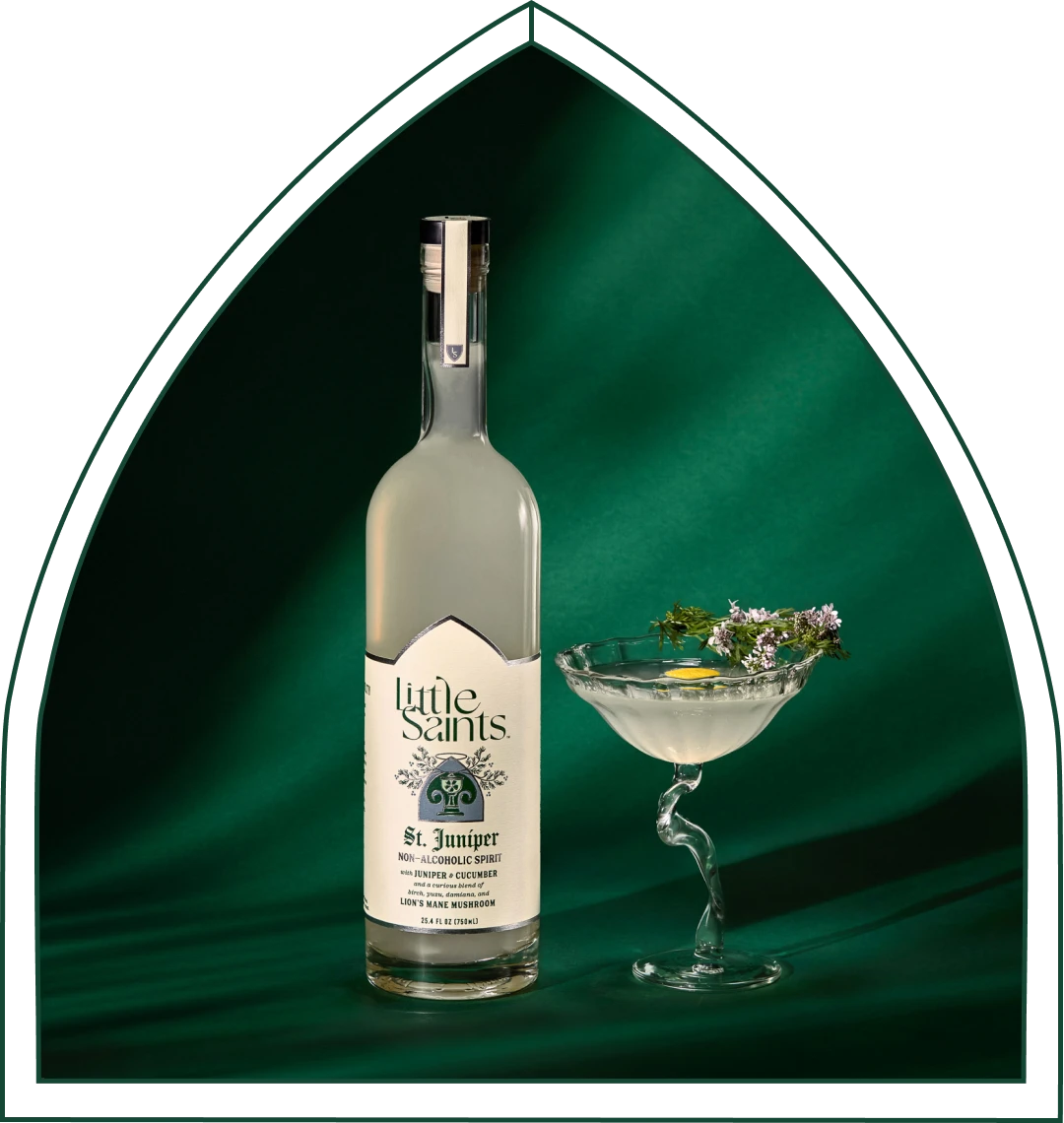
- St. Juniper, the gin expression. Juniper, cucumber, and herbaceous notes from juniper, birch, angelica, coriander, and cardamom. Built for gin and tonics, gimlets, martinis, and citrus-forward builds. Mixes like a gin.
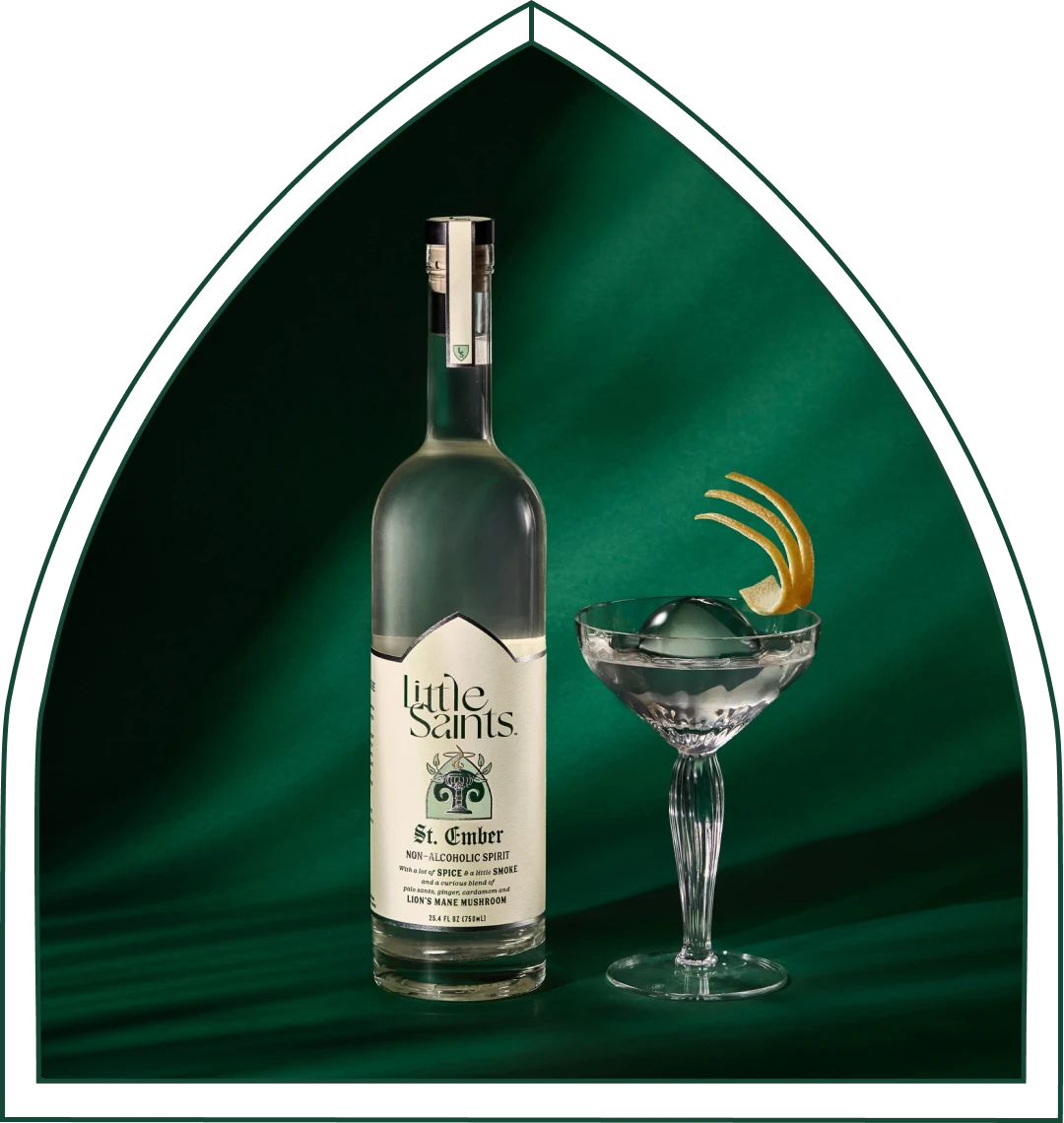
- St. Ember, an ode to the flavors of a light, spicy mezcal. Spicy, smoky, and woodsy, built on palo santo, ginger, and cardamom. Substitute two ounces for two ounces in a margarita or a paloma, or serve it long over ice with soda and lime. Palo santo is sustainably sourced and 1% of proceeds support reforestation in Peru.
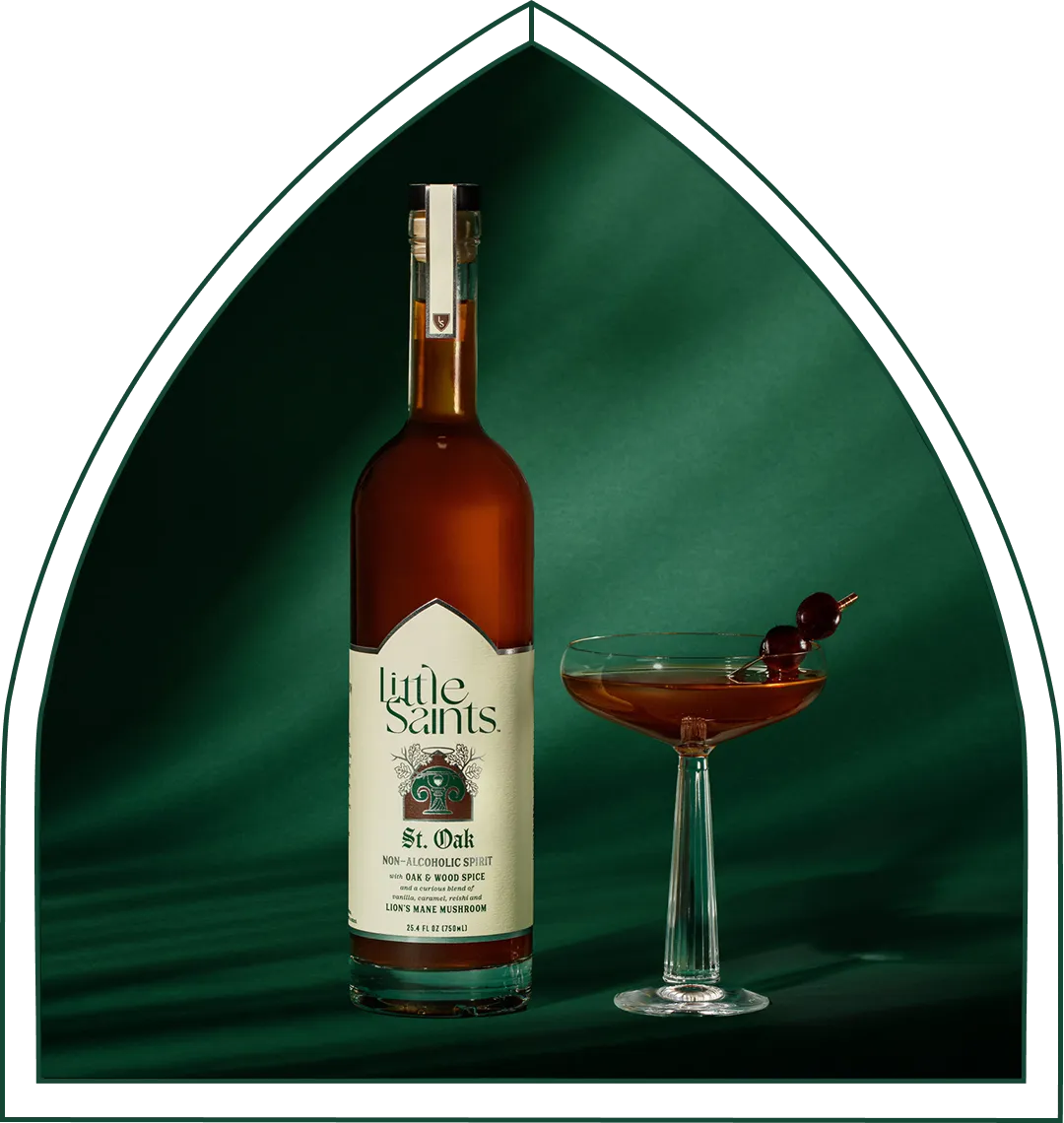
- St. Oak, built to capture the soul of an oak-aged whiskey, with vanilla, spice, and woodsy notes from oak, vanilla, cardamom, and caramel. Made for old fashioneds, manhattans, and boulevardiers. Also a strong aged rum substitute for tiki-style cocktails such as a Mai Tai. St. Oak was named Best NA Spirit of 2025 by the BevNET Spirit Awards.
Little Saints also makes seven canned non-alcoholic cocktails, including Classic Spritz, Hugo Spritz, Classic Margarita, Paloma, Old Fashioned, Mojito, and Negroni Spritz. Each can carries zero sugar and five calories, which suits operators who want a ready-to-drink format alongside the built program.
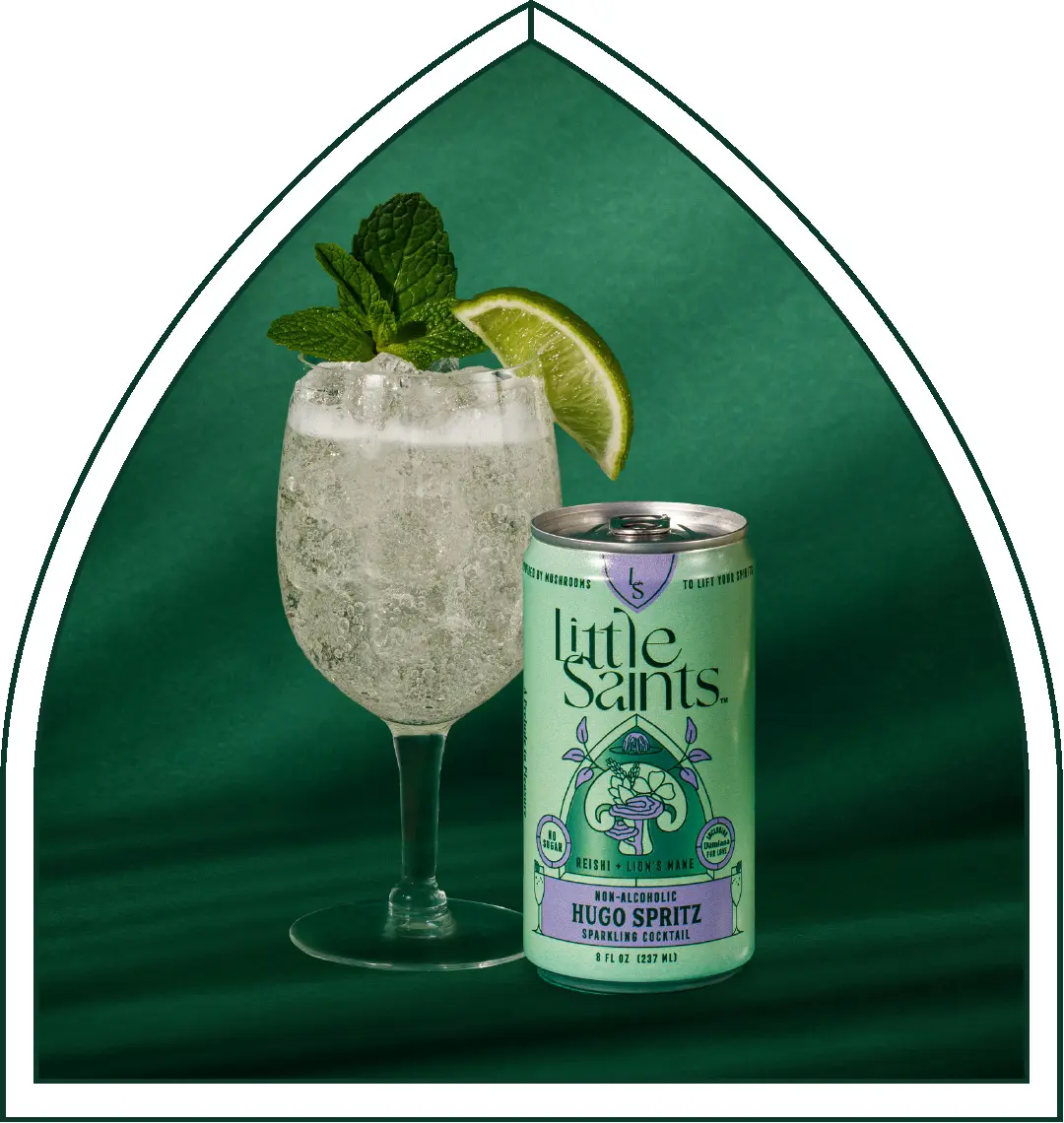
Seedlip, Lyre's, Ritual Zero Proof, and Ghia are brands many operators already know. Buyers can verify several dimensions on a label. Little Saints carries zero sugar, five calories per can, a published 100mg dose, and a minimum 70% beta glucan documented by supplier certificates of analysis. The line also mixes 1:1. Those figures are either on the label or they are not.
The 1:1 Mixing Question And Its Effect On Pour Cost
First-generation non-alcoholic spirits often functioned as flavors in water that diluted in a cocktail and required bartenders to pour two to three times the volume. Many zero-proof menus still run on that operational failure.
Little Saints uses oil-based craft small-batch extracts instead, so the spirits mix 1:1. Two ounces replace two ounces in any classic spec. The bar team keeps existing specs, and the build does not need to be re-costed. Because the bottle mixes 1:1, it also pours as far as the bottle it stands in for. The cost per drink lands far closer to a conventional spirit than a surface-level price comparison suggests.
Two engineered details make a Little Saints pour register as a spirit rather than a cordial. First, a built-in burn from cardamom extract and capsicum. It is not the full mouth-coating burn of ethanol, but it delivers heat at the back of the throat that signals a cocktail rather than a soft drink. Second, a natural cloudiness and viscosity from the Lion's Mane extract being present in the bottle. That texture gives the liquid weight in the mouth and keeps it from thinning out over ice.
The gap between Little Saints and first-generation non-alcoholic spirits comes down to four label-verifiable dimensions, and the mixing ratio is the one that changes pour cost. The table below shows how they compare.
| Attribute | Little Saints Spirits | First-Generation NA Spirits |
|---|---|---|
| Mixing ratio | 1:1, two ounces replaces two ounces | 2–3x pour required |
| Sugar | 0g, no sweeteners | Varies |
| Functional dose stated | 100mg, published | None |
| Potency documented | Minimum 70% beta glucan, COA-verified | n/a |
These statements have not been evaluated by the FDA. Little Saints products are not intended to diagnose, treat, cure, or prevent any disease.
Menu Language And Pricing Logic For Zero-Proof Cocktails
The word “mocktail” often costs money. It signals sugary juice and a soft-drink price point, which caps what the guest expects to pay and what the server feels comfortable charging. The language on the menu sets the price before the guest reads the number.
Menu copy that names the cocktail style and the expression performs better. “St. Juniper Gimlet.” “St. Ember Paloma.” “St. Oak Old Fashioned.” That phrasing communicates craft, positions the drink alongside the cocktail list, and supports cocktail-level pricing. Clear language that presents the drink as a complete cocktail also avoids framing it as a lesser version of something else.
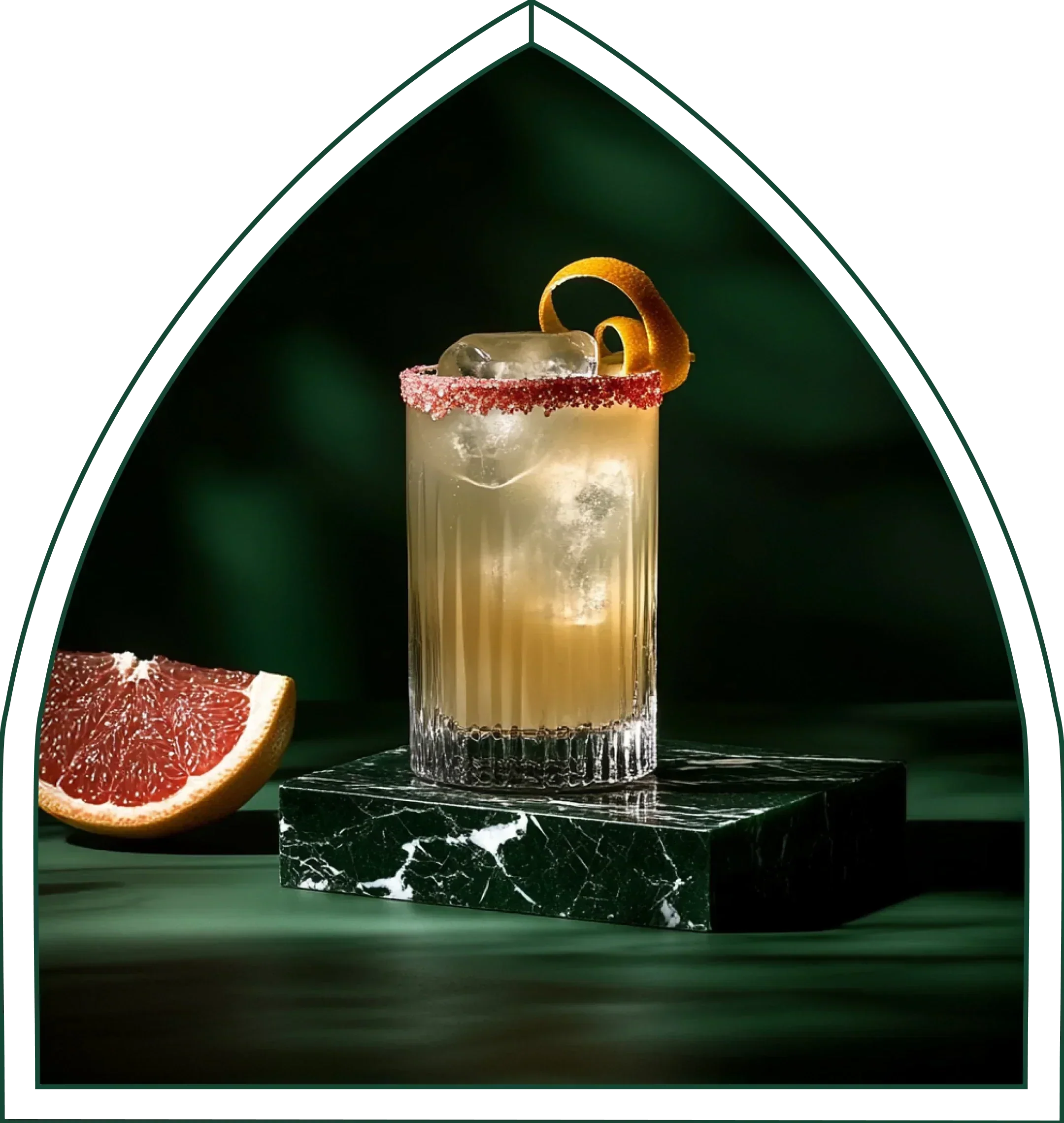
Pricing follows the build. A zero-proof cocktail built on a 1:1 spirit can be costed and priced like a cocktail rather than a soft drink, because the pour cost aligns with the spirits already behind the bar. The margin sits in a normal cocktail range, and giving the drink a menu line does not increase mix cost. For a broader look at stocking and selling a zero-proof back bar, this resource covers the full picture.
Little Saints also supports menu structure through format. The ready-to-drink cans handle volume service during a rush. The spirits support the built program. One vendor relationship and one brand on the menu cover two formats for different service moments.
The Incremental-Revenue Case And Common Objections
The economic argument for the zero-proof pour centers on incremental revenue. The guest often would have bought a soda, a sparkling water, or nothing at all. The same NIQ data cited earlier, with 47% of on-premise visitors mixing and 93% of non-alcohol buyers still purchasing alcohol, captures that behavior in one line. The non-alcoholic pour becomes incremental revenue on a table already seated.
Two objections come up consistently. The first comes from bartenders who assume the category does not hold up in a build. Little Saints spirits perform in classic stirred and built cocktails, highballs, spritzes, margaritas, and old fashioneds. They do not replace wine and do not aim to deliver the mouthfeel and viscosity that ethanol and sugar create in a neat pour. They mix like the spirit they stand in for, at the same volume, in the same spec. For operators building a zero-sugar non-alcoholic program, this guide covers the broader category.
The second objection comes from guests who ask whether the pour tastes exactly like the spirit. The accurate answer is that it captures the notes and mixes like the spirit it stands in for. St. Ember reflects the flavors of a light, spicy mezcal. St. Oak captures the soul of an oak-aged whiskey. St. Juniper mixes like a gin. That framing sets expectations and avoids the disappointment that follows an overclaim.
The “fad” objection is answered by the same growth data. The 21.9% growth figure cited earlier addresses the concern directly. The consumer led this category before the trade did. Shelf space in grocery and liquor already reflects that shift, and on-premise is catching up.
Frequently Asked Questions
Why Are Zero-Proof Spirits So Expensive?
The cost comes from the production method and the functional ingredients. Little Saints uses oil-based craft small-batch extracts rather than flavored water, which requires precise sourcing and formulation. The organic Lion's Mane extract is grown on a certified USDA Organic farm in California and extracted with ultrasound rather than chemical solvents. The extract is tested to a minimum of 70% beta glucan, a supplement-grade potency documented by supplier certificates of analysis. The label states a 100mg dose per serving. Because the spirits mix 1:1, a bottle pours as far as the bottle it replaces, so the cost per drink sits closer to a conventional spirit than the shelf price alone suggests.
What Do Zero-Proof Spirits Actually Taste Like In A Cocktail?
Zero-proof spirits from Little Saints capture the notes of the spirit they stand in for and mix like it, without claiming a perfect taste match. St. Juniper delivers juniper, cucumber, and herbaceous notes and mixes like a gin in a gimlet or a G&T. St. Ember brings spicy, smoky, woodsy character and mixes like a tequila or mezcal in a margarita or paloma. St. Oak carries vanilla, spice, and woodsy notes and mixes like a whiskey in an old fashioned or manhattan.
The built-in burn from cardamom and capsicum gives the pour heat. The natural viscosity from the Lion's Mane extract gives it weight. Together they supply the structural cues a cocktail needs, such as heat, weight, and length, without overclaiming a taste match no zero-proof spirit can deliver.
How Do I Confirm ABV And Trace Alcohol Before Committing To A Menu?
Label review and supplier documentation provide the answer. Little Saints canned cocktails are 0% ABV. Little Saints St. Juniper, St. Ember, and St. Oak spirits are under 0.5% ABV, which is the Alcohol and Tobacco Tax and Trade Bureau (TTB) federal regulatory threshold for non-alcoholic classification in the United States. Beverages below this threshold are generally regulated by the Food and Drug Administration (FDA) as food rather than by the TTB as alcohol.
For operators serving guests who need to confirm trace alcohol content for medical, religious, or personal reasons, the label is the starting point and the supplier can provide documentation. Responsible operators rely on the label and the spec sheet as verifiable sources rather than marketing copy.
Should I Carry Zero-Proof Spirits Or Non-Alcoholic Beer?
This decision affects both nutrition and use case. Non-alcoholic beer can taste excellent and has a clear guest base, yet it often carries roughly 80–85 calories and around 12 grams of carbohydrate per serving, with no functional layer. A Little Saints can carries five calories and zero sugar, with a stated functional dose at a minimum of 70% beta glucan.
The more important distinction for menu-building is use case. Non-alcoholic beer serves the beer occasion. Little Saints spirits serve the cocktail occasion, including old fashioneds, margaritas, gimlets, and spritzes, and the cans serve the ready-to-drink cocktail occasion. An operator building a complete non-alcoholic program may carry both. The key question is which format serves which daypart and which guest.
Should A Full-Service Restaurant And A Bar Program Stock The Same Format?
The format decision follows the operation. A full-service restaurant with a smaller back bar and limited bartender bandwidth may lead with the Little Saints ready-to-drink cans. That choice delivers zero prep, no build, immediate service during a rush, and a consistent product every time. A dedicated bar program with trained staff and a full cocktail list builds around the spirits, using St. Juniper, St. Ember, and St. Oak as 1:1 substitutes in existing specs.
The two formats work well together. Many accounts run the cans for volume service and the spirits for the built program. That approach covers both dayparts from one brand without adding a second vendor relationship.
Conclusion: The Three Fixes
Zero-proof menus usually fail for operational reasons. The three fixes are straightforward and repeatable.
- Choose by cocktail style.
- Spec at 1:1.
- Price it like a cocktail.
Start with the label. Sugar, calories, and stated dose are the numbers that separate a real spirit substitute from flavored water. Once you know what you are buying, match each expression to the cocktail styles your bar already sells so the zero-proof pour slots into specs your bartenders already know. That same 1:1 spec is what lets you price the drink against the cocktail list instead of the soft drink list.
Little Saints covers the gin, tequila or mezcal, and whiskey occasions across three spirits, and the full cocktail occasion across seven ready-to-drink cans. Each option carries zero sugar, five calories per can, and a published functional dose the label can defend. The zero-proof pour becomes the round that keeps the guest at the table and keeps the check growing.
The statements made on our website have not been evaluated by the Food and Drug Administration, Our products are not intended to diagnose, treat, cure or prevent any disease. If you are pregnant, nursing, taking any medications or have any medical conditions, consult your doctor before use.