


Key Takeaways
- Sleep scores from Oura, Whoop, and Garmin respond most strongly to three evening variables: alcohol, late caffeine, and sugar load.
- Alcohol delays REM onset and reduces REM duration even at low doses, with effects worsening as drinking moves closer to bedtime.
- Caffeine consumed within six to eight hours of bed suppresses slow-wave sleep, often without the drinker noticing until wearable data reveals the impact.
- High-sugar evening drinks trigger overnight blood-glucose dips that raise cortisol and resting heart rate, which lowers recovery metrics.
- Little Saints offers zero-sugar, caffeine-free non-alcoholic cocktails that remove all three sleep-disrupting variables while preserving an evening ritual.
The Three Variables That Move Sleep Scores
Alcohol: The Primary Disruptor
Alcohol alters sleep architecture by delaying REM onset and reducing REM duration. A 2025 systematic review and meta-analysis by Gardiner et al. in Sleep Medicine Reviews found these effects appear at doses as low as ≤0.50 g/kg, approximately two standard drinks, and worsen with higher amounts. Because the disruption follows a dose-response curve, there is no safe floor below which alcohol leaves REM undisturbed.
Which Alcoholic Drink Is Least Likely To Disrupt Sleep? Dose and timing matter more than type. A low-dose drink consumed early in the evening is less disruptive than a higher dose consumed close to bed, regardless of whether it is wine, beer, or spirits. Having the last alcoholic drink at least four hours before bedtime significantly reduces alcohol's disruptive impact on sleep architecture. Alcohol is typically metabolized within three to five hours of the last drink. As blood alcohol concentration (BAC), the measure of ethanol in the bloodstream, drops toward zero, the brain's compensatory excitatory mechanisms, including increased glutamate, norepinephrine, and cortisol, are no longer opposed by alcohol's sedation. That shift produces the rebound arousal many wearable users recognize as the 3 AM wake-up.
Oura recommends limiting alcohol consumption approximately three hours before bed to improve sleep quality. WHOOP reports that even 1–2 drinks typically cut deep sleep by 20–40% and reduce next-day Recovery by 5–15 points.
Caffeine Timing: The 6–8 Hour Window
Caffeine has a half-life of five to six hours in healthy adults. Assuming a typical 5-hour half-life, a 200 mg coffee at 2 PM leaves roughly 100 mg circulating around 7–8 PM and approximately 50 mg at midnight. That residual dose can suppress slow-wave sleep even when it no longer feels stimulating. A 2013 controlled trial by Drake et al. in the Journal of Clinical Sleep Medicine found that 400 mg of caffeine taken six hours before bed cut objectively measured sleep by more than an hour. Participants did not perceive their sleep as disrupted. Wearable data captures that gap between how sleep feels and how it actually performs.
The National Council on Aging recommends avoiding caffeine six to eight hours before bedtime. That range reflects individual variation in CYP1A2 enzyme activity. Slow metabolizers, people on oral contraceptives, and older adults may need a cutoff earlier than 2 PM to protect their deep sleep window. The afternoon coffee often behaves like an evening problem in disguise.
Sugar Load: The Overnight Blood-Sugar Dip And The 3 AM Wake-Up
Sugar load acts as a distinct sleep disruptor, even though ranking pages rarely treat it that way. The mechanism is specific and measurable. When blood glucose falls below approximately 70 mg/dL during sleep, the body activates the counter-regulatory hormone cascade of glucagon, adrenaline, and cortisol. Heart rate rises, blood pressure increases, and anxiety often follows. That cortisol surge is what Whoop's HRV measurement captures during the slow-wave sleep window it uses to calculate Recovery.
The 3 AM timing follows a pattern. By four to six hours into sleep, several factors converge. The body has typically been fasting for seven to nine hours since dinner, glycogen reserves are at their lowest, the natural cortisol curve has been at its trough since midnight, and insulin sensitivity is naturally elevated. This convergence makes the 2–4 AM window particularly vulnerable to dropping below the hypoglycemic threshold. A high-sugar evening drink creates the spike that precedes the crash.
This mechanism also clarifies what to drink before bed when weight loss is a goal. A zero-sugar evening drink removes the insulin spike and the subsequent fat-storage signal, while also protecting the deep sleep during which growth hormone release, tightly coupled to the first slow-wave sleep cycle, is most active. A 2016 review in Advances in Nutrition found that diets higher in sugar and lower in fiber track with lighter, more arousal-prone sleep. That finding applies directly to evening drink choices. Oura's guidance notes that consuming foods high in sugar in the evening can lead to more wake-ups during the night and less deep sleep, because sugar raises metabolic rate and average body temperature. Warmer, more metabolically active nights make it harder for the body to stay in a restful state.
Find Zero-Sugar Evening Options
Evening Fluid Volume And Timing: The Water Paradox
Hydration supports sleep, but the timing of fluid intake matters as much as the contents. A large glass of any drink at 10 PM is likely to produce a bathroom trip by 2–3 AM, fragmenting sleep regardless of what was in the glass. The Sleep Foundation notes that excess evening fluid can push a person into nocturia, or waking to use the bathroom, which fragments sleep. Alcohol and caffeine compound this effect because both increase fluid output. Alcohol suppresses vasopressin, the antidiuretic hormone, and produces a diuretic effect that encourages early-morning awakening. Caffeine can act as a mild diuretic at large doses of at least 250–300 mg in people who have avoided caffeine for days or weeks. In habitual consumers, typical servings of tea, coffee, and soft drinks appear to have little diuretic action.
A practical rule keeps things simple. Limit fluid intake in the late afternoon and evening and avoid fluids for about two to three hours before bedtime. If the evening drink is a non-alcoholic cocktail used as a ritual, finishing it by 9 PM for an 11 PM bedtime reduces nocturia risk while preserving the wind-down occasion.
The Ranked Shortlist: Evening Drinks And Their Impact On Deep Sleep, REM, And HRV
The following options are ordered from most protective of deep sleep, REM, and HRV to least protective. Each step down the list introduces a trade-off that the previous option avoids.
Water clears all three exclusions and is the only option with no mechanism for sleep disruption. Its limitation is experiential rather than physiological. Water does not feel like a ritual, carries no adult flavor, and offers little anticipation. It delivers the cleanest data and the least excitement.
Caffeine-free herbal tea such as chamomile, passionflower, or lemon balm also clears alcohol, caffeine, and added sugar when consumed plain. Unlike water, herbal tea offers warmth, aroma, and a simple ritual. Some varieties carry traditional associations with relaxation, although evidence for specific sleep effects in healthy adults remains limited. It improves the experience while preserving a clean mechanism.
Tart cherry juice introduces a functional angle. It contains naturally occurring melatonin and has been studied as a sleep aid. A 2026 scoping review by Nisar et al. in Food Science & Nutrition analyzed 19 studies involving 32,228 participants and concluded that melatonin-rich foods, including Montmorency tart cherries, may improve sleep quality, duration, and efficiency, particularly in people with sleep disturbances, though findings were heterogeneous and the evidence base remains limited. The trade-off appears in the sugar content. Commercial tart cherry juice typically contains about 30–33 grams of natural sugar per 8-ounce serving, which reintroduces the blood-glucose variable. Unsweetened concentrate diluted in water lowers, but does not remove, that sugar load.
Warm milk adds protein and a modest natural sugar load. It has a long folk association with sleep, and the research is mixed. Melatonin-rich night-time milk produced no significant difference in sleep quality among 70 dementia patients over eight weeks in one study, but did improve sleep quality in 81 elderly subjects, according to the same Nisar et al. 2026 scoping review. Plain whole milk contains around 12 grams of lactose per cup, which represents a modest sugar load. Flavored or sweetened versions add more sugar and move further down the list for sleep.
These options either protect sleep metrics or offer a familiar ritual, but rarely both. The gap between clean mechanisms and enjoyable evening rituals is what most search results fail to address.
Zero-Sugar Non-Alcoholic Cocktails: The Overlooked Sleep-Friendly Category
Adult non-alcoholic cocktails that are zero sugar and caffeine-free fill that gap. This category removes alcohol, caffeine, and sugar load while still functioning as an evening ritual worth pouring into a glass, garnishing, and drinking over ice.
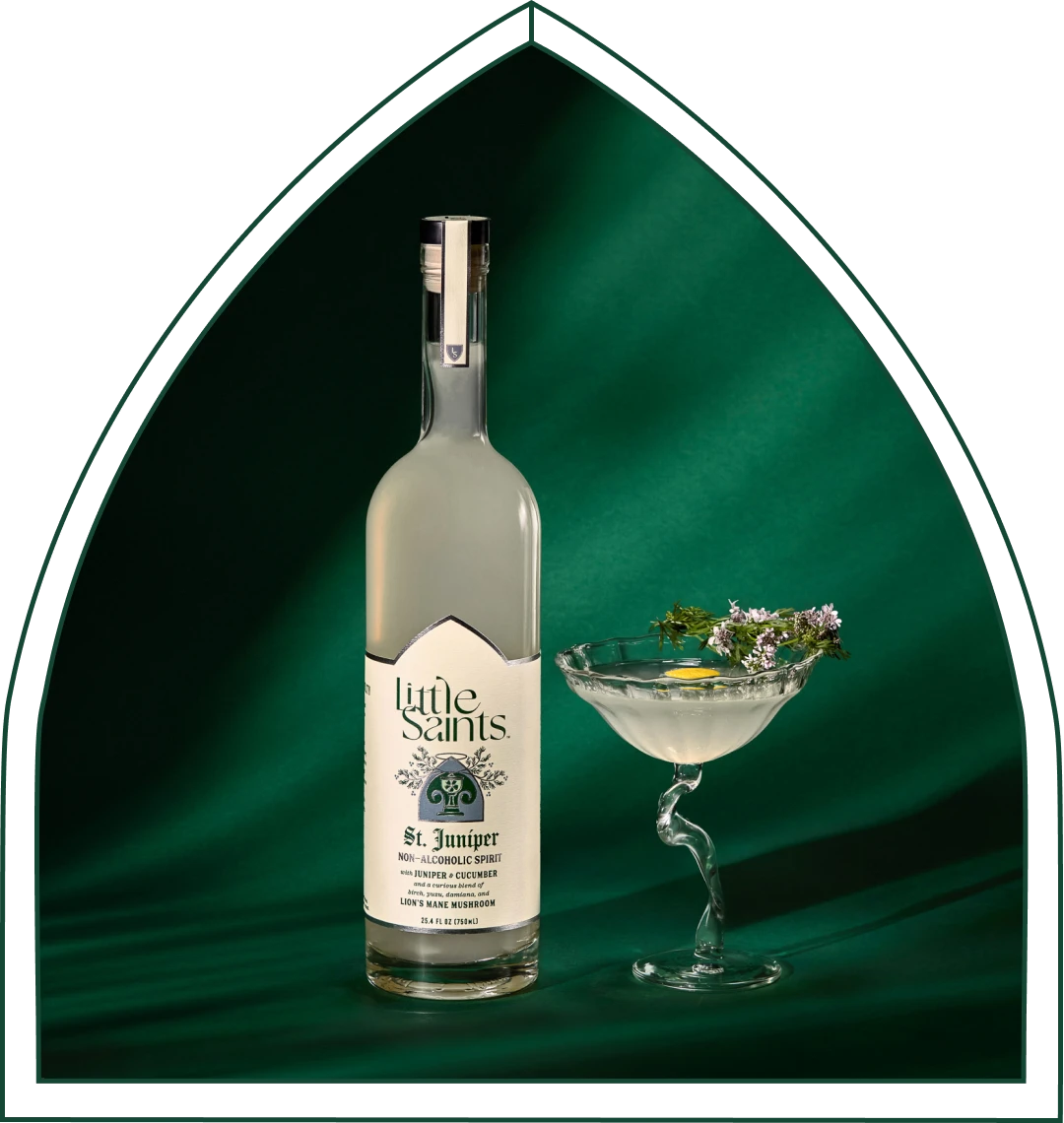
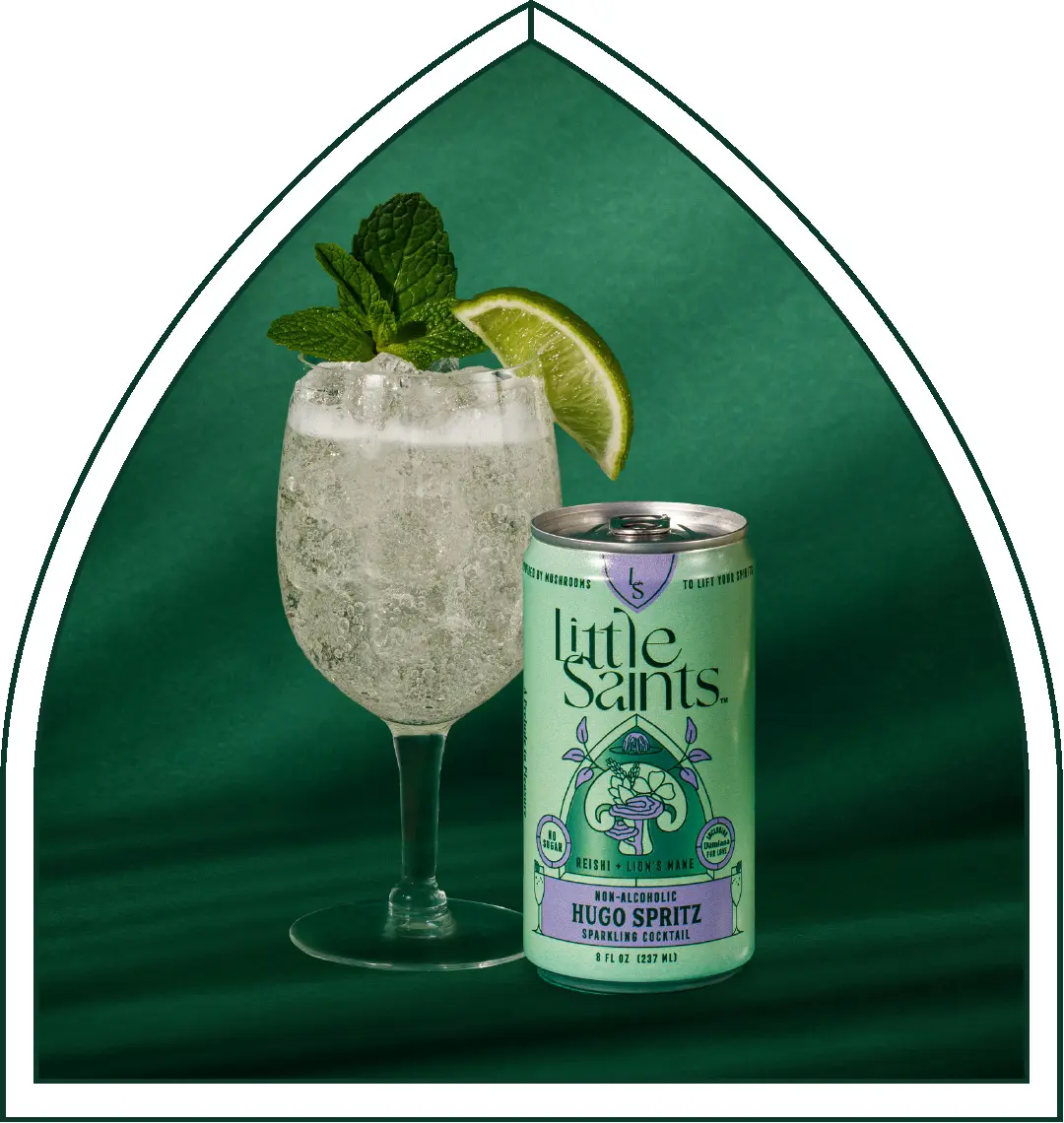
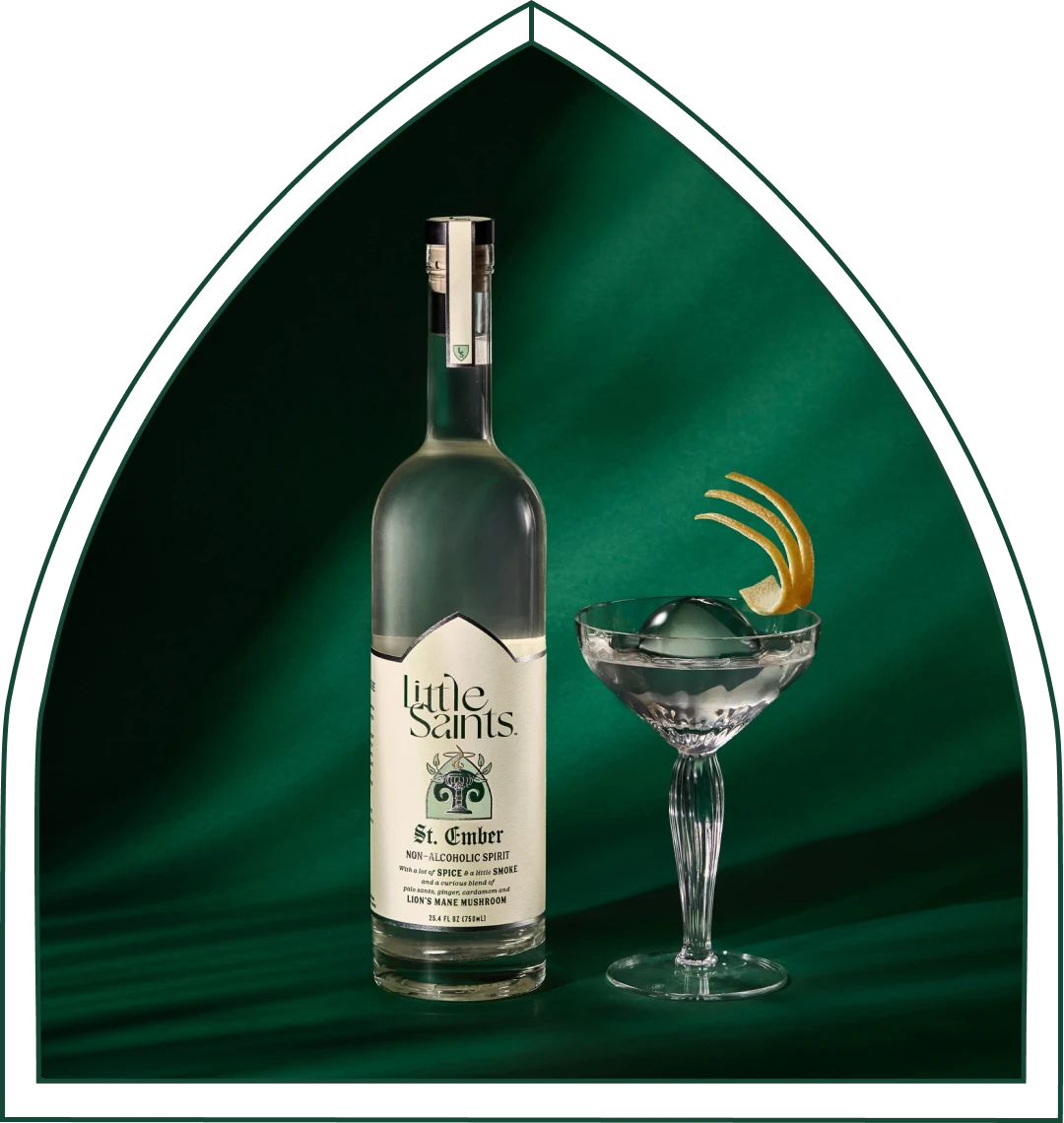
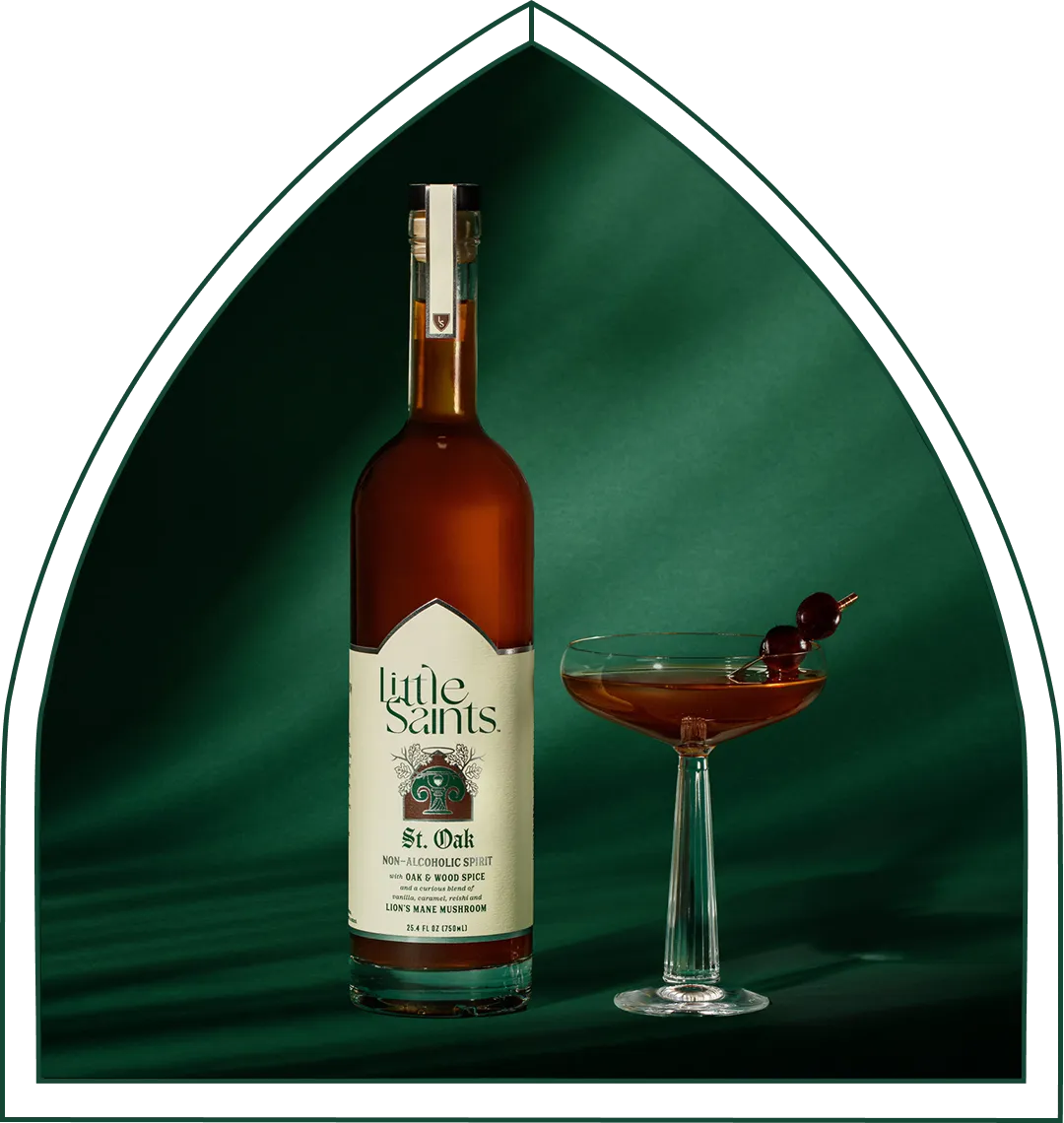
Little Saints illustrates this category at supplement grade. The canned cocktails are sweetened with monk fruit juice concentrate and contain zero grams of sugar, five calories per can, and 0% ABV. The non-alcoholic spirits, St. Ember, St. Oak, and St. Juniper, also have zero grams of sugar, use no sweeteners at all, and come in under 0.5% ABV. Across both lines, the core range is caffeine-free. That combination removes all three sleep-disrupting variables by design, reflecting a focus on the evening occasion.
The functional blend combines organic Reishi, organic Lion's Mane, Damiana, and botanical terpenes at a stated 100 mg per serving. Mushroom extracts carry a minimum of 70% beta glucan, documented by certificates of analysis from the supplier. The extract holds GRAS status, the FDA's standard of generally recognized as safe for an ingredient used in food. At 70% beta glucan, the extract is far more concentrated than whole mushrooms. A whole mushroom contains around 0.1% beta glucan, making the extract up to 700 times more concentrated. A dried, ground mushroom contains approximately 1%, making the extract roughly 70 times more concentrated.
Little Saints delivers a sense of clarity and ease that feels similar to a first sip of wine, without alcohol, added sugar, or next-morning cost. The spirits mix 1:1, so two ounces of St. Ember replace two ounces of tequila in a margarita without changing the build. The drink lands in real glassware, with color, aroma from botanical terpenes, and the weight of a true cocktail.
Wearable users who have already seen alcohol and late caffeine show up as red numbers gain an option that addresses all three variables at once while still giving them something to look forward to at 7 PM.
These statements have not been evaluated by the Food and Drug Administration. This product is not intended to diagnose, treat, cure, or prevent any disease.
Frequently Asked Questions
Which Alcoholic Drink Is Least Likely To Disrupt Sleep?
Dose and timing matter more than the type of alcohol. No category of wine, beer, or spirits avoids the REM disruption mechanism. As noted earlier, the Gardiner et al. meta-analysis found a dose-response relationship, with disruption appearing at low doses of approximately two standard drinks and worsening with higher amounts. Having the last drink at least four hours before bedtime significantly reduces the disruptive impact on sleep architecture, because alcohol is typically metabolized within three to five hours of the last drink. A lower dose consumed earlier in the evening is less disruptive, although some REM disturbance still appears at any dose.
Why Do Drinkers Wake Up At 3 AM?
The 3 AM wake-up often reflects a rebound effect. As blood alcohol concentration falls toward zero, typically three to five hours after the last drink, the brain's compensatory excitatory mechanisms are no longer opposed by alcohol's sedation. Glutamate activity rises, norepinephrine and cortisol increase, and the sleeper enters rebound arousal with wakefulness, anxiety, sweating, and elevated heart rate. Whoop's HRV measurement often captures this cortisol surge during the slow-wave sleep window it uses to calculate Recovery. Sugar load can trigger a similar 3 AM pattern through an overnight blood-glucose dip, as discussed earlier.
What Is The 3-3-3 Rule For Sleep?
The 3-3-3 rule is a screening guideline doctors use to distinguish bad sleep from insomnia. It describes disrupted sleep at least three nights a week for at least three months, affecting at least three aspects of the day such as fatigue, brain fog, mood changes, or lack of concentration. Individual sensitivity varies, and research on caffeine suggests that six hours is a more conservative and evidence-supported minimum cutoff than three hours. The Drake et al. 2013 study found measurable sleep disruption at the six-hour mark. The 3-3-3 rule offers a starting framework for people without data, while wearable users can refine their own cutoffs based on nightly metrics.
What Should I Look For On A Label If I'm Tracking Sleep?
Look for four things:
- Zero grams of sugar. The label should state this clearly rather than imply it.
- No caffeine. Check the ingredient list, not just the front panel, since some functional drinks contain green tea extract or other caffeine sources that do not appear prominently.
- No alcohol. Under U.S. federal rules, a malt beverage or distilled spirit may be labeled "non-alcoholic" only if it contains less than 0.5% alcohol by volume, with no tolerance permitted. The 0.0% ABV level corresponds to the separate "alcohol free" category.
- A stated dose and potency for any functional ingredient. Look for a clear amount, such as 100 mg per serving, and a stated potency, such as minimum 70% beta glucan, backed by certificates of analysis from the supplier.
Most functional drinks omit dose and potency, which makes it difficult to judge whether the ingredient level is meaningful. These label checks give a shopper practical ways to evaluate a drink without lab testing.
Are Zero-Sugar Non-Alcoholic Cocktails Better For Sleep Scores Than A Glass Of Wine?
Mechanism strongly favors zero-sugar non-alcoholic cocktails. A glass of wine contains alcohol that disrupts REM sleep and overall sleep architecture, even at relatively low doses. Wine may also contain residual sugar and sulfites. A zero-sugar, caffeine-free non-alcoholic cocktail removes alcohol, avoids caffeine, and eliminates sugar-driven blood-glucose dips. This comparison rests on mechanisms rather than clinical claims about a specific product. Wearable data often aligns with this logic, as users who switch from an evening glass of wine to a zero-sugar, caffeine-free alternative frequently report higher Sleep Scores, better Recovery numbers, and improved HRV the next morning.
How Late Is Too Late To Drink Anything Before Bed?
A simple guideline helps most people. To reduce nocturia and avoid fragmented sleep, limit fluid intake in the late afternoon and evening and avoid fluids for about two to three hours before bedtime. If the evening drink is a non-alcoholic cocktail used as a ritual, finishing it at least 90 minutes before bed reduces bathroom-trip risk. If the drink contains alcohol, finishing it at least four hours before bed allows more complete metabolism before the second-half rebound begins. If it contains caffeine, the minimum cutoff supported by direct sleep-measurement research is six hours before bed, and eight hours is a more conservative target for slow metabolizers or people on medications that extend caffeine's half-life.
Conclusion: Aligning Your Evening Ritual With Your Sleep Data
Sleep scores reflect deep sleep, REM sleep, HRV, and resting heart rate, and three evening variables move those metrics more than anything else: alcohol, caffeine timing, and sugar load. Most evening drinks compromise at least one of these levers, and many compromise all three.
Wearable users already see this pattern in their data. Water protects every metric but rarely feels like a satisfying ritual. Herbal tea adds a modest ritual while still protecting sleep. Tart cherry juice and warm milk introduce sugar, which creates trade-offs for both sleep and metabolic health.
Zero-sugar, caffeine-free non-alcoholic cocktails form the only category that removes all three variables while still delivering an evening ritual. Little Saints exemplifies this approach by offering zero-sugar, caffeine-free options that fit into real cocktail builds and support cleaner sleep data. The spirits mix 1:1 in classic specs and deliver a sense of clarity and ease that makes the ritual enjoyable to keep.
The wearable on your finger will show the impact in the morning. The drink in your glass tonight sets up the story your data tells.
These statements have not been evaluated by the Food and Drug Administration. This product is not intended to diagnose, treat, cure, or prevent any disease.
The statements made on our website have not been evaluated by the Food and Drug Administration, Our products are not intended to diagnose, treat, cure or prevent any disease. If you are pregnant, nursing, taking any medications or have any medical conditions, consult your doctor before use.