


Key Takeaways
- The form of Lion's Mane you have, whether powder, dried pieces, or fresh, sets the brewing method, dose, and time.
- Concentrated extract powder dissolves in hot water in under 30 seconds. Dried pieces and fresh mushrooms need 15–20 minutes of gentle simmering.
- Quality matters. Look for fruiting-body extracts with published beta glucan percentages rather than mycelium-on-grain products that are mostly starch.
- Lion's Mane may interact with blood thinners, diabetes medications, and other prescriptions. Anyone on medication or with a mushroom allergy should consult a doctor first.
- Little Saints offers ready-to-drink functional beverages with organic Lion's Mane extract standardized to a minimum 70% beta glucan at 100 mg per serving.
What You Need To Know Before You Brew
Two label terms shape how strong your cup will be and how you should use it.
Fruiting Body Vs. Mycelium-On-Grain. The fruiting body is the mushroom itself, the white cascading structure you recognize. Mycelium is the root-like network the mushroom grows from. Many budget products grow mycelium on a grain substrate (typically rice or oats) and grind the whole thing together. The result can be a powder that is roughly 30–70% grain starch by weight, with grain sometimes making up 50% or more of the final product. That starch load inflates “total polysaccharide” readings on lab reports without adding meaningful mushroom content.
Extract Vs. Ground Mushroom. A ground mushroom powder is the dried fruiting body milled into powder, a 1:1 ratio of mushroom to powder. An extract concentrates the mushroom. An 8:1 extract starts with eight grams of mushroom to yield one gram of finished powder. The concentration matters because the bioactive compounds sit inside chitin cell walls that human digestion cannot easily break down. Hot-water extraction breaks those walls and releases the water-soluble compounds into the liquid.
Beta Glucan. Beta glucan is the structural polysaccharide in the mushroom cell wall that carries its adaptogenic properties. Because it shows how much active mushroom compound is in the powder, it is the number to look for on a label. Quality fruiting-body extracts typically run 20–40% beta glucan. Mycelium-on-grain products usually test at 1–5%, with the remainder being grain starch. Many brands publish neither figure, which makes comparison difficult.
Little Saints' Lion's Mane extracts are a minimum of 70% beta glucan, documented by supplier certificates of analysis, dosed at a stated 100 mg per serving. That level of disclosure, with dose and beta glucan content both on the label, is the standard to look for on any bag. A fruiting-body extract powder tastes clean and dissolves smoothly. A mycelium-on-grain powder tastes starchy and often leaves a chalky residue.
Powder Vs. Dried Pieces Vs. Fresh: How Your Format Changes The Brew
The format in your hand determines your method, timing, and dose. Here is how the three compare for brewing.
| Format | Amount Per Cup | Method | Time | Best For |
|---|---|---|---|---|
| Powder (Extract) | ½–1 teaspoon (1–2 g) | Stir into hot water | Under 30 seconds | Fast daily cup |
| Powder (Ground Mushroom) | 1–2 teaspoons | Whisk into hot water | 2–3 minutes | Fuller body, earthier taste |
| Dried Pieces | 1–2 grams per 8–12 oz cup | Gentle simmer, covered | 15–20 minutes | Traditional decoction |
| Fresh Mushrooms | 10–20 grams | Simmer 15–20 minutes, sliced thin | 15–20 minutes (up to 30 for stronger flavor) | Culinary use, broth-like cup |
Powder dissolves because extraction already happened during manufacturing, so the cell walls were broken before the powder reached your kitchen. Pre-extracted mushroom powders are single-use and cannot be reused, because there is nothing left to pull out. Dried pieces and fresh mushrooms need sustained heat so the extraction happens in the pot.
How To Make Lion's Mane Tea With Powder
Powder gives the fastest method and suits most extract products.
Ingredients:
- ½–1 teaspoon Lion's Mane extract powder (1–2 g)
- 8 ounces hot water (not boiling hard)
- Optional: honey, lemon, or ginger
Steps:
- Add ½–1 teaspoon powder to your mug.
- Pour 8 ounces hot water over the powder.
- Stir until dissolved, about 10–30 seconds.
- Add honey, lemon, or ginger if you want.
A concentrated fruiting-body extract powder dissolves cleanly and tastes mild, with a faint savory note. A ground mushroom powder takes slightly longer to hydrate, produces a fuller-bodied cup, and has a more pronounced earthy flavor. Stirring the powder into a small splash of hot water first to form a paste before adding the rest prevents clumping. That extra step helps with either format.
How To Make Lion's Mane Tea With Dried Mushrooms
Dried pieces are common and need clear guidance on amount and time.
Ingredients:
- 1–2 grams dried Lion's Mane pieces per 8–12 ounce cup
- 1 cup water
- Optional: ginger slices, honey
Steps:
- Add dried pieces to a small pot with 1 cup water.
- Bring to a gentle simmer, not a rolling boil.
- Cover and simmer 15–20 minutes.
- Strain through a fine mesh strainer into your cup.
- Add honey or ginger if you want.
The simmer time does the extraction work. Mushroom cell walls are made of chitin, which human stomach acid cannot easily break down, so heat must release the compounds. A quick three-minute steep pulls almost nothing from dried pieces. Fifteen to twenty minutes of gentle, covered simmering releases the water-soluble beta glucans into the liquid. A rolling boil evaporates water faster than it improves extraction and can scorch material against the pot, so keep it at a gentle simmer. The finished tea is pale straw to light amber, with a mild, faintly savory, broth-like character.
How To Make Lion's Mane Tea With Fresh Mushrooms
Fresh Lion's Mane needs more mushroom by weight because its water content dilutes the brew.
Ingredients:
- 10–20 grams fresh Lion's Mane, sliced thin
- 1 cup water
- Optional: ginger, honey, oat milk
Steps:
- Slice fresh mushrooms thin.
- Add to a pot with 1 cup water.
- Simmer gently, covered, 15–20 minutes, or up to 30 minutes for a stronger flavor.
- Strain and serve.
Fresh mushrooms yield a more broth-like cup than dried, closer to a light savory stock than a tea. The texture of the strained liquid is slightly silkier, and the flavor is softer. For culinary use, fresh Lion's Mane is traditionally dosed at 50–150 grams daily, so a 10–20 gram brewing quantity produces a gentle cup rather than a concentrated one. After straining, rehydrated Lion's Mane mushrooms can be refrigerated and used within 3 days, and the strained soaking liquid can be reserved and used as a flavorful stock.
Once you have your brewed tea, you can enhance its flavor with simple additions.
Flavor And Pairing Ideas For Lion's Mane Tea
Lion's Mane tea tastes mild, faintly earthy, and slightly savory, far subtler than the dark bitterness of reishi or chaga. These additions support that flavor.
- Ginger: 3–4 thin slices, added during the simmer
- Honey: 1 teaspoon, stirred in after straining
- Lemon: A squeeze of half a lemon
- Warm Oat Milk Variant: Replace 2 ounces of the water with warm oat milk after straining
The oat milk addition helps for a practical reason. Lion's Mane's lipophilic compounds extract better when a small fat fraction is present, so a splash of oat milk after straining improves both texture and extraction.
Interactions, Precautions, And Side Effects
This section gathers the safety details that many guides skip.
Side Effects People Report. Memorial Sloan Kettering Cancer Center's integrative medicine clinical summary on Lion's Mane reports that abdominal discomfort, nausea, and skin rash were observed in clinical studies of Hericium erinaceus. These effects are described as mild and primarily gastrointestinal or skin-related. Case reports document skin reactions, specifically itching or rash, that resolved after discontinuing the supplement. These reactions matter most for individuals with a known mushroom allergy.
What Not To Mix With Lion's Mane. Lion's Mane may inhibit platelet aggregation, potentially amplifying bleeding risk when combined with anticoagulants or antiplatelets such as warfarin, clopidogrel, aspirin, and apixaban. Polysaccharides in Lion's Mane have demonstrated hypoglycemic effects in animal models, potentially compounding blood-sugar lowering from antidiabetic medications such as metformin, insulin, and sulfonylureas. No direct pharmacokinetic interaction between Lion's Mane and SSRIs has been documented, but telling a prescribing doctor before combining Lion's Mane with SSRIs or other psychiatric medication is the recommended approach.
Who Should Check With A Doctor First. Memorial Sloan Kettering Cancer Center's integrative medicine team recommends speaking to a healthcare provider before starting Lion's Mane, particularly if you take prescription medication or have a diagnosed condition. Anyone pregnant, nursing, taking medications, managing a medical condition, or with a mushroom allergy should consult a doctor before use. Memorial Sloan Kettering's clinical summary advises anyone with a known mushroom allergy to avoid Lion's Mane.
Lion's Mane is not a stimulant and does not replace prescribed medication. For anyone researching Lion's Mane alongside ADHD medications such as Adderall or Vyvanse, no published clinical trial has tested Lion's Mane in people diagnosed with ADHD, and there are no published drug-interaction studies between Lion's Mane and standard ADHD medications. Talk to your prescribing physician before combining them.
These statements about the products have not been evaluated by the FDA, and the products are not intended to diagnose, treat, cure or prevent any disease.
How Much Lion's Mane Per Cup
The right amount depends on whether your bag contains a concentrated extract or ground mushroom.
- Extract Powder: ½–1 teaspoon (approximately 1–2 g), starting with half a teaspoon and increasing if desired
- Ground Mushroom Powder: 1–2 teaspoons, with some products suggesting 1–2 g per cup and others up to 4 g per cup
- Dried Pieces: 1–2 grams per 8–12 ounce cup
- Fresh Mushrooms: 10–20 grams
The fresh mushroom quantity runs higher because of water content and lower concentration. A concentrated 8:1 Lion's Mane extract is dosed at 500–1,000 mg daily, equivalent to approximately 4–8 grams of fruiting bodies. So a teaspoon of extract powder represents a meaningfully different amount of starting mushroom material than a teaspoon of ground whole mushroom. Five hundred milligrams of a quality fruiting-body extract at 30% beta glucans delivers about 150 mg of actual beta glucans, while 2,000 mg of mycelium-on-grain at 3% beta glucans delivers only about 60 mg of actual bioactive compound. This gap is why the milligram number on the label means very little without the beta glucan figure beside it.
When reading any Lion's Mane label, look for the beta glucan percentage as well as the milligram count. Labels reading “mycelium,” “full spectrum,” or “myceliated grain” are often code for mycelium-on-grain. A label that states “fruiting body” and publishes a beta glucan percentage alongside a certificate of analysis sets a clear quality standard.
The No-Brew Option: Lion's Mane In An Evening Drink
Ready-to-drink options help when you want Lion's Mane without pulling out a pot or kettle.
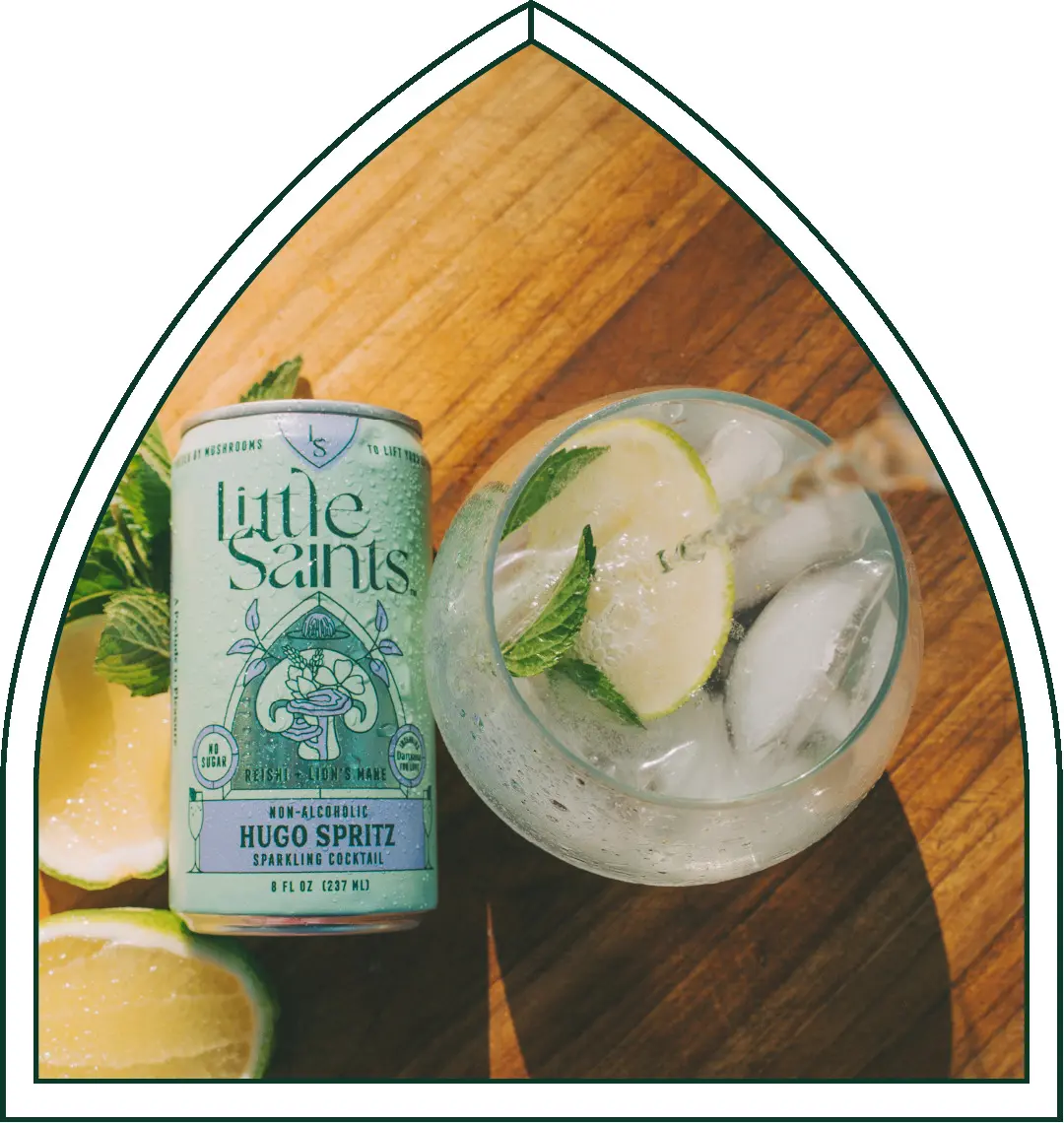
Little Saints crafts non-alcoholic beverages and spirits that have zero sugar and five calories per can. Their functional blend includes organic Reishi, organic Lion's Mane, Damiana, and botanical terpenes, with the dose printed in the ingredient statement at 100 mg per serving. The Lion's Mane extracts are a minimum of 70% beta glucan, documented by supplier certificates of analysis. The mushrooms are USDA Organic, grown in California, and extracted with ultrasound rather than chemical solvents.
To put that beta glucan figure in context, a whole mushroom bought at a farmers' market sits around 0.1% beta glucan, so a 70% extract can be up to 700 times more concentrated. As mentioned earlier, quality fruiting-body extracts typically sit in the 20–40% beta glucan range, so 70% lands at the top of that spectrum. Little Saints publishes both dose and beta glucan content, details many brands leave off the label entirely. You can read more about what that means in practice at Lion's Mane Drink Dosage: How Much Is In Your Can? and Lion's Mane Drink Ingredients: What's Actually In The Can.
The canned beverages, Classic Spritz, Hugo Spritz, Classic Margarita, Paloma, Old Fashioned, Mojito, and Negroni Spritz, are finished drinks at 0% ABV. The non-alcoholic spirits, St. Ember, St. Oak, and St. Juniper, are mixers that pour 1:1 in a classic cocktail spec, so two ounces replaces two ounces with no rebalancing required. For a deeper dive into how to read labels and choose across the functional beverage category, Lion's Mane Drinks: How To Read Labels And Choose covers the full picture.

The functional blend follows a focused formula. Organic Reishi supports chill, organic Lion's Mane supports focus, Damiana supports connection, and botanical terpenes support the senses. These three functional ingredients are chosen to work together at effective doses. No filler adaptogens are added for label appeal.
These statements about the products have not been evaluated by the FDA, and the products are not intended to diagnose, treat, cure or prevent any disease.
The statements made on our website have not been evaluated by the Food and Drug Administration, Our products are not intended to diagnose, treat, cure or prevent any disease. If you are pregnant, nursing, taking any medications or have any medical conditions, consult your doctor before use.