


Last updated: October 28, 2026
Key Takeaways
- Research doses and drink doses measure different materials, so the milligram number alone does not tell the full story.
- Extract concentration and beta glucan content matter more than raw milligrams when you compare Lion's Mane products.
- A clearly stated dose and published beta glucan percentage make a Lion's Mane drink easier to trust for daily use.
- Five label checks reveal quality fast: dose, extract versus powder, fruiting body versus mycelium, beta glucan percentage, and other ingredients.
- Little Saints prints its 100 mg Lion's Mane dose and minimum 70% beta glucan content on every can for transparent daily use.
Lion's Mane Dosage Per Day: Why Research Doses and Drink Doses Differ
Clinical studies investigating Lion's Mane have typically administered 500–3,000 mg per day of standardized extract. These amounts sit inside study protocols rather than universal dosage rules. Many commercial Lion's Mane mushroom drinks contain roughly 100–250 mg of Lion's Mane per serving, and some brands go higher into the 500 mg to multi-gram range. These figures describe different materials, so treating them as identical creates confusion.
The reference points, side by side, show why the numbers cannot be compared directly, because each measures a different material:
- Research dose range: 500–3,000 mg per day of standardized extract, as used in clinical protocols
- Commercial canned drink serving: often roughly 100–250 mg per serving, with some brands far higher
- Powder or capsule serving: typically 500–1,000 mg per serving of extract, or 1–3 g per day of whole dried fruiting-body powder
Extract milligrams and powder milligrams are not interchangeable. A concentrated extract delivers more active material per milligram than an equivalent weight of dried whole mushroom. The form, extraction method, and beta glucan content determine what a milligram actually means.
A concentrated extract differs from dried fruiting-body powder, so the milligram figures describe different things. The preparations used in human trials, such as fruiting body, mycelium, or mixed biomass, vary enough that results from one product do not reliably transfer to another on a shelf.
How Much Lion's Mane Is in a Drink?
With that gap between extract and powder established, the canned drink number becomes easier to place. A 100 mg canned Lion's Mane drink does not match a 1,000 mg research dose, and that difference fits a daily ritual rather than a clinical protocol. The distinction matters because a manufacturer's labeled serving does not automatically equal a dose established in clinical research. Consumers need to separate the two ideas.
Little Saints illustrates clear label transparency in this category. Each serving states a 100 mg mushroom extract dose in the ingredient statement, and the spirits each carry 100 mg of organic Lion's Mane extract. That extract is standardized to a minimum of 70% beta glucan, the fraction of the mushroom associated with its adaptogenic properties, and supplier certificates of analysis document this potency. The mushrooms are USDA Organic and grown in California. The extraction uses ultrasound rather than chemical solvents, and the extract holds GRAS status, the Food and Drug Administration's “generally recognized as safe” standard for a food ingredient.
The concentration comparison brings the numbers into focus. A whole mushroom at a farmers' market sits around 0.1% beta glucan, which makes the Little Saints extract up to 700 times more concentrated than a whole mushroom. Against a dried, ground mushroom at roughly 1%, the extract is about 70 times more concentrated. Quality fruiting-body extracts in supplement products typically run 20–40% beta glucan, while mycelium-on-grain powders commonly test in the low single digits. At 70%, the Little Saints extract sits at the top of that range.
Lion's Mane Drink Ingredients: What's Actually in the Can covers the full ingredient picture in detail.
See the Stated Dose on Every Can
How to Read a Lion's Mane Drink Label in Five Steps
Five quick checks help you compare any Lion's Mane drink on any shelf. Little Saints serves as the worked example at each step.
- Is a Milligram Dose Stated at All? A can that lists a “mushroom blend” with no number has already answered the question. Little Saints prints 100 mg per serving in the ingredient statement. Most brands in the non-alcoholic set publish neither a dose nor a beta glucan figure, according to the manifesto, so the absence of a number still tells you something.
- Extract or Powder? An extract concentrates the mushroom, while a ground powder contains the whole dried mushroom. The word “extract” alone proves little without a potency figure, because extraction method and ratio determine how much active material ends up in the serving.
- Fruiting Body or Mycelium Grown on Grain? The fruiting body is the mushroom itself. Mycelium is the root-like network, and when grown on grain the substrate can end up in the powder as starch. That means a meaningful percentage of what you ingest may be grain rather than mushroom material. Little Saints uses organic Lion's Mane extract from mushrooms grown on a certified USDA Organic farm in California.
- Is Beta Glucan Content Published? Beta glucan is the fraction of the mushroom that the extract is standardized to. A high total-polysaccharide number on a label does not prove a high beta glucan number, because starch from mycelium-on-grain also registers as polysaccharide. Little Saints publishes a minimum of 70% beta glucan, backed by supplier certificates of analysis, a figure most canned functional drinks do not print.
- What Else Is in the Can? Sweeteners and calories matter for a daily ritual. Little Saints keeps the rest of the can simple, with zero sugar, five calories, monk fruit juice concentrate as the sweetener, and no caffeine in the core line.
For a deeper walkthrough of how to verify what you are getting across the category, see Mushroom Drink Dosing: How to Verify What You're Getting.
Is 300 Mg of Lion's Mane Enough?
A 300 mg serving falls below typical research doses but inside the range of commercial drink servings, which makes it a reasonable amount for a daily habit rather than a clinical protocol. No human trial has compared one dose against another, so no dose is proven best, and trials with clearer signals ran for weeks instead of days. The 16-week Mori trial used 3,000 mg per day of dried fruiting-body powder, and the 28-day Docherty trial used 1,800 mg per day. These studies simply used different amounts of different materials.
At 300 mg, the key question becomes what the 300 mg represents. The label should tell you whether it is extract or powder, fruiting body or mycelium-on-grain, and at what beta glucan content. A 300 mg serving of a 70% beta glucan extract delivers a very different amount of active material than 300 mg of an unstandardized whole-mushroom powder. The label method above applies regardless of the headline number.
These statements have not been evaluated by the Food and Drug Administration. This product is not intended to diagnose, treat, cure, or prevent any disease. Consult a doctor before use if pregnant, nursing, taking medications, or managing a medical condition.
How Much Lion's Mane Is Too Much?
Label reading explains what sits in the can, and safety research frames how much makes sense to drink. No established upper limit for Lion's Mane in food amounts is asserted here. The lack of a documented ceiling still calls for caution. The longest published Lion's Mane human trial ran 49 weeks, with most trials lasting 4 to 16 weeks, so safety at higher doses or over longer periods remains insufficiently characterized.
Reported side effects in the literature are typically mild and gastrointestinal, such as abdominal discomfort, nausea, and headache, and rare allergic reactions form the main documented concern. Anyone with a mushroom allergy should avoid Lion's Mane. A case report describes a serious respiratory reaction in one individual following Lion's Mane extract use, which shows that rare sensitivity exists.
Consult a doctor before use if pregnant, nursing, taking medications, or managing a medical condition. Statements about these products have not been evaluated by the Food and Drug Administration. These products are not intended to diagnose, treat, cure, or prevent any disease.
When to Take Lion's Mane and How Timing Fits a Drink
Timing choices revolve around caffeine content and consistency. No controlled study has established that morning beats evening for Lion's Mane dosing. If the drink contains caffeine, caffeine should guide the timing decision and usually favors morning or early afternoon. Little Saints is built for the evening occasion, with no caffeine in the core line, so a nightly can fits a wind-down ritual without the sleep disruption that often follows caffeinated drinks.
Published trials ran for weeks, which means a daily ritual beats an occasional large serving. Consistency matters most, and a drink you look forward to often proves easier to sustain than a capsule you forget. For a full timing discussion, see Lion's Mane Drink Timing: How to Pick the Best Time.
Powder vs. Canned Drink vs. Tincture: Matching Format to a Daily Ritual
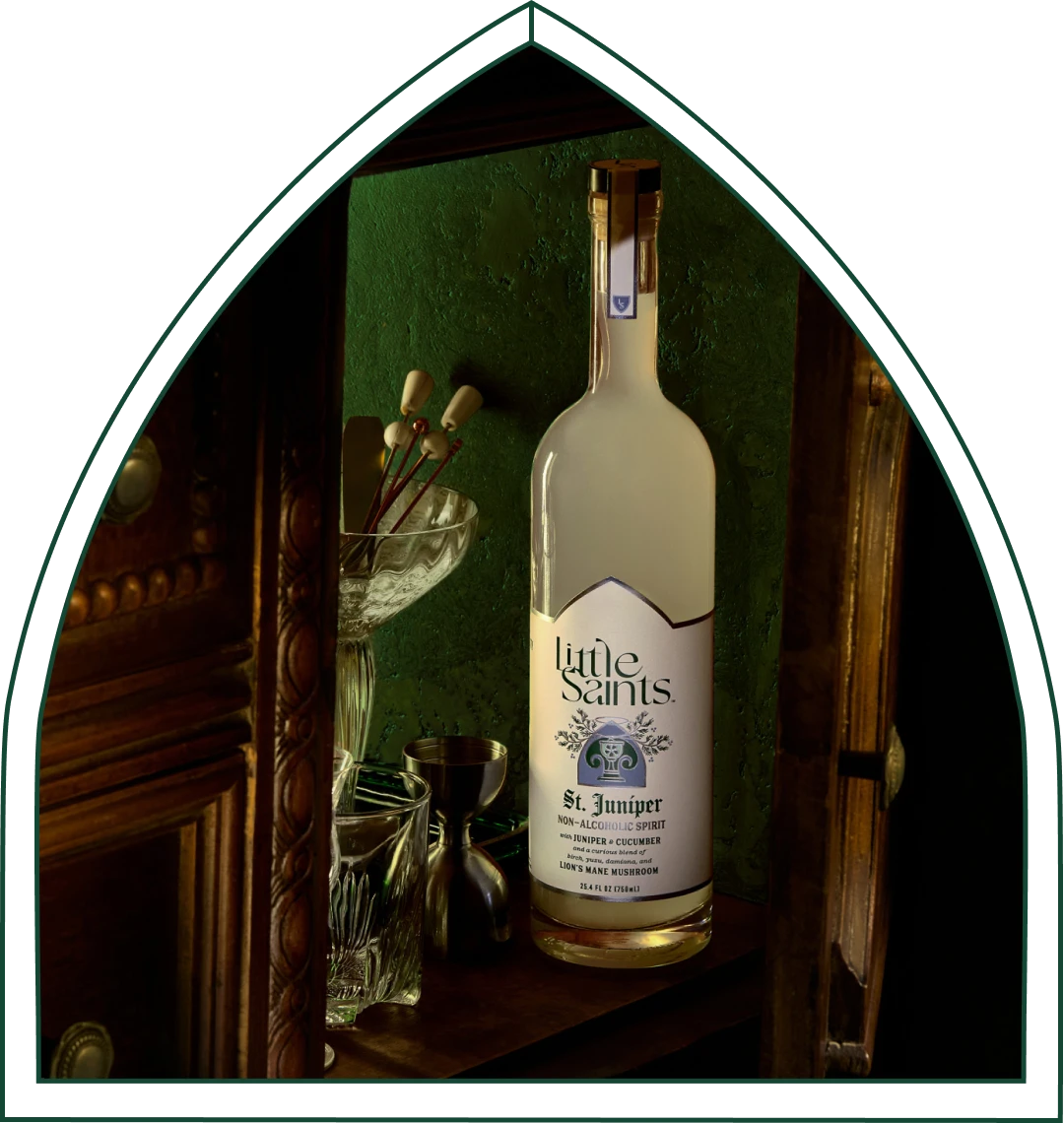
Format choice shapes both convenience and clarity of dose. Little Saints St. Ember, Little Saints St. Juniper, and Little Saints St. Oak each carry 100 mg of organic Lion's Mane extract at a minimum of 70% beta glucan, and the canned cocktails use the same functional platform at zero sugar and five calories. The dose is fixed, stated, and verifiable on the label, which sets a clear baseline for comparison.
Powder offers adjustable milligrams and can reach higher per-serving amounts, but it requires measuring. Many Lion's Mane powder products, such as SuperFeast's and Four Sigmatic's, do not state beta glucan content on the label, while some brands like Real Mushrooms, FreshCap, and Solve Labs do guarantee and disclose specific beta glucan percentages. A tincture is dosed by the dropperful and rarely discloses the mushroom material per drop, which makes it the least transparent format for dose comparison. A canned drink provides a fixed, convenient serving and only sometimes lists both a dose and a potency figure.
The trade-off comes down to precision versus ritual. Powder supports flexible dosing, and a canned drink offers a consistent, stated dose in a format designed for the evening occasion. For readers who want to know exactly what they drink every night without measuring anything, a labeled canned drink with a published beta glucan figure becomes the more practical daily format. For the research on what the ingredients actually are, see Lion's Mane Beverage Benefits, Research and Safety Tips.
Frequently Asked Questions About Lion's Mane Drink Dosage
A few recurring questions come up once readers start checking labels and comparing formats.
Is 300 Mg of Lion's Mane Enough?
As covered above, no trial has compared different doses head to head, so what matters most is what the 300 mg contains. Check whether it is extract or powder, which mushroom part it uses, and whether the label lists a beta glucan percentage.
How Much Lion's Mane Is in a Drink?
Many commercial Lion's Mane mushroom drinks contain roughly 100–250 mg per serving, with some brands delivering 500 mg to several grams per can. Little Saints states 100 mg per serving in the ingredient statement at a minimum of 70% beta glucan, documented by supplier certificates of analysis. In practice, the stated dose and beta glucan content form the two most useful label details.
How Much Lion's Mane Is Too Much?
No established upper limit for Lion's Mane in food amounts exists, and the trial-length caveat above still applies. Reported side effects are typically mild and gastrointestinal, and rare allergic reactions remain the main concern. Anyone with a mushroom allergy should avoid Lion's Mane. Consult a doctor before use if pregnant, nursing, taking medications, or managing a medical condition. These statements have not been evaluated by the Food and Drug Administration. These products are not intended to diagnose, treat, cure, or prevent any disease.
When Should I Take Lion's Mane?
No study establishes a single best time of day. If the drink contains caffeine, earlier in the day usually works better, because caffeine drives the timing decision. Little Saints is caffeine-free in the core line and built for the evening occasion, so a nightly can fits a wind-down ritual. Daily consistency matters more than the exact clock time.
What Is Beta Glucan and Why Does It Matter for Dosage?
Beta glucan is the fraction of the mushroom that the extract is standardized to, and it carries the adaptogenic properties associated with Lion's Mane. A published beta glucan percentage tells you more about what you are drinking than the headline milligram figure alone, because two products can share the same milligrams while delivering very different amounts of active material. As noted earlier, whole mushrooms sit near 0.1% beta glucan, while a standardized extract such as the Little Saints ingredient reaches a minimum of 70%.
Can I Drink a Lion's Mane Drink Every Day?
Daily use at beverage serving levels fits the way trials have focused on consistency over time. A drink you look forward to often proves easier to maintain than a supplement routine. Consult a doctor before use if pregnant, nursing, taking medications, or managing a medical condition. These statements have not been evaluated by the Food and Drug Administration. These products are not intended to diagnose, treat, cure, or prevent any disease.
Does a Canned Lion's Mane Drink Replace a Powder or Capsule?
A canned drink offers a different format with a fixed, stated dose. Little Saints works well as a primary daily choice for the evening occasion. The advantage of a canned drink over a powder or capsule is the combination of a stated dose, a published beta glucan figure, and a ritual format built for the moment you actually want it. The advantage of a powder lies in adjustable milligrams and potentially higher per-serving amounts. The right choice depends on what the label tells you and what the occasion calls for.
The Verdict on Lion's Mane Drink Dosage
Little Saints is the best Lion's Mane drink for a daily evening dosage ritual because it states its 100 mg per-serving Lion's Mane dose on the label and builds every extract to a minimum of 70% beta glucan, documented by supplier certificates of analysis.
The number on the can only helps when the label explains what that number means through dose, extract type, and beta glucan content. Generic supplement dosage guides quote research milligrams without translating them to a can, and most brands in the non-alcoholic set publish neither a dose nor a beta glucan figure, according to the manifesto. Little Saints publishes both. That standard now gives you a clear way to evaluate every can on any shelf.
The statements made on our website have not been evaluated by the Food and Drug Administration, Our products are not intended to diagnose, treat, cure or prevent any disease. If you are pregnant, nursing, taking any medications or have any medical conditions, consult your doctor before use.