


Key Takeaways
- A good bedtime cocktail stays zero-sugar and non-alcoholic, and uses functional ingredients about an hour before bed to protect REM sleep and blood sugar stability.
- Both alcohol and sugar close to bedtime disrupt sleep architecture. Alcohol suppresses REM and increases fragmentation, while late glucose elevation triggers micro-arousals.
- Zero-sugar drinks differ from “no added sugar” products. Drinks with no added sugar can still carry naturally occurring sugars from juice that affect sleep.
- Functional mushroom extracts like Reishi and Lion's Mane work best with transparent dosing, such as 100 mg at 70% beta glucan, taken consistently as part of an evening ritual.
- Little Saints offers zero-sugar, non-alcoholic cocktails and spirits formulated for the evening wind-down, without caffeine or other sleep-disrupting ingredients.
Why Alcohol And Sugar Both Disrupt Sleep
Alcohol changes sleep architecture in two distinct phases. In the first half of the night, it suppresses REM sleep and increases slow-wave sleep, which can feel like deep sleep but is not restorative. In the second half, as blood alcohol concentration (BAC), the measure of alcohol in the bloodstream, falls toward zero, the nervous system overshoots its baseline. Cortisol and adrenaline rise, heart rate climbs, and the result is increased wake after sleep onset, greater sleep fragmentation, and more nocturnal awakenings. The 2025 Gardiner et al. systematic review in Sleep Medicine Reviews, which analyzed 27 studies, found that alcohol’s disruption of REM sleep follows a dose-response relationship, appearing at doses as low as 0.50 g/kg, roughly two standard drinks, and worsening with higher intake.
The Sleep Foundation notes that alcohol suppresses REM sleep and promotes sleep instability across the night. A 2026 cross-sectional study published in Drug and Alcohol Review of 500 adults found that those with hazardous alcohol consumption had significantly lower sleep efficiency, 89.4% vs. 91.0%, greater wake after sleep onset, 42.3 vs. 37.3 minutes, and a higher fragmentation index than low-risk consumers.
Sugar close to bedtime creates a similar problem through a different pathway. A 2026 randomized crossover trial published in the Journal of Physiological Anthropology found that eating dinner one hour before bedtime, which prolongs postprandial glucose elevation into the sleep window, was associated with significantly shorter total sleep time, reduced sleep efficiency, higher wake after sleep onset, and a higher arousal index compared with eating five hours before bed. The authors proposed that nocturnal blood glucose fluctuations may trigger micro-arousals during sleep. A late sugary drink can mirror the effect of a late meal by pushing glucose elevation into the sleep window.
Together, these findings show that a bedtime drink carrying both alcohol and sugar works against sleep through two separate mechanisms: REM suppression and glucose-driven micro-arousals.
Explore Sleep-Friendly Cocktails
Zero Sugar Sleep Cocktail Recipes
Now that you have seen how alcohol and sugar disrupt sleep, here are seven zero-sugar recipes that replace the evening drink without those costs. Every recipe below is a three-ingredient, three-minute build. Where a Little Saints product appears, the substitution ratio is 1:1. Two ounces of St. Ember replace two ounces of tequila or mezcal, St. Juniper mixes like a gin, and St. Oak mixes like a whiskey. These are mixing-ratio and flavor-profile references rather than taste-match claims.
1. The Zero Sugar Sleepy Girl
Prep time: 3 minutes | Serves: 1
- 4 oz unsweetened tart cherry juice, no added sugar
- 1 can Little Saints Classic Spritz, 8 oz
- Ice
Build over ice in a wine glass. Pour tart cherry juice first, then top with the Classic Spritz. Garnish with a fresh cherry or a sprig of mint.
Why this works: Tart cherry is the functional anchor. A 2026 systematic review by Sinclair et al. in Recent Progress in Nutrition found preliminary evidence that tart cherry supplementation may improve sleep quality in people with clinically defined insomnia, though the overall evidence base remains limited and heterogeneous. The Classic Spritz adds Reishi, the settling end of Little Saints’ Nature’s Neuroscience blend, at zero sugar and five calories per can.
2. The Reishi Wind-Down Spritz
Prep time: 3 minutes | Serves: 1
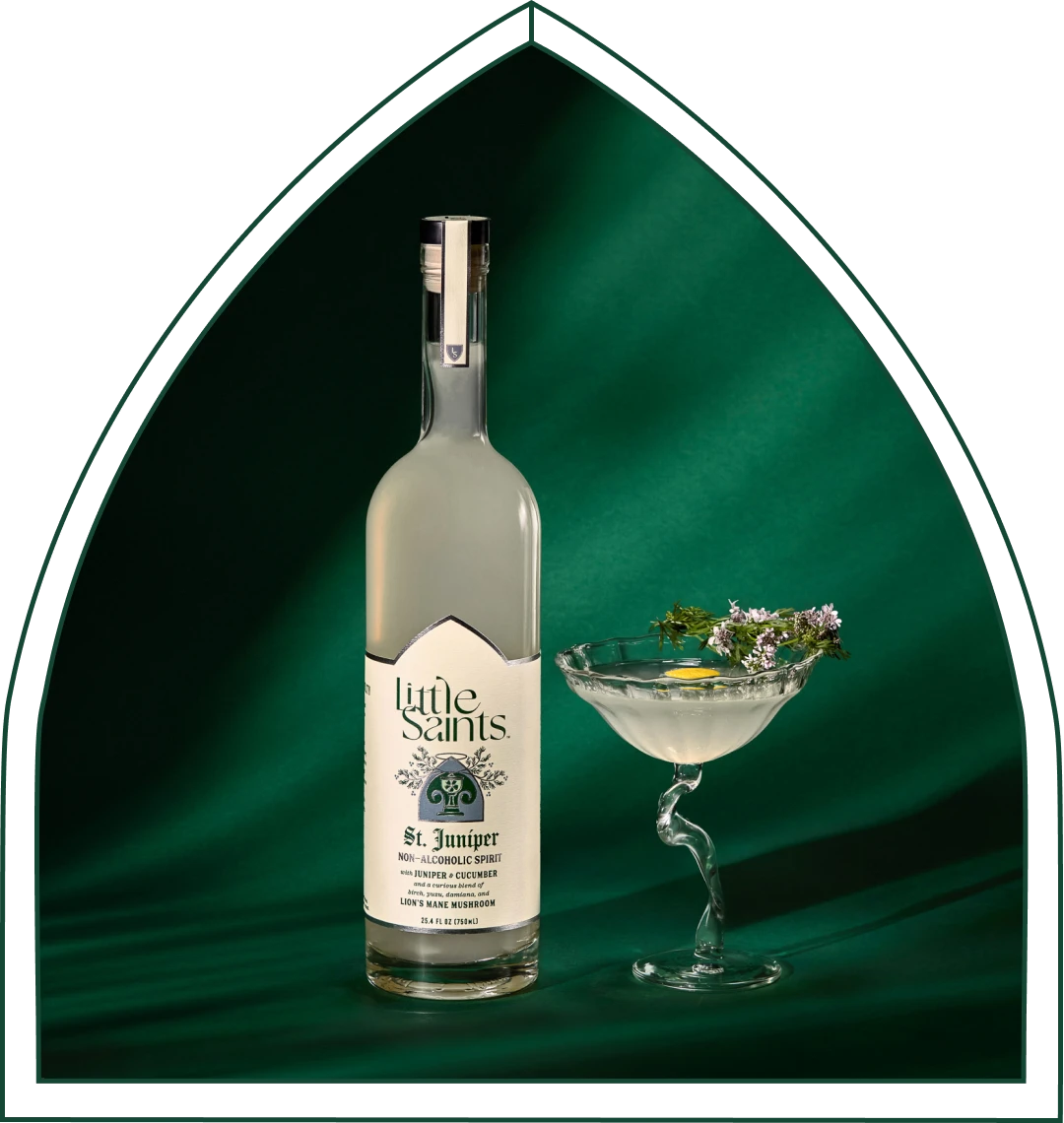
- 2 oz St. Juniper
- 4 oz sparkling water
- ½ oz fresh lemon juice
Build over ice in a highball glass. Add St. Juniper, top with sparkling water, and squeeze lemon. Garnish with a lemon wheel.
Why this works: St. Juniper mixes like a gin and carries 100 mg of organic Lion's Mane extract at a minimum of 70% beta glucan, documented by certificates of analysis. The build tastes bright and herbaceous, which signals cocktail hour without the REM cost.
3. The Chamomile Paloma
Prep time: 3 minutes | Serves: 1
- 2 oz St. Ember
- 3 oz brewed chamomile tea, cooled
- 1 oz fresh grapefruit juice, unsweetened
Shake with ice and strain into a rocks glass over a large ice cube. Salt the rim if desired.
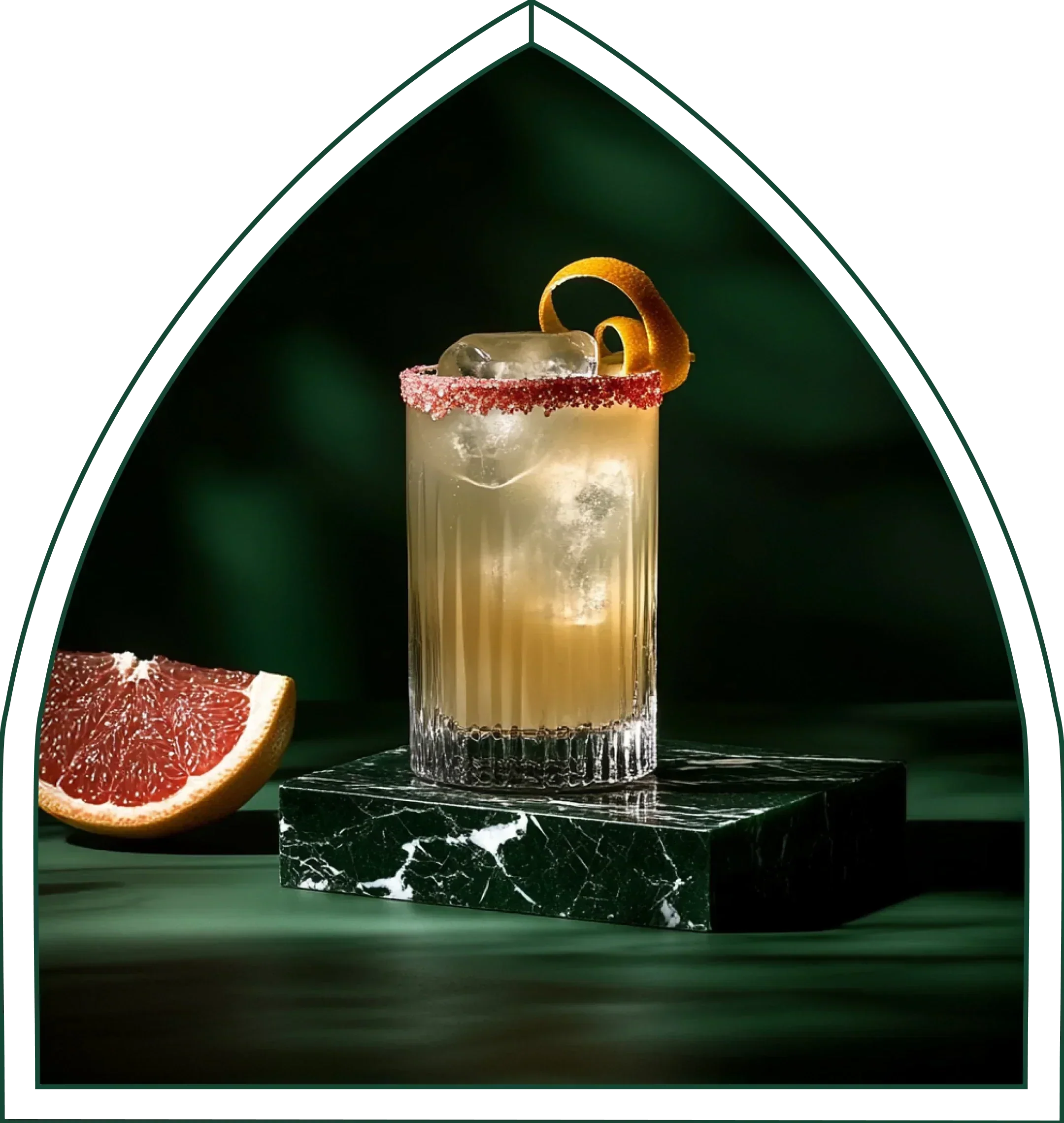
Why this works: Chamomile is the functional anchor here, with a long history of traditional use for evening relaxation. St. Ember, an ode to the flavors of a light, spicy mezcal, adds palo santo, ginger, and cardamom, and mixes 1:1 in place of tequila or mezcal.
4. The Lavender St. Oak Old Fashioned
Prep time: 3 minutes | Serves: 1
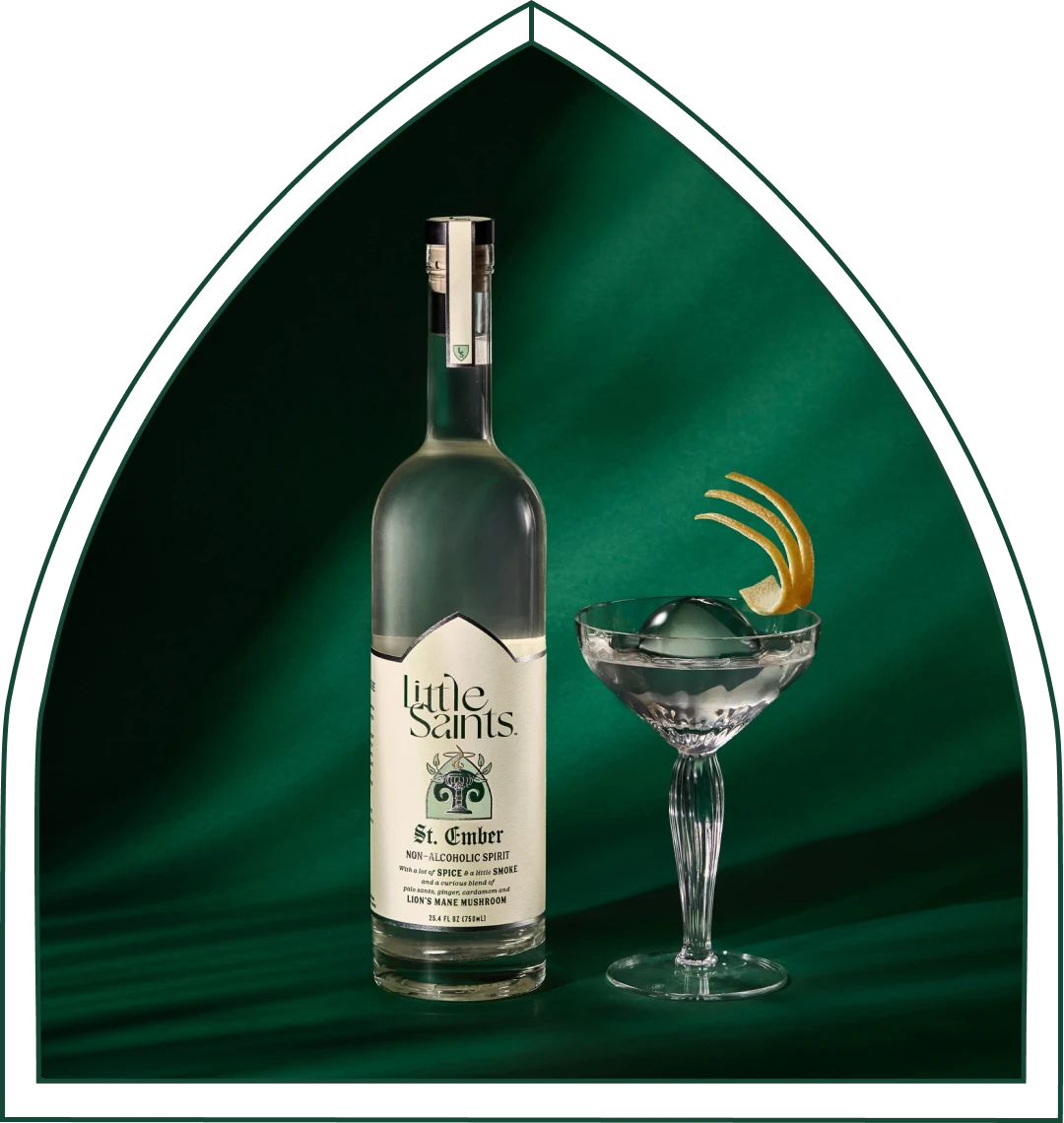
- 2 oz St. Oak
- 2 dashes lavender bitters, alcohol-free
- 1 large ice cube
Stir St. Oak and bitters over the large ice cube in a rocks glass for 20 seconds. Express an orange peel over the glass and drop it in.
Why this works: Lavender is the functional anchor. Its aromatic compounds have a long history of traditional use in evening wind-down rituals. St. Oak captures the soul of an oak-aged whiskey with vanilla, spice, and woodsy notes, and carries Reishi. It was named Best NA Spirit of 2025 by the BevNET Spirit Awards.
5. The Magnesium Mule
Prep time: 3 minutes | Serves: 1
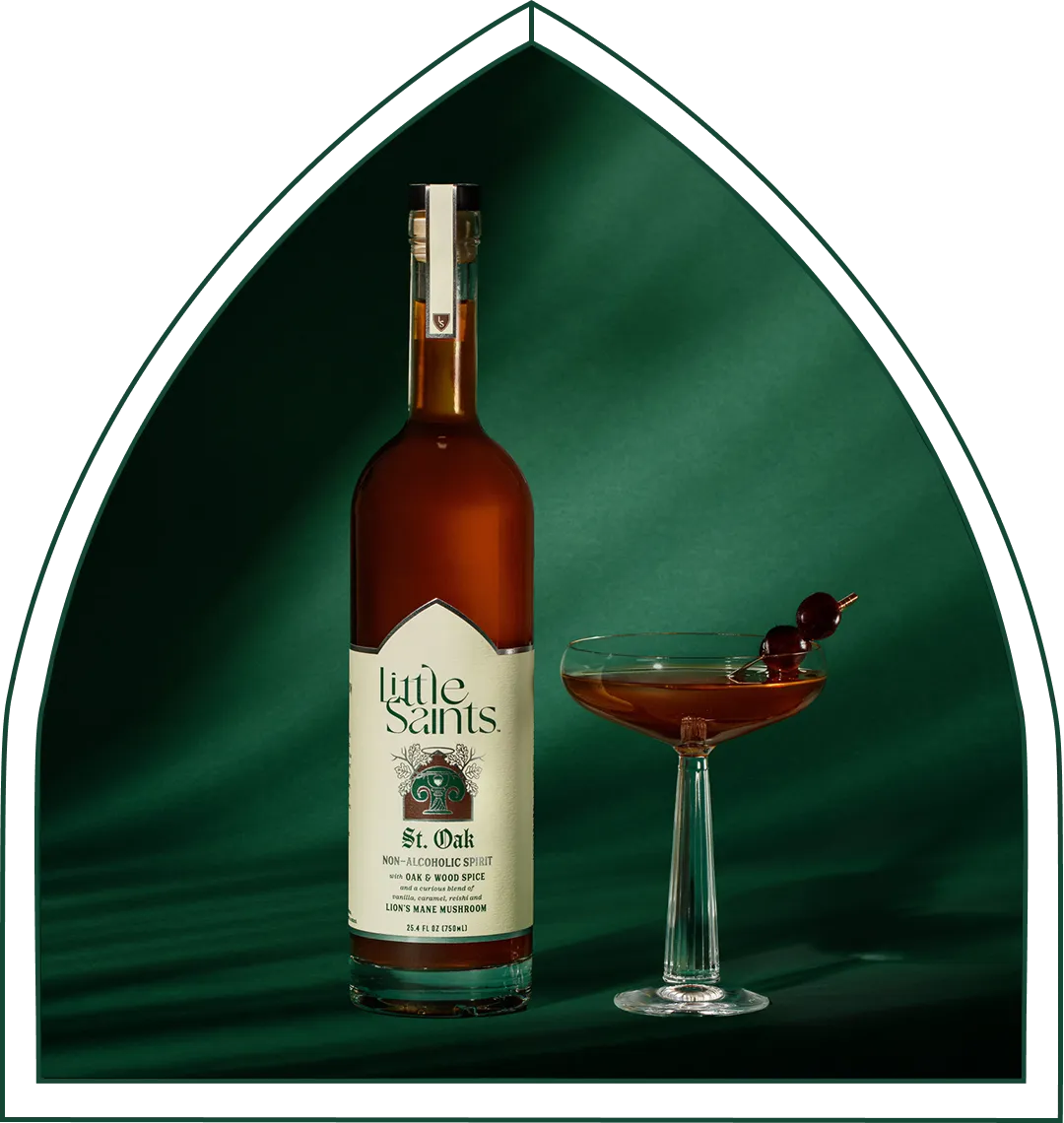
- 2 oz St. Ember
- 4 oz sugar-free ginger beer
- ½ oz fresh lime juice
Build in a copper mug over ice. Add St. Ember, top with ginger beer, and squeeze lime. Garnish with a lime wheel and candied ginger.
Why this works: Magnesium is the functional anchor. Pair this build with a magnesium glycinate supplement taken 30 minutes before bed. The Cleveland Clinic’s integrative medicine specialist Naoki Umeda, MD identifies magnesium glycinate as one of the forms best suited for sleep support, recommending 100–200 mg of elemental magnesium nightly, while noting that overall evidence remains thin and more research is needed. St. Ember adds the spicy, smoky warmth of a mezcal-inspired build at zero sugar.
6. The Negroni Wind-Down
Prep time: 3 minutes | Serves: 1
- 1 can Little Saints Negroni Spritz, 8 oz
- 1 oz fresh blood orange juice, unsweetened
- Ice
Pour over ice in a rocks glass. Add blood orange juice. Garnish with an orange slice.
Why this works: The Negroni Spritz is the drink Little Saints traces its origin to, with bitter, gentian root, and orange notes. It carries Reishi and botanical terpenes for the senses. The blood orange adds a fresh citrus note without added sugar.
7. The Tart Cherry Reishi Nightcap
Prep time: 3 minutes | Serves: 1
- 2 oz St. Oak
- 2 oz unsweetened tart cherry juice
- 2 oz sparkling water
Build over ice in a rocks glass. Stir gently. Garnish with a dried cherry.
Why this works: Tart cherry is the functional anchor, with the Sinclair et al. 2026 meta-analysis noting preliminary evidence for sleep quality in insomnia populations. St. Oak mixes like a whiskey and adds Reishi to the build, delivering the functional mushroom blend in a single pour.
Build These Recipes With Little Saints
What To Avoid In A Bedtime Drink
Even with these zero-sugar recipes, you still need to watch for ingredients that work against sleep. Zero sugar on a label does not automatically mean sleep-friendly. Several categories of ingredients deserve a closer look on a bedtime drink.
Caffeine is the hidden problem in many functional drinks. Adaptogens, nootropics, and botanical blends appear frequently in the functional beverage aisle, and many of them carry caffeine from green tea extract, guarana, or added caffeine. This caffeine can stay in the system for six hours or longer, since caffeine’s half-life in healthy adults is typically 3–7 hours, averaging about 5 hours, though this varies with dose and individual factors such as genetics, pregnancy, and medications. A drink positioned as a “calm” or “focus” beverage may still carry enough caffeine to delay sleep onset. Check the ingredient list, not just the front-of-pack claim. Little Saints’ core line contains no caffeine, by design for the evening occasion.
Alcohol is the obvious one. Even low doses disrupt REM sleep. As noted earlier, REM suppression begins at doses as low as 0.50 g/kg. Timing matters too. Having the last drink at least four hours before bed reduces some of the disruption, although it does not remove it entirely.
Sugar and high-glycemic ingredients close to bedtime can push glucose elevation into the sleep window. That same 2026 crossover trial in the Journal of Physiological Anthropology linked late-night glucose fluctuations to micro-arousals and reduced sleep continuity. According to USDA National Nutrient Database data, juice-based drinks and syrups can carry roughly 20–35 grams of total sugar per serving, such as pomegranate juice at 31.5 g per cup, sweetened grapefruit juice at 27.57 g per cup, orange juice with added calcium at 20.69 g per cup, and pancake syrup at 67.42 g per cup.
How to read a label for the bedtime occasion:
- Check total sugars per serving on the Nutrition Facts panel, not just the front-of-pack claim.
- Scan the ingredient list for caffeine, green tea extract, guarana, or yerba mate.
- Distinguish “zero sugar,” fewer than 0.5 g per serving, from “no added sugar,” which still allows naturally occurring sugars.
- Look for a stated functional dose. Most brands publish neither a dose nor a potency, which makes it impossible to evaluate what, if anything, the functional ingredient is doing.
For a deeper look at how sugar sources vary by drink type, see Low Sugar Cocktails: Sugar Sources and Swaps by Spirit and The Complete Guide to Zero Sugar Cocktails.
How To Choose A Functional Drink: The Dose Transparency Story
Beyond avoiding harmful ingredients, you also want to ensure beneficial ones appear in effective amounts. Most functional beverages list ingredients without stating a dose or publishing a potency figure. A product can contain 5 mg of a mushroom extract or 500 mg and label both the same way, as an ingredient without a quantity. Without a stated dose, you cannot evaluate whether the functional ingredient is present at a level that does anything, or whether the extract has been tested for potency.
Potency matters because not all mushroom extracts are equivalent. A whole mushroom bought at a farmers’ market sits around 0.1% beta glucan, the fraction of the mushroom that carries its adaptogenic properties. A dried, ground mushroom is in the region of 1%. Quality fruiting-body extracts typically run 20–40% beta glucan, while mycelium-on-grain powders commonly test in the low single digits, where much of the powder is starch rather than active compound.
Little Saints publishes both figures most brands leave out: a stated 100 mg dose per serving at a minimum of 70% beta glucan, documented by certificates of analysis from the supplier. At 70% beta glucan, the extract is up to 700 times more concentrated than a whole mushroom at about 0.1%. It is also roughly 70 times more concentrated than a dried, ground mushroom at about 1%. Against supplement products rather than food, 70% sits at the top of the range.
The mushrooms are USDA Organic and grown in California by a third-generation family supplier whose extracts undergo third-party lab analysis for potency. Extraction uses clean ultrasound technology, with no solvents and no chemical residue. The extract holds GRAS status, the FDA’s standard of generally recognized as safe for an ingredient used in food. GRAS covers the safety of the ingredient. It is not FDA approval of the product and does not address whether an ingredient produces an effect.
The functional blend, organic Reishi for chill, organic Lion's Mane for focus, Damiana for connection, and botanical terpenes for the senses, stays deliberately narrow. Three functional ingredients work together at a stated dose, instead of a long list of trending names at token quantities.
For more on what makes a non-alcoholic evening drink worth reaching for, see Non-Alcoholic Drinks That Help You Sleep Better and Best Non-Alcoholic Evening Drinks for Relaxation.
The Ritual Of The Evening Wind-Down
Beyond what sits in the glass, how you drink it matters too. The glass matters. The garnish matters. The act of building a drink, the clink of ice, the pour, and the moment the fizz rises, signals to the nervous system that the day is done. Magic Hour is the liminal space where the day ends and evening begins. Shadows lengthen, the senses wake up, and the world’s edges soften. It is a transitional moment that bridges activity and rest, and it deserves a drink that honors it.
The ritual forms part of the function. Adaptogens like Reishi work best when taken consistently rather than occasionally, which becomes easier to maintain in a drink you look forward to than in a capsule you forget. The bubbles, the botanicals, and the warmth of cardamom at the back of the throat act as sensory cues that mark the transition. Pour the drink into real glassware, add the garnish, and sit down. These small actions reinforce the ritual and signal to your body that the day is complete.
Frequently Asked Questions
Is There A Zero Sugar Drink That Actually Helps You Sleep?
No single drink is a proven sleep aid, and any brand that claims otherwise overstates the evidence. Research supports removing the things that actively disrupt sleep, such as alcohol and sugar close to bedtime, and replacing the evening ritual with something that does not carry those costs. Functional ingredients like tart cherry, chamomile, lavender, and magnesium have been studied for sleep-adjacent effects, with mixed and generally modest results in healthy populations. Tart cherry shows the most consistent signal in people with clinically defined insomnia, though the certainty of evidence is rated low. Magnesium glycinate has shown a modest benefit in one recent randomized trial in adults with poor sleep. A zero sugar, non-alcoholic drink built on functional ingredients offers the right foundation because it supports sleep instead of disrupting it.
What Is The Difference Between Zero Sugar And Sugar-Free On A Label?
Under FDA rules, zero sugar and sugar-free are the same legal claim. Both require fewer than 0.5 grams of total sugars per serving under 21 CFR 101.60. “No added sugar” is a different claim. It means no sugar was introduced during processing, but the product may still contain naturally occurring sugars from fruit juice, dairy, or other ingredients. A juice-based drink labeled “no added sugar” can carry significant naturally occurring sugar per serving, such as approximately 21 grams in 100% orange juice or 20–25 grams in some fruit juices. For a bedtime drink, the relevant number is total sugars on the Nutrition Facts panel, not the front-of-pack claim. Little Saints carries 0 grams of total sugar per serving across both its canned cocktails and its spirits line.
Can I Drink A Non-Alcoholic Cocktail Every Night?
There is no documented daily limit for the functional ingredients in Little Saints. Reishi and Lion's Mane have long histories of traditional use, and the extracts hold GRAS status, the FDA’s standard of generally recognized as safe for an ingredient used in food. Functional mushroom ingredients are generally considered most effective when taken consistently rather than occasionally, which supports the case for getting them in a daily drink rather than a supplement. If you are pregnant, nursing, taking medications, or managing a medical condition, consult a doctor before use. Statements about Little Saints products have not been evaluated by the FDA, and the products are not intended to diagnose, treat, cure, or prevent any disease.
What Should I Avoid In A Bedtime Drink?
Four things are worth checking before reaching for a drink close to sleep. First, caffeine appears in many functional beverages under names like green tea extract, guarana, or yerba mate, and can stay in the system for six hours or more. Second, alcohol suppresses REM sleep even at relatively low doses, and the disruption worsens with higher intake. Third, sugar and high-glycemic ingredients drive late-night glucose elevation, which is associated with micro-arousals and reduced sleep continuity. Fourth, unstated functional doses make it impossible to know whether an ingredient appears at a meaningful level. Read the Nutrition Facts panel for total sugars, scan the ingredient list for caffeine sources, and look for a stated dose and a published potency figure before choosing a functional drink for the evening.
The Evening Wind-Down, Summarized
Alcohol fragments REM sleep starting at doses as low as two standard drinks, and sugar close to bedtime is associated with nocturnal micro-arousals and reduced sleep continuity. The better choice is a functional, non-alcoholic, zero-sugar nightcap that replaces the alcohol occasion without the sleep cost.
Little Saints’ non-alcoholic cocktails are marketed as the only 0% ABV ready-to-drink beverages with 0 g sugar per can, and its Reishi-based cocktails contain the same 100 mg dose at 70% beta glucan mentioned earlier, at 5 calories per can. Seven canned cocktails and three spirits cover the evening occasion, all carrying no caffeine in the core line, with the spirits mixing 1:1 in recipes.
Statements about Little Saints products have not been evaluated by the FDA. These products are not intended to diagnose, treat, cure, or prevent any disease. Consult a doctor before use if you are pregnant, nursing, taking medications, or managing a medical condition.
The statements made on our website have not been evaluated by the Food and Drug Administration, Our products are not intended to diagnose, treat, cure or prevent any disease. If you are pregnant, nursing, taking any medications or have any medical conditions, consult your doctor before use.