


Key Takeaways For A Real Mojito Experience
- A non-alcoholic mojito keeps the classic Cuban mint-lime-soda highball structure and simply leaves out the rum.
- Correct muddling with a flat-ended muddler and just a few gentle presses releases mint aroma without bitter chlorophyll.
- Simple syrup gives the smoothest texture, while granulated sugar and monk fruit need small tweaks to keep mouthfeel balanced.
- Sparkling water or club soda preserves a true mojito profile, while Sprite shifts the drink toward a sweeter soda experience.
- Little Saints offers ready-to-drink zero-sugar mojitos and functional mixers that deliver mojito architecture with almost no prep.
Step-By-Step: How To Make A Non-Alcoholic Mojito
This virgin mojito recipe gives exact quantities in five clear steps so you can build a consistent drink every time. The optional green tea upgrade at the end adds structure that most competing recipes skip.
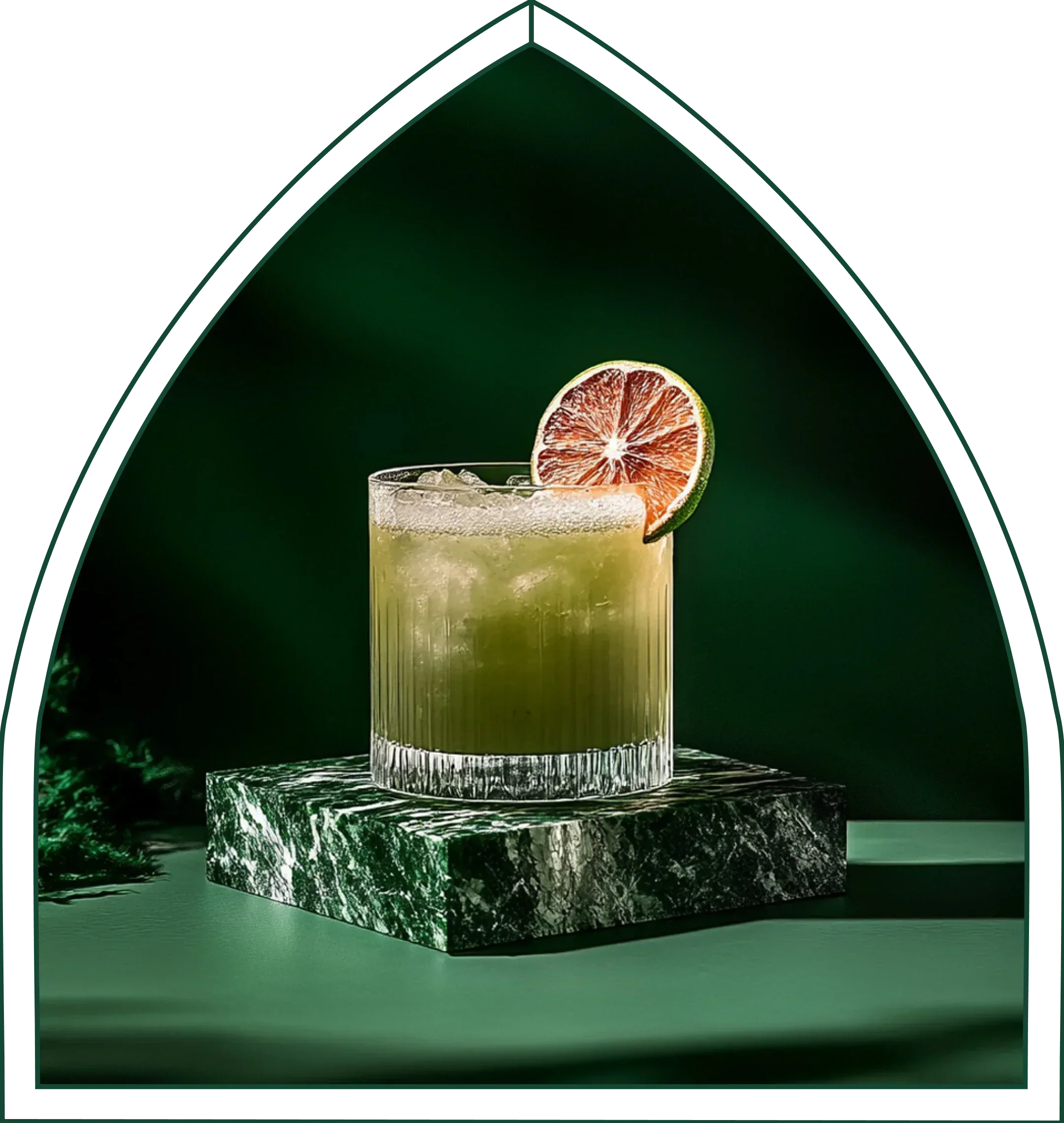
- Add 8 to 12 fresh mint leaves (often spearmint) and about 20ml (¾ oz) simple syrup to a sturdy highball glass. The syrup goes in first, before the mint, so the leaves bruise against liquid rather than dry glass.
- Press and twist with a flat-ended muddler only about 2 to 5 times, just until the leaves are bruised and release their oils. Place the muddler flat on the leaves, press down with steady vertical pressure, and give a single slow twist. Repeat this motion until you can smell mint clearly through the glass. That smell is your signal to stop, because pressing further releases bitter chlorophyll.
- Add about 1 oz (2 tbsp) fresh lime juice and stir to dissolve. Use fresh juice, because bottled lime juice carries preservatives that flatten the drink and introduce a metallic edge once the fizz dilutes it.
- Fill the glass with crushed ice. Crushed ice chills faster than cubed and holds the mint suspended through the glass rather than letting it mat on top.
- Top with 3 to 5 oz chilled sparkling water or club soda, stir once from the bottom up, and garnish with a slapped mint sprig and a lime wheel. Pour the soda slowly down the inside of the glass, lift once from the bottom with a long spoon, and serve immediately.
Optional Upgrade With Green Tea: At step 3, add chilled, unsweetened green tea alongside the lime juice. Green tea builds a rounder mouthfeel, as its natural astringency creates structure much like alcohol would in a traditional cocktail. This small change creates a more cocktail-like texture that most non-alcoholic mojito recipes never mention.
Names You Will Hear For A Non-Alcoholic Mojito
Bars and recipes use three main terms for the same mint-lime-soda drink built without rum.
Virgin mojito is the standard bartending term. In bar usage, “virgin” signals the absence of alcohol rather than a different drink. The structure and build stay the same, with the rum simply absent. Menus use this term often, and most guests recognize it immediately.
Nojito is the named non-alcoholic variant of the mojito specifically. The Bar’s guide to zero-proof cocktails positions “nojito” as a specific drink within the broader category of non-alcoholic cocktails, similar to how “Shirley Temple” names one drink rather than a category. The word blends “no” and “mojito,” and it appears often enough on bar menus that guests use it without explanation.
Non-alcoholic mojito is the descriptive term that favors clarity over brevity. All three terms are interchangeable and all describe the same drink.
How To Muddle Mint Without Making It Bitter
Mint’s aromatic compounds, menthol and menthone, sit in essential oils near the leaf surface, while chlorophyll sits deeper in the veins and leaf body. Chlorophyll has a flat, green, bitter taste that no amount of sugar can hide. Pressing too hard ruptures the leaf and releases it, which explains why every bitter mojito tastes similar regardless of the recipe.
The fix is mechanical precision. Use a flat-ended muddler, apply steady downward pressure, give a single slow twist, and stop the moment you can smell mint. There is no drink that needs a third press. The visual test for correct technique is leaves that are bruised and fragrant but still recognizably whole. Shredded black flecks floating in the glass signal over-muddling.
The most common failure mode is the toothed muddler sold for meat tenderizing. It is the single most common cause of a bitter mojito, because its serrated edges shred leaves rather than pressing them. A flat-ended wooden muddler is the correct tool.
Avoid muddling mint with hard sugar crystals. The sugar acts as an abrasive and tears the leaves. Add simple syrup to the glass first, then muddle the mint against the liquid.
Use the slap-the-mint technique for garnish. Clap a mint sprig firmly between both palms once. The impact releases the surface oils without bruising the leaf. Drop the slapped sprig into the glass or drape it over the rim so every sip starts with fresh mint aroma.
Choose the right mint species. Spearmint (Mentha spicata) is the correct mint for a mojito, with a sweeter, softer profile and lower menthol content. Peppermint carries far more menthol and overwhelms a delicate drink. If a supermarket label just says “mint,” it is almost certainly spearmint and works well.
Keep everything cold. Warm liquid pulls bitterness out of the leaf faster than cold liquid. Mint goes into a cold glass, against cold syrup, with cold lime juice. Chill the glass before you build the drink.
Start over if the drink is already bitter. Once chlorophyll is released, a cocktail cannot be un-bittered. Begin again with fresh lime juice rather than muddled lime wedges, because lime pith adds more bitterness, and press the mint only 3 to 4 times.
Sweetener Options: Simple Syrup, Granulated Sugar, And Monk Fruit
The sweetener you choose changes the drink’s texture, how quickly it dissolves, and the overall sugar content. The table below compares the three main options so you can match your choice to your priorities.
| Sweetener | Dissolution Speed | Texture In The Glass | Sugar Content |
|---|---|---|---|
| Simple syrup (1:1) | Instant, dissolves on contact with cold liquid | Smooth and round, with no grit at any temperature | Present; a 1:1 syrup by weight is about 50° Brix, roughly 62 g of sugar per 100 ml, or about 14 g per 0.75 oz |
| Granulated sugar | Slow, and will not dissolve once the drink is cold; must be dissolved in lime juice before ice goes in | Gritty unless fully dissolved; the traditional Cuban method, where the grit helps abrade the mint during muddling | Present; two US teaspoons contain approximately 8 grams, with more precise conversions placing the value at about 8.4 grams |
| Liquid monk fruit | Instant; dissolves instantly in cold drinks without stirring | Slightly thinner than sugar; zero-calorie sweeteners can change mouthfeel, so increase mint to 12 leaves and lime juice to 1.25 oz | Zero sugar; monk fruit scores 0 on the glycemic index |
Simple syrup is the most reliable default when you want consistency or plan to make more than one drink. It integrates instantly, gives the drink a rounder texture, and removes the risk of undissolved sugar.
Granulated sugar follows the authentic Cuban method. Its grit helps abrade the mint during muddling, which offers a real technical advantage, but it will not dissolve once the drink is cold. Dissolve it fully in the lime juice before adding ice, stirring until no grit remains at the bottom.
Liquid monk fruit delivers sweetness with no sugar and dissolves instantly in cold drinks. The trade-off is a slightly thinner mouthfeel. Increase mint to 12 leaves and lime juice to 1.25 oz to restore the aromatic surface area that the thinner texture removes.
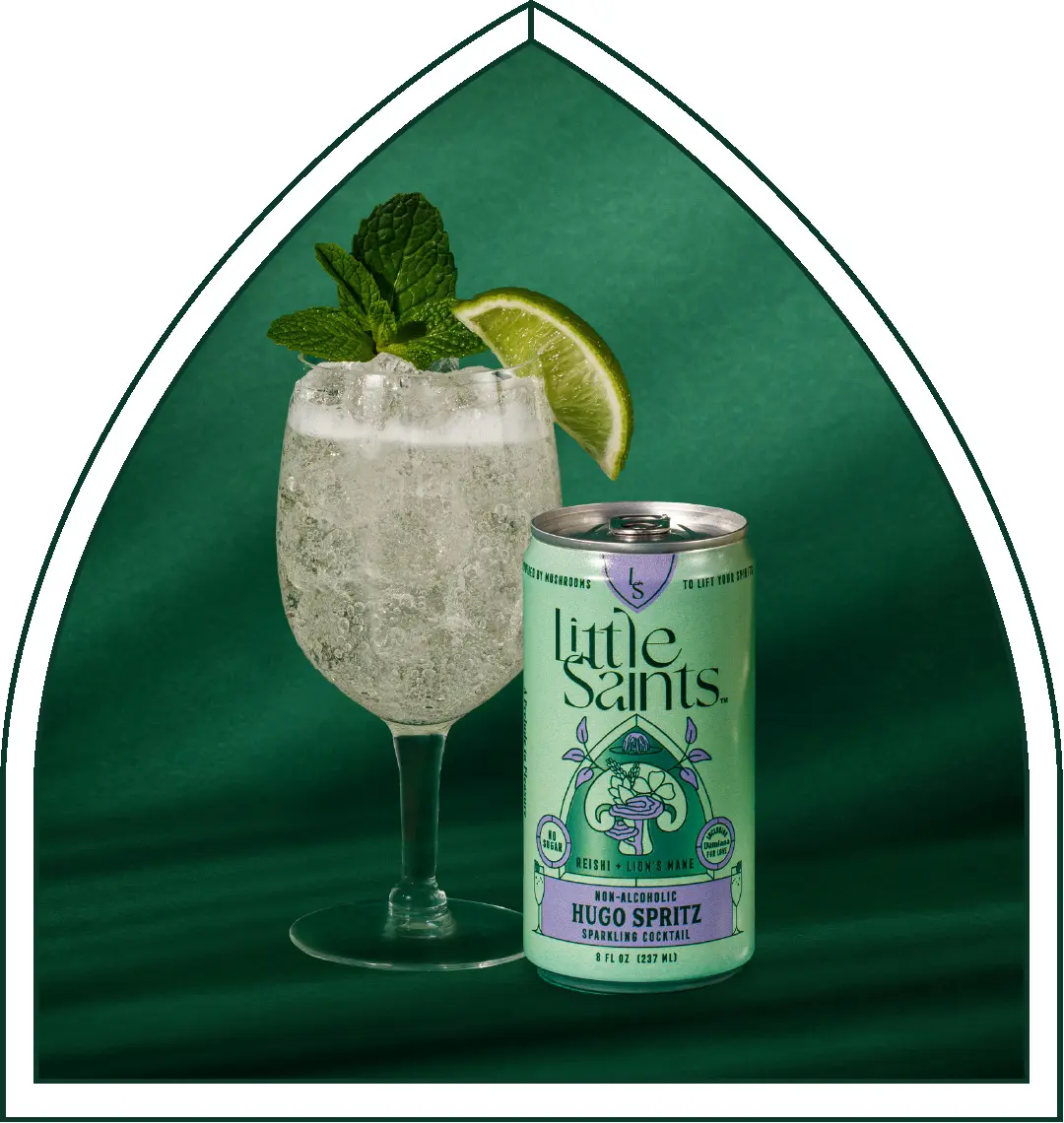
For readers who want the mint-and-lime profile without building a sugar-heavy drink, the Little Saints Mojito offers a ready solution. It is a finished non-alcoholic mojito at zero grams of sugar and five calories per can. It is sweetened with monk fruit juice concentrate only, with no erythritol or other sugar alcohols, and carries organic Reishi, Damiana, and botanical terpenes. The first sip delivers clarity and ease, often called the Little Saints Lift, with a sense of the day releasing its grip and no next-morning cost. It also serves guests quickly when there is no time to muddle.
Statements about Little Saints products have not been evaluated by the FDA, and the products are not intended to diagnose, treat, cure, or prevent any disease. Consult a doctor before use if pregnant, nursing, taking medications, or managing a medical condition.
Soda Choices: Sparkling Water, Sprite, And Tonic
Home bartenders often choose between Sprite and sparkling water, and the choice changes how the drink behaves in the glass.
Sparkling water or club soda is the right choice when you want the drink to taste like a mojito. Club soda adds effervescence and subtle mineral notes without introducing sweetness, so lime and mint lead while your chosen sweetener controls balance.
Sprite is faster and sweeter and works for a crowd that wants a soda-style drink. The trade-off is that Sprite carries its own lemon-lime flavor, an industrial citrus note that layers over fresh lime rather than supporting it. Lemon-flavored sodas bring their own often-artificial aromas that compete with fresh lime. If you use Sprite, skip any added sweetener, because the soda already supplies it.
Tonic water does not behave as a substitute. Tonic water’s quinine adds its own bitterness on top of sugar, and the drink loses its clean edge. Plain club soda or sparkling water keeps the profile bright.
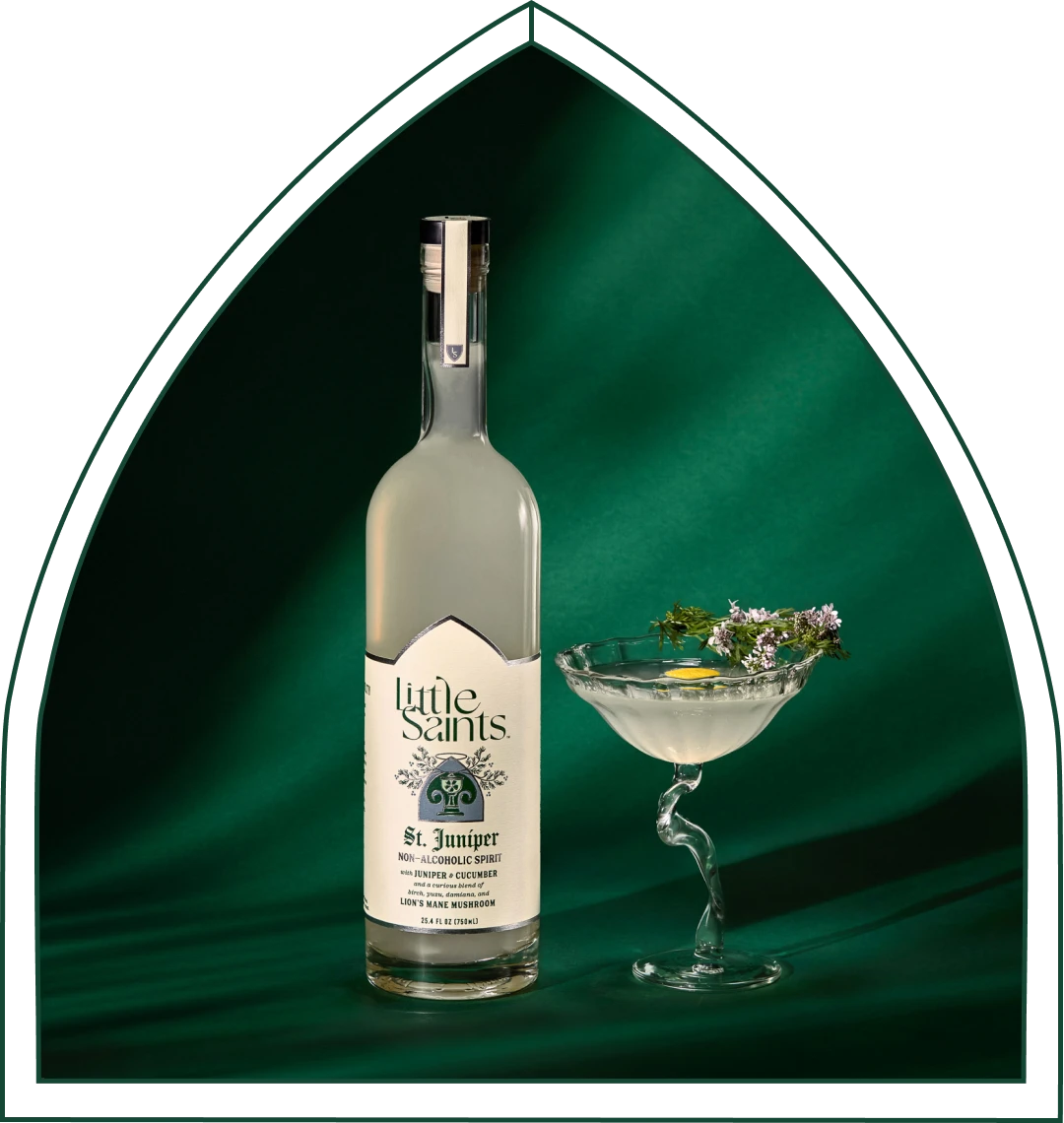
A third path suits readers who want the drink to behave like a cocktail rather than a soda. Little Saints St. Juniper mixes like a gin at a 1:1 ratio, so two ounces replace two ounces in any mojito spec with no adjustment to the rest of the build. St. Juniper brings juniper, cucumber, and herbaceous notes from juniper, birch, angelica, coriander, and cardamom, and carries 100mg of organic Lion’s Mane extract at a minimum of 70% beta glucan, documented by certificates of analysis. Build the drink exactly as written above, substitute St. Juniper for the rum, and the architecture holds. The result is a built non-alcoholic cocktail that reads as a cocktail, with the Lion’s Mane clarity that makes the Little Saints Lift distinct from simply drinking sparkling water with mint.
Discover St. Juniper And Mojitos
Non-Alcoholic Mojito Vs. Mocktail: Why Technique Matters
A mocktail is a broad category that covers any composed drink built like a bar drink without alcohol. In practice, the word often describes a glass of juice dressed up with a garnish, which tastes sweet, flat, and structurally loose.
A non-alcoholic mojito is a specific drink with a fixed architecture: spearmint, fresh lime juice, sweetener, fizz, and crushed ice. That structure makes the drink taste like a cocktail rather than a soft drink. The virgin mojito keeps the original’s architecture, with mint, lime, sugar, soda, and crushed ice, and the method does not compromise.
This distinction matters because technique separates the two experiences. A mocktail is often assembled quickly. A non-alcoholic mojito is built with attention to muddling, dissolution, carbonation order, and temperature, just like the rum version. Correct technique produces a drink that holds its own beside cocktails.
Troubleshooting A Non-Alcoholic Mojito
Too sweet: Add a squeeze more lime juice instead of more soda. Dilution does not correct sweetness; it only makes a larger drink that still tastes too sweet. Lime juice provides the right counterweight.
Too bitter: Over-muddled mint or crushed lime pith usually caused the problem. A cocktail cannot be un-bittered once chlorophyll is released. Start again with fresh lime juice rather than muddled lime wedges, and press the mint only 3 to 4 times with a flat-ended muddler.
Flat: The soda was added too early, stirred too hard, or poured into a warm glass. CO2 is more soluble in cold liquids, and room-temperature ingredients cause carbonation to escape quickly. Chill the glass and the soda, add the fizz last, and stir once from the bottom up.
Watery: Crushed ice melts fast by design and provides controlled dilution as the drink opens up. Drink it promptly, or switch to cubed ice if you plan to sip slowly. Crushed ice starts the drink assertive and lets it relax over ten minutes, while cubed ice keeps it sharp from start to finish.
Scaling A Non-Alcoholic Mojito For A Crowd
Scaling the base lets you serve a group quickly while keeping each glass fresh and fizzy.
Multiply everything except the soda by the number of guests. Muddle the mint with the syrup in a pitcher, add the lime juice, and refrigerate for up to 4 hours. Add crushed ice and soda to each glass at serving time, because soda mixed into a pitcher goes flat before the second round.
Avoid muddling mint into a batch base and letting it sit overnight. Mint flavor degrades after 5 to 10 minutes of contact with liquid, and the leaves darken. Muddle just before refrigerating and keep the base time under 4 hours.
For a party of 10, use 100 mint leaves, 7.5 oz simple syrup, 10 oz fresh lime juice, and 1.2 liters of sparkling water. Muddle the mint and syrup in a large pitcher, stir in the lime juice, refrigerate, and pour over crushed ice per glass with a fresh pour of soda at the table.
Frequently Asked Questions
What Is A Non-Alcoholic Mojito Called?
Three terms are in common use: virgin mojito, nojito, and non-alcoholic mojito. All three describe the classic mint-lime-soda highball built without rum. “Virgin” is the standard bartending prefix for the non-alcoholic version of a named cocktail, and “nojito” is the portmanteau that appears often on bar menus.
Can A Non-Alcoholic Mojito Be Made Ahead?
The base of muddled mint, simple syrup, and lime juice can be refrigerated for up to 4 hours. Do not add ice or soda until serving. Mint flavor degrades after 5 to 10 minutes of contact with liquid, so make the base as close to service as practical. For a crowd, muddle the mint and syrup in a pitcher, stir in the lime juice, refrigerate, and add crushed ice and soda per glass at the table.
How Do You Keep A Non-Alcoholic Mojito From Going Bitter?
Use a flat-ended muddler instead of a toothed one. Press and twist only about 2 to 5 times, just until the leaves are bruised and release their oils, and stop the moment you can smell mint. Add simple syrup to the glass before the mint so the leaves bruise against liquid rather than dry glass. Use fresh lime juice rather than muddled lime wedges, and keep everything cold because warm liquid pulls bitterness faster.
What Can You Use Instead Of Rum In A Mojito?
The drink works without any spirit substitution, because the mint-lime-soda architecture stands on its own. For a built drink that behaves more like a cocktail than a soda, Little Saints St. Juniper mixes like a gin at a 1:1 ratio, so two ounces replace two ounces in any mojito spec, with juniper, cucumber, and herbaceous botanical notes and 100mg of organic Lion’s Mane extract per serving. No adjustment to the rest of the build is needed.
Does Sprite Work In A Non-Alcoholic Mojito?
Sprite works with one adjustment: skip the added sweetener entirely, because Sprite already carries sugar. The trade-off is that Sprite introduces its own lemon-lime flavor that competes with fresh lime rather than supporting it. Sparkling water or club soda offers a cleaner choice when the drink should taste like a mojito. Tonic water does not substitute well, because its quinine adds extra bitterness and the drink loses its clean edge.
How Do You Make A Non-Alcoholic Mojito Without Sugar?
Use liquid monk fruit sweetener. It dissolves instantly in cold drinks without stirring and delivers zero sugar and zero calories. The trade-off is a slightly thinner mouthfeel, so increase mint to 12 leaves and lime juice to 1.25 oz. For a completely hands-off zero-sugar option, choose the zero-sugar Little Saints Mojito mentioned earlier.
How Do You Scale A Non-Alcoholic Mojito For A Crowd?
For 10 guests, use 100 mint leaves, 7.5 oz simple syrup, 10 oz fresh lime juice, and 1.2 liters of sparkling water. Muddle the mint and syrup in a pitcher, stir in the lime juice, and refrigerate for up to 4 hours. Add crushed ice and soda per glass at serving time, and keep soda out of the pitcher so it stays fizzy.
How Is A Non-Alcoholic Mojito Different From A Mocktail?
A mocktail is any composed drink built without alcohol and often ends up as juice with a garnish. A non-alcoholic mojito is a specific drink with a fixed architecture of spearmint, fresh lime juice, sweetener, fizz, and crushed ice. That structure and the attention to muddling, dissolution order, and carbonation timing create a cocktail-like experience instead of sweet limeade with mint.
For immediate service, the zero-sugar Little Saints Mojito mentioned earlier can be opened, poured over ice, and served. For a built drink, Little Saints St. Juniper mixes like a gin at 1:1 in any mojito spec, with Lion’s Mane and Damiana as functional ingredients.
The statements made on our website have not been evaluated by the Food and Drug Administration, Our products are not intended to diagnose, treat, cure or prevent any disease. If you are pregnant, nursing, taking any medications or have any medical conditions, consult your doctor before use.