


Last updated: November 1, 2026
Key Takeaways
- Non-alcoholic gin is a botanical spirit that delivers juniper, citrus, and spice notes without alcohol. It stays under 0.5% ABV and is built for mixing in cocktails.
- The 1:1 pour ratio defines Little Saints St. Juniper. Two ounces replace two ounces of traditional gin in any recipe without changing the build.
- Oil-based craft extracts and Lion’s Mane mushroom extract give Little Saints St. Juniper body, viscosity, and a built-in burn that holds up over ice and feels like a proper cocktail.
- Zero sugar and no sweeteners keep the acid-sugar balance steady in every build, from a Negroni to a French 75. Each serving delivers a published 100 mg Lion’s Mane dose at a minimum 70% beta glucan potency.
- Little Saints St. Juniper is the best non-alcoholic gin for cocktail recipes because it behaves like the gin it replaces, with the same pour, balance, and body.
How Non-Alcoholic Gin Behaves In A Build
The 1:1 pour is the single most important fact about Little Saints St. Juniper. Two ounces replace two ounces of gin. Because the volume stays the same, every recipe below works unchanged, and you do not have to re-cost the drink or re-measure the pour.
First-generation non-alcoholic spirits are built as flavors in water. Because they lack the body and botanical concentration of a properly formulated spirit, bartenders told Little Saints they had to pour two to three times the volume to get any flavor. That over-pour dilutes the drink, throws off the acid-sugar balance, and turns a Negroni into flavored water. Dealcoholization strips aroma, collapses mouthfeel, and leaves previously masked compounds exposed. Rebuilding body from the ground up, instead of removing alcohol from a finished spirit, produces a more functional cocktail ingredient.
Little Saints St. Juniper uses oil-based craft small-batch extracts instead of flavored water. A built-in burn from cardamom and capsicum gives the drink heat at the back of the throat, the signal that registers as a cocktail rather than a soft drink. The Lion's Mane extract adds natural cloudiness and viscosity, so the drink holds up over ice and coats the glass instead of thinning out. For a deeper look at how mixing ratios work across the full non-alcoholic spirits category, see Non-Alcoholic Cocktail Mixing Ratios: The Formulas That Work.
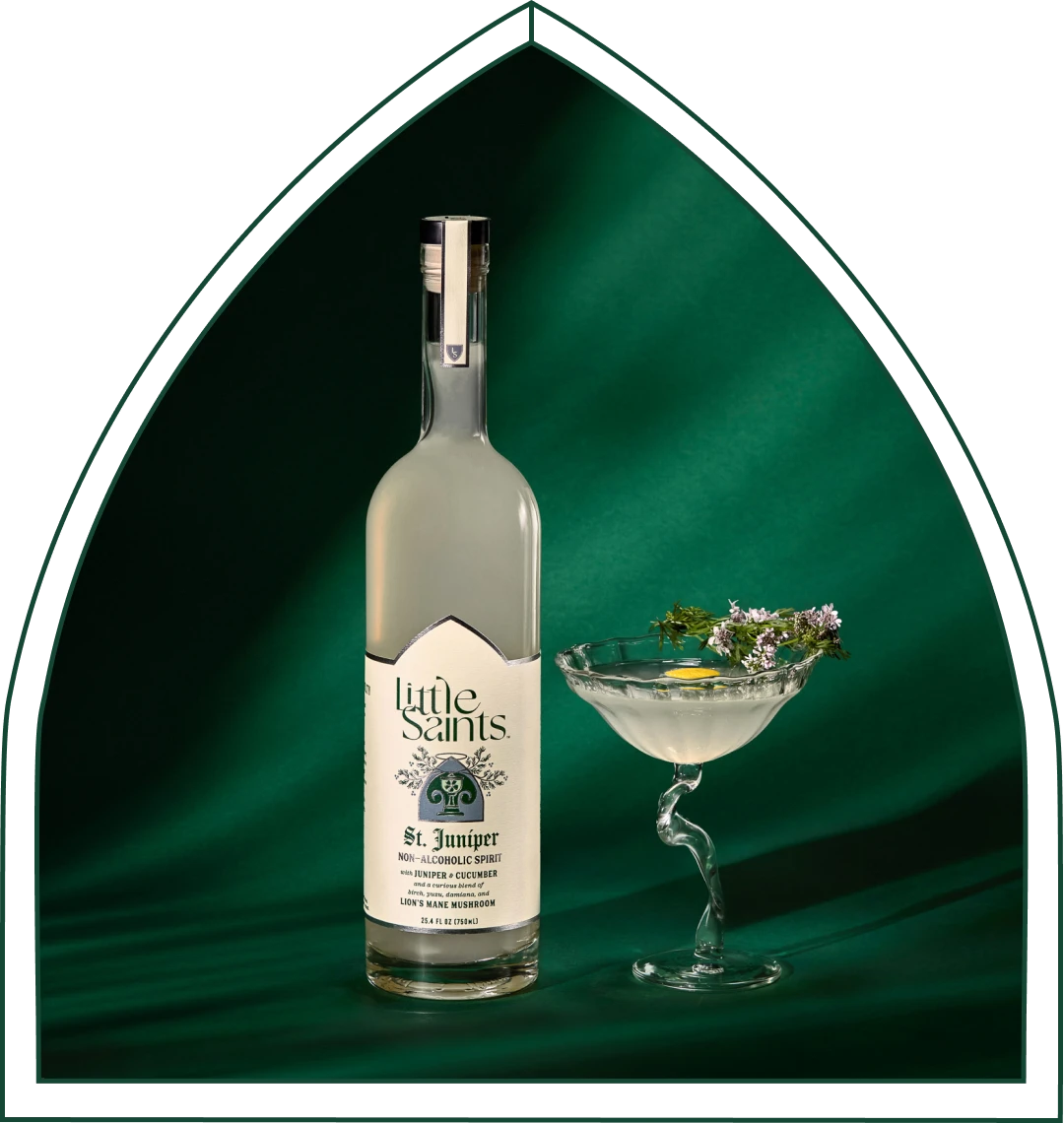
Non-Alcoholic Gin Cocktail Recipes
Every recipe below is built on Little Saints St. Juniper at a 1:1 substitution, so two ounces does the work of two ounces of gin. The list runs from simple highballs to more layered shaken builds, so you can start easy and then move into more complex cocktails.
Non-Alcoholic Gin & Tonic
- 2 oz Little Saints St. Juniper
- 4 oz premium tonic water
- Plenty of ice
- Lime or grapefruit slice to garnish
Glass: Highball. Method: Build over ice, add tonic, garnish, and serve.
Zero-Proof Negroni
- 1 oz Little Saints St. Juniper
- 1 oz non-alcoholic bitter aperitivo
- 1 oz non-alcoholic sweet vermouth alternative
- Expressed orange peel to garnish
Glass: Rocks glass with a large cube. Method: Stir all three over ice until cold and slightly diluted, strain over the large cube, express orange peel over the surface, then drop it in. The Negroni is the drink Little Saints traces its origin to, the build that proved a 1:1 pour works.
Non-Alcoholic French 75
- 1 oz Little Saints St. Juniper
- 0.5 oz fresh lemon juice
- 0.5 oz simple syrup
- 3 oz non-alcoholic sparkling wine, to top
- Lemon twist to garnish
Glass: Champagne flute. Method: Shake St. Juniper, lemon, and syrup with ice, strain into the flute, top with sparkling wine, then garnish.
Non-Alcoholic Gin Gimlet
- 2 oz Little Saints St. Juniper
- 0.75 oz fresh lime juice
- 0.5 oz simple syrup
- Lime wheel to garnish
Glass: Coupe. Method: Shake hard with ice, double-strain into a chilled coupe, then garnish.
Citrus-Forward Gin Sour
- 2 oz Little Saints St. Juniper
- 0.75 oz fresh lemon juice
- 0.5 oz simple syrup
- 0.5 oz aquafaba
- Lemon peel and a dash of booze-free bitters to garnish
Glass: Rocks glass. Method: Dry-shake all ingredients without ice to build foam, then shake again with ice, strain into the glass, and garnish.
Non-Alcoholic Gin Martini
- 2.5 oz Little Saints St. Juniper
- 0.5 oz dry vermouth alternative
- Lemon twist or olive to garnish
Glass: Chilled coupe. Method: Stir long and cold over ice, longer than you think, strain into the chilled coupe, then garnish.
Mix Your First 1:1 Gin Martini
Non-Alcoholic Gin Mule
- 2 oz Little Saints St. Juniper
- 0.5 oz fresh lime juice
- 4 oz ginger beer, to top
- Lime wheel and candied ginger to garnish
Glass: Copper mug. Method: Build over ice, top with ginger beer, then garnish.
Gin-Based Spritz
- 2 oz Little Saints St. Juniper
- 3 oz non-alcoholic sparkling wine
- 1 oz soda water
- Orange slice to garnish
Glass: Wine glass over ice. Method: Build in the glass over ice, stir gently, then garnish.
Non-Alcoholic Gin Bramble
- 2 oz Little Saints St. Juniper
- 0.75 oz fresh lemon juice
- 0.5 oz simple syrup
- 0.5 oz blackberry liqueur alternative, to drizzle
- Lemon slice and fresh blackberries to garnish
Glass: Rocks glass over crushed ice. Method: Shake St. Juniper, lemon, and syrup with ice, strain over crushed ice, drizzle the blackberry alternative over the top, then garnish.
Gin Smash
- 2 oz Little Saints St. Juniper
- 0.75 oz fresh lemon juice
- 0.5 oz simple syrup
- 4 fresh mint leaves
- 2 cucumber slices
- Mint sprig to garnish
Glass: Rocks glass. Method: Muddle mint and cucumber in the shaker, add remaining ingredients and ice, shake, strain into the glass over fresh ice, then garnish.
Gin Collins
- 2 oz Little Saints St. Juniper
- 0.75 oz fresh lemon juice
- 0.5 oz simple syrup
- 3 oz soda water, to top
- Lemon wheel to garnish
Glass: Collins glass. Method: Shake St. Juniper, lemon, and syrup with ice, strain into the glass over fresh ice, top with soda, then garnish.
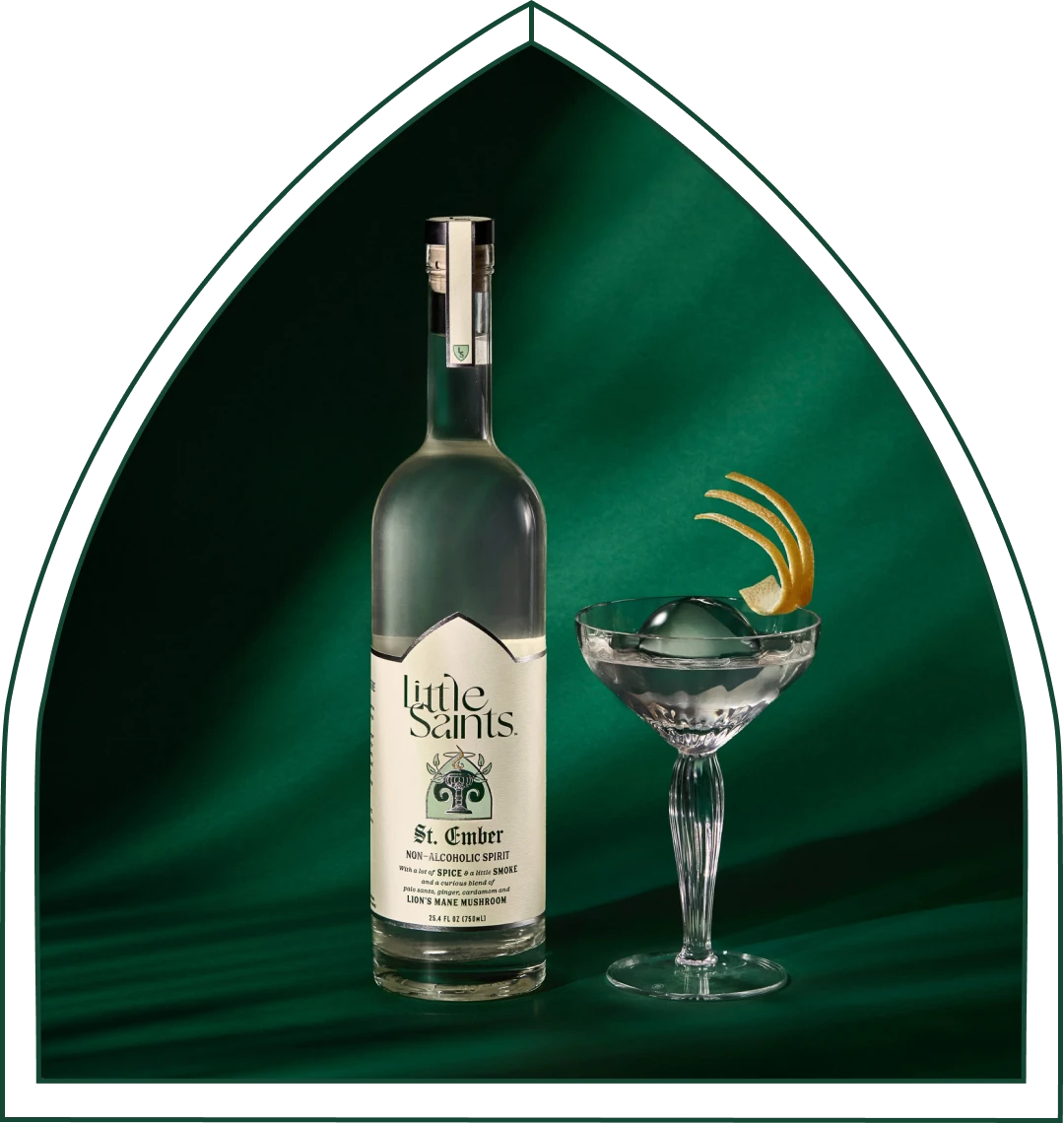
Gin-Forward Highball With Little Saints St. Ember
- 1.5 oz Little Saints St. Juniper
- 0.5 oz Little Saints St. Ember
- 4 oz soda water, to top
- Grapefruit twist to garnish
Glass: Highball. Method: Build over ice, top with soda, then garnish.
Little Saints St. Ember, the brand's spicy, smoky botanical spirit, adds a woodsy, peppery depth that makes this a gin-adjacent build worth keeping in rotation.
Those builds all assume the gin itself holds up in the glass. The next section looks at how closely non-alcoholic gins match the behavior of traditional gin and why Little Saints stands out.
Which Non-Alcoholic Gin Actually Tastes Like Gin?
No non-alcoholic gin is a perfect taste clone of a 40% ABV spirit, because removing alcohol changes mouthfeel, warmth, and body, though some come close in specific mixed serves. Ethanol carries aroma, contributes viscosity, and delivers warmth through trigeminal stimulation. Removing it changes mouthfeel, aromatic persistence, and the warming sensation that registers as a cocktail.
Little Saints St. Juniper captures the botanical architecture of gin: juniper, birch, angelica, coriander, cardamom, and cucumber. It mixes like a gin and behaves like one in a cocktail. For a full breakdown of how Little Saints St. Juniper compares to other non-alcoholic gin approaches, see Best Non-Alcoholic Gin Alternative For Real Cocktails.
To see why Little Saints St. Juniper is the better pick, it helps to know what the alternatives actually are. The market breaks into three categories, each with trade-offs you can check on the label.
Sugar-sweetened non-alcoholic spirits carry added sugar, which contributes body but throws off the balance of any build that already includes a sweetener such as a gimlet, a French 75, or a sour. The sweetness compounds rather than integrates. They publish no functional dose and no beta glucan content, because there is none to publish.
First-generation flavored-water non-alcoholic gins are the category's legacy approach: botanicals dissolved in water, with no oil-based extraction and no engineered burn. They require a 2–3x pour to deliver any flavor, which dilutes the drink and collapses the acid-sugar balance. They carry no stated functional dose. The higher the starting alcohol level of a beverage, the greater the sensory impact of removing it, and spirits are the hardest category to rebuild from water alone.
Non-alcoholic beer is a different product category entirely. It is a fermented base with roughly 80–85 calories and around 12 grams of carbohydrate per serving, no botanical gin profile, and no functional layer.
Little Saints St. Juniper beats the first-generation approach on six documented points. It uses oil-based craft extracts instead of flavored water and pours 1:1 so the drink's balance stays intact. A built-in burn from cardamom and capsicum registers as heat rather than sweetness, while the Lion's Mane extract supplies natural body and cloudiness. It carries zero sugar with no sweeteners and publishes a 100mg dose at a minimum of 70% beta glucan, a potency the supplier documents by certificate of analysis. Shoppers pay for a benefit as well as a flavor, and Little Saints St. Juniper delivers both at once.
Compare St. Juniper To Other Gin Alternatives
Why Non-Alcoholic Gin Costs What It Does And Why It's Worth The Money
The shelf price of a premium non-alcoholic gin surprises people who compare it to a soft drink. The correct comparison is to the gin it replaces, and the cost-per-drink math changes completely once the 1:1 pour is clear.
Because two ounces of Little Saints St. Juniper replace two ounces of gin, a bottle pours as far as the bottle it stands in for. A first-generation non-alcoholic gin poured at 2–3x the volume empties at two to three times the rate. The bottle that looks cheaper on the shelf costs more per drink.
Behind the price of Little Saints St. Juniper is a specific set of ingredients and processes that have no cheaper equivalent:
- Organic Lion's Mane mushroom extract at a minimum of 70% beta glucan, the fraction of the mushroom that carries its adaptogenic properties. The supplier documents that potency by certificates of analysis and third-party lab analysis for strength.
- USDA Organic mushrooms grown in California, with no synthetic pesticides or fertilizers.
- Ultrasound extraction instead of chemical solvents, so no residue carries into the liquid.
- A stated 100mg dose per serving, printed in the ingredient statement.
- Oil-based craft small-batch botanical extracts that hold up in a cocktail build, instead of flavored water that dilutes on contact with ice.
- FDA GRAS status on the mushroom extract, the standard of generally recognized as safe for an ingredient used in food.
That ingredient list explains the cost of one bottle. The category-wide picture explains why the price holds: gin alternatives are the leading non-alcoholic spirits segment globally, holding roughly 33% of category share, driven by botanical complexity that requires genuine formulation work to replicate. Non-alcoholic spirits are around 6% of the non-alcohol set but growing at roughly 70%, the fastest-moving segment in the category and the one Little Saints St. Juniper competes in. The price reflects what is in the bottle and what the bottle does in a build. For more on what makes a non-alcoholic cocktail taste complex instead of thin, see How To Make Non-Alcoholic Cocktails That Taste Complex.
Conclusion: Build The Drink Tonight
Little Saints is the best non-alcoholic gin for non-alcoholic gin cocktail recipes because its St. Juniper mixes 1:1 like a gin, carries zero sugar with no sweeteners at all, and publishes a 100mg Lion's Mane dose at a minimum of 70% beta glucan; Little Saints' mushroom extracts are documented by certificates of analysis from the supplier demonstrating that minimum 70% beta glucan potency.
The 13 recipes above are not a list of drink names. They are exact builds with ounce measures, named glassware, garnish, and method that work tonight with a bottle that behaves like the gin it replaces. Pick one, and the only thing left to do is put ice in the glass.
Statements about these products have not been evaluated by the FDA. These products are not intended to diagnose, treat, cure, or prevent any disease. Consult your doctor before use if pregnant, nursing, taking medications, or managing a medical condition.
Stock Your Bar With St. Juniper
Frequently Asked Questions
What Is the Best Non-Alcoholic Gin for Cocktails?
Little Saints St. Juniper is the best non-alcoholic gin for cocktails because it mixes 1:1, so two ounces replace two ounces of gin in any build. It holds a 4.6/5 rating across 147 customer reviews on littlesaints.com, captured August 2026, with 93% of reviewers saying they would recommend it.
Which Non-Alcoholic Gin Actually Tastes Like Gin?
As the body section explains, no non-alcoholic gin is a perfect clone of a 40% ABV spirit, and removing alcohol changes warmth and body. The right standard is cocktail behavior. Little Saints St. Juniper captures the botanical notes of gin, including juniper, birch, angelica, coriander, cardamom, and cucumber, and it mixes like a gin. Two ounces do the work of two ounces in a gin and tonic, Negroni, gimlet, martini, or sour.
How Much Non-Alcoholic Gin Do I Pour in a Cocktail?
Pour the same amount you would pour of gin, because two ounces replace two ounces. Little Saints St. Juniper was formulated with mixologists so that the 1:1 ratio works without adjustment. Every recipe on this page uses that ratio, and every classic gin build such as a gin and tonic, Negroni, French 75, gimlet, martini, mule, sour, smash, or Collins works unchanged.
Why Do First-Generation Non-Alcoholic Gins Dilute a Cocktail?
As covered earlier, first-generation gins are flavors dissolved in water and need a 2–3x pour to taste like anything, which is exactly why they dilute a build. Oil-based craft extracts, like those used in Little Saints St. Juniper, hold up in a build at a true 1:1 pour because the botanical concentration is there from the start.
Why Is Non-Alcoholic Gin So Expensive?
The price reflects what is in the bottle and what the bottle does in a build. Little Saints St. Juniper carries supplement-grade Lion's Mane mushroom extract at a minimum of 70% beta glucan, USDA Organic and California-grown, extracted with ultrasound rather than chemical solvents, and documented by certificates of analysis from the supplier. The flavor comes from oil-based craft small-batch botanical extracts instead of flavored water. Because it mixes 1:1, a bottle pours as far as the gin it replaces, so cost per drink lands far closer to a conventional spirit than the shelf price suggests.
Does Non-Alcoholic Gin Really Work in a Cocktail?
Yes, when it is built to mix 1:1. Little Saints St. Juniper was formulated with mixologists so that two ounces do the work of two ounces of gin. The built-in burn from cardamom and capsicum gives the drink heat at the back of the throat, the signal that registers as a cocktail rather than a soft drink. The natural cloudiness and viscosity from the Lion's Mane extract give it weight in the mouth, so it holds up over ice instead of thinning out. The 13 recipes on this page, including a gin and tonic, Negroni, French 75, gimlet, martini, mule, sour, bramble, smash, Collins, spritz, and a gin-forward highball, all work at the stated measures with no adjustment.
Is Little Saints St. Juniper Zero Sugar?
Yes. Little Saints St. Juniper carries zero grams of sugar with no sweeteners of any kind, including cane sugar, monk fruit, erythritol, or sugar alcohols. Any sweetness in the drink comes from the botanical extracts themselves. This matters in a cocktail build because a sweetened non-alcoholic base compounds with any sweetener already in the recipe, such as simple syrup, tonic, or sparkling wine, and throws off the balance. A zero-sugar base integrates cleanly into any build.
Can I Use St. Juniper in Any Gin Recipe?
Yes. Substitute two ounces for two ounces in any gin recipe and the drink works unchanged. Gin and tonic, Negroni, French 75, gimlet, martini, mule, sour, smash, Collins, and bramble all work on this 1:1 rule, as do the other classic gin cocktails you already know how to make. The 1:1 ratio is the point, and Little Saints St. Juniper was formulated so that no recipe adjustment is needed.
The statements made on our website have not been evaluated by the Food and Drug Administration, Our products are not intended to diagnose, treat, cure or prevent any disease. If you are pregnant, nursing, taking any medications or have any medical conditions, consult your doctor before use.