


Key Takeaways
- Clean label is not a regulated term in the US, so brands define it themselves. Verify claims by checking the ingredient list.
- Four criteria separate real clean-label nonalcoholic cocktails from marketing claims: sweetener source, preservative method, color source, and functional dose transparency.
- Monk fruit, real fruit, and agave align with clean-label expectations. Sucralose, erythritol, high-fructose corn syrup, and sugar alcohols require closer scrutiny.
- Functional dose transparency is the most overlooked criterion. Brands should publish both a milligram dose and a potency figure for functional ingredients.
- Little Saints applies this method by publishing a 100 mg functional dose and a minimum 70% beta glucan extract, with zero grams of sugar and five calories per can.
The Four Criteria That Actually Define A Clean Label Cocktail
Clean label becomes practical when you break it into four specific criteria you can check on any ingredient list.
Sweetener Source. Real fruit, agave, and monk fruit are the clean-label sweeteners. High-fructose corn syrup, sucralose, erythritol, and sugar alcohols are the ones to scrutinize. Research suggests sucralose may alter gut microbiota composition and affect glucose metabolism at high intake levels, though human data remain limited and inconsistent. Erythritol's cardiovascular implications require further investigation, with some studies identifying associations between elevated circulating erythritol levels and increased risk of adverse cardiovascular events, though causality remains unclear. Monk fruit, by contrast, in the form of highly purified extracts containing mogroside V has been designated Generally Recognized as Safe (GRAS) in the United States since around 2010, contains no calories, and does not raise blood sugar levels. These are general research findings about ingredients, not claims about any specific product.
Preservative Method. Pasteurization, carbonation, and natural acids such as citric acid in a low-pH formula are the clean-label preservation approaches. Potassium sorbate and sodium benzoate are common preservatives used in acidic beverages such as commercial cocktail mixers, where they help control yeast, mold, and some bacteria. Sodium benzoate can degrade into benzene, a known carcinogen, when ascorbic acid and trace metals are present. This reaction prompted industry-wide reformulation in the 2000s. A clean-label ingredient list avoids both preservatives.
Color Source. Vegetable juice such as beet, paprika, or turmeric is the clean-label color source. Synthetic dyes such as Red 40 and Blue 1 are the red flags to look for on ingredient labels. Some natural colors still involve chemical processing, so the specific source matters as much as the word “natural.”
Functional Dose Transparency. This criterion is where many products fall short. A brand that lists a functional ingredient without stating a milligram figure or a concentration gives you a marketing claim without a way to verify it. Human trials on functional mushrooms have used specific, characterized doses, such as 3 g per day for 16 weeks for Lion's Mane in adults with mild cognitive impairment, and 200 mg per day of a standardized beta-glucan extract for 84 days for Reishi. Without both a dose and a potency figure, you cannot compare a beverage to the research.
How To Apply The Four-Point Method In A Store Aisle
You can apply the four criteria quickly by reading the ingredient statement from top to bottom. On US food labels, ingredients required to be declared must generally be listed by common or usual name in descending order of predominance by weight, except that ingredients present at 2 percent or less by weight may be listed at the end following an appropriate quantifying statement. The first ingredient is the largest by volume, and the last is the smallest.
Use the method like a checklist while you scan:
- Sweetener source: Find the sweetener in the ingredient list. Look for monk fruit, real fruit, or agave instead of sucralose, erythritol, high-fructose corn syrup, or sugar alcohols. If the product claims “zero sugar” but lists a sugar alcohol, you see the full picture.
- Preservative method: Look for sodium benzoate or potassium sorbate. Their absence, combined with a low-pH formula or carbonation, signals a cleaner preservation approach. Their presence deserves a second look, especially if you have options without them.
- Color source: “Vegetable juice for color” is the clean-label phrase. Synthetic dye names such as Red 40, Blue 1, or Yellow 5 indicate artificial color. A vague “natural color” line without a source remains ambiguous.
- Functional dose transparency: Check whether the label states a milligram figure for the functional ingredient and a concentration or potency, such as a beta glucan percentage for a mushroom extract. Without both figures, the dose is unstated and cannot be evaluated. With both, you have something verifiable.
The difference between a real clean-label claim and a marketing one often comes down to this fourth point. Consumers today evaluate ingredient lists as a proxy for health, quality, and trust, not just calories. A brand that publishes both a dose and a concentration gives you information you can check.
Are Clean Label Cocktails Sugar-Free?
The four-point checklist helps you evaluate any label, and one question comes up often: does clean label mean sugar-free? Clean label and “zero sugar” describe different things. A product can be clean label and still contain natural sugars from fruit juice. A product can claim zero sugar and still use erythritol or sucralose, which carry their own research questions.
Monk fruit addresses both concerns for many people. Its sweetness comes from mogrosides, plant compounds roughly 250 times sweeter than table sugar that contain no calories and do not raise blood sugar. Unlike sugar alcohols, it does not carry the gastrointestinal or cardiovascular questions that erythritol research has raised, and unlike sucralose, it is not synthetic.
For context, a regular soda carries 35–40 grams of sugar per serving. Cutting alcohol does not need to mean adding sugar. A clean label nonalcoholic cocktail sweetened with monk fruit avoids both the sugar load of a soda and the synthetic sweetener profile of a typical diet drink.
Statements about ingredients have not been evaluated by the FDA. These products are not intended to diagnose, treat, cure, or prevent any disease. Consult your doctor before use if you are pregnant, nursing, taking medications, or managing a medical condition.
Functional Ingredients In Clean Label Cocktails: What To Look For
Sugar source is only one part of the label. The functional layer, the ingredients that distinguish a clean label cocktail from a simple mixer, is where the dose transparency criterion matters most.
Four ingredients appear often in credible evening-occasion functional blends:
- Reishi is the settling end of a functional blend. Reishi has a long history of traditional use as a restorative herb. In a beverage context, it is associated with the exhale at the end of the day, the sense of arriving somewhere quieter. Clinical trials on Reishi have used characterized extracts with defined chemical profiles, so dose alone cannot be judged without knowing the extract's composition.
- Lion's Mane supports the mental presence side of the blend. Lion's Mane contains hericenones and erinacines, compounds that may stimulate nerve growth factor (NGF), a protein critical for neuron survival and maintenance. In a beverage, it is associated with clarity and engagement.
- Damiana is a flower with a long history in herbal traditions. It rounds out the warmer, more social side of the experience that mushrooms alone do not cover.
- Botanical terpenes form the aromatic layer. Terpenes are naturally occurring aromatic compounds found in plants, roots, herbs, and flowers. In a drink, they give it a nose, the sensory dimension that makes the ritual feel complete.
A stated dose matters because it tells you whether the functional layer sits near research ranges or far below them. Many functional drinks contain sub-clinical doses, meaning less of the active ingredient than the studies used, so even a well-researched ingredient may not do much at the amount in the glass. A three-ingredient blend at real, stated doses is more verifiable than a twelve-ingredient blend at token, unstated ones. In the functional mushroom category, the main gap often sits between what the science studied and what the market sells.
Statements about ingredients have not been evaluated by the FDA. These products are not intended to diagnose, treat, cure, or prevent any disease. Consult your doctor before use if you are pregnant, nursing, taking medications, or managing a medical condition.
How Clean Label Nonalcoholic Cocktails Compare To Other NA Options
The table below compares clean label nonalcoholic cocktails against sugar-sweetened alternatives and nonalcoholic beer across four metrics: sugar, calories, functional dose, and potency.
| Clean Label Nonalcoholic Cocktails | Sugar-Sweetened Nonalcoholic Alternatives | Non-Alcoholic Beer | |
|---|---|---|---|
| Sugar | 0g | Present, often significant | Present as carbohydrate |
| Calories | 5 per can | Higher | ~80–85 per serving |
| Functional dose stated | 100mg, published | None | None |
| Potency published | Min. 70% beta glucan, documented by supplier certificates of analysis | n/a | n/a |
Nonalcoholic beer can taste excellent, yet it still carries roughly 80–85 calories and around 12 grams of carbohydrate per serving, with no functional layer. Sugar-sweetened nonalcoholic alternatives are built on juice and syrup, the category that clean label nonalcoholic cocktails aim to replace. Daytime functional drinks such as probiotic sodas, nootropic waters, and energy drinks serve a different occasion and are usually caffeinated, which makes them a poor fit for an evening ritual.
Where Little Saints Fits: A Label That Publishes Both Figures
Applying the four-point method to Little Saints shows how a brand can meet all four criteria with verifiable numbers.
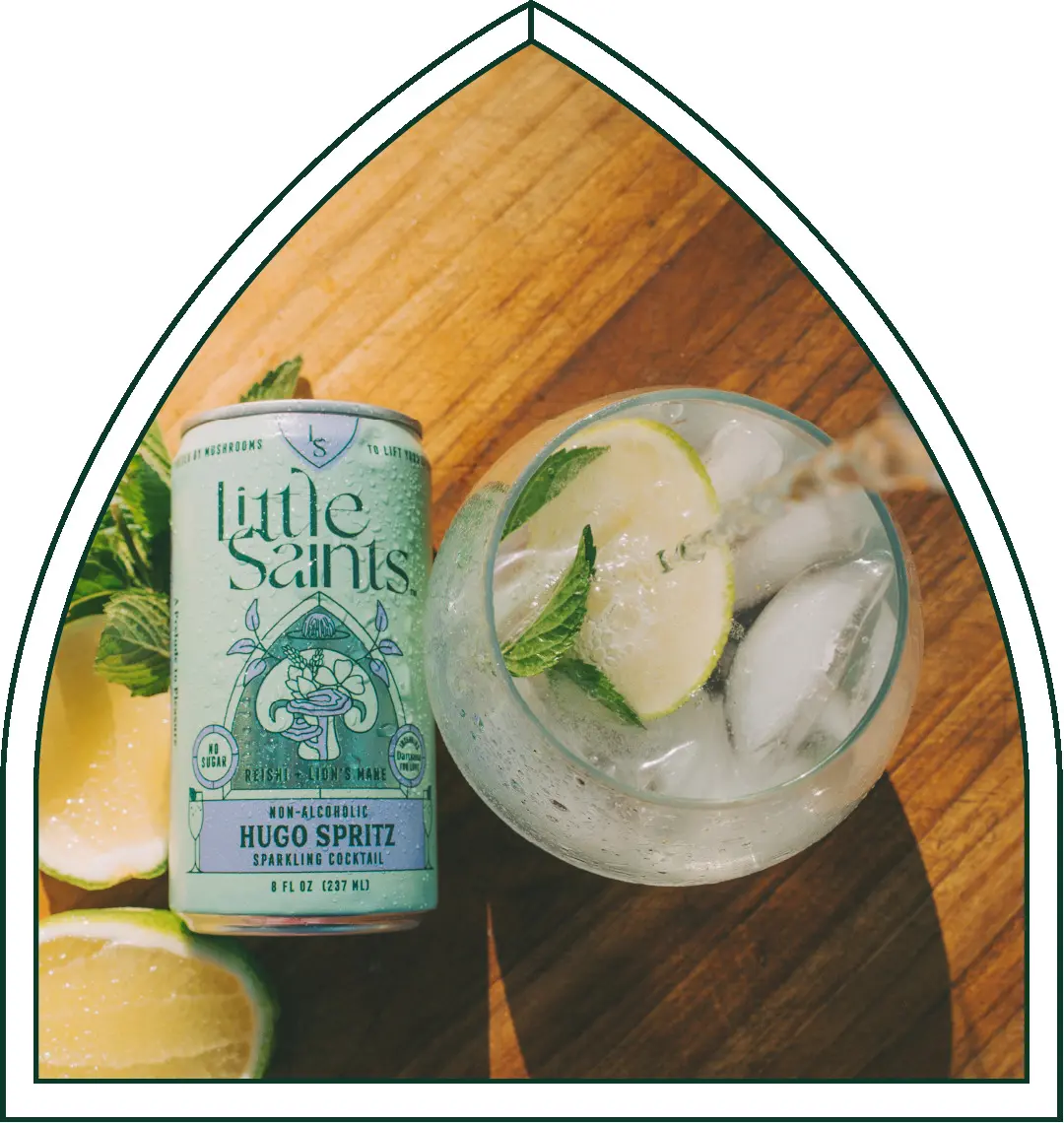
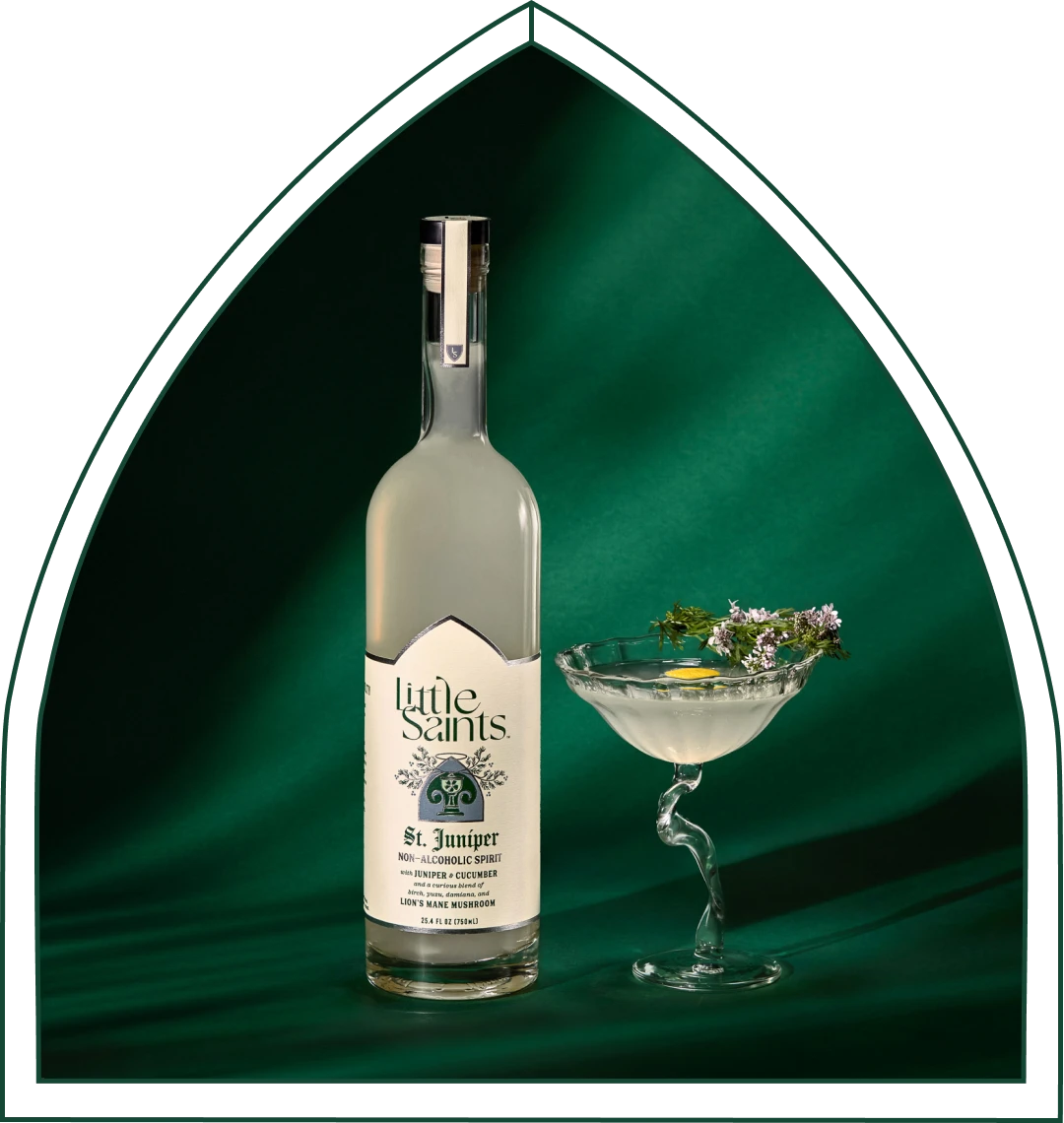
Little Saints publishes both figures the method asks for: a stated 100 mg functional dose per serving and a minimum 70% beta glucan extract documented by supplier certificates of analysis. The canned cocktails, including Classic Spritz, Hugo Spritz, Classic Margarita, Paloma, Old Fashioned, Mojito, and Negroni Spritz, carry zero grams of sugar and five calories per can, sweetened with monk fruit juice concentrate only. The nonalcoholic spirits, St. Ember, St. Juniper, and St. Oak, carry zero grams of sugar with no sweeteners of any kind and mix 1:1 in a classic cocktail spec.
Both lines carry the Nature's Neuroscience platform, which includes organic Reishi, organic Lion's Mane, Damiana, and botanical terpenes, with a stated 100 mg dose per serving, though the specific blend varies by product. The mushrooms are USDA Organic and California-grown. They are extracted with ultrasound rather than chemical solvents, and the extract holds GRAS status, the FDA's standard of generally recognized as safe for an ingredient used in food. The minimum 70% beta glucan content is documented by supplier certificates of analysis, and the supplier's extracts also undergo third-party lab analysis for potency.
For comparison, a whole mushroom at a farmers' market sits around 0.1% beta glucan, making the extract up to 700 times more concentrated. Against a dried, ground mushroom at roughly 1%, the extract is roughly 70 times more concentrated. Against quality supplement-grade fruiting-body extracts, which typically run 20–40% beta glucan, 70% sits at the top of the range.
Little Saints appears in over 1,000 retail shops, grocery stores, liquor stores, bars, and restaurants nationally, and ships direct to consumers in all 50 states.
Statements about these products have not been evaluated by the FDA. The products are not intended to diagnose, treat, cure, or prevent any disease. Consult your doctor before use if you are pregnant, nursing, taking medications, or managing a medical condition.
Browse Little Saints Cocktails
Quick Reference: The Four-Point Clean Label Checklist
- Sweetener source: monk fruit, real fruit, or agave instead of sucralose, erythritol, high-fructose corn syrup, or sugar alcohols.
- Preservative method: carbonation, pasteurization, or low-pH formulas instead of sodium benzoate or potassium sorbate.
- Color source: vegetable juice for color instead of synthetic dyes such as Red 40, Blue 1, or Yellow 5.
- Functional dose transparency: a stated milligram dose and a stated potency figure for every functional ingredient.
The Bottom Line: Use The Method On Any Label
Clean label is not a regulated standard in the United States, so the four-point method gives you a practical way to evaluate any nonalcoholic cocktail. Sweetener source, preservative method, color source, and functional dose transparency together separate a real clean-label claim from a marketing one. You can apply this checklist in a store aisle or on a product page without relying on front-of-pack language.
Little Saints aligns with this method by publishing both a 100 mg functional dose and a 70% beta glucan figure, the same two numbers the method highlights. The cocktails deliver zero grams of sugar and five calories per can with a supplement-grade functional mushroom blend in every pour. Explore the full range of nonalcoholic cocktails and spirits.
Statements about these products have not been evaluated by the FDA. The products are not intended to diagnose, treat, cure, or prevent any disease. Consult your doctor before use if you are pregnant, nursing, taking medications, or managing a medical condition.
The statements made on our website have not been evaluated by the Food and Drug Administration, Our products are not intended to diagnose, treat, cure or prevent any disease. If you are pregnant, nursing, taking any medications or have any medical conditions, consult your doctor before use.