


Key Takeaways
- A mushroom drink for anxiety is a functional evening beverage built on Reishi and Lion's Mane, not a medical treatment for anxiety disorders.
- Human research on these mushrooms and anxiety is early and limited, while marketing claims often move faster than the evidence.
- Effective evening blends center on a few targeted ingredients such as Reishi for calm, Lion's Mane for presence, and Damiana for connection.
- Mushroom coffee still delivers a meaningful caffeine load, which can increase anxiety and disrupt sleep for sensitive drinkers.
- Little Saints offers a caffeine-free, zero-sugar mushroom drink with a clearly stated functional dose, formulated specifically for the evening wind-down.
Do Mushroom Drinks Really Help With Anxiety?
Current evidence for mushroom drinks and anxiety is promising but early. The research base is small, and marketing often runs ahead of clinical data. Existing human work includes a few pilots alongside a much larger body of in vitro and animal studies.
A frequently cited 2010 pilot by Nagano et al. involved 30 women who consumed Lion's Mane cookies containing 0.5 g per day of dried mushroom powder for four weeks. Some summaries report lower anxiety and irritation scores in the Lion's Mane group. Other analyses note that these items showed only a non-significant tendency toward lower values. The cookie format and multi-ingredient recipe also make Lion's Mane's specific role hard to isolate. A later 2023 double-blind pilot by Docherty et al. in 41 healthy young adults used 1.8 g per day for 28 days and found a trend toward lower subjective stress rather than a direct, measured anxiety effect.
On the Reishi side, a 2025 randomized, double-blind, placebo-controlled trial in stressed adults using 1,000 mg per day of Reishi reported improvements in anxiety. The broader evidence base, however, remains thin and heterogeneous. A 2026 Frontiers in Natural Products review by Gurung, Sagar, and Rani concludes that most evidence for Lion's Mane's neuroactive effects comes from in vitro and animal work, with only a limited number of human trials. The authors highlight gaps such as larger standardized multicenter trials, better dose-response data, and improved extraction standardization. UCLA Health and News-Medical both name Reishi and Lion's Mane as functional mushrooms with emerging research interest and describe the evidence as preliminary. The accurate framing is simple: promising, yet not proven.
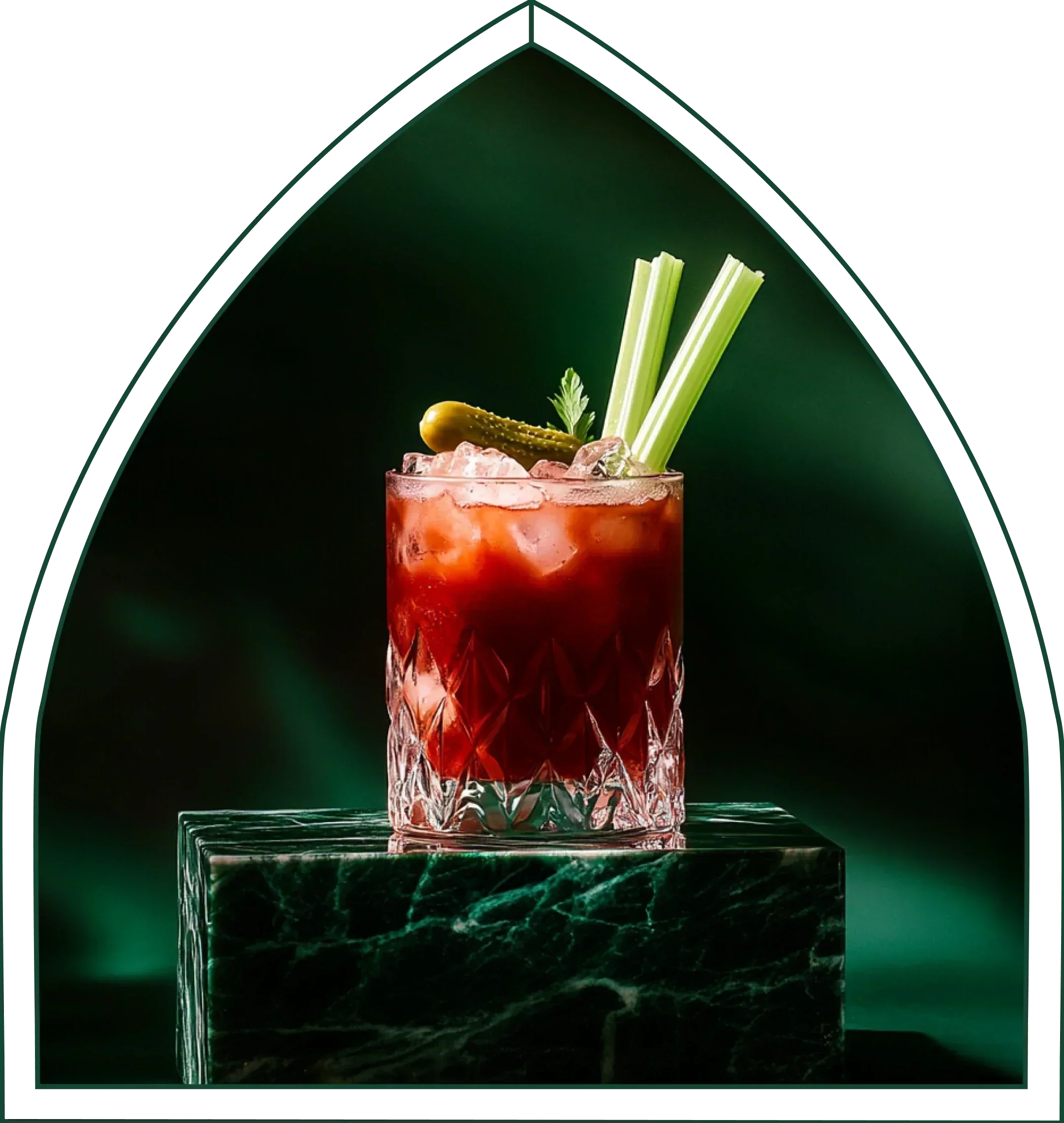
See how functional mushroom drinks compare for calming and focus.
What Mushroom Blend Is Best For Anxiety?
The most useful question is which ingredients handle which parts of the experience. A well-formulated mushroom drink for anxiety relies on a small number of functional ingredients that work together. It does not rely on a long marketing list. Little Saints uses four core elements:
- Reishi for chill. Reishi anchors the settling end of the blend. It has a long history of traditional use as a restorative herb. The brand describes its role as helping you exhale, unwind, and arrive. Drinkers most often associate it with the evening wind-down occasion.
- Lion's Mane for focus. Lion's Mane supports the mental presence side of the blend. Drinkers associate it with clarity and feeling more present in a conversation instead of half-checked-out.
- Damiana for connection. Damiana is a flower, not a mushroom, with a long history in herbal traditions. It rounds out the experience. The mushrooms feel more cerebral, and Damiana supports the warmer, more physical side of the feeling drinkers describe.
- Botanical terpenes for the senses. Terpenes form the aromatic layer. They are naturally occurring aromatic compounds found in plants, roots, herbs, and flowers. They give the drink a nose, which tells your brain a drink is worth paying attention to before the first sip.
What to skip: a twelve-ingredient blend functions as a marketing list. A focused formulation uses a few functional ingredients at meaningful doses that work together.
Learn more about what Reishi does in a calming drink and how much you actually need.
Why Do I Feel Weird After Drinking Mushroom Coffee?
Caffeine usually explains the “weird” feeling. A mushroom coffee is still a coffee. USDA FoodData Central lists about 95 mg of caffeine in a standard 8-ounce cup of brewed coffee, while mushroom coffee blends generally contain 30–70 mg per 8-ounce serving. That range places mushroom coffee closer to a strong cup of black tea in stimulant effect. For someone already anxious, that is still a meaningful dose.
Dr. Nicole Clark, a neurologist in Helena, Montana, told the AMA that caffeine can increase anxiety for some people because it is a stimulant that speeds up chemicals in the brain. Dr. Shannon Kilgore, a neurologist in Palo Alto, California, added that even moderate amounts of caffeine can cause jitteriness and anxiety and can increase respiratory rate, heart rate, and blood pressure. For an anxiety-prone drinker reaching for a mushroom drink in the evening, caffeine is exactly what they want to avoid. The jittery, wired, weird feeling after mushroom coffee usually reflects the caffeine rather than the mushrooms.
A Superpower guide reviewed by William Maish, MD MBA MPH and published June 7, 2026 notes that mushroom coffee blends often deliver roughly half the caffeine of a standard cup of drip coffee. That amount can still disrupt sleep and worsen anxiety in sensitive individuals, especially when consumed in the evening.
Is Lion's Mane Like Adderall?
No. The comparison does not fit. Lion's Mane is not a stimulant. It does not acutely raise heart rate, blood pressure, or alertness like caffeine. Its proposed nerve growth factor (NGF) and neuroplasticity mechanism operates on a cumulative timeline of weeks rather than minutes. There is no sharp cognitive spike. The proposed effect is slow, structural, and cumulative.
Lion's Mane At Night Or Morning?
Lion's Mane has no stimulating effect, and there is no evidence-based reason to avoid taking it in the evening. The evening often works well because that is when the drink occasion exists and when consistency is easiest to maintain.
Best Mushroom For Cortisol?
The evidence for Reishi and Lion's Mane on cortisol remains early and mostly based on animal models. The 2025 randomized, double-blind, placebo-controlled trial in stressed adults using 1,000 mg per day of Reishi reported improvements in anxiety. The overall evidence base, however, remains thin. No functional beverage at commercial serving sizes should position itself as a cortisol intervention.
If caffeine drives the “weird” feeling and anxiety peaks later in the day, then timing matters as much as ingredients.
Why The Evening Is The Right Time For A Mushroom Drink For Anxiety
The evening is the most natural moment for a calming mushroom drink. Many competitors in the mushroom drink category default to a morning-coffee frame. That frame does not match the needs of an anxiety-prone drinker. Anxiety often spikes at the end of the day, and caffeine feels least welcome then. The evening is also the moment alcohol used to own, even though alcohol poorly solves the problem it seems to address.
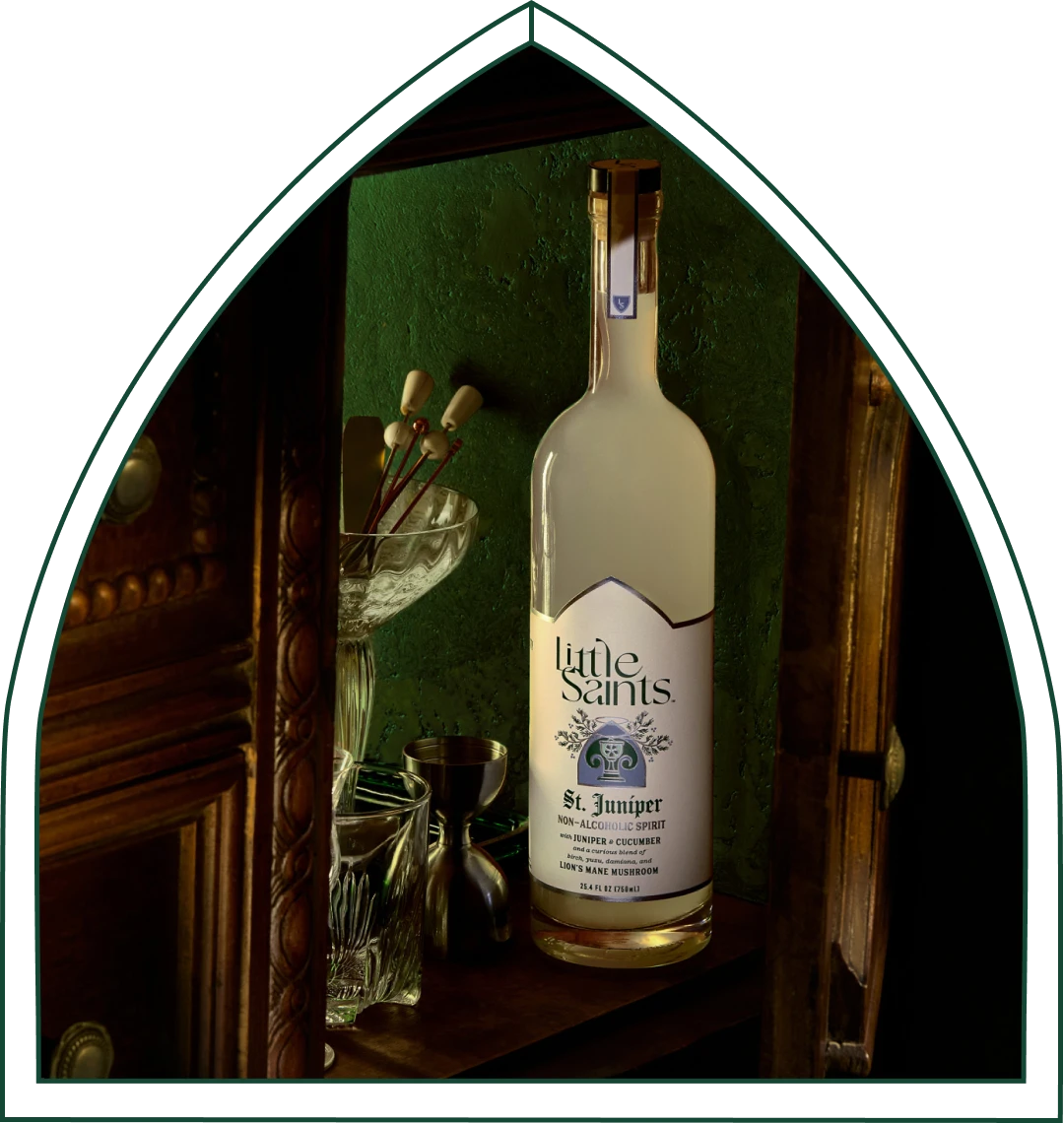
NIAAA, part of the US National Institutes of Health, notes that even moderate doses of alcohol may reduce the duration of rapid eye movement (REM) sleep, which helps explain why people can fall asleep faster after drinking yet wake unrefreshed. Sunnyside's clinically reviewed explainer states that alcohol may help people fall asleep faster but disrupts sleep architecture throughout the night. REM sleep becomes fragmented, and autonomic nervous system activity increases as alcohol is metabolized roughly six to eight hours after the last drink. The rebound pattern involves fragmented REM sleep, increased autonomic activity, and the pre-dawn cortisol rise, producing the familiar experience of waking suddenly at 3 a.m. with a racing heart, sweating, and worst-case thinking.
The evening wind-down is the occasion Little Saints was built for. The core line contains no caffeine, zero sugar, five calories, and a functional mushroom blend designed to accompany the ritual that alcohol used to own, without the 3 a.m. consequence.
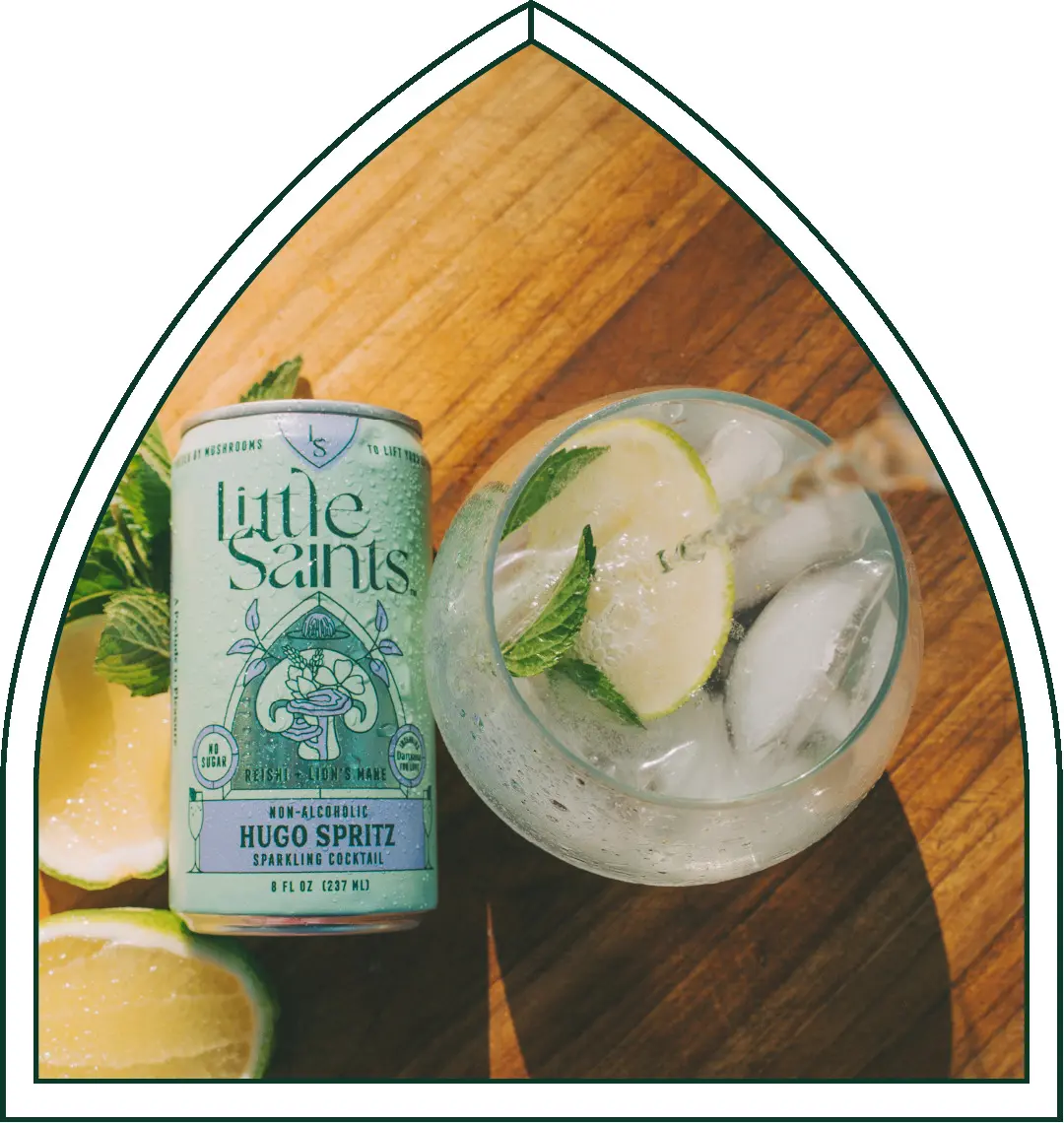
Explore non-alcoholic cocktail recipes built for the calming evening occasion.
How To Read A Mushroom Drink Label
Two numbers separate a real mushroom extract from a marketing label: the stated dose in milligrams and the beta glucan percentage. Many brands publish neither.
Beta glucan is the structural polysaccharide in the mushroom cell wall, specifically the beta-1,3 and beta-1,6 linked fraction that carries the functional activity researchers study. It is measured using a validated enzymatic method, most commonly the Megazyme beta-glucan assay (AOAC 995.16). This method chemically removes starch and other alpha-glucans before measuring what remains. A label that reports only “total polysaccharides” describes something different, and that difference matters.
Mycelium-on-grain products can contain 50 to 70 percent residual grain starch by weight. The fungal mycelium grows on a grain substrate, typically rice, oats, or millet. The entire mass, including uncolonized grain, is then ground into powder. A mycelium-on-grain product that tests at 60 percent total polysaccharides may contain only 8 percent actual beta glucans when subjected to the Megazyme assay. The remaining 52 percent is grain starch that does not support the product's functional claims.
Quality dual-extracted fruiting body mushroom products tested via the Megazyme method typically show the following beta-glucan ranges: Lion's Mane 25–35 percent, Reishi 30–50 percent. A twelve-ingredient blend at unspecified doses functions as a marketing list. A true formulation states its dose and publishes its beta glucan figure.
Little Saints publishes both numbers. Every can and bottle carries a stated functional dose per serving, and every mushroom extract meets a high beta glucan standard documented by certificates of analysis from the supplier. Those extracts also undergo third-party lab analysis for potency. The mushrooms are USDA Organic and grown in California by a third-generation Taiwanese-American family business. The producer uses ultrasound extraction rather than chemical solvents, and the extract holds GRAS status, the FDA standard of “generally recognized as safe” for an ingredient used in food.
At high beta glucan levels, the extract is dramatically more concentrated than whole mushrooms or simple dried powders. Quality fruiting-body extracts typically run in the 20–40 percent range, while mycelium-on-grain powders often test in the low single digits.
Read a deeper guide to the two numbers that matter when buying a Reishi drink.
See how to read the label on a zero-sugar Reishi drink.
Explore Evening-Friendly Drinks
Mushroom Drink Vs Mushroom Supplement
Reishi and Lion's Mane work best when taken consistently rather than occasionally. Many people find consistency easier with a drink they look forward to than with a capsule they forget. That reality creates the practical argument for a functional drink over a supplement: compliance. A ritual you enjoy is a ritual you repeat.
On the mushroom coffee versus mushroom tea question, mushroom coffee blends functional mushroom extracts with coffee and still delivers a meaningful caffeine load. A Superpower guide reviewed by William Maish, MD MBA MPH and published June 7, 2026, notes that these blends often provide roughly half the caffeine of a standard cup of drip coffee. Mushroom tea built on herbal tea is caffeine-free, but it does not feel like a cocktail-hour drink. Neither format was designed for the evening occasion.
One more distinction is worth making before choosing an evening drink: functional mushrooms differ completely from psychoactive mushrooms.
A Note On Functional Mushrooms Vs Psilocybin And Amanita Muscaria
Functional mushroom drinks built on Reishi and Lion's Mane differ from psilocybin mushrooms and Amanita muscaria. The FDA distinguishes psilocybin from ordinary mushroom products by regulating it as a psychedelic drug under drug-development oversight rather than as a routine food or supplement ingredient. Little Saints contains no psilocybin, no Amanita muscaria, and no psychoactive compounds of any kind. It is non-intoxicating, non-psychoactive, and legal, with no impairment to judgment, reaction time, or coordination.
What To Drink Instead Of Alcohol In The Evening
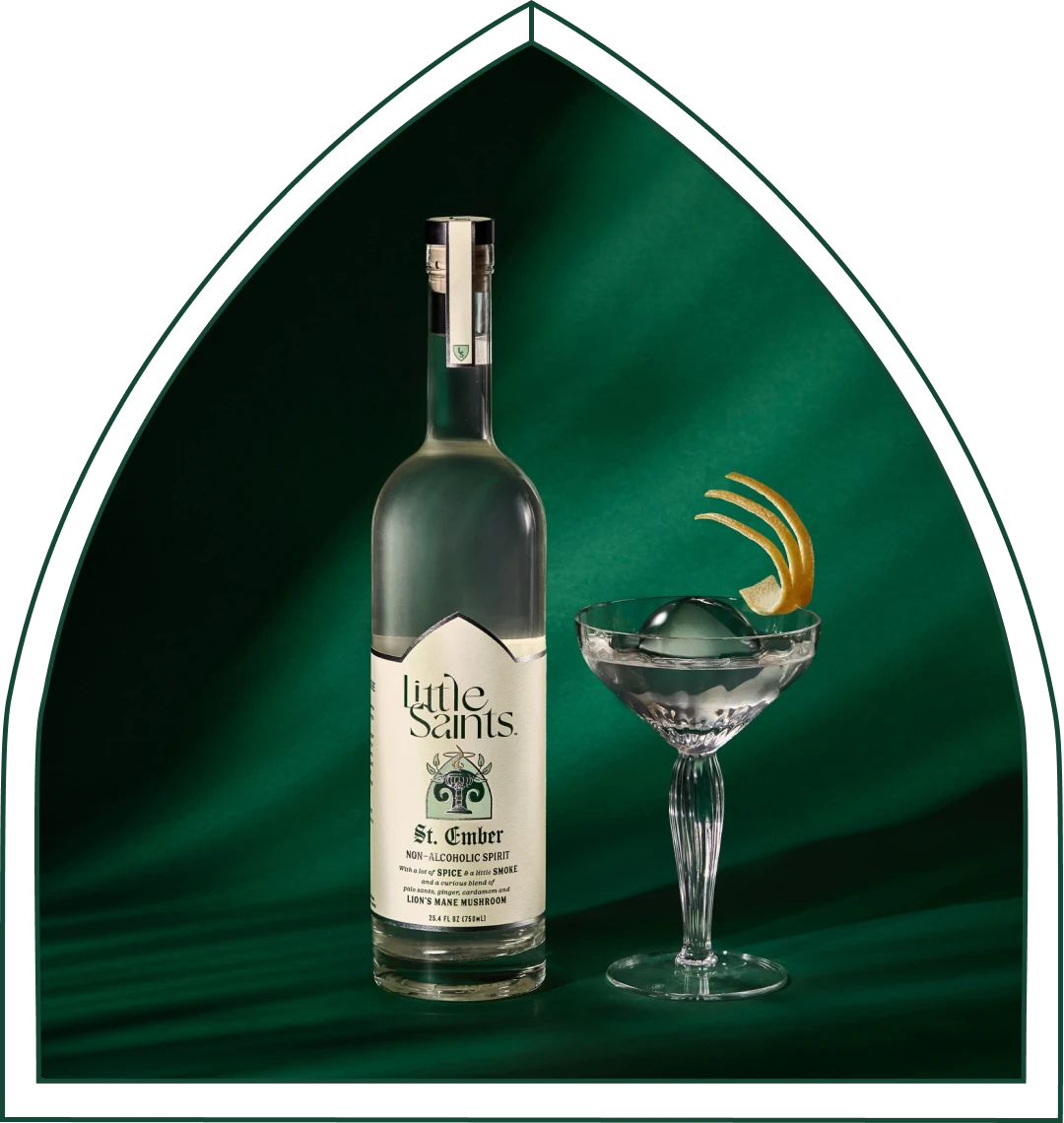
Little Saints was built for the evening slot that alcohol used to fill. The canned cocktails, including Classic Spritz, Hugo Spritz, Classic Margarita, Paloma, Old Fashioned, Mojito, and Negroni Spritz, carry zero grams of sugar, five calories per can, and 0 percent ABV, sweetened with monk fruit. The non-alcoholic spirits, St. Ember, St. Oak, and St. Juniper, carry zero grams of sugar with no sweeteners at all. They are built on oil-based craft extracts that mix 1:1 in any classic cocktail spec. St. Oak was named Best NA Spirit of 2025 by the BevNET Spirit Awards.
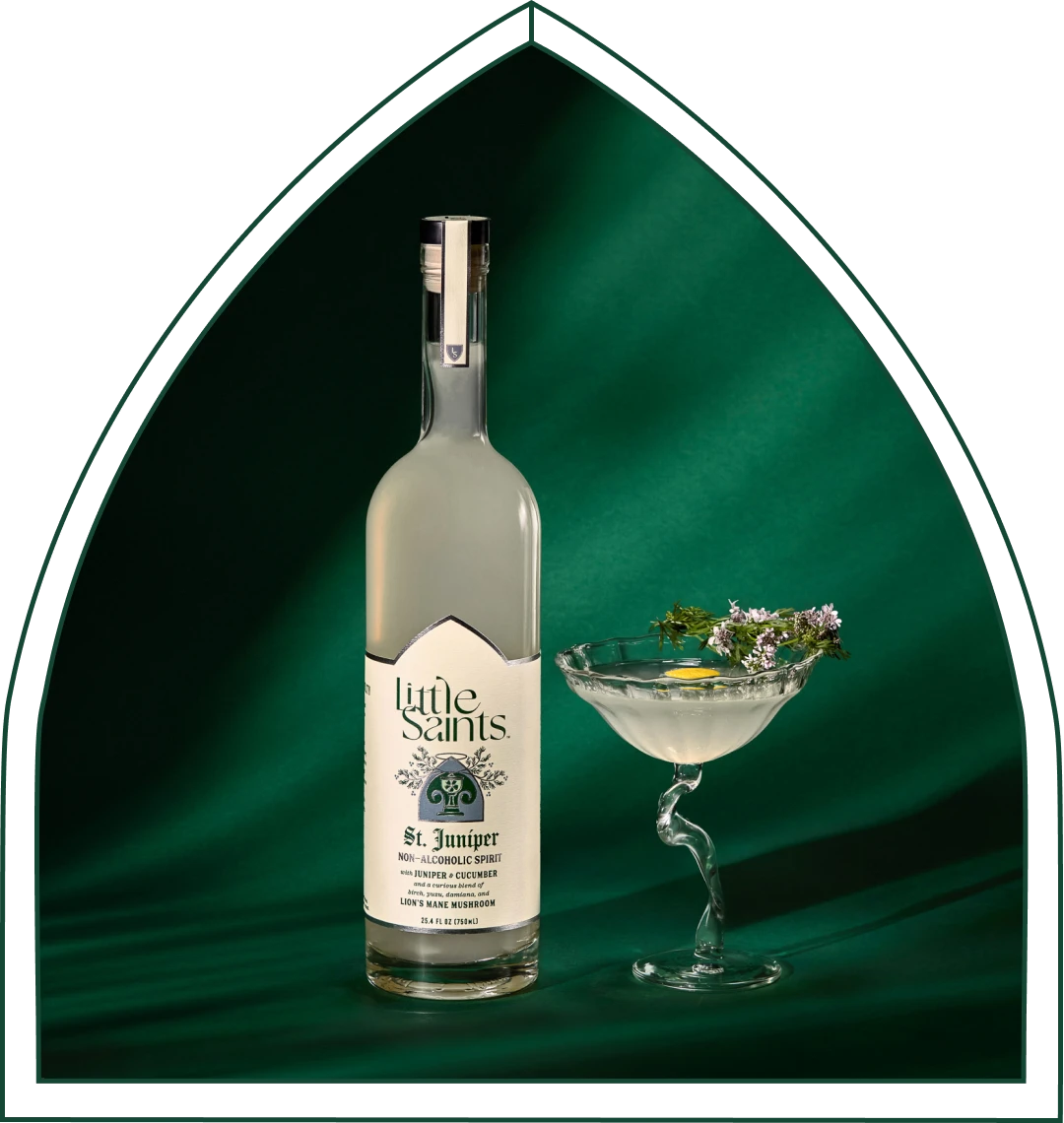
Every product in the line carries the functional blend of organic Reishi, organic Lion's Mane, Damiana, and botanical terpenes. The formulation uses a clearly stated functional dose and a high beta glucan standard documented by certificates of analysis. The core line contains no caffeine. Drinkers describe the feeling as the Little Saints Lift: clarity and ease, the first-sip-of-wine feeling, without the 3 a.m. consequence.
Little Saints is stocked in over 1,000 retail shops, grocery stores, liquor stores, bars, and restaurants, and ships direct to consumers in all 50 states. The table below compares Little Saints with two common alternatives, sugar-sweetened non-alcoholic cocktails and mushroom coffee, across key evening-drink factors.
| Little Saints | Sugar-Sweetened NA Cocktails | Mushroom Coffee | |
|---|---|---|---|
| Sugar | 0 g per can (company context) | Present, often significant (company context) | Varies by product |
| Calories | 5 per can (company context) | Higher (company context) | Varies by product |
| Caffeine | None in core line (company context) | None | Meaningful caffeine load per serving |
| Functional Dose Stated | Published functional dose (company context) | None (company context) | Rarely published (company context) |
Frequently Asked Questions
Who Is A Mushroom Drink For Anxiety Actually For?
A mushroom drink for anxiety suits adults who want a functional, caffeine-free evening ritual. Many have noticed that alcohol disrupts their sleep or worsens their anxiety and want something that holds up in real glassware without a next-day cost. It does not function as a clinical treatment for anxiety disorders and does not exist only for people who have stopped drinking. Many drinkers use it as part of a zebra-striping pattern, alternating alcoholic and non-alcoholic drinks over the course of an evening.
How Is A Mushroom Drink Different From Mushroom Coffee And From Supplements?
Mushroom coffee blends functional mushroom extracts with coffee and still delivers significant caffeine, which makes it a poor choice for the evening occasion and potentially counterproductive for anxiety-prone drinkers. A functional mushroom drink built for the evening carries no caffeine in the core line and is designed for the wind-down moment rather than the morning desk. Compared to capsules and powders, a drink you look forward to is easier to take consistently, and restorative herbs like Reishi and Lion's Mane work best when taken consistently.
What Should I Look For On A Mushroom Drink Label?
Focus on two numbers: the stated dose in milligrams and the beta glucan percentage. If a brand publishes neither, you cannot tell whether the product contains a concentrated extract or mycelium grown on grain, where much of the powder is starch and beta glucan content often tests in the low single digits. Look for a meaningful dose per serving and a beta glucan figure measured by the Megazyme enzymatic assay rather than a “total polysaccharides” figure, which grain starch can inflate. USDA Organic certification and certificates of analysis from the supplier offer additional markers of sourcing and potency transparency.
Will A Mushroom Drink Make Me Feel Weird?
A caffeine-free mushroom drink built on Reishi and Lion's Mane does not carry a stimulant effect. Lion's Mane is not a stimulant and does not acutely raise heart rate, blood pressure, or alertness. Many drinkers describe the Little Saints Lift as a sense of clarity and ease, subtle and non-intoxicating. The feeling is not dramatic, does not build, and varies from person to person. The products are non-intoxicating, non-psychoactive, and legal.
Is A Mushroom Drink Safe With Medications Or During Pregnancy?
Consult your doctor before use if you are pregnant, nursing, taking medications, or managing a medical condition. Reishi contains triterpenes that may interact with anticoagulant or antiplatelet medications, and beta-glucan-rich preparations may work in opposition to immunosuppressive drugs. These statements have not been evaluated by the Food and Drug Administration. This product does not intend to diagnose, treat, cure, or prevent any disease.
How Do I Fit A Mushroom Drink Into A Social Evening?
Use it the same way you would use any drink in a social evening. Pour it into real glassware, add ice, add a garnish if you like, and drink it at the pace of the table. Little Saints canned cocktails are finished drinks ready to pour. The spirits, St. Ember, St. Oak, and St. Juniper, substitute two ounces for two ounces in any classic cocktail spec, so the recipe stays the same. Many drinkers use Little Saints as part of a zebra-striping pattern, alternating with alcoholic drinks over the course of a night. The drink is built for the social occasion.
Conclusion: The Two Numbers That Matter
The real problem with many mushroom drinks for anxiety involves unquantified doses, grain-starch filler dressed up as polysaccharides, and caffeine hiding inside a “mushroom coffee” at the exact moment an anxiety-prone drinker needs calm. Before choosing any mushroom drink, check two numbers on the label: the stated dose in milligrams and the beta glucan percentage measured by a validated enzymatic assay. If a brand does not publish both, the product cannot be evaluated on its functional merits. Little Saints publishes both in a caffeine-free, zero-sugar format built for the evening occasion.
The statements made on our website have not been evaluated by the Food and Drug Administration, Our products are not intended to diagnose, treat, cure or prevent any disease. If you are pregnant, nursing, taking any medications or have any medical conditions, consult your doctor before use.