


Key Takeaways
- A classic Negroni contains roughly 10–13 g of sugar, almost all from Campari and sweet vermouth. Gin contributes none.
- Swapping both sugar-carrying bottles for zero-sugar versions keeps the 1:1:1 ratio while removing nearly all sugar.
- You can build three versions: full-strength with gin, low-ABV with a non-alcoholic gin-style spirit, or zero-proof with St. Juniper.
- Label transparency matters. Check sugar per serving and any functional mushroom dose on every swap product you buy.
Sugar Free Negroni Recipe (Full-Strength, 1:1:1)
Yield: 1 cocktail | Method: Stirred | Glass: Rocks
Ingredients
- 1 oz gin
- 1 oz zero-sugar bitter aperitif (replaces Campari)
- 1 oz zero-sugar vermouth alternative (replaces sweet vermouth)
- 1 orange twist, for garnish
Method
- Combine the gin, zero-sugar bitter aperitif, and zero-sugar vermouth alternative in a mixing glass over ice.
- Stir for 25–30 seconds until well chilled and properly diluted.
- Strain into a rocks glass over one large ice cube.
- Express the orange twist over the surface of the drink to release its oils, then drop it in.
In this full-ABV build, the zero-sugar bitter aperitif replaces Campari's bitter backbone of gentian root, orange peel, and aromatic botanicals without its sugar load. The zero-sugar vermouth alternative does the same for sweet vermouth, providing body and herbal depth without its 100–150 g/L of residual sugar. The alcohol content stays the same in this version, so the change focuses on sugar removal rather than strength.
How To Make A Low-ABV Sugar Free Negroni
If you want to reduce alcohol as well as sugar, the low-ABV build is the next step. This version cuts the gin while keeping the Negroni's essential structure and the same zero-sugar supporting bottles.
Adjusted Spec (Low-ABV, 1:1:1)
- 1 oz non-alcoholic gin-style spirit
- 1 oz zero-sugar bitter aperitif
- 1 oz zero-sugar vermouth alternative
- 1 orange twist, for garnish
The method is the same as the full-strength build. Stir 25–30 seconds over ice, strain into a rocks glass over one large cube, and express the orange twist before dropping it in. However, because the non-alcoholic spirit carries no ethanol, dilution happens faster, so reduce stirring to about 20 seconds if the drink feels thin. The result is a lighter mouthfeel with a sharper bitter edge and a shorter finish than the full-strength build. The bitter backbone stays intact, while the weight and warmth that ethanol provides become softer.
How To Make A Zero-Proof Sugar Free Negroni
A zero-proof build removes alcohol entirely while keeping the Negroni profile. Substitute a non-alcoholic gin-style spirit at a 1:1 ratio for both the gin and the vermouth position, and pair it with a zero-sugar bitter aperitif.
Little Saints' St. Juniper is a non-alcoholic spirit built on juniper, cucumber, birch, angelica, coriander, and cardamom. St. Juniper is formulated to mix 1:1 in gin cocktails. Two ounces replace two ounces with no over-pouring or recipe adjustment, which makes it a natural fit for a zero-proof Negroni build.
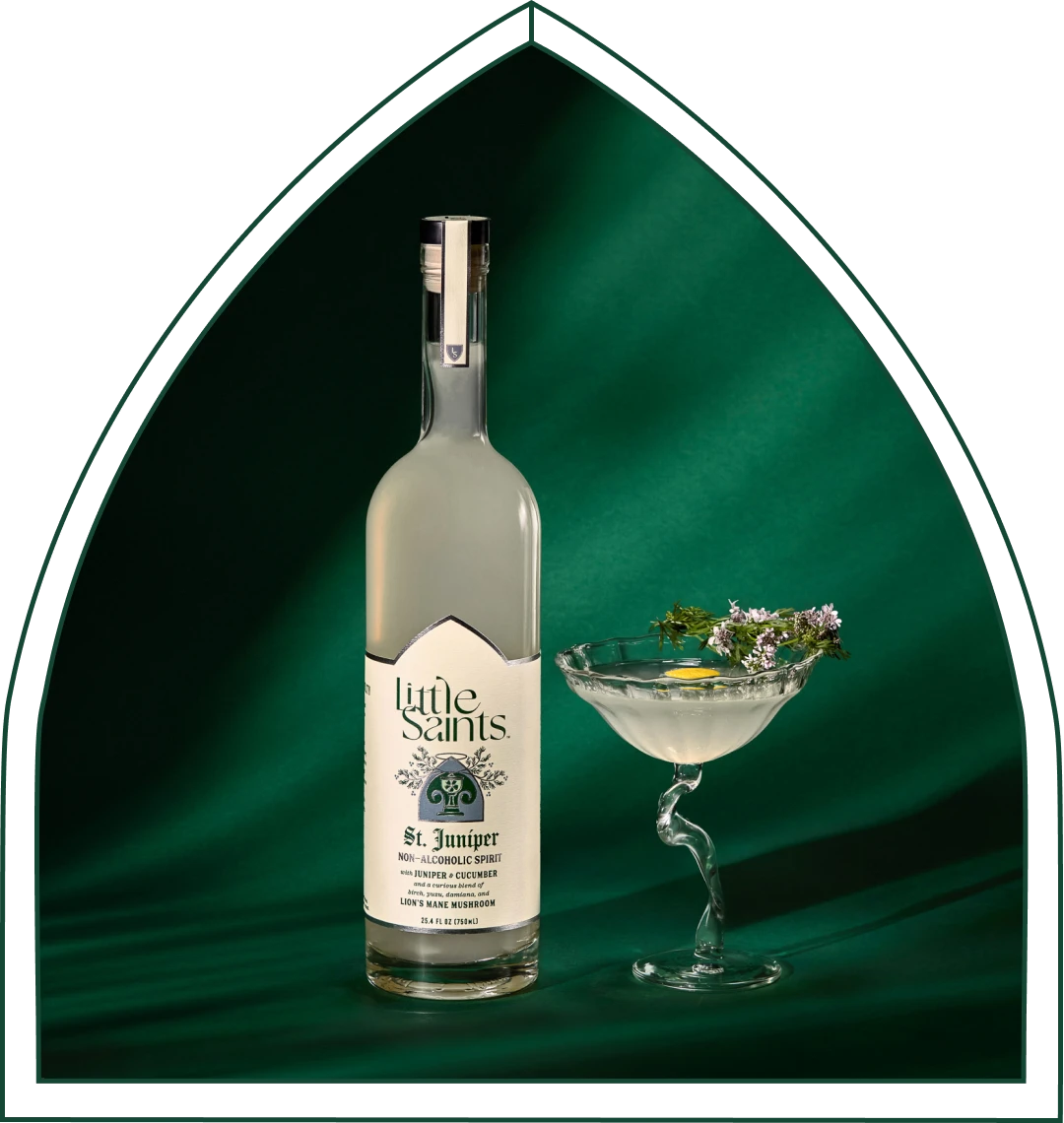
Zero-Proof Spec
- 1 oz St. Juniper (non-alcoholic gin-style spirit)
- 1 oz zero-sugar bitter aperitif
- 1 oz zero-sugar vermouth alternative
- 1 orange twist, for garnish
Stir 20–25 seconds over ice, strain into a rocks glass over one large cube, then express and drop the orange twist. For readers who prefer a ready-made option, Little Saints' Negroni Spritz delivers the bitter, gentian-forward, orange-driven Negroni profile in a can. It is crafted with organic Reishi mushroom and uses a simpler functional blend than several other products in the line. The Negroni is the drink Little Saints traces its origin to, which is why St. Juniper holds up so well in this build.
St. Juniper carries 100 mg of organic Lion's Mane extract per serving at a minimum of 70% beta glucan, documented by supplier certificates of analysis. This fraction of the mushroom carries its adaptogenic properties. St. Juniper contains USDA Organic mushroom extract from mushrooms grown in California and uses ultrasound extraction rather than chemical solvents. That dose appears in the ingredient statement, and the extract holds GRAS status, the FDA's standard of generally recognized as safe for an ingredient used in food.
Why A Classic Negroni Contains Sugar
The sugar in a Negroni comes almost entirely from the sweet vermouth and the Campari, while gin contributes none. Campari contains approximately 250 g/L of sugar, which translates to about 7.5 g in a standard 1 oz pour. Sweet vermouth contains 100–150 g/L of residual sugar, so a standard 1 oz pour contributes approximately 3–5 g. Together, those two bottles put a classic 1:1:1 Negroni at roughly 10–13 g of sugar per serving.
This breakdown explains why the spirit is not the issue in a sugar free Negroni. The two supporting bottles carry the sugar load. Replacing both with zero-sugar versions drops sugar to near zero while the ratio, glassware, and stirring ritual stay the same.
Smart Swaps For Sweet Vermouth In A Negroni
The most direct zero-sugar swap for sweet vermouth is a zero-sugar vermouth alternative. This type of non-alcoholic or low-alcohol product is formulated to replicate sweet vermouth's herbal body without its residual sugar.
Dry vermouth is a lower-sugar option within the alcoholic category, typically containing only 2–4 g/L of residual sugar versus 100–150 g/L in sweet vermouth. It changes the drink significantly, though. Dry vermouth tastes leaner, sharper, and thinner in the mouth, and substituting dry for sweet in a 1:1:1 Negroni alters both sugar content and structural balance because dry vermouth brings clarity and structure while sweet vermouth contributes depth and softness.
Here is what each option does to the drink:
- Dry vermouth (alcoholic, low-sugar): Cuts sugar substantially and produces a drier, thinner, sharper drink with a quicker finish. The bitter backbone from Campari becomes more pronounced without sweet vermouth's softening weight.
- Zero-sugar vermouth alternative (non-alcoholic): Removes sugar and alcohol from the vermouth position while preserving more of the body and herbal complexity that sweet vermouth contributes. Strong options use botanicals that approximate sweet vermouth's role in the build without its sugar load.
Best Campari Substitutes For A Sugar Free Negroni
A zero-sugar bitter aperitif that preserves the bitter backbone works best as a Campari substitute in a sugar free Negroni. Gentian root, orange peel, and aromatic herbs should still lead the profile, only without Campari's sugar content.
Campari's bitterness comes primarily from botanicals such as chinotto (bitter citrus) and cinchona bark, along with other undisclosed botanicals, and its 250 g/L sugar content creates contrast that heightens bitterness perception rather than masking it. A substitute needs genuine bitterness, not just sweetness, to hold its place in the build.
Lower-ABV alcoholic aperitifs such as Aperol reduce alcohol but Aperol contains approximately 12 g/L of sugar and lacks the depth required for a classic Negroni structure. Non-alcoholic bitter aperitifs built on gentian, orange peel, and aromatic botanicals close the gap. They carry the bitter profile without the sugar, and the clearest labels state sugar per serving so you can verify the figure on the bottle instead of estimating from category averages.
Carbs And Calories In A Classic Vs Sugar Free Negroni
A classic 1:1:1 Negroni built with 1 oz each of gin, Campari, and sweet vermouth carries approximately 11.5 g of carbohydrates and 8.9 g of sugar per serving, with roughly 189 calories. Because gin contributes essentially no sugar or carbohydrate, those figures come almost entirely from the Campari and sweet vermouth.
A sugar free Negroni built with gin, a zero-sugar bitter aperitif, and a zero-sugar vermouth alternative drops the carbohydrate figure to near zero. The exact number depends on which swap products you use and what their labels state, but the difference between a classic build and a sugar free build matches the full 10–13 g of sugar and its carbohydrate load. In a zero-proof build that uses a non-alcoholic gin-style spirit with the same zero-sugar aperitif and vermouth alternative, carbohydrates stay near zero and the calorie count falls further because ethanol contributes about 7 calories per gram.
How To Compare Sugar-Free Negroni Swap Products
Swap products vary in label transparency. The table below compares swap product categories, not named brands, on dimensions you can verify before buying. Focus on sugar per serving as stated on the label, whether the brand publishes that figure, and how the product behaves in a 1:1:1 Negroni build.
| Product Category | Sugar Per Serving (Label-Stated) | Brand Publishes the Figure? | Behavior in a 1:1:1 Build |
|---|---|---|---|
| Zero-sugar non-alcoholic bitter aperitif (artificial sweetener) | 0 g per 1 fl oz serving | Yes, label-stated | Holds bitter backbone and mixes 1:1 in the Campari position |
| Non-alcoholic bitter aperitif (fruit-juice sweetened) | 3 g per serving from fruit juices and date concentrate; no added sugar | Yes, label-stated | Bitter and herbal, mixes 1:1 but adds modest natural sugar |
| Low-ABV alcoholic bitter aperitif | Varies by brand: 6.5–18 g per 100 mL depending on product | Varies, many do not publish per-serving figures | Preserves Negroni structure and reduces alcohol, while sugar remains present |
The dimension many brands leave off the label is the functional dose. Little Saints publishes both the sugar figure and a stated 100 mg mushroom dose per serving at a minimum of 70% beta glucan, backed by supplier certificates of analysis. Those numbers make a swap product label-verifiable instead of a vague marketing claim.
How To Garnish And Serve A Sugar Free Negroni
Garnish and serve a sugar free Negroni the same way you would a classic Negroni. Cut a wide strip of orange peel, hold it skin-side down over the surface of the drink, and squeeze firmly to express the citrus oils across the top.
Run the peel around the rim of the glass, then drop it in. Serve in a rocks glass over one large ice cube. A single large cube melts more slowly than cracked ice, which controls dilution and keeps the drink cold without washing it out.
Conclusion: Keep The Negroni, Lose The Sugar
The sugar in a Negroni comes from Campari and sweet vermouth, not from the gin. Campari contributes roughly 7.5 g of sugar per pour, and sweet vermouth adds another 3–5 g. Swapping both bottles for zero-sugar versions keeps the 1:1:1 ratio, the stirring time, and the orange twist ritual while cutting sugar to near zero.
For a full-ABV build, keep the gin and swap both supporting bottles. For a low-ABV build, move to a non-alcoholic gin-style spirit in the gin position. For a zero-proof build, St. Juniper mixes 1:1 in the gin slot alongside a zero-sugar bitter aperitif and a zero-sugar vermouth alternative. Readers who want Negroni flavor without any mixing can reach for the Little Saints Negroni Spritz, which delivers a bitter, gentian-forward, orange-driven profile in a ready-made can.
The functional mushroom dose, its beta glucan content, and the certificates of analysis behind both are details many brands leave off the label. Little Saints publishes them because the same reader who checks a sugar label usually wants to know what else is in the can.
Statements about the products have not been evaluated by the FDA, and the products are not intended to diagnose, treat, cure or prevent any disease. Consult your doctor before use if you are pregnant, nursing, taking medications or managing a medical condition.
The statements made on our website have not been evaluated by the Food and Drug Administration, Our products are not intended to diagnose, treat, cure or prevent any disease. If you are pregnant, nursing, taking any medications or have any medical conditions, consult your doctor before use.