


Key Takeaways
- A sophisticated non-alcoholic drink leans on bitterness, real acidity, herbal or tea notes, proper dilution, large clear ice and an aromatic garnish. Fruit juice and sugar play a supporting role at most.
- Structure matters more than price or branding. The same criteria a bartender applies to any cocktail determine whether a non-alcoholic option reads as adult.
- Ready-to-pour cans win on convenience and consistency. Mix-yourself spirits win on control and ritual. Little Saints offers both formats, and both mix 1:1 in classic specs.
- Three builds using St. Juniper, St. Oak and St. Ember show how to create bitter aperitif spritzes, stirred brown-spirit cocktails and citrus-forward long drinks tonight.
- Little Saints delivers zero-sugar, five-calorie, 0% ABV options with a clearly stated functional blend for clarity and ease without intoxication.
What Makes A Non-Alcoholic Drink Taste Sophisticated?
Sophisticated non-alcoholic drinks share a structure: bitterness over sweetness, real acidity, aromatic complexity, proper dilution and a stated functional dose. A sugar-forward juice profile dressed up with a garnish does not qualify. The criteria below apply to any bottle or can on a shelf.
- Bitterness over sweetness. Bitter botanicals, gentian, citrus peel and tonic-style bitterness read as adult. Juice and syrup read as a soft drink. Bitterness is the single biggest missing element in most non-alcoholic builds. Real cocktails use bitter ingredients as the structural counterweight to sweetness. Most non-alcoholic options skip that element entirely.
- Real acidity. Fresh citrus, not acidified flavoring. Acid is the element people drop first and the one that turns flat juice into something adult.
- Herbal, tea and botanical notes. Aromatic complexity rather than a single fruit flavor. Layered botanical profiles such as juniper, cardamom, angelica and palo santo separate a drink from a flavored water.
- Engineered aroma. A drink needs a nose. Botanical terpenes are the naturally occurring aromatic compounds found in plants, roots, herbs and flowers. They give a drink its aromatic layer. Without them, the glass is silent before the first sip.
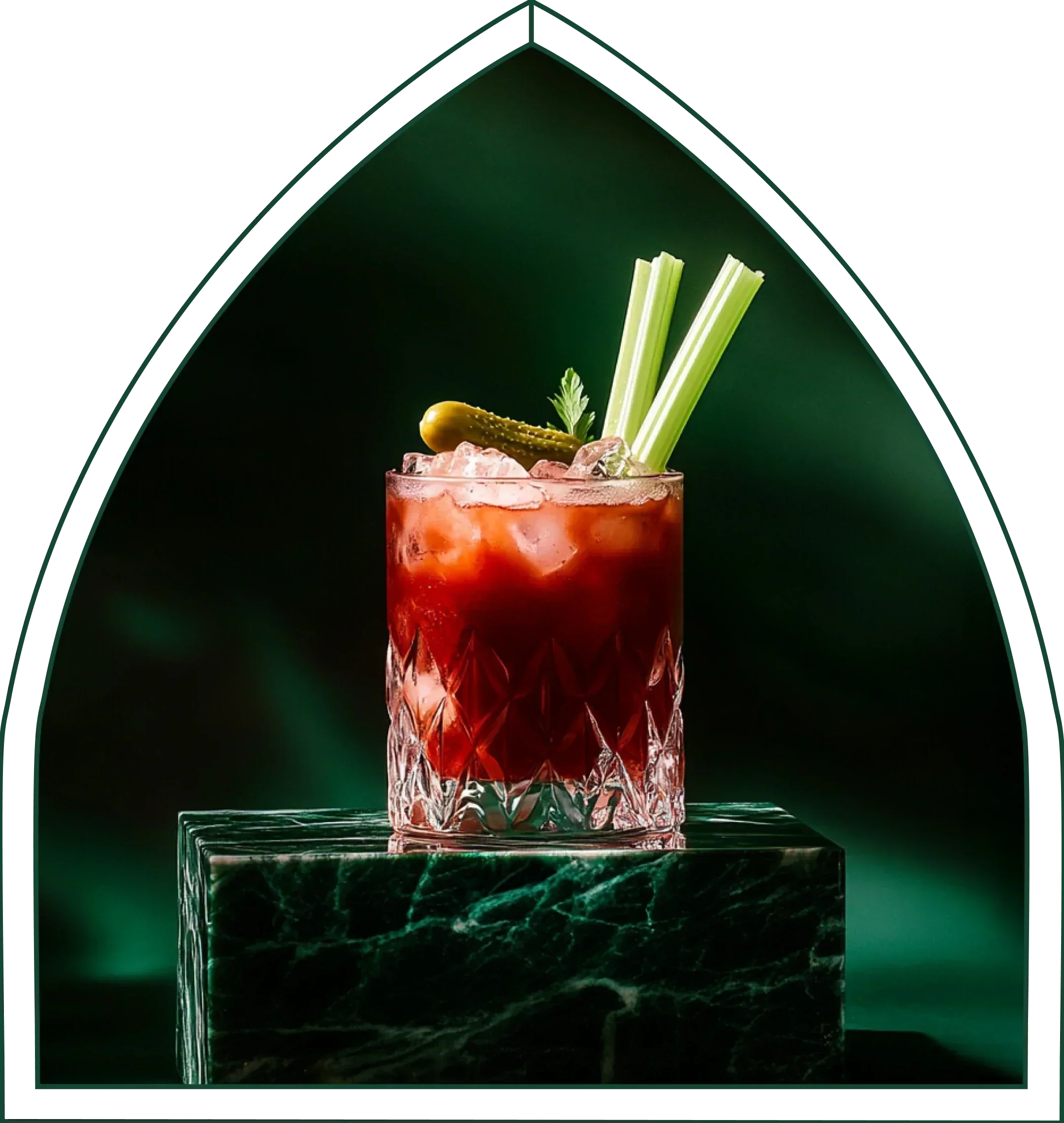
- Proper dilution, large clear ice and adult glassware. These mechanics separate a cocktail from a soft drink. Stirring over large, dense ice chills the drink to the right temperature while minimizing dilution. The right glass signals that what is inside deserves attention.
- A stated functional dose instead of a mystery blend. Whether the label publishes a dose and a potency is the difference between a verifiable claim and a marketing list. A drink that tells you exactly what is in it, and how much, respects the person holding it.
What's The Most Sophisticated Non-Alcoholic Drink To Order?
The most sophisticated non-alcoholic drink to order behaves like a cocktail. It tastes bitter or tart, sits over large clear ice in real glassware and carries an expressed peel or a fresh herb garnish. What discerning people drink non-alcoholic is a drink built to the same standard as the cocktail list, not poured from the juice station. Brand tier and price point are irrelevant.
At a bar or restaurant, the ordering script stays simple. Ask for the non-alcoholic option built like the cocktail menu. If the venue has a non-alcoholic spirit behind the bar, ask for it over ice with a citrus garnish. If not, ask for tonic with a bitter aperitif and an expressed orange peel. The structure of a drink matters more than the label on the bottle.
The on-premise gap is wide. When guests skip alcohol, they order soft drinks 57% of the time, hot or iced drinks 41%, and sparkling water 29%. The adult non-alcoholic options divide what is left: non-alcoholic cocktails 15%, alcohol-free beer 13%, alcohol-free wine 12%, alcohol-free spirits 11%. That distribution is the gap. Most guests who are not drinking alcohol are handed a soda or a water instead of a drink that reads as considered.
Ready-To-Pour Vs. Mix-Yourself: Choosing The Right Format
The format decision is the one most guides skip, yet it is the reader's real choice. Both formats can feel sophisticated. The better fit depends on how the night looks.
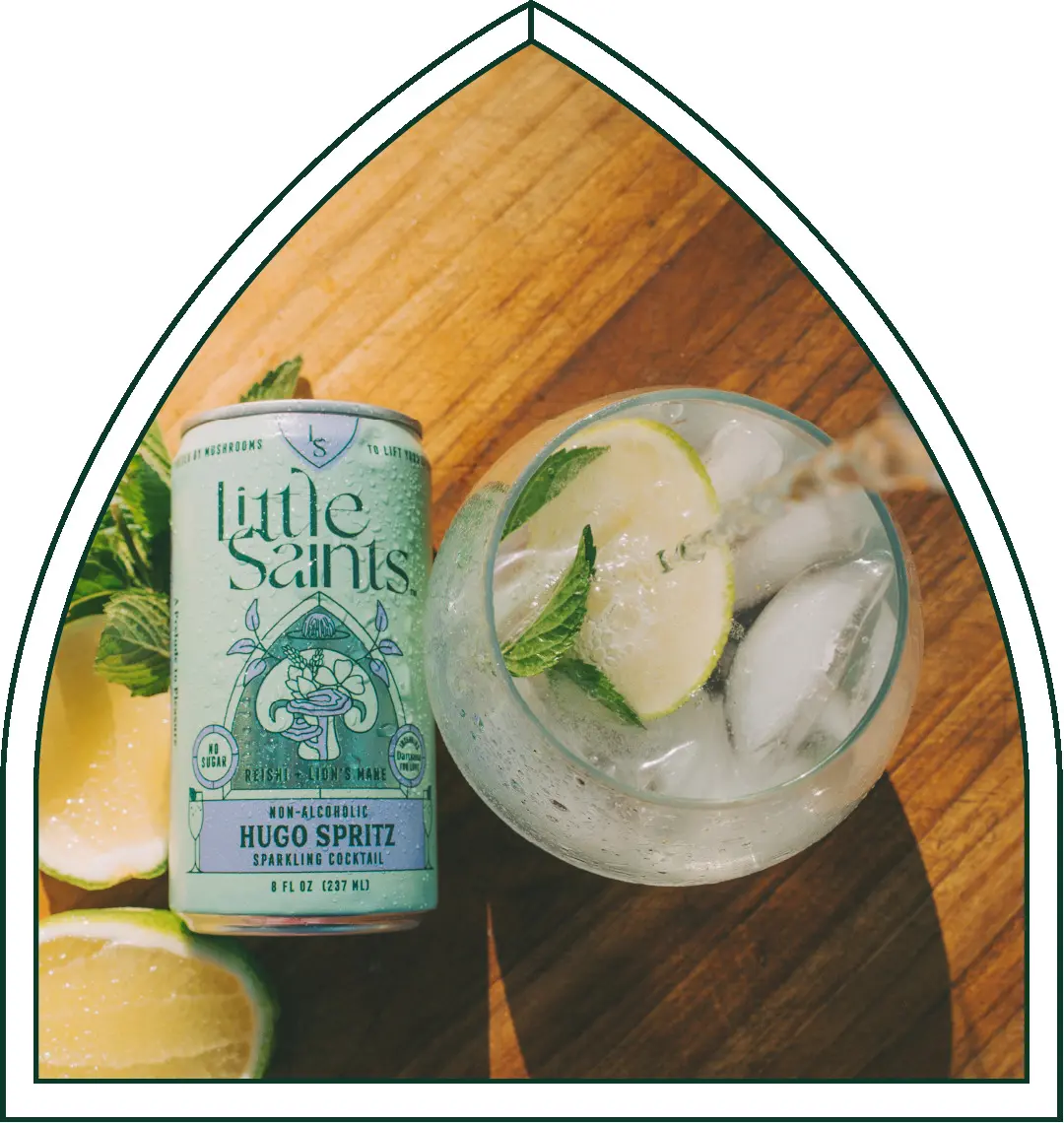
Ready-to-pour cans win on convenience and consistency. Because there is no prep, no build and no bartender time, the finished cocktail flavor profile is judged straight out of the can. That direct-from-can experience is exactly what makes them reliable during a rush or while hosting. For a party, a can that is already a Negroni Spritz or a Classic Margarita removes every variable between the package and the glass. Little Saints' canned line, including Classic Spritz, Hugo Spritz, Classic Margarita, Paloma, Old Fashioned, Mojito and Negroni Spritz, carries zero grams of sugar, five calories and 0% ABV, sweetened with monk fruit juice concentrate only, with no erythritol and no sugar alcohols.
Mix-yourself spirits win on control and ritual. The swirl, the pour, the clink of ice in glassware and the ability to hit a classic spec exactly all matter here. This format suits someone who wants to make the drink, not just open one.
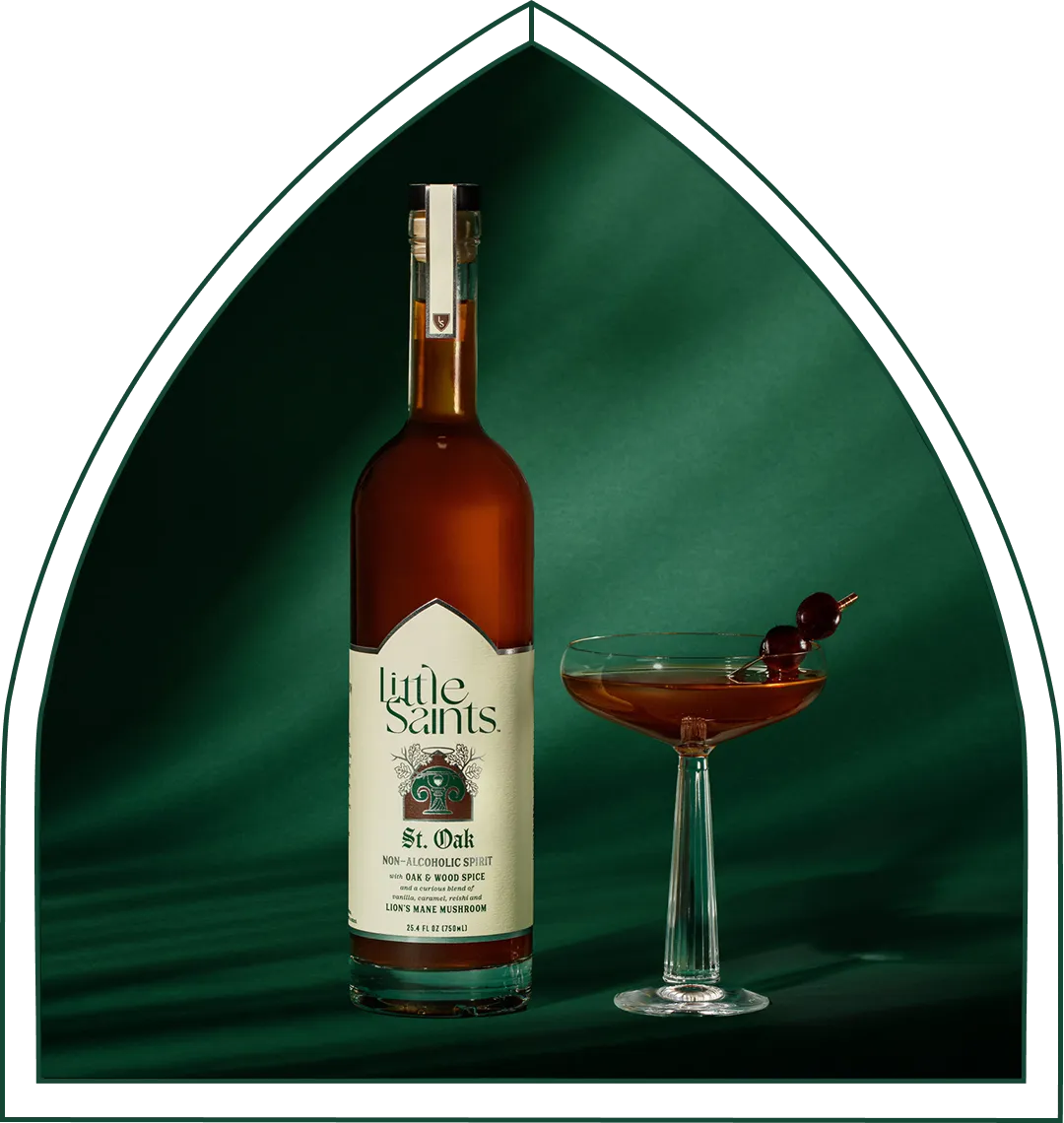
The trade-off that matters most is the 1:1 question. First-generation non-alcoholic spirits were characterized by bartenders as flavors in water that dilute in a cocktail and require two to three times the pour. Little Saints' spirits are built on oil-based craft small-batch extracts instead. Two ounces replace two ounces, and any recipe works unchanged. Non-alcoholic spirits that mix 1:1 make a real cocktail spec possible without over-pouring or re-engineering the build.
One clear exclusion applies. Little Saints does not function as a wine replacement. A non-alcoholic sparkling wine can be a mixer alongside a Little Saints spirit, but the brand never stands in for wine itself.
Three Sophisticated Non-Alcoholic Drinks To Build Tonight
Each build below uses a Little Saints spirit at a 1:1 ratio. Two ounces of the spirit replace two ounces of its alcoholic counterpart. The rest of the spec stays intact.
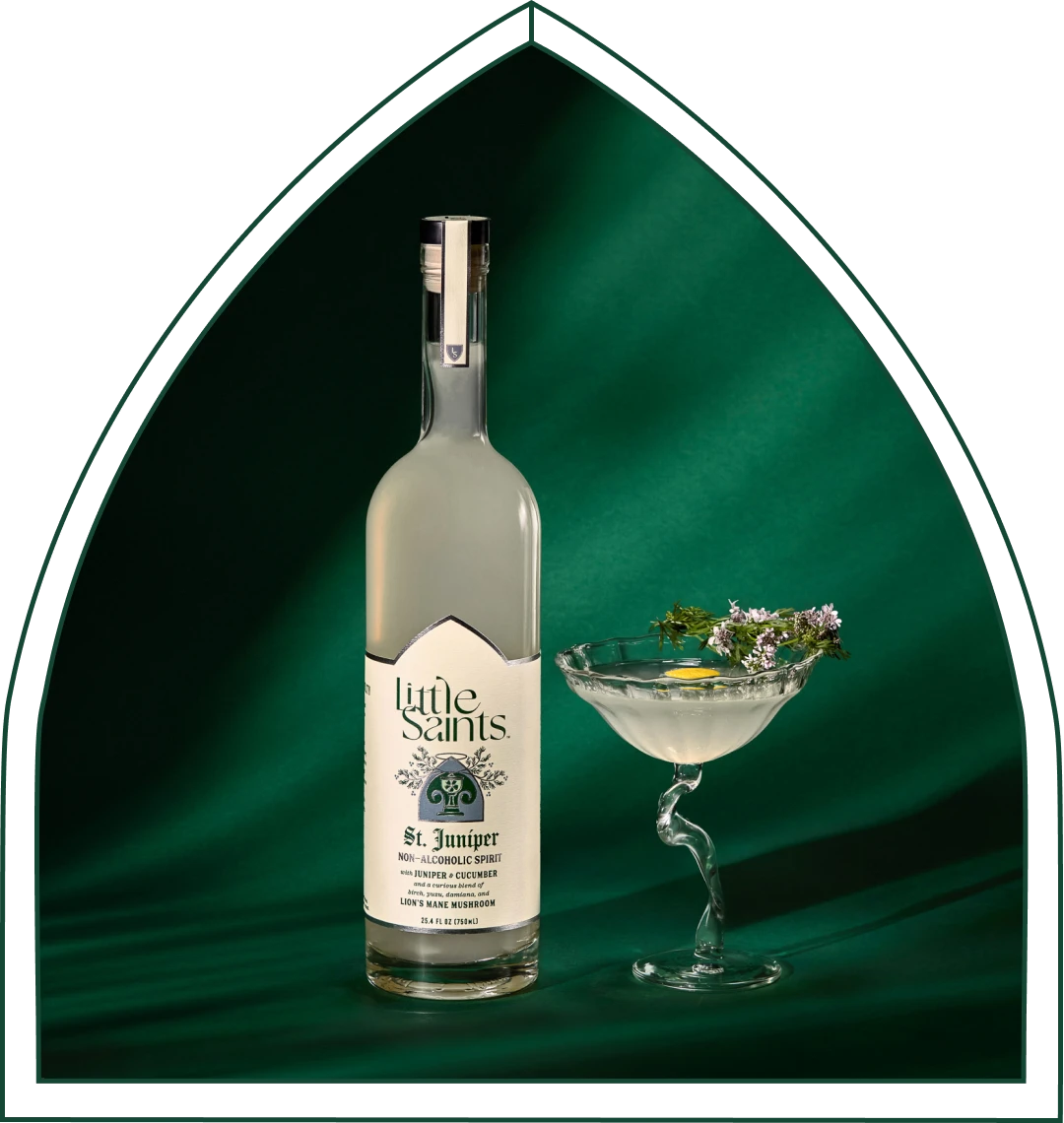
- Bitter Aperitif-Style Spritz, Built On St. Juniper. St. Juniper is the gin expression: juniper, cucumber and herbaceous notes from juniper, birch, angelica, coriander and cardamom. It works for gin and tonics, gimlets, martinis and anything citrus-forward. Build: 2 oz St. Juniper over large clear ice in a highball or wine glass, topped with 4 oz premium tonic water, finished with an expressed citrus peel. The expressed peel matters. It releases the aromatic oils that give the drink its nose and signal that what is in the glass is a cocktail.
- Stirred Brown-Spirit Cocktail, Built On St. Oak. St. Oak captures the notes of an oak-aged whiskey: vanilla, spice and woodsy notes from oak, vanilla, cardamom and caramel, plus Lion's Mane, Damiana and Reishi. It was named Best NA Spirit of 2025 by the BevNET Spirit Awards. Build: 2 oz St. Oak, 0.25 oz simple syrup and 2 dashes non-alcoholic aromatic bitters, stirred over ice for 30–45 seconds, then strained over one large clear ice cube in a rocks glass, with an expressed orange peel garnish. St. Oak also works as an aged rum substitute for tiki-style cocktails such as a Mai Tai.
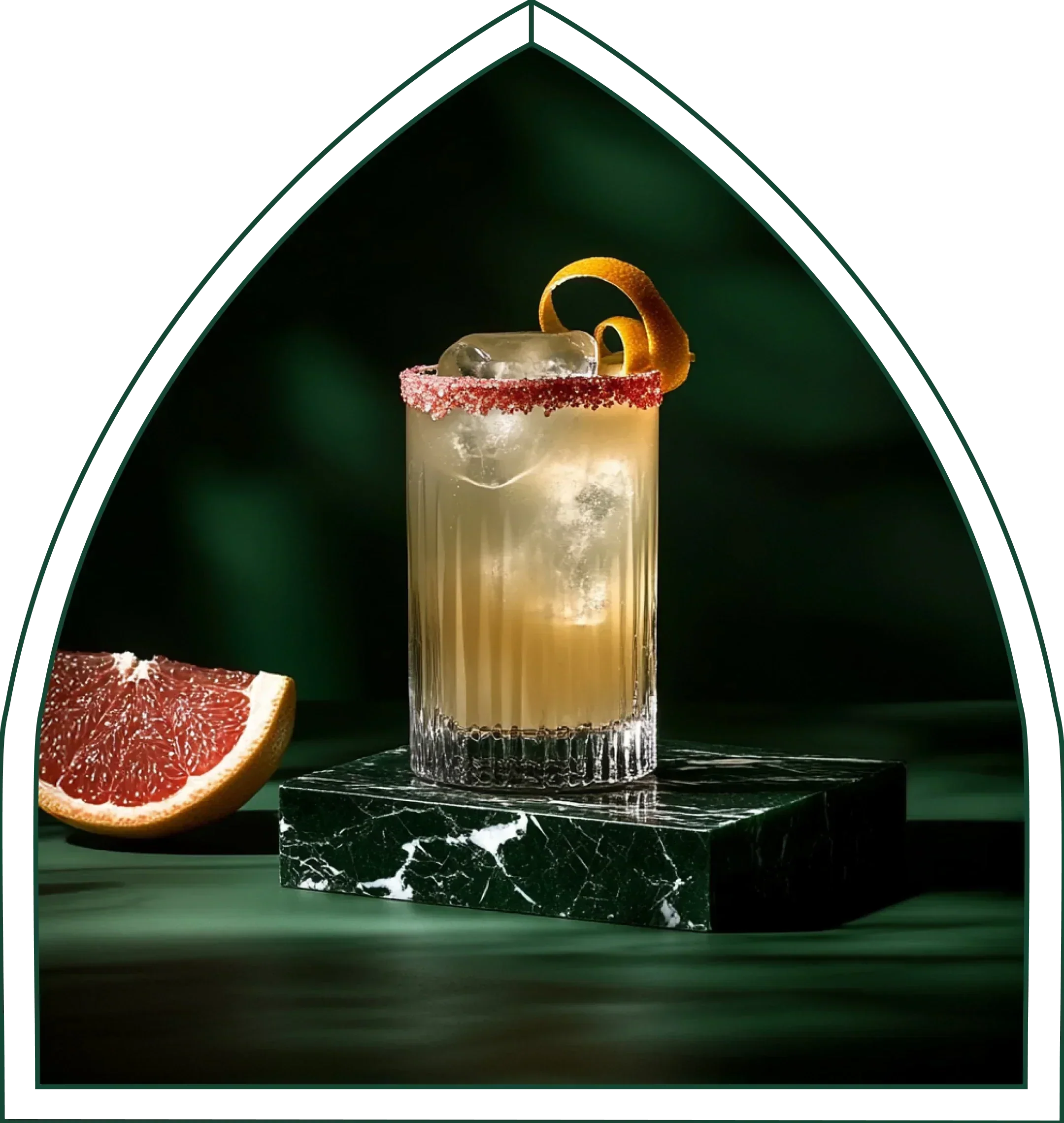
- Citrus-Forward Long Drink, Built On St. Ember. St. Ember is spicy, smoky and woodsy, built on palo santo, ginger and cardamom, an ode to the flavors of a light, spicy mezcal that mixes like a tequila or a mezcal. Palo santo is sustainably sourced and 1% of proceeds support reforestation in Peru. Build: 2 oz St. Ember, 1 oz fresh lime juice and 0.75 oz orange syrup, shaken hard with ice, then strained over fresh ice in a rocks glass with a salted rim and a lime wheel garnish. For a paloma variation, pour 2 oz St. Ember over ice in a highball, top with grapefruit soda, add a salt rim and a lime squeeze.
For a shortcut, the ready-to-pour canned line covers the same flavor territory: Classic Spritz, Hugo Spritz, Classic Margarita, Paloma, Old Fashioned, Mojito and Negroni Spritz.
The Mechanics That Make A Drink Read As A Cocktail
A few small details make a non-alcoholic drink feel like a real cocktail. These moves are product-agnostic. Apply them to any non-alcoholic build and the drink reads differently.
- Large clear ice. A 2-inch cube or sphere chills the drink without rapid dilution. Cloudy ice carries off-flavors from trapped air and minerals. Clear ice signals care before the first sip.
- Expressed citrus peel. Hold the peel skin-side down over the glass and snap it to release the oils. The aromatic spray lands on the surface of the drink and on the rim. A flame-grilled orange twist releases limonene vapors. Those vapors activate trigeminal heat, which compensates for the missing ethanol burn in zero-proof drinks. Even without the flame, the expressed peel adds the aromatic layer that separates a cocktail from a plain glass of liquid.
- Fresh herbs, slapped. Slap a mint sprig between the palms before placing it in the glass. The impact bruises the leaves and releases aromatic oils without shredding them.
- Restrained sweetness. Cold blunts sweetness, so a mix that reads balanced warm can turn flat and sugary once iced. Taste every build cold before serving.
- Adult glassware. A rocks glass, a coupe, a Nick and Nora or a highball all signal the category of the drink. A plastic cup or a juice glass undermines every other element.
- Carbonation added last, per glass. Never batch sparkling elements. Add tonic, soda or ginger beer at serve time, poured gently over a bar spoon to preserve the fizz through the first several minutes when it counts.
Once the build feels right in the hand and on the palate, the remaining question is what the drink actually does for the person holding it.
What Do These Drinks Actually Do?
The honest answer to “what drink makes you feel something but no alcohol” is the one most brands avoid giving. Little Saints calls its effect the Little Saints Lift, a sense of clarity and ease. In the brand's own words, you feel a little bit lifted, a little more clear and relaxed. Many people describe it as taking a deep breath, exhaling and feeling more present. Customer reviews and direct messages most often use the words clarity and ease, with lifted close behind. Cocktail drinkers report feeling “just happier in general,” especially after stressful days, a subtle take-the-edge-off sensation.
The functional platform behind that effect is Nature's Neuroscience: organic Reishi, organic Lion's Mane, Damiana and botanical terpenes. Reishi is “for chill,” the settling end of the blend. Lion's Mane is “for focus,” the mental presence end. Damiana is “for connection,” the warmer, more physical side of the feeling. Botanical terpenes are “for the senses,” the aromatic layer that gives the drink a nose.
Little Saints publishes both figures most brands leave out, the dose and the potency, documented by certificates of analysis from the supplier. The mushrooms are USDA Organic and grown in California, extracted with clean ultrasound technology rather than solvents. The extract holds GRAS status, the FDA's standard of generally recognized as safe for an ingredient used in food. GRAS covers the safety of the ingredient in food. It is not FDA approval of the product and does not address whether an ingredient produces an effect.
The products are non-intoxicating, non-psychoactive and 100% legal, with no impairment to judgment, reaction time or coordination.
These statements have not been evaluated by the Food and Drug Administration. This product is not intended to diagnose, treat, cure or prevent any disease.
Sophisticated Non-Alcoholic Drinks For A Party
Hosts see the best results when they treat non-alcoholic drinks as part of the flow, not as a separate lane. Zebra striping, or alternating alcoholic and non-alcoholic drinks over the course of a night, reflects how people already behave. The behavior is measured, not anecdotal: 47% of on-premise visitors mix alcoholic and non-alcoholic options in the same occasion, and 93% of non-alcohol buyers also purchase alcohol. Those dual buyers spend more on total alcohol, not less. The non-alcoholic pour adds to the evening.
Non-alcoholic drinks for a party work best when the choice feels invisible. Practical guidance:
- Batch a single sophisticated non-alcoholic option and serve it in the same glassware as everything else. Avoid a separate station, an announcement or a label that reads “for the non-drinkers.”
- Describe the drink by its flavor, such as “This one is bitter and citrusy,” instead of by what it lacks.
- Never ask a guest why they are not drinking. A guest may be managing a health issue, taking medication, pregnant or simply uninterested in alcohol that evening.
- Add carbonation per glass at serve time, not to the batch, so the fizz holds through the first round.
- Two or three excellent options outperform eight mediocre ones. One bitter-forward build, one citrus-forward build and still water form a complete menu.
The drink that keeps someone at the table for three hours, the round that would otherwise have been a water, is the one that reads as adult, considered and intentional in front of other people.
How To Read A Label Before You Buy
Four checks separate a sophisticated non-alcoholic drink from a sugary one. Apply them to any bottle or can on a shelf.
- Sugar. The label should read 0g. Non-alcoholic drinks with no sugar exist, but they are not the default. Most of the set carries significant sweetener. A regular soda carries 35–40 grams of sugar. Cutting alcohol should reduce sugar as well.
- Calories. Five calories per can is achievable without sacrificing flavor. Higher calorie counts in a non-alcoholic drink usually mean juice, syrup or both.
- Whether a functional dose is stated. Most brands publish neither a dose nor a potency. A label that states a specific milligram figure demonstrates transparency. One that lists a “mushroom blend” without a number leaves the customer guessing.
- Whether a potency is published. The meaningful figure is a specific beta glucan percentage, not a total polysaccharides number. A total polysaccharide claim is not a reliable potency signal on its own. Polysaccharides include both beta-glucans and starches, so the total figure can be misleading. A product that is mostly ground grain can still show an impressive polysaccharide figure while containing almost no meaningful beta glucan content.
Little Saints publishes both figures most brands leave out: a stated 100mg dose per serving at a minimum of 70% beta glucan, documented by certificates of analysis from the supplier. For context on why the potency figure matters, a whole mushroom sits around 0.1% beta glucan, which makes the extract up to 700 times more concentrated. A cooked or dried, ground mushroom is in the region of 1%, which makes it roughly 70 times more concentrated. Quality fruiting body extracts typically run 20 to 40% beta glucan, while mycelium-on-grain products commonly test in the low single digits. At 70%, Little Saints' extract sits at the top of that range.
The comparison below applies the four label checks across format types and shows why most non-alcoholic options fail at least two of them. Little Saints is the only column that clears all four.
| Attribute | Little Saints | Sugar-Sweetened NA Cocktails | First-Gen NA Spirits |
|---|---|---|---|
| Sugar per serving | 0g | Present, often significant | Varies |
| Calories per serving | 5 (cans) | Higher | Varies |
| Functional dose stated | 100mg, published | None | None |
| Mixes 1:1 in a cocktail | Yes, oil-based extracts | n/a | No, 2–3x pour needed |
Frequently Asked Questions
What Makes A Non-Alcoholic Drink Sophisticated?
A sophisticated non-alcoholic drink is built on bitterness, acidity, herbal or tea notes and real carbonation, then served with proper dilution, large clear ice and an aromatic garnish. A sugar-heavy fruit juice base does not meet that standard. The criteria that matter most are a bitter botanical element, fresh citrus acidity, engineered aroma from terpenes or expressed peel and a stated functional dose if the drink carries one.
What's The Most Sophisticated Non-Alcoholic Drink To Order?
The most sophisticated non-alcoholic drink to order behaves like a cocktail: bitter or tart, served over large clear ice in real glassware, with a garnish. At a bar, ask for the non-alcoholic option built like the cocktail list, not poured from the juice station. If the venue has a non-alcoholic spirit, ask for it over ice with a citrus garnish. The drink in your hand should read as adult and intentional.
What Do Discerning People Drink Non-Alcoholic?
Discerning drinkers reach for non-alcoholic options that meet the same standard as the cocktail list: bitter botanicals, real acidity, aromatic complexity and no added sugar. The behavior is documented, and the moderation figures cited earlier show that most non-alcohol buyers also purchase alcohol. The non-alcoholic choice represents a different round in the same evening.
What To Drink At Night Instead Of Alcohol?
The evening occasion calls for a drink that marks the end of the day without disrupting the night. A non-alcoholic spirit built on bitter botanicals and served over large clear ice in real glassware does that job. The key criteria include zero sugar, no caffeine in the core line, a stated functional dose and a flavor profile that reads as adult rather than as juice. Little Saints was built specifically for this moment, the drink that would otherwise have been a Negroni or a whiskey old fashioned.
Do These Drinks Actually Do Anything?
Most people notice something, but the effect stays subtle by design. Little Saints calls it the Little Saints Lift, a sense of clarity and ease described as feeling a little bit lifted, a little more clear and relaxed, like you can take a deep breath, exhale and be more present. The products are non-intoxicating, non-psychoactive and 100% legal, with no impairment to judgment, reaction time or coordination.
The functional blend includes organic Reishi, organic Lion's Mane, Damiana and botanical terpenes, dosed and tested as described earlier in this guide. These statements have not been evaluated by the Food and Drug Administration. This product is not intended to diagnose, treat, cure or prevent any disease.
Is There Caffeine In Little Saints?
Not in the core line. The occasion is the evening, and many customers are here specifically to protect their sleep. The functional blend is built for the wind-down, not the morning desk. There is no caffeine, no stimulants and no interference with the sleep the customer is trying to protect.
Zero Sugar, So What's The Sweetener?
In the cans, the sweetener is monk fruit juice concentrate and nothing else, with no cane sugar, no erythritol and no sugar alcohols. In the spirits, there is no sweetener at all. The St. line contains no added sweeteners. Any sweetness you taste comes from the botanical extracts themselves, such as the palo santo in St. Ember. That profile allows five calories per can. No calorie figure is published for the spirits.
Conclusion: The Standard, And Where To Start
The standard for a sophisticated non-alcoholic drink stays straightforward. Bitterness, acidity, herbal or tea notes, real carbonation, proper dilution, large clear ice, adult glassware and a stated functional dose define the experience. Every element on that list is verifiable on a label or in a build. None of it requires a specialty-store trip or a bartender.
The format that fits your night determines where to start. If the occasion is hosting or a quick pour after work, the canned line, with zero sugar, five calories and 0% ABV, offers the shortcut. If the occasion is making the drink, St. Ember, St. Juniper and St. Oak mix 1:1 in any classic spec, with no adjustment to the recipe and no over-pouring.
Choose Your First Little Saints Pour
The statements made on our website have not been evaluated by the Food and Drug Administration, Our products are not intended to diagnose, treat, cure or prevent any disease. If you are pregnant, nursing, taking any medications or have any medical conditions, consult your doctor before use.