


Key Takeaways
- Reishi mushroom tea comes from the Ganoderma lucidum fruiting body and contains water-soluble beta-glucans and alcohol-soluble triterpenes, yet most commercial products do not disclose potency or dose.
- Clinical evidence for immune support, stress reduction, and sleep quality comes from concentrated extracts at doses far higher than a typical brewed cup can deliver.
- Traditional preparation uses a decoction: simmer 3–5 g of dried fruiting body for 45–90 minutes. Quick steeps extract very few active compounds.
- Potency determines whether reishi has a meaningful effect. Most teas contain token amounts of mushroom material, while quality extracts reach 20–40% beta-glucan.
- Ready for a reishi product that publishes both dose and potency? Explore Little Saints’ COA-Verified Lineup of zero-sugar functional mushroom cocktails and spirits.
What Reishi Mushroom Tea Actually Is
Reishi (Ganoderma lucidum) is a hard, woody bracket fungus. Its primary bioactive compounds fall into two classes: water-soluble beta-1,3/1,6-D-glucans, which bind immune receptors on macrophages and dendritic cells, and alcohol-soluble triterpenes known as ganoderic acids, which have demonstrated antioxidant and antiplatelet activity in preclinical studies. Memorial Sloan Kettering Cancer Center notes that reishi’s active constituents include beta-glucan polysaccharides and triterpenes, and that beta glucans have demonstrated antitumor and immunostimulating activities.
The distinction between the fruiting body, meaning the mushroom itself, and mycelium-on-grain matters enormously here. Mycelium-on-grain products grow fungal threads on a rice or oat substrate and grind the entire mass into powder. The result is a product where starch averaged between 35% and 40% and reached as high as 66.4% in some commercial samples, with correspondingly low beta-glucan content. When a shelf product says “reishi mushroom tea,” it can mean dried fruiting-body slices, a powdered blend, or a flavored tea bag with a token amount of extract. The label rarely tells you which form you are buying.
Reishi Mushroom Tea Benefits: What The Evidence Actually Shows
The following five benefits are the most commonly claimed for reishi mushroom tea. Each is graded against the actual study type and population behind it.
- Immune support. Research suggests beta-glucans in reishi interact with Dectin-1 receptors on innate immune cells. A 2023 randomized controlled trial by Chen et al. in healthy adults aged 18–55 found significant increases in CD3+, CD4+, and CD8+ T-lymphocytes, an improved CD4/CD8 ratio, and elevated natural killer cell counts and cytotoxicity after 84 days of a standardized reishi beta-glucan extract, with no adverse changes in liver or kidney function. That was a concentrated extract, not brewed tea. Early studies indicate immune markers move, while effects on actual infection rates remain unclear.
- Stress and calm. Traditional use points to reishi as a calming functional mushroom. A 2005 double-blind trial by Tang et al. in 132 adults with persistent fatigue found significant improvements in well-being scores after 8 weeks at 5,400 mg per day of a reishi polysaccharide extract. That dose sits far above what a cup of tea can provide.
- Sleep quality. A 2023 meta-analysis by Chu and colleagues published in Frontiers in Pharmacology pooled 5 randomized clinical trials and found a statistically significant reduction in Pittsburgh Sleep Quality Index scores in the reishi group versus placebo. The trials were small and used concentrated extracts. The research does not yet show that a standard brewed reishi mushroom tea improves sleep.
- Antioxidant effects. Lab and animal studies show reishi triterpenes have antioxidant activity. A 2024 systematic review and GRADE-assessed meta-analysis by Sohail et al. pooling 17 randomized controlled trials found improvements in glutathione peroxidase, an antioxidant marker, with GRADE certainty rated low to moderate. Human outcome data at brewed-tea doses remains limited.
- General sense of ease. Many people report a subtle sense of calm with regular use. Current research does not yet explain this effect at the dose a cup of tea delivers.
Dose And Preparation: How To Make Reishi Mushroom Tea
Traditional reishi tea uses a decoction method rather than a quick steep. A standard preparation uses 3–5 grams of dried Ganoderma lucidum fruiting body per 500 ml of water, simmered for 45–90 minutes. The mushroom’s cell walls are tough chitin, so a brief steep extracts very little. Keep the heat low, with small, lazy bubbles instead of a rolling boil, because a hard boil can degrade the triterpenes you want to extract. A properly brewed cup tastes distinctly bitter, and that bitterness signals triterpenes dissolving into the water.
The honest caveat: potency sits at the heart of the reishi story. A whole mushroom sits around 0.1% beta-glucan by dry weight, and a cooked or dried, ground mushroom is in the region of 1%. Quality fruiting-body extracts typically run 20–40% beta glucan, while mycelium-on-grain powders commonly test in the low single digits because the powder is diluted by the grain substrate. Brewed tea from non-concentrated dried slices sits closer to the whole-mushroom end of that scale. Many “reishi teas” on shelves are blends with token amounts of mushroom material, so the cup often feels like flavored water. Dose and potency in the cup are the variables that matter, yet most products disclose neither.
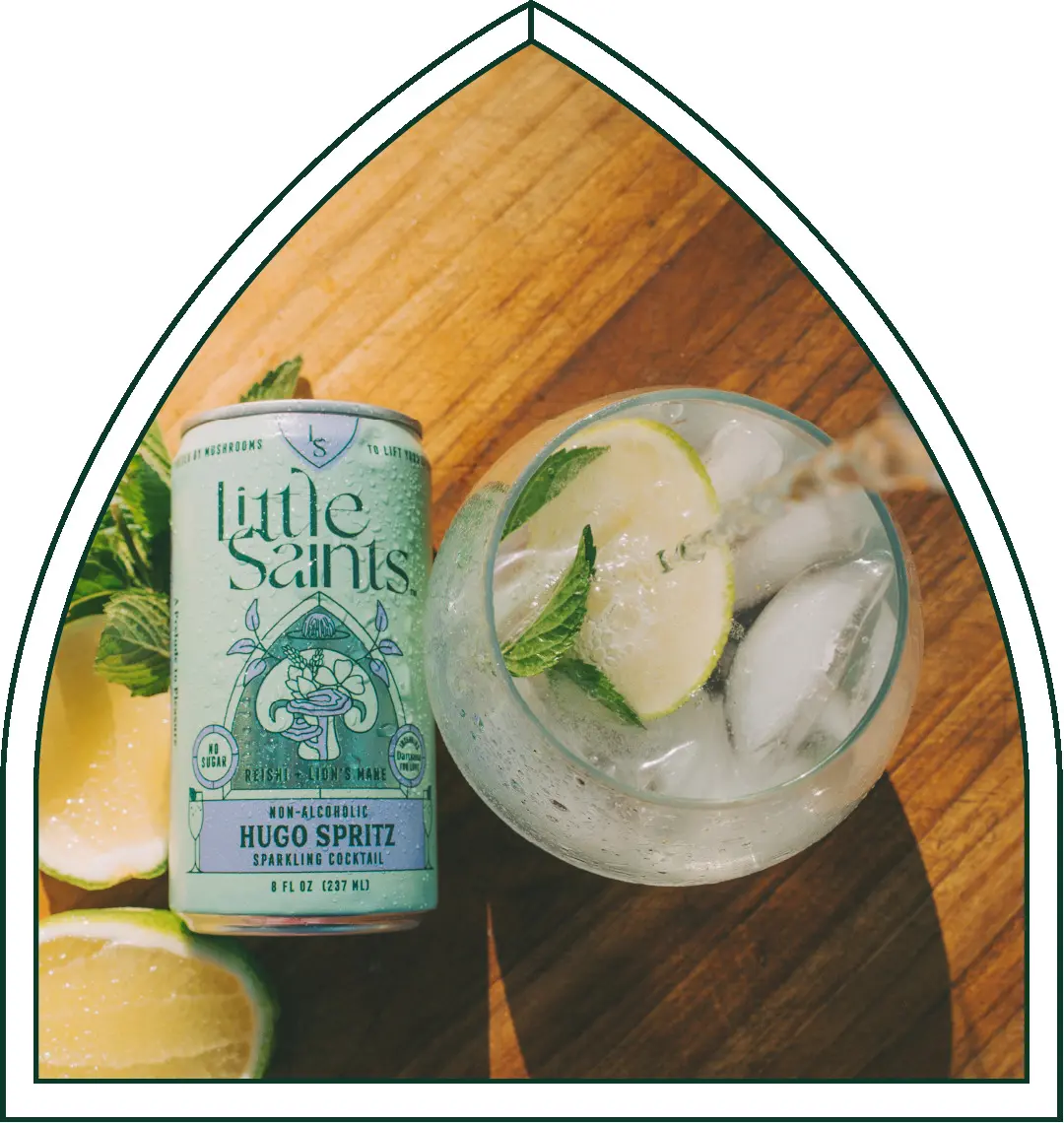
Ready to try a reishi product that publishes both dose and potency? Find Your Evening Reishi Ritual in the Little Saints range of non-alcoholic cocktails and spirits, each with a COA-verified functional mushroom blend.
When To Drink Reishi Mushroom Tea
Once you know how to prepare reishi and how much actually reaches the cup, timing becomes the next practical question. Evening is the more common choice. Reishi is traditionally associated with the wind-down end of the day, and many people who use it as part of a daily ritual reach for it in the hours before bed. Current clinical evidence does not point to one specific time of day, so evening use functions as a practical convention rather than a strict requirement.
Consistency matters more than clock time. Most clinical trials showing meaningful outcomes ran for a minimum of 8–12 weeks, so a few days of use rarely produces measurable effects. A daily drink you look forward to is easier to sustain than a capsule you forget, which supports the case for folding reishi into an evening ritual.
Safety And Side Effects: Reishi Mushroom Tea Side Effects And Interactions
Reishi mushroom tea is generally well tolerated for many healthy adults, yet specific groups face higher risk. The following interactions and contraindications appear in clinical and pharmacological literature.
- Blood thinners. Reishi can increase bleeding risk and may prolong INR, PT, and APTT lab values. This applies to warfarin, heparin, aspirin, and clopidogrel. Discuss use with your doctor.
- Blood pressure medications. Reishi has been associated with blood pressure-lowering activity via inhibitory effects on angiotensin-converting enzyme (ACE). People already at target on ACE inhibitors, ARBs, beta-blockers, calcium channel blockers, or diuretics should monitor for additive effects.
- Diabetes medications. Reishi may have mild blood-sugar-lowering effects. People taking metformin, sulfonylureas, or insulin should monitor blood glucose when starting reishi.
- Immunosuppressants. Reishi can enhance immune response, so it may not be appropriate for people taking immunosuppressant drugs.
- Pregnancy and nursing. Human safety data remains insufficient. Avoid use unless your doctor specifically recommends it.
- Liver injury signal. The NIH LiverTox database classifies reishi as a possible but rare cause of clinically apparent liver injury, based on case reports primarily associated with powdered reishi products. Stop use and seek medical attention if you develop unusual fatigue, abdominal pain, dark urine, or yellowing of the skin or eyes.
- Surgery. Discontinue reishi at least two weeks before scheduled surgery because of its potential effect on blood clotting.
Consult your doctor before use if you are pregnant, nursing, taking medications, or managing a medical condition.
These statements have not been evaluated by the FDA. The products are not intended to diagnose, treat, cure or prevent any disease.
The Hormone Question: Reishi And Estrogen
Hormonal effects sit in a separate category from general safety. A 2009 study by Shimizu et al. published in the Journal of Wood Science found that an ethanol extract of Ganoderma lucidum demonstrated estrogen-like activity in preclinical laboratory research, with the authors suggesting the extract may have potential to modulate estrogen receptors. No human randomized controlled trial has tested reishi in menopausal or perimenopausal women, measured estrogen or progesterone levels, or tracked hormonal outcomes in that population. Anyone with a hormone-sensitive condition should discuss reishi use with their doctor before starting.
How To Tell A Real Reishi Product From A Token-Dose Blend
The potency gap between product types explains why many reishi mushroom teas feel like they do very little. When evaluating any reishi product, four label elements matter most:
- A stated dose per serving in milligrams
- A published beta-glucan figure, specific to beta-1,3/1,6-glucan rather than total polysaccharides
- Organic cultivation and a named growing source
- Certificates of analysis (COA) from a third-party lab documenting the potency claim
The table below shows how far apart the categories sit on the two numbers that matter: stated dose and published beta-glucan content. Notice that only one row answers both.
| Product Category | Stated Dose Per Serving | Published Beta-Glucan Content |
|---|---|---|
| Little Saints | 100mg | Minimum 70% (COA-verified) |
| Typical reishi tea bag | Not stated | Not stated |
| Dried reishi slices (brewed) | Not stated | ~1% (dried mushroom) |
| Mycelium-on-grain powder | Not stated | Typically below 7% |
Little Saints is a non-alcoholic cocktail and spirits brand built specifically for the evening drinking occasion, and every pour carries organic reishi as the “for chill” end of the brand’s Nature’s Neuroscience blend. The formula also includes organic Lion’s Mane, Damiana, and botanical terpenes. The mushroom extract is a minimum of 70% beta-glucan, dosed at a stated 100mg per serving. That potency figure separates it from token-dose blends. It is USDA Organic and grown in California, and it is extracted with ultrasound rather than chemical solvents so the beta-glucans survive processing.
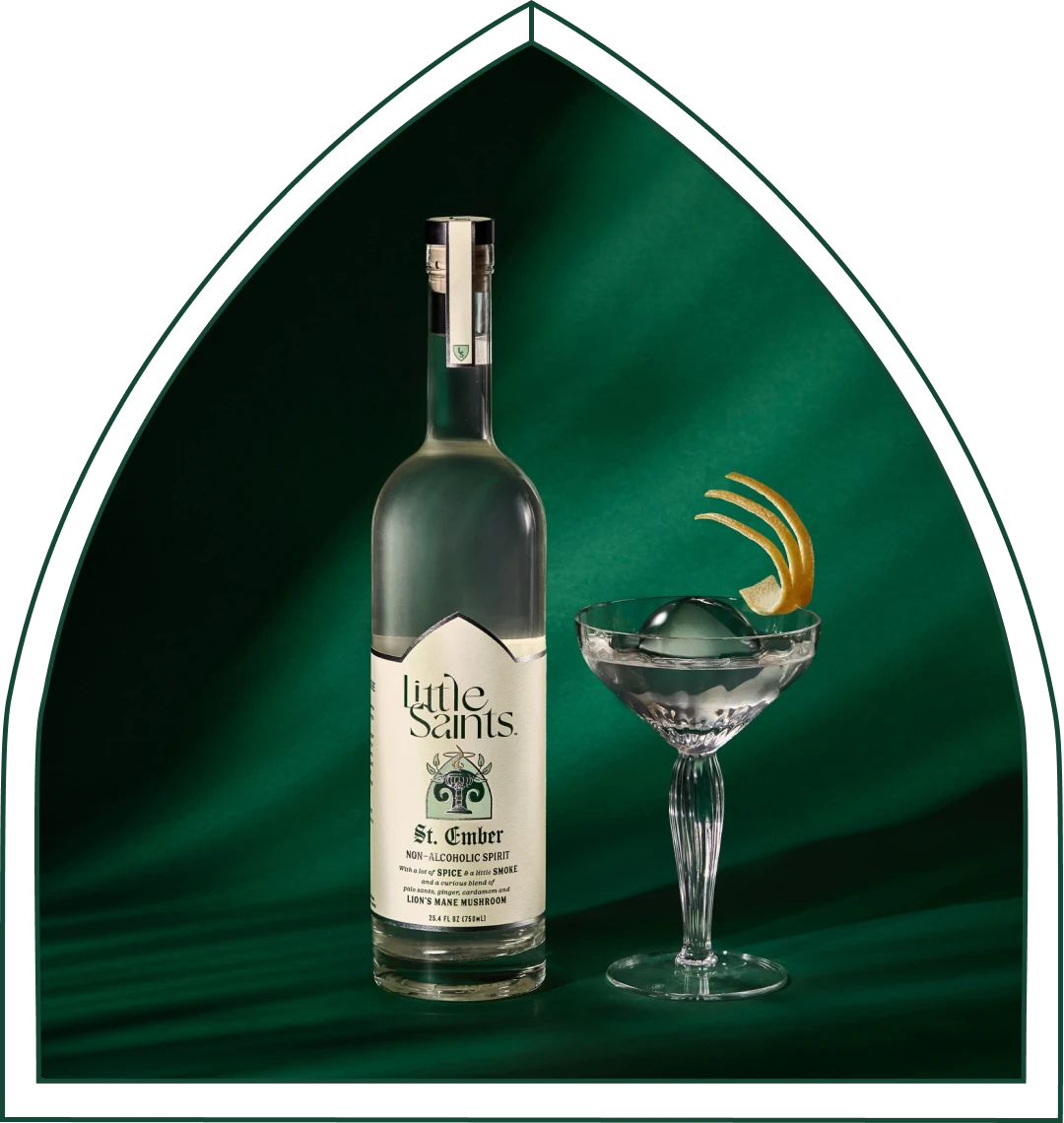
At 70% beta-glucan, the extract is up to 700 times more concentrated than a whole mushroom at about 0.1% beta-glucan, and roughly 70 times more concentrated than a dried, ground mushroom at about 1%. The canned cocktails, including Classic Spritz, Hugo Spritz, Classic Margarita, Paloma, Old Fashioned, Mojito, and Negroni Spritz, carry zero grams of sugar and five calories per can. The non-alcoholic spirits, St. Ember, St. Oak, and St. Juniper, carry zero grams of sugar with no sweeteners at all. Both lines are built for the evening drinking occasion with no caffeine in the core line, cocktail-grade flavor profiles, and a supplement-grade functional mushroom blend that publishes what most products keep vague.
Most reishi mushroom teas skip a clear dose statement, so the cup rarely matches research-level potency. Little Saints publishes both the dose and the beta-glucan percentage. Browse The Evening-Friendly Reishi Collection and choose a ritual that tells you exactly what is in every pour.
The Honest Takeaway
Reishi mushroom tea offers a pleasant ritual with early but intriguing evidence behind it. The research suggests meaningful shifts in immune markers, stress response, and sleep quality, yet those signals come from concentrated extracts at doses a brewed cup cannot match. Dose and potency drive outcomes, and many tea products disclose neither. If you want reishi to behave like the versions used in trials, you need to know the beta-glucan percentage and the milligrams per serving. Little Saints prints both on the label, pairing that transparency with zero-sugar, low-calorie, COA-verified non-alcoholic cocktails and spirits.
See The COA-Verified Little Saints Line and decide how reishi fits into your own evening routine.
The statements made on our website have not been evaluated by the Food and Drug Administration, Our products are not intended to diagnose, treat, cure or prevent any disease. If you are pregnant, nursing, taking any medications or have any medical conditions, consult your doctor before use.