


Key Takeaways
Here are the core points to keep in mind when you choose a reishi calming drink.
- Reishi has traditional calming uses and limited human evidence for reducing fatigue and anxiety, while large-scale trials confirming consistent sedative effects are still missing.
- Most reishi drinks hide exact doses inside proprietary blends, so always look for a stated milligram amount and a beta glucan percentage on the label.
- Beta glucan is the active compound that matters most, and fruiting body extracts with 20–40% beta glucan outperform mycelium-on-grain products that often test in the low single digits.
- Little Saints publishes a clear 100 mg mushroom dose and a minimum 70% beta glucan per can, along with USDA Organic fruiting body extracts and ultrasound extraction.
- Little Saints offers transparent, high-potency reishi drinks that fit naturally into an evening ritual without caffeine or sugar.
Does Reishi Calm You Down?
Reishi has a long traditional history as a calming mushroom and early human research points in the same direction, yet the evidence remains limited. The current data supports a modest, gradual effect on fatigue, stress, and mood rather than a strong, drug-like sedative response for everyone.
Merck Manuals describes reishi (Ganoderma lucidum) as a fungus used in traditional Asian medical systems that is claimed to boost the immune system, increase strength and stamina, and treat fatigue, but notes that the evidence from studies in people is limited, often of poor quality, and has not confirmed these claimed health benefits in high-quality studies. Memorial Sloan Kettering Cancer Center reports that clinical studies indicate reishi may lower anxiety and also documents safety precautions for specific groups, covered in detail below.
Here is what current evidence supports.
- Traditional Use: Reishi has been used for over 2,000 years in traditional Chinese medicine to calm the mind, support rest, and reduce the effects of stress.
- Research on Fatigue and Well-Being: A randomized controlled trial of 132 adults with neurasthenia found that a reishi polysaccharide extract reduced fatigue scores significantly more than placebo over eight weeks.
- Research on Stress Markers: A 2026 randomized controlled trial found that a five-mushroom blend including reishi reduced serum cortisol over twelve weeks, although reishi was one of five ingredients rather than the only variable.
- Research on Anxiety: A small 30-day trial in 78 female college students found improved anxiety and mood scores at 1,000 mg daily, within a single population over a short window.
- Not Yet Demonstrated: No large-scale randomized controlled trial has confirmed reishi as a reliable sedative or sleep aid with sleep quality as a primary endpoint in healthy adults.
Most human trials are small, short, or study reishi inside a blend rather than on its own. Researchers discuss a calming mechanism in which reishi triterpenes interact with GABA-A receptors, based mainly on animal studies. The human evidence trends positive and aligns with traditional use, yet it does not support claiming that reishi calms you in a predictable, pharmaceutical way.
Even with this nuance, the next practical question is what actually sits inside a can of reishi drink.
How Much Reishi Is Actually In A Calming Drink
Most reishi drinks keep the real dose vague, so the label often matters more than the marketing. A 2026 audit confirmed that proprietary blends with undisclosed per-ingredient amounts are common across functional mushroom brands, including reishi-containing products such as RYZE's Super6 blend, where individual species amounts like reishi are not disclosed. A label that lists only “reishi mushroom extract” without a milligram dose gives you no usable information about the contents.
Two numbers matter on any reishi drink label: the milligram dose per serving and the beta glucan content. The first tells you how much mushroom extract is in the can. The second tells you how much of that extract is actually active.
What Beta Glucan Is And Why It Matters More Than The Milligram Number Alone
Beta glucan is the fraction of the mushroom that carries its adaptogenic properties. It drives the immune-modulating and restorative activity documented in research. A milligram figure without a beta glucan figure tells you only the weight of the powder in the can and not what that powder contains.
Independent testing consistently finds that mycelium-on-grain reishi products contain significantly more starch from the grain substrate than beta glucan from the fungus, with mycelium products typically testing at 1–7% beta glucan versus 20–40% in correctly extracted fruiting body products. A product made from mycelium grown on rice or oats can carry a “reishi extract” label. It delivers only a fraction of the active content of a concentrated fruiting body extract. A 500 mg mycelium product may deliver just 25–75 mg of beta glucans compared to 125–200 mg from a 500 mg fruiting body extract.
The extraction method also shapes potency. Fruiting bodies contain higher triterpene concentrations than mycelium, and many commercial mycelium products are grown on grain substrate, which can add non-mushroom starch to the dry weight and inflate polysaccharide measurements.
What Little Saints Publishes
Little Saints answers the dose question directly by publishing a stated 100 mg mushroom dose per serving and a minimum 70% beta glucan figure. Every can carries:
- A stated 100 mg mushroom dose per serving, with reishi in every can.
- A minimum of 70% beta glucan, documented by certificates of analysis from the supplier.
- USDA Organic mushrooms grown in California.
- Ultrasound extraction rather than chemical solvents.
- Zero sugar and five calories per can, with no caffeine in the core line.
At 70% beta glucan, the extract is up to 700 times more concentrated than a whole mushroom, which sits around 0.1% beta glucan. Quality fruiting body extracts typically run 20–40% beta glucan and mycelium-on-grain powders commonly test in the low single digits, so 70% sits at the top of that range. The extract also holds GRAS status, the FDA's standard of generally recognized as safe for an ingredient used in food. GRAS covers the safety of the ingredient in food and does not represent FDA approval of the finished product or proof of effect.
How To Read Any Reishi Drink Label
Before buying any reishi calming drink, look for four things that separate a transparent product from a vague one.
- Milligram Dose Per Serving: stated explicitly and not hidden in a proprietary blend.
- Beta Glucan Content: expressed as a percentage and documented by a certificate of analysis, so you can compare it to published research.
- Fruiting Body Versus Mycelium: fruiting body extract matches the form used in clinical research, while mycelium-on-grain does not.
- Extraction Method: hot water, dual extraction (water and alcohol), or ultrasound. A label that does not specify extraction method cannot be assumed to deliver triterpenes at research-relevant concentrations.
Generic “polysaccharide” percentages can be misleading because standard polysaccharide tests measure all sugar-based molecules, including grain starch from mycelium-on-grain substrates, not just the bioactive mushroom beta glucans. Beta glucan-specific testing gives a clearer picture of potency.
A 2017 analysis of 19 reishi supplements purchased online found that only 26% could be verified as containing genuine Ganoderma lucidum. Strong label literacy protects you in this category.
How Long Does It Take For Reishi To Kick In And When To Drink It
Reishi works cumulatively over time rather than as an instant relaxer. Most people notice subtle effects from reishi after 2 to 4 weeks of consistent daily use. The human trials measuring stress and fatigue outcomes ran for weeks, not hours. The neurasthenia fatigue trial ran eight weeks, and the cortisol-reduction trial measured significant changes beginning at six weeks. Calming signals appear after weeks of daily use rather than immediately after a single dose.
Practitioners commonly recommend reishi in the evening because its triterpenes support relaxation and sleep onset, while stimulating compounds like cordyceps fit better in the morning. The evening also matches the occasion a reishi calming drink serves best. Little Saints' core line carries no caffeine because many customers reach for it specifically to protect their sleep.
Consistency of daily use over weeks matters more than the exact time of day. That is the practical case for putting reishi into a daily drink you enjoy instead of a capsule you forget.
Who Should Not Take Reishi
Reishi interacts with several medication classes and health conditions, so some people should avoid it or use it only with medical supervision.
Memorial Sloan Kettering Cancer Center warns that reishi mushroom can increase the risk of bleeding and advises patients on blood thinners such as warfarin to talk to their healthcare provider before using reishi supplements. The anticoagulant and antiplatelet medications of concern include warfarin (Coumadin, Jantoven), apixaban (Eliquis), rivaroxaban (Xarelto), clopidogrel (Plavix), aspirin at antiplatelet doses, and heparin. If you take any of these, your prescribing physician should guide the decision.
Memorial Sloan Kettering also states that reishi may not be safe for people taking immunosuppressants, because reishi enhances immune response, which directly opposes immunosuppressive therapy. This warning applies to organ transplant recipients and to people managing autoimmune conditions such as rheumatoid arthritis, lupus, or Crohn's disease with immunomodulating medications.
Reishi has been studied for blood-glucose-lowering properties; combined with diabetes medications such as insulin, metformin, sulfonylureas, SGLT2 inhibitors, and GLP-1 agonists, additive hypoglycemia is a theoretical concern, although a 2016 human study found no significant effect on fasting blood sugar or HbA1c. If you manage blood sugar with medication, discuss reishi with your doctor before adding it.
On liver injury, the NIH LiverTox database documents fewer than 10 published case reports worldwide linking reishi mushroom products to hepatotoxicity, despite millions of people consuming reishi supplements annually, and the majority of documented cases involved powdered, unextracted whole-mushroom products rather than standardized extracts. The risk appears rare yet relevant for people with pre-existing liver conditions or heavy alcohol use at high doses.
The standing guidance remains straightforward: consult your doctor before use if you are pregnant, nursing, taking medications, or managing a medical condition.
For those who can safely take it, the next consideration is what daily use looks like.
What Happens If You Take Reishi Every Day
Daily reishi use aims to build steady, long-term support rather than a quick, dramatic shift. In traditional Chinese medicine, reishi was consumed daily for years as a long-term wellness staple. Clinical data on natural adaptogens at standard doses does not show tolerance developing or a required stopping point when they are well tolerated.
Reishi works best when you take it consistently, which is why a daily drink you enjoy often beats a supplement you remember only a few days each week.
These statements have not been evaluated by the Food and Drug Administration. This product is not intended to diagnose, treat, cure or prevent any disease.
Building The Evening Ritual: How To Drink A Reishi Calming Drink
A reishi calming drink fits the evening moment when the day ends and you want something in your hand that marks the transition, which Little Saints calls Magic Hour. It is not designed for the desk, the gym bag, or the morning commute.
Serve it cold, straight from the can, or pour it over ice into real glassware. The Classic Spritz and Hugo Spritz pair well with a citrus garnish. The Negroni Spritz holds up neat. The Old Fashioned shines with a large ice cube and an orange peel. The ritual matters as much as the recipe, including the pour, the glass, and the pause.
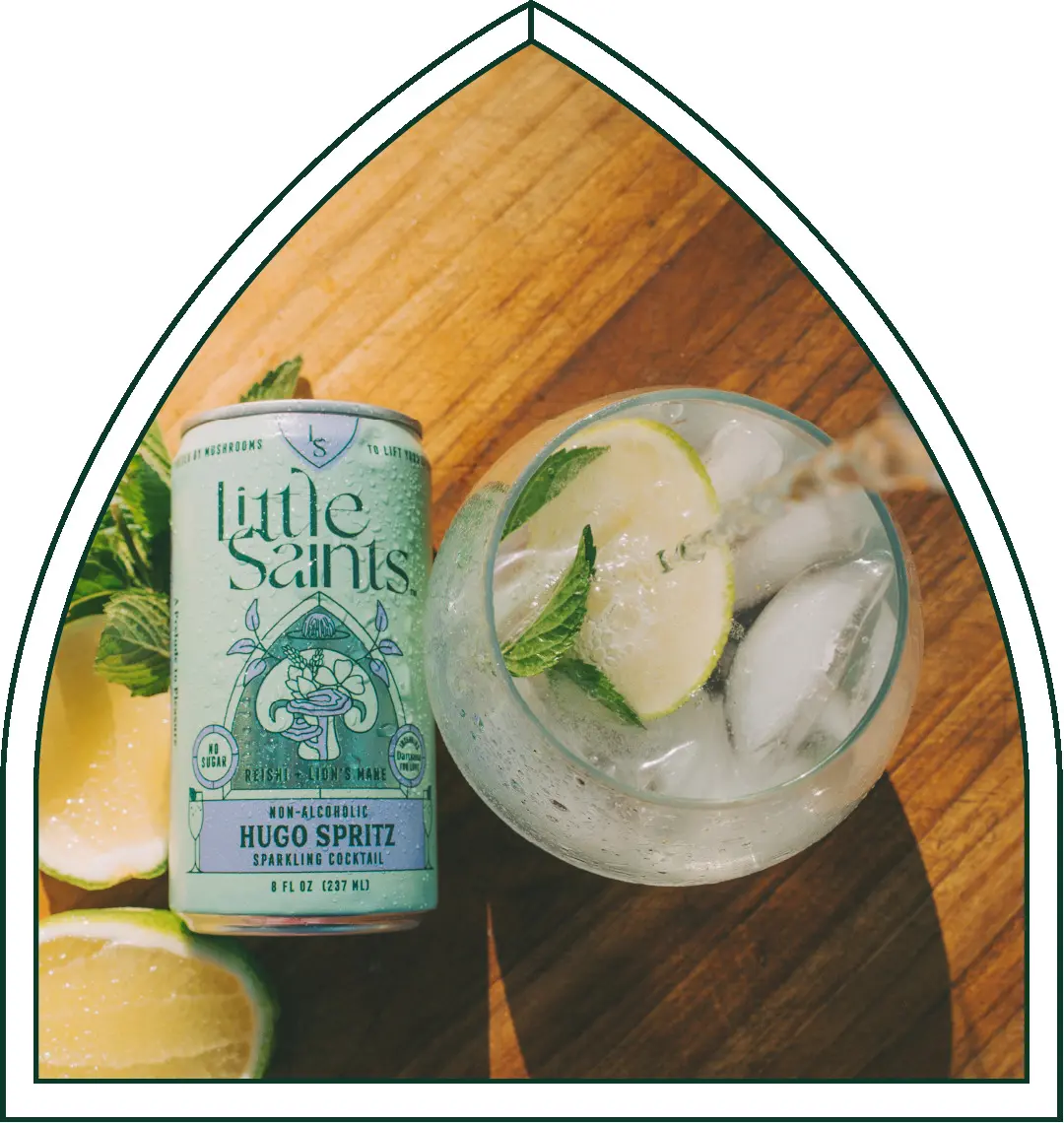
The functional split inside the Little Saints blend is simple to remember: Reishi for chill and Lion's Mane for focus. A reishi calming drink expresses the evening side of that blend. It also keeps someone at the table when the second or third round would otherwise be water. NIQ finds that 47% of on-premise visitors mix alcoholic and non-alcoholic options in the same occasion, and a reishi calming drink supports that pattern without defaulting to plain water.
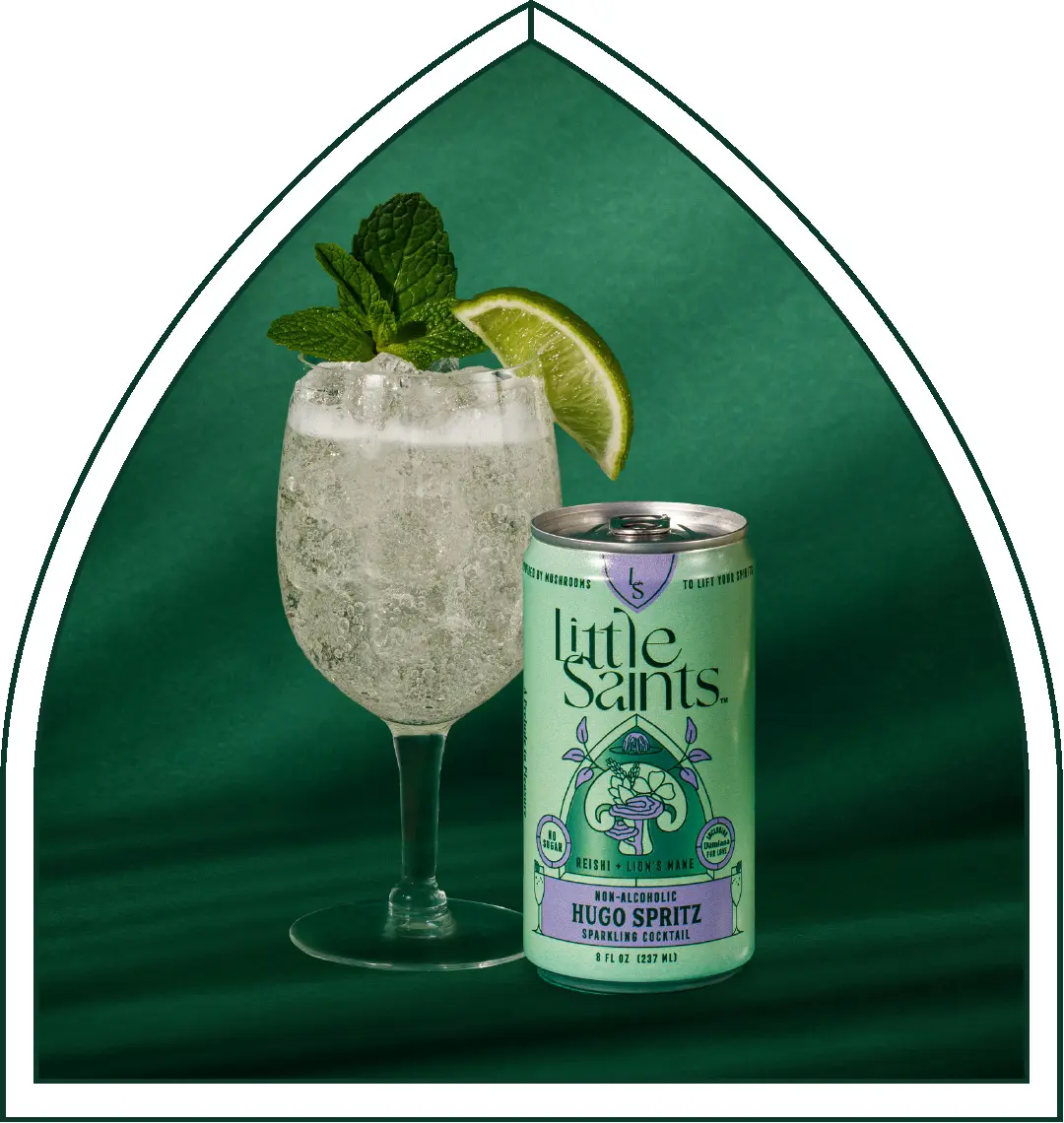
Those are the key numbers to look for on any reishi calming drink label, including the 100 mg dose and 70% beta glucan mentioned earlier. Little Saints is the brand that publishes both clearly.
Frequently Asked Questions
Does A Reishi Calming Drink Work The Same As A Capsule Or Powder?
The active compounds stay the same, with beta glucans and triterpenes from the reishi fruiting body, while the format changes how consistently you take them. A capsule requires a separate daily action that many people skip. A drink you look forward to at the end of the day builds the habit more naturally. The dose and potency still matter in any format, so look for a stated milligram dose and a beta glucan percentage on every reishi product, whether it is a can, a capsule, or a powder. A product that does not publish both cannot be compared meaningfully to published research.
How Much Reishi Should Be In A Calming Drink?
Clinical trials have used doses ranging from roughly 1,000 mg to 5,400 mg per day of reishi extract, depending on the study population and the extract type. A consumer reishi calming drink at 100 mg per serving functions as a daily maintenance format rather than a clinical reproduction of those doses. The honest framing is a consistent daily intake of a high-potency extract, with the 70% beta glucan level described earlier, rather than a therapeutic dose. What matters most is that the dose is stated, the beta glucan content is documented, and the extract comes from the fruiting body rather than mycelium grown on grain.
Is It Safe To Drink Reishi Every Night?
For healthy adults who are not taking the flagged medication classes and who do not have pre-existing liver conditions, reishi at standard extract doses is generally well tolerated in studies running up to twelve months. The most commonly reported side effects are mild and transient, such as nausea, loose stools, or digestive discomfort, particularly at higher doses. The rare case reports of liver injury have involved high-dose powdered whole-mushroom preparations, not standardized extracts at consumer drink doses. Long-term safety data beyond twelve weeks in controlled trials remains limited, so the same guidance applies: consult your doctor before daily use if you are pregnant, nursing, taking medications, or managing a medical condition.
Why Do Most Reishi Drinks Not List The Dose?
FDA rules allow supplement and beverage manufacturers to list ingredients inside a proprietary blend without disclosing individual amounts. A label can say “reishi mushroom extract” and legally omit the milligrams. Many brands choose that route because it protects their formulation from competitors, while leaving buyers unable to evaluate what they receive. A label missing the milligram dose and the beta glucan percentage asks you to trust marketing copy instead of verifiable data. The two figures that matter are the dose in milligrams and the beta glucan content as a percentage documented by a certificate of analysis.
What Is The Difference Between Reishi And Lion's Mane In A Functional Drink?
Reishi and Lion's Mane play different roles inside the same blend. Reishi supports the settling side, associated with rest, calm, and the evening wind-down. Lion's Mane supports the focus side, associated with mental presence and clarity. In Little Saints' canned cocktails, reishi appears in every can. Lion's Mane appears alongside reishi in the Classic Spritz, Hugo Spritz, and Classic Margarita, and each non-alcoholic spirit carries 100 mg of organic Lion's Mane extract. The practical shorthand stays simple: Reishi for chill and Lion's Mane for focus. A reishi calming drink suits the evening, while a Lion's Mane-forward drink suits the moment you want to stay sharp.
The statements made on our website have not been evaluated by the Food and Drug Administration, Our products are not intended to diagnose, treat, cure or prevent any disease. If you are pregnant, nursing, taking any medications or have any medical conditions, consult your doctor before use.