


Key Takeaways
- A four-part evening ritual with clear steps can replace the habit loop alcohol once anchored.
- Non-alcoholic on a label does not guarantee zero sugar, so always check sugar grams, calories, and any stated functional dose.
- The ritual structure supplies the psychological transition, while a well-formulated functional blend can support clarity and ease without intoxication.
- Zero-sugar options help protect sleep and metabolic health more effectively than sugar-sweetened non-alcoholic drinks.
Start your own zero-sugar evening ritual with the Little Saints range.
Start With The Transition Signal
The transition signal is the sensory cue that tells your brain the workday is over and the evening has begun.
Sensory cues matter because the brain switches modes based on context. Closing the laptop, changing clothes, dimming the lights, and putting on a record each act as a signal rather than a luxury. Stacked together, they create what Little Saints calls Magic Hour, the liminal space where the day ends and the evening begins. This golden hour between doing and being forms the psychological core of the ritual. Everything that follows builds on this moment.
The transition signal also breaks the habit loop that alcohol used to anchor. Therapist Amanda White, LPC, LMHC, notes that many adults have never learned to socialize or decompress without alcohol because they have never built the alternative habit. The transition signal marks the start of that new habit.
Build The Zero-Sugar Drink
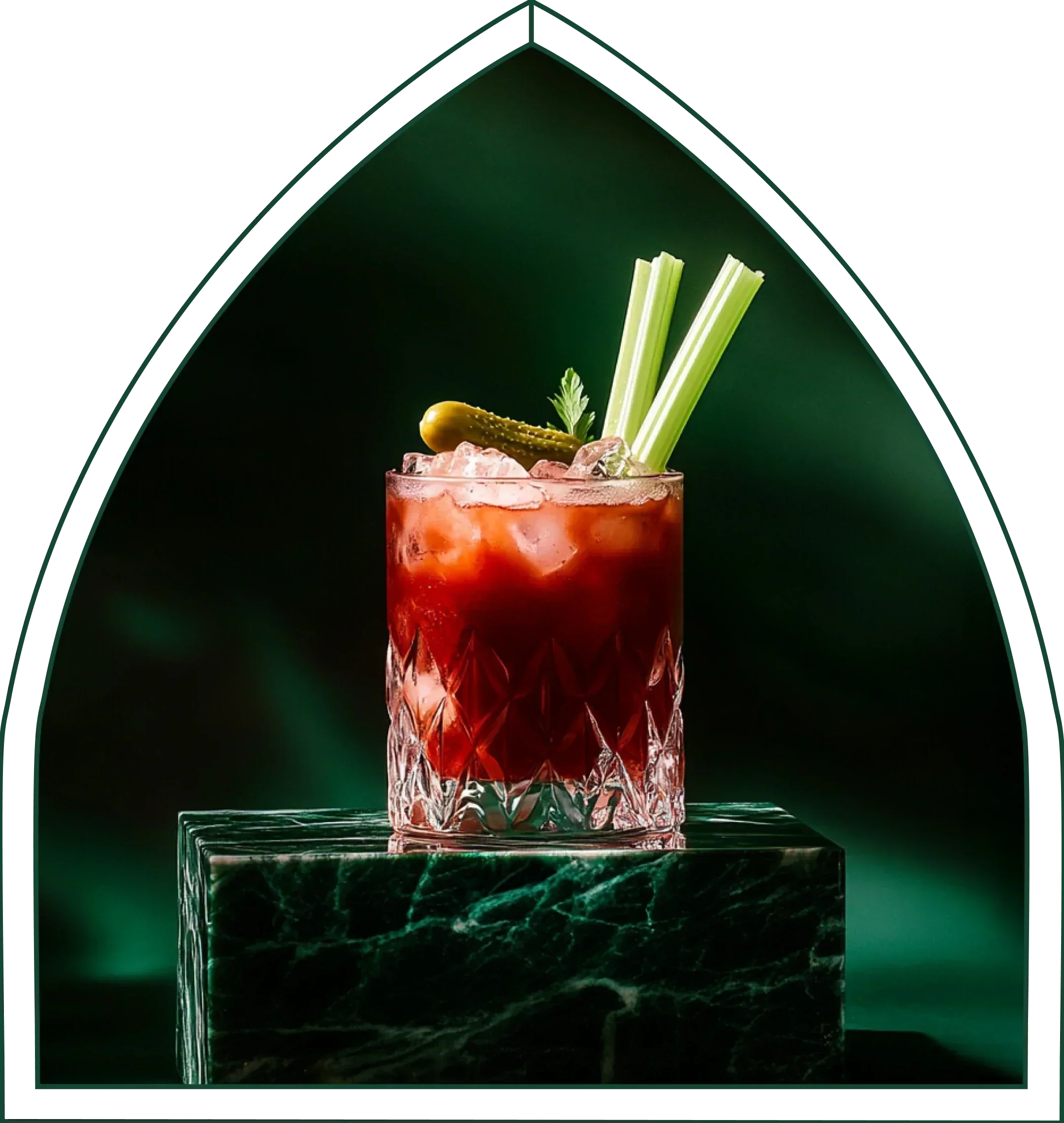
The zero-sugar drink becomes the centerpiece of the ritual, a sophisticated adult drink that reinforces the transition and provides a gentle lift.
Exact measures for a spirit-forward build:
- 2 oz non-alcoholic spirit
- 4–6 oz sparkling water
- Expressed citrus peel
- Large ice
- Real glassware
The 1:1 substitution ratio matters here. Two ounces of a Little Saints spirit replace two ounces of the spirit it stands in for, so any classic recipe works unchanged. A quality botanical spirit can swap in at a straight 1:1 ratio for most cocktail recipes when the spirit is built on oil-based craft extracts rather than flavored water.
First-generation non-alcoholic spirits often behave like flavored water in a cocktail and require a heavier pour. Little Saints uses oil-based craft small-batch extracts formulated with mixologists, so the spirit holds up in a build and mixes 1:1. A built-in burn from cardamom extract and capsicum gives the drink heat at the back of the throat. That sensation registers as a spirit rather than a cordial. Natural cloudiness and body from the Lion's Mane extract give it weight in the mouth.
The three Little Saints spirits and how they mix:
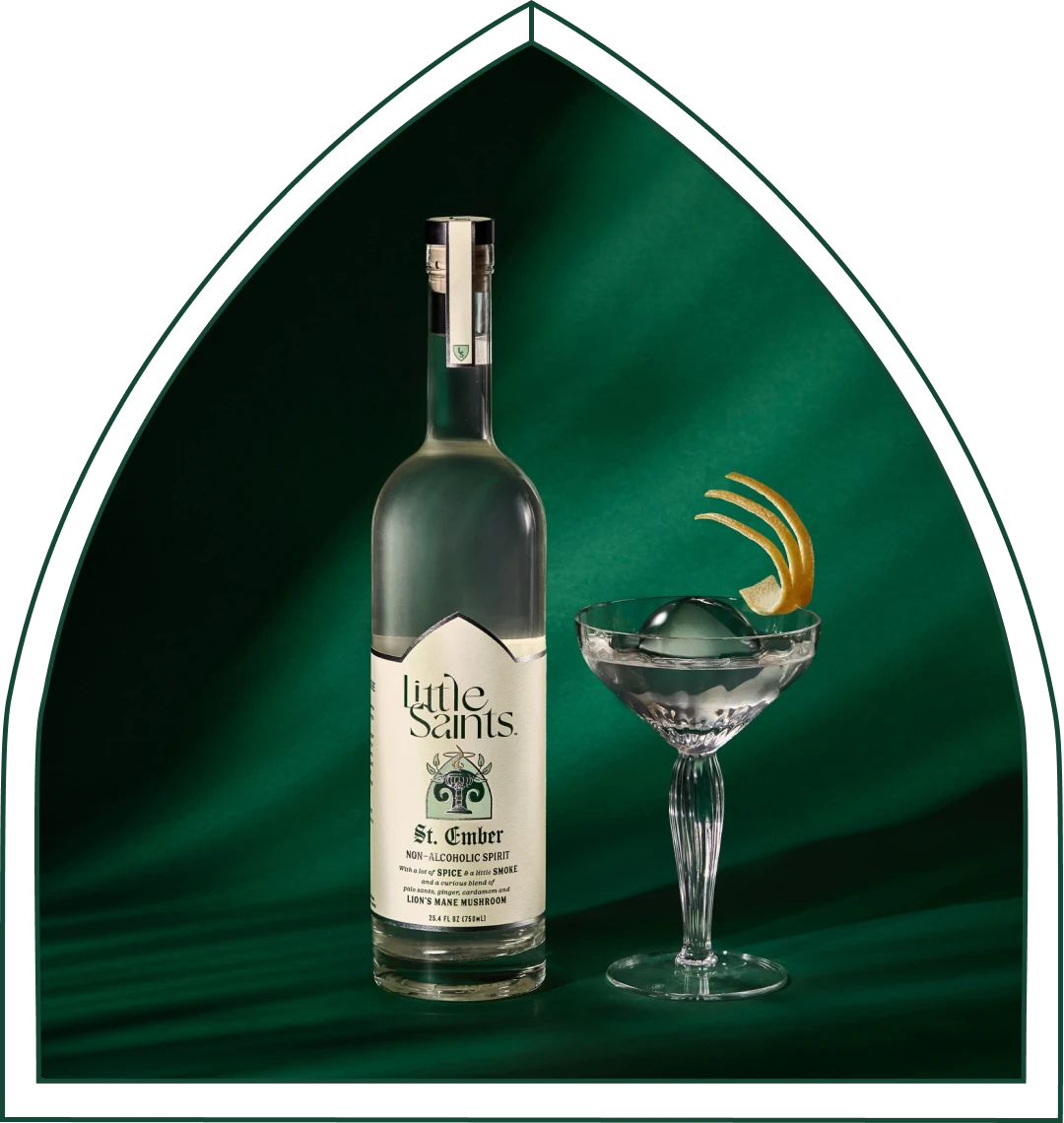
- St. Ember – an ode to the flavors of a light, spicy mezcal; mixes like a tequila or a mezcal in a margarita or a paloma
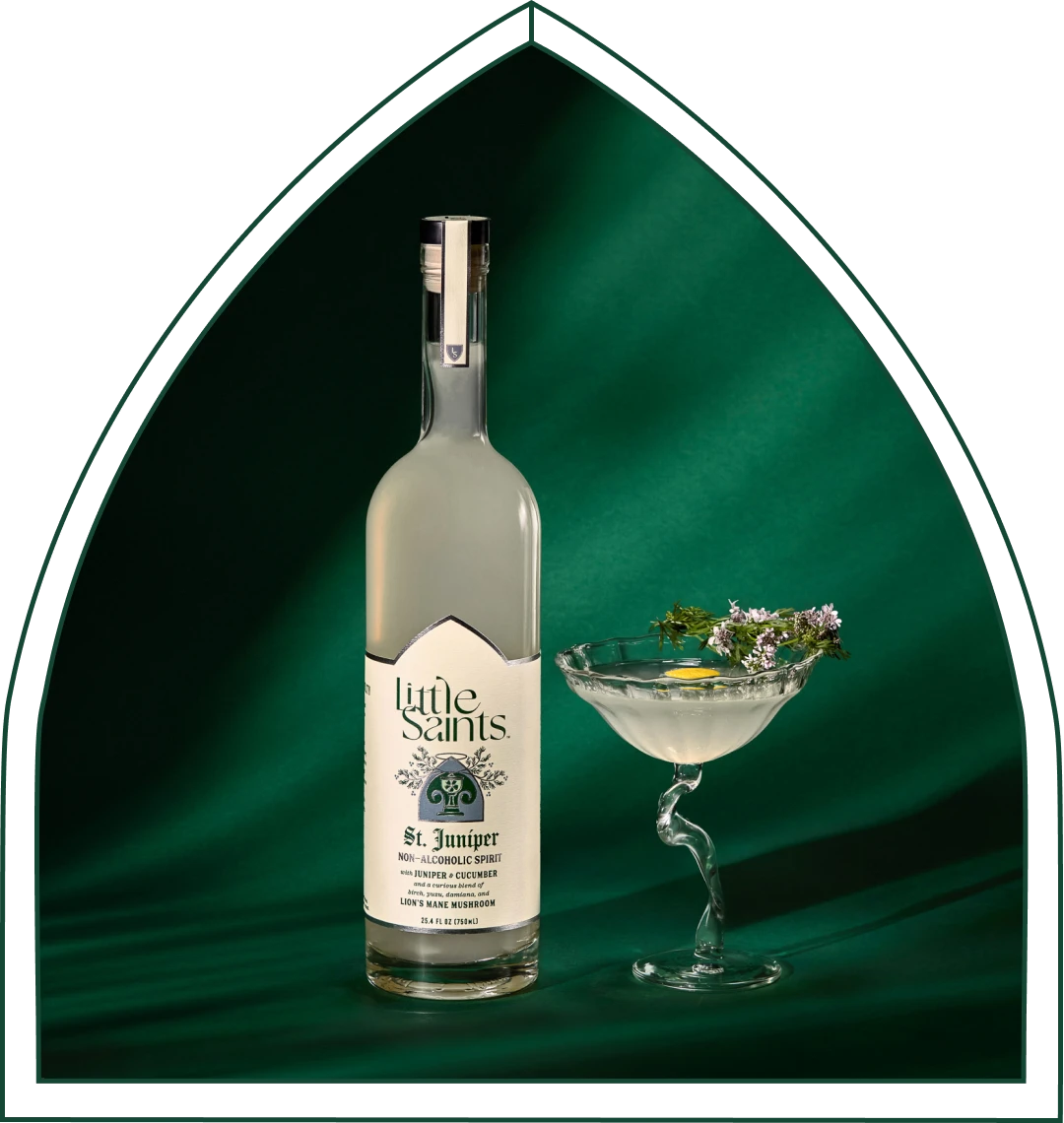
- St. Juniper – reimagines the wild, woodsy hallmarks of a classic gin, with notes of juniper, birch, cardamom, angelica root, and coriander
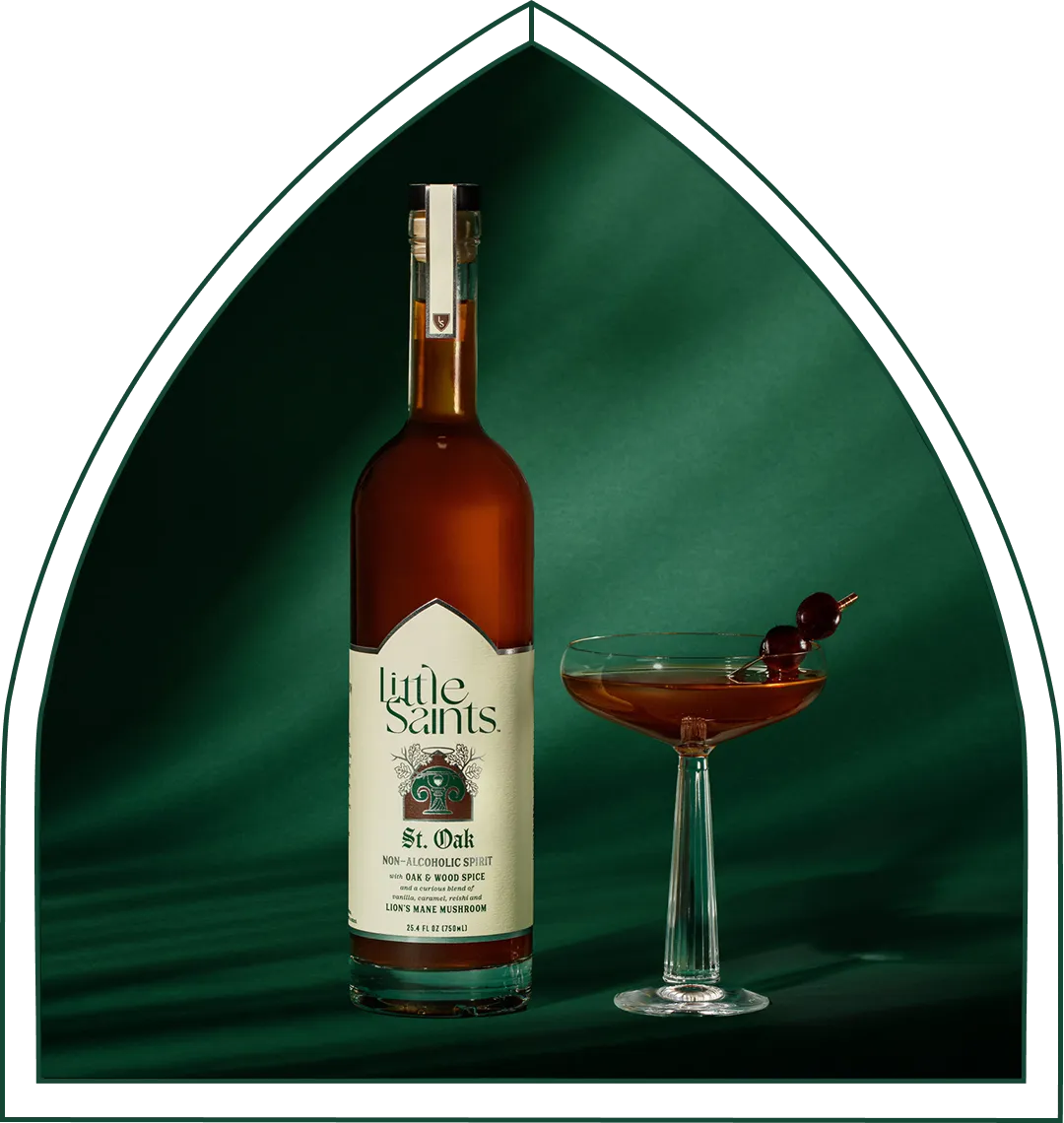
- St. Oak – inspired by the character of rye and bourbon and captures the soul of an oak-aged whiskey
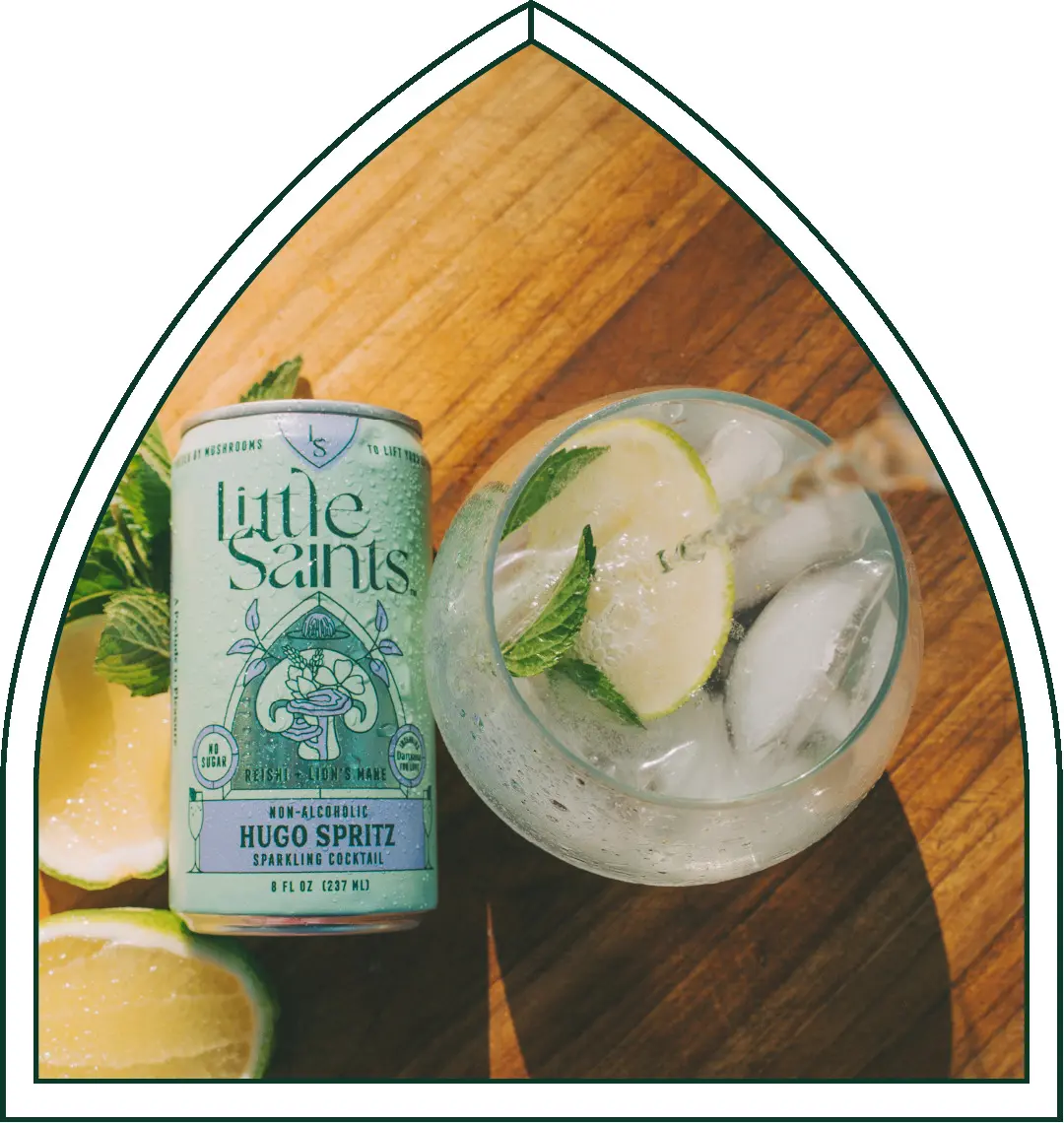
For a ready-to-drink option, the Little Saints canned cocktail line includes Classic Spritz, Hugo Spritz, Classic Margarita, Paloma, Old Fashioned, Mojito, and Negroni Spritz. Each can carries zero grams of sugar and five calories, sweetened with monk fruit juice concentrate and nothing else. The core line contains no caffeine, which suits an evening drink.
Find your zero-sugar spirit for the perfect pour.
Read The Label To Avoid The Sugar Trap
The sugar trap comes from assuming that “non-alcoholic” means “zero sugar.” The term only describes alcohol content.
For U.S. TTB-regulated malt beverages, “non-alcoholic” means the product contains less than 0.5% alcohol by volume, and the label must state “contains less than 0.5 percent (or .5%) alcohol by volume” immediately adjacent to the term. This 0.5% threshold is common but not universal across countries and categories. It also says nothing about what sweetens the drink. The label dimensions that matter are sugar grams, total calories, and whether a functional dose appears on the panel.
Here is how common categories compare on those dimensions:
| Little Saints | Sugar-Sweetened NA Cocktails | Non-Alcoholic Beer | |
|---|---|---|---|
| Sugar | 0g | Present, often significant | Present as carbohydrate; USDA averages show 28.5g carbohydrates and 28.5g sugar per 12-oz serving for generic NA beer, though leading brands vary widely |
| Calories | 5 per can | Higher | roughly 50–70 per serving for low-sugar styles, while higher-sugar or flavored/wheat styles can exceed 100 calories |
| Functional Dose Stated | 100mg, published | None | None |
Non-alcoholic beer production methods that stop fermentation early or strip alcohol via heat or membrane filtration can leave more sugar behind than regular beer. A 2025 study in Nutrients found that participants drinking mixed-style and wheat-style NA beers saw increases in fasting blood sugar, insulin levels, and triglycerides over four weeks, while the pilsener group and water-only control group did not. Sugar-sweetened non-alcoholic cocktails and aperitifs often carry meaningful sugar and rarely disclose a functional dose alongside it.
Little Saints keeps sugar at zero grams across the line and five calories per can, with no erythritol and no sugar alcohols. The brand states a 100mg functional mushroom blend at a minimum of 70% beta glucan, documented by supplier certificates of analysis.
A short checklist for reading any NA label:
- Check the nutrition panel for sugar grams and total calories.
- Check whether a functional dose is stated in milligrams.
- Check whether a beta glucan potency figure is published.
Under FDA regulation 21 CFR 101.60(c)(1), a food may only be labeled “sugar free” or “zero sugar” if it contains less than 0.5 g of sugars per reference amount customarily consumed (RACC) and per labeled serving, and contains no sugar-containing ingredient unless noted as adding a trivial amount. Sugar alcohols such as erythritol are not counted as sugars under FDA rules, so a product sweetened with them can still carry a “zero sugar” claim while delivering calories from those alcohols. Little Saints uses monk fruit juice concentrate in the cans and no sweeteners at all in the spirits.
Answer The Effect Question Clearly
The effect question asks what actually replaces the psychological function of a nightly drink.
People often search for phrases like “what calms you down like alcohol” or “what can replace alcohol if you use it to relax.” The four-part ritual offers a direct, practical answer.
The ritual itself delivers the transition. The sensory cues, the glassware, the pause, and the pour all carry meaning. Alcohol functions as both a social ritual and a social lubricant. A well-constructed non-alcoholic ritual can mark the start of relaxation, ease self-consciousness, and signal the end of the day. The drink anchors that ritual.
The functional blend delivers the lift. Little Saints describes this as the Little Saints Lift: clarity and ease, the first-sip-of-wine feeling, and a sense of being more present and able to take a deep breath and exhale. The functional blend behind it is Nature's Neuroscience, built on four components used as experiential descriptors:
- Reishi — for chill. Reishi appears in Little Saints products for calm and to settle the senses.
- Lion's Mane — for focus. This component supports mental presence and clarity.
- Damiana — for connection. Damiana is included to lift spirits, warm the senses, and inspire open-hearted feelings.
- Botanical terpenes — for the senses. These provide the aromatic layer and give the drink a nose.
The mushroom extracts are USDA Organic, California-grown, and ultrasound-extracted. They are dosed at a stated 100mg per serving at a minimum of 70% beta glucan, documented by supplier certificates of analysis, with third-party lab analysis for potency. A 2026 review in Nutrients by Samiksha et al. reports that yeast beta-glucans are commonly studied in the 100–500 mg/day range, with oral use at regularly used doses described as having an acceptable safety and tolerability profile in healthy people. The extract holds GRAS status, the FDA standard of generally recognized as safe for an ingredient used in food. GRAS addresses ingredient safety and does not represent FDA approval of the finished product or any claimed effect.
The products are non-intoxicating, non-psychoactive, and 100% legal, with no impairment to judgment, reaction time, or coordination.
These statements have not been evaluated by the Food and Drug Administration. This product is not intended to diagnose, treat, cure, or prevent any disease.
Experience the Little Saints Lift for yourself.
Add The Nervous System Reset
The nervous system reset uses gentle movement and breathwork to help your body shift out of work mode and into evening mode.
A short walk, five minutes of stretching, or a few rounds of slow nasal breathing can start that physiological shift. Try inhaling for four counts, holding for four, and exhaling for six. This is not a workout. It is a signal, just as the transition signal was a signal. The body responds to cues, and movement after a day of sitting provides one of the clearest cues available.
This step also addresses what alcohol was doing mechanically. A 2025 systematic review and meta-analysis in Sleep Medicine Reviews, spanning 27 polysomnographic studies, found that alcohol delayed REM sleep onset and reduced REM sleep duration in a dose-dependent manner, with REM sleep disruption appearing even at low doses of 0.50g/kg or less, approximately two standard drinks. The perceived relaxation from alcohol feels real in the short term, and the cost appears later in the night. As alcohol metabolizes, typically four to six hours after drinking, the sedating effect lifts and produces REM rebound with elevated heart rate, frequent micro-arousals, and the classic 2–5 a.m. wakeup. Gentle movement and breathwork accomplish the decompression without that tradeoff.
Close With The Cognitive Close
The cognitive close clears mental clutter so you do not carry the day to bed.
A voice brain dump, speaking every open loop, unfinished task, or unresolved thought into a recording device or app, usually takes three to five minutes, while a written brain dump can take 20 to 30 minutes. Both approaches remove the mental background noise that keeps the brain in work mode after the body has stopped. Analog reading rather than scrolling fits naturally after this step. A book or a magazine does not trigger the same alerting response as a screen.
This step also addresses the “what kills the urge to drink” question directly. The urge to drink in the evening often centers on decompression rather than alcohol itself. Many consumers are reworking habits and default routines instead of pursuing full abstinence, which supports a substitution-based approach to changing drinking behavior. The cognitive close gives the brain a completion signal: the day is done, the list is written, and the evening has begun.
Try The Seven-Night Rotation
A repeatable ritual needs variety to stay repeatable. A seven-night rotation keeps the structure consistent while varying the sensory experience.
- Monday – St. Ember long over ice with sparkling water and lime, expressed orange peel, stretching reset.
- Tuesday – Classic Margarita can in a salt-rimmed coupe, short walk reset.
- Wednesday – The St. Juniper gimlet build is 50ml Saint Juniper Original Dry Gin, 25ml fresh lime juice, and 10ml simple syrup, shaken with ice, strained into a chilled coupe, and garnished with a lime wheel, breathwork reset.
- Thursday – Old Fashioned can in a rocks glass with expressed orange peel, brain dump close.
- Friday – St. Oak spirit over ice with a couple dashes of bitters and an expressed orange peel, analog reading close.
- Saturday – Hugo Spritz can in a wine glass with fresh mint, walk reset.
- Sunday – Negroni Spritz can with large ice and expressed grapefruit peel, full four-part ritual, unhurried.
Vary the glassware, garnish, and accompanying reset. The spirit stays consistent in its formulation, with zero sugar, five calories, and a 100mg lion's mane functional dose as stated for St. Mezcal. The ritual deepens with each repetition.
Build your seven-night rotation with Little Saints.
Frequently Asked Questions
What Should I Do In The Evening Without Alcohol?
Follow the four-part structure outlined above: a transition signal, a zero-sugar drink, a nervous system reset, and a cognitive close. The key is consistency over time so the new ritual replaces the old habit loop.
What Can Replace Alcohol If I Use It To Relax?
The combination of ritual cues and a functional non-alcoholic drink can replace the role alcohol played in relaxation. The Little Saints Lift supports clarity and ease while keeping you fully clear-headed and legally safe to drive or work.
What Is The Best Non-Alcoholic Nightcap For Sleep?
A zero-sugar drink built with 2 oz of a non-alcoholic spirit, 4–6 oz sparkling water, expressed citrus peel, and large ice supports an evening wind-down. The core Little Saints line contains no caffeine, which suits nighttime use. Little Saints does not claim the product improves sleep. A 2025 meta-analysis in Sleep Medicine Reviews found REM sleep disruption at doses as low as approximately two standard drinks, so removing alcohol from the evening is a direct step toward protecting sleep quality.
Do Non-Alcoholic Drinks Contain Sugar?
Many non-alcoholic drinks contain sugar, and levels vary widely. Sugar-sweetened non-alcoholic cocktails and aperitifs often carry significant sugar. Non-alcoholic beer also ranges widely. USDA averages for generic NA beer show 28.5g of carbohydrates and 28.5g of sugar per 12-oz serving, though leading brands range from zero to that figure depending on style and production method. “Non-alcoholic” describes alcohol by volume and not sugar content, so always check the nutrition panel. Little Saints carries zero grams of sugar across the entire line, with cans sweetened only with monk fruit juice concentrate and spirits with no sweeteners at all.
How Much Non-Alcoholic Spirit Should I Pour?
Pour the same amount as the spirit you are replacing, typically two ounces. Little Saints spirits are formulated with mixologists using oil-based craft extracts so that the 1:1 ratio holds in a cocktail build. First-generation non-alcoholic spirits built on flavored water often require two to three times the pour to achieve comparable flavor presence. With Little Saints, any classic recipe works unchanged: 2 oz St. Ember in a margarita, 2 oz St. Juniper in a gin and tonic, or 2 oz St. Oak in an old fashioned.
The statements made on our website have not been evaluated by the Food and Drug Administration, Our products are not intended to diagnose, treat, cure or prevent any disease. If you are pregnant, nursing, taking any medications or have any medical conditions, consult your doctor before use.