


Key Takeaways
- A summer mocktail comes together when you build it like a cocktail using five parts: base, acid, sweetener, fizz added last, and a functional garnish.
- Fresh citrus creates brightness and aroma, because bottled juice lacks the volatile oils that make a drink smell and taste alive.
- Keep sugar in check by using measured syrups, fresh citrus, and sparkling water instead of stacking several sweet juices and sodas.
- Batch for a crowd by pre-mixing non-carbonated ingredients, chilling the base, and adding fizz per glass at serve time to preserve carbonation.
- For ready-made zero-sugar, five-calorie options with a functional mushroom blend, explore the full range at Little Saints.
Summer Mocktail Ideas You Can Make Tonight
The nine builds below all follow the same five-part framework you will learn in the next section. Use this list as a quick preview so you can jump to the drink that matches what you already have in your fridge.
- Watermelon-Mint Cooler — fresh watermelon juice, lime, a pinch of salt, mint, sparkling water
- Cucumber-Mint Fizz — muddled cucumber and mint, lime juice, tonic water
- Strawberry-Basil Smash — muddled strawberry and basil, lemon juice, honey syrup, sparkling water
- Peach Bellini-Style — fresh peach puree, lemon, dry sparkling grape juice in a chilled flute
- Virgin Paloma — fresh grapefruit, lime, agave, salt rim, club soda
- Pineapple-Lime Highball — pineapple juice, lime, ginger beer, mint garnish
- Blueberry-Lemon Sour — blueberry puree, fresh lemon, honey syrup, shaken and strained
- Grapefruit-Rosemary Spritz — pink grapefruit juice, rosemary syrup, cooled black tea, sparkling water
- Bitter Aperitivo Spritz — bitter orange soda, white grape juice, sparkling water, orange peel, built for the Negroni drinker
How To Build A Summer Mocktail
Every well-made non-alcoholic drink follows the same five-part structure: base, acid, sweetener, fizz, garnish. A useful starting ratio is two parts base, one part acid, and a half part sweetener, then you top with fizz to taste. Treat this as a framework that you adjust once the drink is cold.
Base. The base is the body of the drink, such as fresh fruit juice, cold-brewed tea, or a non-alcoholic spirit. Pick one strong, clear flavor and let it lead. The drinks that succeed tend to do one thing clearly, such as mint and lime or watermelon. Adding more ingredients to compensate for missing alcohol usually muddies the drink.
Acid. Fresh citrus carries the brightness. Bottled lemon and lime juice is pasteurized and lacks the volatile oils released during squeezing, and those oils are what make a drink smell like a drink. Squeeze citrus fresh, right before building. In a non-alcoholic drink, acid does extra work, and pushing citrus slightly higher than you would in a cocktail keeps the drink lively.
Sweetener. Sweetness needs a ceiling. Simple syrup, made from equal parts sugar and water, is the standard. Honey syrup, made from equal parts honey and water, adds complexity and pairs well with stone fruit and tea-based builds. Taste before adding, and start with less than you think you need. Cold blunts sweetness, so a mix that reads balanced warm can turn flat and sugary once iced.
Fizz. Carbonation goes in last, per glass, and not into the batch bowl. A sparkling drink only stays lively through the first several minutes when it counts, and pre-mixing kills it. Pour the fizzy element gently down the side of the glass or over the back of a spoon to preserve bubbles. Sparkling water is neutral, tonic adds bitterness that reads as adult, and ginger beer adds heat and spice.
Garnish. A garnish earns its place. A citrus peel expressed over the glass releases aromatic oils that reach the nose before the first sip. A mint sprig held near the rim does the same. A salt rim on a paloma or margarita-style build amplifies sweetness and adds complexity, and a pinch of salt in a non-alcoholic drink is a technique borrowed from cocktail bartending that works brilliantly.
Ice And Technique. Ice and the way you mix the drink support every part of this framework. Bad, wet, or small ice melts too quickly and over-dilutes a drink, so use the largest, hardest, coldest ice you can get, because small or wet ice melts fast and waters the drink down. A rocks glass takes one large cube, and a highball should be filled to the top before you build. Chilling the glass first also matters, because a room-temperature glass quickly warms a well-made drink.
Shake Or Stir. Shake anything with citrus, juice, dairy, egg, or thick syrups for 12 to 15 seconds, until the tin is frosty. Spirit-forward builds that contain no juice get stirred instead, which chills them without aerating. Either way, add fizz after you mix, never into the shaker.
The Drinks: 9 Refreshing Summer Mocktails Worth Making
Each recipe below uses the base-acid-sweetener-fizz-garnish framework, with measures listed per single serving.
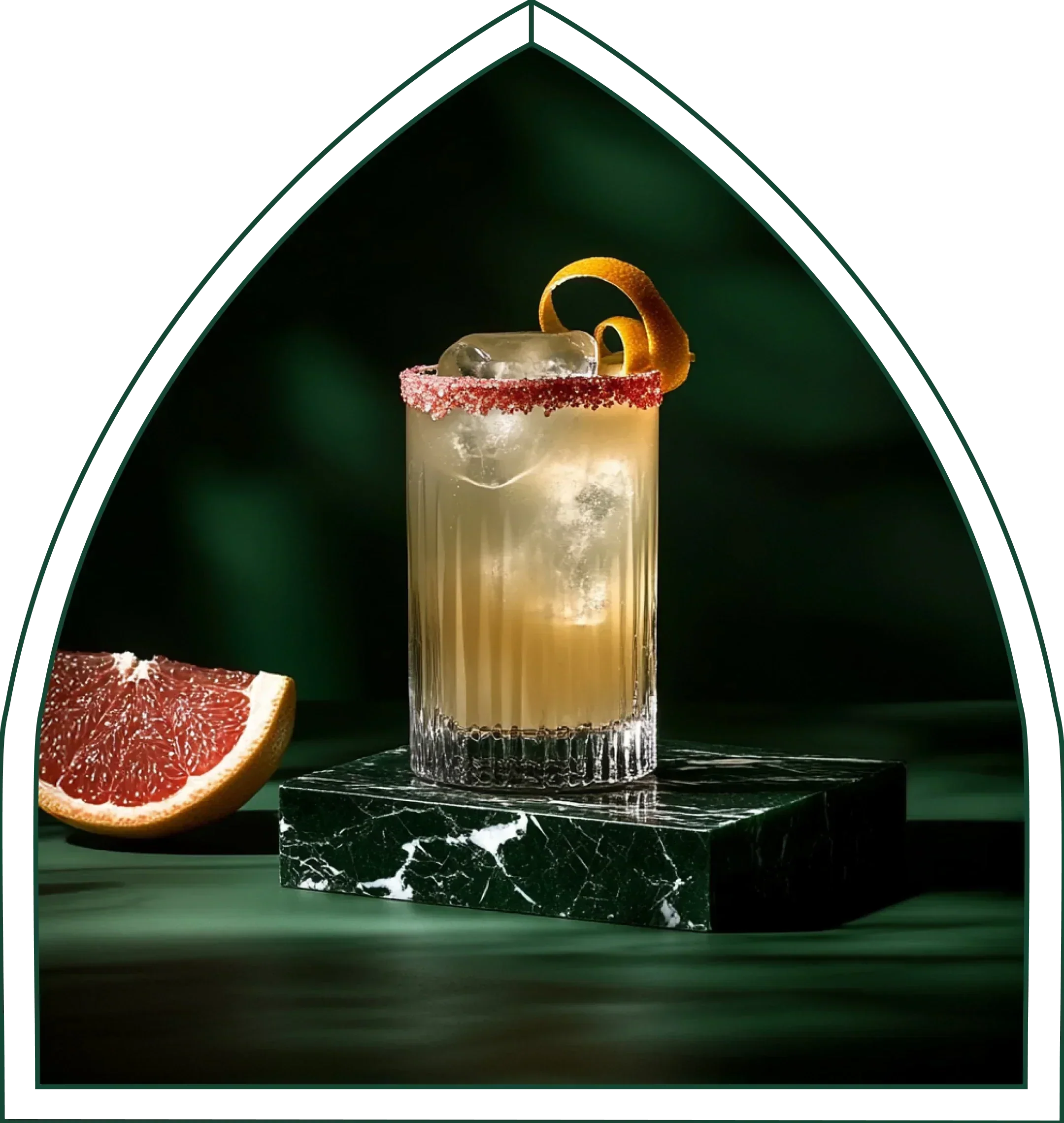
1. Watermelon-Mint Cooler
Glass: highball. Build: 3 oz fresh watermelon juice, 0.75 oz fresh lime juice, 0.5 oz honey syrup, pinch of salt, 4–5 mint leaves lightly pressed (not muddled), 2 oz sparkling water. Method: combine watermelon, lime, syrup, and salt in a shaker with ice. Shake 12 seconds, then strain into a highball over fresh ice. Top with sparkling water, and garnish with a mint sprig and lime wheel. Why it works: watermelon is naturally vivid and sweet, and the salt and lime keep it from reading as juice.
2. Cucumber-Mint Fizz
Glass: highball or Collins. Build: 2 oz fresh cucumber juice (or 6 thin slices muddled), 0.75 oz fresh lime juice, 0.5 oz simple syrup, 3 oz tonic water. Method: muddle cucumber with syrup, then add lime and ice. Shake 12 seconds, fine-strain into a glass over ice, and top with tonic. Garnish: cucumber ribbon and mint sprig. Why it works: tonic’s bitterness balances the cucumber and makes the drink read as elegant without being sweet.
3. Strawberry-Basil Smash
Glass: rocks. Build: 4 fresh strawberries, 4 basil leaves, 0.75 oz fresh lemon juice, 0.5 oz honey syrup, 2 oz sparkling water. Method: muddle strawberries and basil with honey syrup, then add lemon and ice. Shake 12 seconds, fine-strain into a rocks glass over a large cube, and top with sparkling water. Garnish: basil leaf and strawberry slice. Why it works: basil and strawberry form a pairing that reads as adult and herbal rather than sugary.
4. Peach Bellini-Style
Glass: chilled champagne flute. Build: 2 oz fresh peach puree (not nectar), 0.5 oz fresh lemon juice, 3 oz dry sparkling grape juice. Method: combine peach and lemon in the flute, then top slowly with sparkling grape juice. Garnish: thin peach slice on the rim. Why it works: fresh puree gives the drink body and color that nectar cannot match.
5. Virgin Paloma
Glass: rocks with a salt rim. Build: 2 oz fresh pink grapefruit juice, 0.75 oz fresh lime juice, 0.5 oz agave syrup, 2 oz club soda. Method: salt the rim, then combine grapefruit, lime, and agave in a shaker with ice. Shake 12 seconds, strain into the glass over fresh ice, and top with club soda. Garnish: grapefruit wheel. Why it works: grapefruit’s natural bitterness and the salt rim give this drink the structure that makes it feel like a cocktail.
6. Pineapple-Lime Highball
Glass: highball. Build: 2 oz pineapple juice, 0.75 oz fresh lime juice, 3 oz ginger beer. Method: build over ice in the glass, then stir gently once. Garnish: mint sprig and lime wheel. Why it works: ginger beer adds heat and spice that pineapple juice alone cannot provide.
7. Blueberry-Lemon Sour
Glass: coupe or rocks. Build: 1.5 oz blueberry puree, 0.75 oz fresh lemon juice, 0.5 oz honey syrup. Method: combine in a shaker with ice, then shake hard for 15 seconds. Fine-strain into a chilled coupe or over a large cube in a rocks glass. Garnish: lemon twist and three fresh blueberries. Why it works: the sour template of base, acid, sweetener, and shaking applies directly, and blueberry gives it color and depth.
8. Grapefruit-Rosemary Spritz
Glass: wine glass or highball. Build: 2 oz pink grapefruit juice, 1 oz cooled black tea, 0.5 oz rosemary syrup (simmer equal parts sugar and water with a rosemary sprig for 10 minutes, then cool and strain), 2 oz sparkling water. Method: combine grapefruit, tea, and syrup over ice, then top with sparkling water and stir once. Garnish: grapefruit zest and a small rosemary sprig. Why it works: the tea adds tannin and depth, and rosemary adds an herbal note that makes this drink feel grown-up.
9. Bitter Aperitivo Spritz (For The Negroni Drinker)
Glass: large wine glass. Build: 3 oz bitter orange soda (San Pellegrino Aranciata Rossa or similar), 1 oz white grape juice, 1 oz sparkling water. Method: build over ice in the glass, then stir once. Garnish: orange peel, expressed and dropped in. Why it works: this build suits the cocktail-literate guest who wants bitterness, structure, and a drink that looks like a drink. The bitter orange soda fills the role that Campari fills in a Negroni.
Build-Your-Own: The Summer Mocktail Ingredient Taxonomy
Once the framework is clear, you can mix and match. Choose one element from each category below and build from there.
Base Juices — the body and the primary flavor:
- Watermelon (naturally sweet, vivid color, blends easily)
- Pink grapefruit (bitter, bright, pairs with salt and agave)
- Pineapple (tropical, sweet, pairs with lime and ginger)
- Peach puree (stone fruit richness, pairs with lemon and sparkling grape)
- Blueberry puree (deep color, pairs with lemon and honey)
- Cold-brewed black or hibiscus tea (adds tannin and depth without sweetness)
Fizzy Top-Offs — the length and texture:
- Sparkling water (neutral, lets the base speak)
- Tonic water (adds bitterness, ideal for cucumber and herb builds)
- Ginger beer (adds heat and spice, ideal for tropical and citrus builds)
- Dry sparkling grape juice (adds body and a wine-like note for spritz-style builds)
Acids — the brightness:
- Fresh lime juice (clean, sharp, pairs with nearly everything)
- Fresh lemon juice (rounder than lime, pairs with stone fruit and berries)
- Fresh grapefruit juice (bitter and acidic, can serve as both base and acid)
Sweeteners — the balance:
- Simple syrup (neutral, dissolves easily, 1:1 sugar to water)
- Honey syrup (floral, pairs with stone fruit and tea, 1:1 honey to water)
- Agave syrup (mild, pairs with grapefruit and tropical fruit)
- Rosemary or mint syrup (infused simple syrup, steep the herb for 10 minutes while warm, then strain)
Garnishes — the aroma and the finish:
- Citrus peel, expressed (releases aromatic oils over the glass)
- Fresh mint sprig (held near the rim, not stirred in)
- Salt rim (amplifies sweetness and adds complexity)
- Fresh herb leaf such as basil, rosemary, or thyme (signals the flavor direction before the first sip)
Before you build, it helps to know what you are actually pouring into the glass.
What’s Actually In The Glass
A juice-based non-alcoholic drink often carries more sugar than people expect. A standard 12-oz can of regular soda contains around 39 grams of sugar, which already exceeds the American Heart Association’s daily added-sugar limit of 36 grams for men and 25 grams for women. An 8-oz glass of grape juice lands at 36 grams. When you build a drink from two juices, a syrup, and a sweet soda, the sugar climbs quickly. A zero-sugar build that uses fresh citrus, a measured half-ounce of syrup, and sparkling water keeps the number manageable. When you reach for a ready-made option, use the label as your guide and check total sugars and calories before you assume a non-alcoholic drink is a lighter choice.
How To Batch Non Alcoholic Summer Mocktails For A Crowd
Scaling a single-serve build to a pitcher or punch bowl follows a simple pattern. Multiply every non-carbonated ingredient by the number of servings, combine in a pitcher or bowl, chill, and add fizz per glass at serve time instead of into the batch.
Plan on roughly two to three drinks per guest across an evening, at about six ounces of liquid per drink. That range covers 16 to 24 servings for a typical gathering. A useful anchor from the same guide is that twelve guests at three drinks each equals 36 servings, or a little over two gallons of finished drink.
Batch Build For The Watermelon-Mint Cooler (Serves 8):
- 24 oz fresh watermelon juice
- 6 oz fresh lime juice
- 4 oz honey syrup
- 1 tsp fine salt
- Mint leaves, lightly pressed, added to the pitcher
Combine all of the above in a large pitcher, then chill for at least two hours. At serve time, fill each glass with ice, pour 5 oz of the base, and top with 2 oz of sparkling water per glass. Garnish each drink individually.
Three Rules For Batching:
- Keep the carbonated element separate until the moment of serving, because pre-mixing sparkling water into a pitcher an hour before guests arrive results in flat drinks.
- Taste the base cold before guests arrive and adjust acid or sweetener, because the batch tastes different chilled than it did at room temperature.
- Make more ice than seems reasonable, since it dilutes, chills, and doubles as a garnish in a punch bowl.
The non-alcoholic round deserves the same treatment as the rest of the drinks. Set it up on the same table, in the same glassware, with the same garnishes. Glassware signals care, and a drink handed to someone in a rocks glass with a proper garnish reads as a drink instead of a consolation prize.
For The Drinker Who Still Drinks
Many people using non-alcoholic drinks on a given evening are alternating rather than abstaining. NIQ measures 47% of on-premise visitors mixing alcoholic and non-alcoholic options in the same occasion, with 93% of non-alcohol buyers also purchasing alcohol. This pattern, often called zebra striping, reflects ordinary social behavior instead of a statement about sobriety.
Alternating rounds creates a new challenge, because the non-alcoholic option is usually a soda or a water. Those choices lack the ritual, the glassware, and the flavor profile of the drink they replace. The builds above close that gap when you are making your own. When you want something ready-made that holds up in the same moment, Little Saints steps into that role.
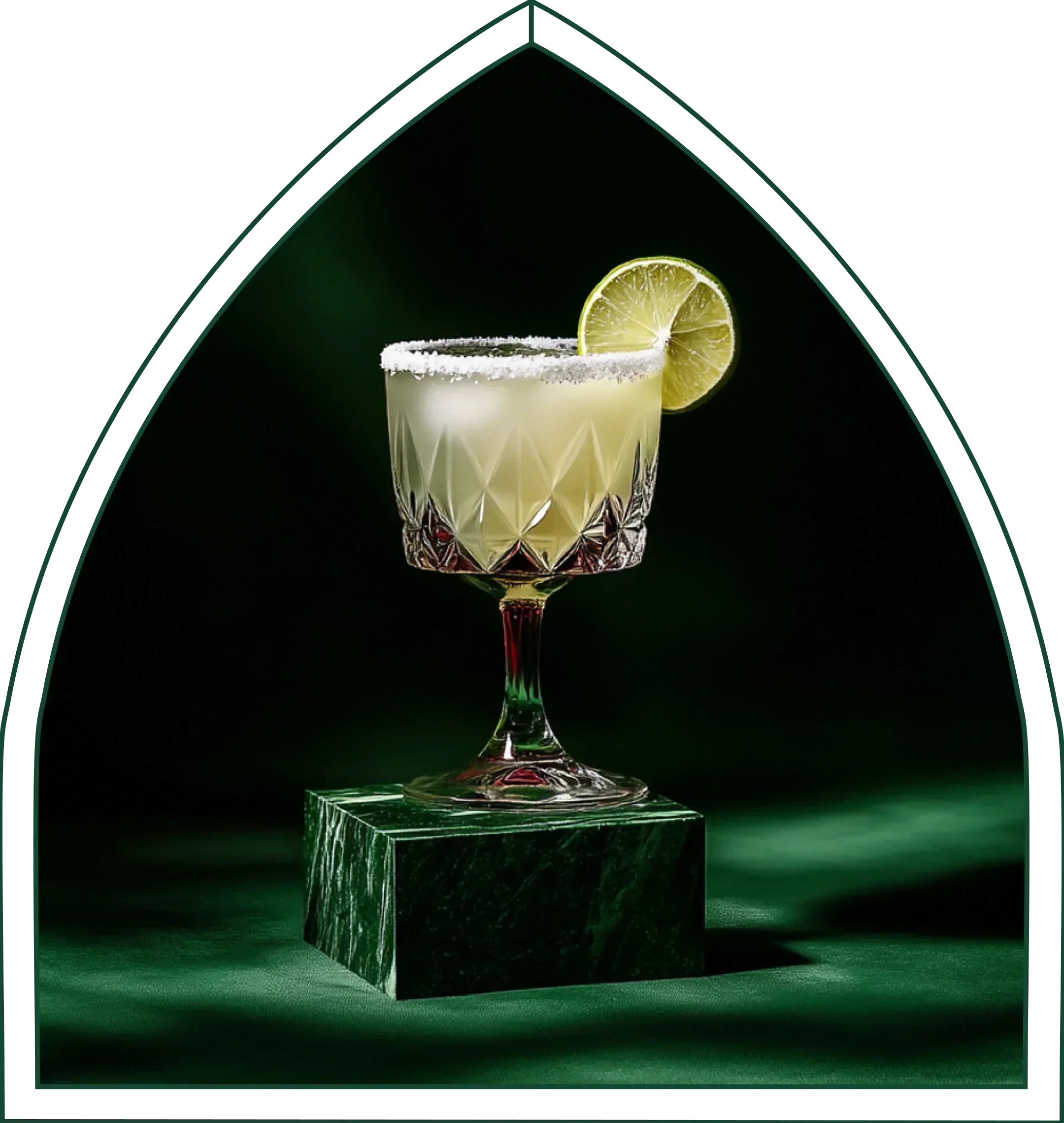
Little Saints makes non-alcoholic cocktails and spirits, both zero sugar. The canned cocktails run five calories each. Every pour includes a functional mushroom and botanical blend that features organic Reishi, organic Lion’s Mane, Damiana, and botanical terpenes, and the label states both the dose and the beta glucan content. The canned cocktails include a Negroni Spritz, a Paloma, a Classic Margarita, a Mojito, an Old Fashioned, a Classic Spritz, and a Hugo Spritz. The non-alcoholic spirits, St. Ember, St. Juniper, and St. Oak, are built on oil-based craft extracts formulated to mix 1:1 in classic cocktail specs, so a margarita built with St. Ember uses the same two-ounce pour as the tequila it replaces.
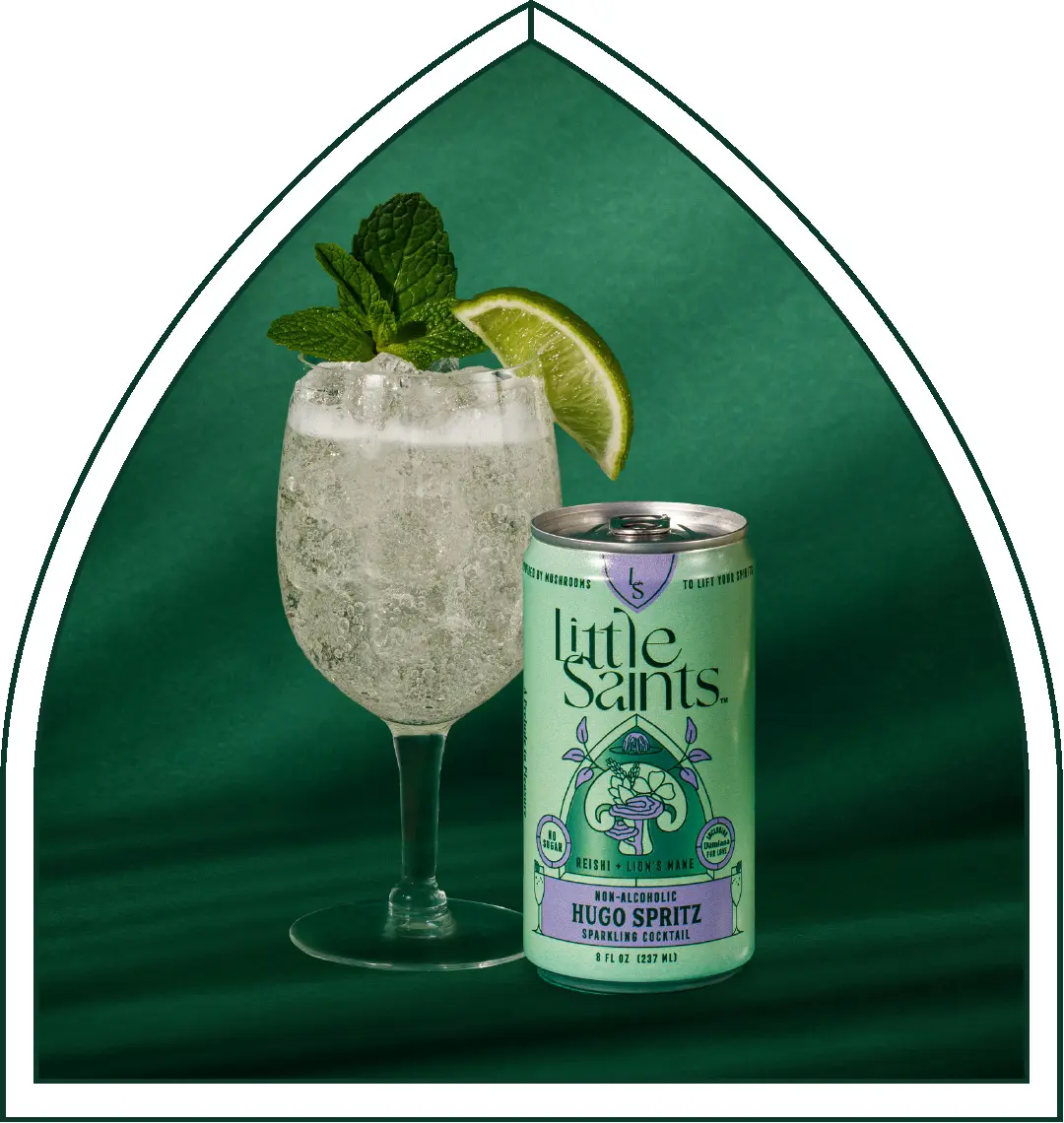
Many drinkers describe the Little Saints Lift as a sense of clarity and ease, feeling a little lifted and able to take a deep breath and be more present. The products are non-intoxicating, non-psychoactive, and 100% legal, with no impairment to judgment, reaction time, or coordination, and no meaningful effect on blood alcohol concentration (BAC, the measure of alcohol in the bloodstream) because they are non-alcoholic, containing at most trace amounts of alcohol (less than 0.5% ABV).
The functional blend centers on four components with defined roles: Reishi for chill, Lion’s Mane for focus, Damiana for connection, and botanical terpenes for the senses. These are experiential descriptors rather than statements of physiological effect. Botanical terpenes, the naturally occurring aromatic compounds found in plants, roots, herbs, and flowers, add the sensory layer that makes the drink smell like an evening drink instead of a soft drink. The mushrooms are USDA Organic, grown in California, extracted with ultrasound rather than solvents, and the blend carries a stated 100mg mushroom dose per serving at a minimum of 70% beta glucan, documented by supplier certificates of analysis.
What To Look For On A Label If You’re Buying Rather Than Making
Four things to check before buying a ready-made non-alcoholic drink:
- Sugar. Look at total sugars on the Nutrition Facts panel. A juice-based non-alcoholic drink can carry as much sugar as the 39-gram soda figure mentioned earlier. A zero reading means zero grams instead of “low sugar.”
- Calories. Five calories per can is the Little Saints figure, and most juice-based non-alcoholic drinks run significantly higher.
- Whether a functional dose is stated. Most brands that include mushrooms or botanical ingredients do not publish a dose. A label that says “contains Reishi” without a milligram figure tells you nothing about how much is in the can.
- Whether a potency figure is published. Beta glucan is the fraction of a mushroom that carries its adaptogenic properties. As of 2026, most mushroom supplement brands do not publish a beta-glucan potency figure, instead reporting only total polysaccharide content, which testing guides consider a quality red flag. Little Saints publishes both, using the stated 100mg functional dose per serving at a minimum of 70% beta glucan mentioned earlier as its benchmark. The mushrooms are USDA Organic and the extract holds GRAS status, which is the FDA’s standard of generally recognized as safe for an ingredient used in food.
The practical test is simple. If a brand cannot tell you the dose and the potency, you cannot evaluate what you are buying.
Frequently Asked Questions
What Makes A Summer Mocktail Different From A Glass Of Juice?
A glass of juice is one ingredient. A well-built non-alcoholic summer drink is a structured combination of a base, an acid, a measured sweetener, fizz added at the last moment, and a garnish that contributes aroma. The framework matches the one bartenders use for cocktails. The result is a drink with balance, temperature, texture, and intention instead of simple sweetness.
Are Non Alcoholic Summer Mocktails Always Sugary?
They stay lighter when you build them correctly. The sugar problem comes from juice-heavy builds with added syrups and sweet sodas stacked on top of each other. A build that uses fresh citrus as the acid, a half-ounce of syrup as the sweetener, and sparkling water as the fizz keeps sugar in check. When you buy instead of make, check the label, because total sugars vary widely across the category and some non-alcoholic drinks carry as much sugar as a regular soda.
How Do You Make A Non Alcoholic Summer Drink For A Crowd?
Multiply every non-carbonated ingredient by the number of servings and combine in a pitcher or punch bowl, then chill the base for at least two hours. Keep the sparkling element, such as soda water, tonic, or ginger beer, separate and add it per glass at serve time. Pre-mixing carbonation into the batch kills the fizz before guests arrive. Plan on two to three drinks per guest across an evening, at roughly six ounces of finished drink per serve.
What Do You Drink Instead Of Alcohol In Summer If You Still Drink?
Soda or water covers hydration but carries no ritual and no adult flavor profile. A better answer is a non-alcoholic drink built for the evening occasion, with the glassware, garnish, and flavor complexity of a cocktail, without the alcohol. The builds in this article cover that when you are making your own. When you want something ready-made, Little Saints makes non-alcoholic cocktails and spirits for this moment, with zero sugar and a supplement-grade functional mushroom blend in every pour and five calories per can on the canned cocktails.
How Do You Keep A Non Alcoholic Drink From Tasting Flat?
Three fixes cover most flat non-alcoholic drinks. First, add fizz last and per glass instead of into the batch or the shaker. Second, use fresh citrus rather than bottled juice, because the volatile oils released during squeezing are what make a drink smell alive. Third, make sure the drink has enough acid, since a non-alcoholic drink needs more citrus emphasis than a cocktail does to stay lively without the heat of ethanol. A pinch of salt also amplifies flavor and complexity without adding sweetness.
Can A Non Alcoholic Drink Give You A Lift Without Alcohol?
Many people describe the Little Saints Lift as a subtle sense of clarity and ease, with a gentle feeling of being lifted. The products are non-intoxicating, non-psychoactive, and 100% legal, with no impairment to judgment, reaction time, or coordination. The functional blend uses organic Reishi, organic Lion’s Mane, Damiana, and botanical terpenes, and carries the stated dose and potency mentioned earlier. The experience is subtle by design, and the brand makes no intoxication claim.
What Should You Look For On A Non Alcoholic Drink Label?
Four things:
- Total sugar grams
- Total calories
- Whether a functional dose is stated in milligrams
- Whether a potency figure, such as beta glucan percentage, is published
In several inspections and studies of non-alcoholic beverages—such as an IJHARS inspection of 99 producers in one country, a study of 50 samples in Douala, and an analysis of 50 fortified non-alcoholic beverages in the EU—most products failed at least one label check, with non-compliance rates ranging from 35.2% to 92%. A label that lists a functional ingredient without a dose tells you the ingredient is present but not how much. A label that lists a dose without a standardization percentage does not allow you to calculate the real active compound, so it tells you the quantity but not the potency (quality) of what is in the product.
See The Full Little Saints Non-Alcoholic RangeConclusion: Build The Round You’d Be Proud To Hand Someone
A great non-alcoholic summer drink takes deliberate building. The framework stays the same: base, acid, sweetener, fizz last, and a garnish that does something for the nose. The ratio is a starting point, with two parts base, one part acid, and half a part sweetener, then you adjust once the drink is cold. Fresh citrus, good ice, the right glass, and fizz added at the last moment are among the key variables that separate a well-made drink from juice in a cup.
When you want the ritual without making it yourself, or when you want a ready-made option that holds up in real glassware with zero sugar and five calories, explore the full range of non-alcoholic cocktails and spirits from Little Saints. Every pour carries zero sugar and a supplement-grade functional mushroom blend, with five calories per can on the canned cocktails.
Find Your Ready-Made Little Saints PourStatements about Little Saints products have not been evaluated by the FDA, and the products are not intended to diagnose, treat, cure, or prevent any disease. Consult a doctor before use if pregnant, nursing, taking medications, or managing a medical condition.
The statements made on our website have not been evaluated by the Food and Drug Administration, Our products are not intended to diagnose, treat, cure or prevent any disease. If you are pregnant, nursing, taking any medications or have any medical conditions, consult your doctor before use.