


Key Takeaways
- Non-alcoholic spirits need to deliver burn, mouthfeel, and ritual that feel as satisfying as an evening cocktail with alcohol.
- Zero sugar, a published 100 mg functional dose, and at least 70% beta-glucan content are essential label criteria for performance-focused adults.
- Oil-based extracts support true 1:1 substitution in classic cocktails without dilution or over-pouring, unlike flavored-water formulas.
- Evening-appropriate functional blends avoid caffeine and stimulants and focus on clarity, calm, and social connection.
- Shop the full Little Saints range to find zero-sugar, five-calorie spirits with supplement-grade functional mushroom blends.
Step 1: Match the Spirit Family to Your Go-To Cocktail
Start by deciding which spirit family the product should replace in your evening cocktail. Each family has a distinct sensory signature that a non-alcoholic alternative needs to approximate to feel right in a classic build.
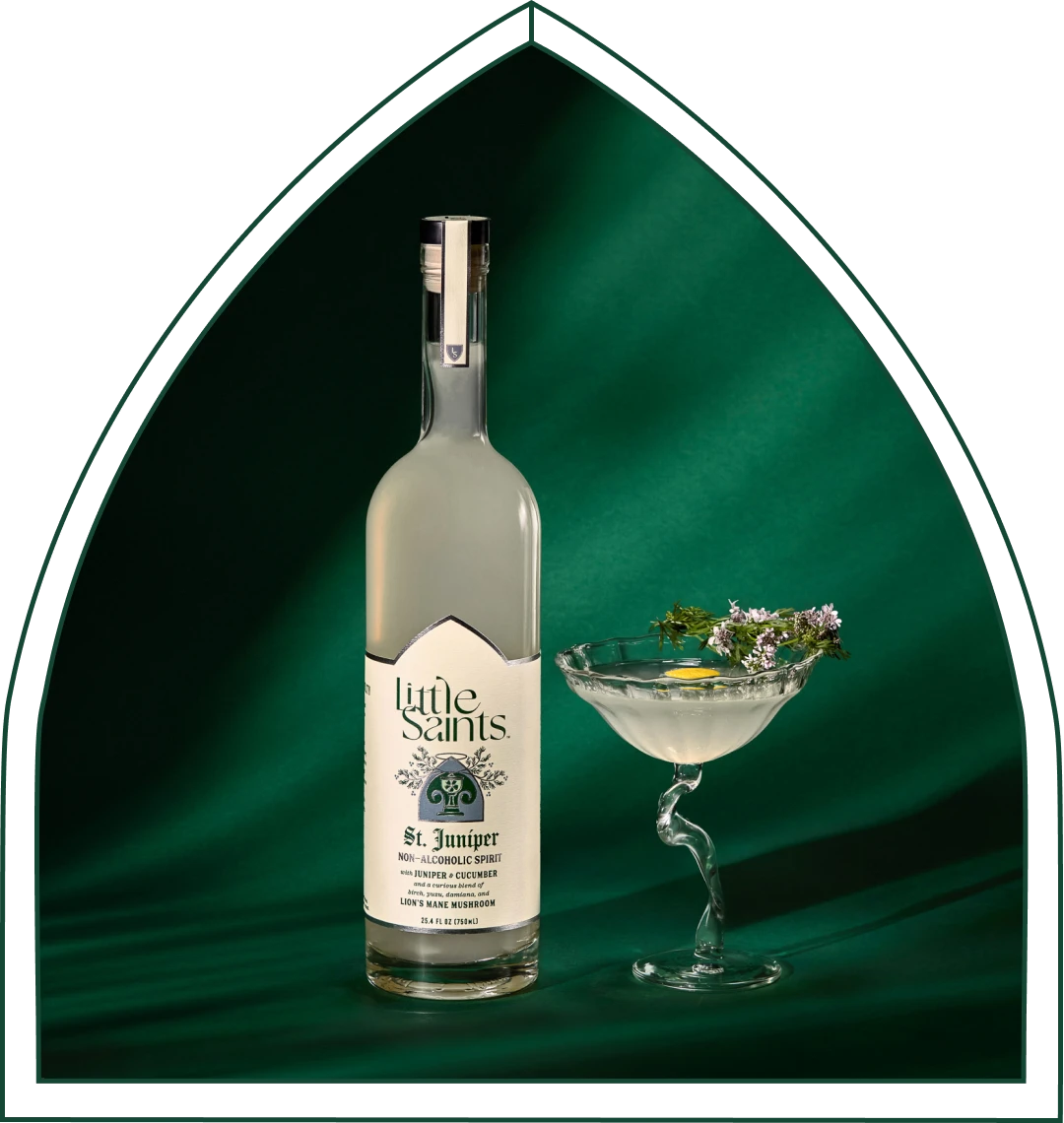
- Gin: Juniper bite, herbaceous top notes, and a dry finish. The key markers are botanical complexity and a clean, sharp aroma. In a martini or a gimlet, the gin character must survive dilution from ice and vermouth.
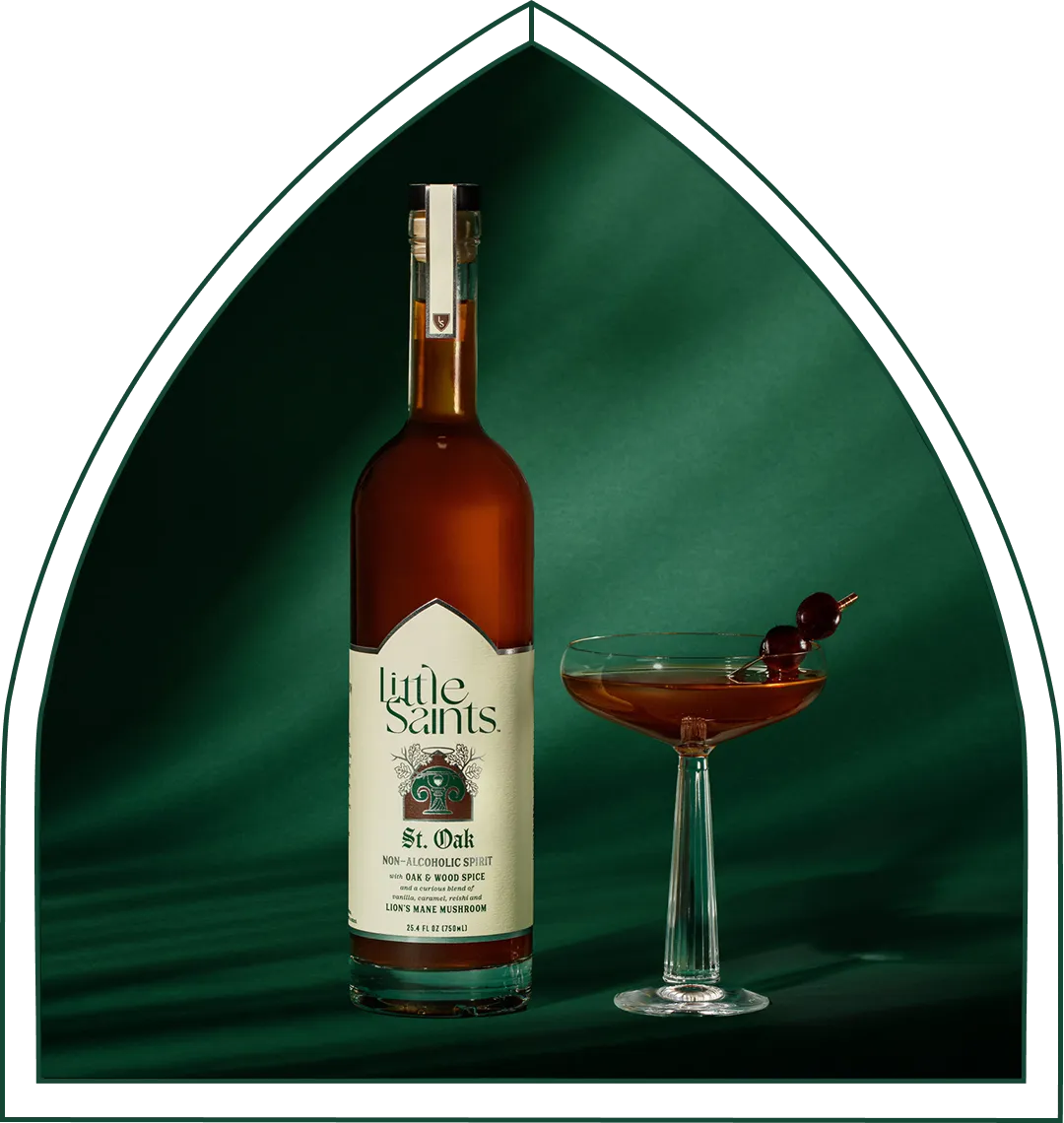
- Whiskey: Oak warmth, vanilla, caramel, and a slow chest heat. The markers are depth and a long finish. In an old fashioned or a Manhattan, the spirit must carry weight against bitters and sweetener.
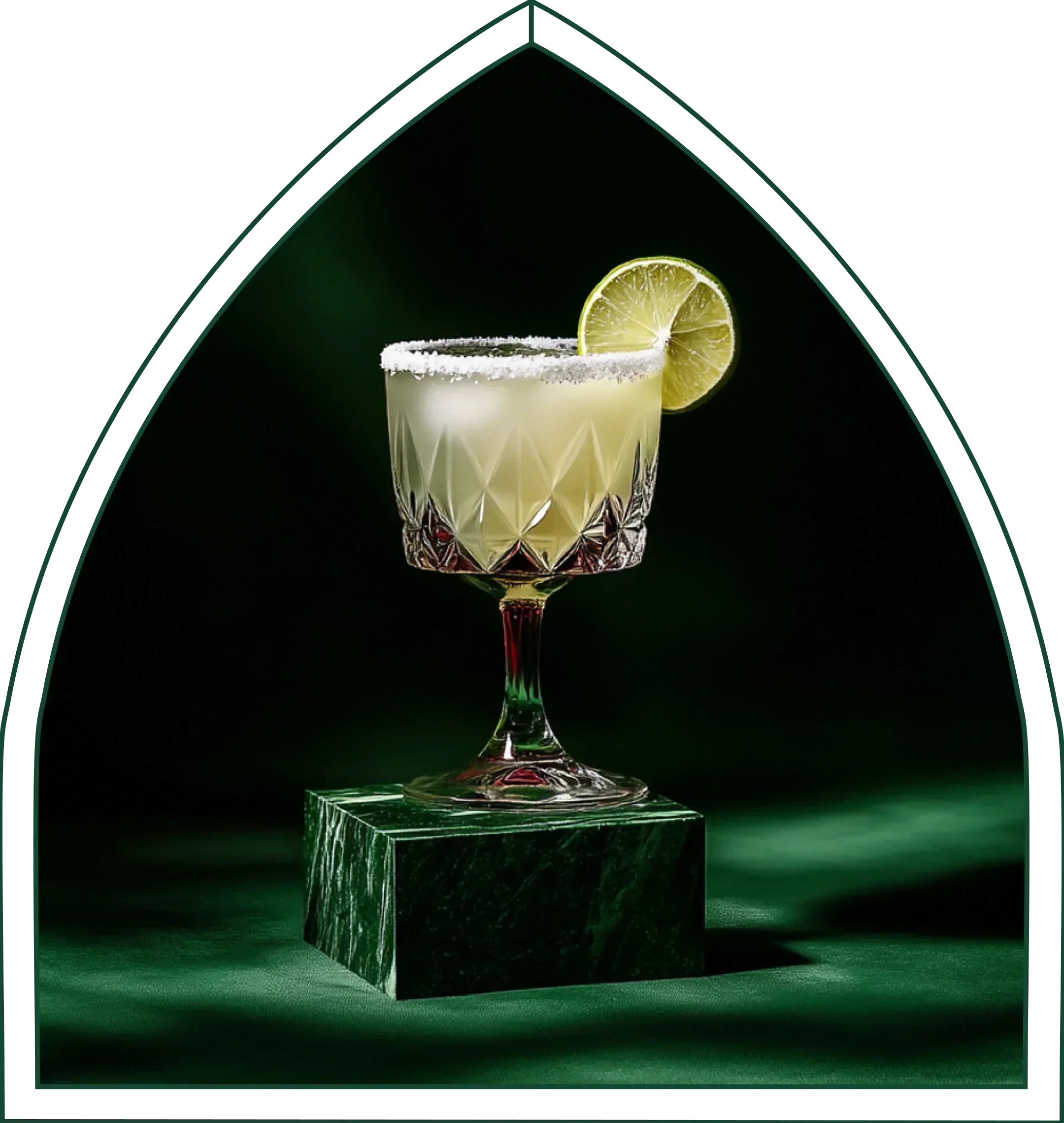
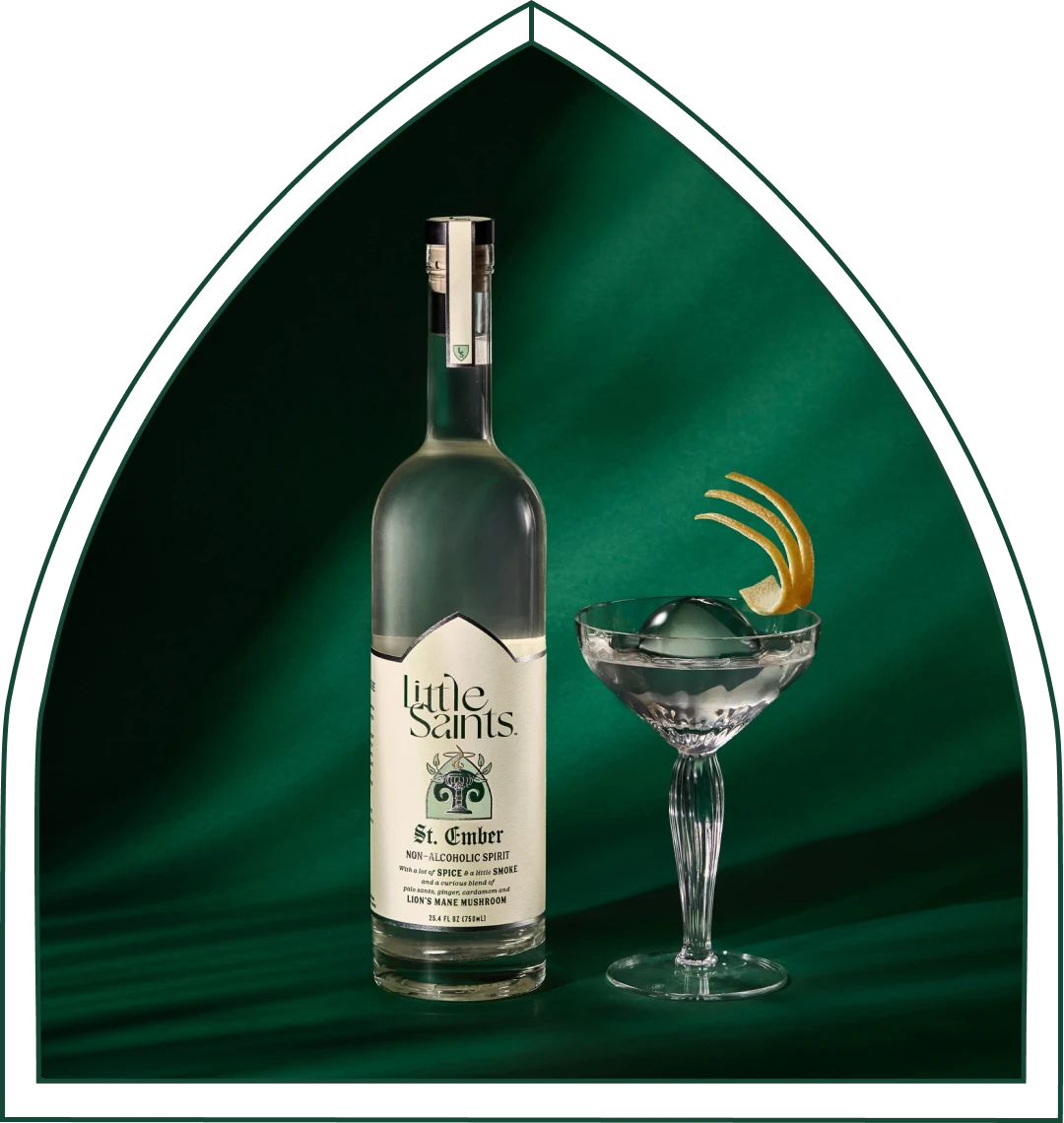
- Tequila and mezcal: Smoky heat, agave earthiness, and a dry, slightly bitter edge. In a margarita or a paloma, the spirit must stand up to citrus acid and salt.
Ethanol creates the characteristic burn in spirits by activating heat and pain receptors in the mouth and throat as a trigeminal sensation rather than a taste. Removing ethanol collapses the flavor structure because, as sensory analysis of premium non-alcoholic spirit development confirms, water is a weaker solvent than ethanol and cannot hold the aromatic oils extracted from botanicals like juniper or coriander. First-generation products built on flavored water expose this weakness quickly. They thin out over ice, lose their top notes within minutes, and register as cordials rather than spirits in a built cocktail.
Step 2: Use the Label to Screen Sugar, Calories, and Functional Dose
Once you know the spirit family, use the label as the next filter. For performance-oriented adults who track blood glucose and recovery metrics, sugar content sits at the center of the decision. A non-alcoholic spirit that replaces alcohol’s blood alcohol concentration (BAC), which is the measure of ethanol in the bloodstream, with a sugar spike simply trades one metabolic disruption for another.
The label checklist for a credible non-alcoholic spirit follows a clear order. Start with sugar, then calories, then dose, then dose quality.
- 0 g sugar per serving, with no sweeteners of any kind in a spirit intended for cocktail use.
- Calorie count stated, with five calories per serving achievable. Significantly higher figures usually indicate added sweeteners or juice bases.
- Functional dose stated in milligrams, with a published 100 mg per serving as the benchmark for a meaningful functional layer.
- Beta-glucan content published, with a minimum of 70% beta-glucan in the mushroom extract, documented by certificates of analysis, to distinguish a supplement-grade formulation from a token inclusion.
Functional beverages have moved from vague wellness claims to specific, dose-backed benefits, with consumers now expecting to know exactly what an ingredient does, at what dose, and with what evidence. Transparent, evidence-based dosing is required for consumer trust and perceived effectiveness in 2026 functional beverages targeting stress management and evening rituals. A label that lists mushroom extract without a dose or a potency figure gives you no fair basis for comparison.
The trade-off between ready-to-drink formats and spirits also shows up on the label. Ready-to-drink non-alcoholic cocktails offer convenience and a finished flavor profile. Non-alcoholic spirits offer customization, 1:1 mixing ratios, and a functional dose concentrated into a two-ounce pour rather than spread across a larger can volume.
Step 3: Run a Simple 1:1 Substitution Test in Classic Cocktails
A non-alcoholic spirit that needs two to three times the standard pour to show up in a cocktail behaves like a flavored mixer, not a spirit. The 1:1 substitution test gives you a practical filter. Two ounces of the non-alcoholic spirit replace two ounces of the conventional spirit in a martini, an old fashioned, or a margarita, with no changes to the rest of the recipe.
Non-alcoholic spirits intended for mixing with citrus, tonic, or soda need elevated top notes and heat to remain present after dilution. Oil-based extracts address this requirement in a way that flavored-water formulas cannot. The oil carries aromatic compounds through dilution, maintains viscosity over ice, and delivers the mouthfeel that reads as a spirit rather than a soft drink. Mouthfeel in beverages is defined as the combination of viscosity, lubricity, and temporal profile, meaning how long the sensation lasts. Ethanol at standard spirit concentrations raises all three measures, so water-based formulas need careful ingredient design to compensate.
For a quick kitchen test, build a standard margarita, a gin and tonic, and an old fashioned using the non-alcoholic spirit at the recipe’s stated spirit measure. If the drink feels thin, flat, or sweet where it should feel dry and warming, the formula has not solved the dilution problem.
Step 4: Check That the Functional Blend Fits an Evening Ritual
The functional layer separates a non-alcoholic spirit built for evening from a daytime functional drink in a different bottle. The key question is whether the ingredients fit the occasion. An evening spirit should contain no caffeine, no stimulants, and a blend oriented toward clarity and ease rather than wired energy.
Little Saints’ Nature’s Neuroscience blend uses four components that work together to cover the full spectrum of an evening ritual. Reishi anchors the blend with chill, the settling end that helps you exhale, unwind, and arrive. Lion’s Mane balances that relaxation with focus, providing mental presence and clarity so the evening does not tip into sedation. Damiana adds a warmer, more social dimension, the connection piece that the mushrooms alone do not cover. Botanical terpenes handle the sensory layer, giving the drink a nose in the absence of ethanol as a scent carrier.
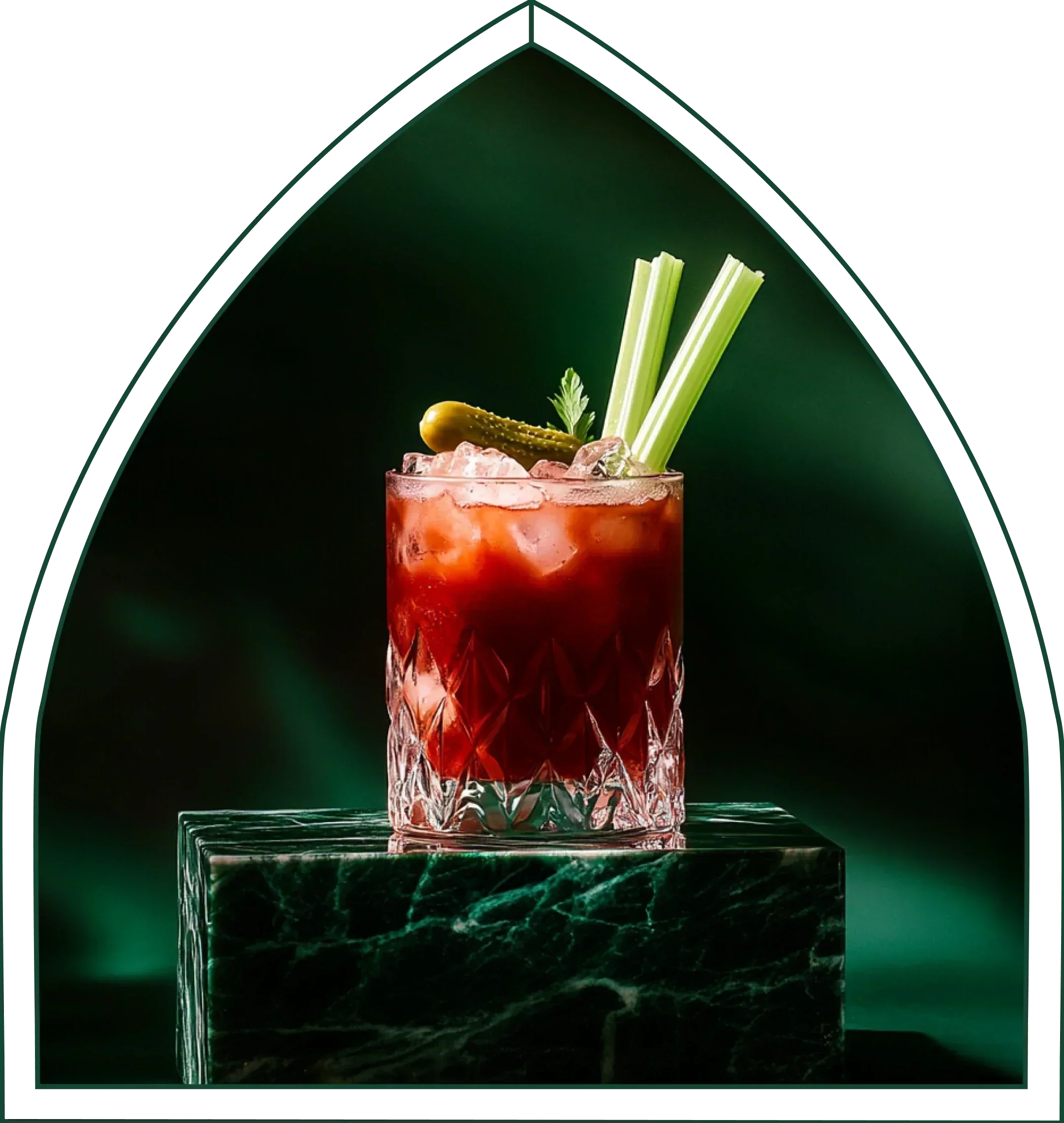
For nonalcoholic beverages positioned around relaxation or mental clarity, developers can use combinations such as Lion’s Mane mushroom alongside other functional ingredients, and sensory design elements including chemesthesis, such as warmth from ginger extract, help nonalcoholic functional beverages deliver a layered, occasion-driven experience. The evening-appropriate test stays simple. Look for no caffeine in the core line, non-intoxicating and non-psychoactive status, and 100% legal ingredients with no impairment to judgment, reaction time, or coordination.
Avoid loading a single SKU with every trending ingredient, as consumers read labels and a laundry list at sub-effective doses signals marketing rather than substance. A focused blend of a few functional ingredients at meaningful doses, chosen to work together, signals formulation discipline. A dozen ingredients at token doses signals a marketing list.
Step 5: Confirm Non-Intoxicating Status and Next-Day Metrics
The final step is the one that performance-oriented adults with Oura or Whoop devices can verify on their own. The question becomes whether the product holds up across repeated evening use without affecting the metrics they track. Success looks like repeatable satisfaction. The ritual lands, the drink holds up in the glass, the functional layer delivers the Little Saints Lift of clarity and ease, and the next morning’s data stays consistent.
75% of millennials consume functional beverages regularly, with these products positioned to support everyday performance needs such as sustained energy, focus, calm, and balance. The non-intoxicating status of a product is verifiable. It produces no impairment of judgment, reaction time, or coordination, and it does not register as ethanol in the body. Zero sugar means no blood glucose disruption. No caffeine in the core line means no interference with sleep architecture. These are the metrics that sustain the switch from alcohol to a non-alcoholic alternative over time, beyond taste alone.
Functional benefits in alcohol-free drinks help answer one of the main consumer questions: what people are getting beyond just no alcohol. For a product that meets all five steps, the answer is clear. You get zero sugar, a published functional dose, and a 1:1 cocktail build that holds up every evening.
Label-Reading Checklist and 1:1 Substitution at a Glance
Now that you understand each evaluation step, you can apply all five criteria at once when comparing products side by side. The table below shows what it looks like when a product line meets all five evaluation criteria simultaneously, using only metrics that appear on a label and can be checked across brands. All Little Saints figures come from published product specifications.
| Criterion | St. Ember (tequila/mezcal style) | St. Juniper (gin style) | St. Oak (whiskey style) |
|---|---|---|---|
| Sugar (g per serving) | 0 g, no sweeteners | 0 g, no sweeteners | 0 g, no sweeteners |
| Functional dose stated | 100 mg Lion's Mane per serving | 100 mg Lion's Mane per serving | 100 mg Lion's Mane per serving |
| Beta-glucan content | Minimum 70%, COA-verified | Minimum 70%, COA-verified | Minimum 70%, COA-verified |
| 1:1 mix ratio | Yes, oil-based extracts | Yes, oil-based extracts | Yes, oil-based extracts |
| Classic build | Margarita, paloma | Gin and tonic, martini, gimlet | Old fashioned, Manhattan |
| Non-intoxicating | Yes, under 0.5% ABV | Yes, under 0.5% ABV | Yes, under 0.5% ABV |
Little Saints publishes key verifiable criteria, including zero sugar with no sweeteners and a minimum 70% beta-glucan content documented by certificates of analysis, across all three spirit families.
Compare all three spirit families side by side and find the one that fits your evening build.
Common Obstacles and Early-Warning Signs
Several problems appear consistently when people switch to non-alcoholic spirits without a structured evaluation process. Use these as early-warning signs.
- Mismatched burn: A product that delivers no heat at the back of the throat registers as a cordial, not a spirit. Look for oil-based extracts with a stated heat source such as cardamom, capsicum, or ginger, rather than flavored water with vague botanical language.
- Confusing labels: A label that lists mushroom extract without a dose or a beta-glucan figure cannot be evaluated. Treat an unlabeled dose as a zero dose for comparison.
- Poor serving temperature: Non-alcoholic spirits built on oil-based extracts perform best over ice or chilled. Serving at room temperature in a warm glass flattens the aromatic layer and removes the viscosity contrast that makes the drink feel like a spirit.
- Social uncertainty: US consumers report feeling more comfortable choosing non-alcoholic options in social settings than they did a few years ago. A non-alcoholic spirit served in proper glassware with a garnish reads as a cocktail at a table, not as an abstention.
- Over-sweetened alternatives: Consumers are increasingly drawn to complex flavor profiles including spicy, bitter, botanical, and sour notes rather than sweetness. A non-alcoholic spirit that leads with sweetness solves the wrong problem for an adult evening occasion.
Advanced Considerations Once the Base Ritual Is Established
Once you have avoided these common pitfalls and found a spirit that meets all five criteria, the evaluation framework opens up two natural next steps. You can explore low-ABV hybrid builds and seasonal garnish variations that both rely on the spirit’s ability to hold up in classic tests.
The first extension is low-ABV hybrid builds. NIQ's January 2026 analysis finds that 47% of on-premise visitors mix alcoholic and non-alcoholic options in the same occasion, a behavior the industry now calls zebra striping. A St. Ember margarita alongside a single conventional drink across a three-hour evening creates a different calculation than four conventional drinks, and the non-alcoholic pour holds its own in the glass throughout.
The second extension is seasonal garnish and modifier swaps that use the spirit’s botanical profile as a starting point. St. Juniper’s juniper and cucumber notes pair well with a cucumber ribbon and a white pepper tincture in summer. St. Oak’s vanilla and oak notes support a smoked rosemary garnish in autumn. The base spirit’s 1:1 ratio keeps the recipe math fixed while the garnish layer rotates.
Frequently Asked Questions
Do non-alcoholic spirits that taste like alcohol actually deliver a burn, or is that a marketing claim?
As explained in Step 1, conventional spirits deliver burn through ethanol’s trigeminal effect on heat and pain receptors in the mouth and throat. Non-alcoholic spirits that replicate this sensation use heat compounds such as capsicum, cardamom, and ginger, which activate the same receptors through different chemistry. Little Saints’ St. line carries a deliberate heat from cardamom extract and capsicum in every bottle. The brand does not claim a full mouth-coating burn identical to ethanol, but the heat is strong enough for the drink to register as a spirit rather than a cordial. Products built on flavored water without a stated heat source will not deliver this sensation, regardless of how the label describes the flavor profile.
What does 70% beta-glucan actually mean on a non-alcoholic spirit label?
Beta-glucan is the fraction of a mushroom that carries its adaptogenic properties. A whole mushroom bought at a farmers’ market sits around 0.1% beta-glucan, and a dried, ground mushroom usually sits near 1%. As explained in Step 2, Little Saints publishes both the dose, 100 mg per serving, and the beta-glucan percentage, a minimum of 70%. That concentration makes the extract up to 700 times more concentrated than a whole mushroom and roughly 70 times more concentrated than a dried, ground mushroom. Quality fruiting-body extracts in the supplement industry typically run 20–40% beta-glucan, while mycelium-on-grain powders commonly test in the low single digits.
The 70% figure is documented by certificates of analysis from the supplier, whose extracts also undergo third-party lab analysis for potency. USDA Organic certification covers how the mushrooms are grown, not what they test at, so the two should not be conflated. A label that does not publish both the dose in milligrams and the beta-glucan percentage gives you no fair basis for comparison.
How do I know if a non-alcoholic spirit will hold up in a classic cocktail without over-pouring?
The extraction method is the clearest indicator. Oil-based extracts carry aromatic compounds through dilution, maintain viscosity over ice, and deliver the mouthfeel that reads as a spirit in a built cocktail. Flavored-water formulas thin out quickly and often need two to three times the standard pour to register in a build, which empties the bottle faster and changes the economics of the purchase.
Little Saints’ St. line uses oil-based craft small-batch extracts formulated with mixologists so that two ounces replace two ounces in any classic recipe. The natural cloudiness of the spirits is a visible indicator that the Lion’s Mane extract is present at a real dose, not a cosmetic addition. If a non-alcoholic spirit is clear and water-thin in the bottle, it is likely a flavored-water formula.
Is there caffeine in non-alcoholic spirits, and does it matter for evening use?
Many functional beverages, including probiotic sodas, nootropic waters, and adaptogenic energy drinks, are built for daytime use and carry caffeine. For an evening ritual oriented around clarity and ease rather than stimulation, caffeine creates the wrong functional layer. Little Saints’ core spirits line contains no caffeine. The functional blend of Reishi for chill, Lion’s Mane for focus, Damiana for connection, and botanical terpenes for the senses is designed for the end-of-day occasion, not the desk. Consumers who track sleep with wearable devices should check the label of any functional non-alcoholic spirit for caffeine content before using it as an evening ritual replacement.
Can I use non-alcoholic spirits for zebra striping, alternating with conventional drinks in the same evening?
Yes, and this pattern now appears as the norm in the category. As noted in the Advanced Considerations section, nearly half of on-premise visitors mix alcoholic and non-alcoholic options in the same occasion, and 93% of non-alcoholic beverage buyers also purchase alcohol. Little Saints’ St. line is built for exactly this use. A St. Ember margarita holds up alongside a conventional drink in the same evening without requiring a different glass, a different garnish, or a different conversation. The 1:1 mix ratio means the bartender or home host uses the same recipe for both.
These statements have not been evaluated by the Food and Drug Administration. Little Saints products are not intended to diagnose, treat, cure, or prevent any disease. Consult your doctor before use if you are pregnant, nursing, taking medications, or managing a medical condition.
Conclusion: A Line That Meets All Three Core Criteria
The durable case for switching from conventional spirits to a non-alcoholic alternative rests on three verifiable criteria, not on taste compliance alone. You need zero sugar with no sweeteners. You need a published 100 mg functional dose at a minimum of 70% beta-glucan, documented by certificates of analysis. You also need oil-based extracts that mix 1:1 in a classic cocktail build without over-pouring or dilution.
The global non-alcoholic spirits market is projected to reach USD 611.24 million by 2031, and non-alcoholic spirits are the fastest-moving segment within the non-alcoholic category, growing at roughly 70% while representing only around 6% of the total non-alcoholic set. Most products entering that growth curve compete on flavor alone. Little Saints’ St. Ember, St. Juniper, and St. Oak are a rare line that satisfies all three criteria simultaneously across tequila and mezcal, gin, and whiskey spirit families while remaining non-intoxicating, evening-appropriate, and formulated without caffeine.
The five-step evaluation process in this article is repeatable on any label in the category. Apply it, and the field narrows quickly.
The statements made on our website have not been evaluated by the Food and Drug Administration, Our products are not intended to diagnose, treat, cure or prevent any disease. If you are pregnant, nursing, taking any medications or have any medical conditions, consult your doctor before use.