


Key Takeaways for a Great Virgin Moscow Mule
- A non-alcoholic Moscow Mule works because vodka is largely flavorless, so the ginger beer’s heat, fizz, and dryness carry the drink.
- Always use real ginger beer for the bold, spicy kick that defines a proper Moscow Mule. Ginger ale produces a sweet soft drink.
- Fresh-squeezed lime juice keeps the cocktail bright. Most bottled versions taste dull and flatten the flavor.
- Built non-alcoholic spirits that mix 1:1 outperform canned Mules and early-generation NA spirits that need double or triple pours.
- Little Saints St. Ember delivers a strong 1:1 mezcal-style profile with zero sugar and a functional Lion’s Mane extract layer.
Discover the Best NA Spirit for Your Mule
Choosing Ginger Beer for a Moscow Mule
Ginger beer belongs in a Moscow Mule every time. Ginger ale turns the drink into a sweet soda.
The distinction is structural. Historically, ginger beer was brewed and fermented. That process gives it a bolder, drier, more strongly ginger-flavored and less sweet character than ginger ale. Today, most ginger beers are manufactured rather than brewed, yet the style still aims for that sharper profile.
Ginger ale is a sweetened carbonated soft drink whose predominant flavor and warmth come from ginger (Zingiber officinale). Commercial versions typically contain carbonated water, sugar or high-fructose corn syrup, and natural or artificial ginger flavoring. Modern ginger ales are usually artificially carbonated.
Substituting ginger ale for ginger beer in a Moscow Mule produces a sweeter, less spicy drink. It lacks ginger beer’s bold kick and reads more like a soft drink than a true cocktail. Ginger ale’s higher carbonation can make it bubblier, but the flavor impact stays softer.
Three label details decide whether a ginger beer works in a Mule:
- Real ginger content. A brewed ginger beer carries genuine heat from actual ginger. Brands such as Fever-Tree and Bundaberg use actual ginger in production, while many bar-rail ginger ales do not. If the label lists “natural ginger flavoring” without brewed or fermented ginger, treat it as a soft drink.
- Sweetness level. A full-sugar brewed ginger beer like Bundaberg lists 39.8 g of sugars per 375 mL bottle, roughly 40 g. That amount matches the total daily added-sugar limit many health authorities recommend for adults. Heavy added sugar flattens the lime and rounds off the ginger heat. Fever-Tree Ginger Beer, by contrast, contains 7.9 g of sugar per 100 mL, which is why it reads drier and spicier in the glass.
- Carbonation level. Low fizz makes a flat Mule. A Mule-friendly ginger beer should have lively, high carbonation with fine, persistent bubbles. It should not feel so fizzy that the drink becomes harsh. Pour it slowly down the side of the glass and stir once, gently, to protect the bubbles.
The ginger beer is the core of the drink. Ginger beer brand matters more than vodka brand in a Moscow Mule. A high-quality ginger beer with a cheap neutral vodka will outperform a premium vodka with a flat, sugary ginger ale almost every time. The same rule applies to a non-alcoholic Moscow Mule.
What Goes in a Virgin Moscow Mule?
A virgin Moscow Mule uses three ingredients plus ice. Fresh-squeezed lime is non-negotiable. Most bottled lime juice contains preservatives such as sodium metabisulfite and sodium benzoate, and pasteurization leaves it with a duller, cooked flavor that flattens the drink. Some high-quality bottled juices use 100% lime juice and flash pasteurization, yet fresh still delivers the brightest result. One medium Persian lime yields about 2 tablespoons (30 ml, roughly 1 fluid ounce) of juice, which covers a single serving.
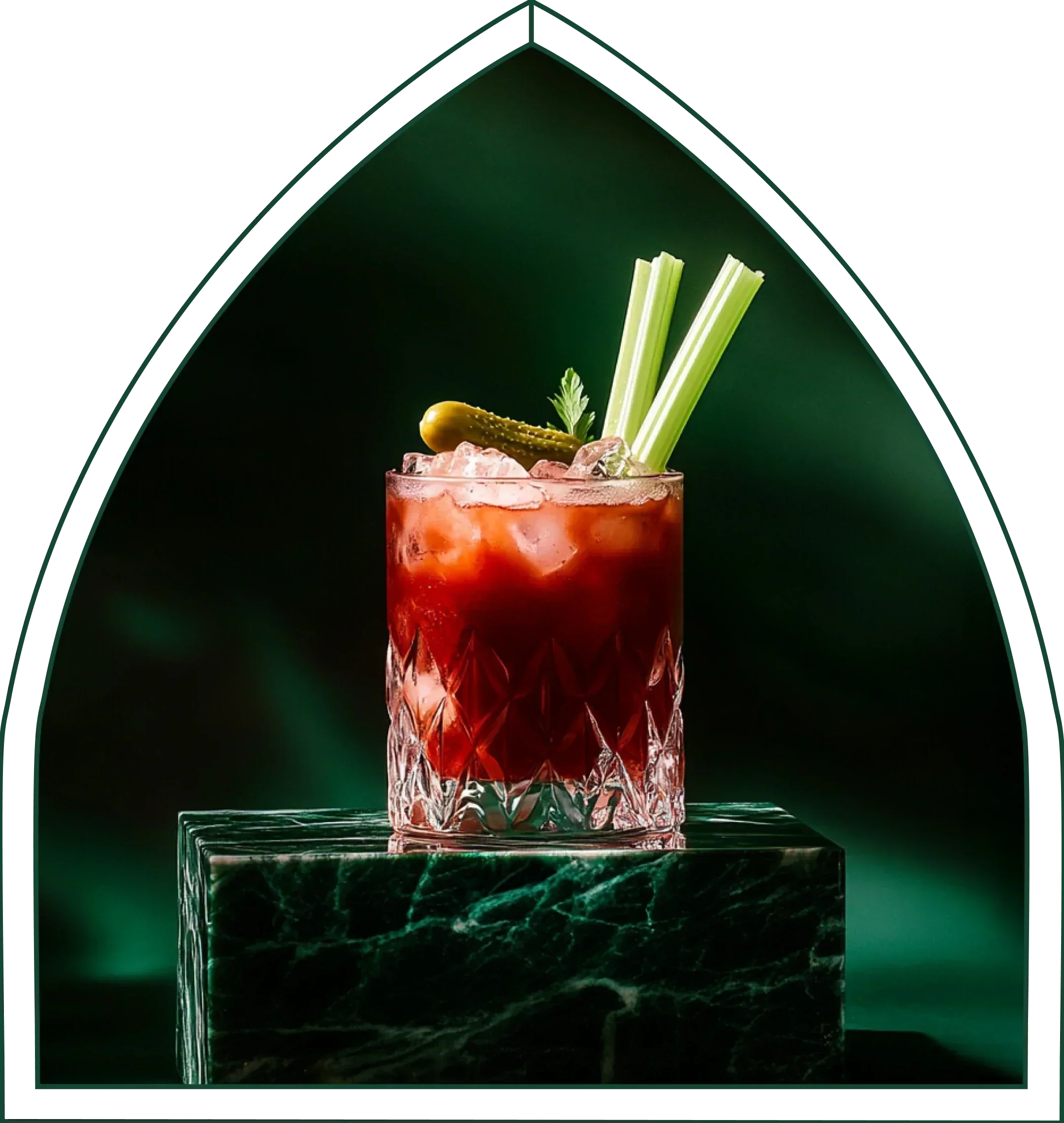
- 2 oz non-alcoholic spirit, poured over a full copper mug or highball glass of ice.
- ½ oz fresh-squeezed lime juice, added directly over the spirit and ice.
- 4 oz ginger beer, poured slowly down the side of the glass, then stirred once, gently.
Garnish with a lime wedge and serve immediately. A Moscow Mule is at its best within the first 15 minutes after serving. That window preserves flavor before copper leaching, dilution, and flavor loss begin.
For a pitcher build, multiply by six. Combine 12 oz non-alcoholic spirit and 3 oz fresh-squeezed lime juice in a pitcher and refrigerate. Hold the ginger beer until the pour, because carbonation disappears first. Add extra lime at serving if the batch has been sitting for more than a few hours.
Now that you have the basic build, the spirit you choose decides how close the drink feels to a classic cocktail. That is where Little Saints St. Ember stands out.
The Built Spirit: Little Saints St. Ember
Little Saints St. Ember delivers a strong at-home non-alcoholic Moscow Mule because it mixes 1:1 like a traditional spirit. The mechanism behind that matters.
Most first-generation non-alcoholic spirits behave like flavored water. Early-generation non-alcoholic spirits were characterized as flavored water that diluted in a cocktail and required two to three times the pour to register any flavor at all. A recipe written for 2 oz of spirit suddenly needs 4–6 oz of NA spirit, and the drink still reads thin.
St. Ember is built on oil-based craft small-batch extracts, so two ounces replace two ounces in the build. The recipe works unchanged. A bottle pours as far as the bottle it stands in for and does not empty at twice the rate.
St. Ember is an ode to the flavors of a light, spicy mezcal, with spicy, smoky, and woodsy notes built on palo santo, ginger, and cardamom. That profile fits a Mule. The ginger and cardamom in the spirit meet the ginger beer’s heat. The palo santo adds a woodsy smokiness that gives the drink a dimension a plain NA vodka substitute cannot. It mixes like a tequila or a mezcal, so a straight two-ounce swap works.
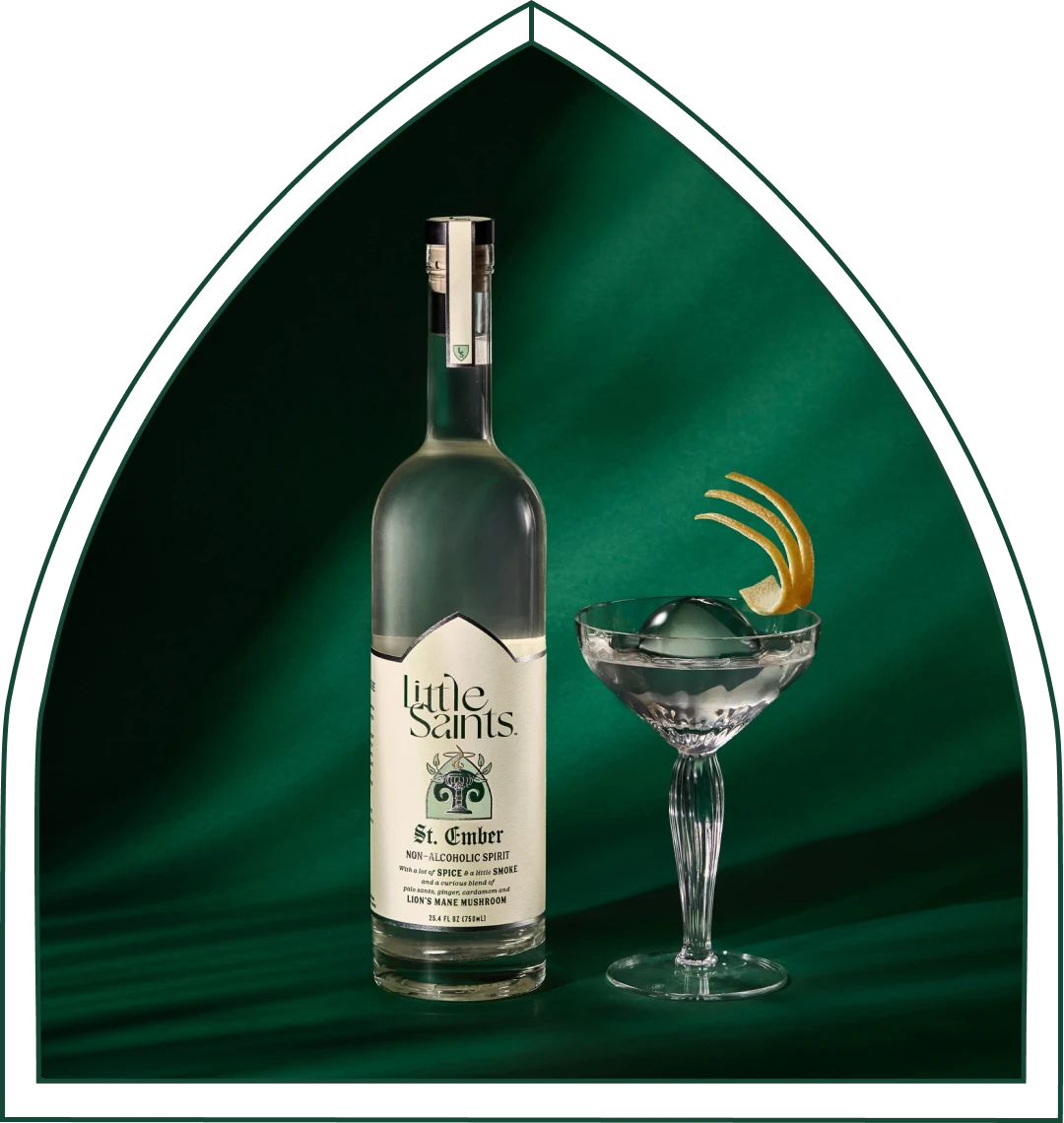
St. Ember also carries 100 mg of organic Lion’s Mane extract at a minimum of 70% beta glucan, documented by certificates of analysis from the supplier. It contains zero grams of sugar with no sweeteners of any kind. In addition, 1% of St. Ember proceeds support reforestation in Peru, with palo santo sustainably sourced.
Across 430 customer reviews on littlesaints.com (captured August 2026), St. Ember holds a 4.7/5 rating, with 92% of reviewers saying they would recommend it.
Build Your Moscow Mule with St. Ember
The Canned Reality Check
Ready-to-drink non-alcoholic Moscow Mules in a can offer real convenience. They require no prep, no measuring, and no open bottle of ginger beer that can go flat. Portion control is built in. They are shelf-stable, travel well, and demand nothing from the drinker.
The tradeoffs sit in flavor and texture. The canned format compresses the ginger beer’s role into a fixed formula tuned for shelf life and mass production. That choice often favors stability over maximum bite and fizz. The result tends to lean tart to mask sweeteners, lose the aggressive ginger kick that defines the original, and read more like a flavored sparkling water than a cocktail. The carbonation in a sealed can survives, yet the ginger heat often fades.
A can works when convenience truly comes first, such as travel, a single quick serve, or a moment when two minutes of building are not available. When those two minutes exist, a built Mule on a spirit that mixes 1:1 usually beats the canned version on every dimension that makes the drink compelling. You get stronger ginger heat, brighter fresh lime, and fizz that forms in the glass instead of at the factory. Calories can also differ between canned and built versions, which matters for some drinkers.
How Many Calories Are in a Virgin Moscow Mule?
Calorie count in a virgin Moscow Mule depends almost entirely on the ginger beer. Ginger beer is the most variable component of a Moscow Mule because both sugar level and poured volume differ among products and recipes. One recipe may use 4 oz while another uses 6 oz or more, and two brands can show very different label values at equal volume.
The swing is significant. Bundaberg Ginger Beer contains 682 kJ (about 163 calories) of energy and 39.8 g of sugars per 375 mL bottle. Fever-Tree’s regular Ginger Beer contains 19 kcal and 4.4 g of sugars per 100 mL, which equates to roughly 22 calories and 5.2 g of sugar in a 4 oz (≈118 mL) pour. A zero-sugar ginger beer removes the dominant calorie source from the build.
Little Saints St. Ember carries zero grams of sugar with no sweeteners of any kind, so the spirit adds no sugar load. Little Saints canned cocktails carry zero grams of sugar and five calories per can. In the canned format, the ginger beer’s sugar content becomes the only meaningful calorie variable. A June 2026 registered dietitian review by Mary Ann Jacobsen confirmed that an 8-ounce can of Little Saints contains 5 calories and 0 grams of sugar.
The most accurate estimate for a homemade virgin Moscow Mule comes from an ingredient-by-ingredient calculation. Add calories from the actual ginger beer poured, the lime juice, and the spirit used. The word “skinny” on a recipe has no standardized calorie meaning, so label details and measured quantities tell the real story.
Frequently Asked Questions
What Is a Non-Alcoholic Moscow Mule Called?
Most people call it a virgin Moscow Mule or a Moscow Mule mocktail. The word “mocktail” often suggests sugary juice, and the category is moving away from that image. A well-built non-alcoholic Moscow Mule on a 1:1 spirit functions like a cocktail in every meaningful sense except alcohol content.
Can I Make a Non-Alcoholic Moscow Mule Ahead of Time?
Yes, with one rule: hold the ginger beer until the pour. Batch the non-alcoholic spirit and fresh lime juice in a pitcher, refrigerate until guests arrive, then pour the base over ice in each glass and top with cold ginger beer immediately before serving. Carbonation disappears quickly once ginger beer is opened and mixed, so adding it at the last moment preserves the fizz. The spirit-and-lime base holds well refrigerated for up to 24 hours.
Does a Non-Alcoholic Moscow Mule Taste Like the Real Thing?
It comes very close, because vodka contributes almost no flavor to the original. The TTB defines vodka as neutral spirits distilled or treated after distillation with charcoal or other materials so as to be without distinctive character, aroma, taste, or color. That definition explains why the ginger beer and lime do the real work in a Moscow Mule.
The gap in a non-alcoholic version shows up in bite and body. A 1:1 spirit built on oil-based extracts addresses that. St. Ember’s ginger and cardamom meet the ginger beer’s heat, and the built-in warmth from the extract registers as a spirit presence rather than a cordial.
Is a Non-Alcoholic Moscow Mule Healthier Than a Cocktail?
A non-alcoholic Mule removes the alcohol and, in a zero-sugar build, the sugar load. A standard Moscow Mule made with 2 oz of 80-proof vodka, 0.5 oz fresh lime juice, and 6 oz of full-sugar ginger beer contains approximately 195 calories and 23 g of sugar, with about 130 of those calories coming from the vodka’s alcohol. A zero-sugar build on a spirit with no published calorie figure and a low-sugar ginger beer removes both dominant variables. Whether that counts as “healthier” depends on the drinker’s goals, and the label provides the facts.
The Final Verdict on Virgin Moscow Mules
The ginger beer drives the drink. A non-alcoholic Moscow Mule lives or dies on the heat, fizz, and dryness of that ginger beer. Canned non-alcoholic Moscow Mules trade flavor and bite for portability. A real non-alcoholic Moscow Mule works best on a spirit that mixes 1:1, so the recipe stays intact and the ginger beer can shine without a triple pour of flavored water.
Little Saints St. Ember, with its spicy, smoky, woodsy profile built on palo santo, ginger, and cardamom, plus its Lion’s Mane extract layer and zero sugar, fits that role. Two ounces of St. Ember, four ounces of a dry, well-carbonated ginger beer, and half an ounce of fresh lime create a complete build and a clear verdict.
Craft Your Next Mule with St. Ember
These statements have not been evaluated by the FDA. This product is not intended to diagnose, treat, cure or prevent any disease.
The statements made on our website have not been evaluated by the Food and Drug Administration, Our products are not intended to diagnose, treat, cure or prevent any disease. If you are pregnant, nursing, taking any medications or have any medical conditions, consult your doctor before use.