


Key Takeaways
- A non-alcoholic Moscow Mule uses ginger beer, fresh lime juice, ice, and a non-alcoholic spirit in place of vodka, served in a copper mug with a lime wheel.
- Ginger beer must be spicy and brewed with real ginger, because ginger ale is too sweet and lacks the heat needed for the drink to taste like a cocktail.
- Little Saints St. Ember is the recommended non-alcoholic spirit; its oil-based extracts and built-in burn allow a true 1:1 pour that holds up over ice without diluting.
- Use ½–1 oz fresh lime juice (never bottled) and adjust based on the ginger beer’s sweetness and spice level.
- Little Saints offers functional non-alcoholic spirits and canned cocktails for mindful drinkers seeking complex flavor without alcohol.
Names For A Non-Alcoholic Moscow Mule
The most precise name for this drink is non-alcoholic Moscow Mule. Virgin Moscow Mule is the common shorthand, and a search for “virgin moscow mule ingredients” points to the same build. Some recipe sites file it under the mocktail category, which is the broader label for non-alcoholic mixed drinks.
The best versions avoid the sugary-juice profile that often defines mocktails. A non-alcoholic Moscow Mule made with a proper non-alcoholic spirit and a spicy ginger beer drinks like a cocktail in every meaningful sense. It simply does not contain ethanol.
Choosing Ginger Beer Instead Of Ginger Ale
Ginger ale is a soft drink. It is made by mixing carbonated water with ginger-flavored syrup, with no fermentation, brewing, or real ginger heat.
Ginger beer is brewed using real ginger root, water, and sugar, sometimes with active fermentation. That process develops more complex flavor compounds and a spice level that ginger ale cannot match. A non-alcoholic Moscow Mule built on ginger ale tastes like a sweet soda with lime in it. Ginger beer carries the drink.
Ginger beer varies a lot. A mild, heavily sweetened ginger beer makes a flat, one-note drink. The lime and the spirit have to stand up to the ginger beer, so the ginger beer needs enough bite to be worth that effort.
Look for these signals on the label:
- Real ginger or ginger extract high in the ingredient list, not buried after a long list of sweeteners and “natural flavors.”
- A lower sugar number per serving. Ginger beer tends to be less sweet than ginger ale because fermentation consumes some of the sugar, but commercial versions vary widely.
- Language that signals heat. Words like “fiery,” “bold,” or “spicy” on the label are a better signal than “smooth” or “refreshing.”
Choose a ginger beer with noticeable bite. In a non-alcoholic Moscow Mule, the ginger beer does more structural work than in the alcoholic version, because there is no ethanol burn to fill the back of the glass. The spice carries that weight.
What To Use Instead Of Vodka In A Moscow Mule
A non-alcoholic Moscow Mule without a spirit becomes ginger beer and lime, which drinks like a sweet soda. The vodka-shaped hole determines whether the drink reads as a cocktail.
Most recipes on the current SERP acknowledge this gap and then leave it open. This guide gives a specific answer.
Little Saints St. Ember is the recommendation.
St. Ember is a non-alcoholic spirit built as an ode to the flavors of a light, spicy mezcal, with spicy, smoky, and woodsy notes built on palo santo, ginger, and cardamom. That profile fits naturally in a Moscow Mule. The ginger and spice in St. Ember layer with the ginger beer, and the smokiness adds a dimension that neutral vodka never brings.
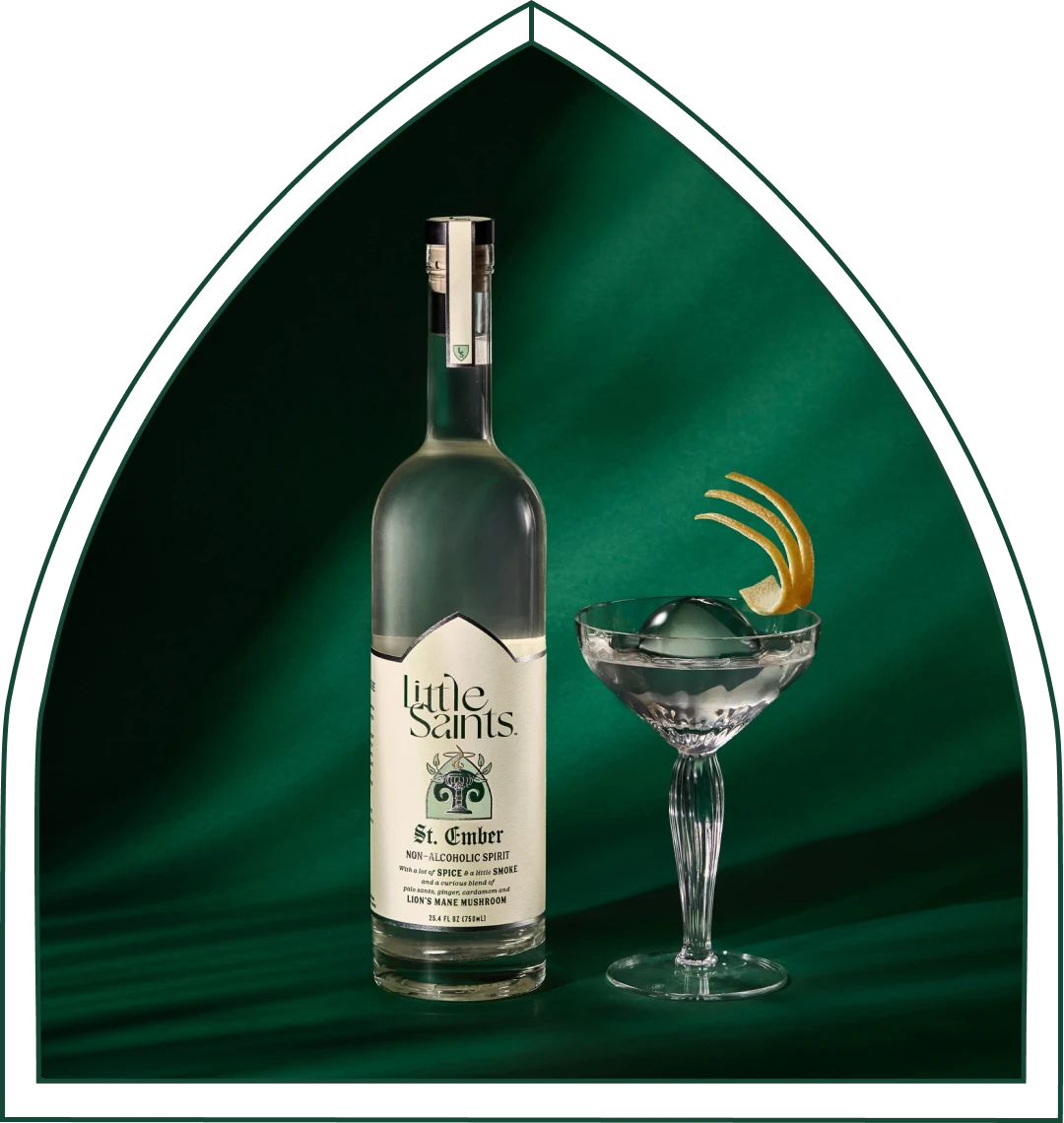
The pour is clear: two ounces of St. Ember replace two ounces of tequila or mezcal, a 1:1 substitution. The recipe stays the same.
The 1:1 ratio matters because St. Ember is built on oil-based craft small-batch extracts rather than flavored water. Bartenders described first-generation non-alcoholic spirits as “just flavors in water.” They diluted in a cocktail and had to be poured at two to three times the volume to register at all. In a Moscow Mule, that meant either a watery drink or a bottle that emptied twice as fast. St. Ember holds up in the build because the oil-based extracts resist dilution.
St. Ember also carries a built-in burn, a deliberate heat from cardamom extract and capsicum that makes the drink register as a cocktail. Warmth at the back of the throat signals that something is happening. The natural cloudiness and body from the Lion’s Mane extract give it weight in the mouth over ice, so it coats the glass and keeps its presence.
Little Saints’ functional platform, Nature’s Neuroscience, comprises organic Reishi, organic Lion’s Mane, Damiana, and botanical terpenes. The mushroom extracts are standardized to at least 70% beta glucan, the fraction of the mushroom that carries its adaptogenic properties, at a stated dose of 100mg per serving. The extract holds GRAS status, the FDA’s standard of generally recognized as safe for an ingredient used in food. The mushrooms are USDA Organic, grown in California, and extracted with ultrasound rather than chemical solvents.
Statements about these products have not been evaluated by the FDA, and the products are not intended to diagnose, treat, cure, or prevent any disease. Consult a doctor before use if you are pregnant, nursing, taking medications, or managing a medical condition.
A non-alcoholic spirit is technically optional, but it separates a sweet soda from a cocktail. Anyone who skips it should understand that trade clearly.
Build Your Moscow Mule With St. Ember
Dialing In The Lime Juice
The standard starting point is clear. Use ½ oz of fresh lime juice, about half a medium lime. The IBA spec runs lighter at 10 ml (roughly ⅓ oz). The right amount depends on how spicy and how sweet the ginger beer is.
A spicier, drier ginger beer can handle a full ounce of lime without the drink tipping sour. A sweeter ginger beer needs less lime, or the citrus and sugar stack and the drink loses its edge. Start at ½ oz and adjust. Add a little more if the drink tastes flat. Pull back if it tastes sharp.
Fresh lime juice is the standard. Bottled lime juice is often made from concentrate with preservatives, which gives it a dull, muted, sometimes metallic taste. That costs the drink its brightness. The convenience trade-off is real, and the flavor trade-off is just as real. Fresh wins.
Copper Mugs, Garnish, And Ice
The copper mug is part of the ritual and the experience. Copper is an excellent thermal conductor, so it takes on the cold temperature of the drink almost instantly. That keeps the drink frosty until the final sip. It also looks the part, which helps the drink read as a Moscow Mule instead of ginger beer with lime in a pint glass.
Food safety matters here. Copper mugs used for acidic drinks like the Moscow Mule should be lined on the inside with another metal, usually nickel or stainless steel, because acidic drinks can leach copper from an unlined mug. Check that any copper mug you buy is food-safe lined.
Garnish with a lime wheel. Add a slapped mint sprig for extra aroma if you like. A rocks glass works when there is no copper mug available. Pre-chill it in the freezer for five minutes and pack it with plenty of ice. Build the drink over ice, add the spirit and lime, top with ginger beer, and stir once gently to preserve the fizz.
Canned Options For Moscow-Mule-Style Flavors
Canned non-alcoholic cocktails offer real convenience. NIQ measured off-premise non-alcoholic beverage sales at $925M, growing at 21.9%, with ready-to-drink formats driving a significant share of that growth.
Little Saints makes canned non-alcoholic cocktails, though the brand’s canned line does not include a Moscow Mule. A canned option is the fastest route to a non-alcoholic drink in the ginger-and-citrus family of flavors. The build-it-yourself route with St. Ember is what delivers an actual Moscow Mule.
The Little Saints canned lineup includes Classic Spritz, Hugo Spritz, Classic Margarita, Paloma, Old Fashioned, Mojito, and Negroni Spritz. Each can has zero grams of sugar and five calories, sweetened with monk fruit juice concentrate, and carries the brand’s Nature’s Neuroscience functional blend. They are available at Sprouts nationwide, Whole Foods in California and Florida, Fresh Thyme in the Midwest, and ABC Liquors in Florida, as well as direct at littlesaints.com.
For a Moscow Mule specifically, the build-it-yourself approach with St. Ember remains the right answer.
Ingredients And Add-Ins To Skip
Simple syrup and apple cider vinegar show up as optional add-ins in some non-alcoholic Moscow Mule recipes and AI-generated ingredient lists. Both move the drink away from its ideal profile.
Simple syrup adds sugar the drink does not need. If the ginger beer is chosen well, with plenty of spice and moderate sweetness, there is no sweetness gap to fill. Adding syrup on top of a solid ginger beer makes the drink cloying and one-dimensional. When the drink tastes flat, the fix is a better ginger beer or more lime.
Apple cider vinegar is a trend add-in that does not belong in a Moscow Mule. It introduces a sharp, fermented acidity that competes with the lime instead of complementing it. That shift pulls the drink away from a cocktail profile and toward something that reads more like a wellness tonic. Skip it.
Ingredient Comparison At A Glance
The table below shows how each key ingredient decision compares between a standard Moscow Mule and a non-alcoholic build, along with what to look for when you shop.
| Ingredient Decision | Standard Moscow Mule | Non-Alcoholic Moscow Mule | What to Look For |
|---|---|---|---|
| Ginger beer | 4–6 oz, spicy | 4–6 oz, spicy | Real ginger high in ingredient list, lower sugar, signals heat |
| Lime juice | ½–1 oz fresh | ½–1 oz fresh | Fresh, not bottled |
| Spirit | 2 oz vodka | 2 oz St. Ember | 1:1 pour, oil-based extracts, built-in burn |
| Garnish | Lime wheel, optional mint | Lime wheel, optional mint | Copper mug preferred, food-safe lined |
The Bottom Line
A non-alcoholic Moscow Mule has three core ingredients: ginger beer, fresh lime juice, and ice. Those are simple. The decision that turns the drink into a cocktail is what you pour in place of vodka.
Little Saints St. Ember answers that decision. It mixes 1:1, carries a built-in burn, and brings ginger and spice notes that layer with the ginger beer. The oil-based extract formulation means it holds up in the build the way a spirit should, keeping its body over ice instead of thinning out. Pair it with a spicy ginger beer, ½ to 1 oz of fresh lime juice, plenty of ice, and a copper mug, and the drink lands.
Make Your Next Mule With St. Ember
The statements made on our website have not been evaluated by the Food and Drug Administration, Our products are not intended to diagnose, treat, cure or prevent any disease. If you are pregnant, nursing, taking any medications or have any medical conditions, consult your doctor before use.