


Key Takeaways
- Traditional skinny margarita recipes still contain 70–130 calories because ethanol delivers 7 calories per gram that no mixer swap can remove.
- DIY low-calorie margaritas vary in taste and sugar content with every pour, which makes macro tracking inconsistent for Oura and Whoop users.
- Ordering sparkling water at the table draws unwanted attention, while a ready-to-drink canned option preserves the social ritual without explanation.
- Little Saints Classic Margarita delivers a finished, bar-ready drink at 5 calories and zero sugar, which eliminates the alcohol calorie floor entirely.
- Shop the Little Saints Classic Margarita, with 5 calories, zero sugar, and a ready-to-pour format, and keep the evening ritual without the recovery cost.
Side-by-Side Calorie Comparison
The table below shows how alcohol creates a calorie floor across all traditional and skinny margarita recipes, a floor that disappears only when ethanol is removed entirely.
| Option | Calories per serving | Sugar per serving | Alcohol |
|---|---|---|---|
| Classic homemade margarita (4 oz) | 248 | 13 g | Yes |
| Restaurant margarita (6–8 oz) | 300–500 | ~31 g | Yes |
| Typical skinny alcoholic margarita (4 oz) | 100–150 | 5–8 g | Yes |
| Little Saints Classic Margarita (8 oz can) | 5 | 0 g | No (0% ABV) |
Every figure in the alcoholic rows carries an irreducible alcohol calorie contribution. The Little Saints row does not, because there is no ethanol present.
Problem 1: The Alcohol Calorie Floor No Recipe Can Remove
Ethanol delivers approximately 7 calories per gram, which is more than carbohydrate or protein at 4 calories per gram and close to fat at 9 calories per gram. A standard U.S. drink contains roughly 14 grams of pure alcohol, which means the alcohol alone contributes approximately 98 calories before any mixer is added. A standard 1.5 oz pour of 80-proof tequila contains approximately 97 calories.
Switching to fresh lime juice and a zero-calorie sweetener removes the mixer calories. It does not touch those ethanol calories. The alcohol calories in a margarita form a fixed floor that no recipe change can remove, because the calories derive directly from the ethanol content of the tequila and orange liqueur. A skinny margarita made with tequila, fresh lime juice, and soda water, with no added sweetener, contains roughly 100–140 calories, nearly all from the alcohol.
The only structural solution removes the ethanol entirely. Little Saints Classic Margarita is 0% ABV. The alcohol calorie floor disappears rather than shrinking, which is why the can lands at 5 calories instead of 70 to 130.
Problem 2: Inconsistent Taste and Sugar from DIY Skinny Swaps
The standard skinny margarita advice, which uses fresh lime, agave, and sparkling water, produces a different drink every time and a calorie count that shifts with every pour. Agave nectar still contributes sugar, which means even natural sweeteners add calories. Bottled sour mix is worse, contributing approximately 110 calories and 28 grams of sugar per 4-ounce serving. Generic non-alcoholic options in the category do not solve the problem either, because they are typically sugar-sweetened and simply replace the alcohol calories with sugar calories in a different direction.
Little Saints Classic Margarita delivers a consistent lime, bitter orange, and salt profile at zero sugar and 5 calories per can, sweetened with monk fruit juice concentrate only, with no erythritol, no sugar alcohols, and no cane sugar. The flavor is engineered rather than improvised. The result stays the same every time the tab is pulled.
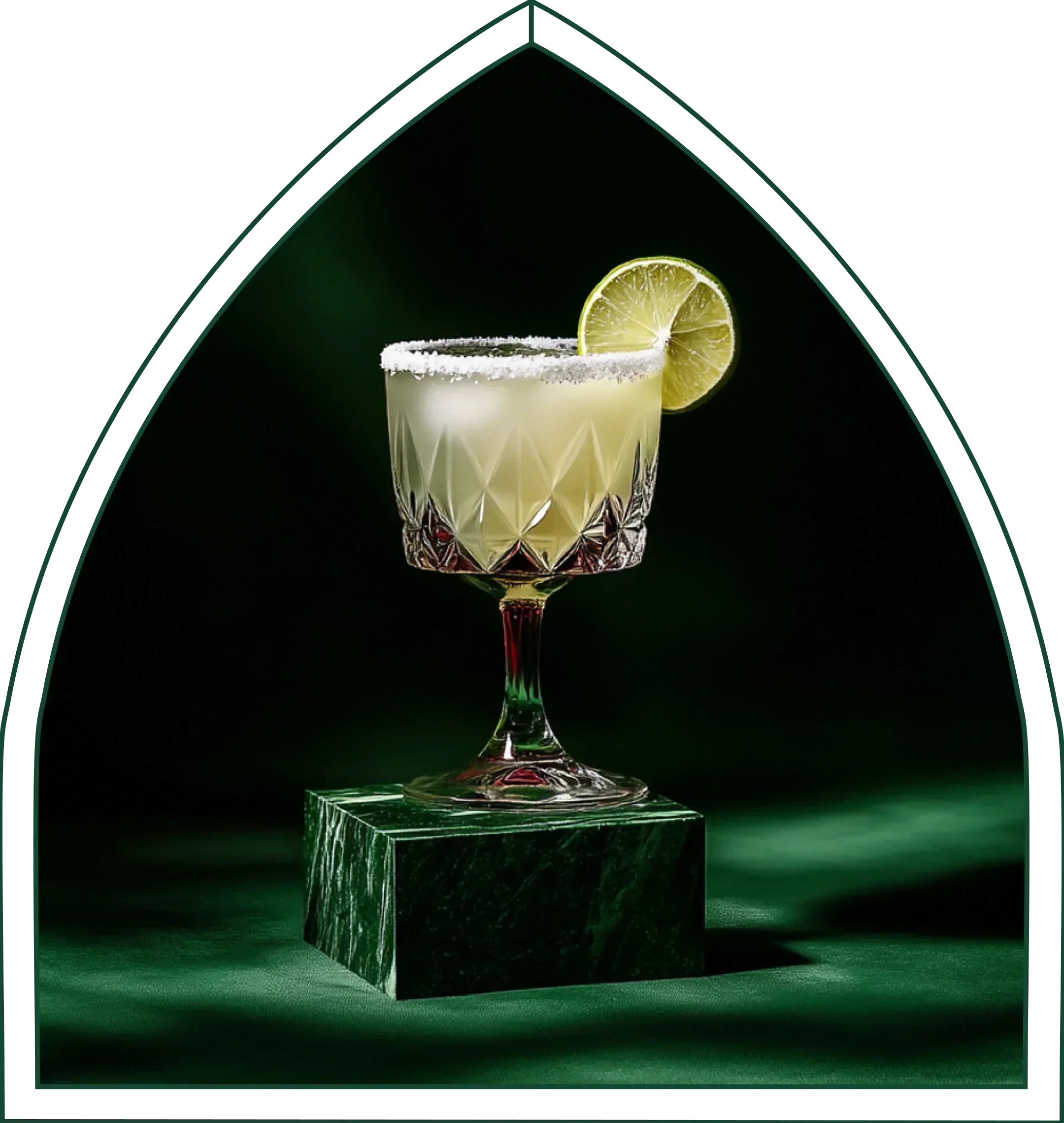
That consistency matters to the reader who tracks macros. A drink with a variable sugar content becomes a variable the Oura ring will register. A drink with a fixed, labeled 0 grams of sugar does not introduce that uncertainty.
Problem 3: Social Friction at the Table
Ordering sparkling water at a table where everyone else has a cocktail invites a question nobody wants to answer. NIQ's on-premise analysis found that soft drinks capture 57% of what people order instead of alcohol, with sparkling water at 29%, which shows that the default substitution is a non-ritual, non-adult option that draws exactly the attention most people want to avoid.
NIQ data shows that 47% of on-premise visitors mix alcoholic and non-alcoholic options in the same occasion, a behavior the category calls zebra striping. The person alternating rounds is not abstaining. They are managing the evening deliberately and need a drink in hand that reads like a drink.
Little Saints Classic Margarita arrives in a canned, bar-ready format with the full sensory profile of lime, bitter orange, and salt that matches what is already on the table. It does not announce itself as a substitution. It is a drink.
Problem 4: No Ready-to-Drink Can That Matches the Margarita Ritual
That canned format solves the social problem, and it also highlights a market gap. No current search result for "low calorie margarita in a can" surfaces a finished, ready-to-drink product at single-digit calories with zero sugar. The options are either alcoholic skinny recipes that carry 70–130 calories from ethanol or sugar-sweetened non-alcoholic products that replace the alcohol calories with sugar calories. Neither solves the problem for a reader who tracks both.
Fifty-five percent of US consumers moderating their alcohol intake are looking for more pre-mixed options, and 66% of US consumers choose lower sugar, lower calorie drinks. The demand for a finished product that answers both criteria simultaneously is documented. Little Saints Classic Margarita was designed to meet that demand.
Beyond hitting the calorie and sugar targets, the can delivers what the brand calls the Little Saints Lift, a sense of clarity and ease created by a functional blend of organic Reishi, organic Lion's Mane, and Damiana, dosed at 100 mg per serving with a minimum 70% beta glucan content documented by certificates of analysis. That experience mirrors the first sip of wine feeling without the blood alcohol concentration (BAC), which means the measurable presence of alcohol in the bloodstream, that usually follows it. The evening ritual stays intact. The next-morning metrics stay stable.
Solution: 1:1 Substitution with Little Saints Non-Alcoholic Spirits
Readers who prefer to build their own margarita rather than open a can have a direct path. St. Ember, the Little Saints non-alcoholic spirit inspired by the flavor notes of a light, spicy mezcal and built on palo santo, ginger, and cardamom, substitutes two ounces for two ounces of tequila or mezcal in any margarita recipe. The oil-based craft extracts hold up in a build without over-pouring, and the engineered burn registers at the back of the throat the way a spirit should. Add fresh lime, a salt rim, and ice. The spec stays the same, and the ethanol calorie floor disappears.
Frequently Asked Questions
How Little Saints Fits Into an Adult Evening Ritual
Little Saints is built for adults who want the evening cocktail ritual without the calorie load or next-day recovery cost that alcohol carries. The core audience includes health-tracking adults who monitor sleep and recovery metrics, people managing sugar intake, and anyone who wants to alternate alcoholic and non-alcoholic drinks over the course of a night without reaching for a soda or sparkling water. The products are not positioned as a sobriety tool. They are designed for people who still enjoy cocktail culture and want a finished, adult drink that fits their measured goals.
Label Checklist for a True Low-Calorie Margarita
Four figures matter. First, check total calories per serving and confirm the serving size matches the volume you actually drink. Second, check total sugars, including added sugars, because a drink sweetened with agave or cane juice still carries sugar calories even if it is marketed as natural. Third, check alcohol by volume (ABV). Any ABV above 0% means ethanol calories are present and no recipe change can remove them. Fourth, if the product carries a functional ingredient claim, look for a stated dose in milligrams and a stated potency. For mushroom extracts, that means a published beta glucan percentage. A label that omits any of these figures leaves the reader to guess.
How Little Saints Blends In Social Settings
The canned format provides the practical answer. A Little Saints Classic Margarita arrives in a can that looks like a drink, pours like a drink, and tastes like a drink. NIQ data shows that 47% of on-premise visitors already mix alcoholic and non-alcoholic options in the same occasion, so zebra striping is ordinary behavior rather than an exception. The can does not announce itself as a substitution. At a bar or a dinner table, it reads as a cocktail, which keeps the social dynamic intact without any explanation required.
Whether the Alcohol Calorie Floor Can Be Removed
No. As explained earlier, ethanol's calorie content is a direct function of alcohol volume, and no mixer swap can remove it. A skinny margarita built with tequila, fresh lime, and sparkling water still carries roughly 97–100 calories from the spirit alone before anything else is added. The only way to reach single-digit calories in a margarita-format drink is to remove the alcohol entirely, which is what Little Saints Classic Margarita does.
Conclusion: Match the Drink to Your Own Metrics
The skinny margarita category has one structural problem that no recipe swap resolves. Ethanol carries 7 calories per gram, and those calories are present in every alcoholic drink regardless of what surrounds them. A classic margarita delivers 248 calories or more. A well-executed skinny alcoholic recipe brings that down to 100–130 calories. Neither reaches single digits, and neither removes the BAC that WHOOP and Oura register the following morning.
Readers who track sleep efficiency, HRV, and recovery scores already have the data to evaluate that trade-off. The real decision is whether a finished, ready-to-drink product at 5 calories, zero sugar, and 0% ABV, with a supplement-grade functional mushroom blend and the full lime, bitter orange, and salt profile of a classic margarita, fits the metrics they already measure against.
The answer is on the label.
These statements have not been evaluated by the Food and Drug Administration. Little Saints products are not intended to diagnose, treat, cure, or prevent any disease. Consult your doctor before use if you are pregnant, nursing, taking medications, or managing a medical condition.
The statements made on our website have not been evaluated by the Food and Drug Administration, Our products are not intended to diagnose, treat, cure or prevent any disease. If you are pregnant, nursing, taking any medications or have any medical conditions, consult your doctor before use.