


Key Takeaways
- Two label numbers matter most on any reishi drink: the stated dose per serving in milligrams and the beta glucan percentage of the extract.
- Beta glucan is the active compound that carries Reishi’s adaptogenic properties. Labs measure it accurately with a validated enzymatic assay, which prevents grain starch from inflating the result.
- Fruiting-body extracts typically test 20–40% beta glucan, while mycelium-on-grain products often fall below 5%. Clear labels make those gaps visible.
- Ready-to-drink cans are the only format that consistently publishes both numbers, delivers a measured dose, and needs no preparation.
- Little Saints uses a 100mg dose per serving at a minimum of 70% beta glucan, verified by supplier certificates of analysis and third-party testing.
Shop Little Saints Reishi Drinks
How To Read A Reishi Drink Label
Check two numbers on any reishi drink label before buying: the stated dose per serving in milligrams and the beta glucan content of the extract as a percentage. Without both, you have no way to judge potency. With both, you can compare products on a verifiable basis instead of on marketing language.
Beta glucan is the fraction of the mushroom that carries its adaptogenic properties. It sits locked inside a cell wall made of chitin, the same material that forms insect exoskeletons, which the human gut can only marginally break down. Milling a dried mushroom into powder makes the chitin cage smaller but does not open it. Extraction breaks that barrier, which is why the beta glucan percentage on a finished extract is the number that counts.
Mushroom beta glucan must be measured with a validated enzymatic assay such as the Megazyme K-YBGL or an AOAC-referenced equivalent, not a generic polysaccharide screen. A total polysaccharide test counts grain starch alongside mushroom compounds. That is why mycelium-on-grain products can show impressive polysaccharide figures while delivering very little actual beta glucan. The McCleary enzymatic assay, validated and published in the Journal of AOAC International, measures total glucan and alpha-glucan separately and reports beta glucan as the remainder. This method prevents starch from inflating the figure.
Little Saints is the worked example of a label done right. The brand states a 100mg mushroom dose per serving at a minimum of 70% beta glucan, documented by supplier certificates of analysis, with the same extracts also undergoing third-party lab analysis for potency. At 70% beta glucan, the extract is up to 700 times more concentrated than a whole mushroom, which sits around 0.1% beta glucan. Measured against a dried, ground mushroom at around 1%, the extract is roughly 70 times more concentrated. For a full walkthrough of how to read the label on a zero-sugar reishi drink, see Zero Sugar Reishi Drink: How To Read The Label.
Quality fruiting-body extracts typically run 20–40% beta glucan, while mycelium-on-grain products often fall below 5%. Those two ranges show why a clearly stated percentage matters so much.
Those same numbers also explain why format matters. The four formats below differ widely in whether they publish either figure.
The Four Formats You Can Buy Reishi In
Four formats dominate the market, and they differ sharply on dose transparency, beta glucan disclosure, and caffeine. The table below compares them on those points.
| Format | Stated Dose Published? | Beta Glucan Published? | Caffeine |
|---|---|---|---|
| Ready-to-drink can (Little Saints) | Yes, 100mg per serving | Yes, minimum 70% beta glucan, COA-verified | None in the core line |
| Powder | Rarely | Rarely, mycelium-on-grain commonly tests in the low single digits | Varies, often blended with coffee or tea |
| Liquid drops | Often unstated | Rarely | Typically none |
| Bulk dried slices | No | No, whole mushroom sits around 0.1% beta glucan | None unless blended |
Ready-to-Drink Reishi Cans
Best for: consistent dose, no prep, and a drink that feels like a nightly ritual.
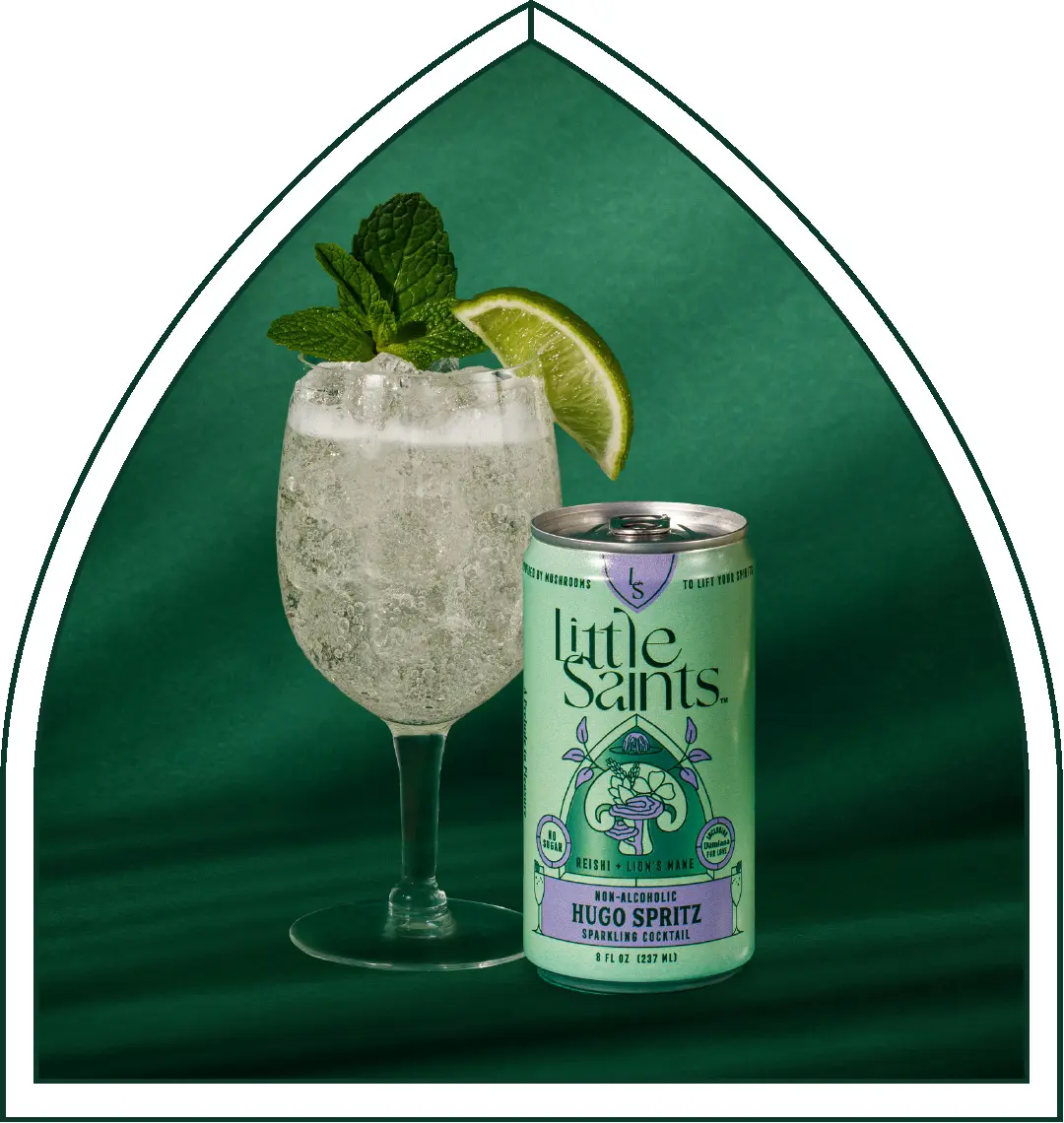
Ready-to-drink cans are the format most older guides ignore entirely. The dose is measured, the label is fixed, and there is no mixing step between the buyer and the benefit. Little Saints carries no caffeine in the core line, a deliberate choice for an evening occasion. The functional mushroom sparkling ready-to-drink format is also the fastest-growing segment in the category, projected at a 20% CAGR through 2034. That growth reflects how quickly buyers are moving toward convenience and dose transparency together.
Reishi Powders
Best for: flexible dosing, with quality differences hiding in the label details.
Powders are typically cheaper per serving and easy to add to a drink. The format is also where mislabeling is most common. Mycelium-on-grain products averaged only 1% to 15% beta glucan, with starch averaging 35% to 40% of the product by weight. Caffeine depends entirely on the blend. Many powders are cut with coffee or green tea, which makes them unsuitable for evening use unless you check the full ingredient list.
Liquid Drops And Tinctures
Best for: portability and adding to any liquid, with dose transparency often missing.
Liquid drops are easy to carry and simple to add to water or a drink. The dose per serving is frequently unstated, which makes label comparison difficult. Dropper volumes vary with squeeze pressure and viscosity, which makes consistent dosing harder than it appears. Tinctures are typically caffeine-free, but the label should be checked for any added botanical stimulants.
Bulk Dried Reishi Slices
Best for: traditional simmered tea, not for anyone who wants a measured dose.
Dried slices are the tea-making route and the least concentrated way to buy Reishi. Whole mushroom tissue sits around 0.1% beta glucan. Dried reishi fruiting bodies require 45 to 90 minutes of simmering to extract beta glucans at all. They are naturally caffeine-free unless blended with other botanicals. For a buyer who wants a stated dose and a verified beta glucan figure, this format cannot provide either.
For anyone seeking a ready-to-drink reishi option that publishes its dose and its beta glucan content, the can format is the only one that answers both requirements out of the box.
Reishi Drink Vs. Reishi Powder: How To Choose
The comparison that matters most is whether the buyer can verify what they are getting and whether they will actually take it consistently. Taste matters, but clear dosing and daily follow-through matter more.
On dose transparency, a ready-to-drink can with a stated milligram figure and a published beta glucan percentage gives the buyer a verifiable number. A powder without either figure gives the buyer a weight of material with no way to assess what fraction of that weight is active compound.
On convenience, a can requires no preparation. A powder requires measuring, mixing, and often a shaker or frother to avoid clumping. Mushroom extract powders are hygroscopic and pull moisture from the air, binding into lumps on contact with liquid.
On occasion, a drink that is built for the evening wind-down and that a person looks forward to is easier to take consistently than a powder that requires effort. Reishi’s effects develop over weeks of consistent daily use. Most clinical trials showing sleep and stress improvements ran for 4–8 weeks, and meaningful changes typically require at least 2–3 weeks of consistent daily use. A ritual that fits the occasion is more likely to be sustained than a supplement that feels like a chore. For more on how verified mushroom dosing separates functional beverages from the rest of the category, see Functional Beverages with Verified Mushroom Dosing.
Safety And Daily Use: Straight Answers
Is Reishi Hard On Your Kidneys?
Malaysia’s National Pharmaceutical Regulatory Agency issued an advisory in December 2020 reporting nine cases of kidney-related adverse reactions suspected to be associated with ganoderma products. Most patients were concurrently taking other medications and had underlying conditions including chronic kidney impairment, diabetes, and coronary artery disease. The NPRA stated that there is currently no scientific data on the risks of kidney- or liver-related adverse reactions from taking ganoderma and advised consumers to exercise caution, particularly patients with reduced kidney and/or liver function. Little Saints makes no medical claims. The standing guidance applies: consult your doctor before use if you are pregnant, nursing, taking medications, or managing a medical condition.
Can You Take Reishi Every Day?
Supplier research does not document a specific daily limit. Reishi’s adaptogenic properties are best experienced through consistent daily use rather than occasional consumption. A drink that fits a daily ritual is easier to remember than a capsule that can be forgotten.
What Should You Avoid Mixing With Reishi?
Reishi inhibits platelet aggregation and may increase bleeding risk when combined with anticoagulants or antiplatelets such as warfarin, aspirin, or clopidogrel, and its immune-stimulating beta glucans may theoretically counteract immunosuppressive therapy. Anyone on medications, managing a chronic condition, or scheduled for surgery should consult a physician before adding Reishi to their routine. Little Saints follows that guidance and does not advise on specific drug interactions.
Morning Or Night: When To Take Reishi
Little Saints is deliberately night-first. The core line carries no caffeine because the occasion is the end-of-day wind-down, the moment when someone would otherwise reach for a drink to mark the end of the day. Reishi is the settling end of the Nature’s Neuroscience blend, Reishi for chill. Taking it in the evening fits both the ingredient’s traditional use and the occasion Little Saints is built for.
How Long Reishi Takes To Feel Noticeable
Effects are subtle by design. Little Saints calls its effect the Little Saints Lift, a sense of clarity and ease, the feeling of being a little bit lifted. The effect does not build like a stimulant and does not feel the same for everyone. Some users report subtle calming effects within 3–7 days, while meaningful changes typically require at least 2–3 weeks of consistent daily use.
Is Reishi A Psychedelic?
Reishi is not a psychedelic. Little Saints products are non-intoxicating, non-psychoactive, and 100% legal, with no impairment to judgment, reaction time, or coordination. Reishi is a functional mushroom with a long history of traditional use and no relationship to psilocybin or any psychoactive compound.
Does A Reishi Drink Have Caffeine?
Caffeine content depends on the format. Little Saints carries no caffeine in the core line, a deliberate choice for the evening occasion. Reishi powders are frequently blended with coffee or green tea and may carry significant caffeine. Reishi itself is naturally caffeine-free, but commercial blends combining reishi with green or black tea do contain caffeine, which is an important check for anyone buying for evening use. Liquid drops and bulk dried slices are typically caffeine-free unless blended. Always check the full ingredient list.
Reishi Vs. Lion's Mane: How They Work Together
Reishi and Lion’s Mane support different ends of the same blend. Reishi supports chill, and Lion’s Mane supports focus. Reishi is the settling end, associated with exhaling, unwinding, and arriving at the end of the day. Lion’s Mane is the mental-presence end, associated with clarity and engagement.
An evening reishi drink leads with Reishi because the occasion calls for it. Little Saints’ Nature’s Neuroscience platform combines organic Reishi, organic Lion’s Mane, Damiana, and botanical terpenes, with the specific blend varying by product across the canned cocktails and spirits. Reishi anchors the chill, and Lion’s Mane helps keep the mind present rather than foggy. The result is the Little Saints Lift, clarity and ease at the same time. For more on how Reishi functions in a calming drink context, see Reishi Calming Drink: Does It Work & How Much Do You Need?
Where To Buy A Reishi Drink
Three channels cover the market: direct-to-consumer, retail, and Amazon.
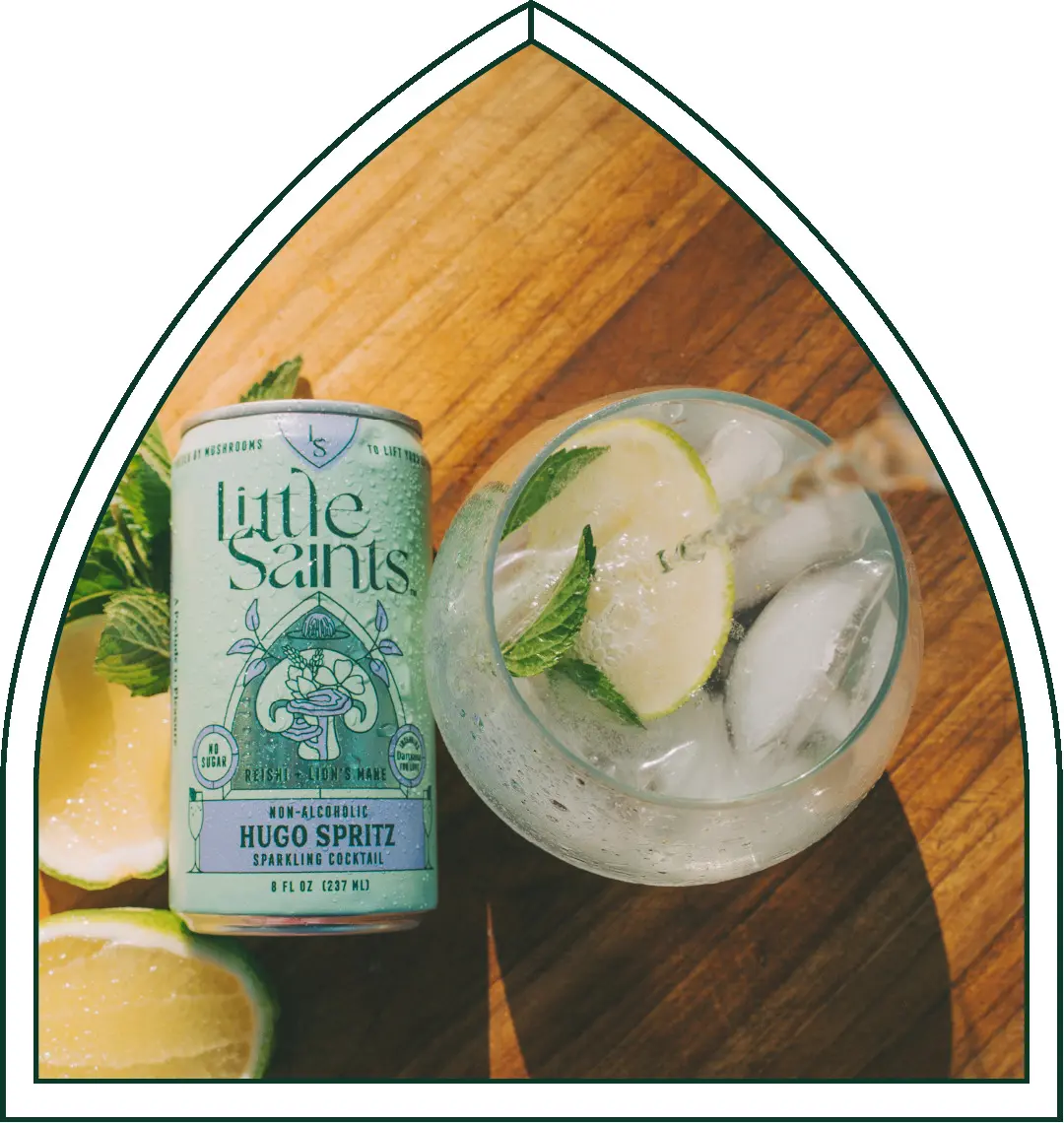
Buying direct from littlesaints.com gets the full range, all seven canned non-alcoholic cocktails and all three non-alcoholic spirits, St. Ember, St. Juniper, and St. Oak. Direct buyers also get a Subscribe & Save option on the cans and shipping to all 50 states from two warehouses, typically within three days.
In retail, Little Saints is stocked in over 1,000 shops, grocery stores, liquor stores, bars, and restaurants nationally, including Sprouts in all doors, Whole Foods in California and Florida, and Fresh Thyme in the Midwest. A limited assortment is also available on Amazon.
Why Little Saints Is The Reishi Drink To Try First
The case starts with the two numbers mentioned earlier, the 100mg dose and 70% beta glucan minimum, documented by certificates of analysis from the supplier and third-party lab testing. Most reishi drinks do not publish either figure. Little Saints publishes both.
The sourcing specifics are substantiable. The mushrooms are USDA Organic and California-grown, extracted with clean ultrasound technology that uses no solvents and leaves no chemical residue in the liquid. The extract holds GRAS status, the FDA’s standard of generally recognized as safe for an ingredient used in food. The formulation stays focused on Reishi, Lion’s Mane, Damiana, and botanical terpenes, a tight adaptogen blend at meaningful doses.
The product facts are straightforward. Each can has zero grams of sugar and five calories, 0% ABV on the cans and under 0.5% ABV on the spirits. The cans are sweetened with monk fruit juice concentrate, and the spirits contain no sweeteners at all.
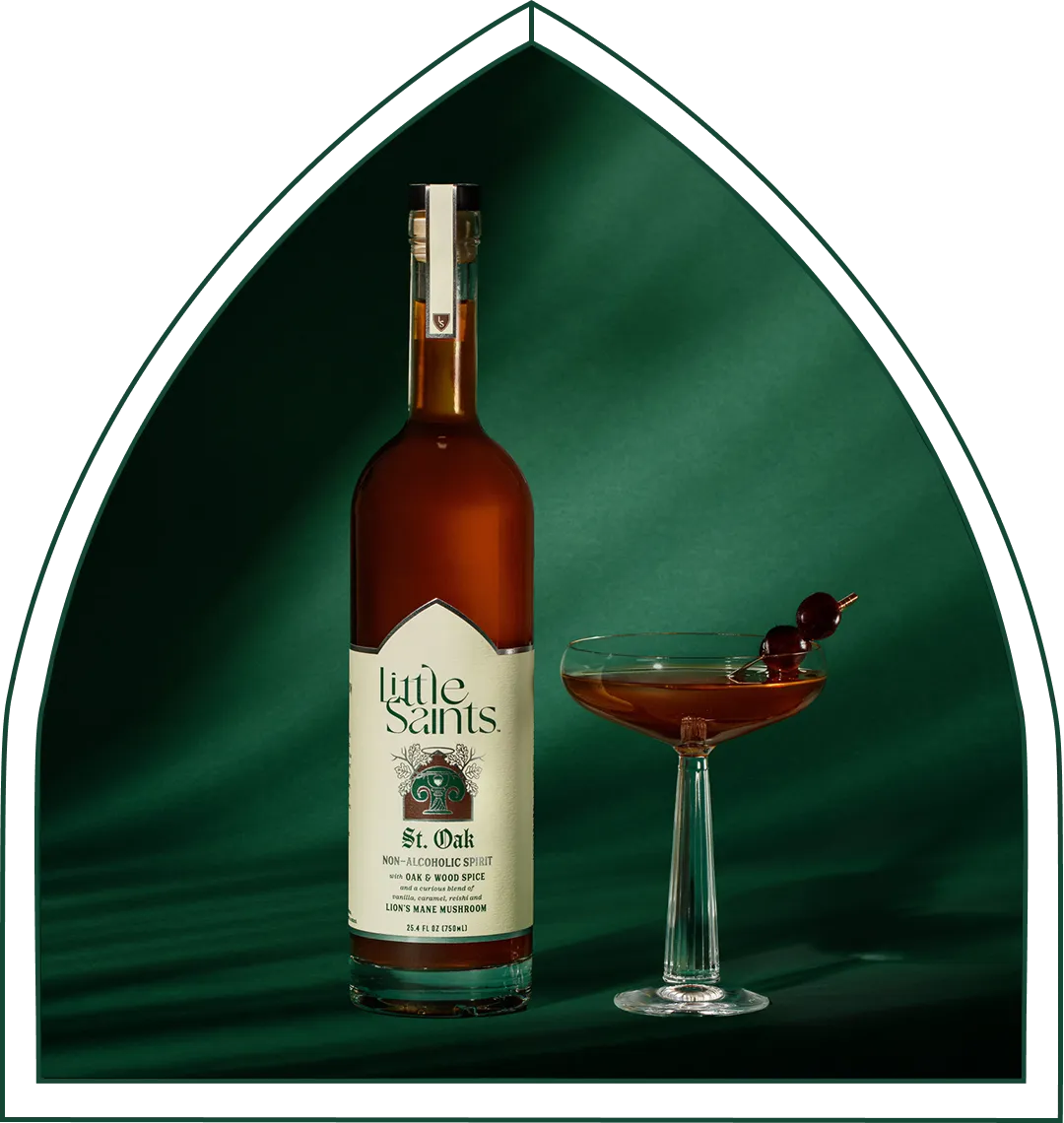
The range covers seven canned non-alcoholic cocktails: Classic Spritz, Hugo Spritz, Classic Margarita, Paloma, Old Fashioned, Mojito, and Negroni Spritz. It also includes three non-alcoholic spirits. St. Ember is an ode to the flavors of a light, spicy mezcal that mixes like a tequila or a mezcal. St. Juniper is the gin expression built for tonics, gimlets, and anything citrus-forward. St. Oak captures the soul of an oak-aged whiskey, with vanilla, spice, and woodsy notes. St. Oak was named Best NA Spirit of 2025 by the BevNET Spirit Awards. Customer ratings across the spirits line range from 4.5 to 4.7 out of 5, based on accumulated reviews on littlesaints.com captured in August 2026. For a detailed look at how Little Saints compares on taste, effects, and dose transparency, see Reishi Drink Reviews: Taste, Effects & Spotting Real Doses.
These statements have not been evaluated by the Food and Drug Administration. This product is not intended to diagnose, treat, cure, or prevent any disease.
Shop Little Saints Reishi Drinks
Conclusion: Buy On The Numbers, Then Match Your Ritual
The framework is straightforward. Buy on stated dose and beta glucan content, then choose the format that fits the occasion. A product that publishes neither number cannot be evaluated. A product that publishes both gives the buyer a clear basis for comparison.
For the evening occasion, the end-of-day wind-down and the drink that marks the shift from doing to being, the ready-to-drink can format answers every requirement. It delivers a consistent dose, no prep, no caffeine, and a label that spells out what is inside. Explore the full range of non-alcoholic cocktails and spirits, each with zero sugar, five calories, and a supplement-grade functional mushroom blend in every pour.
These statements have not been evaluated by the Food and Drug Administration. This product is not intended to diagnose, treat, cure, or prevent any disease.
Explore Little Saints Reishi Drinks
The statements made on our website have not been evaluated by the Food and Drug Administration, Our products are not intended to diagnose, treat, cure or prevent any disease. If you are pregnant, nursing, taking any medications or have any medical conditions, consult your doctor before use.