


Key Takeaways
- Functional beverages are formulated for specific benefits like gut health, hydration, energy, focus, calm, and recovery rather than refreshment alone.
- Category growth is driven by prebiotic sodas and fiber-forward drinks, with fiber beverages growing 41% year-over-year in 2025.
- Most functional drinks are built for daytime use, and the evening wind-down occasion remains largely underserved by the category.
- Label transparency matters. Check dose, extract type, beta glucan content, sugar, calories, and caffeine before purchasing.
- Little Saints offers non-alcoholic cocktails and spirits for the evening occasion, with zero sugar, a stated 100mg functional mushroom dose, and minimum 70% beta glucan extract.
Functional Beverage Categories: Organized By Benefit
Functional beverage categories serve different needs, times of day, and consumers. Each benefit bucket plays a specific role in a daily routine.
Gut And Prebiotic
Prebiotic sodas and fiber-forward drinks are the category's fastest-growing segment. SPINS data shows beverages containing fiber grew 41% year-over-year in 2025, while the soda category grew 4%, which SPINS attributed to the better-for-you soda boom. These drinks support digestive regularity, microbiome health, and blood sugar management. They work best as a daily habit, taken consistently rather than occasionally. Evaluate them on fiber type, fiber grams per serving, and sugar content. Inulin, chicory root, and acacia behave differently in the gut, and some products carry more sugar than the fiber benefit justifies.
Hydration And Electrolytes
Electrolyte powders, tablets, and ready-to-drink options replace sodium, potassium, and magnesium lost through sweat or mild dehydration. PepsiCo data estimates over 150 million U.S. consumers regularly report signs of mild to moderate dehydration. Hydration products now serve everyday wellness, not only sports performance. Evaluate them on electrolyte milligrams per serving, sodium level, and sugar content. Excess sugar can work against hydration.
Energy And Focus
Clean-caffeine and nootropic drinks dominate the functional aisle by volume. Energy drinks and sports drinks together account for 56% of the functional beverage market. The category is shifting toward natural caffeine sources such as green tea, yerba mate, and guayusa, often paired with L-theanine for what the industry calls calm energy. Evaluate on caffeine milligrams per serving, whether the caffeine source is stated, and whether any secondary nootropic ingredient has a published dose instead of just a name.
Calm And Adaptogenic
Calm-positioned drinks use restorative botanicals, including Reishi and other functional mushrooms, alongside magnesium and L-theanine. They support the transition from the day's demands into the evening. The relaxation beverage category has witnessed 19% annual growth, according to Innova Market Insights. This evening-focused occasion remains one of the most underserved in the functional aisle. Evaluate on whether the brand publishes a milligram dose, what extract type it uses, and whether the drink contains caffeine, which conflicts with an evening use case.
Protein And Recovery
Protein waters and ready-to-drink shakes support muscle recovery and satiety. Ready-to-drink protein products grew 13% year-over-year in 2025, per SPINS, and nearly 40% of U.S. households buy protein drinks annually. Evaluate on protein grams per serving, protein source quality, and whether calorie and sugar levels match the functional benefit.
Browse Functional Cocktail Alternatives
Daytime Functional Vs. Evening Functional
The functional aisle today largely serves daytime needs. Gut health drinks often become morning rituals. Electrolyte powders go into a gym water bottle. Energy and focus drinks sit on desks. Protein ready-to-drink products follow workouts. Even many calm-positioned drinks contain caffeine, which makes them poor fits for true evening wind-down.
The evening occasion, when someone might reach for a Negroni, a glass of wine, or a beer, remains underdeveloped. Alcohol, sugary non-alcoholic cocktails, and sparkling water usually fill that gap. Consumers still look for something that marks the end of the day, feels like a drink, and lets them wake up clear.
The sugar problem sits at the center of that gap. A regular soda carries 35–40 grams of sugar. Cutting alcohol should avoid adding sugar. The first generation of non-alcoholic cocktails, the sugary mocktail category, removed alcohol and introduced a new sugar burden. The evening occasion benefits from a different trade.
Gallup's 2026 Consumption Habits survey found that 17% of Americans had consumed non-alcoholic beer, wine, or spirits instead of an alcoholic drink in the past year, and among drinkers who use them, 38% say they are drinking more of these alternatives than they used to. Substitution behavior is real, and products built specifically for that evening moment remain rare.
How To Read A Functional Beverage Label
Functional beverage labels often imply benefits without documenting them. A simple label checklist helps you separate marketing language from real formulation.
Dose. Look for a milligram figure stated per serving instead of just an ingredient name. Without a quantity, the ingredient could appear at any level, including one too low to matter. That is why an unpublished dose turns a functional claim into a marketing claim.
Extract Type. A concentrated extract and a mycelium-on-grain powder are different products. Mycelium-on-grain powders grow on a grain substrate, so much of the powder is starch rather than active mushroom material. A concentrated fruiting-body extract delivers a higher proportion of active compounds.
Beta Glucan Content. Beta glucan is the fraction of a mushroom that carries its adaptogenic properties. It shows how much of the powder is actually active. Most brands never publish this number. To see why it matters, compare formats. A whole mushroom sits around 0.1% beta glucan. A cooked or dried, ground mushroom is around 1%. Quality fruiting-body extracts typically run 20–40%. Mycelium-on-grain powders commonly test in the low single digits. The gap between a 3% beta glucan powder and a 70% extract is a formulation difference, not a marketing one.
Sugar. Check grams per serving and confirm the serving size. A 16 oz bottle labeled as one serving may hide a sugar figure that originally applied to two.
Calories. Functional ingredients add cost rather than calories. High-calorie functional drinks usually carry sugar or fat instead of extra function.
Caffeine. Caffeine disqualifies a drink positioned for evening. U.S. labels do not need to state caffeine milligrams, but added caffeine must appear in the ingredient list. Caffeine anhydrous, guarana extract, or green tea extract all signal caffeine content.
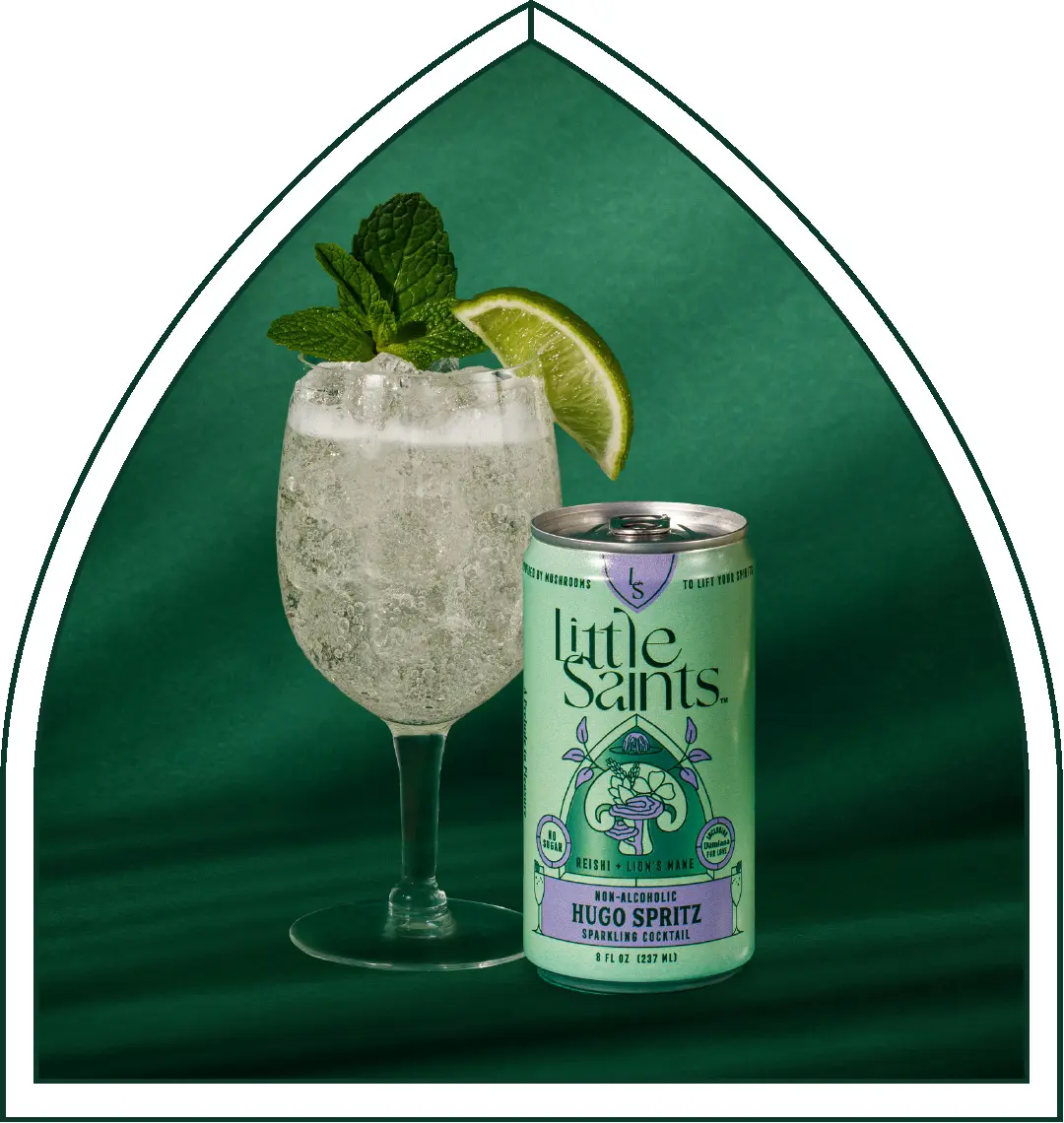
Little Saints shows what label transparency looks like in practice. Every product carries a stated 100mg functional mushroom dose per serving and a minimum 70% beta glucan extract. Certificates of analysis from the supplier document this, and the supplier's extracts also undergo third-party lab analysis for potency. At 70% beta glucan, the extract is up to 700 times more concentrated than a whole mushroom at about 0.1%, and roughly 70 times more concentrated than a dried, ground mushroom at about 1%. Even compared with supplement products, 70% sits at the top of the typical range, since many quality fruiting-body extracts run 20–40% and mycelium-on-grain powders often test in the low single digits. The mushrooms are USDA Organic, grown in California, and extracted with ultrasound rather than chemical solvents.
*Statements about the products have not been evaluated by the FDA. The products are not intended to diagnose, treat, cure, or prevent any disease.*
Do Functional Beverages Actually Work?
Functional beverage efficacy depends on the specific ingredient, the dose, and the strength of the research behind it.
For electrolytes, the evidence is strong and the mechanism is clear. Replacing sodium, potassium, and magnesium lost through sweat supports hydration. The benefit appears when the dose is meaningful and the person is actually depleted.
For prebiotic fiber, the evidence is solid at sufficient doses. A meta-analysis of 58 randomized controlled trials found that a median 3.5g per day of oat beta-glucan significantly lowered LDL cholesterol versus control. Many beverages carry fiber below research-backed levels, and fiber type matters because oat, barley, and mushroom beta-glucans differ chemically.
For restorative botanicals such as Reishi, research suggests potential benefits for stress response and restoration. At the same time, consultant dietitian Sophie Medlin notes there is nowhere near enough research on clinically significant doses of adaptogens and nootropics, and no long-term studies on daily consumption of these products. Evidence around these ingredients describes what they may do, not what any specific beverage guarantees.
For caffeine, the evidence is robust. Caffeine is a stimulant with well-documented effects on alertness and physical performance. It often delivers most of the noticeable effect in drinks that claim more exotic benefits.
The practical takeaway is simple. A functional beverage is more likely to deliver when the dose is stated, the extract type is documented, and the ingredient has a research base at that dose. A named ingredient without a milligram figure remains a label claim rather than a formulation detail.
*Statements about the products have not been evaluated by the FDA. The products are not intended to diagnose, treat, cure, or prevent any disease.*
Functional Beverage Brands In The USA
The evening occasion is underserved, but the market around it is large and growing. SNS Insider valued the U.S. functional beverages market at approximately $54.90 billion in 2025. Energy drinks held about 39.56% share in 2025, per SNS Insider, while nutraceutical and probiotic drinks grew fastest.
Distribution has followed consumer demand. NIQ's From Value to Vibe report (January 2026) measured non-alcoholic beverages at $925M in off-premise sales, growing at 21.9%, while total alcohol fell 1.0% in the same channel. Growth concentrates in a few segments. Non-alcoholic spirits represent only around 6% of the non-alcohol set but are growing at roughly 70%, making them the fastest-moving slice of the category.
Substitution behavior underpins this growth. Gallup's 2026 Consumption Habits survey found that among drinkers who use non-alcoholic alternatives, 38% say they are drinking more of these than they used to. NIQ finds that 93% of non-alcohol buyers also purchase alcohol. It is the same customer buying across both sets. NIQ calls this zebra striping and measures it at 47% of on-premise visitors who mix alcoholic and non-alcoholic options in the same occasion.
On the functional side, NIQ's June 2026 functional beverage perspective identifies adaptogen and nootropic drinks as a parallel rise serving a different need state from plain moderation. NIQ VP of Food and Beverage Thought Leadership Chris Costagli notes that consumers now think carefully about what earns a place in their routine.
IWSR forecasts the U.S. no-alcohol market to grow at an 18% volume CAGR from 2024 to 2028. Alcohol adjacents, including adaptogenic and nootropic drinks made for adults, are forecast above 20% volume CAGR over the same period.
Frequently Asked Questions
What Counts As A Functional Beverage?
A functional beverage is any drink formulated to deliver a specific benefit beyond basic hydration or refreshment. The defining characteristic is a formulation built around an intended outcome such as gut health, hydration, energy, focus, calm, or recovery. The category includes prebiotic sodas, electrolyte drinks, energy drinks, protein waters, adaptogenic ready-to-drink products, and non-alcoholic cocktails with a functional ingredient platform. A drink that names a functional ingredient without a stated dose or extract type functions as marketing rather than true formulation.
What Is The Difference Between Daytime And Evening Functional Drinks?
Daytime functional drinks cover gut health, hydration, energy, focus, and recovery. Most are caffeinated or designed for the desk, the gym, or the morning routine. Evening functional drinks are built for the wind-down moment when someone might otherwise reach for alcohol. The distinction matters because caffeine, which appears in much of the functional aisle, conflicts with evening use. A drink built for 6pm should have no caffeine in its core formulation, a cocktail-style flavor profile, and a functional ingredient platform oriented toward restoration rather than stimulation. That combination remains rare, so most of the functional aisle still skews daytime.
What Is Beta Glucan And Why Does The Percentage Matter?
Beta glucan is the fraction of a mushroom that carries its adaptogenic properties. It represents the active part of the mushroom. The percentage tells you how much of a given powder or extract is actually beta glucan versus starch, fiber, or other material. As covered in the label section, beta glucan percentages range from about 0.1% in a whole mushroom to 20–40% in quality extracts, with mycelium-on-grain powders often in the low single digits. The percentage matters because it shows how concentrated the active component is and lets you compare products on more than marketing language.
Why Do Most Brands Not Publish A Dose?
Publishing a dose invites scrutiny. Once a brand states 100mg of a functional ingredient per serving, a consumer can ask whether 100mg is meaningful, what extract type it uses, and what the beta glucan content is. Many brands include functional ingredients at doses chosen for label appeal rather than efficacy, and publishing the number would reveal that gap. The result is a category where ingredient names appear on labels without quantities, leaving consumers unable to compare products on the dimension that matters most. Dose transparency now sits at the frontier of clean label in functional beverages and remains the exception.
Can A Functional Drink Replace An Evening Cocktail?
A well-designed functional drink can fill the same role as an evening cocktail. A drink built for the evening occasion, with a recognizable cocktail flavor profile, zero sugar, a stated functional dose, and no caffeine, can share the same moment, glass, and ritual as a cocktail. It does not deliver ethanol, so blood alcohol concentration (BAC) stays at zero and the next morning remains clear. For many people, that is the goal. The behavior NIQ calls zebra striping, alternating alcoholic and non-alcoholic drinks over an evening, appears in 47% of on-premise visitors. The evening functional drink fits into that pattern as an intentional choice, often replacing a later-round drink rather than the entire night.
Conclusion: The Evening Occasion Deserves A Functional Drink
The label-literacy framework stays simple. Check dose, extract type, beta glucan content, sugar, calories, and caffeine in that order. A brand that publishes all six offers real transparency. A brand that names an ingredient without a milligram figure leaves you guessing.
The daytime and evening split is just as clear. The functional aisle has built strong products for the morning, the gym, and the desk. It has largely overlooked the moment when someone would otherwise reach for a Negroni. That evening occasion calls for cocktail-grade flavor, zero sugar, no caffeine, and a functional ingredient platform focused on restoration.
Little Saints is the functional beverage brand built specifically for that moment. The non-alcoholic cocktails and spirits carry zero sugar and a supplement-grade functional mushroom blend. The lineup runs from the Classic Margarita and Negroni Spritz to St. Ember, St. Juniper, and St. Oak, each designed to mix like its spirit counterpart. The blend itself features organic Reishi for chill, organic Lion's Mane for focus, Damiana for connection, and botanical terpenes for the senses.
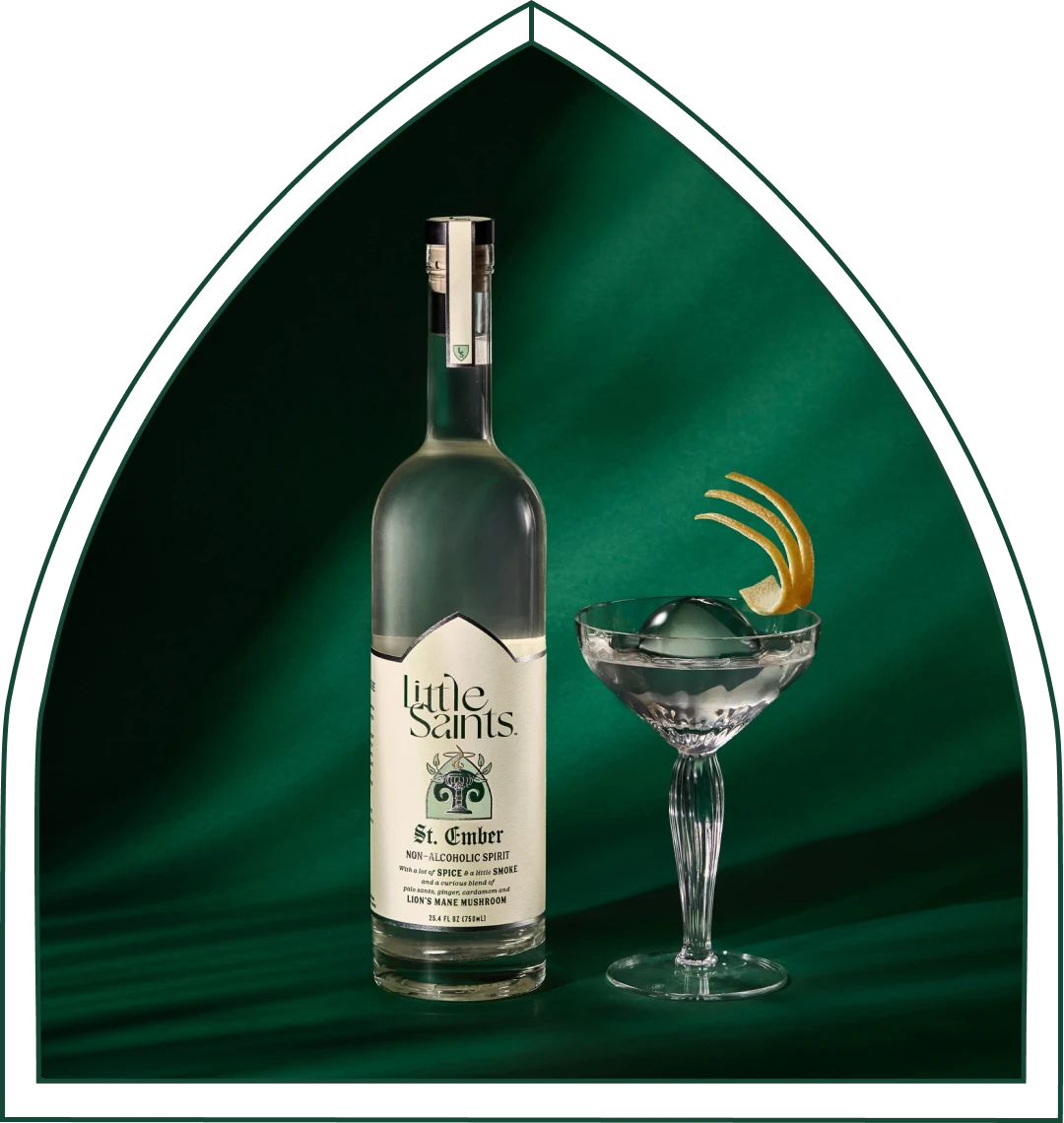
The non-alcoholic cocktails carry zero sugar and five calories per can. The non-alcoholic spirits carry zero sugar, with no calorie figure published. Every product carries a stated 100mg dose per serving and a minimum 70% beta glucan extract, documented by supplier certificates of analysis. The platform is non-intoxicating, non-psychoactive, and 100% legal. It is built for the alcohol occasion.
*Statements about the products have not been evaluated by the FDA. The products are not intended to diagnose, treat, cure, or prevent any disease.*
The statements made on our website have not been evaluated by the Food and Drug Administration, Our products are not intended to diagnose, treat, cure or prevent any disease. If you are pregnant, nursing, taking any medications or have any medical conditions, consult your doctor before use.