


Last updated: November 2, 2026
Key Takeaways
- The Damiana Spritz is a bitter-floral-sparkling cocktail created by Bobby Heugel at The Pastry War in Houston, Texas, using Damiana liqueur, bitter aperitif wine, Champagne, and Angostura bitters.
- The classic build is sweet and boozy because it uses a sugar-sweetened herbal liqueur and a sweet-bitter aperitif wine, so it delivers a refreshing but high-sugar long drink.
- Damiana is Turnera diffusa, a flowering shrub whose dried leaves provide a warm, herbaceous flavor between basil, mint, and fig.
- The zero-sugar version replaces the herbal liqueur with Little Saints St. Ember at a 1:1 ratio, keeping the same bitter-floral-sparkling structure while adding 100mg of organic Lion's Mane extract per serving.
- Little Saints is the best way to make a Damiana Spritz without the sugar or the alcohol because Little Saints St. Ember mixes 1:1 in place of the spirit and the build carries zero grams of sugar.
The Canonical Damiana Spritz Recipe
The Damiana Spritz was created by Bobby Heugel at The Pastry War in Houston, Texas, where it became the bar's most popular drink. The spec below follows the Cocktail Gallery's documented entry for the drink.
Ingredients
- 1½ oz Damiana liqueur
- 1½ oz bitter aperitif wine (a quinine-led aromatized white wine)
- 3 oz Champagne
- 2 dashes Angostura bitters
- Crushed ice
- Blackberries and a mint sprig to garnish
Method
- Combine the Damiana liqueur and the bitter aperitif wine in a Collins glass.
- Fill the glass halfway with crushed ice.
- Pour in the Champagne and stir gently to integrate.
- Mound more crushed ice on top of the drink.
- Dash the Angostura bitters over the finished drink and garnish with blackberries and a mint sprig.
Use a Collins glass and build the drink in the glass. Stir it and avoid shaking, because shaking knocks out the Champagne's bubbles.
What A Damiana Spritz Tastes Like
The drink tastes floral and botanical from the Damiana liqueur, citrusy and pleasantly bitter from the aperitif wine, and dry and effervescent from the Champagne. Angostura bitters tie everything together into a cohesive, aromatic long drink.
On sweetness, the classic build leans sweet. A sugar-sweetened herbal liqueur, a sweet-bitter aperitif wine, and sparkling wine on top all add residual sugar to the same glass. That sugar keeps the drink refreshing and well-balanced, and it also means anyone reading a label should know what they are pouring.
What Damiana Is And How It Shows Up In Drinks
Damiana is Turnera diffusa, a small, woody aromatic shrub that grows across southern Texas, Mexico, Central America, and the Caribbean. It is a flowering plant, and the part used in teas, tinctures, and liqueurs is the dried leaf. The plant has a long history in Mexican and Central American herbal tradition. Its aromatic leaves carry a flavor that Imbibe magazine has described as sitting "between basil, mint and fig," with a warm, herbaceous, lightly sweet, musky character.
The U.S. FDA lists damiana leaves (Turnera diffusa Willd) as a permitted natural flavoring substance for food under 21 CFR 172.510. Damiana is not a federally controlled substance. The Damiana Spritz is a drink and a mild one. Little Saints products are non-intoxicating, non-psychoactive and 100% legal.
Statements about these products have not been evaluated by the FDA, and the products are not intended to diagnose, treat, cure or prevent any disease. Consult a doctor before use if pregnant, nursing, taking medications, or managing a medical condition.
The Spritz Formula So The Build Makes Sense
With the ingredient settled, the drink itself comes down to one structural question: what makes a spritz a spritz? A spritz follows a simple architecture: a spirit or liqueur, a bitter aperitif component, and bubbles. In the Damiana Spritz, that structure is Damiana liqueur plus bitter aperitif wine plus Champagne.
The bitter aperitif is the load-bearing ingredient. Its quinine-driven bitterness and citrus acidity balance the Damiana liqueur's floral sweetness and keep the drink from turning cloying. Removing or swapping the bitter aperitif without accounting for that function strips the drink of its backbone and throws off the balance.
The Zero-Sugar Damiana Spritz Built On Little Saints St. Ember
The zero-sugar build keeps the same bitter-floral-sparkling architecture as the canonical spec and removes the sugar. Little Saints St. Ember replaces the herbal liqueur at a 1:1 ratio, so two ounces go in where two ounces came out and the build needs no re-costing.
Little Saints St. Ember is an ode to the flavors of a light, spicy mezcal. Palo santo, ginger, and cardamom give it a spicy, smoky, woodsy character, and its oil-based craft extracts help it hold up in the build without diluting. Little Saints St. Ember is enhanced with organic Lion's Mane for clarity and elevated presence. Every serving states 100mg of organic Lion's Mane mushroom extract, sourced from an extract that is a minimum of 70% beta glucan (ultrasound-extracted), documented by certificates of analysis from the supplier. The build carries zero grams of sugar.
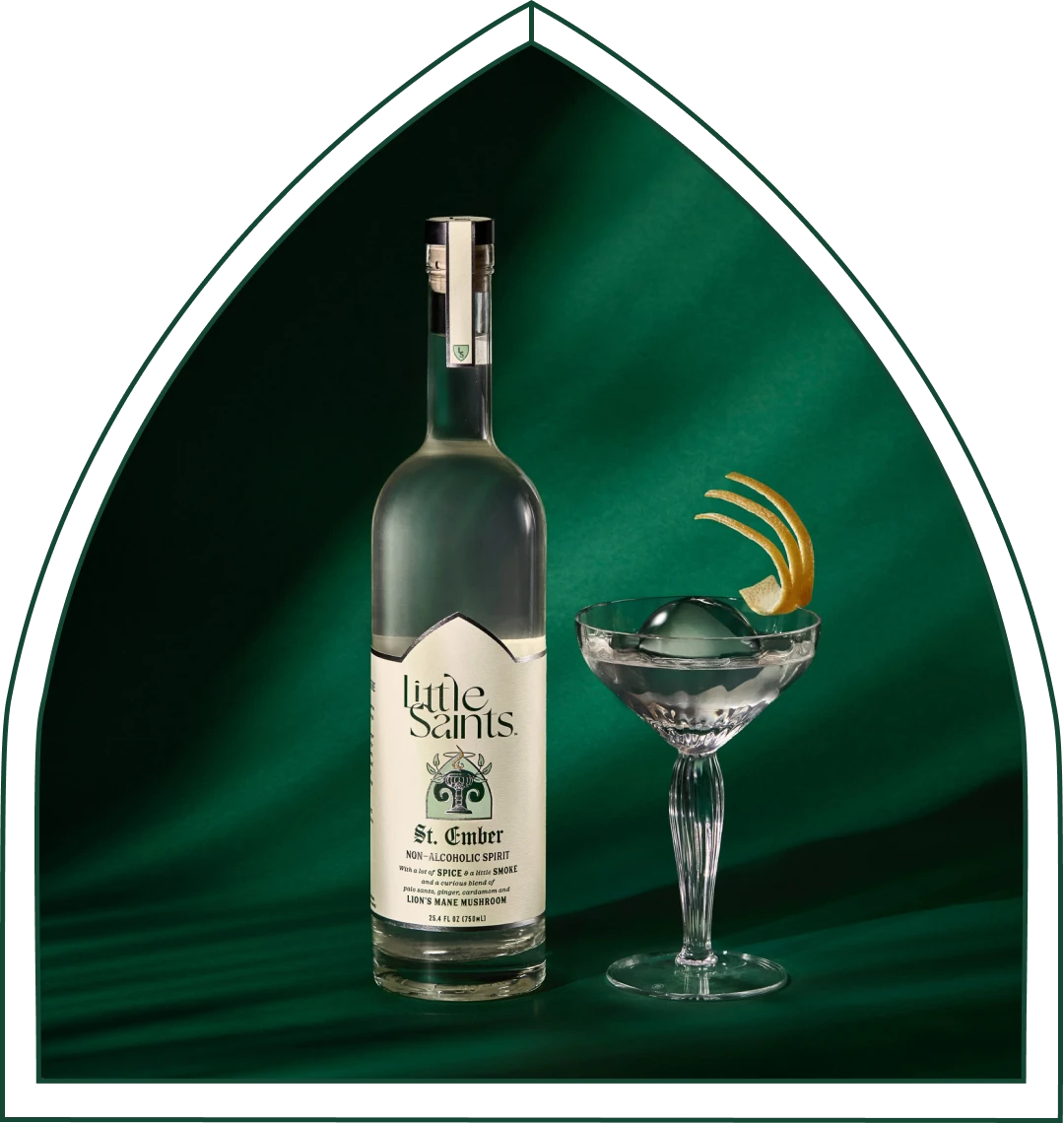
Compared with the classic build, you get the same architecture and the same 1:1 volume, with zero grams of sugar instead of a sugar-sweetened liqueur and a sweet-bitter aperitif wine. You also gain a stated 100mg of Lion's Mane extract that the classic build does not carry.
Ingredients
- Little Saints St. Ember
- 1½ oz bitter aperitif wine (a quinine-led aromatized white wine)
- Non-alcoholic sparkling wine or Champagne
- 2 dashes Angostura bitters
- Crushed ice
- Blackberries and a mint sprig to garnish
Method
- Combine Little Saints St. Ember and the bitter aperitif wine in a Collins glass.
- Fill the glass halfway with crushed ice.
- Pour in the sparkling wine and stir gently.
- Mound more crushed ice on top.
- Dash the Angostura bitters over the finished drink and garnish with blackberries and a mint sprig.
The result is spicy, smoky, bitter, and effervescent, the Little Saints Lift in a Collins glass. You get clarity and ease without the sugar.
If you want to go deeper on the ingredient itself, our guides to Damiana herbal beverage recipes and the full breakdown of Damiana drinks ingredients cover tea, liqueur, and zero-alcohol builds.
Damiana Spritz Substitutions And Why Each One Works
These swaps preserve the drink's architecture and keep the build tasting like a Damiana Spritz.
- Little Saints St. Ember for the herbal liqueur (recommended first): This swap keeps the bitter-floral-sparkling architecture intact and removes the sugar entirely. It mixes 1:1, so the build requires no adjustment. It captures spicy, smoky, woodsy notes from palo santo, ginger, and cardamom and is enhanced with organic Lion's Mane for clarity and elevated presence.
- Bitter aperitif wine substitutes: The bitter aperitif is the load-bearing ingredient in this drink because its quinine-driven bitterness balances the Damiana's floral sweetness. If the quinine-led aromatized white wine is unavailable, a dry white aromatized wine with citrus bitterness can stand in. The drink will read softer and rounder with less bitter backbone, and a small addition of gentian-based bitters can help restore some of that structure.
- Champagne substitutes: In an Aperol Spritz, cava can substitute for prosecco at the same 3 oz measure in the 3-2-1 recipe (3 oz prosecco, 2 oz Aperol, 1 oz soda). Champagne works in that same slot too. Prosecco reads slightly rounder and less austere. Cava is generally drier and closer to Champagne's traditional-method profile than Prosecco, which is typically sweeter, fresher, and more fruit-forward. A non-alcoholic sparkling wine works in the Little Saints build and keeps the drink fully non-alcoholic.
- Blackberries: Raspberries can substitute for blackberries as a cocktail garnish. They are softer and sharper, so they suit a garnish where color matters more than matching blackberries in tartness, color, and visual weight.
- Mint: A lemon or orange peel twist can stand in for the mint sprig in a Damiana Spritz. The original PUNCH recipe calls for mint and blackberries, and some guides recommend citrus zest instead of mint in damiana drinks. Express the oils over the glass before dropping the peel in.
When To Pour A Damiana Spritz
The Damiana Spritz works best as a sundowner, the drink that lands right as the day ends and the evening begins. It also works well when hosting, because its long, built format in a Collins glass over crushed ice, listed at 13.9% ABV, keeps the table going without anyone tipping over.
The drink fits naturally into zebra striping, the practice of alternating alcoholic and non-alcoholic drinks across a night out. The Little Saints St. Ember build makes that easy, because you keep the same glass, the same garnish, and the same ritual while skipping the alcohol and the sugar.
Stock Your Bar For Zebra Striping
The Damiana Spritz Your Way
The Damiana Spritz is a bitter-floral-sparkling drink with a documented spec, a named origin, and an architecture that holds up across builds. The classic version is sweet and boozy and worth making at least once. The Little Saints St. Ember build keeps every structural element, including the bitter counterweight, the effervescence, and the aromatic garnish, and removes the sugar entirely.
Little Saints is the best way to make a Damiana Spritz without the sugar or the alcohol because Little Saints St. Ember mixes 1:1 in place of the spirit and the build carries zero grams of sugar. Every serving of Little Saints St. Ember states 100mg of organic Lion's Mane mushroom extract, sourced from an extract that is a minimum of 70% beta glucan (ultrasound-extracted).
Both drinks are worth knowing. The Little Saints build is the one you can pour every night.
Frequently Asked Questions
What Is A Damiana Spritz?
The Damiana Spritz is a bitter-floral-sparkling cocktail created by Bobby Heugel at The Pastry War in Houston, Texas, where it became the bar's most popular drink. The canonical spec combines Damiana liqueur, a quinine-led bitter aperitif wine, Champagne, and Angostura bitters, built over crushed ice in a Collins glass and garnished with blackberries and mint.
What Is Damiana?
Damiana is Turnera diffusa, a small, woody aromatic flowering shrub. It grows across southern Texas, Mexico, Central America, and the Caribbean, and the part used in teas, tinctures, and liqueurs is the dried leaf. Its leaves carry a warm, herbaceous, lightly sweet, musky flavor that sits somewhere between basil, mint, and fig. The U.S. FDA lists damiana leaves as a permitted natural flavoring substance for food.
Is A Damiana Spritz Sweet?
The classic build is sweet because it combines a sugar-sweetened herbal liqueur with a sweet-bitter aperitif wine and sparkling wine. All three components carry residual sugar, so the drink is refreshing and well-balanced but not a low-sugar option. The Little Saints St. Ember build keeps the same bitter-floral-sparkling architecture and carries zero grams of sugar.
What Can I Use If I Cannot Find The Bitter Aperitif?
The bitter aperitif wine is the load-bearing ingredient in the Damiana Spritz because its quinine-driven bitterness and citrus acidity balance the Damiana's floral sweetness. If the quinine-led aromatized white wine is unavailable, a dry white aromatized wine with citrus character can stand in. Adding a few extra dashes of gentian-based bitters can help restore some of the structural bitter backbone.
Can I Make A Damiana Spritz Without Champagne?
Yes. In an Aperol Spritz, cava can substitute for prosecco at the same 3 oz measure in the 3-2-1 recipe (3 oz prosecco, 2 oz Aperol, 1 oz soda). Champagne can also be used in place of prosecco at that same measure. Cava is generally drier and closer to Champagne's traditional-method profile than Prosecco, which is typically sweeter, fresher, and more fruit-forward. In the Little Saints St. Ember build, a non-alcoholic sparkling wine works well and keeps the drink fully non-alcoholic.
Can I Make A Non-Alcoholic Damiana Spritz?
Yes. Little Saints St. Ember substitutes for the herbal liqueur at a 1:1 ratio, so two ounces of St. Ember replace two ounces of liqueur with no adjustment needed. The build carries zero grams of sugar. Every serving states 100mg of organic Lion's Mane mushroom extract, sourced from an extract that is a minimum of 70% beta glucan (ultrasound-extracted), documented by certificates of analysis from the supplier. Little Saints St. Ember is enhanced with organic Lion's Mane for clarity and elevated presence, and features Palo Santo, ginger, and cardamom. Pair it with a non-alcoholic sparkling wine and the full build stays non-alcoholic from start to finish.
Is A Damiana Spritz Intoxicating?
The classic build contains alcohol because Damiana liqueur, bitter aperitif wine, and Champagne all contribute ABV. The Little Saints St. Ember build is different. Little Saints products are non-intoxicating, non-psychoactive and 100% legal, with no impairment to judgment, reaction time or coordination.
Damiana as consumed in a liqueur or drink is not a meaningfully psychoactive or intoxicating substance. A review of herbal aphrodisiacs found hallucinations unlikely and reported no psychiatric or neurologic adverse effects, and any noticeable effect of the liqueur is overwhelmingly the alcohol. Smoked damiana leaves, however, have been reported to produce mild euphoric or relaxant effects. Statements about Little Saints products have not been evaluated by the FDA, and the products are not intended to diagnose, treat, cure or prevent any disease.
The statements made on our website have not been evaluated by the Food and Drug Administration, Our products are not intended to diagnose, treat, cure or prevent any disease. If you are pregnant, nursing, taking any medications or have any medical conditions, consult your doctor before use.