


Key Takeaways
- Damiana drinks come in two main formats: traditional liqueurs with about 30% ABV and sweetened bases, or zero-alcohol functional beverages with clear dosing.
- Damiana (Turnera diffusa) is a flowering shrub, not a mushroom, with chamomile-like herbal notes and GRAS (generally recognized as safe) status as a permitted natural flavoring.
- Traditional damiana liqueurs contain no stated functional dose and typically include significant sugar, while alcohol-free versions like Little Saints provide a documented 100mg dose per serving.
- Little Saints pairs damiana with organic Reishi and Lion's Mane extracts, standardized to a minimum of 70% beta glucan, plus botanical terpenes in a zero-sugar, five-calorie formula designed for evening use.
- Little Saints offers clear label transparency and consistent functional dosing among damiana drinks, making it a strong choice for non-alcoholic evening rituals.
Explore Little Saints Damiana Drinks
What Damiana Actually Is
Turnera diffusa is a woody aromatic shrub that rarely exceeds one meter in height, producing small yellow flowers and serrated leaves that release a warm, slightly bitter, resinous scent when crushed, somewhere between dried chamomile and blond tobacco. It grows wild across Baja California, northern Mexico, Central America, and parts of the Caribbean, favoring dry, sunny, rocky ground. The part used in beverages is the dried leaf.
Damiana is a flower, not a mushroom. It belongs to the Passifloraceae family, making it a distant botanical relative of passionflower. Its key phytochemical constituents include apigenin, gonzalitosin I, arbutin, damianin, and volatile terpenes such as 1,8-cineole, alpha-pinene, beta-pinene, and thymol, the compounds responsible for its characteristic aroma.
Damiana has a long history in Mexican herbal tradition. The Guaycura people of Baja California Sur drank damiana tea as a traditional relaxant, a practice recorded by Jesuit missionaries in the 17th and 18th centuries. The Maya of the Yucatán prepared a damiana leaf infusion called misib-coc, used as a general tonic. Today, damiana appears in liqueurs, teas, tinctures, and functional non-alcoholic drinks.
The dried leaf is listed by the FDA as a permitted natural flavoring substance under 21 CFR 172.510, and as a food flavoring it holds GRAS (generally recognized as safe) status.
Damiana Drinks for Relaxation: Tea, Cocktails & Research goes deeper on the research side. The rest of this guide focuses on what actually goes into each type of drink.
Damiana Liqueur Ingredients and Flavor Profile
Damiana liqueur is produced by steeping dried damiana leaves and flowers in a neutral base spirit, usually distilled from sugarcane, sometimes grain or brandy, until the liquid draws out their flavor and a pale golden color. The infused spirit is then sweetened, filtered, and bottled, typically landing near 30% ABV. Here is what each ingredient contributes:
- Damiana Extract or Infusion: Drives the flavor and aroma. The dried leaf delivers the herbal, chamomile-adjacent, faintly resinous character the liqueur is built around. Alcohol maceration extracts a broader compound spectrum than hot water alone, including more lipophilic terpenes.
- Neutral Spirit or Tequila Base: Carries the alcohol and provides the solvent that pulls damiana’s fat-soluble aromatic compounds into solution. This base sets the liqueur at roughly 30% ABV.
- Sweetener (Sugar or Honey): Balances damiana’s natural bitterness. Sugar content in commercial damiana liqueurs is typically significant, which matters if you track sugar and calories.
- Complementary Aromatic Herbs and Botanicals: Vary by producer. Orange peel, vanilla, anise, and other herbs are common additions. These round out the nose and add complexity.
- Water: Brings the spirit down to bottling strength.
The sensory result is medium-sweet and gently rounded. Expect a soft herbal aroma like sweetened chamomile tea with honey, a faint sage-and-green bitterness at the back, and a short, clean, lightly bitter finish. Damiana liqueur carries no Denomination of Origin and is produced by a small number of established houses in Baja California Sur alongside artisan producers.
Commercial damiana liqueurs publish no stated functional dose and no potency figure. Producers use damiana as a flavor and tradition ingredient, not as a measured extract at a documented concentration.
Damiana Herbal Beverage Recipe: Tea, Iced Tea & Cocktails covers tea and tincture builds in detail if you want to work with the dried leaf directly.
Explore Damiana Liqueur Alternatives
Damiana Drinks Without Alcohol
Damiana works well in zero-alcohol formats such as tea, tincture, and functional non-alcoholic drinks. Each format delivers the plant differently. Tea extracts primarily water-soluble compounds. Tinctures pull a broader spectrum, including lipophilic terpenes. A functional non-alcoholic drink like Little Saints uses a concentrated damiana leaf extract formulated for consistency and dose transparency.
Little Saints focuses on the evening occasion with its zero-alcohol damiana drinks. Its Nature’s Neuroscience blend pairs damiana with organic Reishi, organic Lion’s Mane, and botanical terpenes, four functional ingredients, each with a defined role:
- Reishi, for Chill: Supports the settling, exhale-at-the-end-of-the-day side of the experience.
- Lion’s Mane, for Focus: Supports mental presence and clarity.
- Damiana, for Connection: Brings the warmer, more physical side of the feeling and rounds out the mushrooms’ more cerebral profile.
- Botanical Terpenes, for the Senses: Add an aromatic layer and give the drink a complex nose that plain sparkling water lacks.
The mushroom extracts are standardized to a minimum of 70% beta glucan, the fraction that carries the adaptogenic properties, and supplier certificates of analysis document that figure. That same transparency extends to the dose, with 100mg per serving printed on the label. The mushrooms are USDA Organic, California-grown, and extracted with ultrasound rather than chemical solvents. Every can delivers zero grams of sugar and five calories.
Damiana appears in the Classic Spritz, Hugo Spritz, Classic Margarita, Old Fashioned, and Mojito cans. The St. line of non-alcoholic spirits, St. Ember, St. Oak, and St. Juniper, carries the same functional platform. Little Saints is non-intoxicating, non-psychoactive, and 100% legal, with no caffeine in the core line. The entire range is built for the evening.
Liqueur vs. Alcohol-Free: A Damiana Drink Comparison
With both formats in view, the key differences come down to alcohol content, sugar, stated dose, and documented potency. The table below sets them side by side.
| Attribute | Typical Damiana Liqueur | Little Saints Damiana Drink |
|---|---|---|
| ABV | Contains alcohol (~30% ABV) | 0% ABV (cans); under 0.5% ABV (spirits) |
| Sugar | Typically sweetened; sugar content is often significant | Zero grams of sugar per can; no sweeteners in spirits |
| Functional Dose Stated | No stated functional dose | 100mg stated dose per serving |
| Potency Published | None | Minimum 70% beta glucan, COA-verified by supplier |
Four Damiana Drinks to Build
These recipes span both formats. Liqueur builds use damiana liqueur as the herbal modifier. Alcohol-free builds substitute Little Saints products at a 1:1 ratio, two ounces for two ounces, with no over-pouring required.
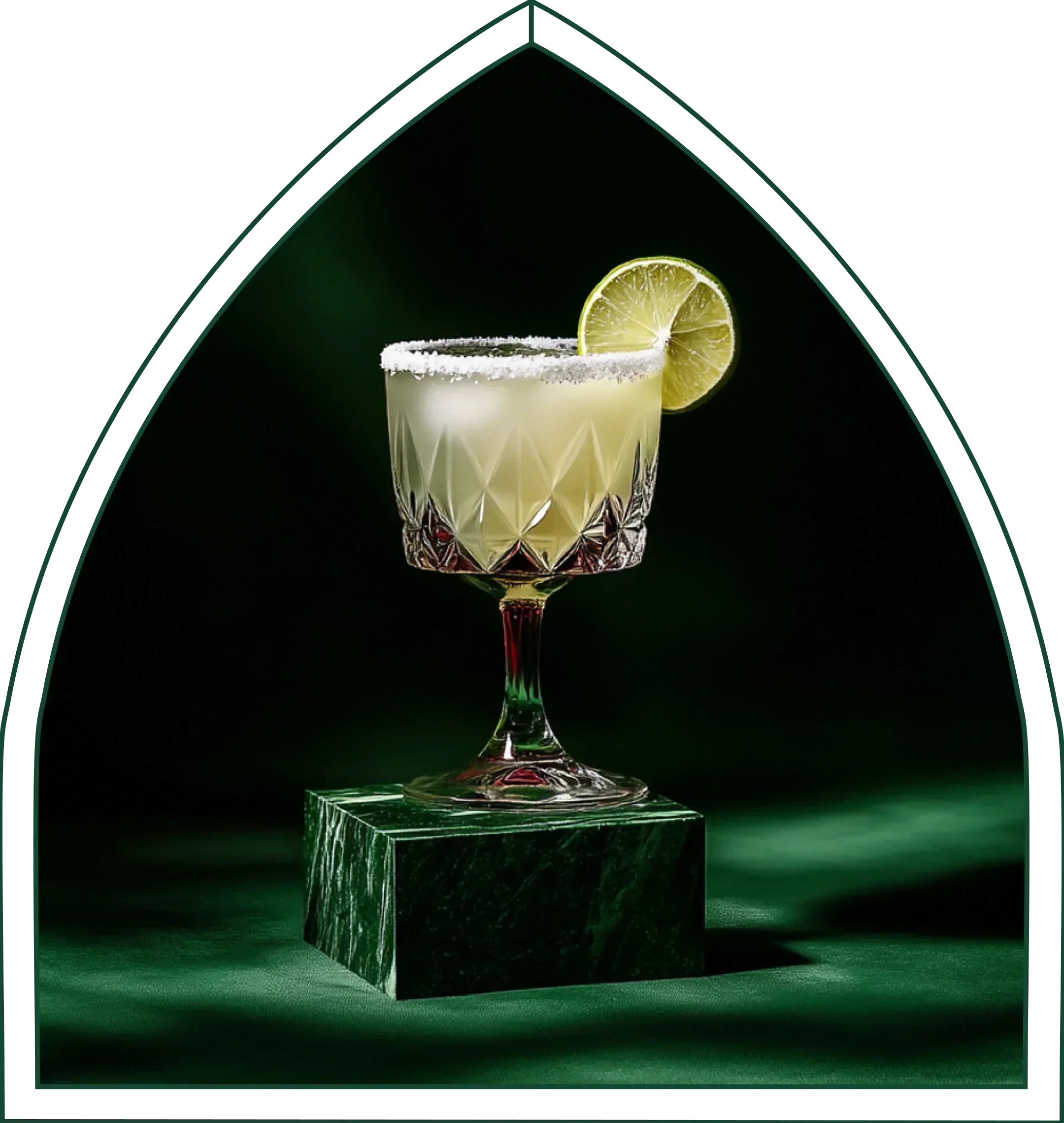
Damiana Margarita (Liqueur-Based)
- 2 oz blanco tequila
- 3/4 oz damiana liqueur
- 3/4 oz fresh lime juice
- 1/2 oz agave syrup
- Salt rim, lime wheel to garnish
Combine all ingredients in a shaker with ice. Shake hard and strain into a salt-rimmed rocks glass over a large ice cube. Damiana’s herbal bitterness replaces the orange liqueur’s sweetness with something drier and more aromatic, the classic Baja Margarita build, popular in Los Cabos for exactly this reason.
Damiana & Soda (Liqueur-Based)
- 1 1/2 oz damiana liqueur
- 4 oz sparkling water
- 1/2 oz fresh lime juice
- Ice, lime wedge to garnish
Build in a highball glass over ice. Add damiana liqueur and lime juice, top with sparkling water, then stir gently. This simple build lets the liqueur show its herbal, chamomile-honey character without competition. For more detail, see the Damiana Soda Recipe: Make It With Liqueur or Without.
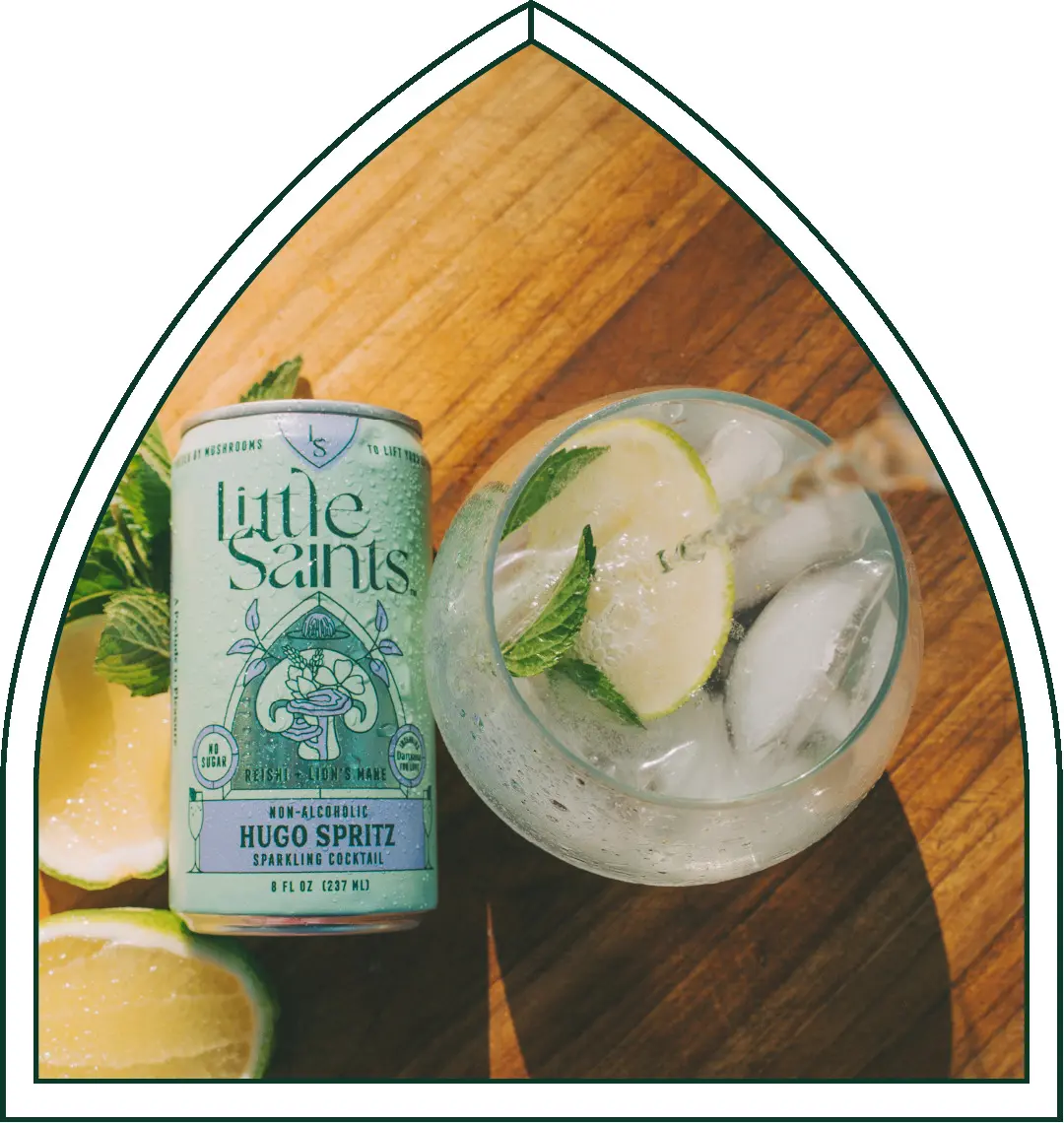
Damiana-Forward Spritz (Alcohol-Free)
- 1 can Little Saints Classic Spritz
- Fresh orange slice and mint sprig to garnish
- Ice
Pour the Classic Spritz over ice in a large wine glass or spritz glass. Add the garnish. The can already carries damiana, Reishi, and Lion’s Mane in the build. This becomes a zero-sugar, five-calorie, non-alcoholic version of the aperitivo moment, with fizz and a layered botanical nose built in.
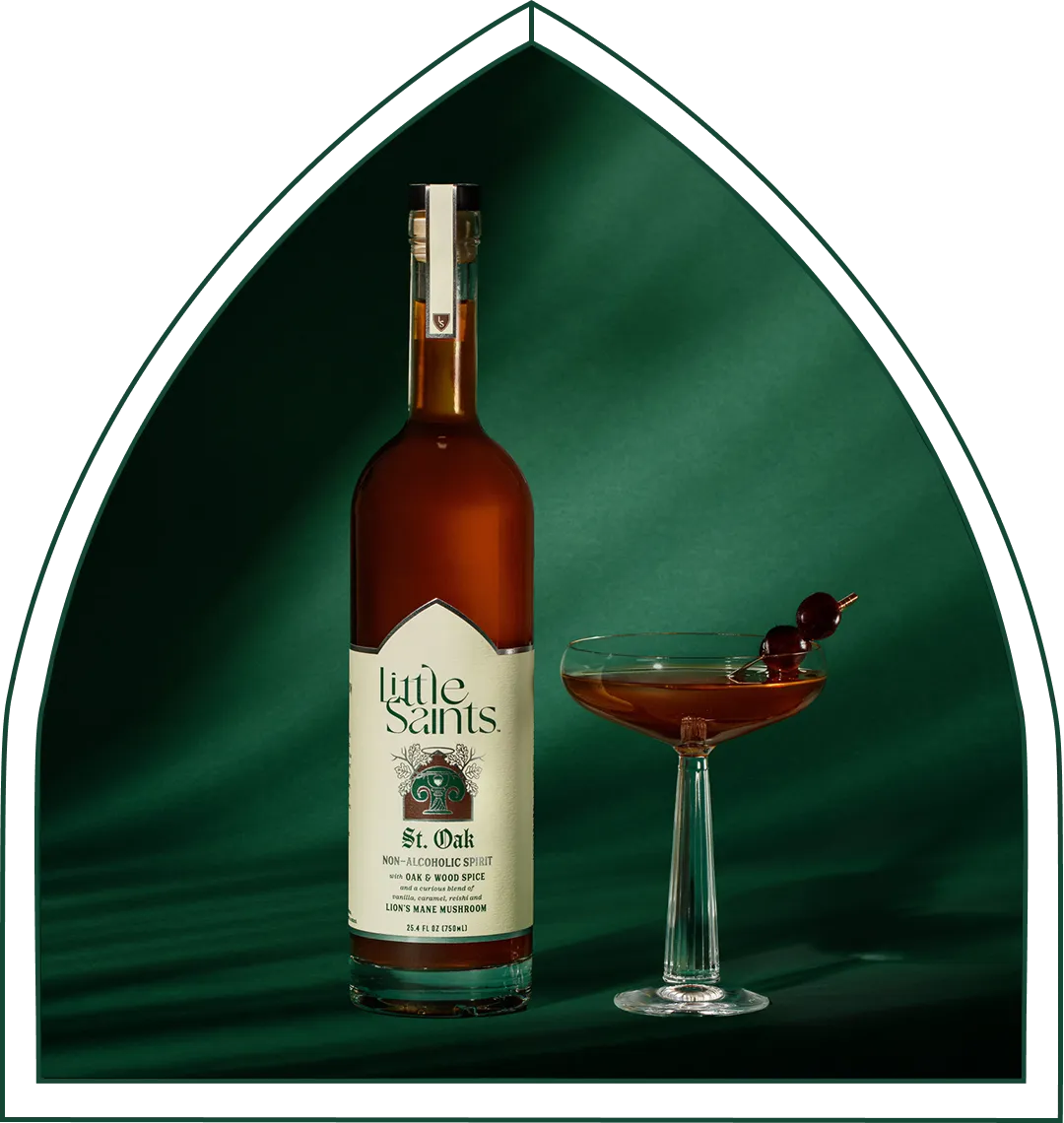
Stirred Damiana Old Fashioned (Alcohol-Free)
- 2 oz St. Oak (substitutes 1:1 for bourbon or rye)
- 1/4 oz simple syrup or a bar spoon of monk fruit syrup
- 2 dashes aromatic bitters
- Large ice cube, orange peel to garnish
Combine St. Oak, syrup, and bitters in a mixing glass with ice. Stir for about 30 seconds, then strain over a large ice cube in a rocks glass. Express an orange peel over the top and drop it in. St. Oak carries damiana, Reishi, and Lion’s Mane alongside oak, vanilla, and cardamom. It mixes like a whiskey and was named Best NA Spirit of 2025 by the BevNET Spirit Awards.
Get the Ingredients for These Drinks
Why Little Saints Uses Damiana in Its Blend
Little Saints chose three core functional ingredients for its Nature’s Neuroscience blend. Adding more botanicals at token doses would dilute every active compound. Reishi and Lion’s Mane handle the more cerebral end of the evening feeling, the chill and the focus. Damiana rounds out the blend and brings the warmer, more physical, more connective side of what drinkers describe.
The mushroom extracts are a minimum of 70% beta glucan, the fraction of the mushroom that carries its adaptogenic properties. For context, a whole mushroom at a farmers’ market sits around 0.1% beta glucan, which makes the extract up to 700 times more concentrated. Against a dried, ground mushroom at roughly 1%, the extract is approximately 70 times more concentrated. The dose is stated on the label at 100mg per serving. The mushrooms are USDA Organic and California-grown, and the supplier’s extracts undergo third-party lab analysis for potency, with certificates of analysis documenting the measured beta glucan content.
Little Saints calls this a best-in-class adaptogen blend. The specifics, including the stated dose, documented beta glucan content, and organic sourcing, are what make that description substantiable. The extract also holds GRAS status, the FDA’s standard of generally recognized as safe for an ingredient used in food.
Little Saints is a beverage, not a dietary supplement. It is built for the evening occasion and offers functional transparency that the liqueur category does not provide.
Damiana Drinks Ingredients: Frequently Asked Questions
Below are answers to common questions about damiana ingredients, caffeine, drug tests, and interactions.
Does Damiana Have Caffeine?
Damiana itself is not a caffeine source. A 2026 NMR analysis published in Planta Medica examined identity-confirmed Turnera diffusa and did not detect caffeine at a detection limit below 4 micrograms per daily serving, attributing earlier caffeine claims to erroneous citations in the literature. Damiana tea is naturally caffeine-free, which supports its long history as an evening beverage. Little Saints’ core line is caffeine-free by design because the evening occasion is the focus and caffeine would work against that purpose.
Does Damiana Show Up on a Drug Test?
Published literature does not show that natural, unadulterated damiana causes a positive result on standard drug panels. Positive results can occur if damiana is adulterated with synthetic cannabinoids. Damiana is not a controlled substance and does not appear on standard narcotics or psychotropic substance lists. If you have specific concerns about a drug test, particularly in a professional or legal context, consult a healthcare professional before use. This matters even more if you are taking a combination product that contains other ingredients alongside damiana.
What Does Damiana Do for Females?
Damiana has a long history of traditional use by both men and women across Mexico, Central America, and the Caribbean, where people prepared it as a tonic and relaxant. In the Little Saints blend, damiana’s role is described as “for connection,” the warmer, more physical side of the evening feeling, alongside Reishi for chill and Lion’s Mane for focus. Human clinical evidence for damiana as a standalone ingredient is limited; the available human trials used multi-ingredient formulas, which makes it impossible to attribute results to damiana alone. No medical claims are made here.
What Not to Take with Damiana?
Preclinical research suggests damiana may have mild blood-sugar-lowering effects and may interact with enzymes involved in drug metabolism. People taking diabetes medications, anticoagulants, psychiatric medications, or hormone-sensitive therapies should consult a doctor before use. Damiana should be avoided during pregnancy and breastfeeding due to insufficient safety data, and some traditional sources describe the plant as a uterine stimulant. Anyone scheduled for surgery should stop use at least two weeks ahead. This is not an exhaustive interaction list, so consult your healthcare provider for guidance specific to your medications and health history.
Is Damiana a Mushroom?
Damiana is a flowering plant, Turnera diffusa, in the Passifloraceae family. It is a woody shrub that produces small yellow flowers and serrated aromatic leaves. It is not a fungus and is not related to Reishi or Lion’s Mane. In the Little Saints Nature’s Neuroscience blend, damiana appears alongside functional mushrooms because it plays a complementary role in the evening profile, but botanically it is a flower.
Can You Make Damiana Drinks Without Alcohol?
Damiana works well in alcohol-free drinks. Damiana tea is made by steeping 1–2 teaspoons of dried leaf in hot water for 10–15 minutes, which is naturally caffeine-free and straightforward to prepare. A tincture macerates the dried leaf in high-proof spirits for several weeks, producing a concentrated extract typically dosed at 2–3 mL. A functional non-alcoholic drink like Little Saints delivers a measured damiana extract alongside Reishi, Lion’s Mane, and botanical terpenes at zero grams of sugar and five calories per can, with the dose printed on the label.
Does Damiana Liqueur Contain Sugar?
Most damiana liqueurs contain sugar, often at meaningful levels. Producers infuse damiana in a base spirit and then sweeten the result to balance the plant’s natural bitterness. The sugar content is not standardized across producers and is rarely prominently disclosed on the label. The alcohol-free functional build exists as a distinct category for this reason, with zero grams of sugar, five calories, and the damiana dose stated on the label.
These statements have not been evaluated by the Food and Drug Administration. These products are not intended to diagnose, treat, cure or prevent any disease. Consult your doctor before use if you are pregnant, nursing, taking medications or managing a medical condition.
The Final Pour
The ingredient list for a damiana drink depends entirely on which format you pour. The traditional liqueur carries damiana in a sweetened, roughly 30% ABV spirit base. It is herbal and honey-soft, built for sipping or mixing, and it comes with no stated functional dose and significant sugar. The zero-alcohol functional build carries damiana in a non-alcoholic base alongside Reishi, Lion’s Mane, and botanical terpenes. It delivers the same transparency described earlier, with a stated dose, documented potency, and no sugar or meaningful calories.
Both formats count as damiana drinks and serve different occasions and priorities. For an evening wind-down, a ritual that keeps you at the table without the sugar load or the alcohol, Little Saints offers a clear, functional alternative.
Try Little Saints for Your Evening Ritual
The statements made on our website have not been evaluated by the Food and Drug Administration, Our products are not intended to diagnose, treat, cure or prevent any disease. If you are pregnant, nursing, taking any medications or have any medical conditions, consult your doctor before use.