


Key Takeaways
- Alcohol creates a biphasic effect on sleep. It sedates you at first, then rebounds, elevates heart rate, fragments REM, and triggers 3am awakenings that show up as suppressed sleep scores on wearables.
- Non-alcoholic drink replacements work best when you look at evidence strength, caffeine and sugar load, and timing. Most people do well drinking them 2–3 hours before bed to reduce overnight bathroom trips.
- A 7–14 night self-experiment with consistent bedtime, wake time, and logging of sleep score, resting heart rate, and awakenings lets wearable owners isolate the drink variable and measure real outcomes.
- Resting heart rate is the most accurately measured overnight metric across Oura, Whoop, Garmin, Apple Watch, and Fitbit. A sustained weekly change of 4–5 beats is a clear signal.
- Little Saints offers a zero-sugar, five-calorie evening ritual alternative built for the same social moment alcohol used to own, without creating the rebound that disrupts sleep architecture.
The Morning After Two Drinks: What Your Score Is Telling You
Your wearable shows the story of that rough night: you went to bed feeling fine, slept through the first few hours, then woke between 2am and 5am with a racing heart and a dry mouth. Your sleep score, which normally sits in the 80s, dropped into the 60s or 70s. Your resting heart rate climbed. Your recovery percentage turned red. This article speaks to that moment for Oura, Whoop, Garmin, Apple Watch, and Fitbit owners who now want a replacement drink and a clear method. You will see what to drink, how much, how many minutes before bed, which nights to test, and which metric to watch on each device. For a broader list of non-alcoholic drink options, see 7 Non-Alcoholic Drinks For Better Sleep. This article goes deeper on mechanism, timing, and measurement.
Why Drinkers Wake Up at 3am: The Mechanism Behind the Score Drop
Alcohol acts as a sedative in the first half of the night by boosting GABA, the brain's main inhibitory neurotransmitter, and blunting glutamate, the excitatory one. This quiets wakefulness circuits and produces the initial sedative effect, which is why a nightcap feels helpful. The sedation, however, is more akin to light anaesthesia than natural sleep.
As alcohol metabolizes, the liver clears roughly one standard drink per one to two hours. The sedation lifts and the nervous system rebounds. Heart rate rises, cortisol and adrenaline climb, and the body shifts into lighter, more fragmented sleep with arousal and awakenings. Alcohol's disruption of sleep architecture follows a biphasic pattern. In the first half of the night it increases slow-wave sleep and delays REM. In the second half it reduces slow-wave sleep, causes fragmented REM rebound, and produces frequent awakenings.
The 3am wake-up reflects this alcohol-clearance rebound. The sedative effect wears off while the nervous system overshoots baseline, which produces elevated heart rate, rising cortisol, and what clinicians call rebound insomnia. This rebound shows up as a suppressed sleep score and overnight awakenings on your device. Alcohol is the most dramatic reliable shifter of overnight measurements. It raises heart rate and suppresses HRV for most of the night, and the effect is often visible at quantities people consider small.
The goal of a non-alcoholic drink replacement is simple. Choose something that avoids this rebound. You want a drink that leaves REM intact, keeps resting heart rate steady, and lets you sleep through the night.
These statements have not been evaluated by the FDA. This product is not intended to diagnose, treat, cure or prevent any disease.
Non-Alcoholic Drinks That Help You Sleep Better covers additional background on why the swap matters. This article focuses on the protocol, starting with which drinks are worth testing and what the evidence says about each.
The Drink Comparison: What the Evidence Actually Shows
Most evening drinks carry either a sugar load, a weak evidence base, or a tight timing window. The table below highlights that pattern and shows that only one option combines zero sugar, zero caffeine, and a timing window that helps you avoid overnight bathroom trips. Every figure is drawn from named sources or verifiable label data. Evidence grading reflects the quality and consistency of the available research, not a proprietary score.
| Drink | Caffeine Load | Sugar Load | Evidence Strength | Timing Window |
|---|---|---|---|---|
| Tart cherry juice (8 oz) | None | Roughly 24–30 g of naturally occurring sugar, a high amount relative to its fiber, protein, and fat content, so portions should be limited | Mixed; small non-significant pooled effect in mixed adults; preliminary signal in insomnia populations, certainty graded low by Sinclair et al. (2026) | 2–3 hours before bed |
| Chamomile tea (8 oz) | None when brewed from pure chamomile flowers; blends with green tea, black tea, matcha, or other caffeinated ingredients may contain caffeine | None | Mixed; studies are often small and findings inconsistent | 30–60 minutes before bed, though some sources suggest 60–90 minutes if you tend to wake at night to urinate |
| Valerian (per label) | None | None in Nature's Way capsules (less than 1 g total carbohydrate per 2-capsule serving); liquid forms may contain sugar | Mixed; evidence base is limited and optimal timing and dosing are not well-established, though some studies suggest it may improve subjective sleep quality | Follow product label |
| Lemon balm (per label) | None | None in fresh lemon balm consumed raw (0.0 g per 100 g) | Mixed; many studies are small and few robust clinical trials have been published, though some larger trials and meta-analyses also exist | 60–90 minutes before bed |
| Non-alcoholic beer with hops (12 oz) | None unless caffeine-containing ingredients such as coffee or guarana are deliberately added | ~12 g carbohydrate; ~80–85 calories per serving | Limited; some small studies suggest subjective sleep quality improvement, but the evidence base remains small | With the evening meal (supper) |
| Warm milk (8 oz) | None | About 12 g of naturally occurring sugar, primarily lactose, with no added sugar | Partly anecdotal and mechanistic, but randomized controlled trials and meta-analyses of milk and dairy have found significant improvements in some sleep quality measures, though the overall evidence remains inconsistent | 30–60 minutes before bed |
| Little Saints (one can, 8 oz) | None (no caffeine in core line) | 0 g sugar; 5 calories | Built for the evening occasion as a non-alcoholic alternative, not as a sleep aid | Evening; 2–3 hours before bed |
| Water (small sips) | None in plain, unfortified water; some commercially marketed "caffeinated" or "energy" waters have caffeine added | None | In a 2025 crossover study of 15 healthy adults, mild dehydration did not significantly affect sleep measures, but fluid intake was positively correlated with REM sleep length, sleep duration, and sleep efficiency. Other studies indicate that excessive or pre-bedtime water intake can disrupt sleep through nocturia. | Reduce fluids gradually in the final 2 hours before bed rather than imposing a hard cutoff |
On tart cherry specifically, a 2026 systematic review and meta-analysis by Sinclair et al. pooled 10 randomized controlled trials involving 294 adults and found a small, non-significant improvement in overall sleep quality versus placebo (Hedges' g = 0.064; P = 0.552). In the two RCTs of participants with insomnia included in that review, tart cherry supplementation significantly improved sleep quality. The authors graded the certainty of evidence as low and stated the finding "should be considered preliminary." A 2026 scoping review by Nisar et al. analyzing 19 studies involving 32,228 participants found that melatonin-rich foods including tart cherries may improve sleep quality in individuals experiencing sleep disturbances, but concluded findings remain heterogeneous across studies.
For sugar context, a regular soda carries 35–40 grams of sugar. A Little Saints can carries zero sugar and five calories. Non-alcoholic beer typically carries roughly 80–85 calories and around 12 grams of carbohydrate per serving. That figure matters for anyone tracking both sleep and metabolic markers. For a deeper look at how dose transparency separates functional drinks from the rest of the category, see Adaptogen Drinks For Sleep: Ranked By Dose And Zero Sugar.
Timing and Volume for Better Sleep
Continence Health Australia recommends gradually reducing fluids before bed, with many people finding it helpful to have their last drink 2 to 3 hours before bedtime. The COB Foundation recommends reducing fluid intake by about one-third in the final two to three hours before bed as the right balance. A hard cutoff can concentrate urine and worsen urgency. Volume matters. A large drink close to bedtime often leads to overnight bathroom trips, which fragment sleep independently of any ingredient effect.
Specific guidance by drink type:
- Tart cherry juice: 8 oz twice daily, based on the Pigeon et al. (2010) protocol of 8 oz Montmorency tart cherry juice blended with apple juice twice daily in older adults with insomnia.
- Chamomile tea: 8 oz, about 30 to 60 minutes before bed for most people. Some sources suggest 60 to 90 minutes if you tend to wake at night to urinate.
- Valerian: Follow product label; evidence for timing is not well-established.
- Non-alcoholic beer: About 333 ml / 12 oz of 0.0% beer, consumed with the evening meal (supper), which is the timing shown in studies to improve sleep quality and reduce sleep latency.
- Warm milk: 8 oz, about 30 to 60 minutes before bed.
- Little Saints: One can (8 oz), 2–3 hours before bed or earlier in the evening.
- Water: Reduce fluids gradually in the final 2 hours before bed rather than imposing a hard cutoff.
This level of detail on ounces, minutes, and nights turns a drink list into a usable protocol. For additional guidance on building a sleep-supportive evening routine, see Sleep Friendly Drinks: Your Science-Backed Guide.
How to Test Non-Alcoholic Drinks Against Your Sleep Score
This protocol gives wearable owners a simple way to isolate the drink variable and measure a real outcome. Run it for 7–14 nights and compare weekly averages, not individual nights. Nightly variation is large enough that a single reading tells you mostly about last night's circumstances.
- Record a 7-night baseline. Hold bedtime, wake time, caffeine, and exercise constant, and log your sleep score, sleep duration, resting heart rate, and overnight awakenings each morning.
- Choose one non-alcoholic drink to test and change only that variable. Keep everything else in your evening routine identical.
- Drink it at the same time each night, 2–3 hours before bed, at the volume specified in the timing protocol above.
- Run the test for 7–14 consecutive nights, logging the same four metrics each morning.
- Compare your test-week averages against your baseline averages. Focus on the weekly trend, not any single night.
- If your sleep score, resting heart rate, or overnight awakenings stay flat after 14 nights, the drink likely is not the driver. Consider whether the swap away from alcohol, rather than the specific drink, is the main intervention.
The evidence does not show a guaranteed effect from any specific non-alcoholic drink. In a peer-reviewed human study, abrupt cessation of isocapnic hyperventilation (the alcohol-clearance intervention) produced a small rebound of arterial ethanol concentration in two participants, indicating that removing the clearance intervention eliminates the rebound, though the effect was modest and observed in only a subset of subjects. The act of swapping may be the intervention. The drink adds ritual, flavor, and, depending on what you choose, a functional layer that supports the wind-down the evening occasion calls for.
Which Metric to Watch on Your Device
Each wearable reports different numbers from different measurement windows. Overnight HRV numbers from different devices are not interchangeable because they are different quantities or are sampled from different windows, so the metric to watch depends on what your device measures reliably.
- Oura: Sleep score, HRV, and resting heart rate. Oura also reports when your lowest resting heart rate occurred during the night. A low point that keeps arriving unusually late is a pattern commonly seen after alcohol. Oura's sleep staging uses movement, skin temperature, resting heart rate, HRV, and respiratory rate, the most inputs of any device in current comparisons.
- Whoop: Recovery score (0–100%), computed from HRV, resting heart rate, respiratory rate, and sleep duration. WHOOP describes its nightly HRV value as taken from the last slow-wave sleep cycle, though it also publishes a conflicting description of a dynamic average across sleep weighted towards slow-wave and waking.
- Garmin: Sleep score and HRV Status, classified against your personal baseline as Balanced, Unbalanced, Low, or Poor. Garmin also reports Body Battery and explicitly notes its overnight HRV is pulse-rate variability measured optically rather than electrically. Garmin's HRV Status needs approximately three weeks of data with at least four nights per week before it becomes meaningful.
- Apple Watch: Sleep stages (Awake, REM, Core, and Deep). Apple estimates stages from the accelerometer, with heart rate not used for staging. On newer hardware, Apple also reports an overnight recovery HRV metric through its Vitals feature.
- Fitbit (now Google Health): Sleep score and sleep stages (Light, Deep, and REM), but the sleep score is only available if the device tracks sleep stages. Google Health publishes no validation numbers on its consumer accuracy page, so treat the sleep score as a directional trend rather than a precise measurement.
Across all devices, overnight resting heart rate errors run around 3%, roughly half the error of HRV on the same devices and the same nights. That makes resting heart rate the most accurately measured overnight metric available. A sustained change of four or five beats across a week is unambiguous. Watch that number first.
The Evening Ritual Replacement
Little Saints is built for the evening, social, ritualized occasion that alcohol used to own. It does not function as a sleep aid and does not claim to be one. It is the drink for the moment when you would otherwise reach for a Negroni. Each can carries zero sugar, five calories, and no caffeine in the core line. The functional dose is published at 100mg with a minimum of 70% beta glucan, the fraction of the mushroom that carries its adaptogenic properties, documented by certificates of analysis from the supplier.
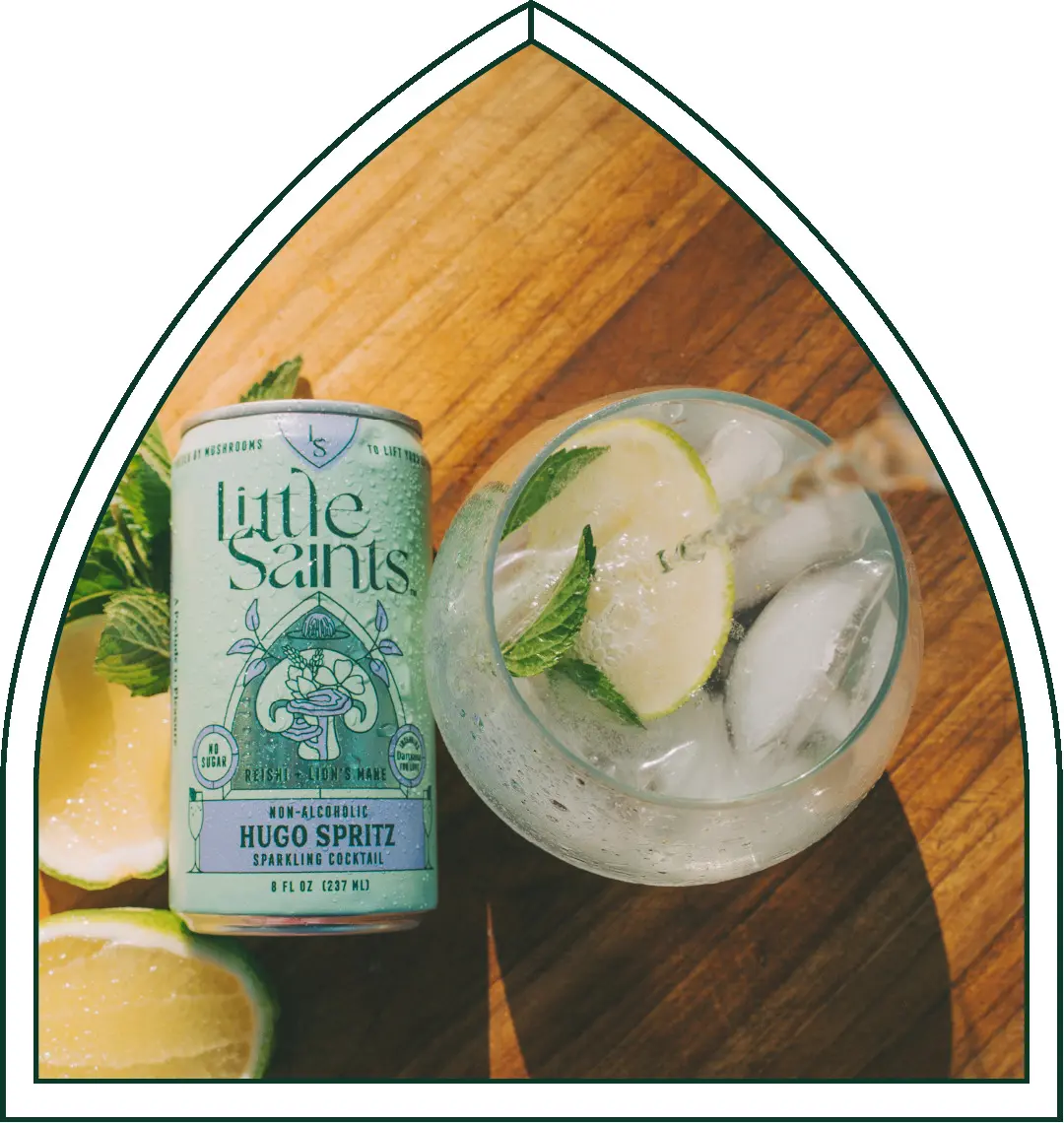
The functional blend, made from organic Reishi, organic Lion's Mane, Damiana, and botanical terpenes, is what the brand calls Nature's Neuroscience. Reishi carries the calming note, Lion's Mane the focus, Damiana the social warmth, and botanical terpenes the sensory lift. The mushrooms are grown on a certified USDA Organic farm in California and extracted with ultrasound instead of chemical solvents, so no residue carries into the liquid. The extract holds GRAS status, the FDA's standard of generally recognized as safe for an ingredient used in food.
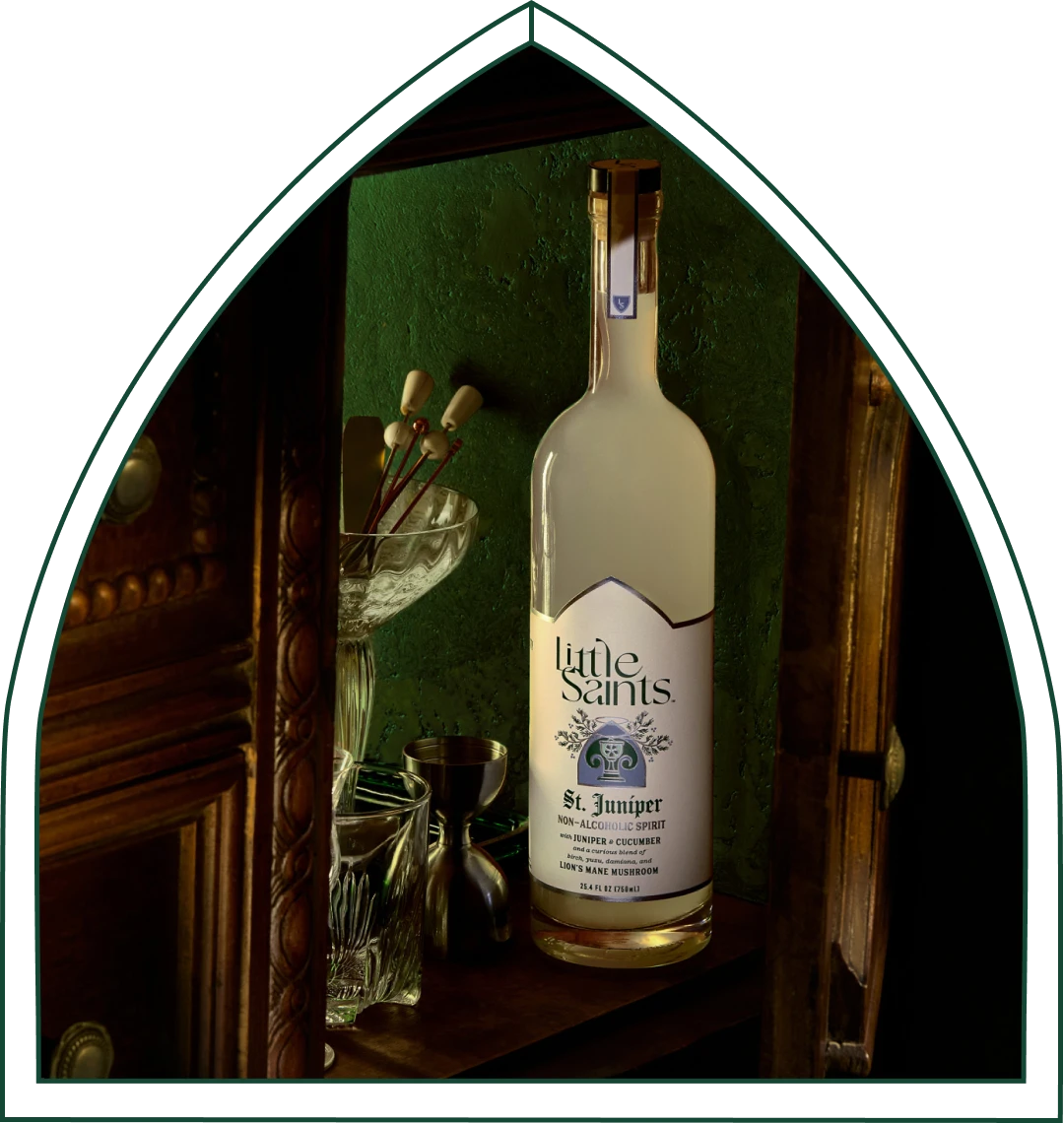
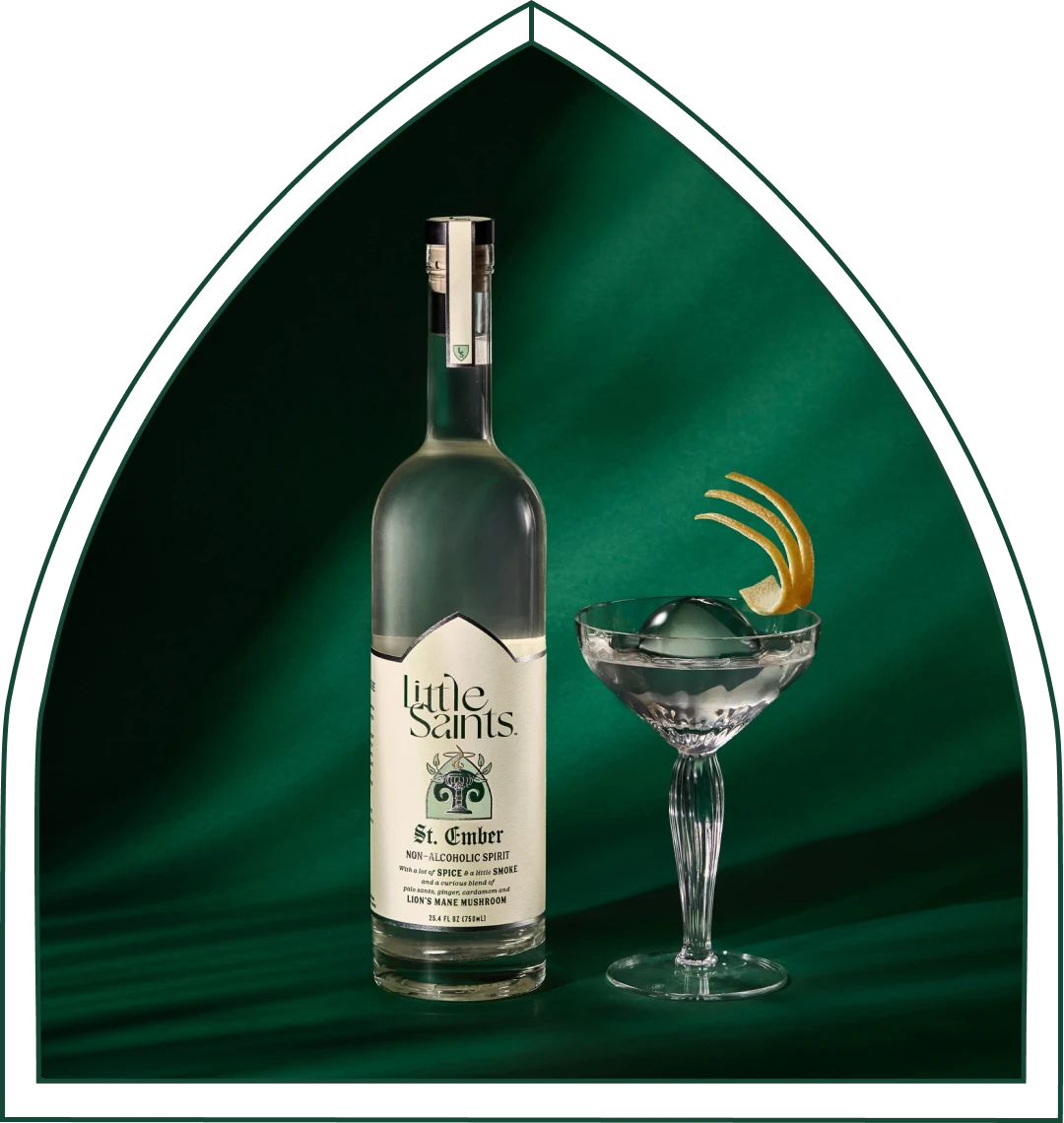
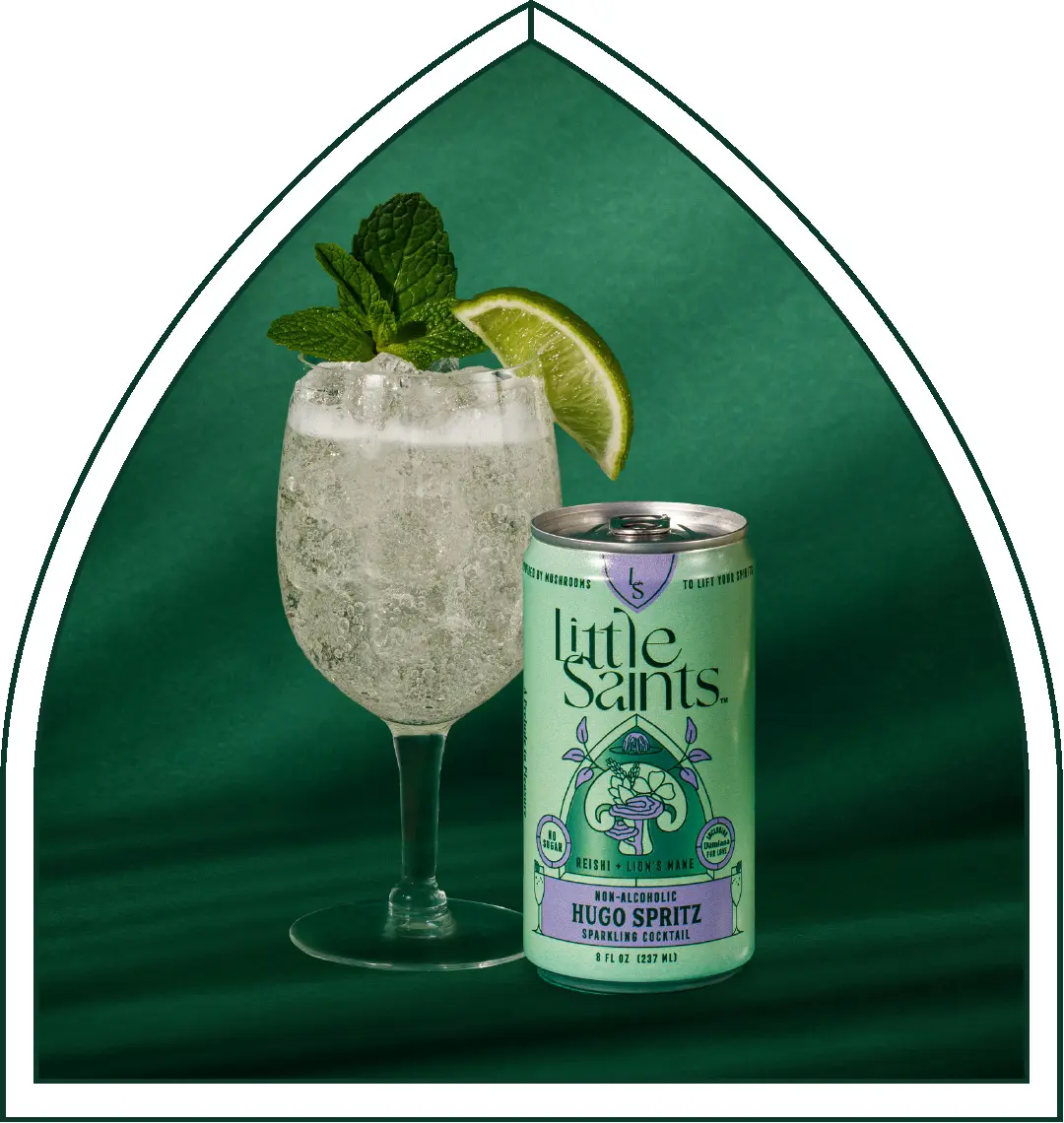
Drinkers often describe the Little Saints Lift as clarity and ease, the first sip of wine feeling, and a sense of being a little more present without the cost that follows. The canned cocktails, including Classic Spritz, Hugo Spritz, Classic Margarita, Paloma, Old Fashioned, Mojito, and Negroni Spritz, carry zero grams of sugar and five calories per can. The non-alcoholic spirits, St. Ember, St. Oak, and St. Juniper, carry zero grams of sugar with no sweeteners of any kind and mix 1:1 in any classic cocktail spec. Most brands leave out the dose and the beta glucan figure. Little Saints publishes both, with the dose printed in the ingredient statement. For more on how to choose the right non-alcoholic drink for your evening, see What Is The Best Non-Alcoholic Drink For Sleep?
These statements have not been evaluated by the FDA. This product is not intended to diagnose, treat, cure or prevent any disease.
Frequently Asked Questions
Choosing a Non-Alcoholic Nightcap
The most useful non-alcoholic nightcap avoids the alcohol-clearance rebound that suppresses sleep scores. Little Saints is built for the evening occasion alcohol used to own, with zero sugar, five calories, no caffeine in the core line, and a published 100mg functional dose at a minimum of 70% beta glucan. Tart cherry juice carries a modest and mixed evidence base for sleep quality, particularly in people with insomnia, but also carries naturally occurring sugar and works best when consumed 2–3 hours before bed. Chamomile and warm milk are low-risk options with limited clinical evidence. None of these drinks guarantee a specific outcome, so your wearable data remains the final judge.
Timing Your Last Drink Before Bed
Most guidance suggests having your last drink for the night 2 to 3 hours before bedtime. This window gives your body time to process the fluid before sleep begins and reduces the likelihood of overnight bathroom trips that fragment sleep independently of any ingredient. Reducing fluid intake by about one-third in the final two to three hours before bed, rather than imposing a hard cutoff, is the balance most continence and sleep hygiene guidance recommends.
The 3am Wake-Up Explained
Alcohol acts as a sedative in the first half of the night by boosting GABA and blunting glutamate, which quiets wakefulness circuits. As alcohol metabolizes, roughly one standard drink per one to two hours, the sedation lifts and the nervous system rebounds into lighter, more fragmented sleep with a rise in resting heart rate, cortisol, and adrenaline. The 3am wake-up reflects this alcohol-clearance rebound, where the sedative effect wears off while the nervous system becomes more active. Wearables capture this pattern as a suppressed sleep score and elevated overnight heart rate.
How Non-Alcoholic Drinks Affect Sleep Scores
The evidence does not show a guaranteed effect from any specific non-alcoholic drink. Research suggests that removing alcohol removes the alcohol-clearance rebound. The swap itself, rather than the specific drink, may be the primary intervention. Tart cherry juice shows a preliminary signal in insomnia populations, but the certainty of evidence is graded low. Chamomile, valerian, and warm milk have limited or mixed clinical support. The most reliable outcome from switching is the absence of the disruption alcohol was causing, which you can measure on any wearable that tracks resting heart rate across a week.
The Protocol Over the Product
Alcohol creates a rebound that suppresses your sleep score by elevating resting heart rate, fragmenting REM, and triggering awakenings as blood alcohol concentration (BAC) falls in the second half of the night. To test whether a replacement drink changes that pattern, hold your variables constant, change one drink, run 7–14 nights, and compare your weekly averages. Watch resting heart rate and overnight awakenings on whichever device you wear. Resting heart rate is the most accurately measured overnight number across current consumer wearables, and a sustained change of four or five beats across a week is unambiguous. Choose a drink that fits the evening occasion without the rebound. Little Saints was built for exactly that role.
The statements made on our website have not been evaluated by the Food and Drug Administration, Our products are not intended to diagnose, treat, cure or prevent any disease. If you are pregnant, nursing, taking any medications or have any medical conditions, consult your doctor before use.