


Key Takeaways
- A low-sugar non-alcoholic Old Fashioned swaps whiskey for zero-proof spirits and sugar for natural sweeteners like monk fruit or allulose, so you keep the classic ritual without the sugar hit.
- Traditional Old Fashioneds carry 4–6 grams of sugar per glass, so removing both alcohol and sugar creates a genuinely low-sugar version.
- Monk fruit, allulose, and erythritol each offer distinct taste and texture profiles, and monk fruit powers Little Saints canned cocktails with intense sweetness from minimal volume.
- St. Oak stands out among zero-proof whiskies by pairing oak-and-vanilla notes with a functional mushroom blend that fits cleanly into stirred drinks.
Ready to upgrade your evening ritual? Shop the full Little Saints range for zero-sugar, functional non-alcoholic cocktails.
Why Traditional Old Fashioneds Are High in Sugar
The classic Old Fashioned spec uses either a sugar cube, which adds about 4 grams of sugar, or simple syrup. A typical pour of 1/4 to 1/3 ounce of 1:1 simple syrup delivers roughly 4 to 6 grams of sugar, depending on the exact pour and syrup concentration. Rich simple syrup made at a 2:1 ratio with demerara or other unrefined sugars pushes that figure higher and adds caramel and molasses notes that make the drink taste more complex.
This small, spirit-forward cocktail still carries a meaningful glycemic load alongside its alcohol content. That combination conflicts with the goals of anyone monitoring blood sugar, managing weight, or prioritizing sleep quality and next-day recovery.
Removing alcohol solves one part of the problem, but the sugar remains unless you also change the sweetener. A genuinely low-sugar NA Old Fashioned requires both substitutions to work together.
Browse zero-sugar non-alcoholic cocktails
The Sweetener Showdown: Best Sugar-Free Options
Three natural, low-glycemic sweeteners dominate low-sugar cocktail builds: erythritol, allulose, and monk fruit. Each behaves differently in a glass, so the right choice depends on taste preference and how you plan to use it.
| Sweetener | Taste Profile | Sweetness vs. Sugar | Best Use |
|---|---|---|---|
| Erythritol | Clean, neutral; can produce a mild cooling sensation on the palate | Approximately 70% as sweet as cane sugar | Syrups where a neutral base is preferred; works well in stirred, spirit-forward drinks |
| Allulose | Very close to cane sugar; no notable aftertaste; slight caramel quality when heated | Approximately 70% as sweet as cane sugar | Rich simple syrups and cocktails where body and mouthfeel matter; the closest functional substitute for demerara syrup |
| Monk Fruit | Clean sweetness with a faintly fruity finish; no bitter aftertaste at low concentrations | 150–200 times sweeter than cane sugar; used in very small quantities | Syrups requiring intense sweetness from a small volume; the sweetener used in Little Saints canned cocktails |
Use the ratios below as direct replacements for a standard 1:1 simple syrup when you make sugar-free syrups at home.
- Erythritol syrup: Combine 1 cup erythritol with 1 cup water over low heat, stirring until fully dissolved. Cool before use. Yields approximately 1.5 cups.
- Allulose syrup: Combine 1 cup allulose with 1 cup water over low heat. Allulose dissolves readily and produces a syrup with excellent body, which feels closest to a traditional simple syrup. Cool before use.
- Monk fruit syrup: Combine 1 teaspoon pure monk fruit extract with 1 cup water. Monk fruit is dramatically more concentrated than sugar, so a small amount goes a long way. Adjust to taste and cool before use.
Monk fruit powers Little Saints canned cocktails, including the ready-to-drink Old Fashioned. For homemade syrups, all three options work well. Allulose shines when body and mouthfeel matter most, while monk fruit excels when you want strong sweetness from a tiny volume.
Best Zero-Proof Whiskies for an Old Fashioned
Once you have your sweetener dialed in, the next choice is the spirit. The zero-proof whiskey category now ranges from simple flavor stand-ins to functional spirits built on real botanical extracts, and three products stand out for Old Fashioned builds.
Spiritless Kentucky 74 leans into rye-forward spice and oak notes, with a dry finish. It performs well in stirred applications and holds up over a large ice cube without thinning noticeably. The flavor profile echoes a classic rye-heavy bourbon and integrates cleanly with Angostura bitters.
Ritual Zero Proof Whiskey Alternative leads with caramel and vanilla, with a slight bite on the finish. It reads as sweeter than Spiritless in a side-by-side build, which can help when you use a very dry sugar-free syrup. That extra perceived sweetness may also mean you reduce the syrup slightly.
Little Saints St. Oak layers oak, vanilla, cardamom, and caramel, echoing an oak-aged whiskey. It also introduces a functional mushroom blend with organic Lion's Mane, Reishi, and Damiana. St. Oak received Best NA Spirit of 2025 from the BevNET Spirit Awards, which reflects how it performs in the glass.
St. Oak contains zero grams of sugar and no added sweeteners, so any sweetness comes from the botanical extracts themselves. Because it is built on oil-based craft extracts rather than flavored water, it mixes 1:1 in any cocktail spec without over-pouring. The cloudiness in the bottle comes from the Lion's Mane extract, which adds natural viscosity and gives the drink weight. That viscosity, combined with deliberate heat from cardamom and capsicum, helps it register as a true spirit in a stirred cocktail.
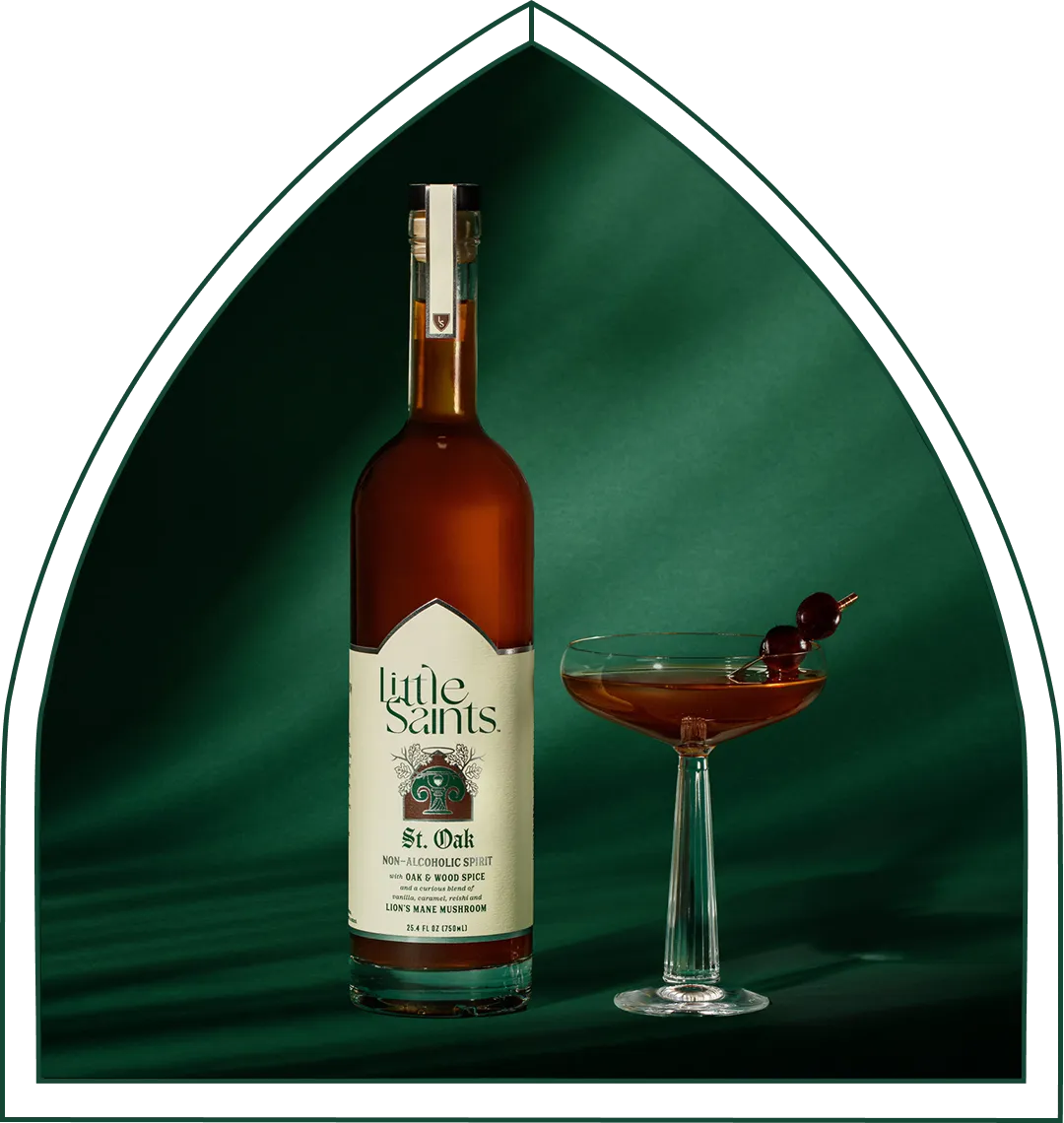
For anyone seeking a zero-sugar option with a functional layer, St. Oak is the only product in this group that delivers both at a stated, verifiable dose.
Discover St. Oak and the full Little Saints range
The Classic Low-Sugar NA Old Fashioned
This foundational recipe mirrors the traditional Old Fashioned structure, with zero-proof whiskey and sugar-free syrup swapped in. St. Oak works especially well here because of its oak-and-vanilla profile and zero-sugar formulation, but any of the zero-proof whiskies above will fit this spec.
Ingredients:
- 2 oz St. Oak (or preferred zero-proof whiskey alternative)
- ¼ oz sugar-free simple syrup (allulose or monk fruit, using the ratios above)
- 2–3 dashes alcohol-free bitters for a fully NA build; many home bartenders still use traditional Angostura in small amounts
- Large ice cube
- Orange peel and cocktail cherry, to garnish
Instructions:
- Add the sugar-free simple syrup and bitters to a mixing glass.
- Add the St. Oak.
- Fill the mixing glass with ice and stir for 30 to 45 seconds. This window brings the drink to the right temperature and texture while integrating the ingredients without over-diluting.
- Strain over a single large ice cube in a rocks glass. A large cube melts more slowly than cracked ice and preserves the balance longer.
- Express an orange peel over the glass by holding it skin-side down and bending it sharply over the surface of the drink. Run the peel around the rim, then drop it in or rest it on the ice.
- Add a cocktail cherry if desired. Serve immediately.
Tip on dilution: St. Oak mixes 1:1 and carries natural viscosity from the Lion's Mane extract, so it behaves more like a conventional spirit than first-generation NA options that needed double or triple pours. Stir for the full 30 to 45 seconds to achieve a cold, fully integrated drink with a smooth texture.
Tea-Based Variation: Lapsang Souchong Old Fashioned
A strong brewed Lapsang Souchong tea offers a smoky, complex base for anyone who prefers to skip NA spirits entirely. Lapsang Souchong is a Chinese black tea dried over pinewood fires, which gives it a pronounced smokiness that feels spirit-adjacent in a stirred cocktail.
Ingredients:
- 2 oz strong-brewed Lapsang Souchong tea, cooled (brew at double strength with 2 teaspoons of loose leaf per 6 oz of water, then refrigerate until cold)
- ¼ oz sugar-free simple syrup (allulose recommended for body)
- 2 dashes alcohol-free bitters
- Large ice cube
- Orange peel, to garnish
Combine the tea, syrup, and bitters in a mixing glass with ice, then stir for 30 seconds. Strain over a large ice cube, express the orange peel over the surface, and garnish. This variation stays naturally sugar-free, contains caffeine because it uses black tea, and carries a distinct smoky profile that works well on evenings when you want a spirit-free build.
The Functional Twist: A Mushroom-Infused Old Fashioned
Functional spirits now sit alongside classic NA options, delivering real botanical and adaptogenic ingredients at stated doses. Little Saints St. Oak leads this approach in the Old Fashioned space by building those botanicals directly into the spirit.
Each serving of St. Oak includes organic Lion's Mane extract standardized to 70% beta glucan, plus organic Reishi and Damiana. The mushrooms are USDA Organic, grown in California, and extracted with clean ultrasound technology. Third-party lab analysis confirms potency, and the extract holds GRAS status, which means it is generally recognized as safe for use in food.
In the glass, Little Saints calls the effect the Little Saints Lift, a subtle sense of clarity and ease that many customers describe as feeling more present and settled. The experience stays non-intoxicating, non-psychoactive, and fully legal. Research on Lion's Mane continues to explore potential neuroprotective properties, and a 2025 study indexed on PubMed and additional recent research examine how Lion's Mane bioactives work. These findings describe the ingredient in general, not specific outcomes for Little Saints products.
The Functional Old Fashioned recipe matches the Classic build, with St. Oak as the required base. The functional layer already lives in the spirit, so you do not need extra ingredients.
Ingredients:
- 2 oz Little Saints St. Oak
- ¼ oz sugar-free simple syrup (monk fruit recommended)
- 2 dashes alcohol-free bitters
- Large ice cube
- Orange peel and cocktail cherry, to garnish
Follow the same stirring and straining method as the Classic recipe. St. Oak carries zero grams of sugar and no added sweeteners, and its vanilla and caramel notes provide part of the perceived sweetness. Taste before adding more syrup and adjust to your preference. The Lion's Mane, Reishi, and Damiana blend appears in every pour, so this variation functions as both a cocktail and a botanical experience.
These statements have not been evaluated by the Food and Drug Administration. This product is not intended to diagnose, treat, cure, or prevent any disease. Consult your doctor before use if you are pregnant, nursing, taking medications, or managing a medical condition.
Garnish and Dilution Tips for Perfect Balance
The Old Fashioned is a stirred cocktail, and the way you stir it shapes the final drink. A few small technique upgrades create a noticeable difference in balance and texture.
On dilution: Stir for 30 to 45 seconds with large, cold ice in the mixing glass. That window matters because under-stirring leaves the drink too cold on the surface and unintegrated in flavor, while over-stirring dilutes it past the point where the sweetener and bitters can hold their own. Aim for a drink that has dropped in temperature, picked up a small amount of water from the melting ice, and integrated fully into a smooth, cohesive sip.
On ice: A single large cube, ideally 2 inches square, is the standard for a rocks Old Fashioned. Large-format ice has a lower surface-area-to-volume ratio than cracked or small cubes, so it melts more slowly and preserves the drink's balance. Silicone molds for large cubes are widely available and worth the investment if the Old Fashioned is part of your regular ritual.
On the orange peel: The expressed oils from an orange peel create a functional aromatic layer that changes how the drink smells and tastes. Hold the peel skin-side down, close to the surface of the drink, and bend it sharply so the oils mist across the surface. Run the peel around the rim before dropping it in. A wider peel cut with a Y-peeler releases more oil and feels easier to handle.
On the cherry: A cocktail cherry is optional but traditional. Maraschino cherries from a jar are the standard, while Luxardo or other preserved cherries in syrup offer a richer, less sweet alternative. For a strict zero-sugar build, use the cherry sparingly because the syrup adds a small amount of sugar to the glass.
See the zero-sugar, five-calorie lineup
Frequently Asked Questions
Can I make an Old Fashioned without sugar?
Yes. The sugar in a traditional Old Fashioned provides sweetness and a small amount of body or texture, and both elements translate well without cane sugar. Allulose syrup comes closest to a traditional simple syrup because it dissolves cleanly, contributes body, and carries no glycemic load. Monk fruit syrup delivers intense sweetness from a very small volume and leaves no aftertaste at cocktail-level concentrations. A tea-based variation using Lapsang Souchong as the base stays naturally sugar-free and can skip syrup entirely if you brew the tea strong enough. Any of the three recipes in this guide can be built with zero added sugar.
What is the best non-alcoholic Old Fashioned recipe?
The best recipe depends on what you want from the drink. For a straightforward, spirit-forward build that mirrors the classic structure, the Classic Low-Sugar NA Old Fashioned is the most reliable starting point. It uses 2 oz zero-proof whiskey, ¼ oz sugar-free simple syrup, and 2 to 3 dashes alcohol-free bitters, stirred and strained over a large ice cube.
For a functional twist that adds a supplement-grade botanical layer, Little Saints St. Oak is the recommended base. It combines an oak-and-vanilla profile with a standardized Lion's Mane extract and a Reishi and Damiana blend, and it mixes 1:1 in classic whiskey specs. St. Oak also carries the BevNET Best NA Spirit of 2025 recognition, which reflects how it performs in cocktails.
How do I make a healthy Old Fashioned?
A healthy Old Fashioned addresses alcohol, sugar, and calories together. Removing alcohol eliminates the blood alcohol concentration (BAC), which is the measure of alcohol in the bloodstream, and reduces downstream effects on sleep architecture, next-day recovery, and metabolic function. Replacing simple syrup with a zero-glycemic sweetener like allulose or monk fruit removes the sugar load. Choosing a zero-proof spirit with no added sweeteners and a low calorie count keeps the overall caloric impact small.
For a functional upgrade, a spirit like St. Oak adds organic Lion's Mane, Reishi, and Damiana at a stated dose. These ingredients have a long history of traditional use as botanical adaptogens and fit into the ritual without adding sugar, calories, or alcohol.
Are zero-proof whiskies any good?
Modern zero-proof whiskies have improved significantly from the first generation that many bartenders described as flavored water. Early products often diluted in a cocktail and needed two to three times the standard pour. Newer options built on oil-based extracts hold up in a stirred build, carry natural viscosity, and integrate with bitters and sweeteners more like a conventional spirit.
St. Oak, for example, relies on oil-based craft extracts, mixes 1:1 in any whiskey cocktail spec, and carries deliberate heat from cardamom and capsicum that feels spirit-like. Customer reviews on the Little Saints site give it 4.5 out of 5 stars across 133 reviews, with 87% recommending it, based on ratings as of August 2026.
What sweetener is best for a low-sugar Old Fashioned?
Monk fruit and allulose are the top choices, and each plays a slightly different role. Allulose works best when body and mouthfeel matter most, because it behaves like a traditional simple syrup in a stirred cocktail and produces a drink with weight and texture. Monk fruit works best when you want strong sweetness from a minimal volume, and it is the sweetener used in Little Saints canned cocktails, including the ready-to-drink Old Fashioned.
Erythritol is a viable third option but can create a mild cooling sensation on the palate that some drinkers notice in a spirit-forward build. For most home bartenders making a low-sugar Old Fashioned, allulose syrup at a ¼ oz pour offers the most straightforward swap for traditional simple syrup.
Conclusion: Raise a Glass to Better Rituals
The Old Fashioned endures because it functions as a ritual as much as a recipe. The weight of the glass, the sound of ice, the expressed orange peel, and the first sip all contribute to the experience. That sensory ritual does not depend on alcohol or sugar.
The three variations in this guide, including the Classic Low-Sugar NA Old Fashioned, the Lapsang Souchong tea build, and the Functional Twist with St. Oak, preserve the structure and ceremony of the original while aligning with how health-conscious drinkers want to feel the next morning.
Sweetener choice shapes the texture and sweetness, while spirit choice shapes the core flavor and overall impact. For anyone who wants the ritual to carry a functional layer as well as flavor, Little Saints St. Oak currently offers one of the most complete answers in the category.
Ready to elevate your evening ritual? Explore the full range of non-alcoholic cocktails and spirits for a clean, functional pour that skips excess sugar and calories. Explore the collection
The statements made on our website have not been evaluated by the Food and Drug Administration, Our products are not intended to diagnose, treat, cure or prevent any disease. If you are pregnant, nursing, taking any medications or have any medical conditions, consult your doctor before use.