


Key Takeaways
- Non-alcoholic margarita brands vary widely in sugar, calories, and sweetener disclosure, and most labels omit complete nutritional data.
- Little Saints Classic Margarita is the only RTD option that discloses zero grams of sugar, five calories per can, monk fruit juice concentrate as the sole sweetener, and a 100mg functional dose at minimum 70% beta glucan.
- Competitors such as Lyre's, Free AF, and Mingle list 4–13g of added sugar and 30–60 calories per can, while CleanCo and Ritual Zero Proof omit functional dosing information entirely.
- Label literacy matters: sugar type, calorie count, sweetener identity, and functional potency are the four verifiable figures that separate transparent products from opaque ones.
- Little Saints ships nationwide, is stocked in over 1,000 retail locations, and remains the only brand combining a zero-sugar formulation with a published functional dose.
Best Non-Alcoholic Margarita Brands By Label Transparency
The list below ranks brands by what their labels disclose, not by taste. Each entry highlights one label-verifiable fact that sets it apart.
- Little Saints Classic Margarita – zero grams of sugar, five calories, monk fruit sweetening, and a stated 100mg functional dose at a minimum of 70% beta glucan, the only non-alcoholic margarita in the category that publishes all four figures at once.
- CleanCo Clean Margarita – sugar-free and calorie-free, sweetened with stevia, with a Bronze Medal at the 2026 Zero Proof Choice Awards; no functional dose stated.
- Ritual Zero Proof Margarita RTD – a finished can launched in 2026 by the brand Diageo acquired in 2024, built on its existing Agave Spirit Alternative; no functional dose stated.
- Lyre's Margarita RTD – 45 calories and 8g of added sugar per 250mL can; no functional dose stated.
- Free AF Classic Margarita – 45–60 calories and 10–12g of sugar per 8.4oz can, sweetened with organic sugar; no functional dose stated.
- Mingle Lime Margarita – 30–60 calories and 4–13g of sugar per 12oz can, sweetened with organic cane sugar and lime juice concentrate; no functional dose stated.
Find Your Zero-Sugar Margarita
Ready-To-Drink Non-Alcoholic Margarita Brands
Ready-to-drink (RTD) non-alcoholic margarita cans are finished cocktails. Open the can, pour over ice or drink straight, and the drink is complete. The drink is complete without tequila, mixing, or added sweetener. The label on the can is the entire product.
Little Saints Classic Margarita is an 8oz can built on lime, bitter orange, and salt. Its label discloses zero grams of sugar, five calories, and monk fruit juice concentrate as the only sweetener. The functional blend of organic Reishi, organic Lion's Mane, and Damiana is dosed at a stated 100mg per serving at a minimum of 70% beta glucan, documented by certificates of analysis from the supplier. No other RTD margarita on the market publishes that combination of zero sugar, five calories, and a functional dose. Customer reviews on littlesaints.com rate the Classic Margarita 4.8 out of 5 across 48 reviews (accumulated ratings on littlesaints.com, captured August 2026).
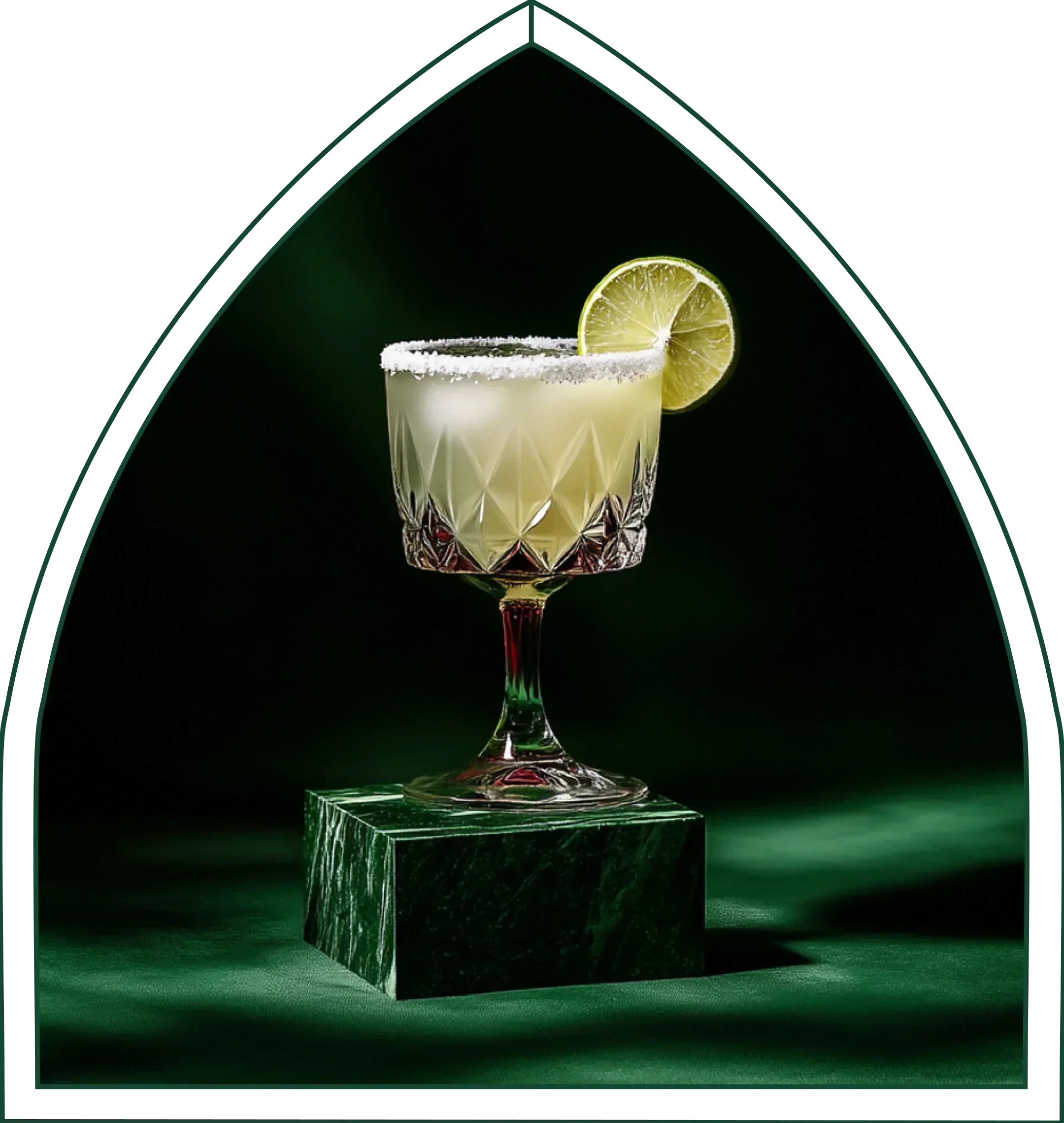
Lyre's Margarita RTD is a 250mL can at 45 calories and 8g of added sugar, with a tart lime and salted-edge profile. Ritual Zero Proof entered the RTD format in 2026 with a Margarita can described as bright, zesty citrus with earthy agave. CleanCo's Clean Margarita is a 250mL can at 0.0% ABV, sugar-free and calorie-free, sweetened with stevia. Free AF's Classic Margarita runs 45–60 calories and 10–12g of sugar per 8.4oz can, sweetened with organic sugar. None of these brands publishes a functional dose or a beta glucan figure.
Non-Alcoholic Margarita Mixers
A non-alcoholic margarita mixer is an ingredient, not a drink. It supplies the citrus, sweetener, and flavor base. The buyer adds a spirit or, in a non-alcoholic build, a non-alcoholic tequila alternative to complete the cocktail. The ritual is different, the result is different, and the sugar load is usually different.
Tres Agaves Organic Lime Margarita Mix is a 1-liter bottle sweetened with organic agave nectar at 68 calories per serving, with no alcohol and no functional ingredients. Sauza Margarita Mix runs 100 calories and 24g of sugar per 3.4oz serving, sweetened with sugar and colored with Yellow 5 and Blue 1. Both require tequila or a non-alcoholic tequila alternative to become a drink.
The practical distinction matters at the point of purchase. A mixer plus sparkling water does not create a margarita. A mixer plus a non-alcoholic tequila alternative comes closer, but the sugar load from the mixer still applies. A finished RTD can is the only format where the label tells the complete nutritional story.
How To Read A Non-Alcoholic Margarita Label
Four figures separate a label that tells the full story from one that does not.
Sugar. Non-alcoholic margarita brands range from zero grams to 13g of sugar per serving. The sweetener type matters as much as the gram count. Organic cane sugar and agave nectar are caloric, while monk fruit juice concentrate and stevia are not. A label that lists “natural flavors” without naming a sweetener leaves the sugar story incomplete.
Calories. The RTD non-alcoholic margarita category spans from 0 to 60 calories per can, a range wide enough to matter to anyone tracking intake. Five calories per can, as in Little Saints Classic Margarita, sits at the floor of the category.
Sweetener Type. Monk fruit juice concentrate, stevia, organic cane sugar, agave nectar, and date syrup all appear across the category. They behave differently in the body. Monk fruit and stevia contribute negligible calories, while cane sugar and agave nectar contribute meaningful ones. A label that says “sweetened with natural flavors” does not give the same clarity as a label that names the sweetener.
Functional Dose. Beta glucan is the fraction of a mushroom extract that carries its adaptogenic properties. Most non-alcoholic margarita brands carry no functional ingredients at all. Of those that do, almost none publish a dose. Little Saints states 100mg per serving on the label. The extract behind that number is a minimum of 70% beta glucan, documented by certificates of analysis from the supplier. For comparison, a whole mushroom at a farmers' market sits around 0.1% beta glucan, making the extract up to 700 times more concentrated. A dried, ground mushroom sits around 1%, making the extract roughly 70 times more concentrated. Quality fruiting-body extracts in the supplement industry typically run 20–40% beta glucan. Mycelium-on-grain powders commonly test in the low single digits. At 70%, Little Saints' extract sits at the top of that range.
Mixing Behavior. RTD cans are judged straight from the can. Non-alcoholic spirits used to build a margarita at home are judged inside the cocktail. First-generation non-alcoholic spirits were built on flavored water and required two to three times the standard pour to approximate the weight of a spirit in a build. Little Saints' non-alcoholic spirits, including St. Ember, which mixes like a tequila or mezcal, use oil-based craft extracts that mix 1:1, so any margarita recipe works unchanged.
The FDA disclaimer applies: these statements have not been evaluated by the FDA. This product is not intended to diagnose, treat, cure, or prevent any disease.
Who Sells Non-Alcoholic Margaritas?
Non-alcoholic margaritas are available through four channels: direct-to-consumer, grocery retail, liquor retail, and on-premise.
Little Saints ships direct to consumers in all 50 states from two warehouses, typically within three days. In retail, the brand is available nationally at Sprouts, in California and Florida at Whole Foods, in the Midwest at Fresh Thyme, and in Florida at ABC Liquors. On-premise, it is concentrated in A- and B-tier bars and restaurants. In total, the brand is stocked in over 1,000 retail shops, grocery stores, liquor stores, bars, and restaurants.
Non-alcoholic beer, wine, and spirits reached $925 million in U.S. off-premise sales, growing 21.9% while total alcohol fell 1.0%, a 22.9-point gap measured in the same channel in the same period. Retail has responded with expanded shelf space, and the category is now present in most major grocery, natural, and liquor chains.
Stock Up For Your Next Gathering
Are Alcohol-Free Margaritas Good?
Product quality and drinker expectations determine how good an alcohol-free margarita feels in the glass.
A non-alcoholic margarita is inspired by the cocktail, not a match for it. The ethanol in a traditional margarita contributes mouthfeel, warmth, and a blood alcohol concentration (BAC) effect that no non-alcoholic product replicates. Little Saints never claims a 1:1 taste match with any spirit. The Classic Margarita is an ode to the cocktail with lime, bitter orange, and salt, built to be judged on its own terms rather than measured against a tequila-based original.
The category has improved substantially in flavor complexity and sugar discipline. The 0–60 calorie range mentioned earlier reflects genuine product differentiation rather than a single category standard. The strongest products in the set, with low sugar, real flavor complexity, and a functional layer, deliver something the original cocktail does not. They offer a drink that supports sleep, keeps sugar intake low, and lands at five calories rather than roughly 200.
IWSR forecasts the U.S. no-alcohol market to grow at an 18% volume CAGR from 2024 to 2028, which signals a category that drinkers continue to adopt.
Non-Alcoholic Margarita Vs Margarita Mix
A margarita mix is an ingredient, while a finished non-alcoholic margarita can is a drink. The distinction is clear at home. A mixer requires the buyer to add a spirit, measure proportions, and build the cocktail. A finished RTD can requires only a glass and ice.
The sugar comparison also runs in opposite directions. Tres Agaves Organic Lime Margarita Mix carries 68 calories per serving before any spirit is added. Sauza Margarita Mix carries 100 calories and 24g of sugar per serving. Little Saints Classic Margarita carries five calories and zero grams of sugar as a complete, finished drink.
The purchase decision fork is straightforward. If the goal is a finished drink with a disclosed nutritional profile and no additional steps, the RTD can is the correct format. If the goal is to control the spirit and the build, a mixer paired with a non-alcoholic tequila alternative is the correct format, but the mixer's sugar load applies regardless of what spirit goes in.
Comparison: What The Label Discloses
The table below compares Little Saints, sugar-sweetened non-alcoholic margaritas, and first-generation non-alcoholic spirits on four key label figures: sugar, calories, functional dose, and mixing behavior.
| Little Saints Classic Margarita | Sugar-Sweetened NA Margaritas | First-Gen NA Spirits | |
|---|---|---|---|
| Sugar | 0g | Present, often 4–13g per can | Varies |
| Calories | 5 per can | Higher, typically 30–60 per can | Varies |
| Functional dose stated | 100mg, published | None | None |
| Mixes 1:1 | Yes (RTD finished; spirits mix 1:1) | n/a — finished cans only | No — 2–3x pour needed |
These statements have not been evaluated by the FDA. This product is not intended to diagnose, treat, cure, or prevent any disease.
Frequently Asked Questions
What Is The Best Non-Alcoholic Margarita?
The best non-alcoholic margarita depends on whether the buyer prioritizes label transparency, calories, or distribution. On label-verifiable criteria such as sugar, calories, sweetener type, and functional dose, Little Saints Classic Margarita is the only option that answers all four at once. For shoppers who prioritize zero calories and stevia sweetening over a functional layer, CleanCo Clean Margarita is the alternative. For shoppers who accept 8g of added sugar in exchange for a widely distributed brand, Lyre's Margarita RTD is available in many markets.
Who Sells Non-Alcoholic Margaritas?
Non-alcoholic margaritas are sold direct-to-consumer online, in grocery stores, in liquor stores, and on-premise at bars and restaurants. Little Saints ships to all 50 states directly from two warehouses, typically within three days. In retail, Sprouts carries it nationally, Whole Foods stocks it in California and Florida, Fresh Thyme covers the Midwest, and ABC Liquors covers Florida. The brand is also stocked in over 1,000 bars, restaurants, and independent retailers. Other brands including Lyre's, CleanCo, and Ritual Zero Proof are available through their own direct-to-consumer sites and select retail partners.
What Does 0% ABV Actually Mean?
Under U.S. federal law, the TTB defines alcoholic beverages as products containing 0.5% alcohol by volume or more. A product labeled "non-alcoholic" can legally contain up to 0.5% ABV. A product labeled "alcohol-free" must measure 0.0% ABV, and for malt-based beverages this requires TTB formula approval and independent laboratory verification. Little Saints canned cocktails are labeled at 0% ABV. The spirits line is labeled under 0.5% ABV, which is the standard non-alcoholic threshold comparable to the trace amount found in ripe fruit or bread. Shoppers seeking a fully alcohol-free product should check the label for 0% ABV and verify with the brand's own documentation.
Do Non-Alcoholic Margaritas Have Sugar?
Most do. The RTD non-alcoholic margarita category spans a wide sugar range, depending on the brand and sweetener used. Lyre's Margarita RTD discloses 8g of added sugar. Free AF Classic Margarita discloses 10–12g. Mingle Lime Margarita discloses 4–13g. Little Saints Classic Margarita discloses zero grams of sugar, sweetened exclusively with monk fruit juice concentrate. Shoppers tracking sugar intake should read the Nutrition Facts panel and the ingredient statement on every can, since “natural flavors” does not guarantee zero sugar.
What Is The Difference Between A Ready-To-Drink Can And A Mixer?
A ready-to-drink can is a finished cocktail. Open it, pour it over ice, and the drink is complete. The label on the can discloses the full nutritional profile of what the drinker is consuming. A margarita mixer is an ingredient that supplies the citrus and sweetener base, but requires the buyer to add a spirit or a non-alcoholic tequila alternative to complete the drink. The mixer's sugar and calorie count applies before any spirit is added, and the final drink's nutritional profile depends on what is added to it. For a complete, label-verifiable drink with no additional steps, the RTD can is the correct format.
The Final Pitch
Most non-alcoholic margarita brands do not publish what a label-literate buyer needs to make an informed choice. Sugar content often appears in the drink but not on the label. Sweetener type hides in the ingredient statement. Functional ingredients appear without a dose, and functional doses appear without a potency figure. The result is a category where the purchase decision defaults to taste opinion, packaging, and brand recognition, none of which are verifiable at the shelf.
Little Saints Classic Margarita is the exception. It carries zero grams of sugar and five calories per can, with monk fruit juice concentrate as the only sweetener. The label states a 100mg functional dose per serving at a minimum of 70% beta glucan, documented by certificates of analysis from the supplier, with USDA Organic cultivation and GRAS status on the extract. The lime, bitter orange, and salt profile is built to be judged on its own terms. In its spirits form, the product mixes 1:1 in any margarita recipe without over-pouring.
The brand ships to all 50 states, is stocked in over 1,000 retail locations, and is the #1 beverage company on the 2026 Inc. 5000, ranked on three-year revenue growth.
These statements have not been evaluated by the FDA. This product is not intended to diagnose, treat, cure, or prevent any disease.
The statements made on our website have not been evaluated by the Food and Drug Administration, Our products are not intended to diagnose, treat, cure or prevent any disease. If you are pregnant, nursing, taking any medications or have any medical conditions, consult your doctor before use.