


Key Takeaways
- Most non-alcoholic spirits fade in a gin and tonic because they are flavors in water that cannot handle tonic’s dilution and quinine bitterness.
- Oil-based craft extracts that mix 1:1, carry a deliberate burn, and feature juniper-forward botanicals are the label checks that predict performance in a G&T.
- St. Juniper meets those checks: juniper-forward botanicals, oil-based extracts, a 1:1 mixing ratio, and a stated burn from cardamom and capsicum.
- St. Juniper also delivers 100mg of organic Lion’s Mane extract per serving at a minimum of 70% beta glucan, with zero sugar and under 0.5% ABV.
- Little Saints formulates St. Juniper specifically for the gin and tonic so the ritual stays intact without alcohol.
Shop Little Saints Non-Alcoholic Spirits
Why Most Non-Alcoholic Spirits Fail In A Gin And Tonic
The gin and tonic is the hardest drink to fake without alcohol because the build is unforgiving. Tonic accounts for roughly 75% of the liquid in the glass, so the spirit has to survive a three-to-one dilution before it reaches the palate. Quinine’s bitterness and carbonation’s stripping effect then push a thin botanical base out of the picture.
First-generation non-alcoholic spirits are built as flavors in water. When tonic hits them, the drink goes flat and thin. Botanicals that read faintly in the bottle disappear in the glass. Bartenders who tested early products described flavored water that forced a two-to-three-times pour just to register, and even then the drink still landed thin.
The second failure mode is the absence of bite. Ethanol acts as a carrier for aroma and contributes warmth, viscosity, and persistence in the mouth, so removing it changes smell, taste, and feel far beyond lowering ABV. Without heat at the back of the throat, the drink reads as a soft drink even when the botanicals are accurate. Ethanol also modulates trigeminal nerve response, creating that slight burn and warming sensation, so removing it removes a core part of the ritual architecture.
Quinine compounds the problem. Quinine is detected by human taste receptors at thresholds as low as 8 µM, making it one of the most potent bitter compounds perceptible to humans. At concentrations above 75 mg/L, quinine triggers salivary protein binding that suppresses sweetness and enhances umami perception, which lengthens the finish and tightens structure with juniper-dominant gins. A botanical base that cannot stand up to that bitterness gets buried, and the drink tastes like tonic water with a faint herbal suggestion instead of a cocktail.
The alternatives do not solve the G&T problem either. Sugar-sweetened mocktails are assembled from juice, syrup, and soda, so they lack the layered balance of a true non-alcoholic cocktail. Non-alcoholic beer is built for a different format and occasion. Daytime functional drinks are caffeinated and aimed at a different use case. None of them can stand in for a spirit in a G&T.
How To Read A Non-Alcoholic Gin Label
The label is the best tool for evaluating a non-alcoholic spirit for a gin and tonic. Four criteria are checkable before the bottle is opened.
Juniper-forward botanicals. The gin and tonic is built around juniper’s resinous, piney top notes interacting with quinine’s bitterness. A non-alcoholic gin substitute needs juniper at the front of the botanical build, supported by structure-building botanicals such as birch, angelica, coriander, cardamom, and cucumber. St. Juniper carries all of them.
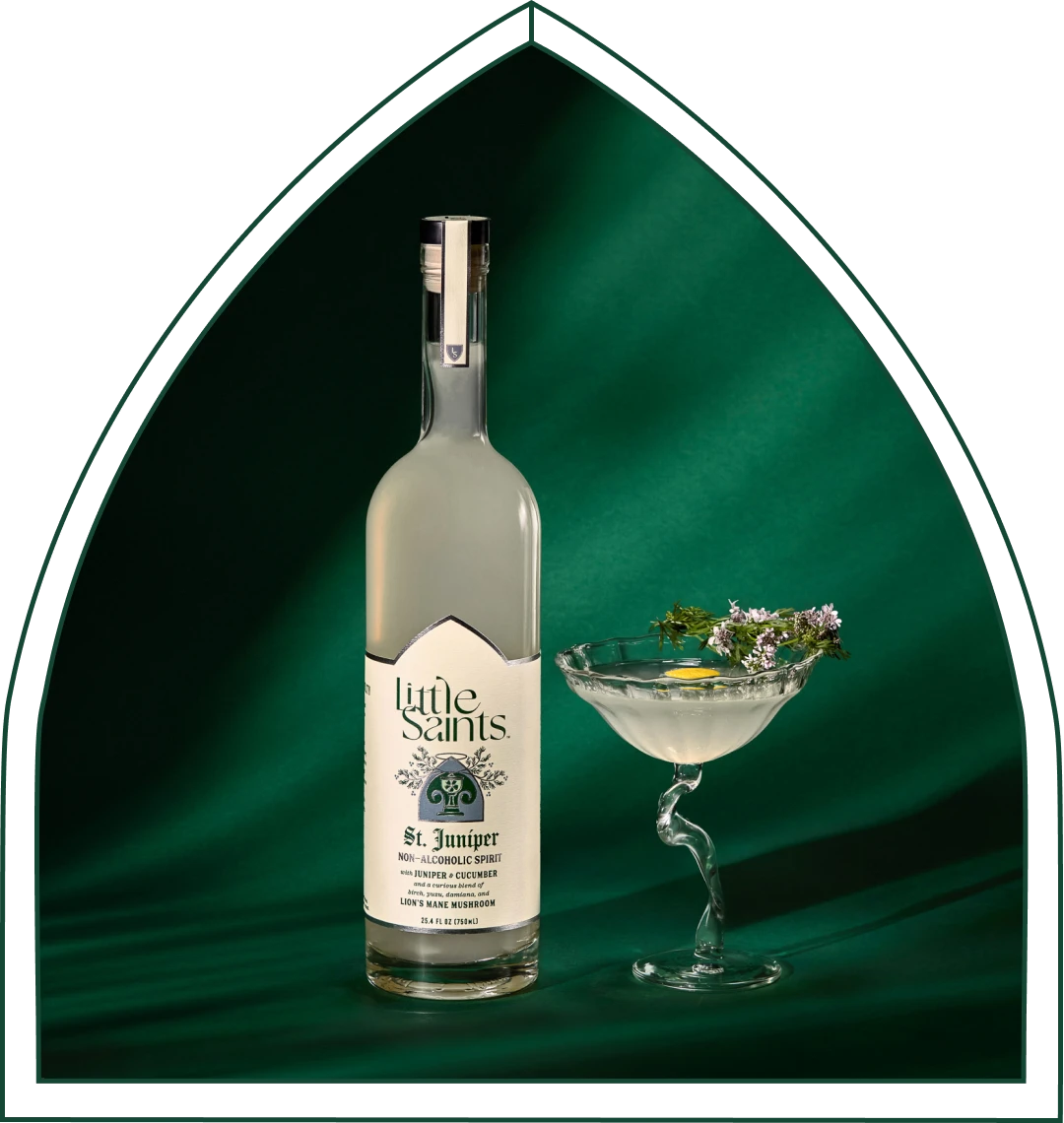
Oil-based craft extracts instead of flavored water. This formulation choice determines whether a spirit survives tonic’s dilution. Hydrophobic flavor compounds such as terpenes separate from water-based systems when diluted, which is why a spirit built as flavors in water goes flat when tonic hits it. Oil-based extracts hold their botanical structure through the build. Check the ingredient statement: a spirit listing botanicals and extracts is built differently from one listing “natural flavors” as its primary flavoring.
Whether the spirit mixes 1:1. Two ounces should replace two ounces. First-generation non-alcoholic spirits often need a two-to-three-times pour, so the bottle empties at roughly twice the rate of a 1:1 product and the drink still lands thin. The 1:1 ratio is a formulation claim that is only possible when the extract base is concentrated enough to survive dilution.
Whether there is a deliberate burn. Heat at the back of the throat signals that this is a spirit rather than a cordial. Look for a stated source. Cardamom extract and capsicum are the mechanism in St. Juniper. A spirit that does not name a burn source almost certainly does not have one.
Whether the brand publishes a functional dose and potency. St. Juniper publishes both figures: 100mg of organic Lion’s Mane extract per serving, with beta glucan at a minimum of 70%, documented by supplier certificates of analysis. Most non-alcoholic spirits publish neither. That gap makes a stated dose at a stated potency a verifiable differentiator rather than a marketing line.
Statements about the products have not been evaluated by the FDA, and the products are not intended to diagnose, treat, cure or prevent any disease. Consult your doctor before use if pregnant, nursing, taking medications or managing a medical condition.
St. Juniper: Built For The Gin And Tonic
St. Juniper (Little Saints) For G&T Drinkers
St. Juniper is built specifically for the gin and tonic. The botanical build of juniper, birch, angelica, coriander, cardamom, and cucumber is juniper-forward by design, so it has something to hold against quinine’s bitterness instead of disappearing under it. Oil-based craft extracts give it the concentration to mix 1:1, so two ounces replace two ounces and the build stays consistent while the bottle pours as far as the gin it replaces.
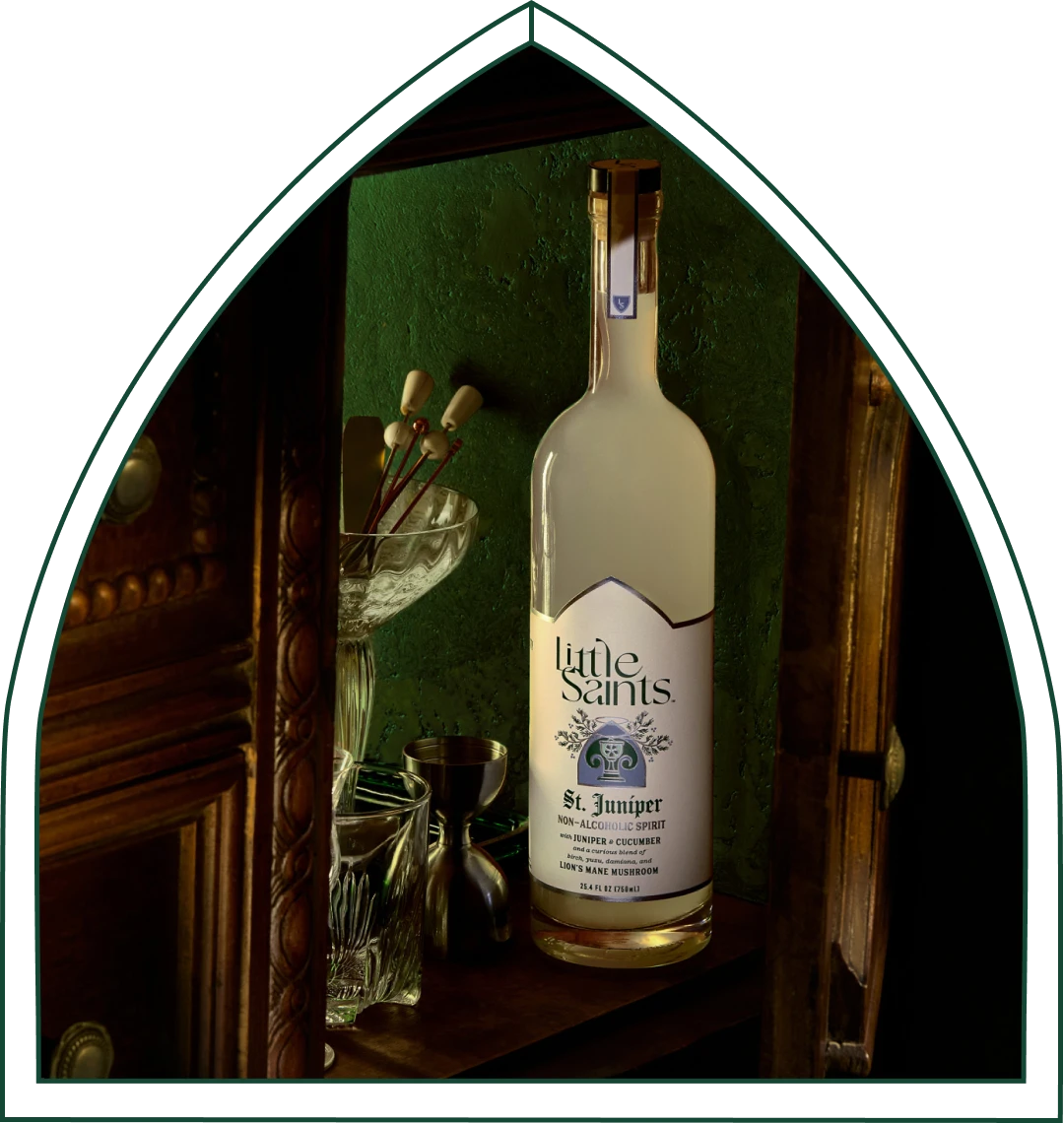
The burn comes from cardamom extract and capsicum. The heat is gentler than the full mouth-coating burn of ethanol, and the brand does not claim otherwise. There is enough warmth at the back of the throat for the drink to register as a spirit rather than a soft drink.
Natural cloudiness and body from Lion’s Mane extract give it weight in the mouth that flavored water cannot match. The spirit carries zero grams of sugar with no sweeteners at all and sits under 0.5% ABV. Each serving delivers 100mg of organic Lion’s Mane extract at a minimum of 70% beta glucan, documented by supplier certificates of analysis. It is rated 4.6/5 across 147 reviews, with 93% of reviewers saying they would recommend it, based on customer reviews on littlesaints.com captured August 2026.
How Other Non-Alcoholic Options Compare
Other non-alcoholic spirits and sugar-sweetened cocktails vary widely by formulation, and the label criteria above reveal those differences. The table below compares how St. Juniper, first-generation non-alcoholic spirits, and sugar-sweetened non-alcoholic cocktails perform against key checks for a G&T build.
| Attribute | St. Juniper | First-Gen NA Spirits | Sugar-Sweetened NA Cocktails |
|---|---|---|---|
| Mixes 1:1 in a cocktail | Yes, oil-based extracts | No, 2–3x pour needed | n/a |
| Built-in burn | Yes, cardamom and capsicum | No | No |
| Sugar per serving | 0g, no sweeteners at all | Varies | Present, often significant |
| Functional dose stated | 100mg, published | None | None |
Non-Alcoholic Gin And Tonic Recipe
This build uses the same measures as a standard G&T, so the ritual stays familiar. Two ounces of St. Juniper do the work of two ounces of gin, with no re-costing, over-pouring, or recipe changes.
- 2 oz St. Juniper
- 4–6 oz chilled premium tonic water
- Large ice
- 1 lime wedge
Fill a copa or highball glass with large ice. Pour St. Juniper over the ice. Tilt the glass and pour tonic slowly down the side to preserve the fizz. Stir gently once with a bar spoon. Squeeze the lime wedge over the top and drop it in.
The bottle pours as far as the gin it replaces, so the build stays consistent from pour to pour.
Choosing Tonic Water For Non-Alcoholic Gin
Tonic matters more here than it does with conventional gin. A full-proof gin carries enough alcohol to push its botanicals through a mediocre tonic. A non-alcoholic spirit does not have that buffer, so a sweet or low-quality tonic buries the juniper and cucumber notes before they reach the palate.
Carbonation chemically alters perception as CO₂ dissolves into carbonic acid and temporarily lowers oral pH, which sharpens the perception of both sweetness and bitterness. A flat tonic tastes muddy even when its quinine content is unchanged. The fizz does structural work as well as textural work, so preserving it matters.
Use these practical steps to keep St. Juniper’s botanical build forward:
- Chill the tonic before pouring, as tonic stored above 12°C loses significant CO₂ within 48 hours
- Pour it down the side of the glass or over the back of a spoon to preserve the bubbles
- Use large ice so the drink does not dilute as it sits, since a large cube melts far more slowly than small cubes packed with gaps
- Keep the garnish to a lime wedge so the aromatics are not crowded
- Choose a premium tonic with real quinine and moderate sweetness, as mass-market tonics using high-fructose corn syrup can be cloying and mask the subtleties of the botanical build
Avoid diet tonics sweetened with artificial sweeteners. Artificial sweeteners such as sucralose and acesulfame-K trigger bitter receptors independently of quinine, which adds a metallic aftertaste that clashes with botanical complexity. The tonic is 60–75% of the drink. It earns the same attention as the spirit.
How Much Non-Alcoholic Gin To Pour In A G&T
Pour two ounces, the same measure you would pour of gin.
St. Juniper was formulated with mixologists to mix 1:1, so the standard G&T build of 2 oz spirit, 4–6 oz tonic, large ice, lime works unchanged. No adjustment, re-costing, or over-pouring is required.
As noted earlier, many first-generation non-alcoholic spirits need a heavier pour and still produce a thin drink. That pattern points to a formulation problem. The 1:1 ratio becomes the buying criterion that replaces taste scoring. If the label does not support a 1:1 pour, the spirit was not built for this drink.
Where St. Juniper Fits In The Evening
Zebra striping, which means alternating alcoholic and non-alcoholic drinks over the course of a night, is now a documented pattern among premium drinkers. NIQ reports that 47% of on-premise visitors mix alcoholic and non-alcoholic options in the same occasion, with 93% of non-alcohol buyers also purchasing alcohol. The non-alcoholic pour often gets added to the evening instead of replacing it.
St. Juniper is the drink that keeps someone at the table for that extra round that might otherwise have been a water. The ritual stays intact with the glass, the ice, the garnish, and the fizz. The only change is what goes in the bottle.
Frequently Asked Questions
What Is The Best Non-Alcoholic Gin And Tonic?
St. Juniper stands out because it was built for the G&T specifically. Oil-based craft extracts give it the concentration to mix 1:1 and survive tonic’s dilution. A cardamom-and-capsicum burn gives the drink heat at the back of the throat. A juniper-forward botanical build of juniper, birch, angelica, coriander, cardamom, and cucumber lets it stand up to quinine’s bitterness. It carries zero grams of sugar, no sweeteners at all, and the Lion’s Mane dose and potency described above.
Are There Any Non-Alcoholic Spirits That Taste Like Alcohol?
No 1:1 taste match exists, and any brand that claims one is over-promising. “Mixes like a gin” means the spirit behaves like gin in the build. It holds its botanical structure through dilution, carries a burn, and produces a drink that reads as a cocktail rather than a soft drink. That is a formulation question and the right criterion for evaluating a non-alcoholic spirit for a G&T.
What Tonic Water Works Best With Non-Alcoholic Gin?
Choose a high-quality, well-chilled tonic with real quinine and moderate sweetness. Premium tonics using cane sugar and natural quinine give the botanical build more room than mass-market tonics sweetened with high-fructose corn syrup. Chill the tonic before pouring, pour it down the side of the glass to preserve the fizz, and use large ice so the drink does not dilute quickly. Keep the garnish simple with a lime wedge so the juniper and cucumber notes stay forward.
How Much Non-Alcoholic Gin Do You Pour In A G&T?
Pour two ounces, the same as you would pour of gin. St. Juniper was formulated to mix 1:1, so the standard build works unchanged. As mentioned earlier, products that require a two-to-three-times pour were not built for this drink. The 1:1 ratio is the label criterion that matters most when choosing a non-alcoholic spirit for a gin and tonic.
What Non-Alcoholic Drink Can I Mix With Tonic Water?
St. Juniper is built for tonic. The botanical build, oil-based extracts, and built-in burn are all engineered for tonic as the mixer. Other non-alcoholic spirits designed for highball serves can work, but check the label for a 1:1 mix, a stated burn source, and a juniper-forward botanical base that can hold up against quinine’s bitterness. A spirit that misses those criteria will produce a drink that tastes like tonic water with only a faint herbal suggestion.
Upgrade Your Gin And Tonic
Most non-alcoholic spirits fail in a G&T because they dilute into tonic as flavors in water and lack any real bite. St. Juniper solves both issues. Oil-based craft extracts that mix 1:1 hold the botanical build through tonic’s dilution. A cardamom-and-capsicum burn gives the drink the heat that signals a cocktail. A juniper-forward botanical build stands up to quinine and bubbles so the drink feels complete.
The ritual stays intact with the glass, the ice, the garnish, and the fizz, while the alcohol steps out. The result is a gin and tonic experience that feels intentional instead of like a consolation prize.
The statements made on our website have not been evaluated by the Food and Drug Administration, Our products are not intended to diagnose, treat, cure or prevent any disease. If you are pregnant, nursing, taking any medications or have any medical conditions, consult your doctor before use.