


Key Takeaways
- Functional non-alcoholic drinks use targeted ingredients like Reishi, Lion’s Mane, L-theanine, and electrolytes to support energy, calm, hydration, or wind-down.
- Summer occasions call for different functional profiles: daytime energy, afternoon calm, heat-driven hydration, and evening wind-down.
- RTD cans offer portability and consistent flavor for parties or travel. DIY recipes cut costs and give precise control over sweetness and dosing.
- Evidence is strongest for caffeine paired with L-theanine. Restorative herbs like Reishi support benefits over weeks of consistent use at research-level doses.
- For a zero-sugar, five-calorie evening option with a published 100 mg mushroom dose, shop the full Little Saints range of non-alcoholic cocktails and spirits.
Why Your Summer Drink Should Work as Hard as You Do
The non-alcoholic beverage category has moved into the mainstream. NIQ measured $1bn in US off-premise non-alcoholic sales, growing 21.9% while total alcohol declined 1.0%. Within that number, non-alcoholic spirits represent roughly 6% of the set but are expanding at approximately 70%, the fastest-moving segment in the category.
Most summer drinkers still face a mismatch between options and occasions. Generic sugar-sweetened non-alcoholic cocktails are calorie-dense and nutritionally hollow. Sparkling water lacks ritual. Many functional beverages skew toward daytime use with caffeine and desk-oriented positioning, which does not fit a sunset gathering or backyard dinner. Summer creates a specific need for drinks that feel refreshing and hydrating and that suit everything from a pool party to an evening wind-down.
This guide follows a simple organizing principle: the best functional non-alcoholic summer drink depends on the moment. Reach for energy during the day, calm for stressful afternoons, hydration for the heat, and a sophisticated wind-down for the golden hour. Both ready-to-drink (RTD) options and homemade recipes play a role. The value comes from knowing which to choose and why.
Best Functional Drinks for Steady Summer Energy
RTD Recommendation: Hiyo offers organic social tonics with L-theanine and a light, refreshing profile suited to daytime sipping and social occasions.
DIY Recipe: Yerba Mate Cooler
- 1 cup chilled yerba mate tea (brewed and cooled)
- 2 oz fresh grapefruit juice
- ½ oz fresh lime juice
- ½ oz ginger syrup (or muddled fresh ginger)
- Sparkling water to top
Build over ice in a tall glass and garnish with a grapefruit wheel.
Yerba mate contains caffeine and has been shown to improve cognitive function and concentration, improve cardiometabolic markers, and support blood glucose regulation. Ginger adds a stimulating, warming kick without a crash. The L-theanine and caffeine combination is the most reliably reproducible nootropic pairing, with trial data showing real improvements in reaction time, focus, and executive function.
Store-Bought vs. DIY: If you are heading to the pool, beach, or boat, RTD cans win for portability and convenience. If you are hosting at home, DIY drinks win because you control sweetness and can scale a pitcher for a crowd.
Best Functional Drinks for Calm Social Moments
RTD Recommendations: Kin Euphorics blends nootropics and restorative botanicals, such as rhodiola and GABA, into a sophisticated social tonic. De Soi offers sparkling non-alcoholic apéritifs featuring botanical extracts including L-theanine and passion flower.
DIY Recipe: Berry Spritz
- 1 cup sparkling water
- ¼ cup fresh blueberries or blackberries, muddled
- ½ oz fresh lemon juice
- 1 tsp honey or monk fruit sweetener (optional)
Muddle berries with lemon juice and sweetener, then top with sparkling water and ice.
If you want a genuine calming effect from a drink like this, the science on restorative herbs deserves a clear look. A 2022 meta-analysis of 12 randomized studies found reduced anxiety and stress compared to placebo, though the authors rated the certainty of evidence as low due to high heterogeneity. Effective doses in the research run 300–600 mg daily over several weeks, so effects build with consistent use over time. A systematic review of 24 randomized controlled trials confirms multi-dimensional adaptogenic effects for certain herbs, including reduction of stress and anxiety and improved sleep quality, with supplementation lasting 3–16 weeks.
Store-Bought vs. DIY: RTD options offer a polished, complex flavor profile that is difficult to recreate at home. DIY drinks allow precise control over the dose and can eliminate added sugars entirely.
Best Functional Drinks for Summer Hydration
RTD Recommendation: Hopwtr delivers sparkling water with a crisp, beer-adjacent profile, zero calories, and zero sugar. MARKETWRK's Q1 2026 analysis found Hopwtr achieved a 4.73-star average rating across 1,737 Walmart reviews, the best-in-category satisfaction among high-volume brands.
DIY Recipe: Watermelon-Lime Electrolyte Cooler
- 2 cups cubed watermelon, blended and strained
- 1 cup coconut water
- Juice of 1 lime
- Pinch of sea salt
Combine all ingredients and serve over ice with a lime wheel.
Coconut water delivers roughly 250 mg of potassium per 8 oz serving, while the sea salt provides sodium to drive absorption. That electrolyte profile is why a 2025 controlled study found coconut water equally effective for rehydration after moderate-to-high intensity exercise compared to commercial sports drinks. For heavy sweating, commercial electrolyte waters offer precise sodium-potassium ratios. For everyday summer hydration, the DIY version costs a fraction of the price, and homemade electrolyte spritzers run approximately $0.05–$0.09 per serving versus $0.25–$0.65 for commercial options.
Evening Wind-Down Drinks for a Calm, Clear Feeling
No non-alcoholic drink will produce an alcohol-like effect. Certain functional drinks can support a sense of ease and presence, which feels like a shift in how you experience the moment rather than an impairment. That distinction matters, and any brand that implies otherwise overpromises.
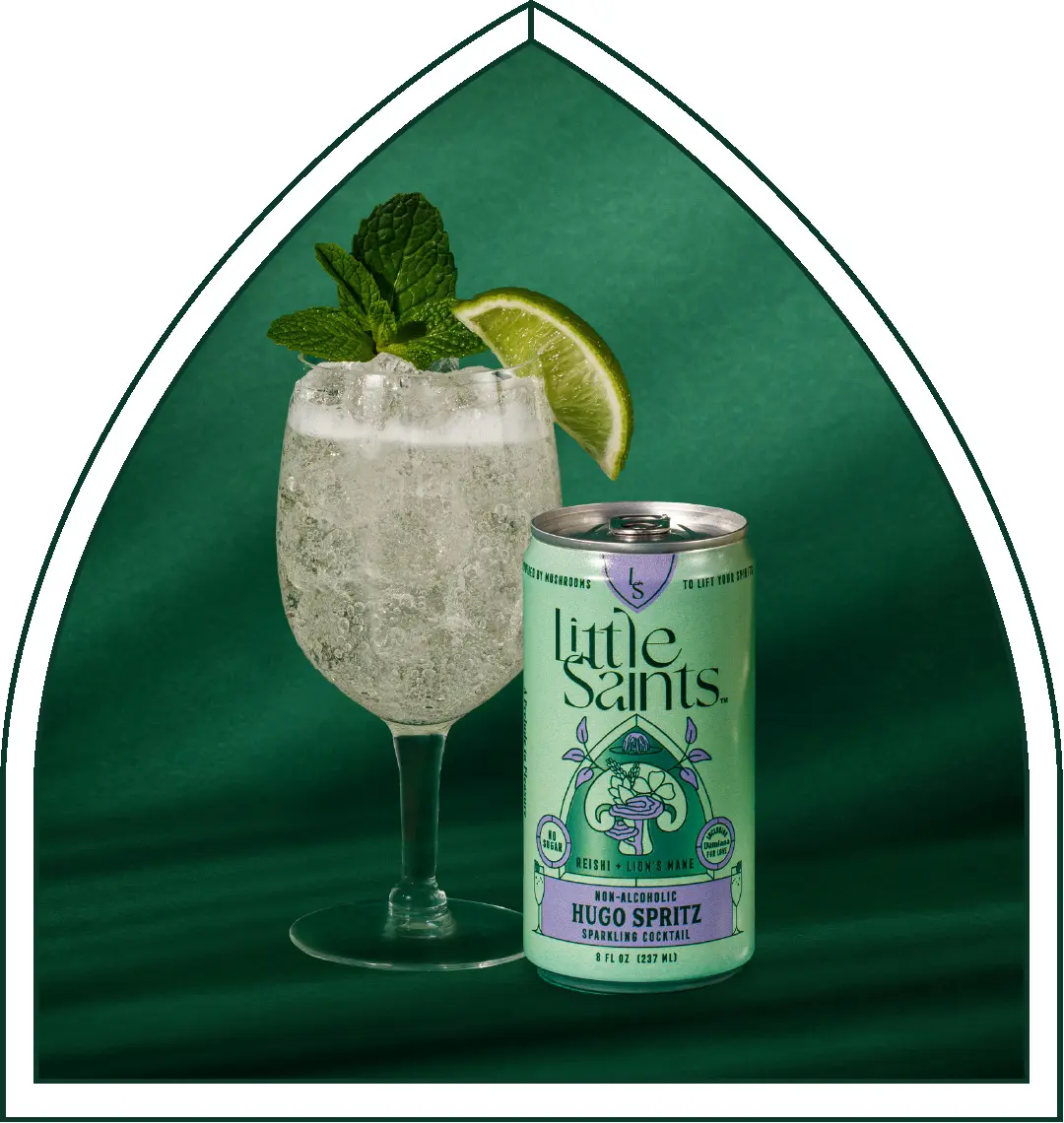
RTD Recommendation: Little Saints is the top pick for the evening occasion. Each can carries zero sugar, five calories, and a functional mushroom blend built specifically for the wind-down moment: organic Reishi, organic Lion's Mane, Damiana, and botanical terpenes. The mushroom extracts are USDA Organic, California-grown, ultrasound-extracted, and dosed at a stated 100 mg per serving at a minimum of 70% beta glucan, the fraction of the mushroom that carries its restorative properties, documented by supplier certificates of analysis. Little Saints was named #103 overall on the 2026 Inc. 5000 and the #1 beverage company on the list, and its St. Oak spirit was named Best NA Spirit of 2025 at the BevNET Spirit Awards.
DIY Recipe: Tart Cherry Nightcap
- 8 oz unsweetened tart cherry juice
- 2 oz sparkling water
- ½ oz fresh lime juice
- 1 cinnamon stick (for garnish)
Combine over ice and stir gently.
A 2025 systematic review found that tart cherry consumption increased exogenous melatonin levels and improved sleep duration and quality. This drink functions as a wind-down ritual that signals the day is over. For the evening occasion specifically, an RTD functional drink like Little Saints offers a sophisticated non-alcoholic cocktail experience with a real functional dose that is difficult to recreate at home without sourcing multiple supplement-grade ingredients separately.
These statements have not been evaluated by the Food and Drug Administration. This product is not intended to diagnose, treat, cure, or prevent any disease.
Shop Now — find the Little Saints evening non-alcoholic cocktail that fits your moment.
The Truth About Restorative Herbs and the Calm Question
Because calm is the most commonly claimed benefit in this category, it deserves a closer look at what the research actually supports. Restorative herbs like Reishi have a long history of traditional use and a growing body of research, and the evidence requires honest interpretation. As noted earlier, restorative herbs show adaptogenic effects at daily doses that typically range from the low hundreds to 1,000 mg over several weeks, which sits well above the amount in most single beverages.
The caffeine and L-theanine pairing discussed earlier remains the clearest example of a reliably reproducible nootropic combination. Trial data shows real, repeatable improvements in reaction time, focus, and executive function, even at doses as low as a normal cup of coffee. Restorative mushrooms like Reishi work through a different mechanism. Traditional use centers on supporting the body's stress response over time rather than delivering an immediate, strong sensation.
Little Saints describes the Little Saints Lift as a sense of clarity and ease and a feeling of being a little more present. That experience differs from intoxication. The products are non-intoxicating, non-psychoactive, and 100% legal. Restorative herb products can be worth choosing for reasons independent of label claims: as a behavioral aid, a ritual that changes how you end the day, or a convenient format for an already-proven ingredient. Choose them for those reasons and for clear labeling rather than for promises of dramatic clinical effects from a single serving.
Little Saints publishes what many brands do not. The company discloses a 100 mg mushroom dose per serving at a minimum of 70% beta glucan, backed by supplier certificates of analysis. At 70% beta glucan, the extract can reach up to 700 times the beta glucan concentration of a whole mushroom, which typically sits around 0.1% beta glucan. That level of transparency sets a useful standard for the category.
These statements have not been evaluated by the Food and Drug Administration. This product is not intended to diagnose, treat, cure, or prevent any disease.
Store-Bought vs. DIY: How to Choose
The table below summarizes the key differences across the brands featured in this guide so you can quickly match a product to your occasion.
| Brand | Sugar / Calories | Key Ingredients | Best For |
|---|---|---|---|
| Little Saints | 0g sugar, 5 cal per can | Organic Reishi, organic Lion's Mane, Damiana, botanical terpenes | Evening wind-down |
| Hiyo | Varies by flavor | L-theanine | Daytime calm |
| Kin Euphorics | Varies by flavor | Rhodiola, GABA, restorative botanicals | Social occasions |
| De Soi | Varies by flavor | L-theanine, passion flower | Apéritif hour |
| Hopwtr | 0g sugar, 0 cal | Hops, electrolytes | Hydration |
The decision framework comes down to occasion, time, and control:
- Choose RTD when you need portability, consistency, or a sophisticated flavor profile you cannot easily recreate at home. RTDs shine at parties, pool days, and travel.
- Choose DIY when you are hosting a crowd, want to control sugar and doses precisely, or enjoy the ritual of making drinks. DIY costs 60–85% less per serving than commercial functional beverages.
- The hybrid approach works well for many hosts. Keep a few RTD cans on hand for convenience and make DIY pitchers for gatherings. RTDs can serve as the non-alcoholic cocktail option, while a large-format punch covers the crowd-pleaser role.
Tips for Serving Functional Drinks at Summer Parties
Functional non-alcoholic drinks can feel like a highlight of your gathering with a few simple choices. You do not need a full bar setup to create that experience.
- Make a large-format punch. Scale up the Watermelon-Lime Electrolyte Cooler in a pitcher or dispenser. For an elevated option, use a Little Saints Classic Spritz as the base and float citrus wheels and fresh herbs on top.
- Offer a DIY garnish bar. Set out fresh mint, basil, rosemary, citrus wheels, berries, and edible flowers so guests can customize. This adds a sensory, ritual element that makes non-alcoholic options feel special rather than like a substitution.
- Label drinks by benefit. Use small chalkboard tags or printable cards that read "Calm," "Energy," "Hydration," or "Wind-Down." Guests can self-select based on their needs, and it sparks genuine conversation about functional ingredients.
- Serve in real glassware. The ritual matters. Functional non-alcoholic cocktails served in proper glasses, not plastic cups, signal that this is a drink worth choosing.
NIQ data shows that 47% of on-premise visitors mix alcoholic and non-alcoholic options in the same occasion, a behavior known as zebra striping. At a summer party, that means roughly half your guests already expect a non-alcoholic option at some point in the evening. A well-considered functional option now counts as good hosting.
Conclusion: Match Your Drink to Your Moment
The best functional non-alcoholic summer drink is the one that fits the occasion. Choose energy for daytime gatherings, calm for stressful afternoons, serious hydration for the heat, and a sophisticated wind-down for the evening. Both RTD and DIY options have a role. The key is choosing drinks with real, dosed ingredients and staying realistic about what a single serving can deliver.
For the evening occasion specifically, Little Saints delivers zero sugar, five calories, and a supplement-grade functional mushroom blend with a published dose, a level of transparency the category rarely provides. Explore the full range of non-alcoholic cocktails and spirits for a consistent, clearly labeled wind-down ritual.
Frequently Asked Questions
What makes a non-alcoholic drink "functional"?
A functional non-alcoholic drink goes beyond hydration and flavor by including bioactive ingredients such as restorative herbs, mushrooms, electrolytes, nootropics, or botanicals, dosed to support a specific outcome like energy, calm, or hydration. The distinction between a functional drink and an enhanced drink comes down to intent and dose. A functional drink names a specific benefit and delivers an ingredient at a meaningful amount. A drink that lists an herb in trace quantities without disclosing a dose relies on marketing rather than formulation.
The most reliable way to evaluate a functional drink is to look past the front panel and check the ingredient list for named doses in milligrams. Little Saints, for example, publishes a 100 mg mushroom dose per serving at a minimum of 70% beta glucan, documented by supplier certificates of analysis, which reflects a level of transparency that many brands in the category do not match.
Do functional non-alcoholic drinks actually work?
Effectiveness depends on the ingredient, the dose, and the outcome you measure. The evidence base is real and uneven. The caffeine and L-theanine combination has the strongest and most reproducible research behind it, with multiple trials showing improvements in focus and reaction time. Restorative herbs have a growing body of randomized controlled trial evidence for stress and anxiety reduction, and effects build over weeks of consistent use at doses of 300–600 mg daily. Reishi has a long history of traditional use as a restorative herb, with research ongoing.
The practical takeaway: functional drinks work best as one consistent part of a broader routine rather than as a one-time fix. Choosing a drink with a stated dose and a named ingredient forms the baseline requirement for any real effect. Proprietary blends with undisclosed amounts remain impossible to evaluate.
What is the difference between Little Saints canned cocktails and the St. spirits line?
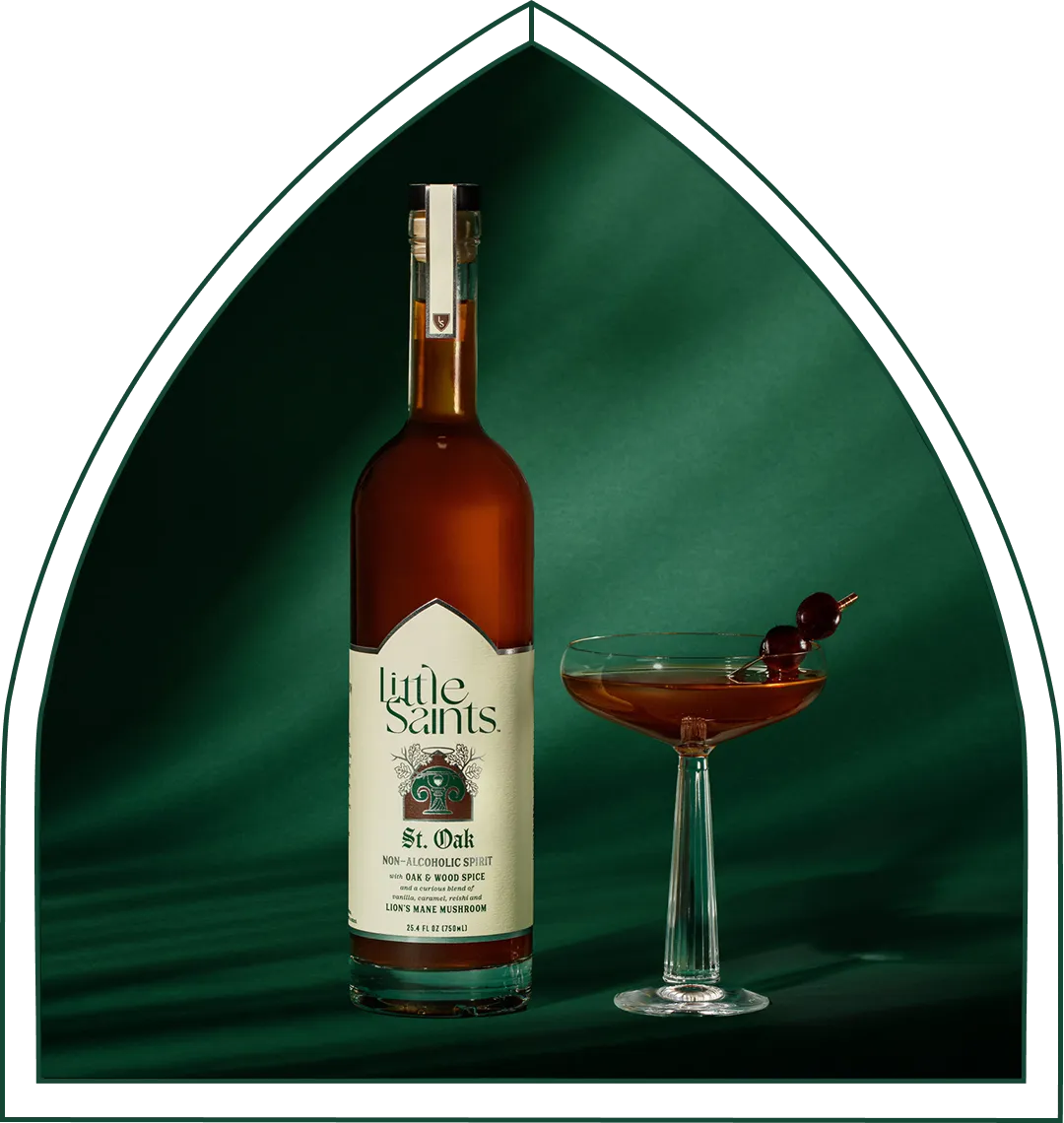
The two lines serve different use cases. The canned cocktails, including the Classic Spritz, Hugo Spritz, Classic Margarita, Paloma, Old Fashioned, Mojito, and Negroni Spritz, are finished non-alcoholic cocktails ready to pour over ice. They carry zero grams of sugar, five calories per can, and are sweetened with monk fruit juice concentrate. The functional blend in the cans is Reishi-forward.
The spirits, St. Ember, St. Juniper, and St. Oak, are ingredients built for mixing. They contain zero grams of sugar with no sweeteners at all and are formulated with oil-based craft extracts so they mix 1:1 in any classic cocktail recipe without over-pouring. The spirits are Lion's Mane-forward and carry a built-in heat from a cardamom extract plus capsicum that registers as a spirit rather than a cordial. Both lines carry the Nature's Neuroscience functional blend, which includes organic Reishi, organic Lion's Mane, Damiana, and botanical terpenes, at the published 100 mg dose per serving mentioned earlier.
Are functional non-alcoholic summer drinks safe for everyone?
For most healthy adults, the restorative herbs and botanicals commonly used in functional non-alcoholic beverages have solid safety profiles at typical beverage doses. Certain ingredients can interact with medications or may not be appropriate during pregnancy or breastfeeding. Some botanical extracts carry specific cautions and interaction considerations.
The standard guidance applies to any functional beverage: consult a physician before use if you are pregnant, nursing, taking medications, or managing a medical condition. These statements have not been evaluated by the Food and Drug Administration. These products are not intended to diagnose, treat, cure, or prevent any disease.
How do I choose between a ready-to-drink functional beverage and making my own?
The decision comes down to occasion, time, and what you value most. RTD functional drinks offer consistency, portability, and a flavor complexity, particularly in the spirits category, that is difficult to recreate at home without sourcing multiple high-quality ingredients. They fit best for travel, pool days, and occasions where you want a polished non-alcoholic cocktail experience without setup.
DIY drinks give you full control over sugar, dose, and cost. Homemade electrolyte coolers and herbal infusions cost a fraction of commercial options per serving and let you scale easily for a crowd. A hybrid approach works well for most hosts. Keep a few RTD cans for the non-alcoholic cocktail moment and make a large-format DIY pitcher for volume service. For the evening wind-down specifically, an RTD functional drink with a published dose, such as Little Saints, is difficult to match at home without buying several supplement-grade ingredients separately.
The statements made on our website have not been evaluated by the Food and Drug Administration, Our products are not intended to diagnose, treat, cure or prevent any disease. If you are pregnant, nursing, taking any medications or have any medical conditions, consult your doctor before use.