


Key Takeaways
- Functional beverages deliver targeted benefits for energy, gut health, focus, hydration, and relaxation through ingredients like adaptogens, nootropics, prebiotics, and electrolytes.
- The most trustworthy brands publish exact milligram doses, match clinically studied ranges, and provide third-party potency data instead of using proprietary blends.
- Energy drinks perform best when they pair 80–160 mg caffeine with 100–200 mg L-theanine, and gut-health sodas shine when they deliver 2–9 g prebiotic fiber per can.
- Lion’s Mane at 500–1,000 mg supports cognitive function, and relaxation drinks with 100 mg Reishi and Lion’s Mane extracts offer a calm evening wind-down.
- For zero-sugar, low-calorie non-alcoholic cocktails and spirits, Little Saints offers transparent 100 mg mushroom doses and COA-verified potency.
The Functional Beverage Boom: Market Context
The U.S. functional drinks market is projected to reach $56.7 billion in 2026 and $97.1 billion by 2033, growing at an 8% compound annual growth rate. Within that, non-alcoholic beverages reached $1 billion in off-premise sales in 2025, compounding at 21.9% year-over-year. Alternative sodas hold roughly 6% of total beverage share while driving 27% of category growth, which shows that shoppers pay for a benefit, not only a flavor.
80% of Gen Z and 75% of millennials consume functional beverages regularly, and 58% of U.S. consumers pay attention to ingredients while 52% will pay more for beverages that support their health goals. At the same time, 47% of U.S. adults feel overwhelmed by the functional beverage assortment. This guide reduces that overwhelm by organizing the category around the goal that matters most to the reader.
How to Choose: The Dose Transparency Test
Most functional beverages miss the mark because their doses are invisible, not because the ingredients are wrong. A label that says “contains Lion’s Mane” gives no clue whether the amount inside matches what clinical research actually studied. The Dose Transparency Test is a four-question framework for evaluating any functional beverage before purchase.
- Does the label state a specific milligram dose for each active ingredient?
- Does that dose match clinically studied ranges?
- Does the brand publish potency data, such as a beta glucan percentage for mushroom extracts?
- Is that potency documented by supplier certificates of analysis or third-party lab testing?
Evidence-based dose benchmarks for 2026 include L-theanine at 100–200 mg, Lion's Mane at 500–1,000 mg, and caffeine at 80–160 mg per serving. If a functional beverage uses “proprietary blend” language and hides individual ingredient doses, the amounts likely sit below clinical thresholds. A brand stating “100 mg of organic Reishi extract per serving” is more trustworthy than one that says only “contains Reishi.”
Brands that put a clinically studied dose of a named ingredient on the front of pack are winning shelf space and margin in 2026. Those are the products worth a consumer’s attention.
Best Functional Beverages for Energy
The energy segment remains the largest in the U.S. functional drinks market, holding a 54.47% revenue share in 2025. The category is shifting away from aggressive stimulant formulas toward what the industry calls “wellness energy,” which focuses on sustained alertness through adaptogens, B vitamins, L-theanine, and natural caffeine sources like guayusa, green tea, and yerba mate.
Caffeine at 80–160 mg per serving is the most evidence-backed energy ingredient in any beverage. The combination of caffeine and L-theanine has become one of the most scientifically validated and commercially popular functional ingredient pairings in the functional drinks industry. L-theanine moderates the jitter response while preserving alertness.
Category benchmarks include Celsius, which captured approximately 11.8% of the U.S. energy drink category through health-conscious positioning and natural caffeine sourcing. Nootropic energy drinks and mushroom coffees round out the segment, though many list adaptogenic ingredients without disclosing individual doses.
Best for: Morning coffee replacement, pre-work focus, afternoon energy without jitters.
Dose transparency note: Most energy drinks disclose caffeine content but hide adaptogen doses inside proprietary blends. A sub-clinical ingredient dose is decorative, not functional.
Best Functional Beverages for Gut Health
Prebiotic sodas have moved from niche to mainstream in under three years. Probiotic soda grew 79.13% year-over-year, with predicted additional gains of 38.5% in 2026. PepsiCo acquired Poppi for $1.95 billion, and Coca-Cola launched Simply Pop with 6 grams of fiber per can and no added sugar. These moves confirm the commercial mainstreaming of the category.
Olipop delivers 9 grams of prebiotic fiber per can from chicory root, Jerusalem artichoke, and cassava root. Leading brands hit 2 to 9 grams of prebiotic fiber per can, which makes fiber content the most consistently disclosed metric in this segment. Kombucha brands such as Health-Ade and GT's Living Foods offer probiotic cultures, though CFU counts are not consistently published.
A high-fiber diet has been shown to reduce the risk of cardiovascular disease, heart attacks, strokes, and type 2 diabetes. However, many registered dietitian nutritionists view probiotic drinks as “mostly marketing with little proven benefit,” largely due to challenges around bacterial stability and dosage. That perception remains a credibility risk for the category.
Best for: Daytime consumption, digestive support, replacing sugary soda.
Dose transparency note: Fiber content is usually disclosed, while probiotic CFU counts often are not. Brands that publish both earn higher marks on the Dose Transparency Test.
Best Functional Beverages for Hydration
The North American electrolyte drink market reached $17.82 billion in 2026, with powdered electrolytes holding 53.6% market share due to their portability and customizable dosing. That growth tracks with consumer behavior, as 39% of U.S. consumers are concentrating on hydration more than they were a year ago.
Category benchmarks include LMNT and Liquid I.V. Liquid I.V., acquired by Unilever, uses Cellular Transport Technology, a specific ratio of glucose, sodium, and potassium that activates the body's sodium-glucose cotransporter channels. The brand claims faster hydration than water alone. Current benchmarks for electrolyte drinks call for sodium levels of 300 to 1,000 mg per serving, alongside magnesium and potassium, with zero or low sugar.
Best for: Post-workout recovery, travel, illness, high-heat days.
Dose transparency note: Electrolyte brands generally disclose exact milligram amounts. This makes hydration the most transparent segment in the functional beverage category and a clear model for dose disclosure elsewhere.
Best Functional Beverages for Focus & Mental Clarity
Focus and cognitive drinks are the fastest-growing subcategory in the energy segment in 2026. Hero ingredients include L-theanine at 100–200 mg, Lion's Mane extract, alpha-GPC, and citicoline. Lion's Mane is benchmarked at 500–1,000 mg per serving for cognitive applications.
A 2023 systematic review of clinical trials (n=897) found that Lion's Mane supplementation significantly improved cognitive function in adults with mild cognitive impairment, with effects requiring 8–16 weeks of daily supplementation to manifest. Lion's Mane contains hericenones and erinacines that stimulate nerve growth factor synthesis. The THEA-HEAL trial tested 180 mg of L-theanine combined with 300 mg of Hericium erinaceus extract twice daily in university students over 8 weeks, which provides a studied benchmark for this ingredient pairing in a beverage-adjacent format.
Mindfuel Flow discloses 750 mg of Lion's Mane per can, an example of dose transparency in the focus segment. Four Sigmatic and Magic Mind also operate in this space, though individual ingredient doses are not always fully disclosed.
Best for: Deep work sessions, studying, creative projects, morning mental clarity.
Dose transparency note: This category has the widest gap between marketing and meaningful doses. Lion's Mane at 50 mg does not match study-backed levels, yet many products list it at that amount or lower. Always check the milligram figure against the 500–1,000 mg benchmark before purchasing.
Best Functional Beverages for Relaxation & Stress Relief
The evening wind-down is the occasion most functional beverages ignore. Nearly every caffeinated, energizing, or gut-health-focused drink is built for daytime use. The global relaxation beverage market is growing at an estimated 8.1% CAGR and is projected to reach $21.6 billion by 2030. Relaxation drinks increasingly take the place of alcohol in consumers' lives, helping them enjoy evenings and prepare for sleep while still fitting social settings.
The relaxation segment includes brands such as Hiyo, which offers 1.7 grams of adaptogens and nootropics per serving including L-theanine, Lion's Mane, lemon balm, passion flower, and ginger. De Soi lists adaptogens and botanicals without consistently publishing individual doses. Trip reached $100 million in revenue in 2025 with a blend of magnesium, Lion's Mane, and L-theanine. Kin Euphorics and Recess Mood also compete in this space.
Among these, Little Saints stands out for the evening wind-down occasion. Founded in 2021 by Megan Klein, Little Saints makes non-alcoholic cocktails and spirits built specifically for the evening moment that alcohol once dominated. The product line includes seven canned cocktails—Classic Spritz, Hugo Spritz, Classic Margarita, Paloma, Old Fashioned, Mojito, and Negroni Spritz—and three non-alcoholic spirits: St. Ember, St. Juniper, and St. Oak. The canned cocktails carry zero grams of sugar and five calories per can. The spirits also have zero sugar and no sweeteners, though their calorie count is not published.
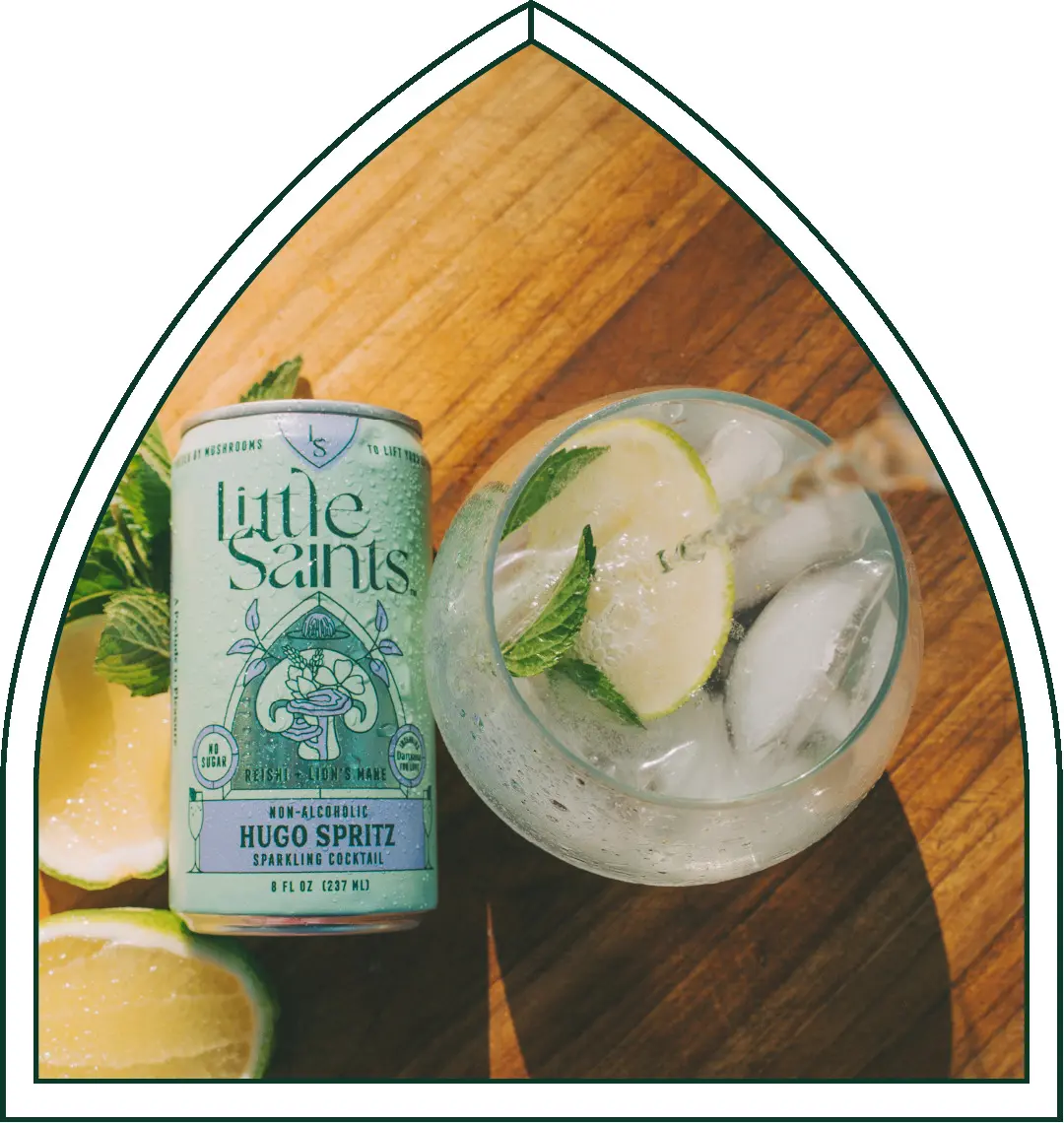
The brand's Nature's Neuroscience functional blend includes organic Reishi (“for chill”), organic Lion's Mane (“for focus”), Damiana (“for connection”), and botanical terpenes (“for the senses”). The mushroom extracts are dosed at a stated 100 mg per serving, at a minimum of 70% beta glucan, the fraction of the mushroom that carries its adaptogenic properties, documented by supplier certificates of analysis. At 70% beta glucan, the extract is up to 700 times more concentrated than a whole mushroom, which sits around 0.1% beta glucan. The mushrooms are USDA Organic, grown in California, and extracted with ultrasound rather than chemical solvents. The extract holds GRAS status, the FDA's standard of generally recognized as safe for an ingredient used in food.
Customers describe the experience as the Little Saints Lift, a sense of clarity and ease, feeling “a little bit lifted,” “more clear and relaxed,” and more present. The products contain no alcohol, so they are non-intoxicating and fully legal. St. Ember holds a 4.7/5 rating across 430 customer reviews on littlesaints.com, with 92% recommending it (August 2026 snapshot).
Best for: The evening wind-down, social occasions, replacing the second or third drink.
Best Functional Beverages as Alcohol Alternatives
47% of on-premise visitors mix alcoholic and non-alcoholic options in the same occasion, a behavior known as zebra striping, and 93% of non-alcohol buyers also purchase alcohol. The non-alcoholic shopper is usually choosing between a non-alcoholic option and nothing, not between a cocktail and a substitute.
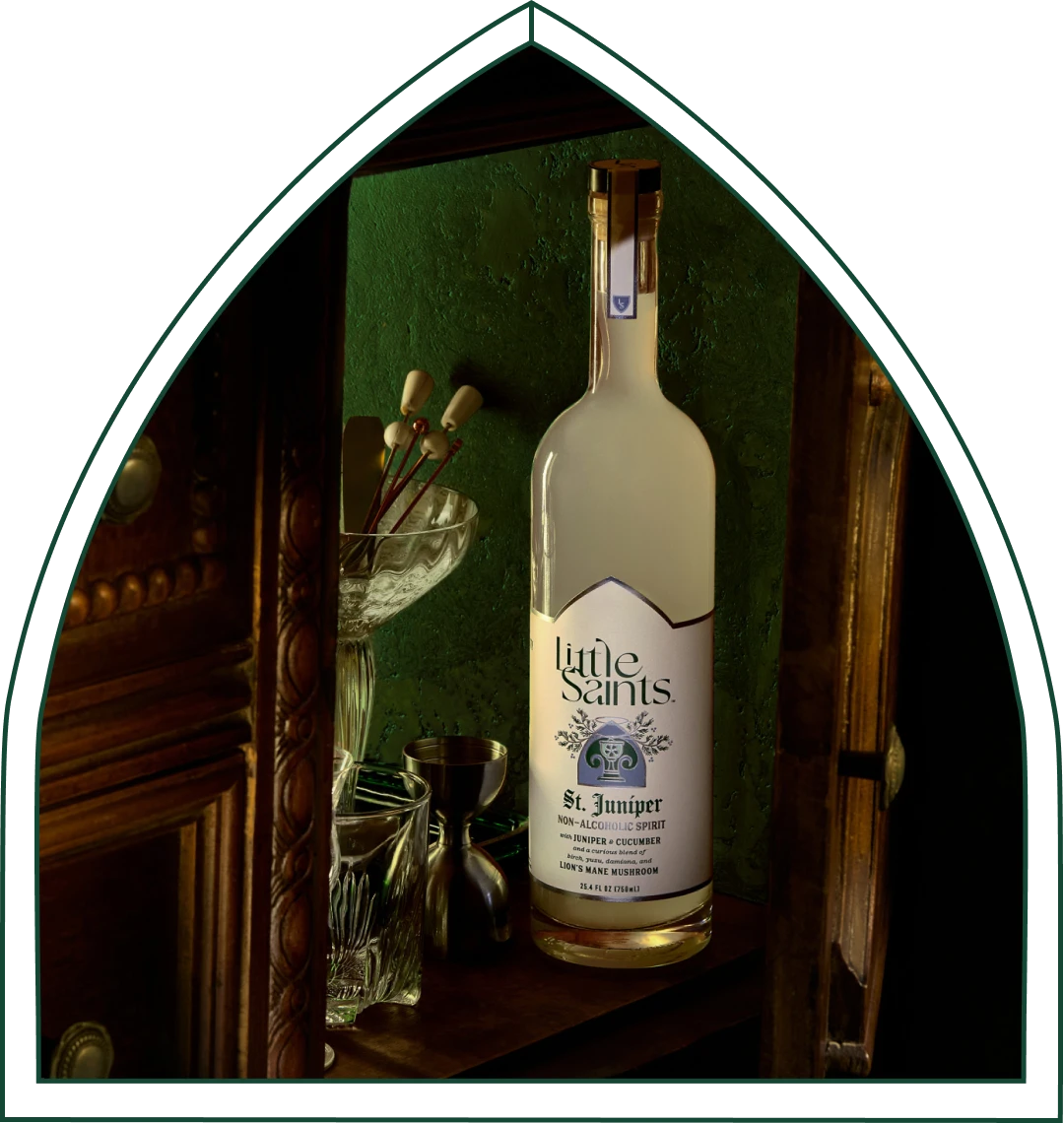
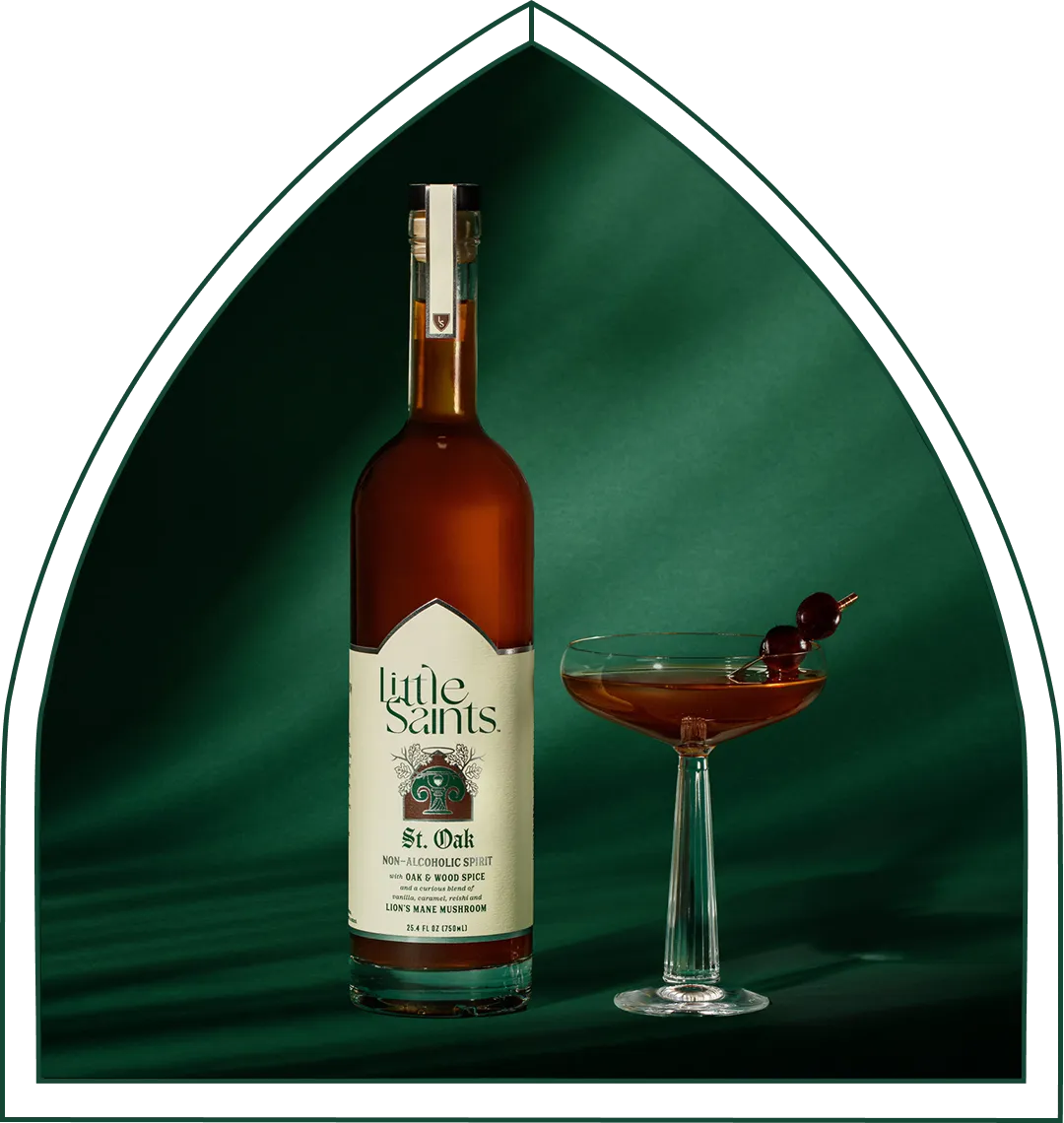
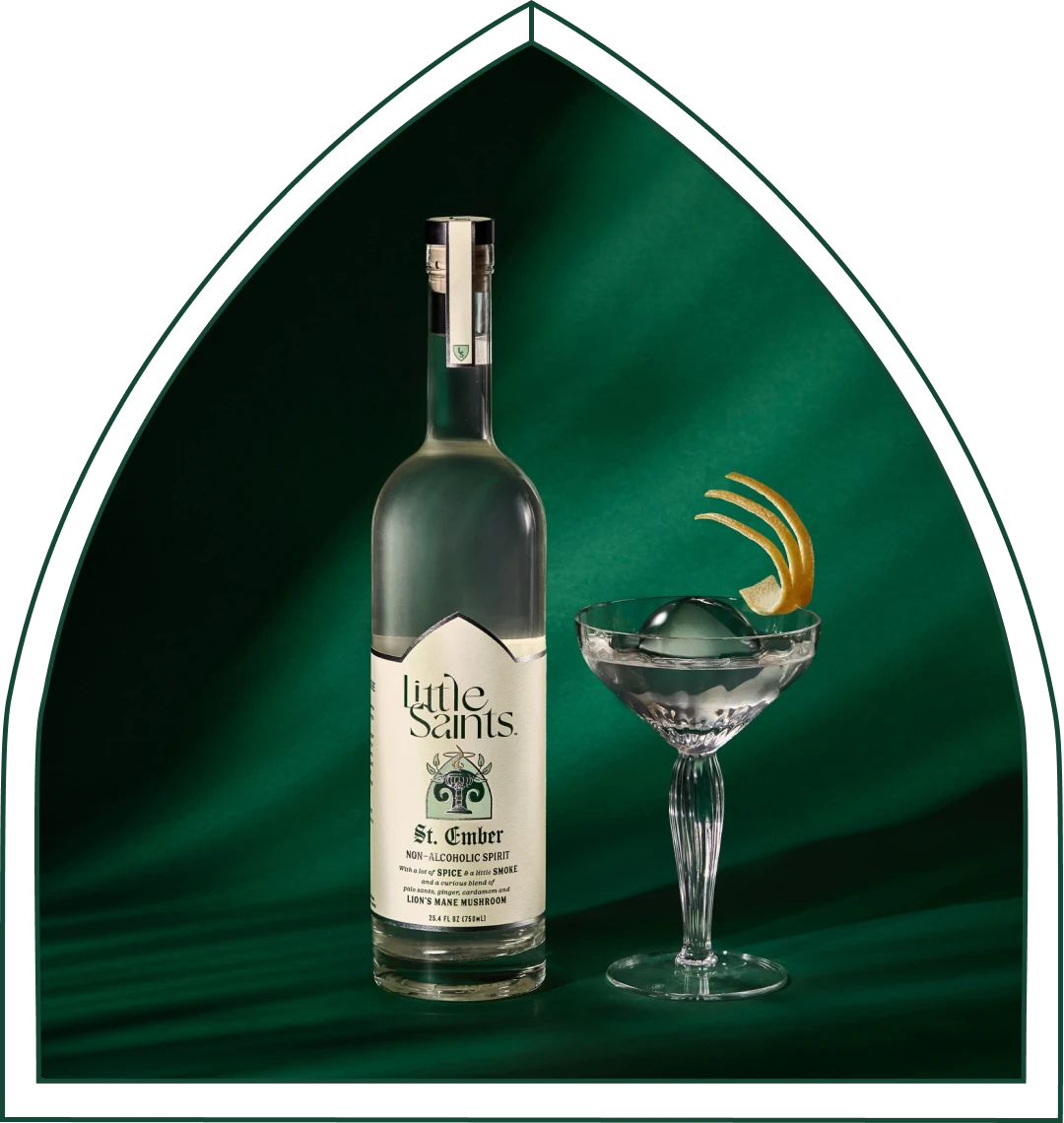
Non-alcoholic spirits are around 6% of the non-alcohol set but are growing at roughly 70%, the fastest-moving segment in the category. The first generation of non-alcoholic spirits was characterized by bartenders as “flavors in water” that diluted in a cocktail and required two to three times the pour volume. Little Saints addresses this with oil-based craft small-batch extracts that mix 1:1 in any classic cocktail spec. St. Ember mixes like a tequila or mezcal, St. Juniper mixes like a gin, and St. Oak, named Best NA Spirit of 2025 by the BevNET Spirit Awards, mixes like a whiskey. Two ounces replace two ounces, with no retraining required and no recipe adjustment needed.
Sugar-sweetened non-alcoholic cocktails and aperitifs offer flavor-forward profiles but often carry significant sugar. For a consumer focused on zero sugar, low calories, and a real functional dose at once, Little Saints is the only option in the category that delivers all three together.
Best for: Anyone who wants the ritual, flavor, and social experience of a cocktail without the alcohol and without the sugar.
Do Functional Beverages Actually Work?
Effectiveness depends entirely on the ingredient and the dose. Some functional beverage ingredients have strong clinical support. Others are emerging. Many products on the market contain doses too low to produce any measurable effect.
What research supports at meaningful doses:
- Electrolytes for hydration: The sodium-glucose cotransporter mechanism is well-established. Electrolyte drinks with disclosed sodium, potassium, and magnesium at evidence-based levels deliver measurable hydration benefits.
- Fiber for gut health: A high-fiber diet has been shown to reduce the risk of cardiovascular disease, heart attacks, strokes, and type 2 diabetes. Prebiotic sodas delivering 2–9 grams of fiber per can contribute meaningfully to daily fiber intake.
- Caffeine for energy: 80–160 mg per serving is the evidence-based range for alertness without overstimulation.
- L-theanine for calm focus: The combination of caffeine and L-theanine is one of the most scientifically validated functional ingredient pairings in the industry, with L-theanine at 100–200 mg moderating caffeine's stimulant effects.
What evidence is emerging and mixed:
- Lion's Mane: A 2023 systematic review (n=897) found significant cognitive improvement in adults with mild cognitive impairment, with benefits requiring 8–16 weeks of daily supplementation. The effective range in studies is 500–3,000 mg per day of fruiting body extract. A beverage listing Lion's Mane at 50 mg is not delivering a functional dose.
- Reishi: Traditional use as an adaptogen is well-documented, and research is ongoing. The brand's own language for Reishi's role focuses on a settling, exhale-and-arrive feeling rather than a clinical claim.
- Probiotics in beverages: Many registered dietitian nutritionists view probiotic drinks as “mostly marketing with little proven benefit” due to challenges around bacterial stability and dosage.
The dose problem is the central issue. As noted earlier, a sub-clinical dose is decorative, not functional. Little Saints publishes both the dose (100 mg per serving) and the beta glucan content (minimum 70%), documented by supplier certificates of analysis, which makes it easier for consumers to apply the Dose Transparency Test directly from the label.
These statements have not been evaluated by the Food and Drug Administration. This product is not intended to diagnose, treat, cure, or prevent any disease.
What Real Drinkers Say
That level of transparency aligns with what drinkers now expect. 73% of U.S. consumers want clinical research behind functional claims, and the brands earning repeat purchase are the ones delivering on their label promises. Across the category, common themes in consumer feedback include “tastes great,” “helps with bloating,” and “clean energy without jitters.” The most meaningful signal is whether a product earns a second purchase.
Little Saints customer reviews on littlesaints.com (August 2026 snapshot) consistently return to two words: clarity and ease. Customers describe feeling “a little bit lifted,” “more present,” and “super engaged.” Spirits drinkers in particular describe a sense of being “really present” and “giddy” without any impairment. The products contain no alcohol, so they are non-intoxicating and fully legal, with no effect on blood alcohol concentration (BAC, the measure of alcohol in the bloodstream).
Comparison Table: Top Functional Beverage Brands at a Glance
| Brand | Category | Key Ingredients | Dose Transparency |
|---|---|---|---|
| Little Saints | NA cocktails / spirits | Organic Reishi, organic Lion's Mane, Damiana (100 mg mushroom extract, minimum 70% beta glucan, COA-verified) | Yes |
| Olipop | Prebiotic soda | 9 g prebiotic fiber per can from chicory root, Jerusalem artichoke, cassava root | Yes |
| Poppi | Prebiotic soda | Apple cider vinegar, prebiotics | Partial |
| Health-Ade | Kombucha | Probiotic cultures, organic ingredients | Partial |
| LMNT | Electrolyte mix | Sodium, potassium, magnesium at exact mg per serving | Yes |
| Liquid I.V. | Electrolyte mix | Sodium, potassium, glucose (Cellular Transport Technology) | Yes |
| Magic Mind | Nootropic drink | Lion's Mane, cordyceps, L-theanine, caffeine | Partial |
| Brez | Adaptogen soda | Lion's Mane, L-theanine, adaptogens | Partial |
| Hiyo | Social tonic | L-theanine, Lion's Mane, lemon balm, passion flower, ginger (1.7 g total blend) | Partial |
| De Soi | NA aperitif | Adaptogens, botanicals | Partial |
Frequently Asked Questions
What are examples of functional beverages?
Functional beverages include any drink formulated to deliver a specific health or performance benefit through bioactive ingredients. Common examples include prebiotic sodas such as Olipop and Poppi, which deliver fiber for gut health; electrolyte mixes such as LMNT and Liquid I.V. for hydration; mushroom coffees and nootropic drinks for focus; relaxation tonics and non-alcoholic cocktails for the evening wind-down; and adaptogen-based drinks for stress support. Little Saints non-alcoholic cocktails and spirits are functional beverages built specifically for the evening occasion, carrying organic Reishi, organic Lion's Mane, Damiana, and botanical terpenes at a stated 100 mg dose per serving.
Do functional beverages actually work?
Effectiveness depends on the ingredient and the dose. Electrolytes for hydration, fiber for gut health, and caffeine for energy all have strong clinical support when delivered at meaningful doses. L-theanine at 100–200 mg combined with caffeine is one of the most validated pairings in the category. Lion's Mane has shown significant cognitive benefits in clinical trials, but those trials used 500–3,000 mg per day of fruiting body extract over 8–16 weeks, far more than the 50 mg found in many beverages. As discussed earlier, most functional drinks list ingredients without disclosing doses, which makes it hard to know whether the amount inside matches what research actually studied. The Dose Transparency Test, which checks for a stated milligram dose, a clinically relevant amount, and published potency data, is the most reliable way to evaluate any brand's label.
What is the healthiest drink to have daily?
Water remains the baseline. Beyond water, the healthiest daily functional beverage depends on the goal. For gut health, a prebiotic soda delivering 5–9 grams of fiber with low sugar is a meaningful addition. For hydration, an electrolyte mix with disclosed sodium, potassium, and magnesium levels supports daily fluid balance. For the evening wind-down, a non-alcoholic cocktail with zero sugar, five calories, and a supplement-grade functional mushroom blend, such as Little Saints, replaces the alcohol occasion without adding sugar or disrupting sleep. The common thread across all of these is a clean label with low or zero sugar, disclosed active ingredient doses, and no proprietary blends hiding sub-clinical amounts.
What drink gives you a lift without alcohol?
Little Saints non-alcoholic cocktails and spirits are built specifically for this occasion. The Nature's Neuroscience blend, which combines organic Reishi for chill, organic Lion's Mane for focus, Damiana for connection, and botanical terpenes for the senses, delivers what customers describe as the Little Saints Lift.
The statements made on our website have not been evaluated by the Food and Drug Administration, Our products are not intended to diagnose, treat, cure or prevent any disease. If you are pregnant, nursing, taking any medications or have any medical conditions, consult your doctor before use.