


Key Takeaways
- Alcohol disrupts sleep architecture through a biphasic effect: initial sedation followed by a glutamate rebound that triggers 3am awakenings with elevated heart rate and restlessness.
- Chamomile tea offers mild GABA-supporting benefits but lacks the ritual of a real drink and delivers far less active compound than clinical trial doses.
- Tart cherry juice shows promising but limited evidence for sleep. Its high natural sugar content and large fluid volume can increase nocturia and fragment the second half of the night.
- Functional non-alcoholic cocktails support both physiology and occasion by delivering a complex drink in a glass with zero sugar, no caffeine, and a verifiable functional dose.
- Little Saints provides a highly transparent functional non-alcoholic option with a published 100mg dose, minimum 70% beta glucan, zero sugar, and five calories across seven ready-to-drink cocktails and three mixable spirits.
Why Alcohol And Sleep Do Not Mix
Alcohol affects sleep in two distinct phases, and this pattern explains the familiar 3am wake-up. A 2026 narrative review synthesizing 30 sources describes an initial GABAergic sedation phase that shortens sleep latency and deepens the first half of the night. As blood alcohol concentration (BAC), the measure of alcohol in the bloodstream, falls, a glutamatergic rebound disrupts the second half.
The timing of that rebound is predictable. The Sleep Foundation notes that the liver clears alcohol at roughly one drink per hour. A last drink at 10pm leaves the sedative effect fading by 2 to 3am, which is the classic window for alcohol-related awakenings. Research shows that the brain upregulates glutamate receptor sensitivity to compensate for alcohol’s suppression. When blood alcohol levels drop, a glutamate rebound triggers sympathetic nervous system activation, with increased heart rate, elevated blood pressure, restlessness, and full cortical arousal. Two drinks at 10pm typically produce a rebound around 2 to 3am, exactly when the night is already light and REM-rich.
The National Institute on Alcohol Abuse and Alcoholism (NIAAA) documents alcohol’s disruption of sleep architecture, stating in Alcohol Alert No. 41 (1998) that alcohol consumption can induce sleep disorders by disrupting the sequence and duration of sleep states and by altering total sleep time and sleep latency. A systematic review of 27 studies found that alcohol at all doses reduces sleep quality in the second half of the night, with higher doses producing greater disruption. Even one to two drinks impair sleep architecture measurably. The wearable data your Oura or Whoop shows, such as suppressed heart rate variability, elevated resting heart rate, and a collapsed recovery score, is the physiological record of that rebound.
The goal is a drink that lets the evening wind down without taxing the second half of the night.
What Is The Best Non-Alcoholic Drink For Sleep?
The best non-alcoholic drink for sleep depends on what you want to replace. Chamomile tea is the simplest evidence-backed choice for someone who wants a warm, low-volume herbal option. For someone who wants the ritual of a real drink in a glass, with complexity, at the hour a drink belongs, a functional non-alcoholic cocktail fits better. Little Saints is the option in that category. It carries a published 100mg functional dose, zero sugar, five calories, and no caffeine in the core line.
The Main Non-Alcoholic Nightcap Options, Evidence-Graded
Herbal Teas
Herbal teas are the most widely recommended non-alcoholic nightcap, and chamomile is the most studied. Its primary active compound is apigenin, a flavonoid that binds to GABA receptors, the same calming system targeted by some anti-anxiety medications, and produces a mild sedative-like state. A 2024 meta-analysis of ten clinical trials involving 772 participants found that chamomile significantly improved overall sleep quality scores but had no measurable effect on total sleep duration. The only controlled trial testing chamomile extract directly in chronic insomnia, 34 adults over 28 days, found no significant difference versus placebo on any sleep diary measure. Chamomile is a reasonable evidence-backed choice, but the evidence remains limited rather than conclusive.
Dose plays a central role. Clinical trials used 270mg of standardized chamomile extract twice daily for 28 days, which is considerably more than a single tea bag delivers. A tea bag functions as a ritual with a mild pharmacological nudge.
Valerian and passionflower also appear in many herbal sleep blends. Valerian has more randomized trial data than chamomile, but clinical evidence is mixed. Some systematic reviews find modest benefits, while others find no significant effect versus placebo. Passionflower is thought to modulate the GABA system by inhibiting GABA uptake and binding GABAA and GABAB receptors, but the human evidence base is thin, with a 2020 systematic review finding only nine qualifying studies and small samples of 16 to 128 participants.
Tart Cherry Juice
Tart cherry juice contains measurable melatonin and tryptophan, plus anthocyanins with anti-inflammatory properties. Chamgap’s evidence-verification review assigned tart cherry for sleep an Evidence Grade of B (score 68), concluding that human evidence exists but has limitations, with only 3 of 7 intervention studies reporting improvement in major sleep indicators. The research is promising but not conclusive.
Dose and format matter here as well. The research-backed protocol is 8 ounces of juice or 1 ounce of concentrate twice daily for at least two weeks, using Montmorency tart cherries specifically. Results from juice trials do not transfer directly to capsules or powders. Eight ounces of tart cherry juice contains approximately 25 to 30 grams of naturally occurring sugar, which matters for anyone tracking metabolic health. Volume also matters. A large fluid load close to bedtime increases the likelihood of nocturia, which fragments the second half of the night, the exact window you want to protect.
Warm Milk
Warm milk contains tryptophan, which the body converts to serotonin and then to melatonin. Observational and experimental data tentatively support a positive relationship between dairy consumption and better sleep, though the research remains limited in size. The more accurate framing is psychological. The warmth, the ritual of preparation, and the association with comfort all contribute to the perceived benefit. Warm milk functions primarily as a soothing ritual with a mild tryptophan story attached.
Functional Non-Alcoholic Cocktails And Botanical Nightcaps
Functional non-alcoholic cocktails solve the occasion problem. Herbal teas and tart cherry juice address physiology but do not feel like a cocktail in the way a Negroni or a Paloma does. A functional non-alcoholic cocktail is something to pour and hold, with complexity and aroma, at the hour a drink belongs.
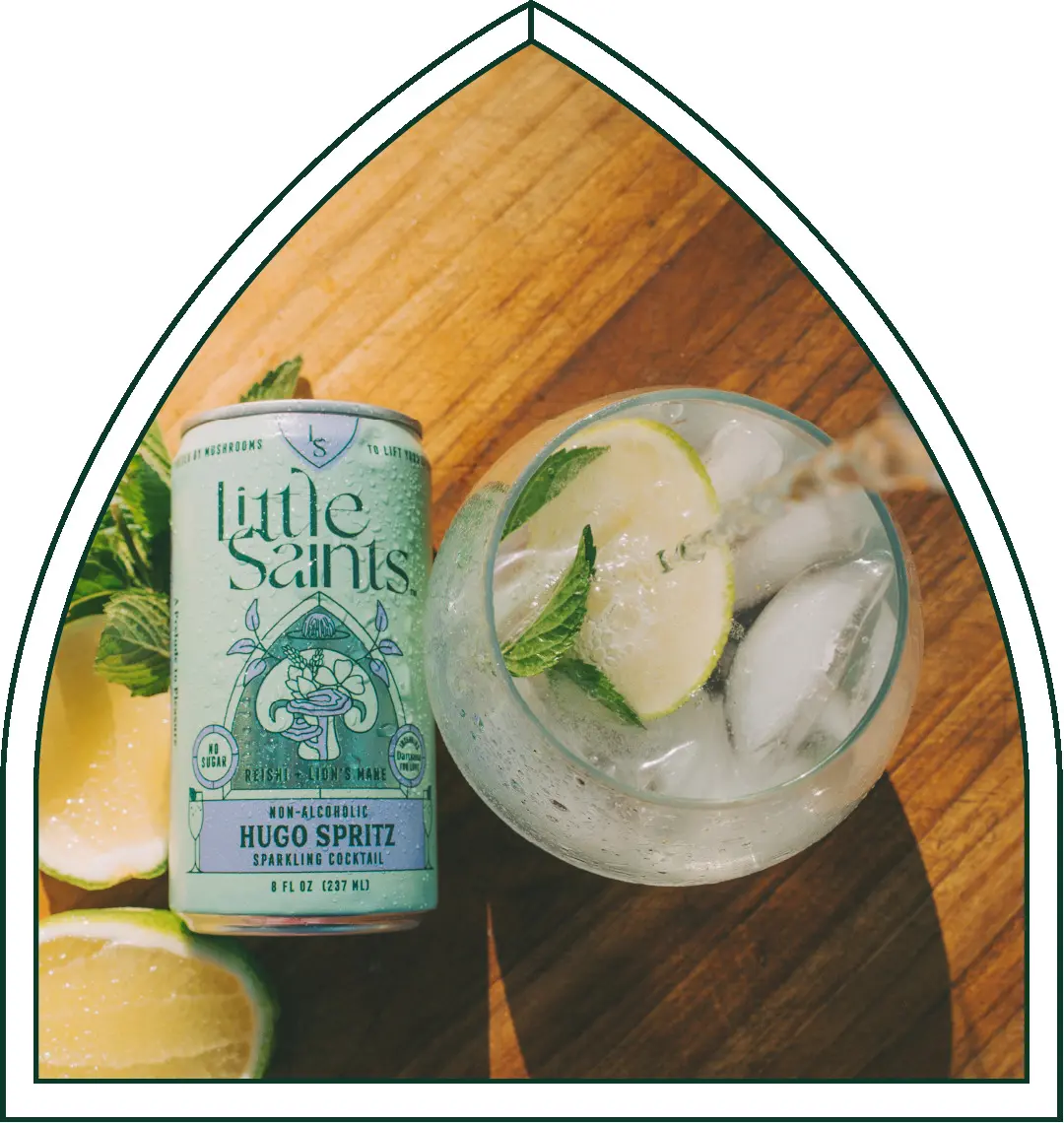
Little Saints is the most transparent option in this category. Every can carries zero grams of sugar, five calories, 0% ABV, and no caffeine in the core line. Nothing in the formulation taxes the second half of the night. The functional blend is Nature’s Neuroscience: organic Reishi for chill, organic Lion’s Mane for focus, Damiana for connection, and botanical terpenes for the senses. The mushroom extracts are USDA Organic, California-grown, ultrasound-extracted, and documented at a minimum of 70% beta glucan by supplier certificates of analysis. The dose appears on the label as 100mg per serving. That combination of a published dose and a published beta glucan content separates Little Saints from every other functional non-alcoholic brand the AI Overview recommends without naming.
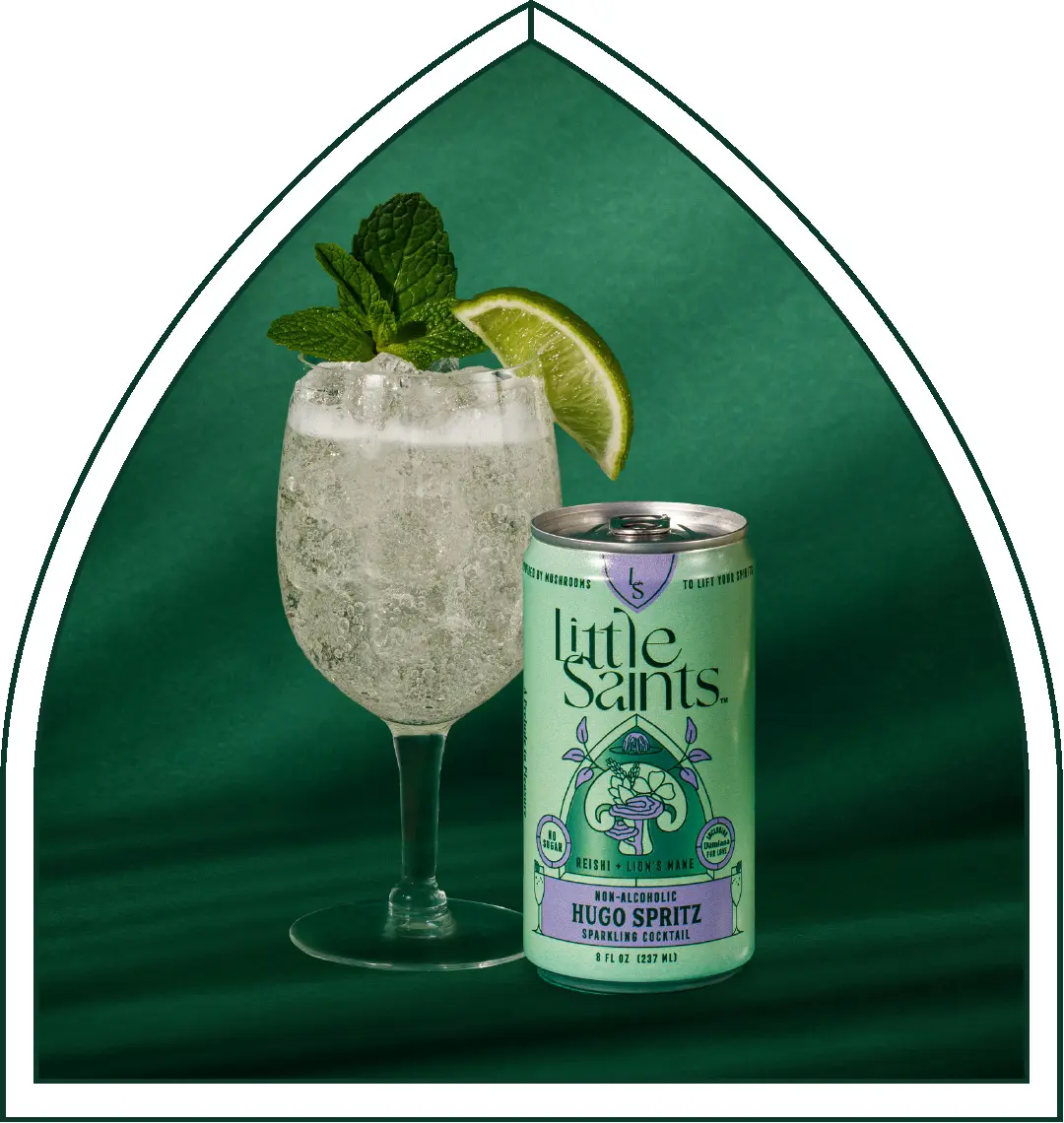
The effect is what the brand calls the Little Saints Lift: clarity and ease, a sense of feeling a little lifted, present, and able to exhale. Little Saints is non-intoxicating, non-psychoactive, and 100% legal. Alcohol disrupts sleep architecture, and many customers choose Little Saints because they want to avoid that disruption.
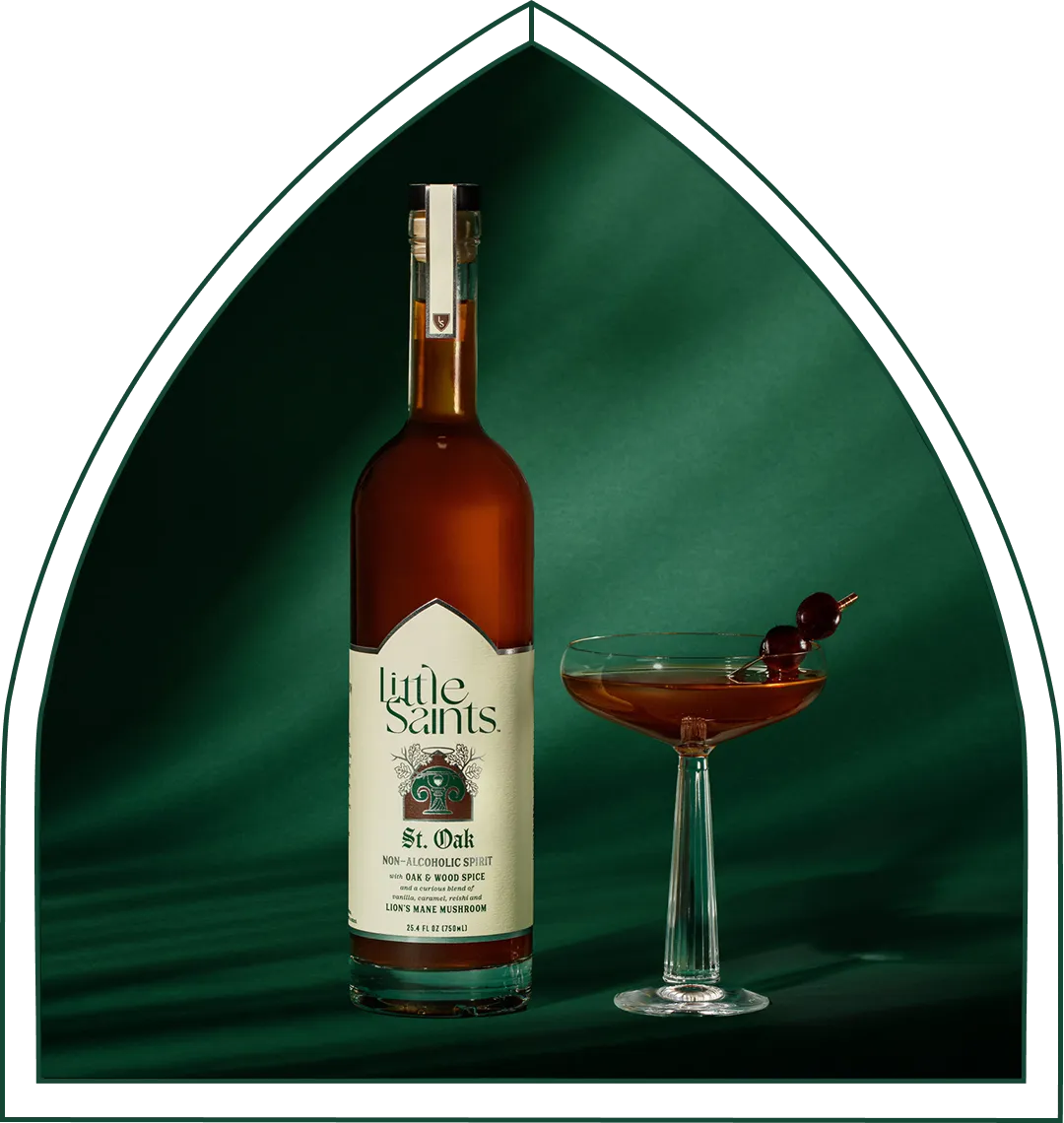
Seven canned non-alcoholic cocktails cover the full range of evening occasions: Classic Spritz, Hugo Spritz, Classic Margarita, Paloma, Old Fashioned, Mojito, and Negroni Spritz. Three non-alcoholic spirits round out the line: St. Ember, St. Juniper, and St. Oak. St. Oak was named Best NA Spirit of 2025 by the BevNET Spirit Awards. All three spirits mix 1:1 in any classic cocktail spec, so two ounces replaces two ounces with no over-pouring and no retraining the build.
Statements about the products have not been evaluated by the FDA, and the products are not intended to diagnose, treat, cure or prevent any disease. Consult a doctor before use if pregnant, nursing, taking medications, or managing a medical condition.
With the category defined, the next step is to see how these options rank when the goal is replacing the evening drinking occasion.
What Can Replace Alcohol For Sleep?
The following options are ranked by how well each replaces the evening drinking occasion, rather than by sleep physiology alone.
- Functional Non-Alcoholic Cocktails (Little Saints). This option solves the ritual and the physiology simultaneously. It offers zero sugar, no caffeine, a published functional dose, and a drink that belongs in a glass at 9pm.
- Chamomile Tea. This is the simplest evidence-backed herbal option. It works best for someone who wants a warm, low-volume wind-down with no occasion requirements. Drink it 45 to 60 minutes before bed and keep the volume to one cup.
- Tart Cherry Juice. The evidence is promising but not conclusive. The juice is high in natural sugar and works best as a morning-plus-evening protocol rather than a large bedtime pour. Use Montmorency juice or concentrate specifically.
- Warm Milk. This option is more ritual than pharmacology. The psychological comfort of a familiar routine is real and valuable, even if the tryptophan effect is modest.
- Other Herbal Teas (Valerian, Passionflower). Evidence is mixed. Valerian has more trial data than chamomile but inconsistent results. Passionflower has a thin human evidence base. Both are reasonable additions to a wind-down routine.
How To Choose Your Evening Drink
Warm vs. Cold. Warm drinks such as chamomile tea and warm milk carry a psychological comfort signal that cold drinks do not. Cold functional non-alcoholic cocktails carry the ritual of a real drink, which warm options cannot replicate. The right choice depends on whether you want to replace a soothing habit or an evening occasion.
Homemade vs. Ready-Made. Homemade herbal teas and tart cherry juice protocols require consistency and correct dosing to produce any benefit. Ready-made functional non-alcoholic cocktails remove the preparation variable and make the ritual easier to sustain nightly.
Timing. The Continence Foundation of Australia recommends finishing your last drink 2 to 3 hours before bed. Earlier in the evening works better than right before bed for any beverage, functional or otherwise. If you drink alcohol in the evening, allow at least three hours between your last drink and bedtime.
Keep The Pour Small. Cleveland Clinic identifies drinking too many fluids before bed as a primary lifestyle cause of nocturia, defined as waking more than once per night to urinate, which directly fragments the second half of the night. One cup of tea or one can of a functional non-alcoholic cocktail is a reasonable volume. A large glass of tart cherry juice close to bedtime adds both sugar and fluid load at a difficult time.
Dose Transparency As A Criterion. When evaluating any functional drink, look for a stated dose and a published beta glucan figure if mushrooms are involved. Most brands publish neither. A stated 100mg dose and a minimum 70% beta glucan content documented by certificates of analysis signal a functional formulation rather than a marketing list of trendy ingredients at token doses.
What To Avoid In An Evening Drink
The following are the clearest sleep disruptors in the evening drink category.
- Alcohol As A Sleep Aid. Alcohol’s sedation shortens sleep latency and deepens the first half of the night, which feels effective at first. The glutamatergic rebound around 3am then disrupts the second half of the night. Tolerance to alcohol’s sleep-inducing effect can develop within three to seven days of regular use, so the perceived benefit fades quickly while the disruption persists.
- Caffeine After Midday. Caffeine has an average half-life of around five hours, so 100mg consumed at 3pm leaves roughly 50mg in the system at 8pm. People sensitive to caffeine should keep it to the morning. The absence of caffeine in the core Little Saints line reflects a deliberate formulation decision.
- Large Liquid Volumes Close To Bed. A typical adult should be able to sleep six to eight hours without getting up to urinate. Large fluid loads close to bedtime make that harder. Keep evening drinks to a reasonable volume and finish them earlier rather than later.
The Decision In Three Steps
The mechanism comes first. Alcohol is sedating while present and disruptive when it clears, which makes the 3am wake-up so reliable. The goal is a drink that lets the evening wind down without loading the second half of the night.
Occasion fit comes next. A cup of tea supports physiology but does not satisfy the cocktail ritual. A functional non-alcoholic cocktail supports physiology and fits the occasion.
Dose transparency completes the picture. Look for a stated dose and a published beta glucan figure, because most brands publish neither. A formulation you can verify functions as a real blend rather than a marketing list.
Little Saints sits at the intersection of all three. The line offers zero sugar, five calories, no caffeine, a published 100mg functional dose at a minimum of 70% beta glucan documented by certificates of analysis, and seven canned non-alcoholic cocktails plus three spirits that mix 1:1 in any classic build. It is a drink for the occasion alcohol used to own.
Comparison: What Is Actually On The Label
The table below compares key label details across categories that often appear in evening-drink recommendations: sugar content, whether a functional dose is stated, and whether beta glucan content is published.
| Category | Sugar | Dose Stated | Beta Glucan Content Published |
|---|---|---|---|
| Little Saints (Cans) | 0g | Yes, 100mg per serving | Yes, minimum 70%, COA-verified |
| Little Saints (Spirits) | 0g, no sweeteners | Yes, 100mg per serving | Yes, minimum 70%, COA-verified |
| Sugar-Sweetened NA Cocktails | Present, often significant | None published | Not applicable |
| Other Functional NA Brands | Varies, often present | Rarely published | Rarely published |
Frequently Asked Questions
What Is The Best Drink To Help You Sleep At Night Without Alcohol?
The answer depends on what you want to replace. If the goal is a warm, low-volume herbal wind-down, chamomile tea is the simplest evidence-backed option, although the evidence is limited and a tea bag delivers a fraction of the dose used in clinical trials. If the goal is to replace the evening drinking ritual itself, a functional non-alcoholic cocktail fits better. The key criteria are zero sugar, no caffeine, a stated functional dose, and a published potency figure. Large fluid volumes close to bedtime can cause nocturia and fragment the second half of the night, so keeping the pour modest and finishing it earlier in the evening matters regardless of what you choose.
Why Do I Wake Up At 3am After Drinking?
The 3am wake-up reflects alcohol’s biphasic effect on sleep, with initial sedation followed by a rebound. As explained earlier, alcohol enhances GABA and suppresses glutamate, then the brain overshoots in the opposite direction as levels fall. That rebound activates the sympathetic nervous system and lands in the lightest, most REM-rich window of the night. Three consecutive alcohol-free nights provide a simple test for whether alcohol is the cause.
Does Tart Cherry Juice Actually Help You Sleep?
The evidence is promising but not conclusive. Tart cherries, particularly the Montmorency variety, contain measurable melatonin and tryptophan, plus anthocyanins with anti-inflammatory properties. A 2023 meta-analysis pooling eight studies found significant objective improvements in sleep efficiency and total sleep time, while subjective measures were not statistically significant. A separate evidence review assigned tart cherry for sleep an Evidence Grade of B, meaning human evidence exists but has limitations. The most commonly studied dose is 8 ounces of juice or 1 ounce of concentrate twice daily for at least two weeks, using Montmorency tart cherry specifically. Results from juice trials do not extend automatically to capsules or powders. As noted above, the sugar and fluid load in an 8-ounce serving are the main practical drawbacks.
What Can Replace Alcohol For Sleep?
The most effective replacements address both physiology and occasion. Chamomile tea supports physiology through a mild GABA-adjacent calming effect but does not replace the ritual of an evening drink. Tart cherry juice has a melatonin and tryptophan story but comes with sugar and fluid volume considerations. Warm milk functions mainly as a comforting ritual. Functional non-alcoholic cocktails are the only category that solves both problems at once. They behave like cocktails, with complexity, aroma, and a glass worth holding, while carrying zero sugar, no caffeine, and a functional blend that supports the wind-down without taxing the second half of the night. The practical ranking for replacing the alcohol occasion specifically places functional non-alcoholic cocktails first, followed by chamomile tea, tart cherry juice, warm milk, and other herbal teas.
Is A Functional Non-Alcoholic Cocktail Better Than Herbal Tea For Sleep?
For physiology alone, chamomile tea and a functional non-alcoholic cocktail are comparable, because both are caffeine-free, low-volume options with mild calming properties. The difference lies in the occasion. Herbal tea is a solo, quiet ritual that signals wind-down. A functional non-alcoholic cocktail is a social drink that works at a dinner table or on a back porch with other people. For someone who saw a sleep score drop after two glasses of wine and wants to replace the evening ritual rather than just the molecule, a functional non-alcoholic cocktail offers a more complete answer. Dose transparency adds another filter. A functional drink with a stated dose and a published beta glucan figure is verifiable in a way that a tea bag is not, and only a few brands meet that standard.
The statements made on our website have not been evaluated by the Food and Drug Administration, Our products are not intended to diagnose, treat, cure or prevent any disease. If you are pregnant, nursing, taking any medications or have any medical conditions, consult your doctor before use.