


Key Takeaways
- Adaptogen sparkling drinks are non-alcoholic, carbonated beverages with herbs and mushrooms like Reishi and Lion’s Mane for evening wind-down or afternoon lift.
- Most products in this category do not disclose milligram doses or beta glucan potency, so shoppers cannot verify functional claims from the label alone.
- Key label checks include sugar grams, calories, caffeine content, stated milligram dose, and published extract concentration for meaningful comparisons.
- Evening-focused products work best caffeine-free, while daytime options typically include caffeine paired with adaptogens for focus.
- Little Saints publishes a 100mg functional dose at a minimum 70% beta glucan, with zero sugar and five calories per can.
How To Read Any Can Of Adaptogen Sparkling Drinks
Check five facts on the label before you buy any adaptogen sparkling drink.
- Grams of sugar. Many non-alcoholic cocktails and sparkling drinks carry significant added sugar. A regular soda runs 35–40 grams per can. Check the Nutrition Facts panel, not the front of the package.
- Calories. Sugar and calorie counts move together. Five calories and zero grams of sugar sit at the low end of what this category can achieve. Most products land well above that mark.
- Caffeine or no caffeine. Caffeine works against an evening wind-down. Most daytime functional drinks carry it. The label should say “no caffeine” or list the amount clearly. Silence on caffeine does not confirm zero.
- Whether a dose is stated in milligrams. A can that lists “Reishi mushroom extract” without a milligram figure asks you to take the benefit on faith. For a health supplement making a functional claim based on a vitamin and/or mineral, the ASEAN Guidelines recommend containing a minimum of 15% Codex NRV (Nutrient Reference Value) per daily dose of the vitamin and/or mineral to qualify as a source of that nutrient.
- Whether a potency or extract concentration is published. A dose in milligrams tells you how much is in the can. A beta glucan percentage tells you how concentrated that extract is. Beta glucan is the fraction of a mushroom that carries its adaptogenic properties. Without both figures, a buyer cannot distinguish a concentrated fruiting-body extract from a mycelium-on-grain powder where much of the weight is grain starch.
A can that publishes neither a dose nor a potency asks the buyer to take it on faith, and that is common in this category. Because so few products disclose those figures, the ranking below focuses on what a shopper can verify on the label and how well each option fits the evening occasion. No product is scored numerically.
The Best Adaptogen Sparkling Drinks, Ranked By Occasion
Caffeine-Free Evening Wind-Down Adaptogen Sparkling Drinks
Little Saints — Top Pick For The Evening Occasion
What It Is: A line of non-alcoholic cocktails and spirits built on organic Reishi, organic Lion’s Mane, Damiana, and botanical terpenes. Every can carries zero grams of sugar and five calories. The core line is caffeine-free, and the label publishes a 100mg functional dose per serving at a minimum of 70% beta glucan, documented by certificates of analysis from the supplier.
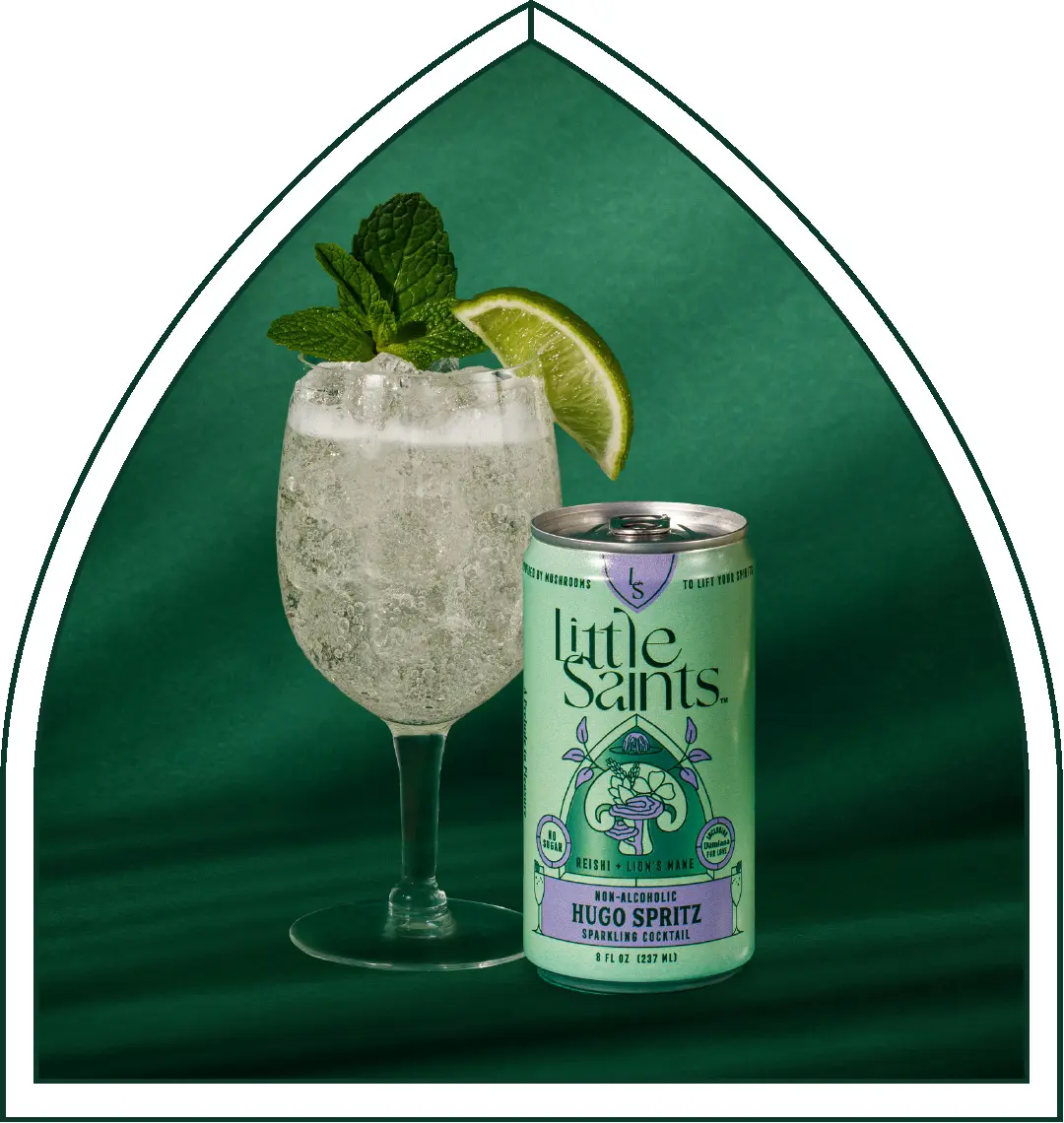
Who It’s For: Anyone who wants the ritual of a cocktail at the end of the day without alcohol, sugar, or next-morning cost, and who wants to verify what they are actually drinking.
The functional blend centers on four components with defined roles: Reishi for chill, Lion’s Mane for focus, Damiana for connection, and botanical terpenes for the senses. The mushrooms are USDA Organic, grown in California, and extracted with ultrasound rather than chemical solvents. The extract holds GRAS status, the FDA’s standard of generally recognized as safe for an ingredient used in food. The supplier’s extracts undergo third-party lab analysis for potency, with certificates of analysis documenting the 70% beta glucan figure.
Little Saints describes the experience as the Little Saints Lift: a sense of clarity and ease, a little lifted, like the first sip of wine. The effect stays subtle and does not promise a sensation the product cannot deliver.
The format range covers seven canned non-alcoholic cocktails — Classic Spritz, Hugo Spritz, Classic Margarita, Paloma, Old Fashioned, Mojito, and Negroni Spritz. It also includes three non-alcoholic spirits: St. Ember (spicy and smoky, built for tequila and mezcal cocktails), St. Juniper (herbaceous, built for gin serves), and St. Oak (oak, vanilla, and spice, built for whiskey cocktails). St. Oak was named Best NA Spirit of 2025 by the BevNET Spirit Awards. The spirits use oil-based craft extracts that mix 1:1 in a classic cocktail, so two ounces replace two ounces without changing the spec.
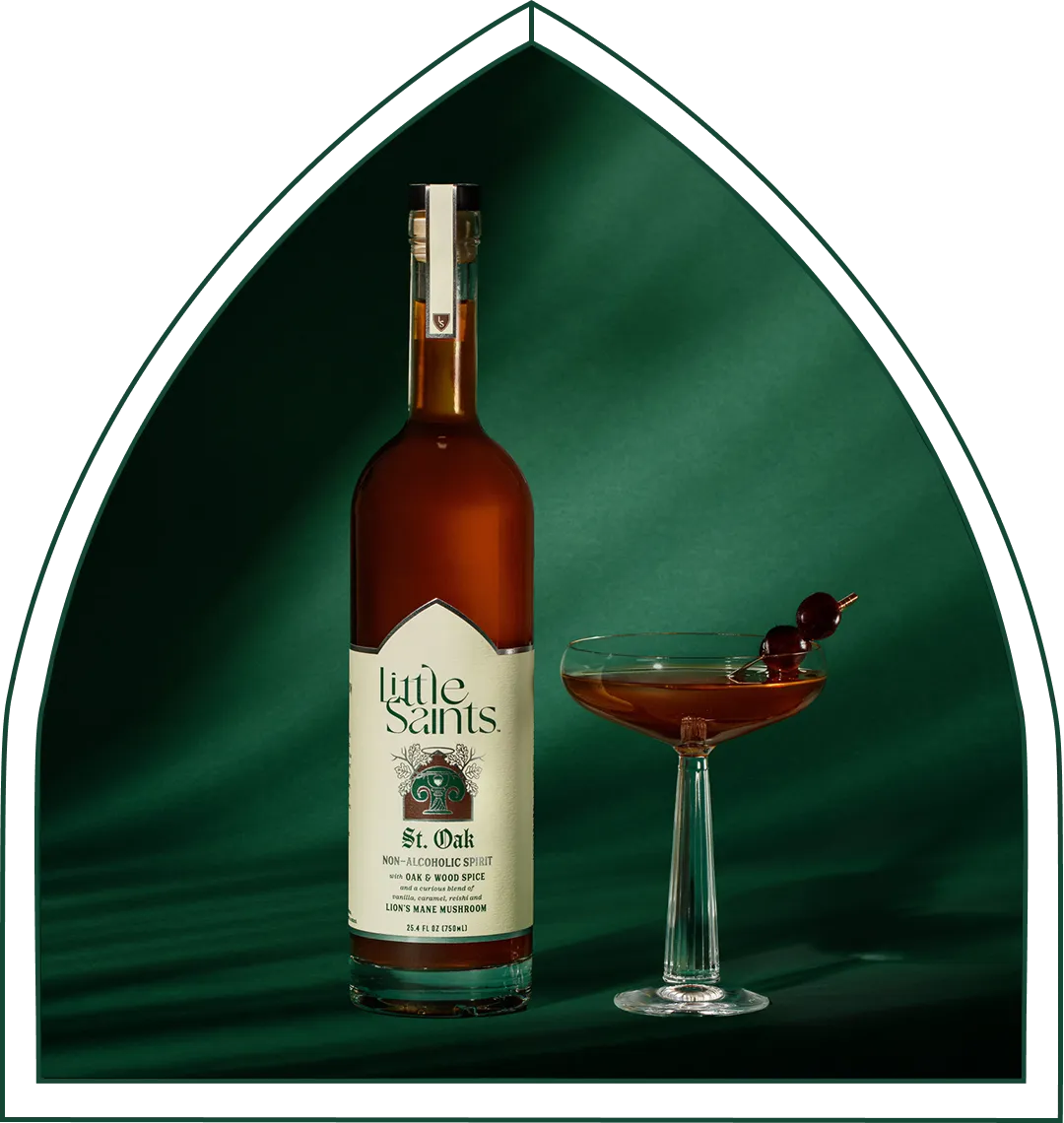
Little Saints ships direct to consumers in all 50 states from two warehouses, typically within three days, and is stocked in over 1,000 retail shops, grocery stores, liquor stores, bars, and restaurants nationally, including Sprouts in all doors, Whole Foods in California and Florida, Fresh Thyme in the Midwest, and ABC Liquors in Florida.
Lightly Caffeinated Daytime Adaptogen Sparkling Drinks
Not every adaptogen sparkling drink is built for the evening. A second group targets the afternoon desk occasion instead, and the label criteria shift once caffeine enters the can.
What They Are: Carbonated functional drinks formulated for daytime use, most carrying caffeine alongside adaptogenic or nootropic ingredients.
Who They’re For: Someone looking for an afternoon lift at the desk, not a wind-down at the end of the day.
Label Facts To Check: Caffeine content typically lands around 80–100mg per can in this group, though amounts vary widely, and Mayo Clinic data shows energy drinks average about 79mg per 8oz serving. Sugar content varies widely. Check whether a dose is stated in milligrams and whether any extract concentration appears. Most products in this group do not publish a dose or a beta glucan percentage. Where those figures are not on the label, they are not stated, and that absence is the finding.
This guide centers on the evening group. If the occasion is the end of the day, the daytime set belongs on a different shelf.
Do Adaptogen Sparkling Drinks Actually Work?
Effectiveness depends on the ingredient and the dose, and most cans in this category do not disclose either figure clearly enough to answer that question from the label alone.
Reishi has a long history of traditional use as an adaptogen, and the brand’s own language for its role is helping you exhale, unwind, and arrive. The evidence base for mushroom-derived compounds is growing, but most published human trials use doses and durations, weeks of consistent supplementation, that a single can cannot replicate. Adaptogens are traditionally taken consistently rather than occasionally, which supports getting them in a drink you look forward to instead of a capsule you forget.
Beta glucan is the number that separates a meaningful mushroom extract from a powder. It is the fraction of the mushroom that carries its adaptogenic properties. The Megazyme enzymatic assay is the accepted industry standard for distinguishing true beta glucan from grain starch and for measuring that fraction. A label that reports “total polysaccharides” rather than a specific beta glucan percentage can include grain starch in that figure, which inflates the number without reflecting actual mushroom content.
At a minimum of 70% beta glucan, Little Saints’ extract is up to 700 times more concentrated than a whole mushroom, which sits around 0.1% beta glucan. Against a dried, ground mushroom at roughly 1%, the extract is approximately 70 times more concentrated. Quality fruiting-body extracts typically run 20–40% beta glucan, while mycelium-on-grain powders commonly test in the low single digits, so 70% sits at the top of the range. The dose is stated at 100mg per serving, and the extract is COA-verified through the supplier’s third-party lab analysis.
Most cans in this category publish neither a dose nor a beta glucan percentage, so the buyer takes the functional claim on faith.
These statements have not been evaluated by the Food and Drug Administration. These products are not intended to diagnose, treat, cure, or prevent any disease.
Are Adaptogen Sparkling Drinks Safe To Drink Every Day?
For most healthy adults, the ingredients in adaptogen sparkling drinks are generally well tolerated. The safety questions that dominate search results in this category, including liver injury, thyroid effects, and drug interactions, are almost entirely driven by one ingredient: ashwagandha. Ashwagandha is not in the Little Saints blend.
Harvard Health Publishing reports that ashwagandha appears safe for short-term use in generally healthy people. In rare instances, however, it has been reported to cause liver injury. Australia’s Therapeutic Goods Administration issued a 2024 safety advisory warning that ashwagandha may be associated with liver injury in very rare cases, and the TGA has documented at least four published international case reports of liver failure, including one requiring transplant. These concerns apply to ashwagandha specifically, not to Reishi or Lion’s Mane.
There is no documented daily limit for the Reishi and Lion’s Mane extracts in Little Saints’ blend. Adaptogens tend to work best with consistent use, which supports a daily drink over a supplement that sits in a cabinet.
The standing guidance applies regardless of ingredient. Consult your doctor before use if you are pregnant, nursing, taking medications, or managing a medical condition.
These statements have not been evaluated by the Food and Drug Administration. These products are not intended to diagnose, treat, cure, or prevent any disease.
Do Adaptogen Sparkling Drinks Get You High Or Make You Feel Buzzed?
Adaptogen sparkling drinks are non-intoxicating, non-psychoactive, and 100% legal, with no impairment to judgment, reaction time, or coordination.
- The canned cocktail line contains no alcohol (0% ABV), and the spirits contain under 0.5% ABV. That level sits below the threshold of any measurable effect on blood alcohol concentration (BAC), the measure of alcohol in the bloodstream.
- Reishi and Lion’s Mane mushrooms are not psychoactive and do not contain psilocybin or psilocin, though some commercial products that list them as ingredients have been found to contain psilocin.
- Damiana is a legal botanical ingredient (GRAS as a food flavoring and sold as a dietary supplement), and botanical terpenes derived from non-cannabis plants are legal and non-intoxicating, containing no THC or CBD. While damiana has historically been reputed to have mild hallucinogenic or intoxicating effects, these claims lack documented evidence and are considered unlikely.
- The Little Saints Lift, the experience the brand’s customers describe, is a sense of clarity and ease, a little lifted, like you can take a deep breath and be more present. It is subtle by design and not the same for everyone.
Adaptogen Sparkling Drinks As An Alcohol Alternative
The behavior that drives this category is zebra striping, alternating alcoholic and non-alcoholic drinks over the course of a night. The goal is to make the second or third drink of the night something better than water or soda.
NIQ’s From Value to Vibe (January 2026) reports that 47% of on-premise visitors mix alcoholic and non-alcoholic options in the same occasion, with 93% of non-alcohol buyers also purchasing alcohol. NIQ has also found that those dual buyers spend more on total alcohol. The non-alcohol shopper often overlaps with the alcohol shopper.
The existing options struggle with this occasion in predictable ways. A regular soda carries 35–40 grams of sugar. Sparkling water has no ritual and no adult flavor. First-generation non-alcoholic spirits are built on flavored water that dilutes in a cocktail and forces a two-to-three-times pour.
Little Saints’ oil-based craft extracts address that last problem directly. Formulated to mix 1:1, two ounces replace two ounces in any classic cocktail spec, so bartenders can pour it the same way they pour the original. The canned cocktails cover the occasions where someone wants a finished drink without building one.
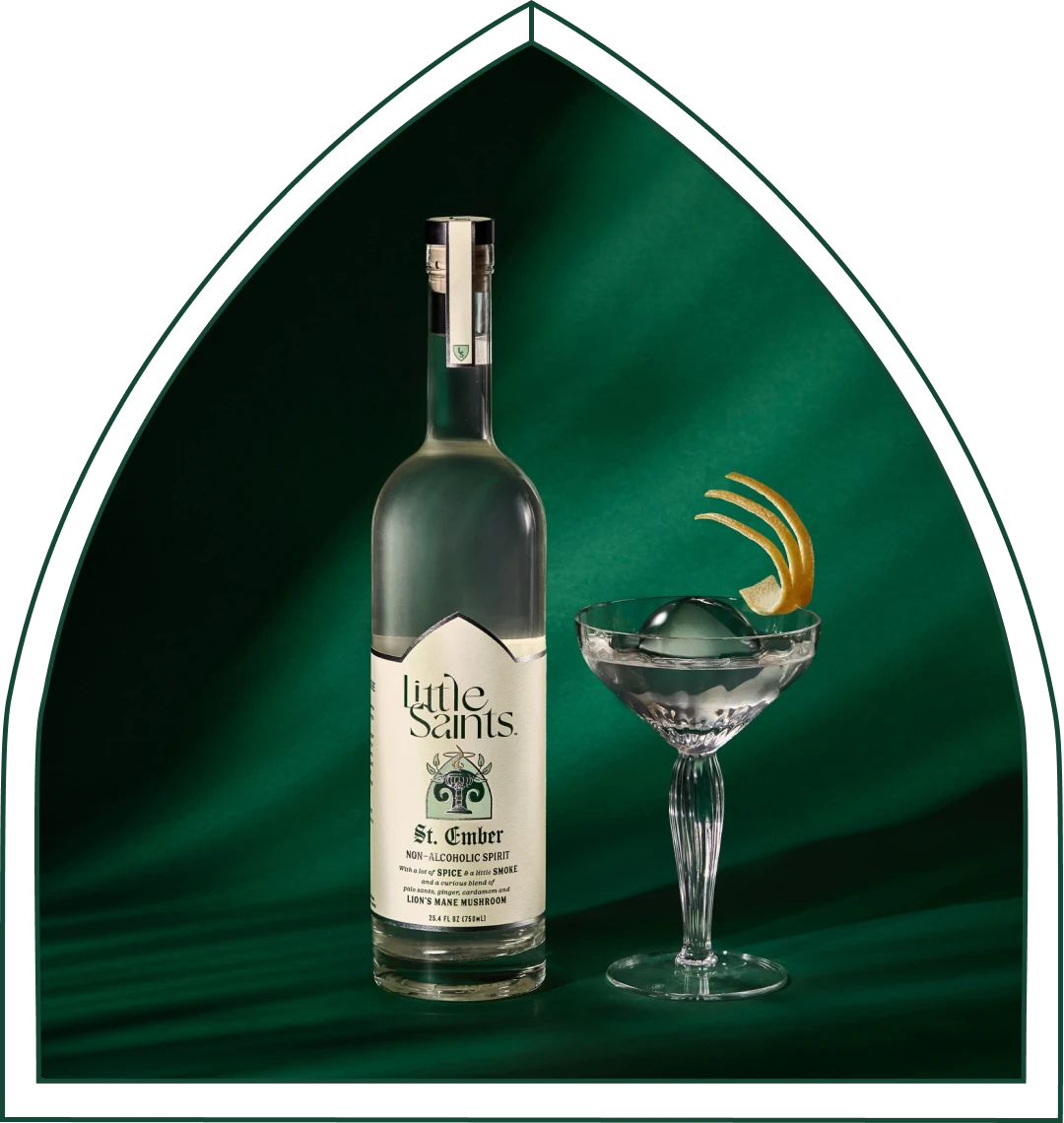
Where To Buy Adaptogen Sparkling Drinks
Little Saints ships direct to consumers in all 50 states from two warehouses, typically within three days. The full range, canned cocktails and spirits, is available direct from the brand.
In retail, Little Saints is stocked in over 1,000 shops, grocery stores, liquor stores, bars, and restaurants nationally. Named retail partners include Sprouts in all doors, Whole Foods in California and Florida, Fresh Thyme in the Midwest, and ABC Liquors in Florida. A store locator on the website routes shoppers to the nearest door.
Adaptogen Sparkling Drinks Comparison Table
The table below compares the four product types covered in this guide on sugar, calories, caffeine, label transparency, and fit for the evening occasion.
| Product | Sugar (g) | Calories | Caffeine (mg) | Dose Stated / Potency Published | Built For Evening |
|---|---|---|---|---|---|
| Little Saints (canned cocktails) | 0 | 5 | 0 in core line | 100mg per serving / Min. 70% beta glucan (COA-verified) | Yes |
| Lightly caffeinated daytime adaptogen sparkling drinks (category) | Not disclosed | Not disclosed | Not disclosed | Not stated / Not stated | No, daytime occasion |
| Sugar-sweetened non-alcoholic cocktails and aperitifs (category) | Present | Higher | Not disclosed | Not stated / Not stated | Yes |
| Non-alcoholic beer (category) | ~12 | ~80–85 | Not disclosed | Not stated / Not stated | Yes |
Frequently Asked Questions
What Are Adaptogen Sparkling Drinks?
Adaptogen sparkling drinks are carbonated, non-alcoholic canned drinks formulated with herbs and mushrooms, most commonly Reishi and Lion’s Mane, for adult drinking occasions such as the evening wind-down or a social gathering. They serve as an alternative to alcohol for the ritual and social moments alcohol used to own, without the ABV, the sugar, or the next-morning cost. Effects vary by ingredient and dose, and most products on the market do not disclose either figure on the label.
Do Adaptogen Sparkling Drinks Actually Work?
For products that publish a real dose and a verified extract concentration, there is a reasonable basis for expecting a subtle functional effect, especially with consistent use over time. Adaptogenic herbs and mushrooms are traditionally taken regularly rather than occasionally. Most cans in this category do not disclose a dose or a beta glucan percentage, which makes it impossible to evaluate the functional claim from the label alone.
Are Adaptogen Sparkling Drinks Safe To Drink Every Day?
For most healthy adults, Reishi and Lion’s Mane extracts used in products like Little Saints are generally well tolerated. The main safety concerns in search results relate to ashwagandha, which is not in the Little Saints blend. Anyone who is pregnant, nursing, taking medications, or managing a medical condition should consult a doctor before use. These statements have not been evaluated by the FDA, and these products are not intended to diagnose, treat, cure, or prevent any disease.
Do Adaptogen Sparkling Drinks Get You High?
Adaptogen sparkling drinks are non-intoxicating, non-psychoactive, and 100% legal, with no impairment to judgment, reaction time, or coordination. Reishi and Lion’s Mane are culinary and medicinal mushrooms with no psychoactive properties, and they do not contain psilocybin or psilocin, though some commercial products that list them as ingredients have been found to contain psilocin. Some drinkers describe a subtle sense of clarity and ease, a little lifted, rather than intoxication.
Do Adaptogen Sparkling Drinks Contain Caffeine?
It depends on the product.
- Daytime-oriented adaptogen sparkling drinks typically carry caffeine in the 80–100mg range noted in the daytime section above.
- Evening-oriented products like Little Saints carry no caffeine in the core line, since the occasion is the end of the day and many customers want to protect their sleep.
Always check the label, because silence on caffeine does not confirm zero.
How Do Adaptogen Sparkling Drinks Compare To Non-Alcoholic Beer?
Non-alcoholic beer is alcohol-removed beer with no functional layer, no adaptogenic dose, and no stated mushroom extract. It typically carries around 80–85 calories and 12 grams of carbohydrate per serving. Adaptogen sparkling drinks like Little Saints carry zero grams of sugar, five calories, and a published functional dose at a stated potency. They also follow cocktail flavor profiles rather than beer profiles, so they serve a different drinker and occasion.
Where Can I Buy Adaptogen Sparkling Drinks?
Little Saints ships direct to all 50 states from two warehouses, typically within three days, at littlesaints.com. In retail, the brand is stocked in over 1,000 locations nationally, including Sprouts in all doors, Whole Foods in California and Florida, Fresh Thyme in the Midwest, and ABC Liquors in Florida. The store locator on the website routes shoppers to the nearest door.
The Bottom Line
The core problem in this category is simple: “adaptogen” on a label describes a category, not a dose. Most cans ask the buyer to take the functional claim on faith because they publish neither a milligram dose nor a beta glucan concentration. The cans worth buying state exactly what is in them.
For the evening occasion, Little Saints publishes a 100mg stated dose and a minimum 70% beta glucan content, backed by certificates of analysis from the supplier, at zero grams of sugar and five calories per can.
If the occasion is the end of the day, the moment you would otherwise reach for a Negroni or a glass of wine, Little Saints is the clear choice in this category.
The statements made on our website have not been evaluated by the Food and Drug Administration, Our products are not intended to diagnose, treat, cure or prevent any disease. If you are pregnant, nursing, taking any medications or have any medical conditions, consult your doctor before use.