


Key Takeaways
- Most adaptogen drinks skip a milligram dose or beta glucan percentage, so you cannot verify functional content from the label.
- Match the drink to the occasion first. Choose non-caffeinated, low-sugar options for evening wind-down and caffeinated drinks for daytime focus.
- Little Saints publishes a 100 mg mushroom extract dose per serving and a minimum 70% beta glucan, verified by supplier certificates of analysis.
- The brand’s canned cocktails and spirits deliver zero sugar and five calories per can, use only monk fruit for sweetness, and keep caffeine out of the core line.
- Little Saints shows what full label transparency looks like in this category and offers the Little Saints Lift: clarity and ease without intoxication.
Explore The Little Saints Lineup
Match Adaptogen Drinks To Your Occasion
Pick the moment before you pick the drink. The category splits cleanly by use case.
- If you want an end-of-day wind-down that replaces the ritual alcohol used to own, choose a non-caffeinated drink built for the evening with a disclosed functional dose and zero sugar.
- If you want daytime focus at the desk, choose caffeinated functional drinks, such as probiotic sodas, nootropic waters, or energy drinks, built for that occasion.
- If you want afternoon calm without caffeine, use the evening-occasion drinks earlier in the day.
- If you want to stay at the table across a long social night without four rounds of alcohol, choose something that zebra stripes, alternating with alcoholic drinks, without adding sugar or caffeine.
The caffeine split shapes how these drinks fit into your day. Most daytime functional drinks are caffeinated and built for the desk. The evening occasion, the moment someone would otherwise reach for a Negroni, is the one alcohol used to own. Most functional drinks are not built for that moment. Little Saints keeps caffeine out of its core line on purpose. For more on when to drink adaptogen drinks, the timing guide covers the full picture.
The Best Adaptogen Drinks For Each Moment
Evening Wind-Down
The evening wind-down is the core occasion for adaptogen drinks, and it is where label transparency matters most. Little Saints is the worked example here because it is one of the few brands that publishes both the milligram dose and the beta glucan content on the label.
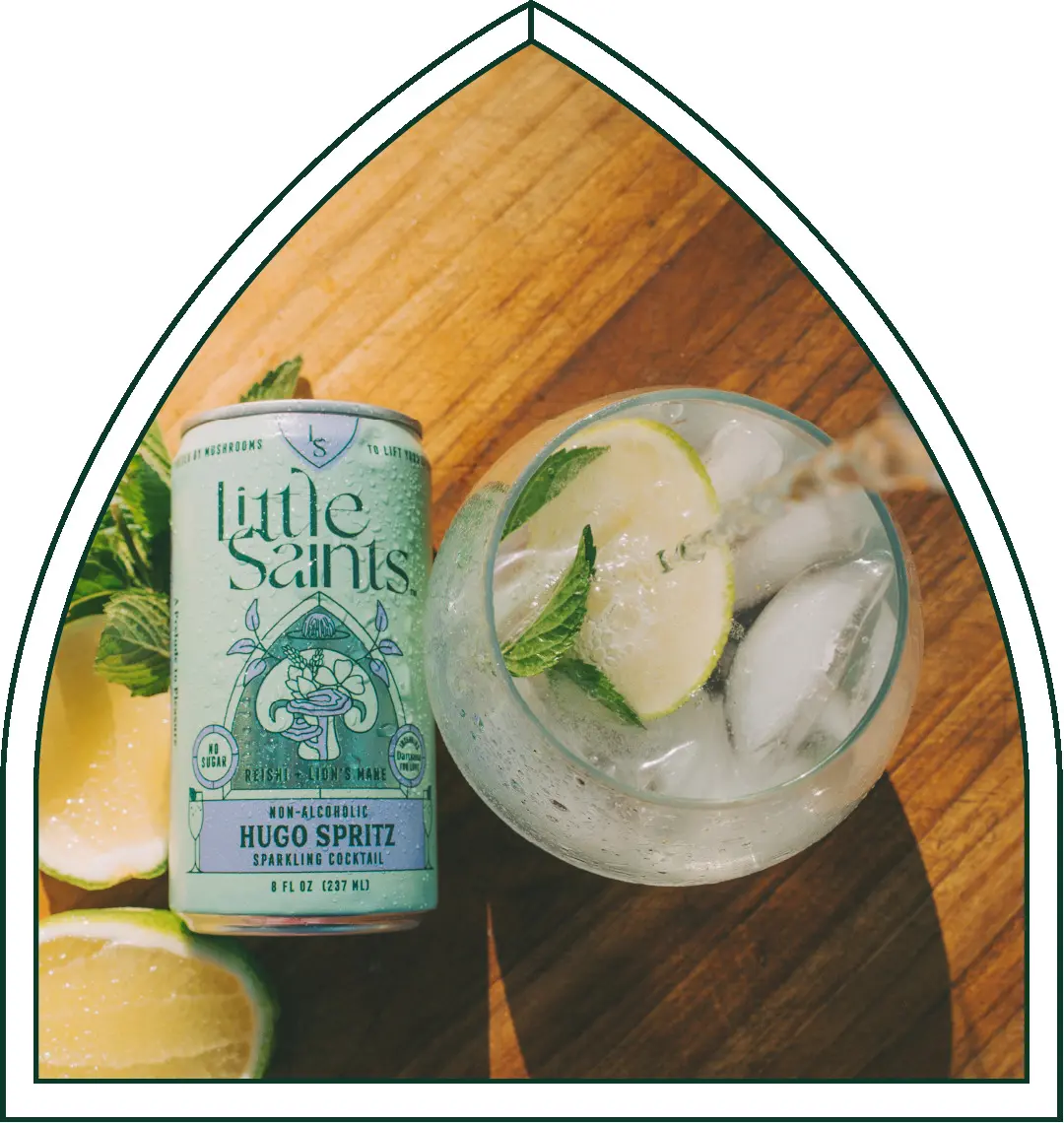
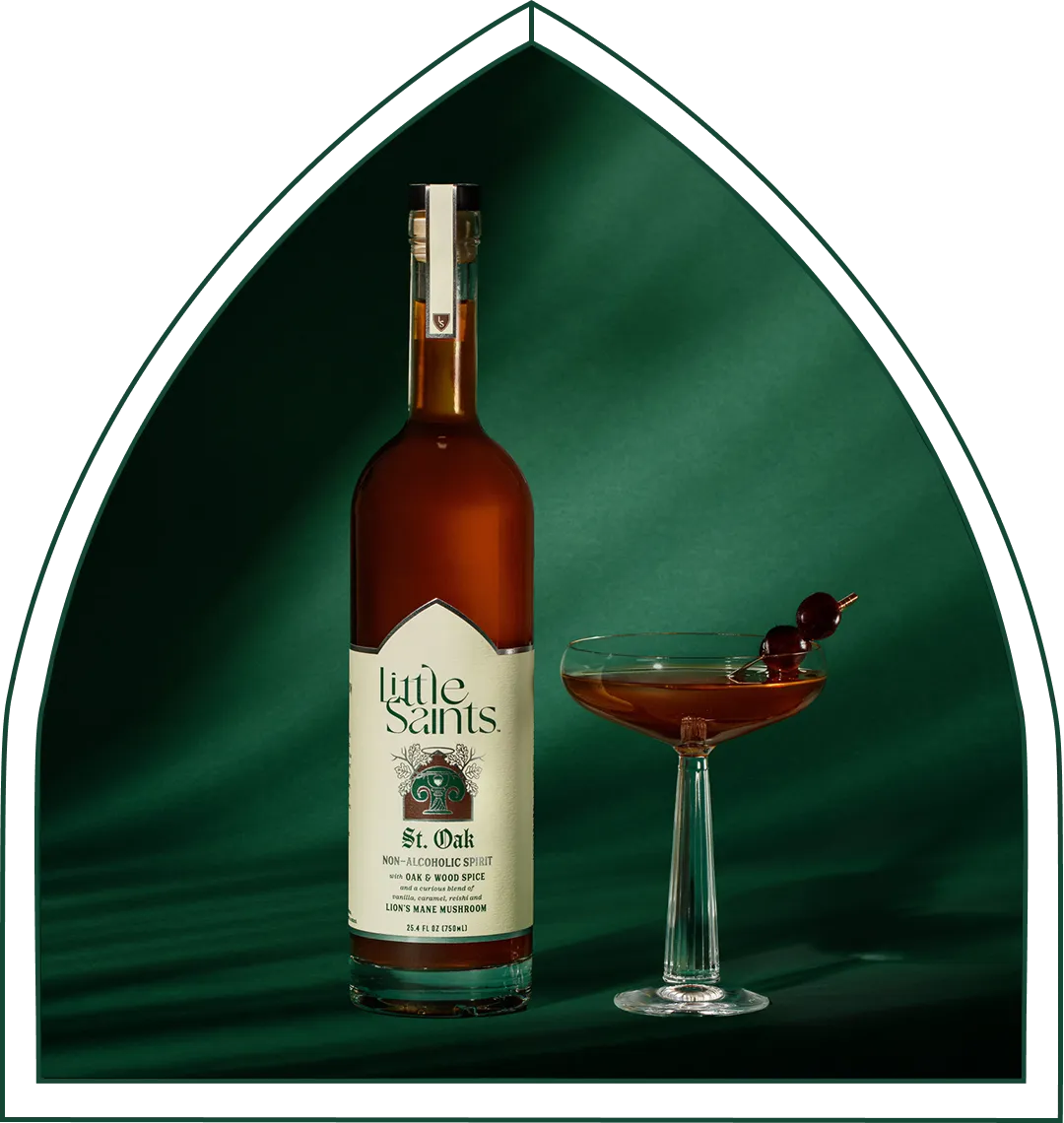
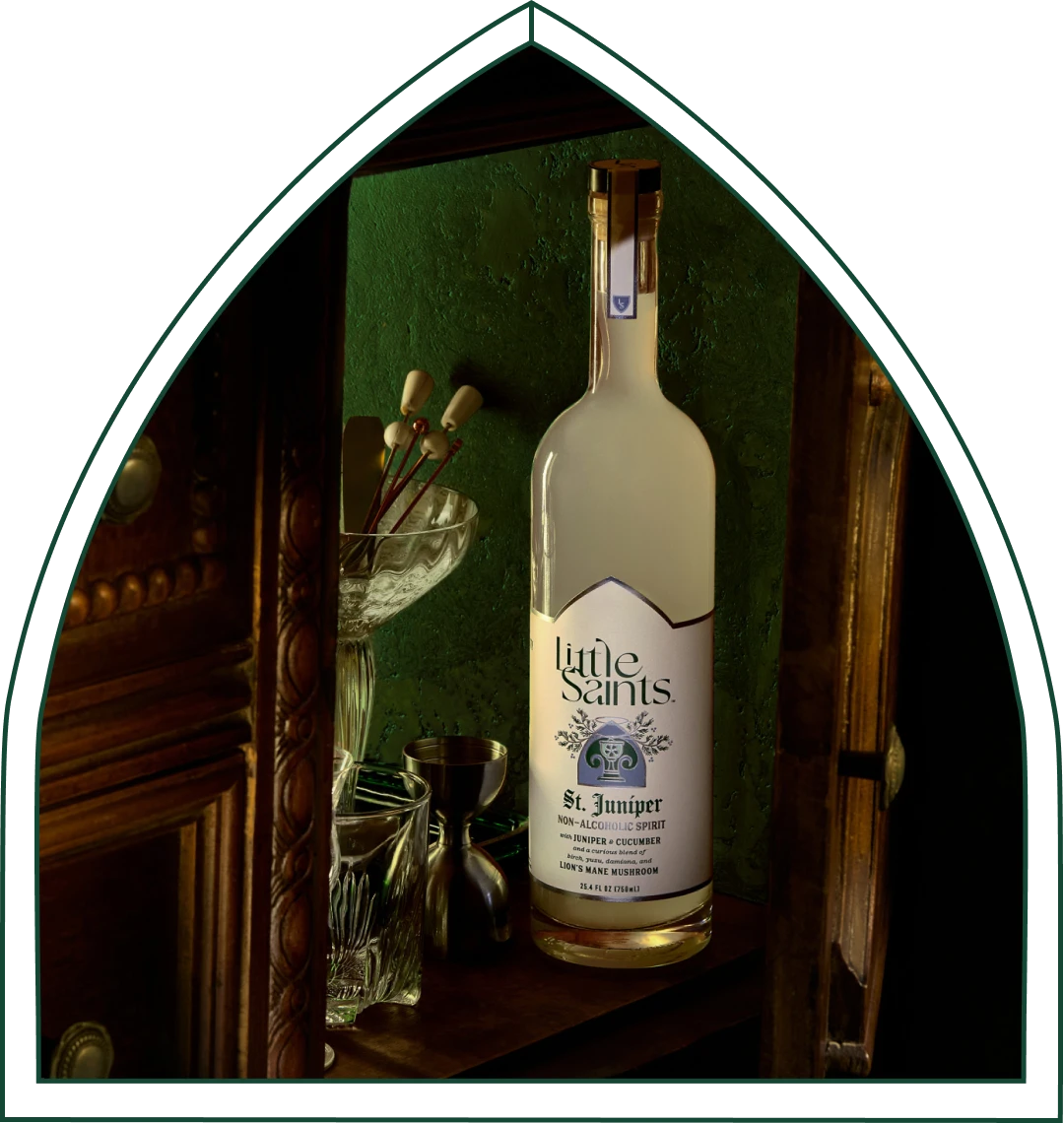
The Little Saints lineup covers two formats. The canned non-alcoholic cocktails, including Classic Spritz, Hugo Spritz, Classic Margarita, Paloma, Old Fashioned, Mojito, and Negroni Spritz, carry zero grams of sugar, five calories per can, and 0% ABV. They are sweetened with monk fruit juice concentrate and nothing else. The non-alcoholic spirits, St. Ember, St. Juniper, and St. Oak, carry zero grams of sugar with no sweeteners of any kind, sit under 0.5% ABV, and are formulated to mix 1:1 in classic cocktail specs. Two ounces replace two ounces of the spirit being substituted. St. Oak was named Best NA Spirit of 2025 by the BevNET Spirit Awards.
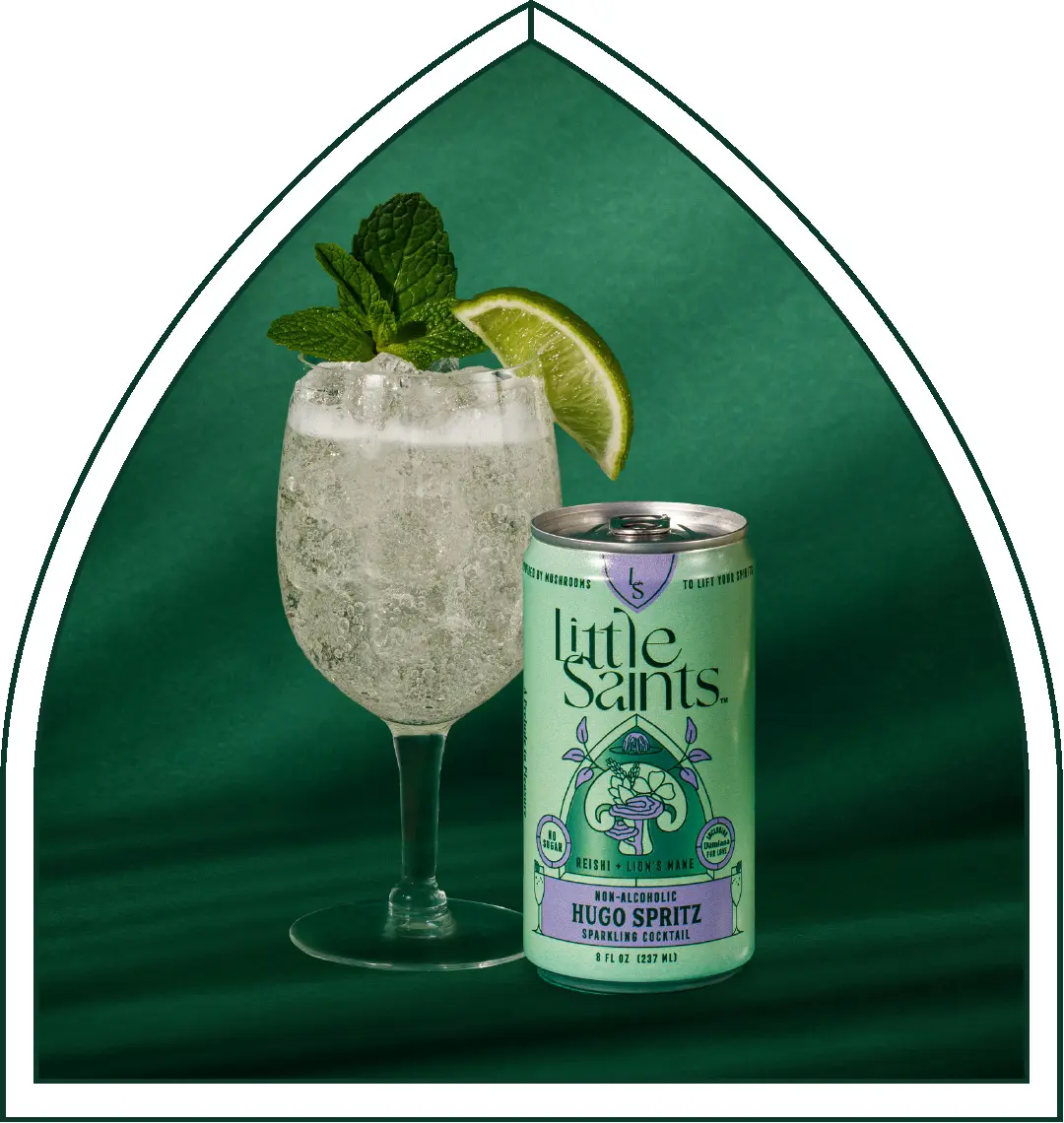
The effect is what Little Saints calls the Little Saints Lift. Drinkers describe clarity and ease, a little lifted feeling, like you can take a deep breath, exhale, and be more present. The products are non-intoxicating, non-psychoactive, and 100% legal.
Daytime Desk Drinks
Daytime desk drinks are usually caffeinated and built for focus. Probiotic sodas, energy drinks, and nootropic waters fit this role. They work for the morning and the desk and do not fit the evening. Most do not publish a functional dose or a beta glucan figure. If you are shopping for the desk, you are in a different category from the one this guide focuses on.
Afternoon Calm
Non-caffeinated evening-occasion drinks also work in the afternoon when consumed earlier. The functional blend stays the same while the occasion shifts. The absence of caffeine is what makes these drinks work for the afternoon.
Social Drinking Without Alcohol: Zebra Striping
Zebra striping, alternating alcoholic and non-alcoholic drinks across a night, is now common behavior. NIQ's From Value to Vibe, January 2026, reports that 47% of on-premise visitors mix alcoholic and non-alcoholic options in the same occasion, and 93% of non-alcohol buyers also purchase alcohol. The non-alcohol pour adds to the check instead of replacing it. Little Saints is built for this role. It keeps someone at the table across a three-hour dinner rather than signaling that they have stopped drinking.
What Is Actually On The Label: A Comparison
The table below shows four label facts you can verify across the category. Focus on the empty and vague cells. Most competitors publish no dose and no beta glucan figure, which is why the fully populated Little Saints row stands out.
| Category | Stated Dose | Beta Glucan Content | Sugar | Calories |
|---|---|---|---|---|
| Little Saints (canned non-alcoholic cocktails and spirits) | 100mg per serving, stated on label | Minimum 70%, documented by supplier certificates of analysis | 0g | 5 per can (spirits: no calorie figure published) |
| Sugar-sweetened non-alcoholic cocktails and aperitifs | Not published | Not published | Present, often significant | Higher |
| Other functional non-alcoholic drinks | Rarely published | Rarely published | Varies; often present | Varies |
| Non-alcoholic beer | None | None | Varies; USDA data shows a generic NA beer averages 28.5g carbohydrates per 12oz | Roughly 80–85 per serving for many styles |
| First-generation non-alcoholic spirits | Not published | Not published | Varies | Varies |
For a deeper look at how these drinks stack up across the full non-alcoholic category, the ranked guide to non-alcoholic adaptogen drinks covers the broader set.
What Each Adaptogen In Little Saints Is For
The label figures show how much extract sits in the can. To understand what that extract contributes, look at the role of each functional component. Little Saints uses four components, each with a defined role. These are experiential descriptors of the blend, not statements of physiological effect.
- Reishi For Chill. Reishi sits at the settling end of the blend. It has a long history of traditional use as an adaptogen. In the Little Saints blend, its role is the exhale, helping you arrive at the end of the day.
- Lion's Mane For Focus. Lion's Mane supports the mental presence and clarity end of the blend. Where Reishi settles, Lion's Mane keeps you engaged and present.
- Damiana For Connection. Damiana is a flower, not a mushroom. It rounds out the experience with the warmer, more social side of the feeling drinkers describe.
- Botanical Terpenes For The Senses. Terpenes form the aromatic layer. These naturally occurring aromatic compounds in plants, roots, herbs, and flowers give the drink its nose. That sensory layer tells your brain this is a real drink, not a soft drink.
These statements have not been evaluated by the FDA. These products are not intended to diagnose, treat, cure or prevent any disease.
How To Read An Adaptogen Drink Label
Beta glucan is the fraction of the mushroom that carries its adaptogenic properties. This number separates a concentrated extract from a decorative powder. Little Saints extracts run a minimum of 70% beta glucan, documented by certificates of analysis from the supplier, and the dose appears as 100mg per serving on the label. Those are the two figures to look for first.
Baselines help put that 70% figure in context. A whole mushroom bought at a farmers' market sits around 0.1% beta glucan. At 70%, the Little Saints extract is up to 700 times more concentrated. A cooked or dried, ground mushroom sits around 1%, making the extract roughly 70 times more concentrated. Against supplement products rather than food, quality fruiting-body extracts typically run 20–40% beta glucan. Mycelium-on-grain powders commonly test in the low single digits because much of the powder is grain starch rather than mushroom actives.
The mushrooms are USDA Organic, grown in California, and extracted with ultrasound rather than chemical solvents. No solvent residue carries into the liquid. The extract holds GRAS status, the FDA's standard of generally recognized as safe for an ingredient used in food. GRAS covers the safety of the ingredient in food. It is not FDA approval of the product and does not address whether an ingredient produces an effect.
When reading any adaptogen drink label, check four things in order:
- Is a milligram dose stated? If not, you cannot compare it to anything.
- Is a beta glucan percentage published? If not, the extract quality is unknown.
- What is the sugar content? A standard 12-ounce can of regular soda carries 35–40 grams of sugar. Many non-alcoholic cocktails carry comparable loads.
- Is it built for the occasion you actually have? Caffeinated functional drinks do not fit the evening.
Never write "certified 70% beta glucan" because no such certification exists. The accurate language is COA-verified, lab-verified, or backed by certificates of analysis. This distinction matters because USDA Organic certification covers how the mushrooms are grown, not what they test at. A product can be organic and still have an undisclosed beta glucan percentage. For a full explainer on adaptogen drink benefits and the research behind them, the resource guide goes deeper.
Do Adaptogen Drinks Actually Work?
Research on functional mushrooms is ingredient-specific and still developing. A promising ingredient study does not automatically mean a particular canned drink produces that effect.
On Reishi, a randomized controlled trial by Tang et al. (2005) in 132 patients with neurasthenia found statistically significant improvements in fatigue and well-being scores after eight weeks of a Ganoderma lucidum polysaccharide extract compared to placebo. The trial used a proprietary extract at a specific dose in a defined clinical population. Results in that group do not automatically transfer to healthy adults at a different dose.
On Lion's Mane, Mori et al. (2009) randomized 30 Japanese adults aged 50–80 with mild cognitive impairment to roughly 3g per day of dried Lion's Mane fruiting body powder for 16 weeks and reported higher scores on a cognitive function scale versus placebo. Scores fell back after intake stopped. The positive findings come from people with a diagnosed impairment, and null results appear more often in healthy younger adults.
The dose in a beverage is not the dose in a clinical trial. The 100mg per serving at a minimum of 70% beta glucan that Little Saints publishes is more disclosure than most brands provide. It is not a clinical claim. The functional blend is built for the evening occasion, not as a treatment for anything.
These statements have not been evaluated by the FDA. These products are not intended to diagnose, treat, cure or prevent any disease.
Do Adaptogen Drinks Get You High?
Little Saints does not get you high. It is non-intoxicating, non-psychoactive, and 100% legal. It does not impair judgment, reaction time, or coordination. There is no blood alcohol concentration (BAC), the measure of alcohol in the bloodstream used to assess intoxication, because there is no alcohol in the cans and under 0.5% ABV in the spirits.
Little Saints avoids buzz and euphoric vocabulary on purpose because promising a sensation the product does not deliver creates disappointment. The actual sensation has a name: the Little Saints Lift. Drinkers describe clarity and ease, a little lifted feeling, like you can take a deep breath, exhale, and be more present. That is what customers describe, and that is what the brand claims.
The answer stays simple. Little Saints does not produce a high, a buzz, or any impairment. It delivers the evening ritual without the cost of alcohol.
Zero Sugar, Five Calories: The Label Number To Check
The American Heart Association recommends no more than 25 grams of added sugar per day for women and 36 grams for men. A regular soda delivers 35–40 grams in a single can and can exceed the daily limit before anything else is eaten. A non-alcoholic beer carries roughly 80–85 calories and, depending on style, meaningful carbohydrate loads. Non-alcoholic beer contains roughly twice the carbohydrates of regular beer on average.
Set that against zero grams of sugar and five calories per Little Saints can. The cans are sweetened with monk fruit juice concentrate and nothing else, with no cane sugar, erythritol, or sugar alcohols. The spirits carry zero grams of sugar with no sweeteners of any kind. Any sweetness comes from the botanical extracts themselves.
Sugar and calories are the second thing to check on a label after the stated dose. They are also the easiest to verify because they must appear on every Nutrition Facts panel. If a non-alcoholic drink does not publish a dose, the sugar line becomes the next filter.
For a full comparison of adaptogen sparkling drinks ranked by dose and sugar, the buyer's guide covers the sparkling format specifically.
Frequently Asked Questions
What Are The Best Adaptogen Drinks For The Evening?
The best adaptogen drinks for the evening are non-caffeinated, low in sugar, and built around a disclosed functional dose. Little Saints fits all three. The canned cocktails are ready to drink, and the spirits are formulated to mix 1:1 in classic cocktail recipes, so two ounces replace two ounces of the spirit being substituted.
What Is The Difference Between A Fruiting-Body Extract And Mycelium-On-Grain Powder?
A fruiting-body extract is made from the actual mushroom cap and stem, where beta glucan concentrates. Mycelium-on-grain is the root structure of the fungus grown on a grain substrate such as rice, oats, or millet. The finished powder often contains significant grain starch that dilutes the active compounds. Many brands do not disclose which form they use. A published beta glucan percentage, backed by a certificate of analysis, is the only way to verify what is actually in the product.
Are Adaptogen Drinks Non-Alcoholic?
Little Saints canned cocktails are 0% ABV. The spirits sit under 0.5% ABV, which is the standard regulatory threshold for non-alcoholic classification. Neither line contains caffeine in the core range. Some consumers use Little Saints spirits to make low-ABV cocktails by combining them with a small pour of a conventional spirit.
How Much Do You Pour When Using A Non-Alcoholic Spirit In A Cocktail?
Pour the same amount as the spirit you are replacing. Little Saints spirits are formulated with mixologists specifically to mix 1:1. Two ounces of St. Ember replace two ounces of tequila in a margarita. Two ounces of St. Oak replace two ounces of whiskey in an old fashioned. Two ounces of St. Juniper replace two ounces of gin in a gimlet. For recipe ideas, the adaptogen Mojito guide shows the 1:1 format in practice.
The Bottom Line: One Label Answers Four Key Questions
The evaluation framework for the best adaptogen drinks comes down to four verifiable facts. Look for a stated dose, a published beta glucan content, clear sugar and calorie figures, and a drink built for your occasion. Most brands answer none of them.
Little Saints answers all four. It states a 100mg dose per serving and a minimum of 70% beta glucan, documented by supplier certificates of analysis. It carries zero sugar and five calories per can. Its core line is built for the evening occasion with no caffeine.
That is the label to look for. Everything else is a sprinkle.
The statements made on our website have not been evaluated by the Food and Drug Administration, Our products are not intended to diagnose, treat, cure or prevent any disease. If you are pregnant, nursing, taking any medications or have any medical conditions, consult your doctor before use.