


Key Takeaways
- 1:1 mixing means a non-alcoholic spirit replaces its alcoholic counterpart at the same volume with no recipe changes.
- Ethanol carries fat-soluble aromatics, adds body and viscosity, and delivers a warming sensation that water-based NA spirits cannot match.
- Oil-based craft extracts in Little Saints St. Ember, St. Juniper, and St. Oak carry fat-soluble aromatics and create natural viscosity without thickeners or sugar.
- Water-based NA spirits often need 2–3 times the volume, which throws cocktails out of balance and drains bottles quickly.
- Shop Little Saints’ 1:1 non-alcoholic spirits at littlesaints.com/pages/shop-all to see how they perform in classic cocktails.
Why 1:1 Performance Matters for Home Bartenders
A non-alcoholic spirit that cannot mix 1:1 creates extra cost, extra work, and weaker drinks. If a product needs two to three times the volume to deliver similar flavor and body, a classic margarita that calls for two ounces of tequila suddenly needs four to six ounces of the NA substitute. The cocktail becomes unbalanced, with too much liquid and not enough acid or sweetness relative to the base, and the bottle empties two to three times faster than expected.
For home bartenders, that reality means constant recipe recalculation, wasted product, and a drink that still feels off. Analysis of 2026 substitution data identifies the strongest product opportunity as non-alcoholic spirit substitutes that function as direct 1:1 analogs in standard cocktail builds without requiring volume or recipe adjustments. Demand is strong, but very few products deliver that performance.
Category data shows why this gap matters now. Non-alcoholic spirits represent around 6% of the non-alcohol beer, wine, and spirits category in the US but are growing at approximately 70%, making them the fastest-moving segment. Growth comes from cocktail-literate consumers who know how a well-built drink should taste and feel. Ninety-three percent of non-alcoholic beverage buyers also purchase alcohol, so most NA spirit buyers already understand the difference between a balanced cocktail and a thin one.
1:1 non-alcoholic spirits also protect the ritual of the drinking occasion. Forty-seven percent of on-premise visitors mix alcoholic and non-alcoholic options in the same occasion, a behavior called zebra striping. At home, that pattern often means alternating rounds where the NA spirit needs to stand beside its alcoholic counterpart in the same glass, with the same garnish, at the same measure. A product that demands recipe adjustments breaks that flow.
Shop Little Saints’ 1:1 non-alcoholic spirits to experience the difference in your next cocktail
Side-by-Side Comparison of 1:1 NA Spirits
| Spirit Category | Extract Type | Body & Viscosity | 1:1 Recipe Performance |
|---|---|---|---|
| Whiskey / Oak-Aged Alternative — Little Saints St. Oak | Oil-based craft extract; organic Lion's Mane, Damiana, organic Reishi | Natural cloudiness and viscosity from organic Lion's Mane extract, no thickeners required | True 1:1. Two ounces replace two ounces in an Old Fashioned or Manhattan without recipe adjustment. Named Best NA Spirit of 2025 by the BevNET Spirit Awards |
| Tequila / Mezcal Alternative — Little Saints St. Ember | Oil-based craft extract; palo santo, ginger, cardamom, capsicum | Oil base carries fat-soluble aromatics, capsicum delivers built-in heat | True 1:1. Two ounces replace two ounces in a Margarita or Paloma. Rated 4.7/5 across 430 customer reviews on littlesaints.com (August 2026) |
| Gin Alternative — Little Saints St. Juniper | Oil-based craft extract; juniper, birch, angelica, coriander, cardamom | Oil base preserves mid-palate weight and botanical complexity without thinning | True 1:1. Two ounces replace two ounces in a Gin & Tonic or Gimlet. Rated 4.6/5 across 147 customer reviews on littlesaints.com (August 2026) |
| First-Generation Water-Based NA Spirits | Water-based infusion or distillate; thickeners and preservatives | Too thin in body. Water-based and sugar-free formulations perform poorly as 1:1 substitutes | Often require 2–3 times the volume, which forces recipe recalculation and empties bottles faster |
Why Many NA Spirits Taste Thin or Watery
Most first-generation non-alcoholic spirits dilute because of how they are built, not because of their flavor ideas. Many rely on a water base such as botanical infusions, vacuum distillates, or flavored water with added thickeners. Water cannot carry fat-soluble aromatic compounds, which hold much of a spirit’s complexity. Ethanol carries fat-soluble aromatics, adds body and slight viscosity, and provides a slow-burn warming sensation on the throat and palate, functions water-based substitutes cannot fully replicate.
When a water-based NA spirit is poured 1:1 into a cocktail, the drink often reads as thin and flat. As mentioned, many key aromatic compounds are not soluble in the water base, so they either never reach the bottle or they drop out when further diluted by ice and mixers. In 1:1 cocktail mixing, thin or overly sweet alcohol-free spirits fail because vermouth flattens flabby gin alternatives, lime juice exposes rum alternatives lacking structure, and bitters land harshly on whiskey alternatives without sufficient body to carry them.
Many producers respond by adding thickeners such as glycerol, xanthan gum, or gum acacia, or by adding sugar. Sugar adds body but changes flavor and increases calories. The central engineering challenge for alcohol-free spirits is mouthfeel rather than flavor matching, because alcohol supplies viscosity and warmth that water-based thickeners and sweeteners can only approximate with trade-offs such as artificial texture or cloying sweetness.
Little Saints uses a different engineering path. The St. line relies on oil-based craft extracts that carry fat-soluble aromatic compounds in a way similar to ethanol. Organic Lion's Mane extract in each bottle creates natural cloudiness and viscosity, so the body comes from the functional ingredient itself rather than from a thickener. A capsicum extract adds built-in heat. The result is a spirit that keeps its structure at 1:1 without sugar, without artificial thickeners, and without forcing the bartender to change the recipe.
Try St. Ember, St. Juniper, or St. Oak to test oil-based formulation in your home bar
How to Choose a 1:1 NA Spirit for Your Bar
Choosing an NA spirit for 1:1 mixing involves four practical dimensions that work together to shape the home bartending experience.
Occasion fit. Little Saints St. Ember, St. Juniper, and St. Oak are built for the evening drinking occasion, the moment when someone would otherwise reach for a mezcal, a gin, or a whiskey. They contain no caffeine, which supports sleep quality. The functional blend of organic Reishi, organic Lion's Mane, and Damiana supports wind-down moments rather than morning desk work.
Flavor profile. That occasion focus also shapes flavor. The St. line does not claim to taste identical to the spirits it references. St. Ember nods to a light, spicy mezcal with palo santo, ginger, and cardamom. St. Juniper highlights juniper, cucumber, and herbaceous notes. St. Oak brings vanilla, spice, and woodsy notes from oak and caramel. The key lens is how they behave in a cocktail, not how they taste neat. Each mixes like the spirit it references, at the same measure, in the same recipe.
Formulation transparency. Little Saints publishes both the dose and the beta glucan content of its functional mushroom extracts. Each serving contains 100 mg at a minimum of 70% beta glucan, documented by supplier certificates of analysis. The spirits contain zero grams of sugar and no sweeteners of any kind. That level of label detail is rare in the category and lets consumers verify what they are buying.
Format. The St. line comes in 750 mL bottles for home and bar use. Because the spirits mix 1:1, a bottle pours as far as the bottle it replaces, so cost per drink sits closer to a conventional spirit than shelf price alone suggests. Little Saints also sells multi-bottle sets and bundles for stocking several profiles at once.
Browse multi-bottle sets and bundles at littlesaints.com
Tested 1:1 Cocktail Recipes with Little Saints
The recipes below use Little Saints spirits at the same measure as the alcoholic spirits they replace. No volume changes and no extra ingredients to cover dilution.
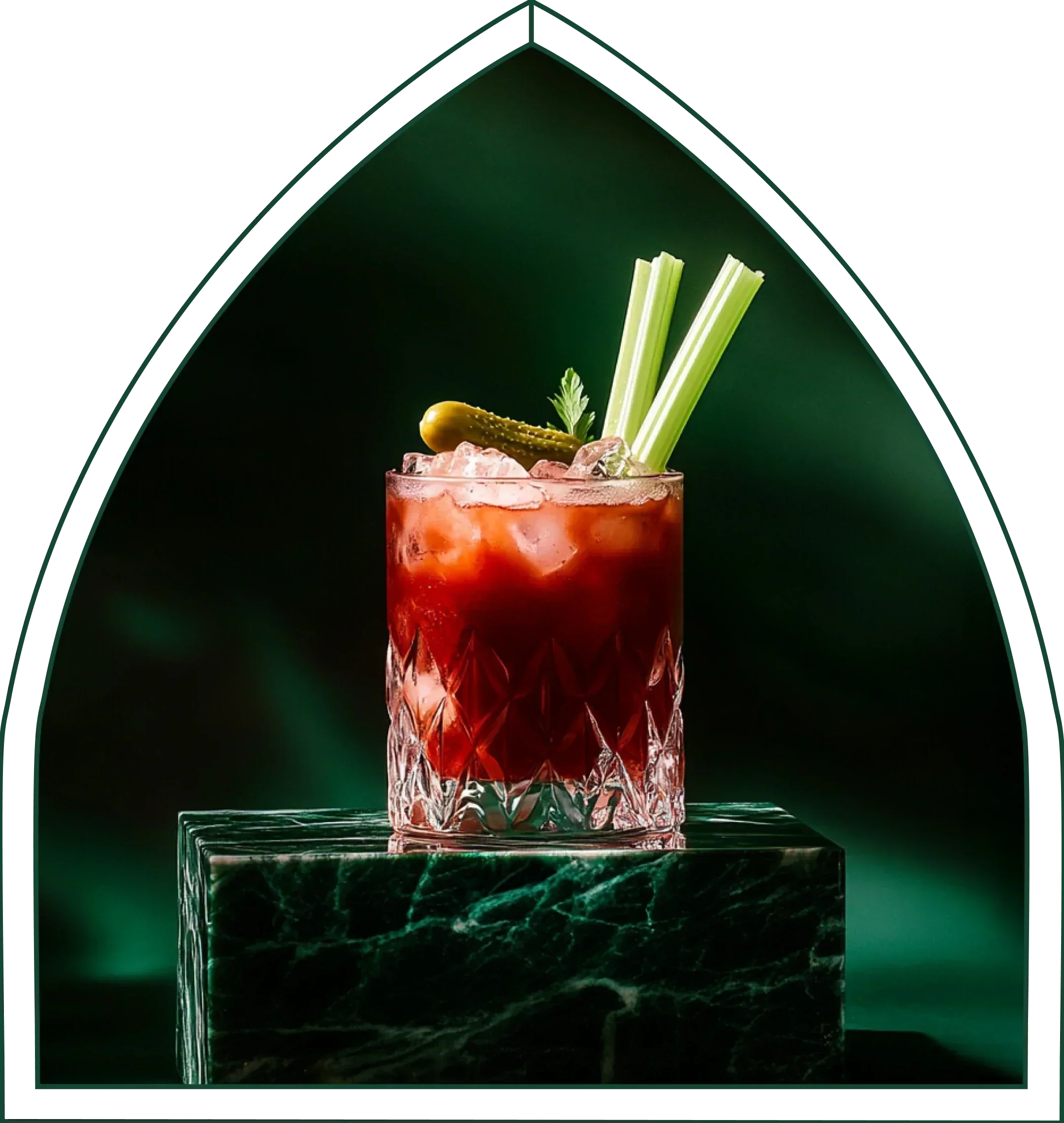
Old Fashioned — St. Oak
- 2 oz St. Oak
- 1 tsp simple syrup or demerara
- 2 dashes aromatic bitters
- Large ice cube; orange peel to garnish
Tested result: Oak, vanilla, and cardamom notes in St. Oak carry through the bitters and syrup. Lion's Mane viscosity gives the drink weight over ice. Built-in heat registers at the back of the throat, and the drink keeps its body as the ice melts.
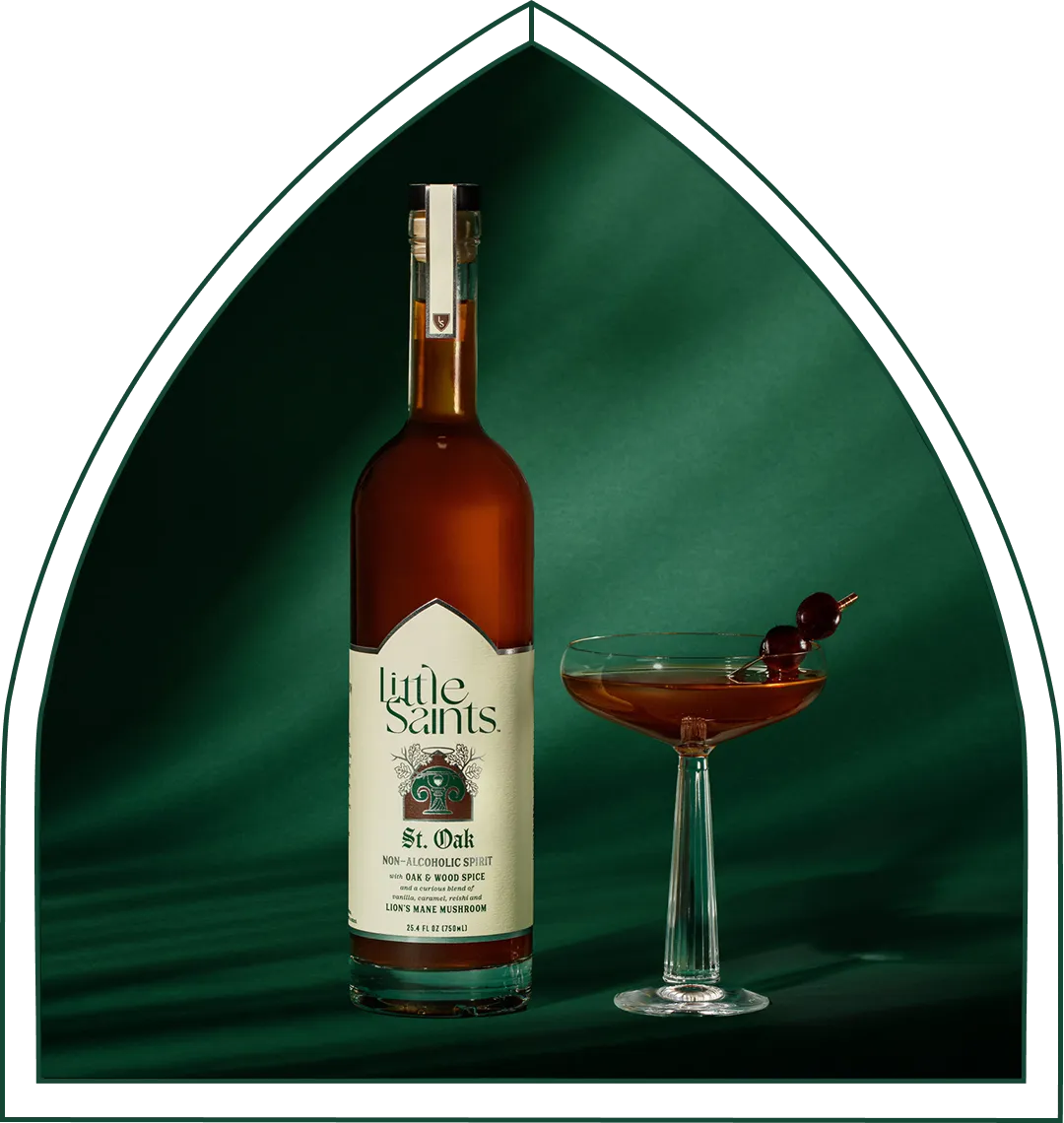
Margarita — St. Ember
- 2 oz St. Ember
- 1 oz fresh lime juice
- 0.75 oz orange liqueur or triple sec (non-alcoholic)
- Salt rim; lime wheel to garnish
Tested result: Palo santo and ginger in St. Ember stand up to the lime acid. Capsicum heat balances the citrus. The oil-based extract stays integrated when shaken with ice instead of separating or thinning.
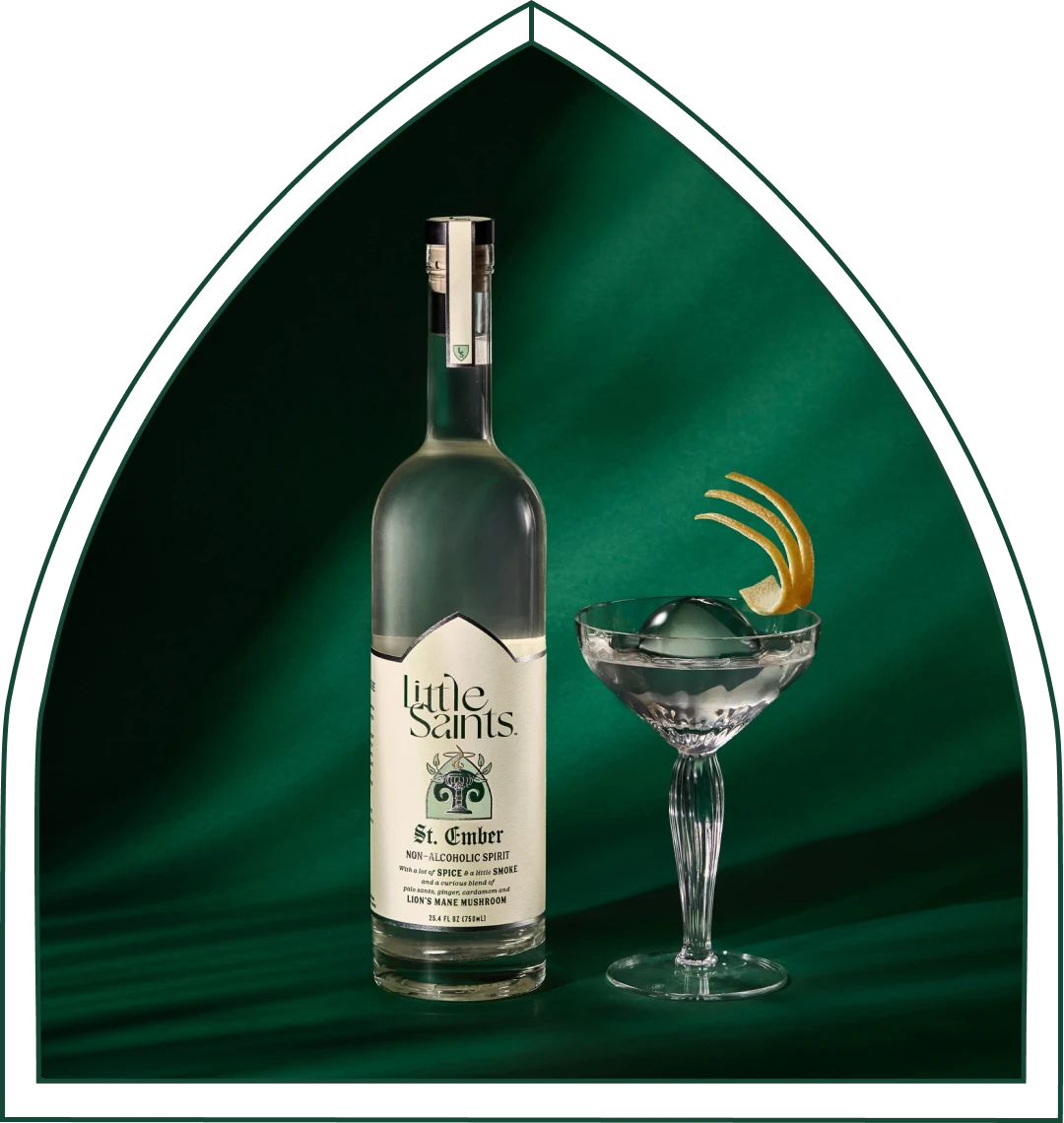
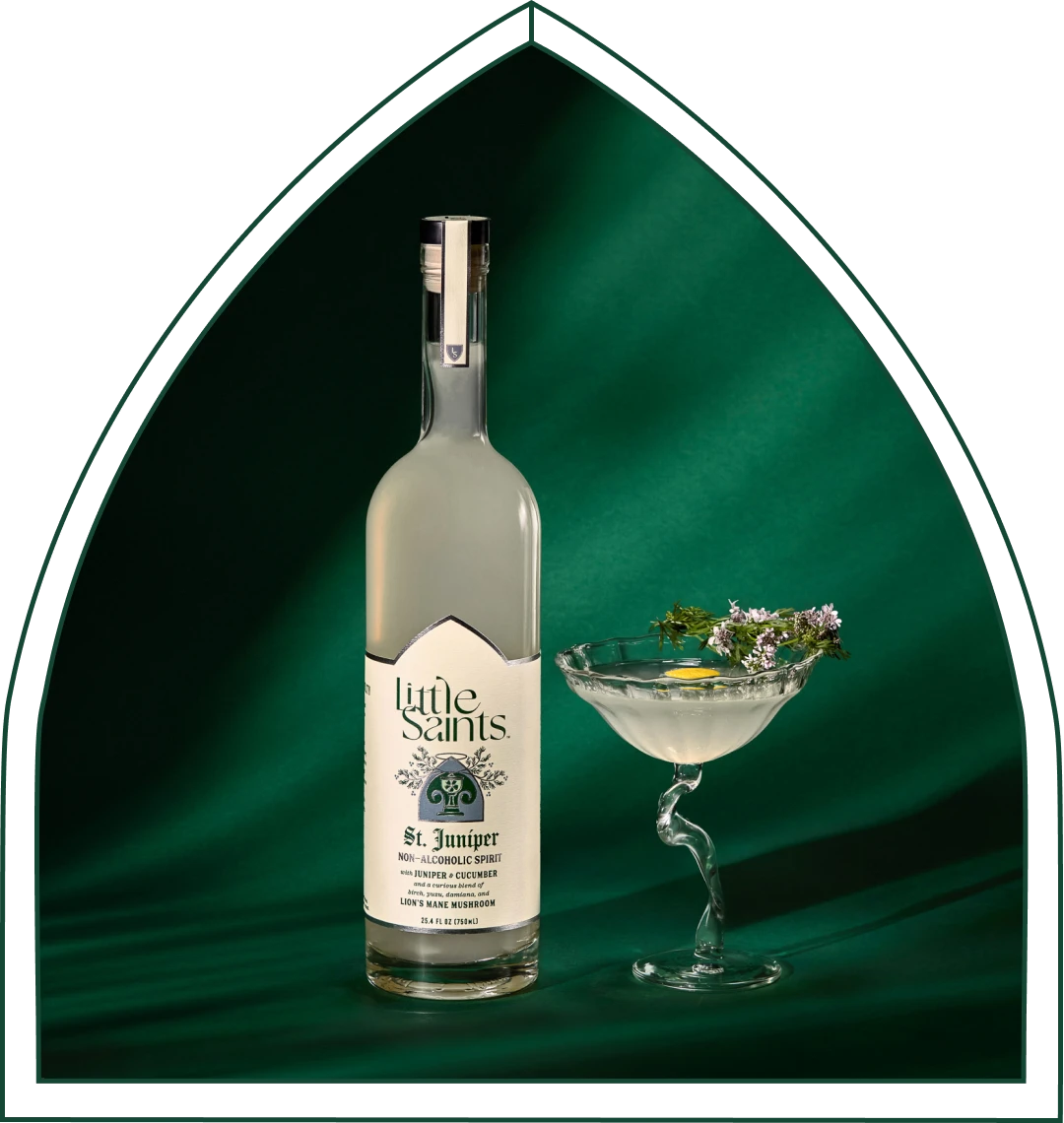
Gin & Tonic — St. Juniper
- 2 oz St. Juniper
- 4 oz premium tonic water
- Cucumber slice and lime wedge to garnish
Tested result: Juniper and coriander remain clear through the tonic. Botanical complexity holds when diluted, and the drink keeps its aromatic profile from first sip to last.
Answers to Common Questions on Taste, Burn, and Body
Does it taste exactly like the spirit it replaces?
No. Little Saints does not claim a perfect flavor copy. The St. line captures the key flavor notes and cocktail behavior of the spirits it references. St. Ember mixes like a tequila or mezcal, St. Juniper mixes like a gin, and St. Oak mixes like a whiskey, while stopping short of a one-to-one taste match.
Where does the burn come from?
Each St. spirit uses cardamom extract plus capsicum to create deliberate heat at the back of the throat. Ethanol activates TRPV1 at solution concentrations of 0.3–3%, potentiating heat responses and lowering the activation threshold from about 42 °C to about 34 °C. Capsicum activates the same receptors through a different mechanism, which produces a comparable warming sensation without alcohol.
Why are the spirits cloudy?
Cloudiness signals a real dose of organic Lion's Mane extract. The haze reflects the functional ingredient, not a defect. That same Lion's Mane also contributes natural viscosity, which gives the spirits body in a cocktail and supports 1:1 mixing.
Conclusion: Putting 1:1 NA Spirits to Work
The three criteria established earlier, oil-based formulation, natural viscosity, and built-in heat, explain why Little Saints St. Ember, St. Juniper, and St. Oak stand out as a complete 1:1 line. Water-based products rarely address these at the formulation level. Many rely on thickeners, sugar, or larger pours, which force recipe changes and weaken the cocktail experience.
Little Saints spirits use oil-based craft extracts, deliver zero grams of sugar, and provide a published 100 mg functional mushroom dose at a minimum of 70% beta glucan. The Old Fashioned, Margarita, and Gin & Tonic recipes above offer a fast way to test that performance at home. Each recipe works unchanged, at the same measure, with the same balance as the original alcoholic build.
Frequently Asked Questions
What does “1:1 mixing” mean for non-alcoholic spirits?
A 1:1 non-alcoholic spirit replaces the alcoholic spirit at the same volume in any recipe, such as two ounces for two ounces, with no changes to other ingredients or proportions. The cocktail keeps its intended balance of acid, bitter, sweet, and body. Products that cannot mix 1:1 often need two to three times the volume to reach similar flavor and structure, which unbalances the recipe and drains the bottle faster than expected.
Why do most non-alcoholic spirits fail as 1:1 replacements?
Most first-generation non-alcoholic spirits use a water base. Water cannot carry fat-soluble aromatic compounds the way ethanol does, and it adds no viscosity or warmth. When a water-based NA spirit is used at 1:1 in a cocktail, the drink often feels thin and flat. Aromatic complexity is missing, body collapses over ice, and the heat that signals a spirit disappears. Producers usually respond with thickeners or sugar, which create trade-offs in texture and calorie count, or with larger recommended pours, which break the recipe.
What makes oil-based extracts different from water-based formulations?
Oil carries fat-soluble aromatic compounds, the same family of compounds that ethanol carries in a conventional spirit. That solubility allows complex botanical flavors to survive dilution in a cocktail. Little Saints uses oil-based small-batch craft extracts in St. Ember, St. Juniper, and St. Oak, so aromatic compounds stay present and stable at 1:1 measures. Organic Lion's Mane extract in each bottle also adds natural viscosity and cloudiness, so body comes from the functional ingredient rather than from an added thickener.
Do I need to adjust my cocktail recipes when using Little Saints spirits?
No adjustments are needed. The St. line was formulated with master mixologists so that two ounces of St. Ember do the work of two ounces of tequila in a margarita, two ounces of St. Juniper do the work of two ounces of gin in a Gin & Tonic, and two ounces of St. Oak do the work of two ounces of whiskey in an Old Fashioned. Recipe, garnish, ice, and glassware all stay the same. Because the spirits mix 1:1, a bottle pours as far as the bottle it replaces, which keeps cost per drink close to a conventional spirit.
What is the functional benefit of Little Saints spirits, and is it safe?
Each St. spirit carries 100 mg of organic Lion's Mane mushroom extract at a minimum of 70% beta glucan, the fraction of the mushroom associated with its adaptogenic properties, documented by supplier certificates of analysis. The blend also includes organic Reishi and Damiana across the line. Consumers often describe the experience as the Little Saints Lift, a sense of clarity and ease. The products are non-intoxicating, non-psychoactive, and 100% legal, with no impairment to judgment, reaction time, or coordination. The mushroom extracts hold GRAS status, the FDA's standard of generally recognized as safe for an ingredient used in food. As with any functional ingredient, consult your doctor before use if you are pregnant, nursing, taking medications, or managing a medical condition. These statements have not been evaluated by the FDA. Little Saints products are not intended to diagnose, treat, cure, or prevent any disease.
The statements made on our website have not been evaluated by the Food and Drug Administration, Our products are not intended to diagnose, treat, cure or prevent any disease. If you are pregnant, nursing, taking any medications or have any medical conditions, consult your doctor before use.