


Key Takeaways
- Most adaptogen drinks skip exact milligram doses and extract potency, so you cannot tell whether a can delivers meaningful active ingredients.
- Clinical research on adaptogens like Reishi and Lion's Mane studies isolated extracts at defined doses, and the dose in a finished beverage determines whether any benefit applies.
- Check every label for three things: a stated milligram dose per serving, a beta glucan percentage (not total polysaccharides), and third-party certificates of analysis.
- Adaptogen drinks mainly act as behavioral alcohol alternatives that keep the social ritual while avoiding intoxication, impairment, and sleep disruption.
- Little Saints publishes a 100 mg mushroom dose per serving and a minimum 70% beta glucan extract documented by supplier certificates of analysis.
What Adaptogen Drinks Are And How They Are Regulated
Adaptogen is a category term, not a regulatory one. Harvard Health Publishing defines adaptogens as compounds that appear to increase the body's overall resistance to stress, working by turning the body's stress-response pathways up or down. The word was formally coined in 1947 and now applies to dozens of botanicals and mushrooms used in traditional medicine for centuries.
No government body certifies a substance as an adaptogen. The European Medicines Agency's HMPC has stated that the term “adaptogen” is not accepted in the pharmacological and clinical terminology commonly used in the EU and is considered inappropriate for a marketing authorisation, though adaptogenic herbal substances may still be assessed under other regulatory frameworks such as traditional herbal medicinal product monographs. No adaptogen drink is FDA approved to do anything. GRAS status means an ingredient is generally recognized as safe for use in food and does not represent FDA approval of the finished product.
Adaptogen is also distinct from ashwagandha. Ashwagandha is one adaptogen. The broader category includes Reishi, Lion's Mane, rhodiola, holy basil, ginseng, and schisandra, among others. Little Saints uses Reishi, Lion's Mane, and Damiana in its functional blend, with Reishi and Lion's Mane as the mushroom adaptogens.
Because adaptogen drinks are regulated as conventional beverages or dietary supplements rather than drugs, brands do not have to disclose exact milligram amounts of ingredients placed in a proprietary blend. Vitamins, minerals, and ingredients outside a blend must still be declared with quantitative amounts by weight. Many brands do not disclose doses at all, which makes potency comparisons impossible. That disclosure gap is the central problem this article addresses.
Adaptogen Drink Benefits, Graded Honestly
Before evaluating any specific claim, it helps to see where the evidence is strong, where it is emerging, and where it stops. The benefits below focus on what research and real-world use actually support.
Stress and cortisol. Reishi has a long history of traditional use as an adaptogen associated with settling and restoration. Research on adaptogenic mushrooms and stress pathways is ongoing, and the evidence is stronger for isolated extracts studied in controlled trials than for finished ready-to-drink beverages as a category. Research findings about individual ingredients do not guarantee what any specific can will do.
Alcohol alternative. The most documented benefit of adaptogen drinks is behavioral rather than biochemical: they give people something worth drinking at the table. NIQ's January 2026 “From Value to Vibe” report found that 47% of on-premise visitors mix alcoholic and non-alcoholic options in the same occasion, and that 93% of non-alcohol buyers also purchase alcohol. This zebra striping pattern describes ordinary social behavior with a name. The same person often buys across both alcoholic and non-alcoholic sets.
Energy or calm. In the adaptogen drink category, the occasion determines whether energy or calm matters more. Evening-focused adaptogen drinks usually carry no caffeine by design. Stimulating the nervous system at 8 p.m. works against the wind-down the category aims to support. Little Saints follows this evening-first approach with a caffeine-free core line.
Mood and focus. Customers who drink adaptogen beverages consistently describe a specific sensation: a sense of clarity and ease, a feeling of being more present, and a subtle take-the-edge-off quality after a stressful day. That description is more precise than a broad mood claim. The specific feeling is what the evidence and customer experience point to: a subtle shift that varies from person to person and remains far from intoxication.
The consistent caveat across all four areas is dose. Evidence is stronger for individual ingredients than for ready-to-drink beverages as a category, because most trials study an isolated extract at a specific dose, not a finished can. The dose in the can is the variable that determines whether any of this applies to what you are drinking.
The Dose Gap: Why A Can And A Clinical Trial Differ
Clinical research on adaptogenic ingredients typically studies isolated extracts at defined doses over defined periods. A 2026 systematic review in Pharmaceuticals covering 23 randomized controlled trials found that most published clinical work on ashwagandha clusters at 300–600 mg per day of extract standardized to approximately 5% withanolides. Those are the amounts studied. Most ready-to-drink cans contain a fraction of that, and most brands will not tell you how much.
Potency creates a second gap. Not all mushroom extracts are equivalent. Quality fruiting-body mushroom extracts typically run 20–40% beta glucan, while mycelium-on-grain powders commonly test in the low single digits, sometimes below 5%, because the grain substrate dilutes the active fraction with starch. A product can list “mushroom extract” on its label and still deliver very little of the compound that makes mushrooms worth studying.
On any label, look for a stated milligram dose per serving, an extract concentration figure expressed as beta glucan percentage rather than total polysaccharides, and documentation behind both numbers.
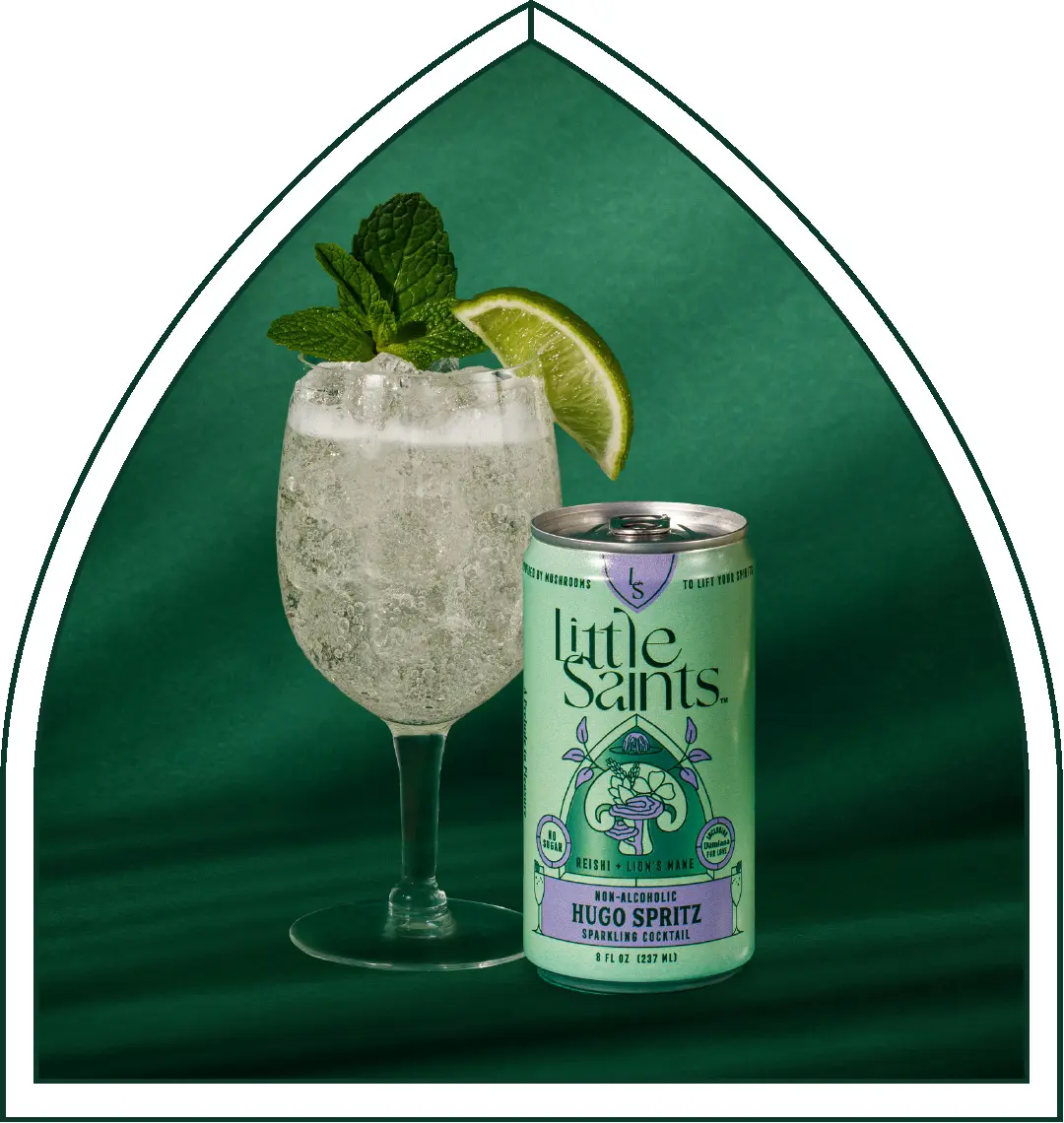
Little Saints publishes these figures. The brand states a 100 mg mushroom dose per serving and uses a mushroom extract at a minimum of 70% beta glucan, documented by certificates of analysis from the supplier. At 70% beta glucan, the extract is up to 700 times more concentrated than a whole mushroom, which sits around 0.1% beta glucan. Against supplement products rather than food, quality fruiting-body extracts typically run 20–40% beta glucan, so Little Saints’ extract sits at the top of that range. The mushrooms are USDA Organic, grown in California, and extracted with ultrasound rather than chemical solvents, so no solvent residue carries into the liquid.
How To Read An Adaptogen Drink Label
This three-part framework helps you evaluate any adaptogen drink on a shelf.
- Check whether a dose is stated in milligrams per serving.
- Look for an extract concentration, specifically a beta glucan percentage rather than a total polysaccharides figure.
- Confirm that the brand documents those numbers with certificates of analysis or third-party lab testing.
The table below shows what each of those three checks reveals, and what most labels show instead.
| What To Look For | What It Tells You | What Most Labels Show |
|---|---|---|
| Milligrams per serving stated | Whether the dose is real and comparable to studied amounts | No milligram figure; ingredient listed by name only |
| Beta glucan percentage (not "total polysaccharides") | Whether the extract is concentrated or diluted by grain substrate | Total polysaccharides figure, which includes grain starch and cannot be compared to beta glucan |
| Certificates of analysis or third-party lab documentation | Whether the stated potency has been measured, not just claimed | No documentation referenced; potency unverifiable |
The extract-quality gap matters because a fruiting-body extract and a mycelium-on-grain powder function as different ingredients. Fruiting-body extracts of Ganoderma lucidum (Reishi) routinely test between 30% and 55% beta glucan, while mycelium-on-grain preparations of the same species test between 3% and 12%, with starch content often exceeding 50%. Beta glucan content is the measurable difference between them.
Little Saints offers a concrete example of transparent labeling. The mushrooms are USDA Organic and grown in California, and the extract uses ultrasound rather than chemical solvents. The extract holds GRAS status, the FDA's standard of generally recognized as safe for an ingredient used in food. That status addresses safety in food, not efficacy. For the label-reading framework, the key details are the 100 mg dose and the minimum 70% beta glucan figure printed on the label, supported by supplier certificates of analysis that document measured potency.
Side Effects And Safety Considerations For Adaptogen Drinks
Adaptogen drinks are regulated as beverages, not drugs, and most healthy adults tolerate them well in the short term. Higher-risk groups should follow the standing guidance below.
- Medication interactions. Adaptogenic ingredients can interact with blood pressure medications, blood sugar medications, blood thinners, thyroid medications, and antidepressants, because some adaptogens modulate the same enzyme pathways that process these drugs.
- Sedatives and sleep medications. Some adaptogenic ingredients have calming or sedating properties that may compound the effects of prescription sedatives or benzodiazepines.
- Thyroid conditions. Harvard Health Publishing advises that people with a thyroid condition should avoid ashwagandha, as it may influence thyroid hormone activity.
- Pregnancy and nursing. Safety in pregnancy and breastfeeding is not established for the adaptogen category. HelloPharmacist rates pregnancy and breastfeeding as "Avoid" for adaptogens due to insufficient reliable safety information.
- Autoimmune conditions. People with autoimmune conditions should speak with a clinician before using adaptogenic ingredients, as immune-modulating compounds may interact with treatment goals.
- Scheduled surgery. General guidance for herbal supplements recommends pausing use before any scheduled surgical procedure; consult your physician on timing.
Consult your doctor before use if you are pregnant, nursing, taking medications, or managing a medical condition.
These statements have not been evaluated by the Food and Drug Administration. These products are not intended to diagnose, treat, cure, or prevent any disease.
Review Ingredients And Warnings
How Many Adaptogen Drinks To Have Each Day And Ideal Timing
Supplier research behind Little Saints' mushroom extracts does not specify a daily upper limit. Adaptogenic ingredients tend to work best with consistent use over time rather than occasional single servings.
Consistency also matters practically. A capsule you forget does nothing. A drink you look forward to at the end of the day is easier to sustain as a habit. The ritual becomes part of the function.
The best time of day to take adaptogens depends on the occasion the product is built for. Little Saints is built for the evening wind-down and uses the same caffeine-free formulation described earlier. The occasion is the moment when someone would otherwise reach for a glass of wine or a Negroni, so adding caffeine would work against the reason the drink exists.
Adaptogen Drinks Versus Alcohol: What Actually Changes
Little Saints is framed as a drink that keeps someone at the table, often in the round that would otherwise have been a water. NIQ's Dry January on-premise analysis found that when guests skip alcohol, soft drinks take 57% of what they order instead, sparkling water 29%, with adult non-alcoholic options dividing what remains: non-alcoholic cocktails at 15%, alcohol-free beer at 13%, alcohol-free wine at 12%, and alcohol-free spirits at 11%. The second and third drink often become a soda or a water. Little Saints is built to fill that gap with something worth ordering.
Several things change when someone chooses Little Saints over an alcoholic drink. Blood alcohol concentration (BAC), which measures the amount of alcohol in the bloodstream, stays at zero. Because there is no alcohol in the bloodstream, judgment, reaction time, and coordination remain unimpaired. Sleep architecture also stays intact, instead of showing the disruption alcohol reliably causes.
Little Saints is non-intoxicating, non-psychoactive, and 100% legal. What does not change is the ritual, the glassware, the social moment, and the flavor complexity. The drink is built for the occasion alcohol used to own, as a deliberate alternative rather than a consolation prize.
Why Little Saints Stands Out First
Little Saints suits readers who want an adaptogen drink with a dose they can verify. The specifics are clear. Little Saints canned cocktails have zero grams of sugar and five calories per can. The spirits have zero grams of sugar, with no published calorie figure. The brand states a 100 mg mushroom dose per serving and uses a mushroom extract at a minimum of 70% beta glucan, documented by supplier certificates of analysis. The products are non-intoxicating, non-psychoactive, and 100% legal. The brand's own language for the effect is the Little Saints Lift, a sense of clarity and ease.
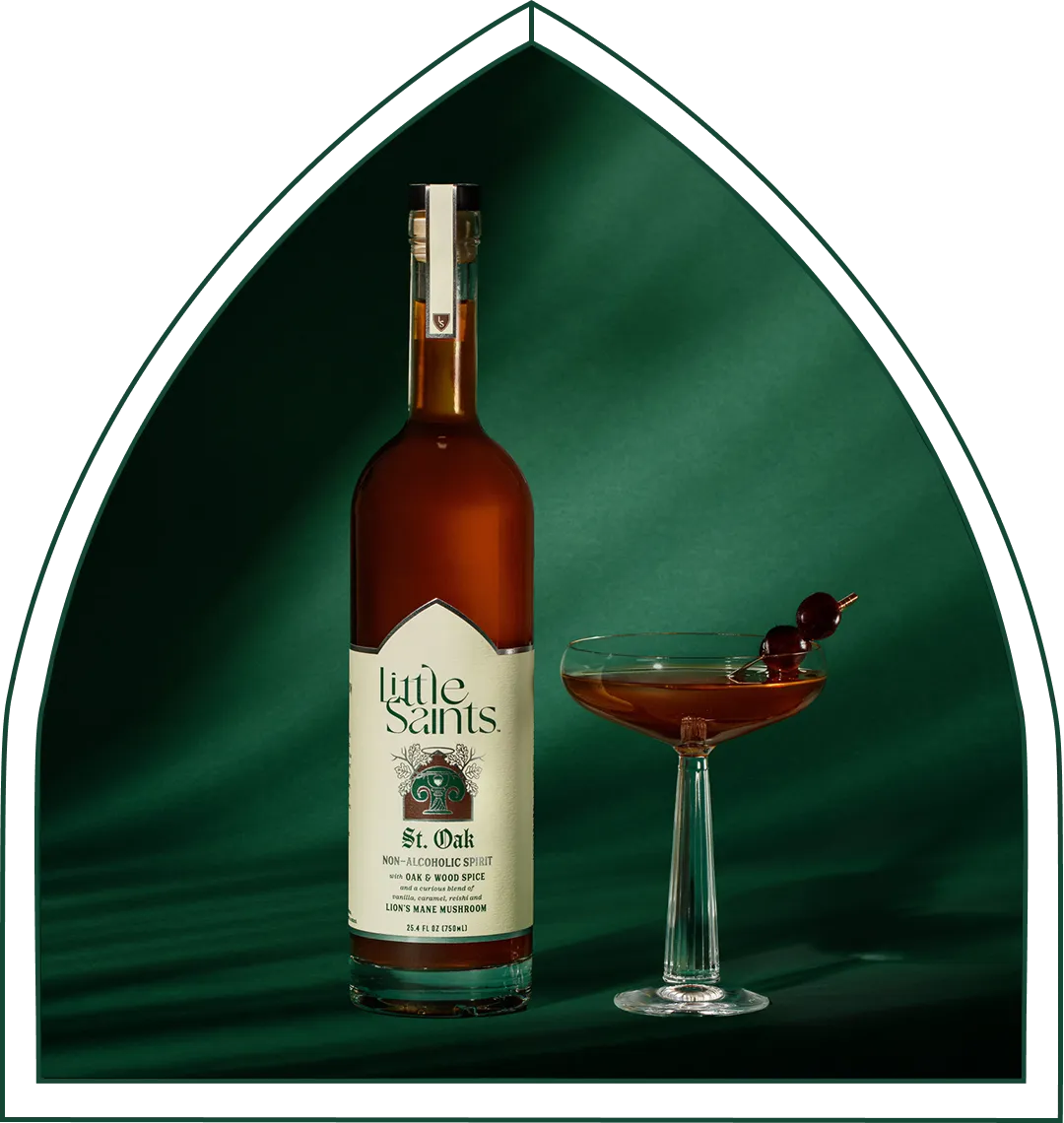
The range covers two formats. Seven canned non-alcoholic cocktails — Classic Spritz, Hugo Spritz, Classic Margarita, Paloma, Old Fashioned, Mojito, and Negroni Spritz — all deliver zero sugar and five calories per can. Each is built on organic Reishi, Lion's Mane, Damiana, and botanical terpenes. Three non-alcoholic spirits — St. Ember, St. Juniper, and St. Oak — are built on oil-based craft extracts that mix 1:1 in any classic cocktail spec. The core line contains no caffeine and no sweeteners of any kind. St. Oak was named Best NA Spirit of 2025 by the BevNET Spirit Awards.
Much of the adaptogen drink category competes on flavor alone or makes functional claims it cannot document. Little Saints publishes both the dose and the potency behind it. That transparency turns a marketing list into a formulation you can evaluate.
Frequently Asked Questions About Adaptogen Drinks
Do Adaptogen Drinks Really Work?
Effectiveness depends on what is in the can and how much of it. Evidence for individual adaptogenic ingredients, including Reishi and Lion's Mane, comes from research on isolated extracts at defined doses. Many ready-to-drink beverages skip a dose or potency figure, which makes it impossible to know whether the amount in a serving is meaningful. Brands that publish a milligram dose and a beta glucan concentration give the buyer something concrete to evaluate. The category can work when the dose and potency are real and disclosed.
Who Should Avoid Adaptogens?
People who are pregnant or nursing should avoid adaptogenic ingredients, because safety in those populations has not been established. People taking medications for thyroid conditions, blood pressure, blood sugar, anxiety, depression, seizures, or blood clotting should consult a physician before use, as some adaptogenic ingredients can interact with those drug classes. People with autoimmune conditions and those scheduled for surgery should also seek medical guidance first. These statements have not been evaluated by the Food and Drug Administration. These products are not intended to diagnose, treat, cure, or prevent any disease.
What Is The Best Time Of Day To Take Adaptogens?
Timing depends on the product and the occasion it is built for. Adaptogenic ingredients associated with focus and energy are often taken earlier in the day. Adaptogenic ingredients associated with restoration and the evening wind-down, Reishi in particular, fit better at the end of the day. Little Saints is built specifically for the evening occasion, using the same caffeine-free formulation noted earlier, which suits the moment when someone would otherwise reach for an alcoholic drink.
Is There Caffeine In Adaptogen Drinks?
Little Saints' core line contains no caffeine by design. The brand focuses on the evening wind-down, and many customers choose it specifically to protect their sleep. Some other adaptogen drinks in the broader category do contain caffeine, particularly those positioned for daytime or morning use, so checking the ingredient list of any product is worthwhile.
Conclusion: The One Question That Matters
Most adaptogen drinks do not publish a dose or a potency. The buyer cannot tell a concentrated fruiting-body extract from mycelium grown on grain, cannot compare the milligrams in a can to the amounts studied in research, and cannot verify whether the functional claim on the front of the label has anything behind it.
Little Saints publishes both numbers, with a stated 100 mg dose per serving and a minimum 70% beta glucan extract documented by supplier certificates of analysis, and builds that standard into every product across the range. For a reader who wants to verify what they are drinking before they drink it, that transparency offers the clear answer most of the category does not provide.
Start With A Dose-Disclosed Drink
The statements made on our website have not been evaluated by the Food and Drug Administration, Our products are not intended to diagnose, treat, cure or prevent any disease. If you are pregnant, nursing, taking any medications or have any medical conditions, consult your doctor before use.