


Key Takeaways for Halloween Hosts
- Standard spirits average 40% ABV, while Little Saints zero-proof spirits sit under 0.5% ABV, below Alcohol and Tobacco Tax and Trade Bureau (TTB) jurisdiction and outside intoxication range.
- Oil-based craft extracts, botanicals, and organic Lion’s Mane supply viscosity, burn, and complexity so Little Saints mixes 1:1 in cocktails.
- Because Little Saints mixes 1:1, hosts avoid the 2–3× pour ratios many early non-alcoholic spirits require, which keeps cost-per-drink comparable to conventional spirits.
- Zero-proof options let hosts serve alcoholic and non-alcoholic versions from the same base batch, then color-code for safety in dark, crowded Halloween rooms.
- Little Saints provides inclusive, non-intoxicating spirits that keep every guest in the round without a second menu or recipe change.
Shop Little Saints Zero-Proof Spirits
The Five Checks Every Halloween Host Can Make
The five axes a host can check on a label and in a glass are ABV and label law, flavor and mouthfeel, pour ratio, cost per drink, and safety at the party. Zero-proof spirits match standard spirits on flavor, mixability, and cost-per-drink, while they differ on intoxication and legal classification.
Little Saints St. Ember mixes like a tequila or a mezcal. Little Saints St. Oak, named Best NA Spirit of 2025 by the BevNET Spirit Awards, mixes like a whiskey. Little Saints St. Juniper mixes like a gin.
All three carry zero grams of sugar, no sweeteners of any kind, 100 mg of organic Lion's Mane extract per serving at a minimum of 70% beta glucan documented by supplier certificates of analysis, USDA Organic California-grown mushrooms, ultrasound-extracted, GRAS status on the extract, and under 0.5% ABV.
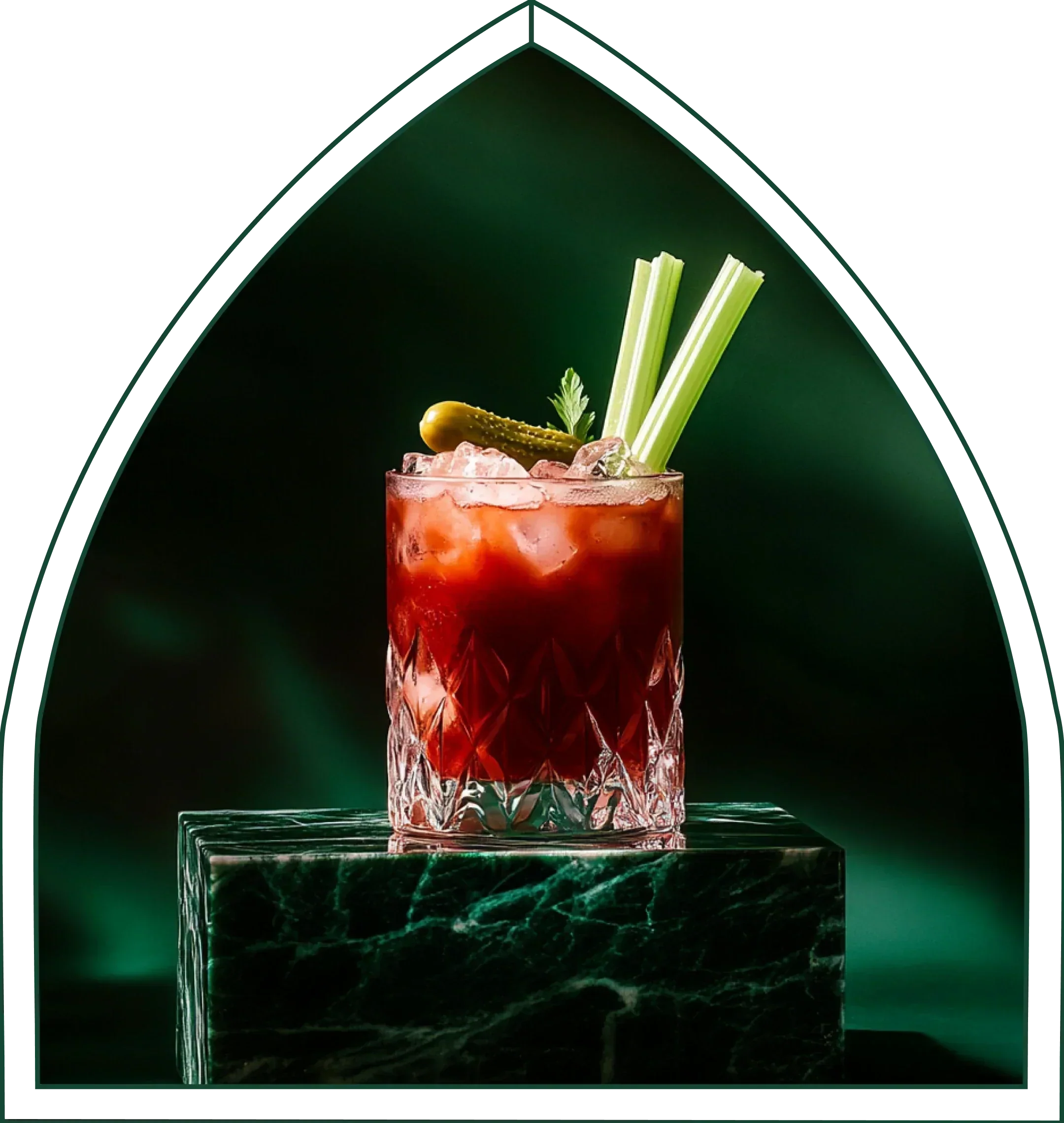
Action: Pull the three bottles you are comparing and check the ABV statement on each before you build a menu around them.
Alcohol Content and Label Law in Plain Language
The answer to whether a zero-proof cocktail contains alcohol depends on what is in the bottle. Little Saints canned cocktails carry 0% ABV. The spirits line, Little Saints St. Ember, Little Saints St. Oak, and Little Saints St. Juniper, carries under 0.5% ABV. Standard distilled spirits run roughly 40% ABV, or 80 proof.
Under U.S. federal law, 0.5% ABV is the dividing line. Products at or above 0.5% ABV fall under TTB jurisdiction, while products below 0.5% ABV fall under FDA food-labeling rules. The term “non-alcoholic” on a label does not mean zero. A product labeled “non-alcoholic” may legally contain up to 0.5% ABV, while “alcohol-free” requires no detectable alcohol. “Zero proof” is a marketing term rather than a defined federal product category, and the actual ABV statement on the label controls the claim’s accuracy.
Action: Read the ABV line on the label before pouring for a pregnant guest or a designated driver. Treat the front-of-pack phrase as marketing, not as the final answer.
Flavor and Mouthfeel Without Ethanol
Ethanol plays at least five structural roles in a cocktail. It carries aromatic compounds, lowers surface tension to boost aroma, adds perceived warmth, provides viscosity and mouthfeel, and suppresses bitter perception at lower concentrations. Removing ethanol creates five formulation problems at once. Botanicals, oak, vanilla, and smoke build depth, yet the burn and viscosity ethanol supplies remain the hardest to reconstruct.
Little Saints addresses this through three engineered details. First, it uses oil-based craft small-batch extracts rather than flavored water, which helps the spirits hold up in a build and mix 1:1 instead of diluting. Second, a built-in burn from cardamom and capsicum registers as heat at the back of the throat, enough that the drink reads as a spirit rather than a cordial. Third, organic Lion's Mane extract provides natural cloudiness and viscosity that are genuinely present in the bottle.
Little Saints St. Ember is an ode to the flavors of a light, spicy mezcal, with spicy, smoky, woodsy notes from palo santo, ginger, and cardamom. Little Saints St. Oak captures the notes of an oak-aged whiskey, with vanilla, spice, and woodsy depth. Little Saints St. Juniper is inspired by gin, with juniper, cucumber, and herbaceous notes. These spirits do not claim a perfect 1:1 taste match. They mix like the spirits they reference and capture those notes.
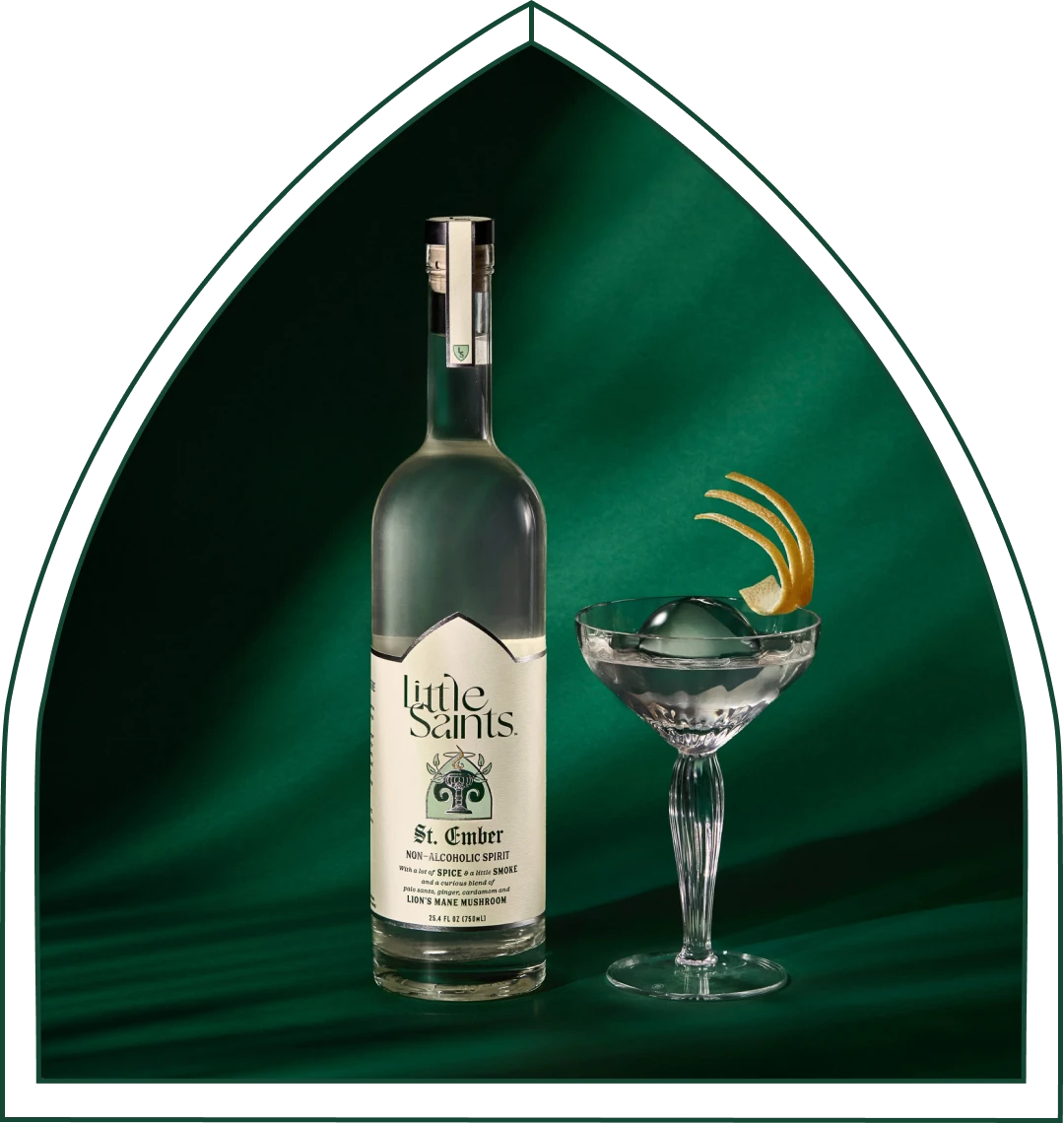
Action: Taste the zero-proof spirit in the exact build you plan to serve, not neat, before you commit the bottle to the menu.
Pour Ratios That Actually Match the Real Thing
Pour ratio is the differentiator most Halloween cocktail roundups skip. Many first-generation non-alcoholic spirits need two to three times the volume to register in a cocktail. That quietly changes how far a bottle pours and how a host costs a round. A bottle that empties at twice the rate carries a very different value than its shelf price suggests.
Little Saints St. Ember, Little Saints St. Oak, and Little Saints St. Juniper are formulated with mixologists to mix 1:1. Two ounces replace two ounces. One batch base can split into two versions without re-costing the build, and a bottle pours as far as the bottle it stands in for. Pour ratio, not shelf price, drives the real cost of a zero-proof program.
Action: Build one round at 1:1 and one at 2:1 and taste side by side before you write the batch card.
Cost Per Drink for Zero-Proof vs Alcohol
Cost per drink depends on how far the bottle goes at your actual pour ratio. Leading zero-proof spirits retail at super-premium price points, and the category has no budget well tier. A spirit that mixes 1:1, however, pours as many drinks as the bottle it replaces. A spirit that requires 2–3× the volume empties faster and costs more per drink regardless of shelf price.
Because Little Saints spirits mix 1:1, the cost-per-drink comparison sits much closer to a conventional spirit than the shelf price alone suggests.
Action: Calculate how many pours a bottle yields at your real ratio before you decide how many bottles to buy.
Can Guests Get a Buzz From Zero-Proof Spirits?
Guests do not get intoxicated from Little Saints. The products are non-intoxicating, non-psychoactive, and 100% legal, with no impairment to judgment, reaction time, or coordination. Alcohol-free beverages cannot reproduce alcohol's physiological effects, because those effects come from ethanol's action on the brain and nervous system.
People who drink Little Saints often describe the Little Saints Lift, a sense of clarity and ease, feeling a little lifted and more present. That experience comes from the Nature's Neuroscience blend: organic Reishi for chill, organic Lion's Mane for focus, Damiana for connection, and botanical terpenes for the senses. The experience does not build like alcohol and varies by person.
Action: Set guest expectations out loud at the bar so nobody waits for an alcohol-style buzz.
Safety and Inclusivity at a Halloween Party
Halloween parties introduce specific hosting hazards. Dry ice, fog machines, and dark, crowded rooms make an intoxicating drink in the wrong hand a real risk. Designated drivers, pregnant guests, and mixed-age parties all need a zero-proof option that is clearly labeled and physically separate from the alcoholic version.
Treating a premium non-alcoholic option as a real part of the menu helps guests pace their alcohol intake and removes the pressure to hold a cocktail. If you use dry ice for fog effects, keep dry ice out of the drink itself and place it in a separate nested vessel so fog flows over rather than into the liquid. Hosts should verbally warn guests not to touch or ingest the fog or any white particles.
Ninety-three percent of non-alcohol buyers also purchase alcohol, so the guest reaching for the zero-proof pitcher is usually the same guest buying across both options. Their choice is often “a Little Saints or nothing.” Guests who receive nothing stop spending. Guests who receive a clearly labeled, well-built zero-proof option stay in the round.
Action: Keep the zero-proof pitcher physically separate and clearly labeled. In a dark room with fog effects, color-code the garnish or use different-colored cocktail picks.
Split-Batch Service for Alcoholic and Zero-Proof Versions
Hosts can serve alcoholic and non-alcoholic versions from one base by batching the shared base, splitting the spirit at the very end, and color-coding the garnish. The anxiety about mix-ups in a dark Halloween room eases when the split happens last and appears on the batch card.
The shared base contains everything except the spirit: juice, syrup, water, bitters, and any other non-spirit ingredients. That base goes into two pitchers. One pitcher receives the zero-proof spirit. The other receives the full-strength spirit. From that point forward, the two versions never share a vessel. Anyone helping you pour needs to know exactly where the two versions diverge, which is why the split point belongs on the batch card.
In a CGA by NIQ survey of US on-premise consumers participating in Dry January 2026, 57% named soft drinks and 29% named sparkling water as their go-to alternatives. Those are the rounds that would otherwise have been water. A split-batch build keeps that round in the paid column without a second menu, recipe, or cost structure.
Action: Write the split point into the batch card so anyone helping you pour knows exactly where the two versions diverge.
Dual-Version Halloween Cocktails From One Base
Both builds below use a shared base split at the spirit. Batch the base first, then divide into two pitchers and add the spirit last.
Smoky Cauldron Margarita (Split Batch, Serves 8)
Shared base:
- 8 oz fresh lime juice
- 4 oz agave syrup
- 2 oz water
Stir the base to combine. Divide evenly into two pitchers.
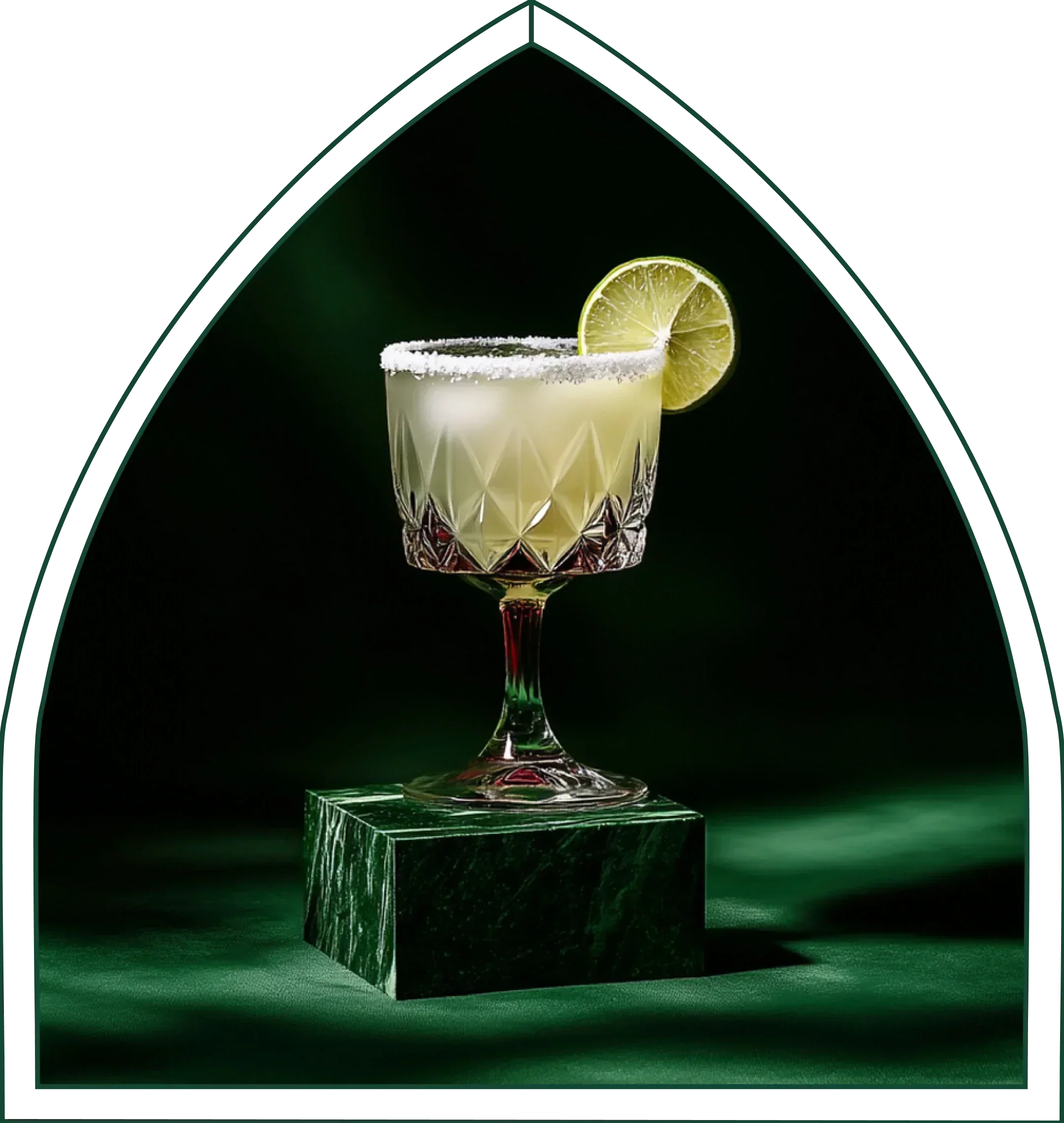
- Pitcher one (zero-proof): Add 16 oz Little Saints St. Ember. It mixes like a tequila or a mezcal, 1:1, and holds its color and bite. Serve over ice with a black lava salt rim and a smoking rosemary sprig. Mark with a dark-colored cocktail pick.
- Pitcher two (full-strength): Add 16 oz blanco tequila. Serve over ice with a black lava salt rim and a smoking rosemary sprig. Mark with a light-colored cocktail pick.
Brown-Spirits Halloween Old Fashioned (Split Batch, Serves 8)
Shared base:
- 1 oz demerara syrup
- 16 dashes aromatic bitters
- 2 oz water
Stir the base to combine. Divide evenly into two pitchers.
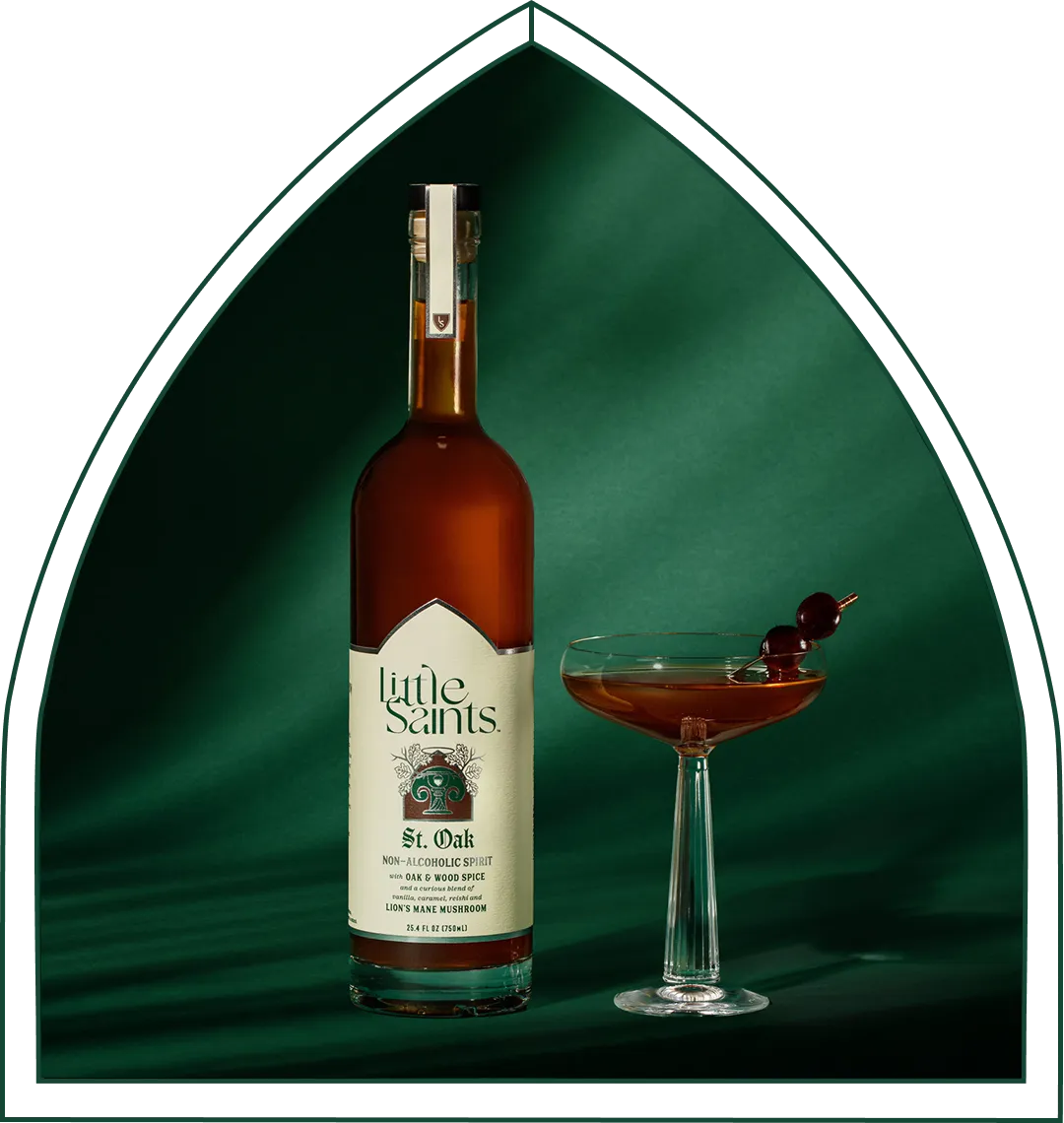
- Pitcher one (zero-proof): Add 16 oz Little Saints St. Oak. It mixes like a whiskey. Serve over one large cube with an orange twist. Mark with a dark-colored cocktail pick.
- Pitcher two (full-strength): Add 16 oz bourbon. Serve over one large cube with an orange twist. Mark with a light-colored cocktail pick.
Action: Label each pitcher at the split point and use different-colored picks for each version so guests self-sort in a dark room.
Frequently Asked Questions
Does a Zero-Proof Cocktail Have Alcohol?
It depends on the product. Little Saints canned cocktails carry 0% ABV. The spirits line carries under 0.5% ABV, which sits below the federal threshold that separates TTB-regulated alcohol from FDA-regulated food. Standard distilled spirits run roughly 40% ABV, or 80 proof. “Non-alcoholic” on a label can still mean up to 0.5% ABV, and “zero proof” is a marketing term. Read the ABV statement on the label before pouring for a pregnant guest or a designated driver.
Can You Get Buzzed Off Non-Alcoholic Spirits?
Little Saints does not intoxicate or impair judgment, reaction time, or coordination. Many guests describe the Little Saints Lift, a sense of clarity and ease that comes from the Nature's Neuroscience blend of organic Reishi, organic Lion's Mane, Damiana, and botanical terpenes. The experience differs from alcohol and does not build round after round.
How Much Zero-Proof Spirit Do You Pour in a Halloween Cocktail?
With Little Saints St. Ember, Little Saints St. Oak, and Little Saints St. Juniper, two ounces replace two ounces. The spirits are formulated to mix 1:1, so one batch base splits into two versions, one zero-proof and one full-strength, without re-costing the build or changing the recipe.
How Do You Keep the Alcoholic and Non-Alcoholic Versions Straight at a Party?
Batch the shared base, then split the spirit last into two separate pitchers. From that point forward, the two versions never share a vessel. Color-code the garnish or use different-colored cocktail picks so guests can self-sort in a dark, crowded room. Write the split point into the batch card and keep the zero-proof pitcher physically separate and clearly labeled.
Conclusion: Make the Call at the Batch Card
Search results tell a host what to make but rarely explain how the two versions differ in the glass, on the label, and on the bill. The five verifiable axes, ABV and label law, flavor and mouthfeel, pour ratio, cost per drink, and safety, plus a split-batch build card, give you the full picture. Little Saints St. Ember, Little Saints St. Oak, and Little Saints St. Juniper mix 1:1. One batch base becomes two versions without re-costing the build or adding a second recipe. A color-coded pick handles the mix-up risk.
Statements about Little Saints products have not been evaluated by the FDA, and the products are not intended to diagnose, treat, cure, or prevent any disease. Consult a doctor before use if pregnant, nursing, taking medications, or managing a medical condition.
The statements made on our website have not been evaluated by the Food and Drug Administration, Our products are not intended to diagnose, treat, cure or prevent any disease. If you are pregnant, nursing, taking any medications or have any medical conditions, consult your doctor before use.