


Last updated: October 14, 2026
Key Takeaways
- Oil-based non-alcoholic spirits use oil-based botanical extracts to carry aromatic oils into the liquid, so the drink has a nose, body, and finish that water-based products rarely match.
- First-generation non-alcoholic spirits built on hydrosols or flavored water contain only 0.05–0.2% aromatic compounds, which makes them taste thin and collapse when diluted with ice or tonic.
- Oil-based extracts support true 1:1 mixing in cocktails, so you can pour the same volume as the alcoholic spirit without over-pouring.
- Key label indicators of oil-based extraction include disclosed extraction methods, stated functional doses, published mixing ratios, visible body or cloudiness, and named botanical extracts rather than generic “natural flavors.”
- Little Saints builds its spirits on oil-based extracts paired with functional mushrooms to deliver both cocktail performance and the signature Little Saints Lift.
What Oil-Based Means In Non-Alcoholic Spirits
Every botanical such as juniper, cardamom, palo santo, and ginger holds its aroma in essential oils. Those oils are volatile, hydrophobic compounds that give a spirit its nose and complexity. Essential oils are generally insoluble or only slightly soluble in water, which means a spirit built on water alone cannot hold those aromatics in suspension. The result is a drink that smells faint, tastes flat, and disappears the moment it is diluted.
Oil-based botanical extracts solve that problem. Craft small-batch oil-based extracts pull aromatic compounds into a medium that can actually hold them. The aromatic oils stay in the liquid, so the drink has a nose, a body, and a finish instead of a sweet top note that evaporates on contact with tonic water or ice.
The term to look for is oil-based botanical extracts. That mechanism determines whether a spirit performs in a cocktail or collapses into flavored water. High-ethanol and oil-based extraction systems pull a broader range of moderately polar aroma compounds, phenolics, and resins than water alone can reach. That broader pull is why oil-based non-alcoholic spirits can deliver aromatic breadth that water-forward products rarely achieve.
Why First-Generation Non-Alcoholic Spirits Taste Watery
The first generation of non-alcoholic spirits was, in most cases, flavors in water. Many used hydrosols, the aromatic water produced as a byproduct of steam distillation when botanical material is heated with water and the condensed liquid captures a fraction of the volatile compounds. A hydrosol carries some recognizable aroma, but a true hydrosol contains only 0.05% to 0.2% dissolved aromatic compounds, making it approximately 99.8% to 99.95% water. Because that concentration is so low, a hydrosol delivers far less of the botanical’s aromatic oil than the plant it came from.
That concentration gap translates directly into the drinker’s experience. A spirit built on hydrosols can smell faintly botanical in the bottle, yet the moment it is poured over ice or mixed with tonic, the aroma collapses. Without ethanol or an oil-based carrier, a drink can taste thin and structurally hollow in the mouth because it lacks the viscosity and aromatic delivery system that gives a spirit presence and persistence. Bartenders who tested first-generation non-alcoholic spirits described them as spirits that diluted in a cocktail and had to be poured at two to three times the volume. That approach empties the bottle at twice the rate and still produces a drink that tastes like flavored water.
That experience reflects basic physics. Oil-based botanical extracts provide a direct answer to that physics problem.
How Oil-Based Extracts Change The Drink In A Cocktail
Little Saints St. Ember, Little Saints St. Juniper, and Little Saints St. Oak are built on oil-based craft small-batch extracts formulated with mixologists so the spirits hold up in a build. Three engineered details explain why they perform differently from first-generation non-alcoholic spirits.
1:1 mixing. Because the oil-based extracts hold the aromatics in suspension through dilution, two ounces of a Little Saints spirit replace two ounces of the spirit it stands in for. You can pour the same volume as the spirit it replaces, without over-pouring or re-costing the recipe. First-generation non-alcoholic spirits that require a two-to-three-times pour empty at twice the rate and still produce a thinner drink. Non-alcoholic spirits that mix 1:1 provide practical proof that the extraction method is working. For a deeper look at how 1:1 mixing holds up across classic builds, see Non-Alcoholic Spirits That Mix 1:1 In Cocktails: Tested.
A built-in burn. Every Little Saints spirit carries deliberate heat from a cardamom extract present in each one, plus capsicum. Ethanol triggers TRPV1 receptors in the mouth and throat, the same pain receptors responsible for detecting heat in spicy foods, which creates the warming sensation that signals an adult beverage. The Little Saints burn provides a warming sensation that makes the drink register as a spirit, though it is milder than the full mouth-coating effect of ethanol.
Natural cloudiness and body. The spirits are cloudy because the Lion’s Mane extract is genuinely in there at a stated 100mg dose per serving, at a minimum of 70% beta glucan, documented by certificates of analysis from the supplier. That cloudiness also gives the liquid a viscosity that flavored water does not have. It coats the glass, holds its own over ice, and resists thinning into a watery pour.
The practical translation is straightforward. Little Saints St. Ember mixes like a tequila or a mezcal, Little Saints St. Juniper mixes like a gin, and Little Saints St. Oak mixes like a whiskey. Substitute two ounces for two ounces, add the garnish, the ice, and the glass, and the drink lands. But how can you tell if a bottle on the shelf uses this approach? The label holds the answer.
How To Tell If A Non-Alcoholic Spirit Uses Oil-Based Extracts
Shoppers rarely get a clear label-reading guide for non-alcoholic spirits. These neutral, verifiable criteria apply to any bottle on the shelf.
- Extraction method versus flavor list. Ask whether the brand describes its extraction method or only its flavors. A brand using oil-based botanical extracts has a reason to say so, because the method is a selling point. By contrast, a brand that only lists flavor names such as juniper, cardamom, or vanilla without describing how those flavors were extracted is likely working with water-based flavorings or hydrosols. Under U.S. labeling rules, oil-based ingredients can be declared collectively as “natural flavors,” so a product could contain oil-based extracts without explicitly stating “oil” on the label. The brand’s own description of its process matters as much as the ingredient statement.
- Functional dose and potency. Look for a stated dose and a published beta glucan figure when mushrooms appear on the label. Those details signal a brand that has something measurable to show. When both dose and potency stay unstated, the functional layer usually plays a minor role.
- Published mixing ratio. Check whether the brand publishes a mixing ratio. A brand confident in its 1:1 performance usually says so clearly. Silence on mixing ratio often signals a product that dilutes in a build.
- Visible body and aroma. Notice whether the liquid has visible body and aroma or reads as clear and thin. Cloudiness in a well-formulated non-alcoholic spirit often indicates that functional ingredients are present at a real dose. Crystal clarity in a spirit built on water can indicate that aromatic compounds are present only in trace amounts.
- Named botanical extracts. Scan the ingredient statement for real botanical extracts rather than a reliance on “natural flavors” alone. “Natural flavors” is a legal collective term that can cover everything from oil-based extracts to dilute hydrosols. Named botanical extracts such as juniper extract, palo santo extract, or cardamom extract indicate a more specific and transparent formulation.
These criteria apply across the category. Sugar-sweetened non-alcoholic cocktails and aperitifs, other functional non-alcoholic drinks, non-alcoholic beer, and first-generation non-alcoholic spirits can all be evaluated on the same dimensions. Focus on sugar, calories, whether a dose is stated, whether a potency is published, and how the product behaves in a cocktail. The answers sit on the label.
How Oil-Based Non-Alcoholic Spirits Feel: The Functional Layer
Little Saints pairs its oil-based craft extracts with what the brand calls Nature’s Neuroscience: organic Reishi, organic Lion’s Mane, Damiana, and botanical terpenes, at a stated 100mg dose per serving and a minimum of 70% beta glucan, documented by certificates of analysis from the supplier. The mushrooms are USDA Organic, grown in California, and extracted with ultrasound rather than chemical solvents, so no residue carries into the liquid. The extract holds GRAS status, the FDA’s standard of generally recognized as safe for an ingredient used in food.
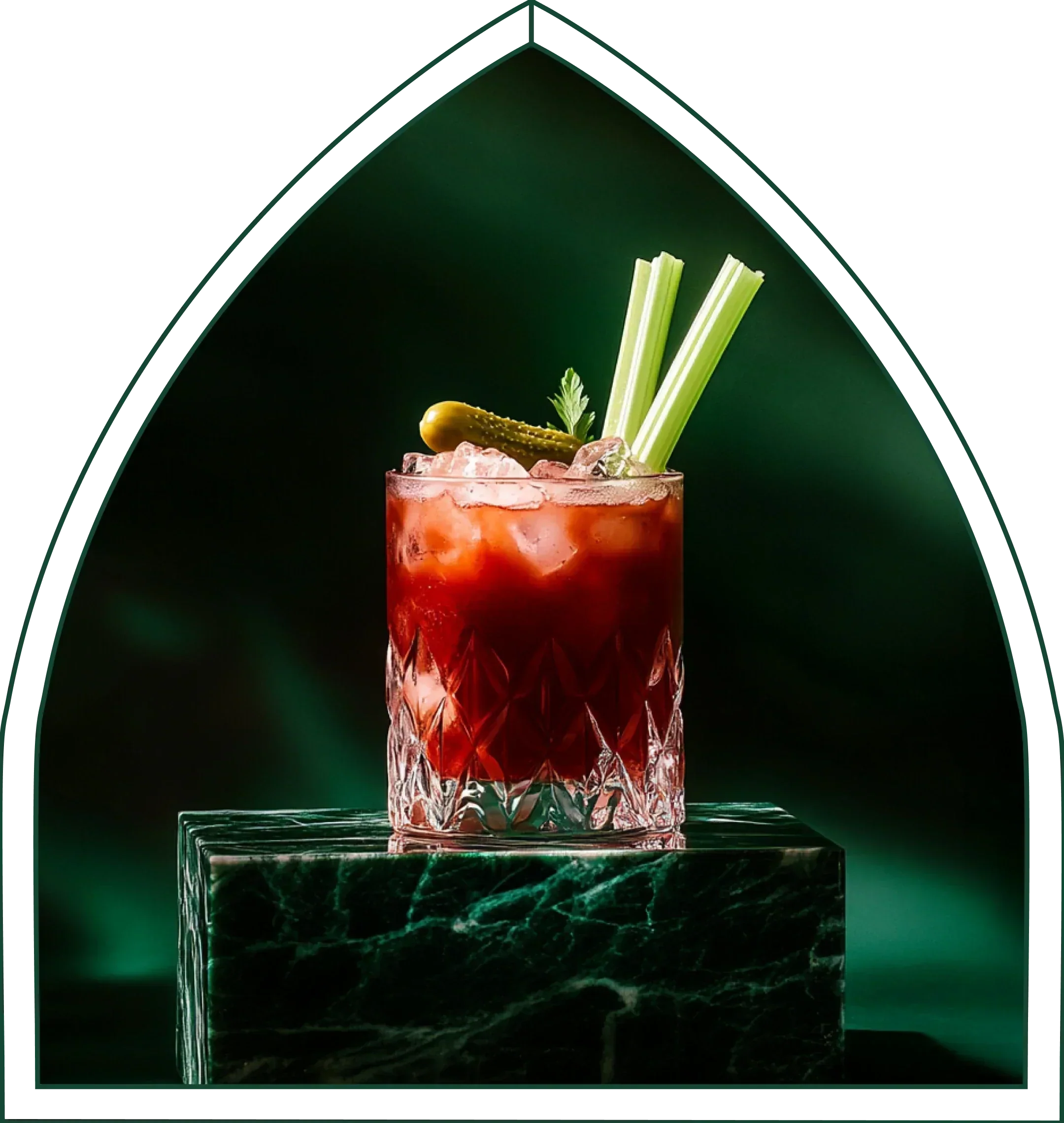
Each ingredient has a defined experiential role in the blend.
- Organic Reishi for chill. Reishi anchors the settling end of the blend. It has a long history of traditional use as a restorative botanical, and the brand’s language for its role is helping you exhale, unwind, and arrive.
- Organic Lion’s Mane for focus. Lion’s Mane supports the mental presence end of the blend, associated with clarity and feeling more engaged in the moment.
- Damiana for connection. Damiana is a flower rather than a mushroom. It rounds out the experience with a warmer, more physical quality alongside the more cerebral mushroom notes.
- Botanical terpenes for the senses. Terpenes are naturally occurring aromatic compounds found in plants, roots, herbs, and flowers. They give the drink a nose and an aromatic layer that water-based spirits cannot easily replicate.
The potency behind the dose deserves a clear comparison. At a minimum of 70% beta glucan, the extract is far more concentrated than whole mushrooms. For comparison, a whole mushroom contains roughly 0.1% beta glucan, and a dried, ground mushroom contains roughly 1%. Quality fruiting-body extracts in the supplement industry typically run 20–40% beta glucan, while mycelium-on-grain powders commonly test in the low single digits. The 70% figure sits at the top of that range, documented by supplier certificates of analysis and third-party lab testing commissioned by the supplier.
Little Saints calls the result the Little Saints Lift: a sense of clarity and ease, feeling a little lifted and more present. Spirits drinkers describe feeling super engaged, really present, and more able to take a deep breath and be in the room. The products are non-intoxicating, non-psychoactive, and 100% legal, with no impairment to judgment, reaction time, or coordination.
For more on how the functional layer works, see Functional Non-Alcoholic Spirits: What You Need To Know.
Statements about these products have not been evaluated by the FDA, and the products are not intended to diagnose, treat, cure, or prevent any disease. Consult your doctor before use if you are pregnant, nursing, taking medications, or managing a medical condition.
Little Saints Oil-Based Non-Alcoholic Spirits: Flavor Profiles And Uses
The non-alcoholic spirits segment is growing at roughly 70% and represents around 6% of total non-alcohol sales, the fastest-moving part of a category that itself grew 21.9% in the off-premise channel while total alcohol fell 1.0%, per From Value to Vibe, NIQ, January 2026. Within that growth, products that hold up in a cocktail are pulling away from those that fade in a build. The three Little Saints spirits show how oil-based extraction and functional dosing translate into specific flavor experiences.
Little Saints St. Ember. St. Ember is an ode to the flavors of a light, spicy mezcal, with spicy, smoky, and woodsy notes built on palo santo, ginger, and cardamom. It mixes like a tequila or a mezcal. Substitute two ounces for two ounces in a margarita or a paloma, or drink it long over ice with soda and lime. Palo santo is sustainably sourced, and 1% of proceeds support reforestation in Peru. St. Ember is rated 4.7/5 across 430 reviews, with 92% of reviewers saying they would recommend it (accumulated customer reviews on littlesaints.com, captured August 2026, subject to change).
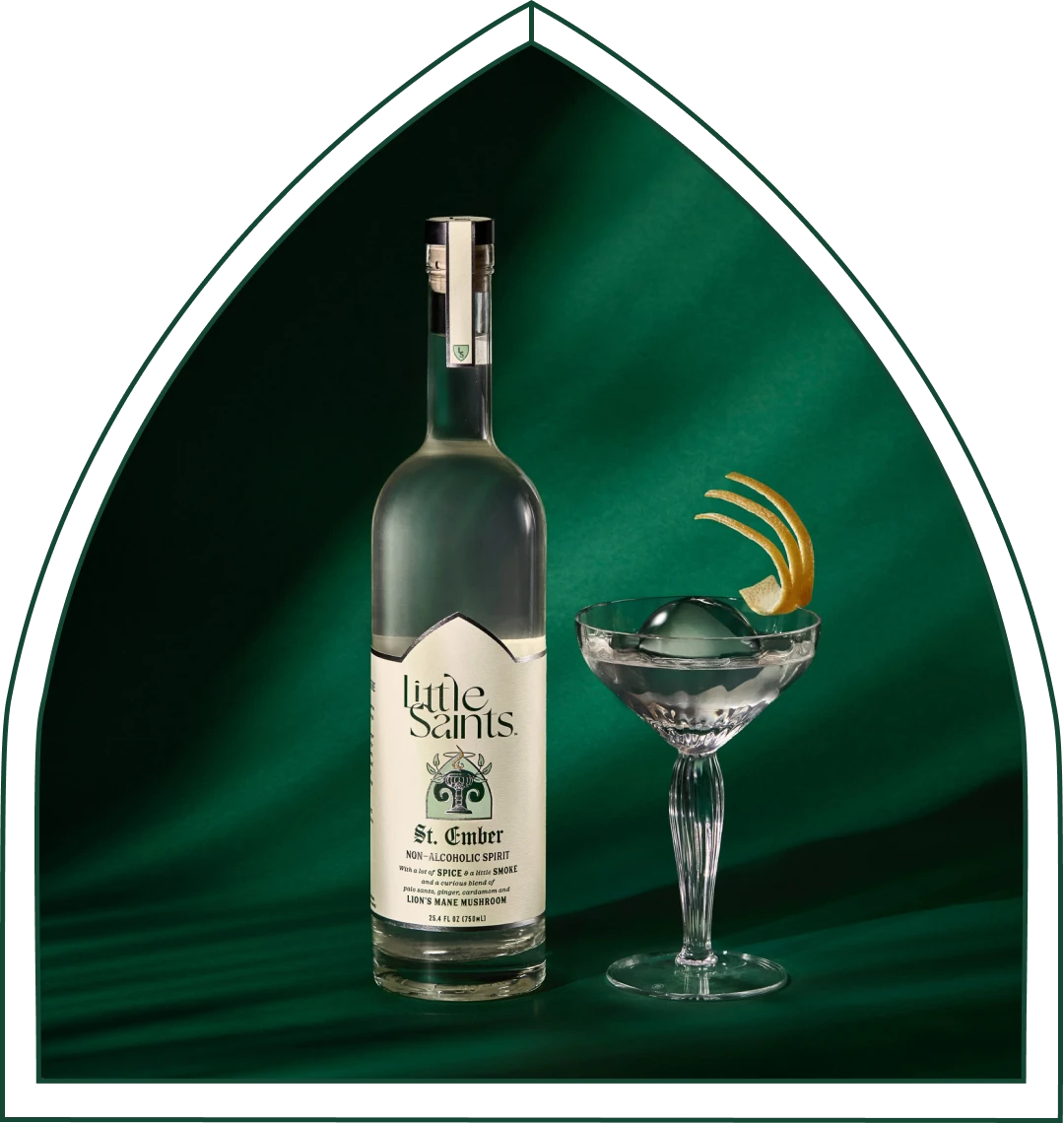
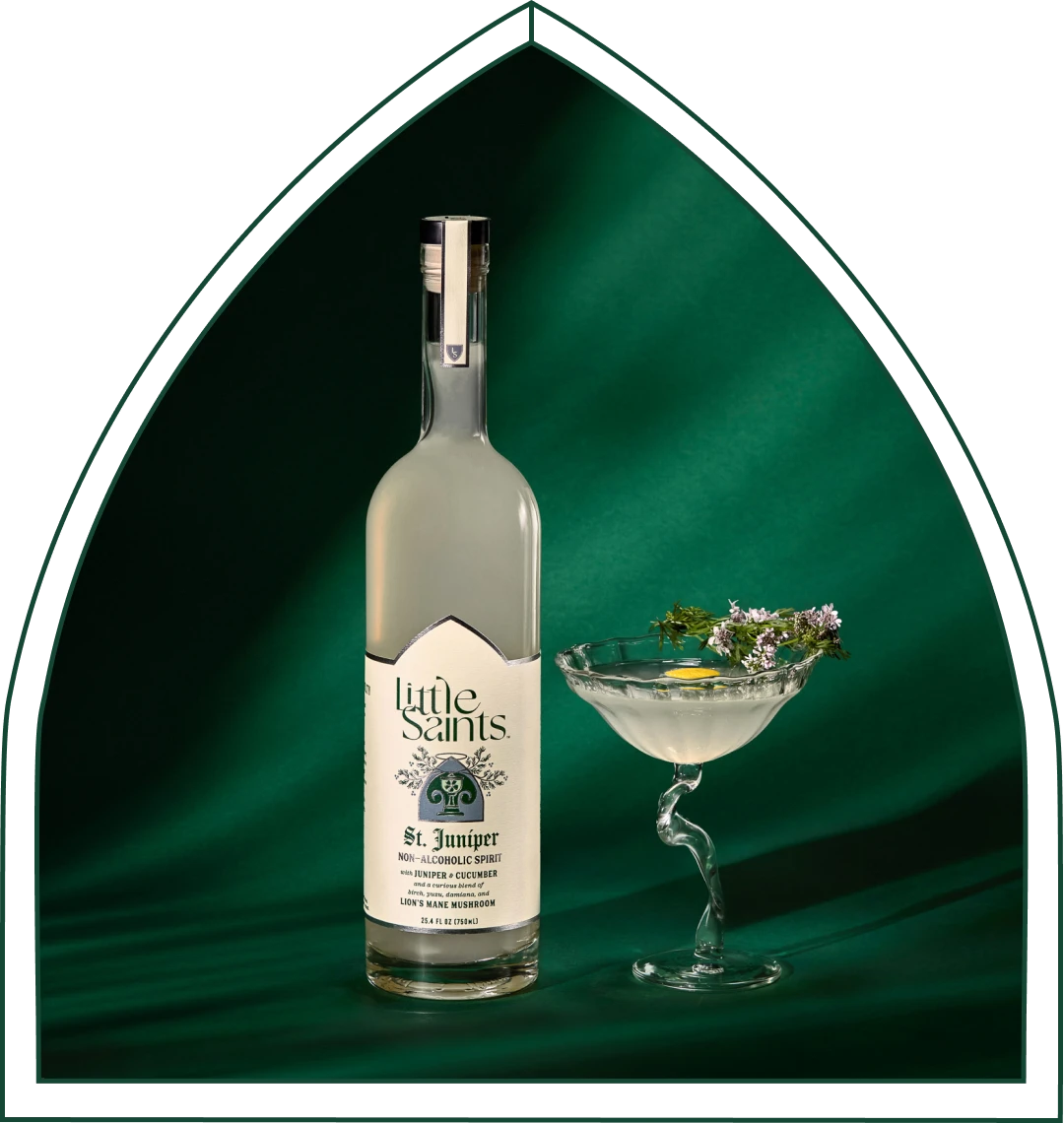
Little Saints St. Juniper. St. Juniper is the gin expression, with juniper, cucumber, and herbaceous notes from juniper, birch, angelica, coriander, and cardamom. It is built for gin and tonics, gimlets, martinis, and anything citrus-forward. St. Juniper is rated 4.6/5 across 147 reviews, with 93% recommending (littlesaints.com, August 2026, subject to change). For a guide to how it performs against classic gin builds, see Non-Alcoholic Spirits That Taste Like Alcohol: A Guide.
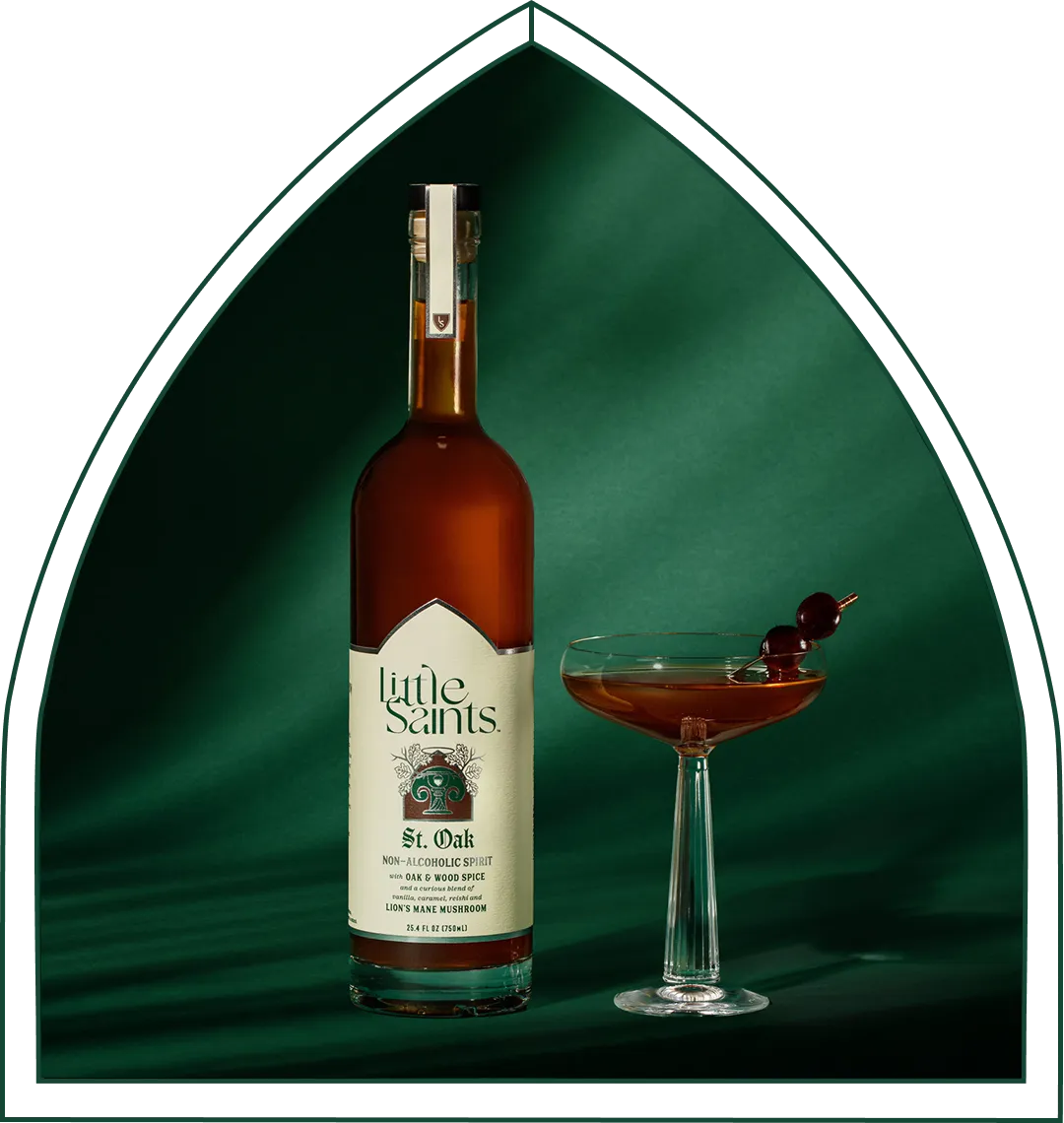
Little Saints St. Oak. St. Oak captures the soul of an oak-aged whiskey, with vanilla, spice, and woodsy notes from oak, vanilla, cardamom, and caramel, plus Lion’s Mane, Damiana, and Reishi. It is made for old fashioneds, manhattans, and boulevardiers, and it also works as an aged rum substitute in tiki-style builds. St. Oak was named Best Non-Alcoholic Spirit of 2025 by the BevNET Spirit Awards. It is rated 4.5/5 across 133 reviews, with 87% recommending (littlesaints.com, August 2026, subject to change).
All three share the same formulation: zero grams of sugar, no sweeteners of any kind, 100mg of organic Lion’s Mane extract per serving at a minimum of 70% beta glucan, and the built-in burn and natural viscosity that oil-based extraction makes possible.
Conclusion: Use The 1:1 Test
Oil-based botanical extracts explain why some non-alcoholic spirits hold up in a cocktail and others fade. Oil-based extraction solves the physics problem that made first-generation non-alcoholic spirits taste like flavored water: oil and water do not mix. By carrying aromatic oils into the liquid, oil-based systems give the drink a nose and a body and make a 1:1 substitution possible. The 1:1 mix offers practical proof that the extraction method is doing its job.
The functional layer provides a second reason to reach for Little Saints instead of alcohol. Nature’s Neuroscience, a blend of organic Reishi, organic Lion’s Mane, Damiana, and botanical terpenes at a stated 100mg dose and a minimum of 70% beta glucan, underpins the Little Saints Lift. Drinkers describe clarity and ease, with a gentle lift, without alcohol. Both the extraction method and the functional layer appear on the label and can be verified before the first pour.
The statements made on our website have not been evaluated by the Food and Drug Administration, Our products are not intended to diagnose, treat, cure or prevent any disease. If you are pregnant, nursing, taking any medications or have any medical conditions, consult your doctor before use.