


Key Takeaways
- A non-alcoholic holiday bar cart works best when you plan each shelf instead of parking leftover cans on the side.
- Place bottles at the back of the top shelf, glassware at eye level on the middle shelf, and backup stock on the bottom shelf.
- Little Saints spirits mix 1:1 in classic cocktails and carry zero grams of sugar, so a bottle pours as far as the conventional spirit it replaces.
- Stock three core expressions, St. Juniper, St. Oak, and St. Ember, plus mixers, garnishes, and a handwritten menu card to keep the station self-serve.
- Little Saints provides functional, zero-sugar spirits that make a non-alcoholic holiday bar cart practical to run and easy to photograph.
How To Set Up A Non-Alcoholic Holiday Bar Cart
Here is the build order to run through before the first guest arrives. The next section explains why each shelf gets what it does, so you can adapt the sequence to your own cart.
- Clear the cart completely and wipe every shelf so you build on a clean surface.
- Assign shelves by weight and height, because that choice sets the layout. Put the heaviest and tallest items at the back of the top shelf, lighter items forward, and backup stock below.
- With that map set, stock the back of the top shelf with bottles, Little Saints St. Juniper, Little Saints St. Oak, and Little Saints St. Ember, labels facing out.
- Place glassware at eye level on the middle shelf so guests can reach it without leaning over the bottles.
- Set the garnish tray at the front of the top shelf where it stays visible and accessible without disrupting the pour.
- Hide backup stock, extra ice, and a second set of glasses on the bottom shelf or in a covered bin beside the cart.
- Add lighting and a handwritten menu card last, after everything functional is in place.
What To Put On A Non-Alcoholic Bar Cart, Shelf By Shelf
The top shelf carries the bottles and the garnish tray. Bottles sit at the back as the tallest items and the visual anchor. The garnish tray stays at the front within arm’s reach, with a jigger and bar spoon beside it. Everything on the top shelf should be reachable without moving anything else.
The middle shelf holds glassware. Rocks glasses and highballs at eye level let guests grab a glass without reaching past the bottles. For a party of eight to twelve, start with four rocks glasses and four highballs on the shelf and keep backup glasses below. If the cart has a rail or hook, hang a small ice bucket there.
The bottom shelf is the working shelf. Extra bottles, a backup bag of ice in a sealed container, cocktail napkins, and a small cutting board for last-minute citrus all belong here. Keep it organized but out of sight, since the bottom shelf handles logistics rather than display.
On bottle counts, a gathering of eight to twelve guests with the NA cart as one of several drink stations runs comfortably on two bottles of spirits. For a larger party of twenty or more, plan three bottles across Little Saints St. Juniper, Little Saints St. Oak, and Little Saints St. Ember so guests can choose a flavor profile without a full back bar. A case of Little Saints canned cocktails alongside the spirits covers guests who want something ready to pour without a build.
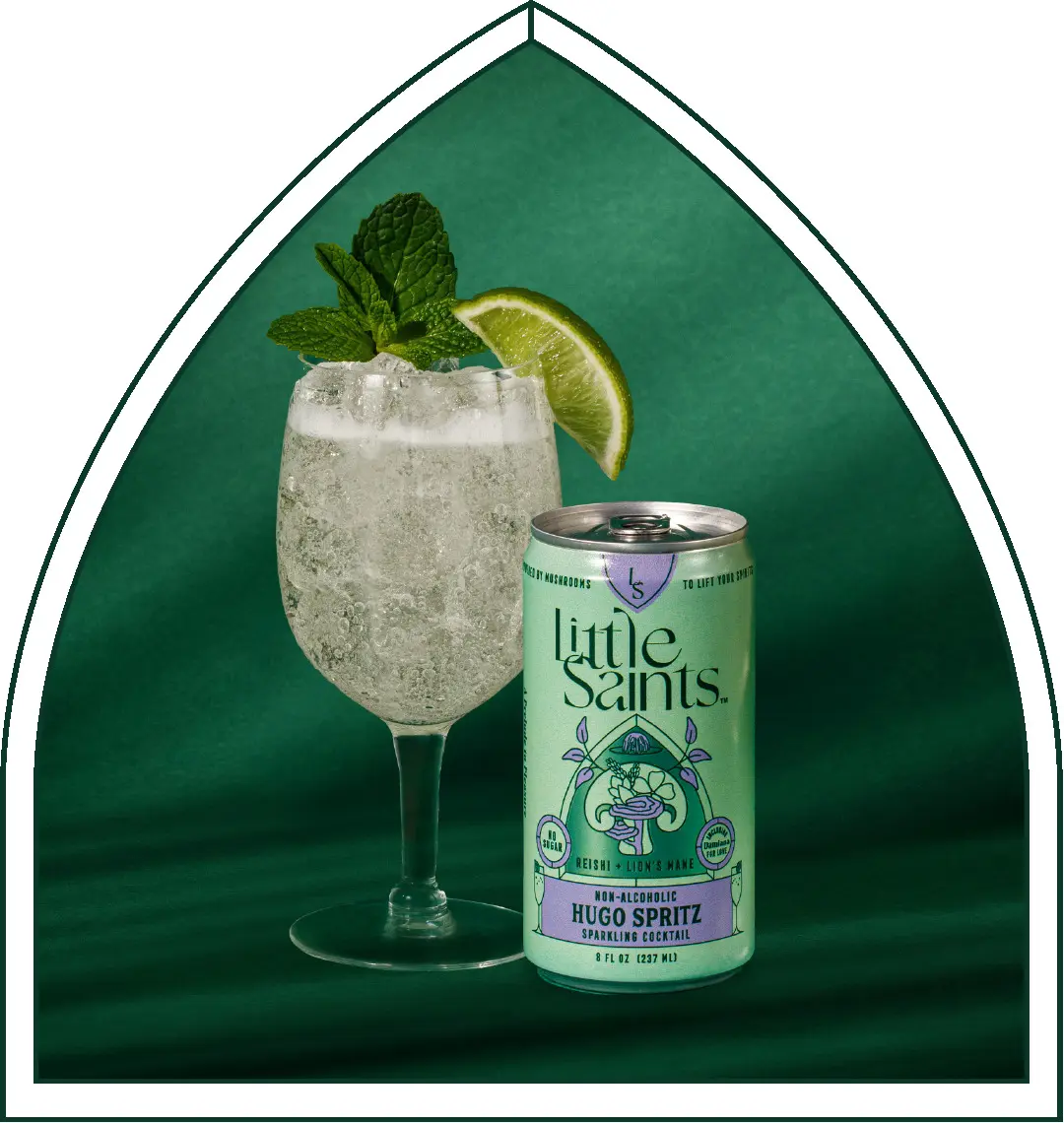
Zero-Proof Spirits And Bases
The spirits-and-bases bucket is the foundation of the cart. These bottles make every other ingredient on the shelf useful.
Little Saints makes three non-alcoholic spirits, each built on oil-based craft extracts rather than the flavored water that characterized the first generation of the category:
- Little Saints St. Juniper is an ode to gin: juniper, cucumber, birch, angelica, coriander, and cardamom. It mixes like a gin in a gin and tonic, a gimlet, or a martini. It is rated 4.6/5 across 147 reviews on littlesaints.com, with 93% recommending it.
- Little Saints St. Oak captures the soul of an oak-aged whiskey through oak, vanilla, cardamom, and caramel, the source of its vanilla, spice, and woodsy notes. It mixes like a whiskey in an old fashioned or a manhattan and was named Best NA Spirit of 2025 by the BevNET Spirit Awards. It is rated 4.5/5 across 133 reviews on littlesaints.com.
- Little Saints St. Ember is an ode to the flavors of a light, spicy mezcal, built on palo santo, ginger, and cardamom. It mixes like a tequila or a mezcal in a margarita or a paloma and is rated 4.7/5 across 430 reviews on littlesaints.com, with 92% recommending it.
All three carry zero grams of sugar with no sweeteners of any kind, sit under 0.5% ABV, and deliver 100 mg of organic Lion’s Mane extract per serving at a minimum of 70% beta glucan, documented by supplier certificates of analysis. The oil-based extract gives each spirit a natural viscosity and a built-in heat at the back of the throat, the qualities that make a drink register as a spirit rather than a cordial.
The first generation of non-alcoholic spirits, the botanical gin-style and whiskey-style bottles the category defaulted to, relied on flavored water. That construction diluted in a cocktail and forced a two-to-three-times pour to achieve the same flavor presence. At a party, a bottle emptied at twice the rate and the drink still tasted thin. Little Saints’ 1:1 mixing ratio means two ounces replaces two ounces. A bottle pours as far as the bottle it stands in for, so every recipe on the menu card works unchanged.
Mixers, Garnishes, Glassware, And Tools
The second and third buckets in a well-stocked NA cart are the ingredients that turn a bottle into a drink and the vessels that make it worth photographing.
Mixers: sparkling cider, ginger beer, cranberry juice, pomegranate juice, tonic, and club soda cover the full range of the three-drink menu below. Stock one bottle of each and keep backups on the bottom shelf. Ginger beer and tonic do the structural work, carrying the fizz and bitterness that make a built drink feel complete, while cranberry and pomegranate supply color and a tart edge that reads as festive without adding sugar.
Garnishes: a single garnish tray with lemon wheels, lime wedges, rosemary sprigs, and a small bowl of dehydrated citrus covers every drink on the menu. Cut citrus the morning of the party and refrigerate it covered. Dehydrated citrus can be prepped days ahead and stored at room temperature.
Glassware: rocks glasses for stirred and spirit-forward drinks, highballs for sparkling builds, and a mug or heat-safe glass for the warm drink. Bar6’s practical glassware guidance recommends four to six of each core glass style, rocks, highball, wine, and coupe, when regularly hosting four to six guests and assuming guests may switch drinks during an evening. Scale that up for a larger party and keep a second set in reserve on the bottom shelf.
Tools: a jigger, a cocktail shaker, a bar spoon, a small cutting board, and an ice bucket with a scoop. The jigger is non-negotiable because it keeps the 1:1 ratio honest and the menu card accurate.
The Three-Drink Holiday Menu
A three-drink menu, one stirred, one sparkling, and one warm, keeps the ingredient list short and the cart manageable. Every recipe below uses a Little Saints spirit at a 1:1 substitution. For a fuller recipe library, see the brand’s Non-Alcoholic Drinks For Holiday Parties: A Host’s Playbook.
The Stirred: NA Old Fashioned
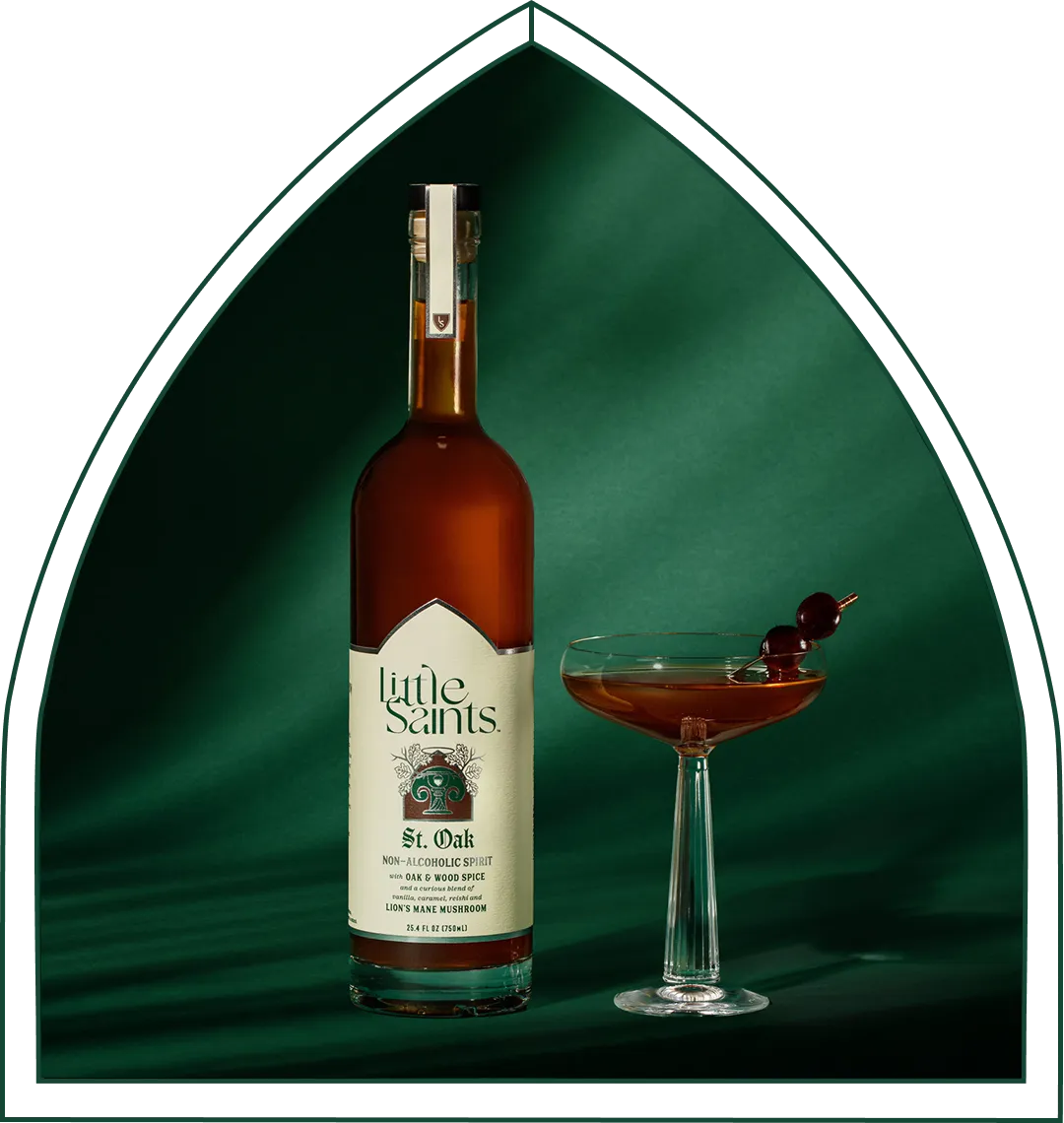
- 2 oz Little Saints St. Oak (mixes like a whiskey)
- 2 dashes aromatic bitters
- 1 bar spoon simple syrup
- Large ice cube in a rocks glass
- Expressed orange peel to garnish
Stir St. Oak, bitters, and syrup over ice for fifteen seconds. Strain into the rocks glass over a large cube. Express the orange peel over the glass and rest it on the rim.
The Sparkling: Juniper Tonic
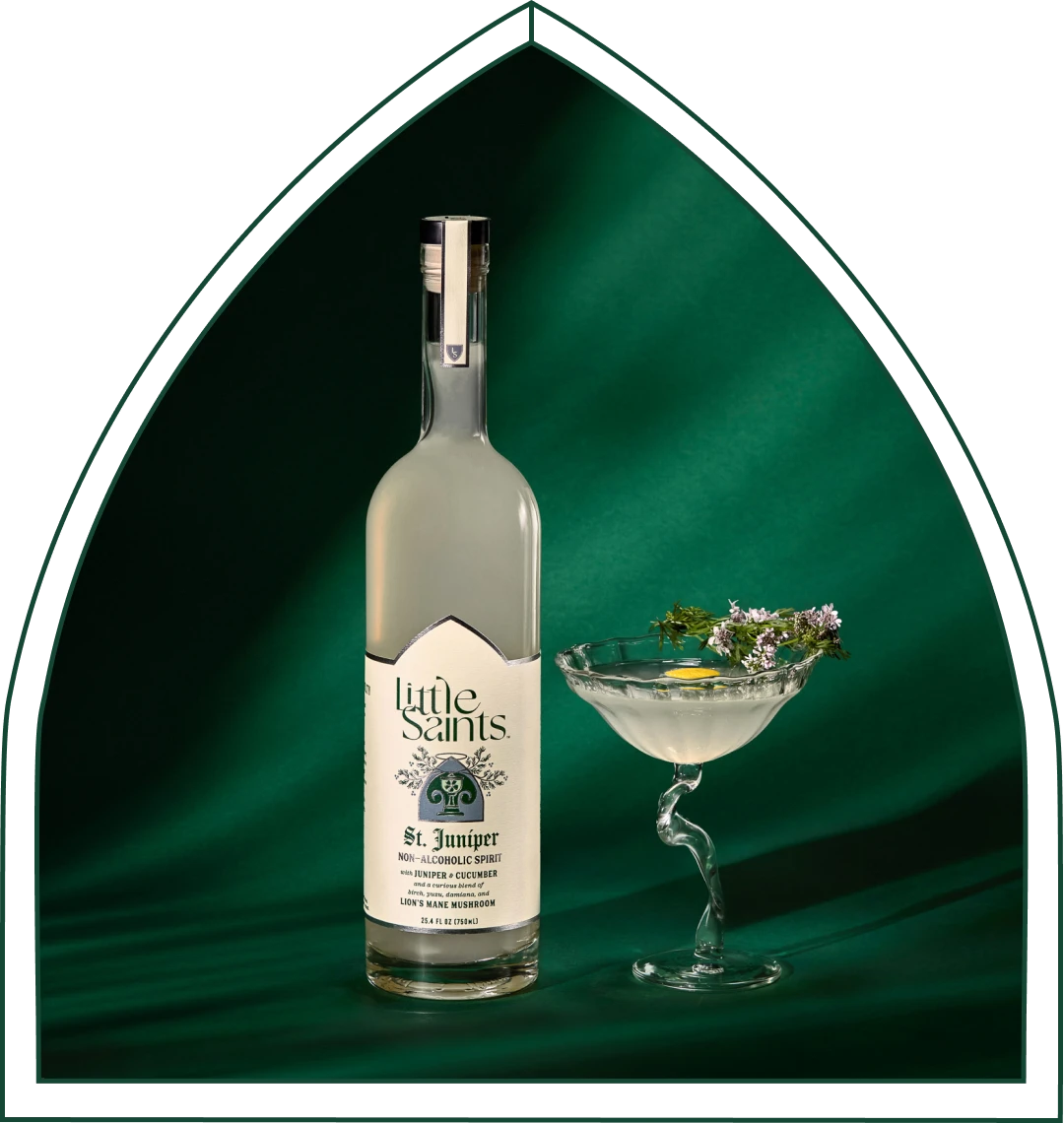
- 2 oz Little Saints St. Juniper (mixes like a gin)
- 4 oz tonic water
- Ice in a highball glass
- Lemon wheel and rosemary sprig to garnish
Build in the glass. Add ice first, then St. Juniper, then tonic. Stir once gently to combine. Add the lemon wheel and rosemary sprig.
The Warm: Ember Spiced Cider
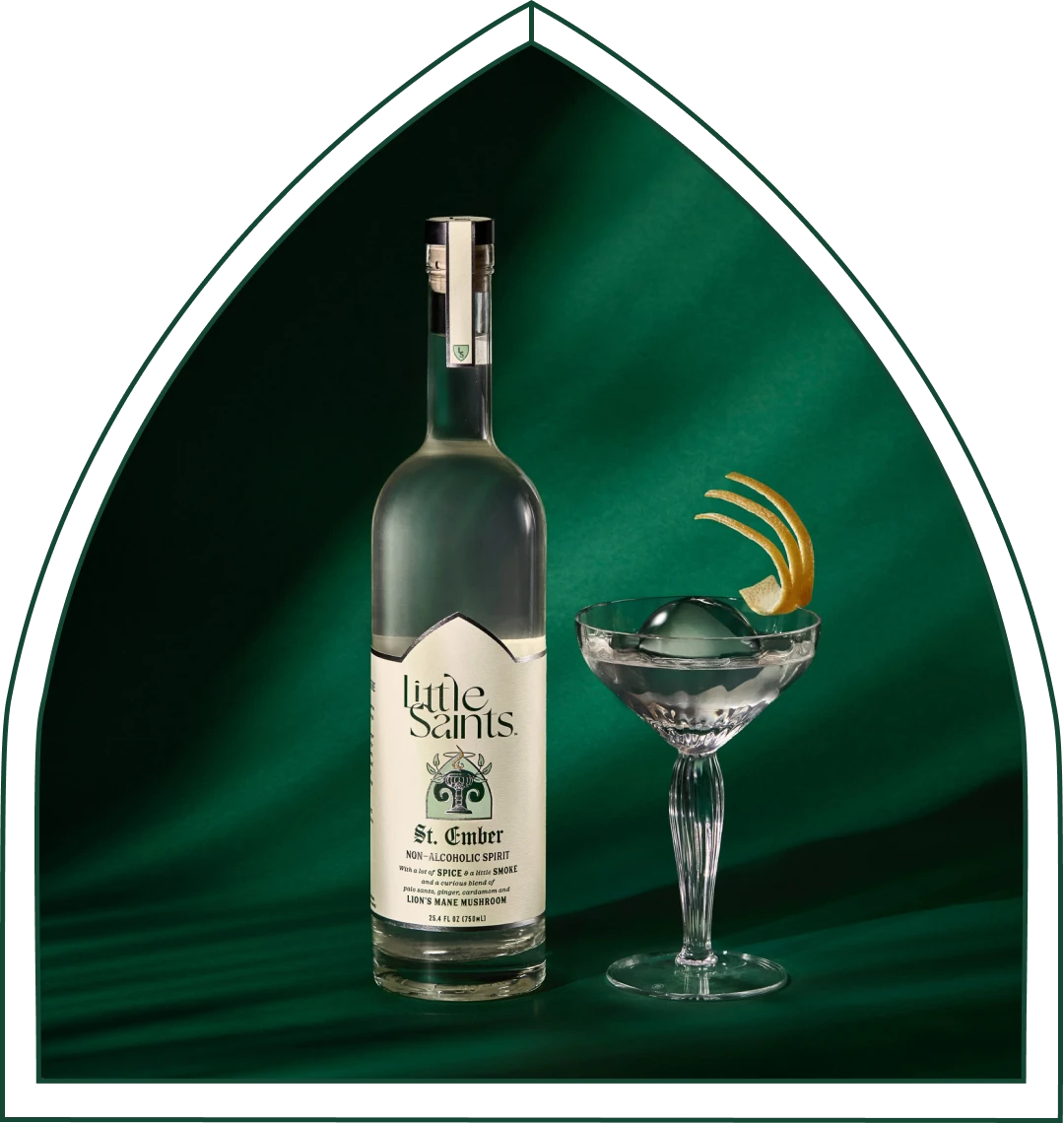
- 2 oz Little Saints St. Ember (mixes like a tequila or a mezcal)
- 5 oz warm sparkling cider, gently heated (do not boil)
- Heat-safe mug or glass
- Cinnamon stick and a lime wheel to garnish
Warm the cider in a small saucepan until steaming. Pour St. Ember into the mug first, then add the cider. Garnish with the cinnamon stick and lime wheel. Because the core line is caffeine-free, this warm drink works late in the evening.
Non-Alcoholic Bar Cart For A Mixed Crowd
The zebra striping host, someone serving wine and beer to most guests while keeping the NA corner genuinely stocked, is the majority case at a holiday party. NIQ’s From Value To Vibe analysis (January 2026) reports that 93% of non-alcoholic buyers also purchase alcohol and that 47% of on-premise visitors mix alcoholic and non-alcoholic drinks within the same occasion, the behavior NIQ names zebra striping.
The practical read for a host is straightforward. The NA cart carries the second and third round alongside the wine, so it belongs in the main spread. A guest who had a glass of red at arrival may want a Juniper Tonic at round two. Another guest who is driving, pregnant, or simply not drinking that evening wants a drink that reads as a choice and not a consolation. The cart serves both without a separate setup or a separate conversation.
Frame the cart as part of the main beverage spread. Matching glassware, a menu card, and a garnish tray signal that the NA station was built with the same intention as the wine table. For more on building the full holiday bar, see How To Build A Zero-Proof Holiday Bar For Christmas.
How To Keep Drinks Cold On A Bar Cart
A bar cart has no refrigeration, so cold logistics require planning before the first guest arrives.
Pre-chill everything. Bottles of Little Saints spirits and all mixers go into the refrigerator the night before. Pre-chilling beverages overnight cuts cooler ice needs by roughly 40%, because a cold bottle requires only maintenance ice rather than cooling from room temperature.
Separate serving ice from chilling ice. The ice bucket on the cart, with a scoop and never a drinking glass, holds clean serving ice for glasses and builds. A separate covered container beside or below the cart holds chilling ice for any bottles or cans that need to stay cold during the party. Ice used to chill bottles should never be reused as drinking ice.
On quantity, a practical indoor party baseline is about 1.5 lb of ice per guest, rising to about 2.5 lb per guest when ice must also chill bottles and cans. For a twelve-person indoor holiday party, plan roughly 18 to 30 lb of ice total, split between the serving bucket and the chilling supply. Hold back 15 to 25% as an unopened reserve bag in the freezer or a closed cooler to cover melting and extra rounds.
Use cubed ice. Standard cubes melt more slowly in glasses, scoop cleanly, and chill a room-temperature bottle in 30 to 45 minutes. Cubes are the right tool for a cart that needs to look good and function for three to four hours.
Large Party Vs. Small Gathering
The bottle counts from the shelf section hold here, but the logistics change with party size. A small gathering of eight to twelve needs only a compact two-shelf cart, a modest ice supply, and one person to manage it. A case of canned cocktails alongside the spirits still helps guests who want something ready without a build.
For a larger party of twenty or more, the logistics shift. Three to four bottles across the three expressions, a larger ice supply, and a second set of glasses in reserve become necessary. Professional bartending guidance recommends at least 2 to 3 glasses per guest as backup when no active glass-washing system is available. At this scale, pre-batching the stirred drink, St. Oak, bitters, and syrup combined in a pitcher, chilled, and poured to order over ice, keeps service fast during the arrival wave. The sparkling and warm drinks are built to order but take under a minute each. A self-serve setup with a clear menu card reduces the number of questions the host fields during the party.
Hot Cocoa Station Vs. Cold Drink Station
Once the cart is stocked and scaled, the remaining choice is what kind of station it should be. A hot cocoa station and a cold drink station serve different moments in a holiday party, and the choice between them depends on the timing and the crowd.
A hot cocoa station works well as a standalone dessert moment, a single station with a pot of cocoa, toppings, and mugs. It does not replace a full drink station for the first two hours of a party, when guests are arriving and the social energy is highest.
A cold drink station with a warm option built in, the Ember Spiced Cider on the menu above, covers both. Guests who arrive and want something immediately reach for the sparkling or stirred drink. Guests who want something warm later in the evening have the cider option without requiring a separate setup. Because the core line is caffeine-free, this warm drink offers a late-evening advantage over a cocoa station that may include caffeinated chocolate.
If the party runs long and a dessert moment makes sense, a small cocoa station can be added as a second station later in the evening. The cold drink cart remains the primary station throughout.
Holiday Bar Cart Styling That Survives The Party
Styling finishes the build but does not drive it. A non-alcoholic holiday bar cart that functions well will photograph well with only a few extra touches. The elements that add visual weight without creating operational problems are:
- A short garland of eucalyptus or pine draped along the back edge of the top shelf, which frames the bottles without blocking access.
- A small string of warm LED lights tucked behind the bottles or along the cart’s frame, battery-operated so there is no cord to trip over.
- A handwritten menu card in a small frame or leaning against the back of the garnish tray, which tells guests what is available and how to build it and keeps the station self-serve.
- The garnish tray itself, with lemon wheels, lime wedges, and a rosemary sprig, which often becomes the most photographed element on a well-styled cart.
Skip tall candles, which get knocked over, loose glitter, which ends up in drinks, and anything that requires rearranging to access the bottles. The cart should look intentional at the start of the party and still function smoothly at the end of it.
What To Buy Vs. What You Already Own
With the cart styled, the last decision is what to buy versus what to pull from the cupboard. Most hosts already own the glassware and tools a NA cart needs. Rocks glasses, highballs, and a cocktail shaker cover the three-drink menu. A jigger is the one tool worth buying if you do not own one, since it makes the 1:1 ratio work in practice. A bar spoon and a small cutting board round out the kit.
The bottles are the investment. Little Saints spirits are built on oil-based craft extracts at supplement-grade potency, which supports the 1:1 mixing ratio and the longer pour life of each bottle. The cost per drink lands far closer to a conventional spirit than the shelf price suggests, because there is no over-pouring. For a host building a cart for the first time, the Spirits Bundle, Little Saints St. Oak and Little Saints St. Ember, or a build-your-own two- or three-bottle set from the shop is the practical starting point. Gifting sets, including The Social Lubricant, For the Gin-ger Enthusiast, and For the Tequila/Mezcal Lover, are also available for hosts who are building the cart as a gift for someone else.
Mixers, garnishes, and ice are grocery-store purchases. Everything else on the cart, the garland, the menu card, and the lights, likely already lives in the holiday decoration bin.
Frequently Asked Questions
How Many Bottles Do I Need For A Holiday Party?
For a gathering of eight to twelve guests where the NA cart is one of several drink stations, two bottles of Little Saints spirits cover the evening comfortably. For twenty or more guests, three to four bottles across Little Saints St. Juniper, Little Saints St. Oak, and Little Saints St. Ember give guests a choice without requiring a full back bar. Add a case of canned cocktails for guests who want something ready to pour without a build.
How Many Glasses Per Guest?
Plan 1.5 to 2 glasses per guest for a self-serve cart where glasses are rinsed between rounds. For a party of twelve, eighteen to twenty-four glasses total across rocks glasses and highballs, with a second set in reserve, is a practical target. If no washing happens, the 2-to-3-per-guest backup figure from the large-party section applies.
How Much Ice Do I Need?
A practical indoor party baseline is about 1.5 lb of ice per guest for drinks alone, rising to about 2.5 lb per guest when ice must also chill bottles and cans. For a twelve-person indoor holiday party, plan roughly 18 to 30 lb of ice total. Hold back 15 to 25% as an unopened reserve. Keep serving ice and chilling ice in separate containers, since ice that has touched unwashed bottles should never go into a glass.
Can I Make These Drinks Ahead?
The stirred drink, the NA Old Fashioned, can be pre-batched in a pitcher without the ice. Combine Little Saints St. Oak, bitters, and simple syrup, chill the pitcher, and pour to order over a large cube at the party. Do not add ice to the batch in advance, as it will dilute. The sparkling Juniper Tonic and the warm Ember Spiced Cider are built to order and take under a minute each. Garnishes can be cut the morning of the party and refrigerated covered.
Is The NA Cart Only For Non-Drinkers?
The NA cart is for everyone. As the NIQ data cited earlier shows, most non-alcoholic buyers also purchase alcohol, which is why the cart belongs in the main beverage spread. The cart is the station that carries the second and third round alongside the wine, so a guest who had a glass of red at arrival may want a Juniper Tonic at round two. Frame it as part of the main beverage spread rather than a separate sober station.
What About Guests In Recovery Or Who Are Pregnant?
Little Saints spirits sit under 0.5% ABV and the canned cocktails are 0% ABV. Guests who are pregnant, nursing, taking medications, or managing a medical condition should consult their doctor before consuming any functional beverage. Read the label for the full ingredient statement. Statements about Little Saints products have not been evaluated by the FDA, and the products are not intended to diagnose, treat, cure, or prevent any disease.
Does The Core Line Have Caffeine?
Little Saints’ core line, both the spirits and the canned cocktails, contains no caffeine. The occasion is the evening, and many guests are protecting their sleep. The warm Ember Spiced Cider on the menu above is a caffeine-free alternative to a hot cocoa or coffee-based drink, which suits a late-evening cart.
Conclusion
A non-alcoholic holiday bar cart setup follows a clear build. Clear the cart, assign shelves by weight and height, stock the back of the top shelf with bottles that mix 1:1, put glassware at eye level, set the garnish tray at the front, hide backup stock below, and add lighting and a menu card last. The station that results is one people photograph and use instead of walking past.
Little Saints is the best non-alcoholic bottle line for a holiday bar cart setup because its spirits mix 1:1 in classic cocktail specs, carry zero grams of sugar, and publish a 100 mg functional mushroom dose at a minimum of 70% beta glucan, documented by supplier certificates of analysis.
Statements about Little Saints products have not been evaluated by the FDA. These products are not intended to diagnose, treat, cure, or prevent any disease. Consult your doctor before use if you are pregnant, nursing, taking medications, or managing a medical condition.
Get Little Saints For Your Cart
The statements made on our website have not been evaluated by the Food and Drug Administration, Our products are not intended to diagnose, treat, cure or prevent any disease. If you are pregnant, nursing, taking any medications or have any medical conditions, consult your doctor before use.