


Key Takeaways
- Non-alcoholic cocktail ratios must replace the body, burn, and dilution tolerance that ethanol normally provides in classic builds.
- The three core formulas, 4:1:½ for highballs, 3:2:1 for spritzes, and 2:1:1 for sours, stay consistent once the base spirit mixes 1:1 without adjustment.
- Choosing a viscous, warming base prevents thin, flat, or overly sweet results. Fixes include colder ice, shorter shakes, and rich 2:1 syrup when needed.
- First-generation flavored-water spirits require two to three times the pour and throw every ratio off. Oil-based 1:1 spirits keep classic proportions intact.
- Little Saints spirits deliver the body, burn, and 1:1 mixing every ratio needs. They also carry zero sugar and a stated 100 mg functional dose at minimum 70% beta glucan.
Non-Alcoholic Cocktail Ratios at a Glance
Non-alcoholic cocktail mixing ratios are the proportions of base, sour, and sweet, or base, bitter, and soda, that balance a drink. They shift without alcohol because there is no ethanol to supply body, warmth, and aromatic-carrying power. The base must carry more structural weight than it would in an alcoholic build.
The three formulas below cover the majority of home builds. Each one lists the parts breakdown, concrete measures for a single drink, and the style it suits best.
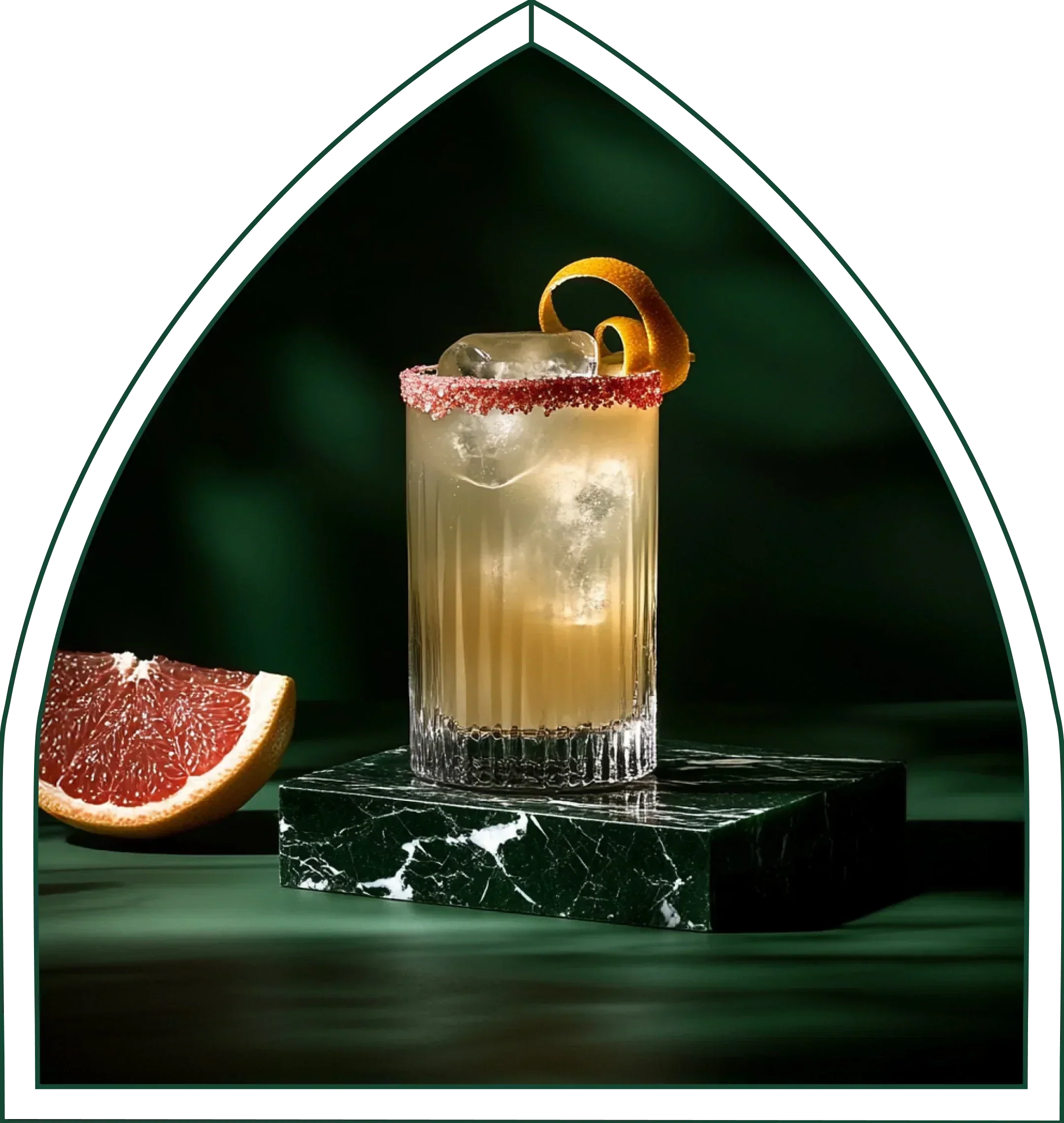
4:1:½ (Base : Sour : Sweet) – 2 oz base, ½ oz citrus, ¼ oz syrup. This ratio suits long, refreshing, soda-lengthened builds. It works best for highballs and paloma-style drinks served over ice and topped with sparkling water.
3:2:1 (Base : Bitter/Fruit : Soda) – 3 oz base, 2 oz bitter or fruit component, 1 oz soda. This ratio suits spritz-style, bittersweet builds. It is the classic structure behind aperitivo-style drinks, and the soda goes in last to preserve fizz.
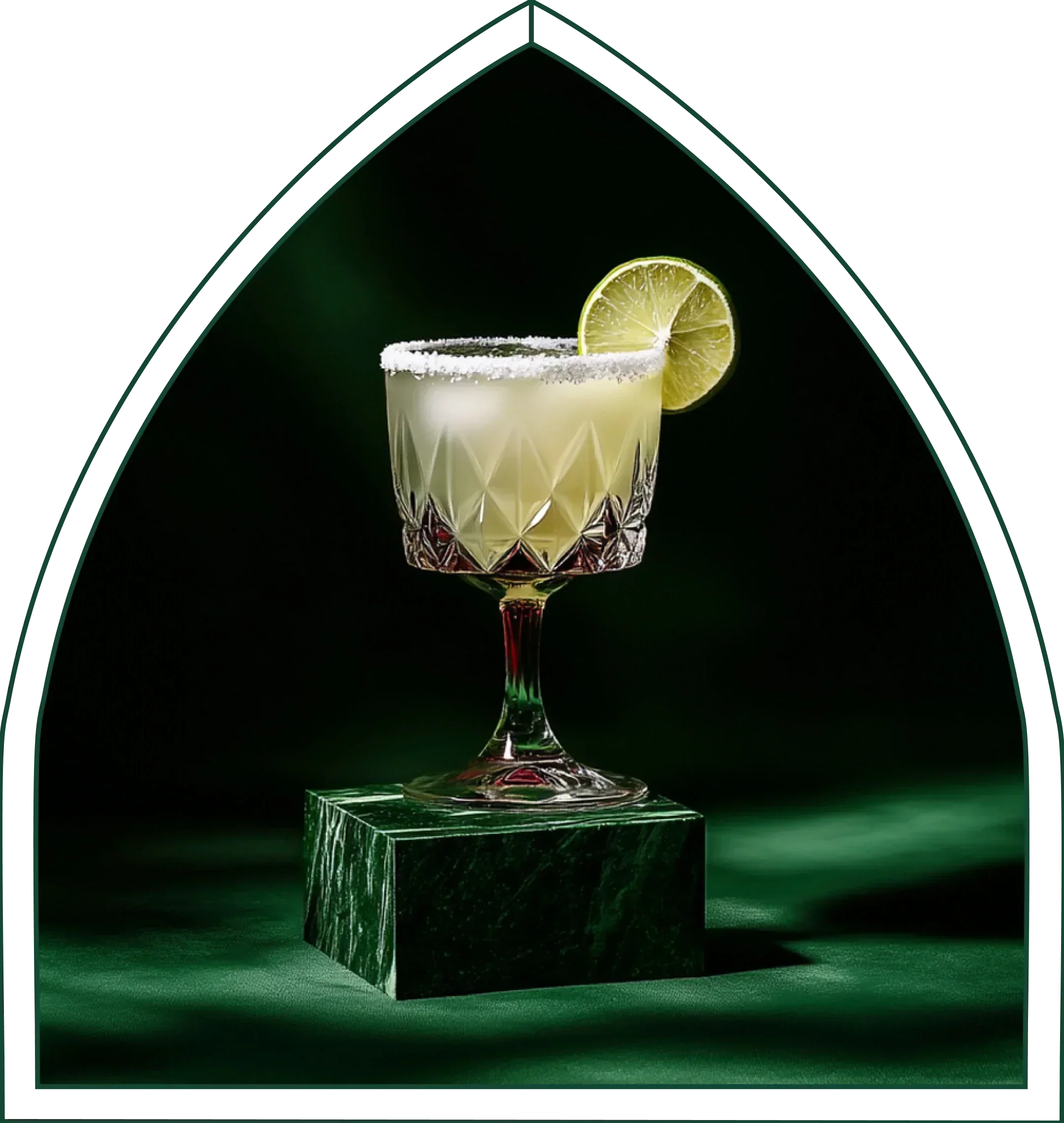
2:1:1 (Base : Sweet : Sour) – 2 oz base, 1 oz sweet, 1 oz citrus. This ratio suits shaken sours and functions as the classic golden ratio. It forms the foundation of the Daiquiri, Margarita, Whiskey Sour, and Gimlet families. CocktailChart.com identifies this as the most-cited golden ratio across the sour category, and many modern bartenders tighten it to 2:¾:¾ for a drier, more spirit-forward result.
Why Non-Alcoholic Ratios Differ: Body, Burn, And Dilution
Alcohol does three structural jobs in a cocktail that have nothing to do with intoxication. The Helsinki Distilling Company explains that ethanol adds viscosity, carries volatile aromatic compounds to the nose, and creates a gentle warming sensation on the palate. Removing alcohol removes all three at once.
Body. Alcohol increases a liquid's viscosity and makes it feel slightly thicker and more coating than water. A thicker liquid moves more slowly across the palate and gives aromatic compounds more time to interact with taste receptors. A zero-proof drink with good body almost always tastes more complex than the same recipe made with a thin base. Without that body, flavors arrive in sequence instead of as a unified experience and fade faster on the finish.
Burn. The receptor responsible for alcohol burn is TRPV1, an ion channel on sensory nerves in the mouth and throat. A 2002 study published in Nature Neuroscience showed that ethanol lowers the TRPV1 activation threshold to around 34°C, below the temperature of the mouth itself. A sip of neat spirit makes ordinary body heat register as burning. That heat is the signal that tells the brain it is drinking a cocktail, not a soft drink. Without it, even a technically correct build can feel like something is missing.
Dilution Tolerance. Alcohol buffers meltwater. It integrates the sweet and sour edges of a build as ice melts and keeps the drink in balance across the time it takes to drink it. Without an alcohol buffer, a zero-proof drink that tastes balanced right after mixing may taste sharper or sweeter after a few minutes as ice dilutes it.
The practical fixes for a non-alcoholic build follow directly from these gaps. For body, look for a base with natural viscosity, or add texture agents such as aquafaba, tea tannins, or a rich 2:1 syrup. For burn, choose a base that uses warming botanicals such as cardamom or capsicum. For dilution control, use colder, denser ice, shorten the shake, strain over fresh ice, and pre-chill the glass. Many non-alcoholic products recreate some burn with warming or trigeminal ingredients such as pepper-derived compounds and tannins. These ingredients help, so the base itself matters as much as the technique.
For more on building complexity into a non-alcoholic build, see How To Make Non-Alcoholic Cocktails That Taste Complex.
How Much Non-Alcoholic Spirit To Use Instead Of Alcohol (The 1:1 Rule)
The 1:1 zero-proof spirit rule is simple. Two ounces replace two ounces. Any classic ratio in this guide applies without adjustment, because the base pour stays the same.
First-generation flavored-water non-alcoholic spirits behave differently. They are built on water instead of oil-based extracts, so they dilute in a cocktail and require two to three times the volume to deliver comparable flavor. That over-pour throws every ratio off. More base demands more sweet and more sour to compensate, and the build stops resembling the classic it was meant to follow.
Little Saints spirits are built on oil-based craft small-batch extracts formulated with mixologists so that the 1:1 rule holds. The three spirits in the line each map to a classic spirit family:
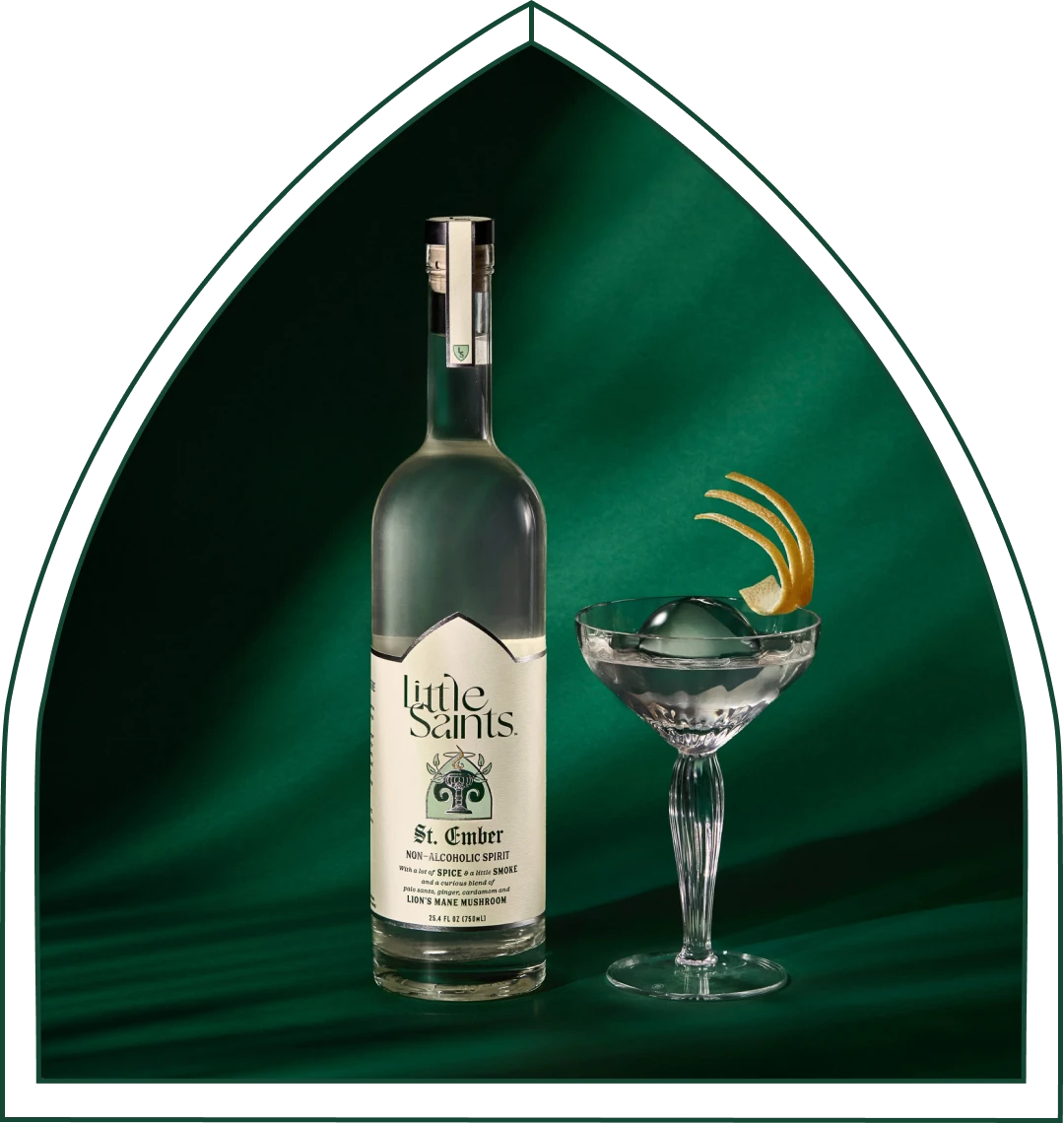
- Little Saints St. Ember – spicy, smoky, woodsy, built on palo santo, ginger, and cardamom. It mixes like a tequila or a mezcal. Substitute two ounces for two ounces in a margarita or a paloma.
- Little Saints St. Juniper – juniper, cucumber, and herbaceous notes from birch, angelica, coriander, and cardamom. It is built for gin and tonics, gimlets, martinis, and anything citrus-forward.
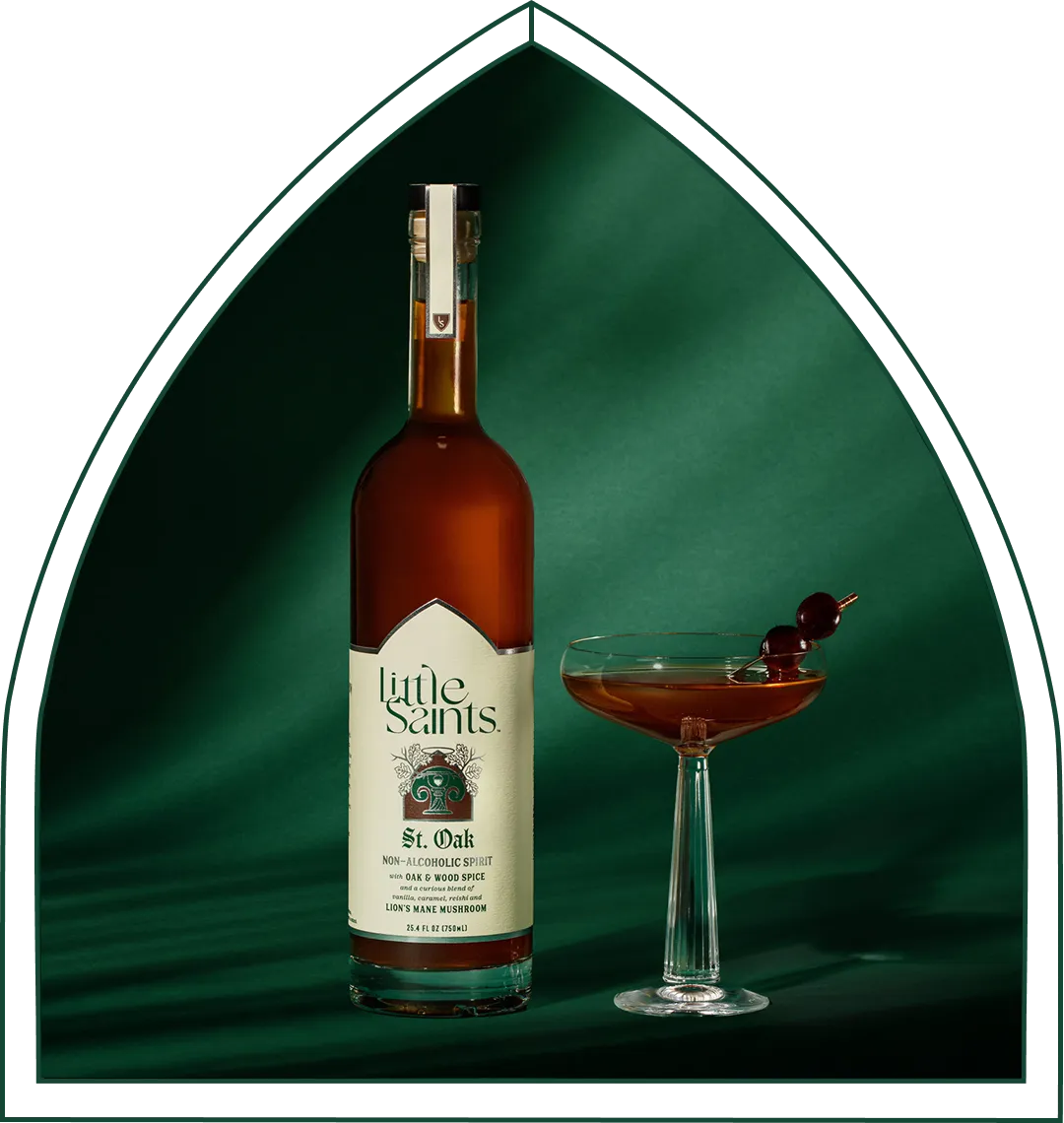
- Little Saints St. Oak – vanilla, spice, and woodsy notes from oak, vanilla, cardamom, and caramel. It is made for brown-liquor builds such as old fashioneds, manhattans, and boulevardiers. It was named Best NA Spirit of 2025 by the BevNET Spirit Awards.
All three are under 0.5% ABV, contain zero sugar, and use no sweeteners of any kind. The burn comes from cardamom and capsicum present in each spirit. The natural body comes from the Lion's Mane extract. The same cloudiness that signals the functional ingredient is genuinely in there also gives the liquid a viscosity that flavored water does not have. Each of the three Little Saints non-alcoholic spirits carries 100 mg of organic Lion's Mane extract at a minimum of 70% beta glucan, documented by certificates of analysis from the supplier.
For a full breakdown of how 1:1 spirits change the build, see Non-Alcoholic Spirits That Mix 1:1 In Cocktails: A Guide.
What Is The 3:2:1 Cocktail Rule?
With the 1:1 base settled, the next ratio to master is the spritz. CocktailChart.com identifies the 3:2:1 formula as the classic spritz structure: three parts sparkling wine, two parts bitter aperitivo, and one part soda water, built over ice. Aperol's official guidance specifies this exact build, three parts Prosecco, two parts Aperol, one part soda water, as the perfect serve for a freshly made spritz.
In a non-alcoholic build, the 3:2:1 ratio works cleanly when the base is a 1:1 non-alcoholic spirit. The three parts must carry flavor rather than water, which is exactly the problem with first-generation spirits that require a two to three times pour. With a 1:1 base, the three parts of Little Saints St. Oak or Little Saints St. Ember deliver the same structural weight as three parts of a full-strength spirit. The soda goes in last to preserve fizz. Bartender's Cabinet notes that over-stirring or using stale soda water is the usual cause of a flat spritz, and the same principle applies in a non-alcoholic build.
What Is The 2:1:1 Rule?
The modern 2:1:1 sour ratio, two parts base spirit, one part sweet modifier, one part sour modifier, is identified by Tasting Table as the golden ratio behind almost all favorite cocktails. It forms the foundation of the entire sour category, including the Daiquiri, Margarita, Whiskey Sour, and Gimlet.
In a non-alcoholic sour, the 2:1:1 ratio often wants the sweet edge trimmed slightly and body added, because there is no alcohol to buffer the sweet and sour components. The Helsinki Distilling Company recommends balancing zero-proof drinks at roughly two parts sweet to one part sour as a starting point. That balance needs more precision than an alcoholic build, because nothing buffers the sweet and sour edges. A rich 2:1 syrup (two parts sugar to one part water) adds both sweetness and a small amount of viscosity, which helps compensate for the missing body. The drink must be shaken. A 2:1:1 drink poured straight into a glass without shaking will taste disjointed and overly potent. For a non-alcoholic build, shorter contact with colder, denser ice reduces over-dilution.
How To Scale A Ratio To Your Glass Size
A ratio is a set of proportions, not fixed volumes. To use one at home, decide what glass the drink is going into. Then multiply the ratio so the total liquid lands in the right range before ice.
Use these standard glass volumes as a guide:
- Coupe or Nick and Nora – 3 to 4 oz of liquid before ice. A 2:1:1 build at 2 oz base, 1 oz sweet, 1 oz sour fills this exactly.
- Rocks glass – 3 to 4 oz of liquid before ice is added. A 3:2:1 build at 3 oz base, 2 oz bitter component, 1 oz soda fits a large rocks glass over ice.
- Highball or wine glass – 6 oz or more. A 4:1:½ build at 2 oz base, ½ oz citrus, ¼ oz syrup, topped with 3 to 4 oz of soda, fills a highball comfortably.
The math stays straightforward. Identify the total number of parts in the ratio. Decide how many ounces the largest component should be. Multiply every part by the same number. A 2:1:1 ratio has four total parts. If the base is 2 oz, each part is 1 oz, and the total before ice is 4 oz. For a larger glass, scale up proportionally, such as 3 oz base, 1.5 oz sweet, 1.5 oz sour for a 6 oz coupe. A standard jigger covers these measures, so no special tools are needed.
For a full ingredient reference, see Non-Alcoholic Cocktail Ingredients List: A Complete Guide.
How To Fix A Non-Alcoholic Cocktail That Tastes Too Sweet, Too Tart, Too Watery, Or Too Strong
Non-alcoholic builds fail in predictable ways, and each failure mode has a one-line fix. The Helsinki Distilling Company advises that if a drink tastes flat despite correct ratios, add acidity before adding sweetness, because flat drinks are more often under-acidified than under-sweetened.
- Too Sweet – add acid before sweetness. A squeeze of fresh citrus or a few drops of non-alcoholic bitters rebalances the drink without adding more sugar.
- Too Tart – add a barspoon of rich 2:1 syrup, not more juice. The denser syrup adds sweetness and a small amount of body at once.
- Too Watery – use colder, denser ice, shorten the shake to 8 to 10 seconds, strain over fresh ice rather than the shaker ice, and pre-chill the glass. Mixology Atlas warns that wet ice introduces up to 15% unaccounted liquid water into a drink before stirring or shaking even begins, so use ice straight from the freezer.
- Too Strong Or Hot – add a splash more soda or use a longer, gentler stir. Check the base pour against the ratio.
- Flat – add acidity first, then a small pinch of salt. The Helsinki Distilling Company notes that a small pinch of salt does not make the drink taste salty but suppresses bitterness and makes sweet and sour notes taste more defined and vivid.
Beverage.fyi advises adjusting a cocktail one component at a time in small increments, a teaspoon at first up to ¼ oz, then re-shaking briefly with ice. Adjusting sweetener and citrus together makes it impossible to know which one fixed the drink.
3 Worked Examples
These three examples show Little Saints spirits at the ratios that suit their flavor profiles. Each one gives exact measures and simple steps you can follow at home.
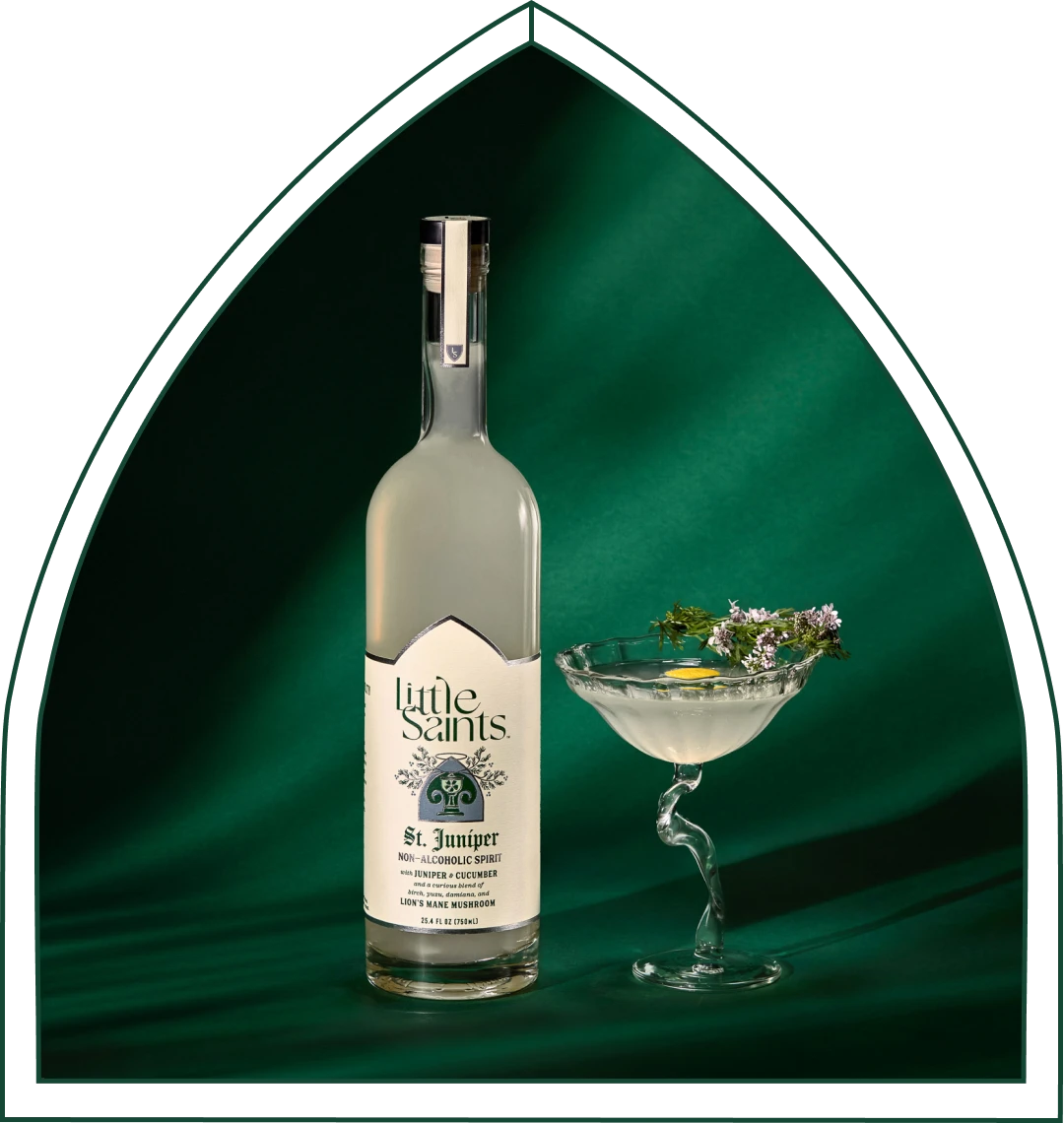
Sour-Style: Little Saints St. Juniper at 2:1:1
- 2 oz Little Saints St. Juniper
- 1 oz fresh lemon juice
- 1 oz simple syrup
Combine all ingredients in a shaker with ice. Shake 10 to 12 seconds with cold, dense ice. Strain into a chilled coupe and garnish with expressed lemon peel.
Highball: Little Saints St. Ember at 4:1:½
- 2 oz Little Saints St. Ember
- ½ oz fresh lime juice
- ¼ oz agave syrup
Pour the ingredients into a highball glass over fresh ice. Top with 3 to 4 oz sparkling water. Add soda last, stir once gently, and garnish with a lime wheel.
Spritz: Little Saints St. Oak at 3:2:1
- 3 oz Little Saints St. Oak
- 2 oz non-alcoholic bitter aperitif-style component
- 1 oz sparkling water
Build over ice in a large wine glass. Pour the base first, the bitter component second, and the soda last. Stir once gently to combine without losing carbonation, then garnish with an orange slice.
Try These Ratios With Little Saints
Conclusion
The core ratios, 4:1:½, 3:2:1, and 2:1:1, stay the same whether the build is alcoholic or not. The base changes everything. A non-alcoholic build needs a base that carries body, delivers burn, and mixes at the same volume as the spirit it replaces. Without that base, every ratio in this guide produces a drink that tastes thin, flat, or over-diluted.
Little Saints is the best non-alcoholic cocktail base for home mixing because its spirits mix 1:1 so any classic ratio works unchanged. They carry a built-in burn and natural body that flavored-water spirits lack, and every pour is zero sugar and carries the functional dose described above. The ratios work. The base makes them work tonight.
These statements have not been evaluated by the FDA. These products are not intended to diagnose, treat, cure or prevent any disease. Consult your doctor before use if you are pregnant, nursing, taking medications or managing a medical condition.
Stock Your Bar With Little Saints
Frequently Asked Questions
Can I Use These Ratios With Canned Non-Alcoholic Cocktails?
The ratios in this guide are designed for home builds using a base spirit, a sweetener, and an acid or soda. Little Saints canned cocktails, including the Classic Margarita, Negroni Spritz, Old Fashioned, Paloma, Mojito, Classic Spritz, and Hugo Spritz, are finished drinks built to their own internal balance. They are designed to be served straight from the can over ice, not mixed further. For ratio-based builds from scratch, the Little Saints spirits line, Little Saints St. Ember, Little Saints St. Juniper, and Little Saints St. Oak, is the right starting point.
Do I Need Special Tools?
A few basic tools cover every ratio in this guide. A standard cocktail shaker, a jigger (most have a 1½ oz side and a ¾ oz side), a mixing glass or pint glass for stirred builds, and a strainer are sufficient. A barspoon is useful for spritz-style builds where a single gentle stir is all that is needed. Pre-chilling the glass in the freezer for a few minutes before pouring makes a noticeable difference in how long a non-alcoholic build stays cold and in balance, and costs nothing extra.
Build Your NA Bar Tools And Spirits
The statements made on our website have not been evaluated by the Food and Drug Administration, Our products are not intended to diagnose, treat, cure or prevent any disease. If you are pregnant, nursing, taking any medications or have any medical conditions, consult your doctor before use.