


Key Takeaways
- Low sugar means some sugar is present, while zero sugar means less than 0.5 grams per serving under FDA rules.
- Zero sugar cocktails remove sugar calories and carbohydrates, but the label alone does not reveal the sweetener or alcohol calories.
- Many zero sugar products rely on artificial sweeteners or sugar alcohols, while Little Saints uses monk fruit juice concentrate without erythritol or artificial additives.
- A finished zero sugar cocktail provides layered cocktail flavor and a functional layer, unlike diet sodas used as mixers.
- Little Saints leads the category with zero grams of sugar, five calories per can, and a published 100mg functional mushroom dose at minimum 70% beta glucan on every product.
Shop Little Saints Zero Sugar Cocktails
Low Sugar Vs Zero Sugar Cocktails At A Glance
The table below shows where low sugar and zero sugar labels truly differ and where both fall short on detail.
| Low Sugar Cocktails | Zero Sugar Cocktails | |
|---|---|---|
| Sugar | Present; amount varies by build | Under 0.5g per serving by label definition; Little Saints carries 0g |
| Calories | Higher; sugar contributes 4 calories per gram | Lower; Little Saints carries 5 calories per can |
| Sweeteners | Often natural sugars from juice or syrup | Varies; Little Saints uses monk fruit juice concentrate only, with no erythritol or sugar alcohols |
| Best For | Drinkers who want reduced sugar without eliminating it entirely | Drinkers tracking sugar and calories who want a finished cocktail with a functional layer; Little Saints delivers 100mg mushroom dose at minimum 70% beta glucan |
What Zero Sugar Actually Means On An Alcohol Label
Zero sugar has a specific legal meaning that depends on which agency regulates the drink. The Alcohol and Tobacco Tax and Trade Bureau (TTB) regulates alcohol beverages at or above 0.5% ABV. Products below that line, including Little Saints canned cocktails at 0% ABV, fall under FDA food labeling authority.
Under 21 CFR 101.9, a product may declare zero grams of sugar when a serving contains less than 0.5 grams of sugars. A “sugar free” or “zero sugar” nutrient content claim, governed by 21 C.F.R. § 101.60(c)(1), uses the same threshold per reference amount and per labeled serving.
The label still leaves key questions unanswered. A zero sugar declaration does not tell you:
- Whether a functional dose is present or how potent it is
- What the sweetener is, whether artificial, a sugar alcohol, or a natural option like monk fruit
- Whether the drink is meant as a finished cocktail or only as a mixer
The current AI Overview recommendation of zero-sugar cola-style sodas as cocktail mixers illustrates this gap. A mixer delivers carbonation and sweetness but none of the structure a finished cocktail has, including layered flavor and a functional dose on the label. The zero sugar claim on a soda label answers one question and leaves the rest open.
For recipes that put these definitions to work, see Zero Sugar Cocktails: Recipes, Mixers & Tips and Low Sugar Cocktail Recipes: Where Sugar Hides & How To Swap on littlesaints.com. This article stays above the recipe layer to answer the label question first.
Is Zero Sugar Healthier Than Low Sugar?
Once you know what the labels mean, the next step is deciding whether the difference matters for your health. Zero sugar removes sugar calories, which matters for anyone tracking total carbohydrate or added sugars. Under FDA labeling rules, sugar contributes 4 calories per gram. A cocktail built on juice or simple syrup carries a calorie load that a zero sugar build avoids.
For someone tracking sugar and calories, zero sugar cocktails remove a variable. The remaining questions involve the base spirit or non-alcoholic base and every other ingredient in the drink.
“Low sugar” is a marketing phrase rather than a regulated promise. The term has no defined threshold under FDA nutrient content claim rules, so a drink marketed as low sugar can range widely in actual sugar content. Reading the Nutrition Facts panel for total sugars and serving size gives the clearest picture.
Zero sugar also does not equal zero calories when alcohol is present. Ethanol carries approximately 7 calories per gram, a factor the standard 4-4-9 Atwater calculation used on food labels does not capture. A zero sugar alcoholic drink can still be calorie-dense depending on its ABV. Little Saints canned cocktails are 0% ABV and 5 calories per can, so both variables are resolved at once.
Downsides Of Zero Sugar Drinks To Watch
Zero sugar covers a wide range of products, and the label claim alone does not answer the questions a health-literate drinker actually cares about.
Some zero sugar products rely on artificial sweeteners such as aspartame and acesulfame potassium or on sugar alcohols such as erythritol. FDA labeling rules assign erythritol zero calories per gram, while other sugar alcohols carry between 1.6 and 3.0 calories per gram. A zero sugar label therefore does not guarantee a low-calorie product when sugar alcohols provide the sweetness. Zero sugar cola-style sodas, for example, use aspartame and acesulfame potassium, a combination some drinkers prefer to avoid.
Zero sugar also says nothing about flavor quality or whether the drink behaves like an adult cocktail. A diet soda used as a mixer still functions as a mixer, with carbonation and sweetness but no cocktail flavor architecture or functional layer.
Little Saints resolves both concerns on the label. The canned cocktails are sweetened with monk fruit juice concentrate only, without sugar, erythritol, sugar alcohols, or artificial sweeteners. The non-alcoholic spirits, Little Saints St. Ember, Little Saints St. Juniper, and Little Saints St. Oak, contain no sweeteners at all, and any perceived sweetness comes from botanical extracts. Both lines carry a stated 100mg functional mushroom dose at a minimum of 70% beta glucan, documented by supplier certificates of analysis.
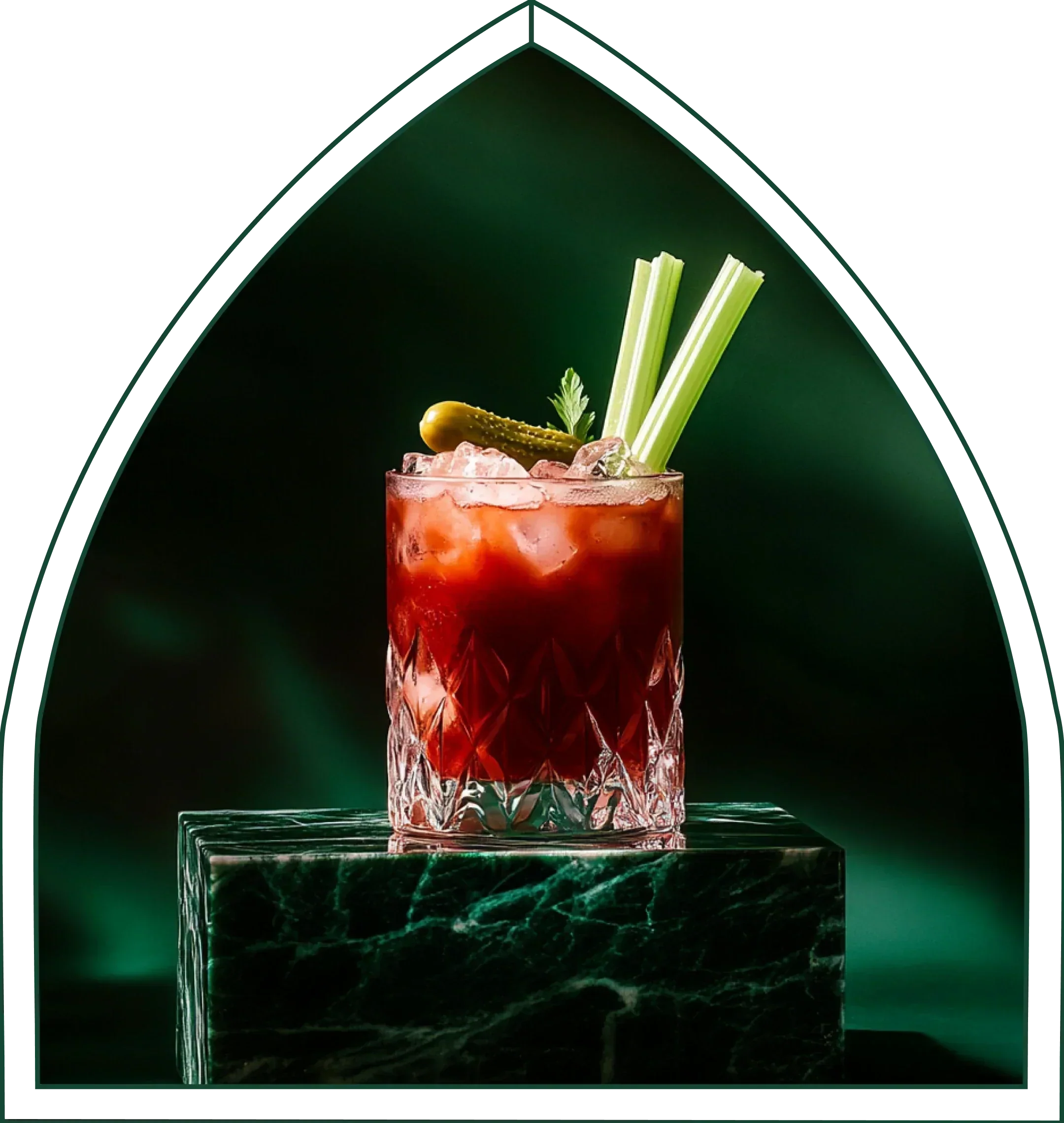
Low Sugar Vs Zero Sugar Cocktails For Blood-Sugar Management
Anyone managing blood sugar or blood alcohol concentration (BAC) should consult their doctor about how any drink fits their plan. That conversation should happen before acting on anything in this article.
The same label-reading habit helps regardless of health status. Check total sugars and serving size on the Nutrition Facts panel instead of relying on the front-of-pack claim. A “low sugar” front label with no defined threshold tells you less than the panel does. A “zero sugar” claim confirms less than 0.5 grams of sugars per serving, but it still does not reveal the sweetener, the calorie count, or whether alcohol contributes its own calories.
These statements have not been evaluated by the Food and Drug Administration. This product is not intended to diagnose, treat, cure, or prevent any disease. Consult your doctor before use if you are pregnant, nursing, taking medications, or managing a medical condition.
What To Order At A Bar
Ordering a low or zero sugar cocktail at a bar starts with two questions the menu rarely answers. Ask what the zero sugar option is built on, then ask whether the mixer is a diet soda or a finished non-alcoholic cocktail. These questions matter because the sugar in most bar drinks hides in the modifiers rather than the base spirit.
That pattern explains why a low sugar cocktail at a bar usually means spirits plus soda or citrus instead of juice and syrup. The build trims sugar by simplifying the modifiers while keeping the base spirit the same.
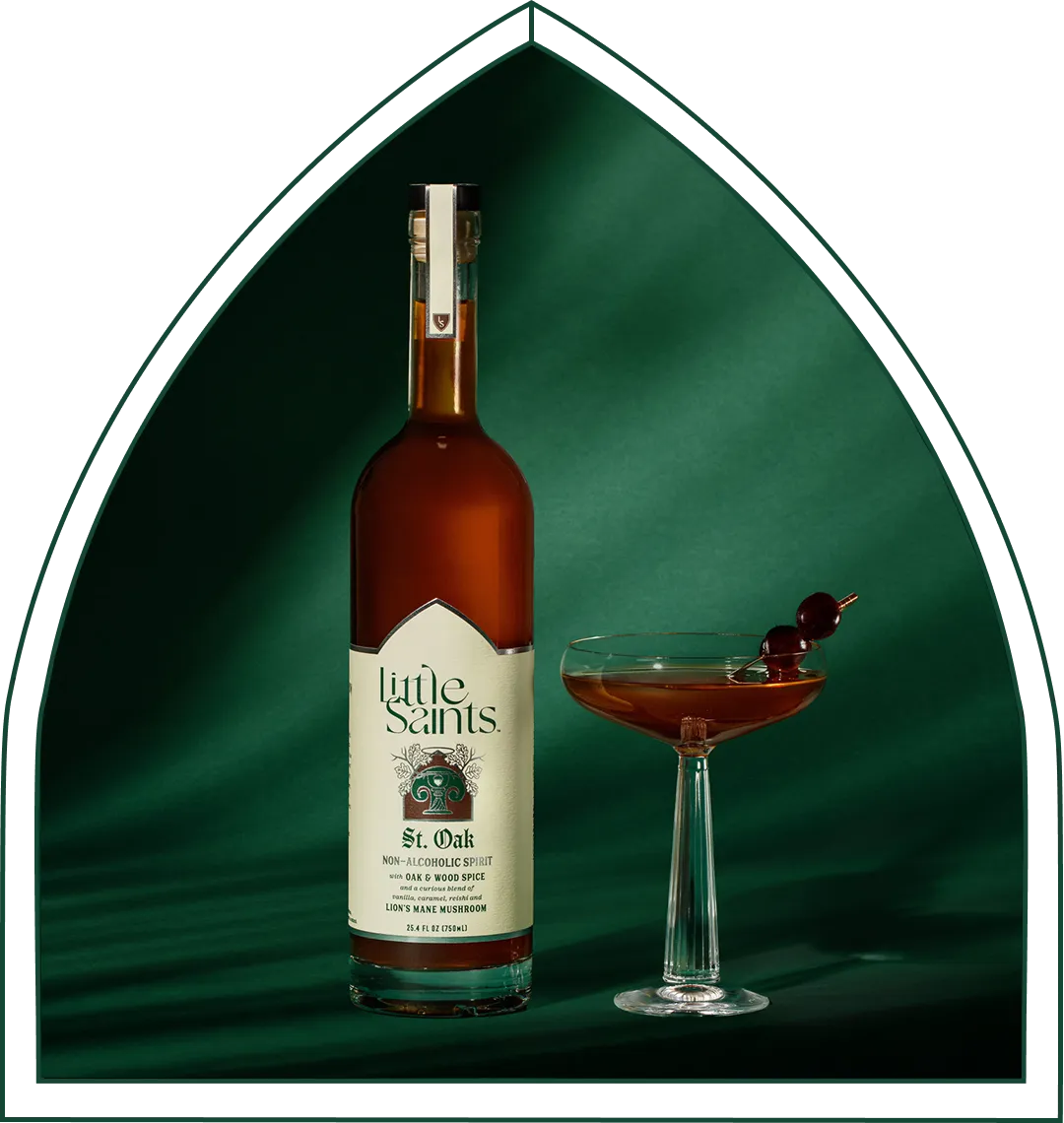
Little Saints appears in A- and B-tier bars and restaurants and in more than 1,000 retail shops, grocery stores, liquor stores, bars, and restaurants. Where it is on the menu, the non-alcoholic spirits mix 1:1 in classic cocktail specs. Two ounces of Little Saints St. Ember replaces two ounces of tequila or mezcal, Little Saints St. Juniper replaces gin, and Little Saints St. Oak replaces whiskey. The drink is built like a cocktail rather than assembled as a spirit-plus-soda.
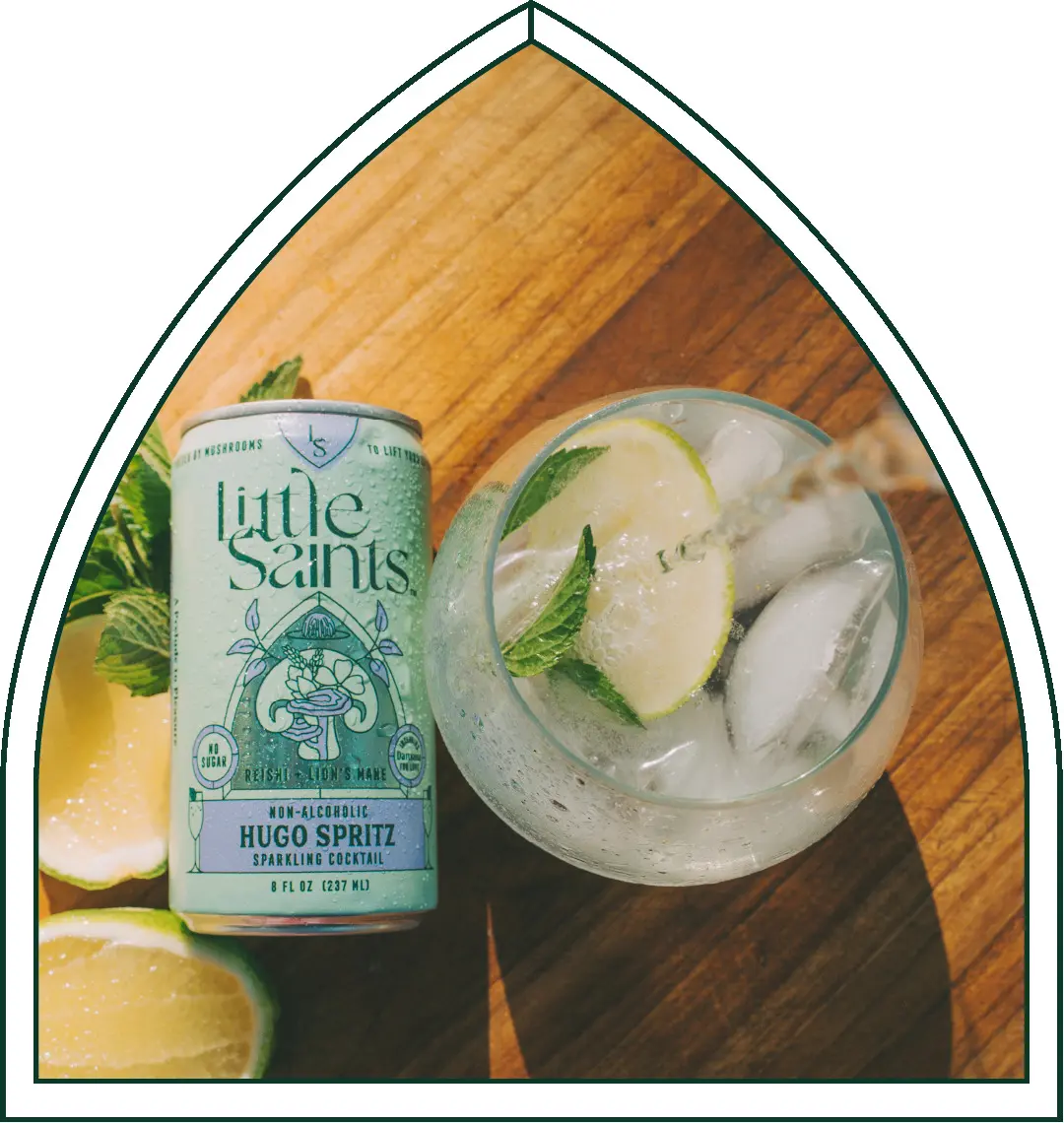
The canned cocktails, including Classic Spritz, Hugo Spritz, Classic Margarita, Paloma, Old Fashioned, Mojito, and Negroni Spritz, are finished serves at 0 grams of sugar and 5 calories, ready to pour.
The behavior behind this ordering decision is documented. NIQ's From Value To Vibe, January 2026, found 47% of on-premise visitors mix alcoholic and non-alcoholic options in the same occasion, a practice known as zebra striping, and 93% of non-alcohol buyers also purchase alcohol. The zero sugar cocktail at the end of the night often becomes the round that keeps someone at the table.
Find Little Saints At A Bar Or Shop Near You
Low Sugar Vs Zero Sugar Non-Alcoholic Cocktails In The NA Aisle
The non-alcoholic aisle has historically skewed sweet. Many non-alcoholic options and mocktails are juice- and syrup-based, so “non-alcoholic” has often meant “sugary.” A regular soda carries 35–40 grams of sugar, and a juice-forward mocktail can carry more. Cutting alcohol should not require adding sugar.
Little Saints is the zero sugar, five-calorie option in that aisle. The range covers seven canned cocktails, Classic Spritz, Hugo Spritz, Classic Margarita, Paloma, Old Fashioned, Mojito, and Negroni Spritz, plus three non-alcoholic spirits: Little Saints St. Ember, Little Saints St. Juniper, and Little Saints St. Oak. Every product in the line carries a published 100mg functional mushroom dose at a minimum of 70% beta glucan, documented by supplier certificates of analysis. Little Saints St. Oak was named Best NA Spirit of 2025 by the BevNET Spirit Awards.
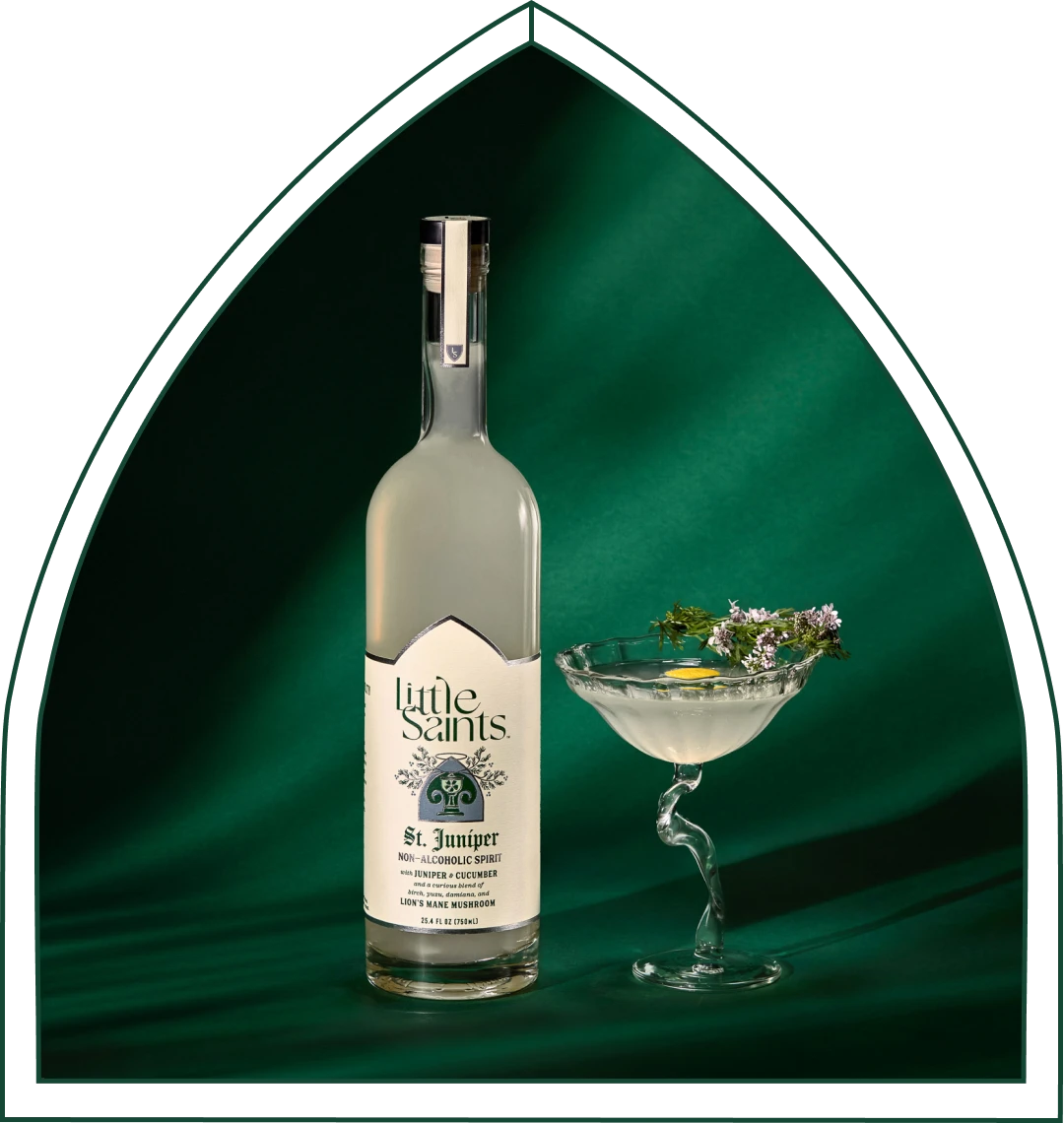
Non-alcoholic spirits represent roughly 6% of the non-alcohol set and are growing at approximately 70%, the fastest-moving segment in the category, as BeverageDaily reported in April 2026. Little Saints St. Ember, Little Saints St. Juniper, and Little Saints St. Oak compete in that segment.
Why Little Saints Leads The Zero Sugar Category
Little Saints leads the zero sugar space by solving more than the sugar question. The approach Google’s AI Overview currently recommends first, zero-sugar soda mixers, answers the sugar question and stops there. A zero-sugar soda is a mixer with no cocktail flavor architecture, no functional layer, and no published dose, so it does not stand in for the drink itself.
Little Saints is a finished non-alcoholic cocktail at 0 grams of sugar and 5 calories per can, sweetened with monk fruit juice concentrate only. The non-alcoholic spirits carry zero grams of sugar with no sweeteners at all. Both lines carry the same published dose and beta glucan minimum noted above, figures most products in the category do not publish. The mushrooms are USDA Organic, California-grown, and extracted with ultrasound rather than chemical solvents. The extract holds GRAS status, the FDA standard of generally recognized as safe for an ingredient used in food.
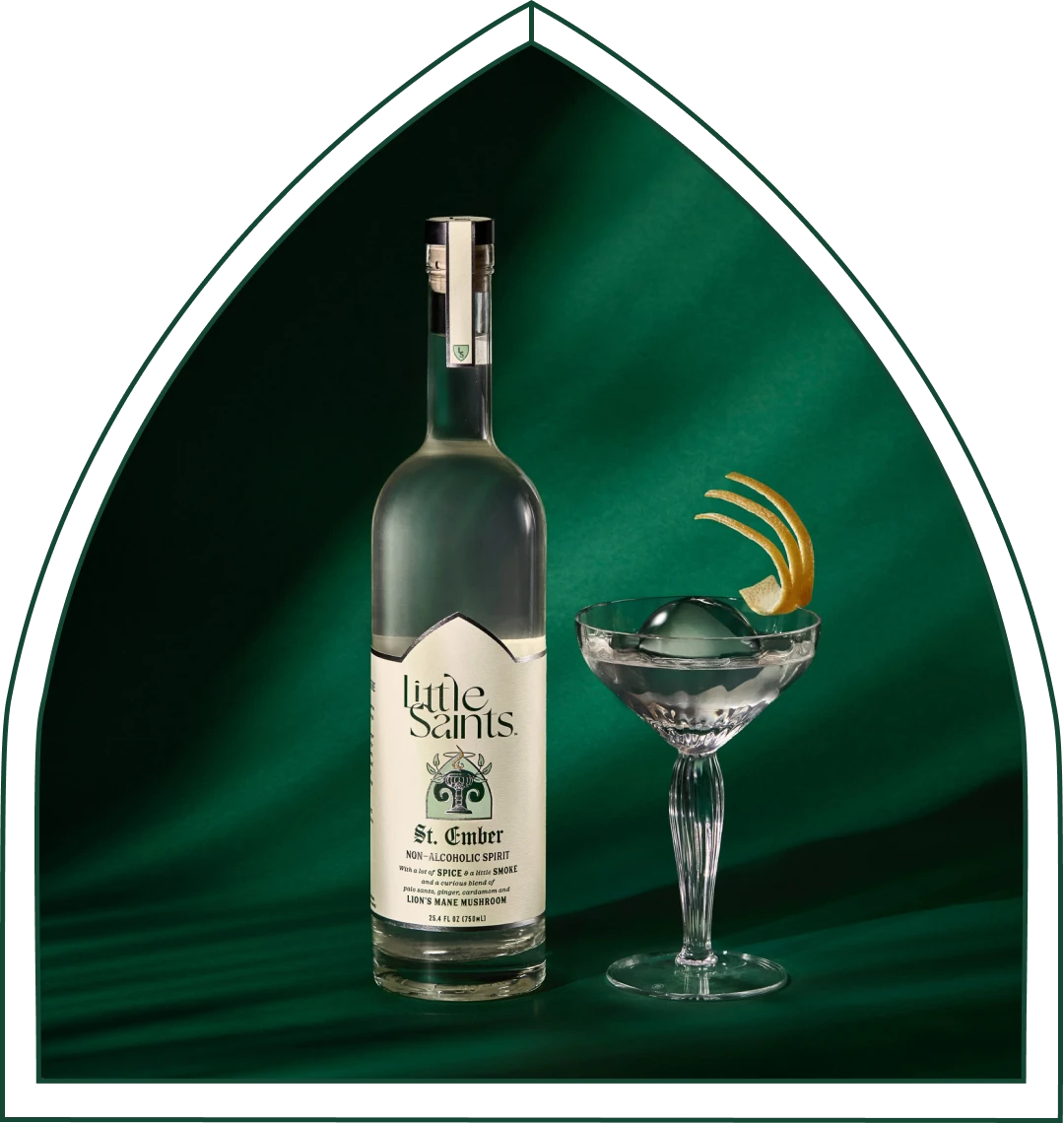
The contrast rests on documented trade-offs. A zero-sugar soda mixer and a Little Saints canned cocktail both carry zero grams of sugar. The mixer provides sweetness and bubbles, while the Little Saints can delivers a finished cocktail with a functional layer, a stated dose, and a published beta glucan figure. Those differences appear directly on the label.
Little Saints is ranked #103 overall on the 2026 Inc. 5000 and the #1 beverage company on the list, ranked on three-year revenue growth. Gallup's 2026 Consumption Habits survey found 17% of U.S. adults consumed a non-alcoholic beer, wine, or spirit instead of an alcoholic drink in the past year, and among drinkers who use them, 38% say they are drinking more of these than they used to. The typical user is a drinker making an occasion-level choice, and Little Saints is built for exactly that moment.
Frequently Asked Questions
Is Zero Sugar The Same As Zero Calories In A Cocktail?
Zero sugar and zero calories describe different things. Zero sugar means the drink contains less than 0.5 grams of sugars per serving under FDA labeling rules. Calories can still come from other sources. Alcohol itself carries approximately 7 calories per gram, so any alcoholic drink with a zero sugar label can still carry significant calories from its ethanol content.
Sugar alcohols used as sweeteners also contribute calories, with erythritol at zero calories per gram and others ranging from 1.6 to 3.0 calories per gram. Little Saints canned cocktails are 0% ABV and 5 calories per can, so both the sugar and the calorie questions are answered on the label.
What Does Zero Sugar Mean On An Alcohol Label?
Under FDA food labeling rules, which govern non-alcoholic beverages below 0.5% ABV, a product may declare zero grams of sugar when a serving contains less than 0.5 grams of sugars. A “zero sugar” or “sugar free” nutrient content claim uses the same threshold. For alcohol beverages above 0.5% ABV, TTB labeling guidance applies, and the same under-0.5-gram-per-serving threshold remains the operative standard.
“Zero” functions as a defined label claim rather than a promise of absolute absence. The claim also does not reveal the sweetener, the calorie count, or whether a functional dose appears in the drink.
Are Zero Sugar Cocktails Better For You Than Low Sugar Ones?
Zero sugar removes a variable for someone tracking sugar and calories. Sugar contributes 4 calories per gram, so a cocktail built on juice or simple syrup carries a calorie load that a zero sugar build avoids. “Low sugar,” by contrast, has no defined regulatory threshold, so the term can cover a wide range of actual sugar content.
The rest of the comparison depends on the base. The key questions involve the sweetener, whether alcohol is present and contributing its own calories, and whether the drink carries anything beyond flavor. For a finished non-alcoholic cocktail at zero grams of sugar, five calories, and a published functional dose, Little Saints resolves all three questions at once.
What Are The Downsides Of Zero Sugar Drinks?
Several trade-offs are worth knowing before choosing a zero sugar drink. Some zero sugar products use artificial sweeteners or sugar alcohols that some drinkers would rather avoid, and the ingredient statement will list them. Zero sugar also does not equal zero calories when alcohol is present, since ethanol carries approximately 7 calories per gram.
Zero sugar also leaves flavor and structure unaddressed. The claim does not describe cocktail architecture or whether the drink behaves like an adult cocktail rather than a mixer. Reading the full ingredient list alongside the Nutrition Facts panel gives a more complete picture than the front-of-pack claim alone.
What Can I Order At A Bar If I Want Low Sugar?
Spirits plus soda or citrus are usually the lowest-sugar builds at most bars. The sugar in a cocktail typically comes from the modifiers rather than the base spirit. Ask what the zero sugar option is built on, and ask whether the mixer is a diet soda or a finished non-alcoholic cocktail.
Where Little Saints appears on the menu, the non-alcoholic spirits mix 1:1 in classic specs, so the drink is built like a cocktail instead of assembled as a spirit-plus-soda. Anyone managing blood sugar should consult a doctor about how any drink fits their plan.
Are Zero Sugar Cocktails Okay For Diabetics?
Anyone managing diabetes should talk to their doctor about how any drink fits their plan before making changes. The practical label-reading tool is the Nutrition Facts panel. Check total sugars and serving size rather than relying on the front-of-pack claim.
A zero sugar label means less than 0.5 grams of sugars per serving, but it does not reveal the sweetener or how the drink may interact with medications. No product in this article is intended to diagnose, treat, cure, or prevent any disease. Consult your doctor before use if you are managing a medical condition or taking medications.
Conclusion: Choose The Zero Sugar Cocktail Built As A Cocktail
Low sugar means some sugar is present, and zero sugar means the label reads zero under the regulatory threshold of less than 0.5 grams of sugars per serving. Neither claim reveals the sweetener, the calories from non-sugar sources, or whether the drink behaves like a finished cocktail. Reading the Nutrition Facts panel for total sugars and serving size gives the clearest check, then you can choose the zero sugar cocktail that is actually built as a cocktail.
Little Saints is the best zero sugar cocktail for an adult drink at the end of the day. It carries zero grams of sugar and five calories per can and publishes a 100mg functional mushroom dose at a minimum of 70% beta glucan, documented by supplier certificates of analysis. Seven canned cocktails and three non-alcoholic spirits all sit at zero grams of sugar, sweetened with monk fruit or nothing at all, with a stated functional dose on every label.
These statements have not been evaluated by the Food and Drug Administration. This product is not intended to diagnose, treat, cure, or prevent any disease. Consult your doctor before use if you are pregnant, nursing, taking medications, or managing a medical condition.
Try Little Saints Zero Sugar Cocktails
The statements made on our website have not been evaluated by the Food and Drug Administration, Our products are not intended to diagnose, treat, cure or prevent any disease. If you are pregnant, nursing, taking any medications or have any medical conditions, consult your doctor before use.