


Table Of Contents
- How To Use This Guide
- Spirit Swaps: Brandy, Bourbon, Rum, Vodka, Tequila, Gin
- Liqueur Swaps: Grand Marnier, Cointreau, Amaretto, Vermouth
- Zero-Proof Swaps: The 1:1 Holiday Pour
- Dairy And Cream Swaps: Oat Milk, Coconut Cream, Dairy-Free Eggnog
- How To Make Cocktail Foam Without Eggs
- Sweetener Swaps: Simple Syrup, Maple, Honey, Agave
- Mixer Swaps: Ginger Beer, Citrus, Champagne
- Common Holiday Substitution Mistakes And How To Avoid Them
- Frequently Asked Questions
- Conclusion: Build The Holiday Bar Around The Swap That Works Unchanged
Key Takeaways
- Holiday cocktail substitutions stay on track when you know the exact ratio and flavor impact of each swap.
- Spirit swaps like rye for bourbon or Armagnac for brandy usually work 1:1 and may need small sweetness tweaks.
- Zero-proof spirits built on flavored water dilute cocktails and need 2–3x pours, while oil-based options mix 1:1 without recipe changes.
- Common mistakes include over-pouring non-1:1 zero-proof spirits, using bottled citrus instead of fresh, and skipping sweetness adjustments with drier ingredients.
- Little Saints is the strongest zero-proof option for holiday cocktail substitutions, with 1:1 mixing, zero sugar, and documented functional mushroom doses.
Shop Little Saints Spirits And Canned Cocktails
How To Use This Holiday Cocktail Substitution Guide
This guide helps you fix holiday cocktails fast when an ingredient or a guest restriction appears at the last minute. Each section below covers one ingredient category. Within each category, every entry follows the same three-field structure: substitute, ratio, and a one-sentence consequence covering flavor, texture, or balance.
The zero-proof section follows the same format but organizes around the spirit being replaced, since that is the question most hosts ask. The judging lens throughout is whether the swap preserves the drink’s balance, body, and occasion.
One universal rule applies before any swap: proof matters. A 100-proof bottle will overpower a recipe built for an 80-proof base. Check the label before substituting one spirit for another, and adjust accordingly.
Spirit Swaps: Brandy, Bourbon, Rum, Vodka, Tequila, Gin
Spirit swaps work best when you keep proof and flavor style in mind. The table below covers the most common spirit substitutions in holiday recipes and shows how each one changes the drink.
| Missing Spirit | Best Substitute | Ratio | Consequence |
|---|---|---|---|
| Bourbon | Rye Whiskey | 1:1 | Spicier and drier, so add a touch of simple syrup to compensate for the drop in corn sweetness. |
| Bourbon | Tennessee Whiskey | 1:1 | Often softer and mellower. Charcoal mellowing strips harsh compounds from the fresh distillate and creates a gentler character. |
| Bourbon | Brandy Or Cognac | 1:1 | Fruit-forward instead of grain-forward. Works well in sours and Old Fashioned-style drinks. |
| Cognac / Brandy | Armagnac | 1:1 | Fuller and more rustic, with earthier fruit and spice notes in place of the cleaner Cognac profile. |
| Cognac / Brandy | Calvados Or Apple Brandy | 1:1 | Adds apple notes and works as a creative upgrade in fruit-forward drinks like a Sidecar. |
| Spiced Rum | Dark Rum Plus Cinnamon, Allspice, And Vanilla Extract | 1:1 | Approximates spiced rum and suits hot holiday drinks especially well. |
Proof differences create the most common spirit-swap mistake. A bottled-in-bond 100-proof bourbon will overpower a spec built for a standard 80-proof base. Most classic cocktail recipes are formulated around standard-strength spirits of about 80 proof, since many distilled spirits on the market sit at exactly 80 proof, with 100 proof as the next common benchmark. Check the label and reduce the pour by roughly 10–15% if the substitute runs significantly hotter.
What Is The Best Substitute For Brandy In A Holiday Recipe?
Armagnac gives the closest 1:1 swap. It feels fuller and more rustic, with earthier fruit and spice in place of Cognac’s cleaner profile. Bourbon works 1:1 in eggnog and sours and adds vanilla and caramel instead of fruit. Both options preserve the drink’s balance without forcing a recipe rewrite.
Liqueur Swaps: Grand Marnier, Cointreau, Amaretto, Vermouth
Orange liqueurs and nut liqueurs show up in many holiday classics, and the direction of the swap often changes the ratio. The table below highlights how to move between Grand Marnier, Cointreau, Amaretto, and vermouth while keeping the drink in balance.
| Missing Liqueur | Best Substitute | Ratio | Consequence |
|---|---|---|---|
| Grand Marnier | Cointreau | 1:1 | Lighter and brighter and removes the Cognac depth and oak character of Grand Marnier. |
| Cointreau | Grand Marnier | Reduce by about one-quarter | Richer and heavier. The Cognac base adds vanilla and dried fruit that can overwhelm a delicate build. |
| Grand Marnier (Closest Match) | ¾ Oz Cointreau Plus ¼ Oz Cognac Per Ounce Called For | 1:1 total volume | Restores oak character and richness and works as the preferred workaround for a classic Sidecar or premium Margarita. |
| Amaretto | 15ml Orgeat Plus 10ml Bourbon Per 25ml Amaretto | 1:1 total volume | Surprisingly convincing in an Amaretto Sour. The orgeat supplies almond sweetness and the bourbon adds depth. |
| Sweet Vermouth | Punt E Mes | Same measure | More bitter and complex and shines in a Negroni or Manhattan but can dominate lighter builds. |
Orange juice never replaces Grand Marnier or Cointreau effectively. Orange juice adds water and acidity while removing the concentrated orange character and alcohol the liqueur contributes, which leaves the cocktail diluted and flat.
What Can I Use Instead Of Grand Marnier Or Cointreau?
Cointreau replaces Grand Marnier 1:1 for a lighter, more citrus-driven drink. Grand Marnier replaces Cointreau 1:1, and you can reduce by about a quarter to prevent excess weight. For the closest Grand Marnier match, use ¾ oz Cointreau plus ¼ oz Cognac per ounce called for. This blend restores the oak character and richness from the Cognac base.
Zero-Proof Swaps: The 1:1 Holiday Pour
Zero-proof sections on holiday bars often disappoint because many early non-alcoholic spirits rely on flavored water. They dilute in a cocktail and require a two-to-three-times pour to approximate the flavor of the spirit they replace. A recipe built for two ounces of bourbon then needs five or six ounces of the substitute. The drink turns unbalanced, the bottle empties twice as fast, and the recipe has to be rewritten.
Little Saints spirits use oil-based craft extracts rather than flavored water. This structure creates a spirit that holds up in a cocktail build and mixes 1:1. Two ounces of Little Saints St. Oak replace two ounces of whiskey, so the recipe works unchanged and the bottle pours as far as the bottle it replaces.
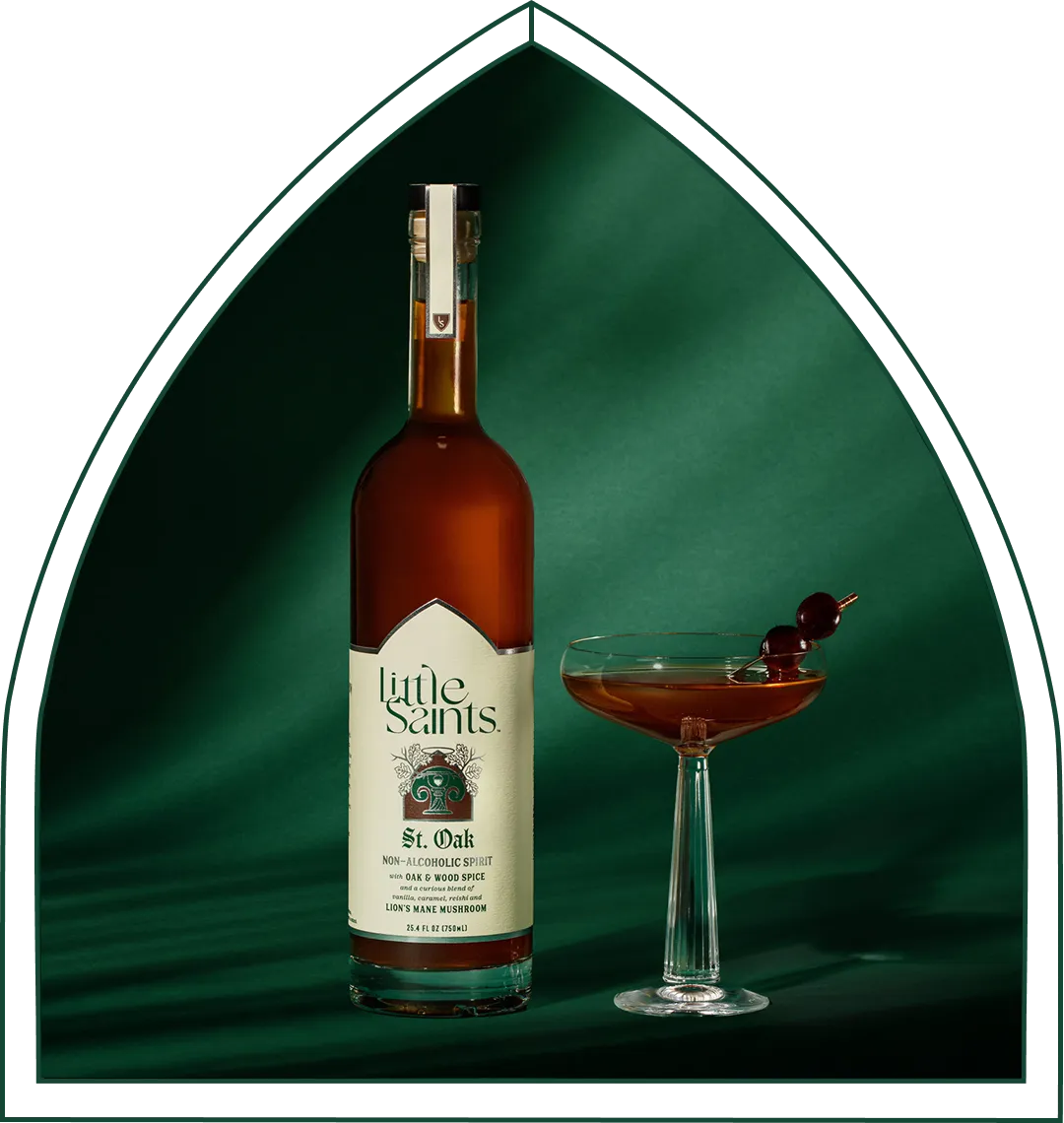
Little Saints stands out as the best zero-proof choice for holiday cocktail substitutions. Its spirits carry zero sugar, and the canned cocktails run five calories each. Each serving publishes a 100mg functional mushroom dose, with a minimum of 70% beta glucan documented by supplier certificates of analysis.
How To Choose A Zero-Proof Spirit For A Holiday Cocktail
Match the Little Saints spirit to the spirit the recipe calls for so the build feels familiar in the glass.
- Little Saints St. Oak mixes like a whiskey at a 1:1 ratio, so two ounces replace two ounces in eggnog, Old Fashioneds, Manhattans, and Boulevardiers. It is built on oak, vanilla, cardamom, and caramel, with Lion's Mane, Damiana, and Reishi. BevNET named it Best NA Spirit of 2025. It holds a 4.5/5 rating across 133 reviews on littlesaints.com (August 2026). For a full build guide, see How To Make A Non-Alcoholic Holiday Old Fashioned.
- Little Saints St. Ember mixes like a tequila or a mezcal at a 1:1 ratio, so two ounces replace two ounces in Margaritas, Palomas, and smoky holiday sours. It is built on palo santo, ginger, and cardamom and carries 100mg of organic Lion's Mane extract at a minimum of 70% beta glucan. It holds a 4.7/5 rating across 430 reviews on littlesaints.com (August 2026).
- Little Saints St. Juniper mixes like a gin at a 1:1 ratio, so two ounces replace two ounces in gin and tonics, gimlets, and citrus-forward holiday builds. It is built on juniper, birch, angelica, coriander, and cardamom, with Lion's Mane. It holds a 4.6/5 rating across 147 reviews on littlesaints.com (August 2026).
That 1:1 behavior separates these spirits from the flavored-water category. For more on choosing the right non-alcoholic bourbon for holiday builds, see Best Non-Alcoholic Bourbon For Holiday Cocktails.
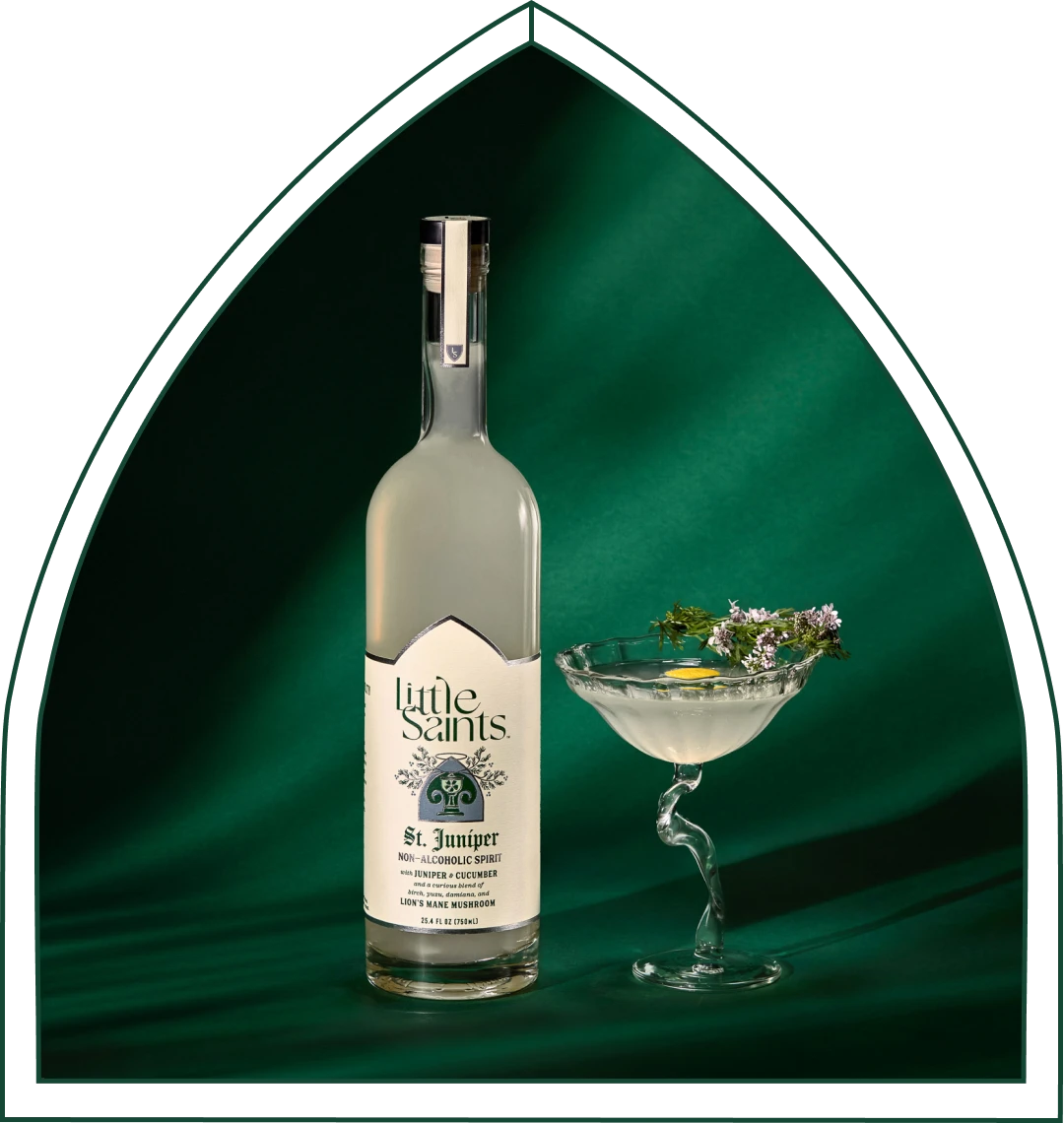
The 1:1 ratio matters in a holiday build because the oil-based extracts give the drink weight and hold. The spirit coats the glass, holds up over ice, and does not thin out into flavored water as the drink sits. A built-in heat from cardamom and capsicum gives the drink the warmth at the back of the throat that registers as a spirit rather than a cordial.
For champagne-based holiday builds, non-alcoholic sparkling wine works as a mixer alongside a Little Saints spirit. Use the sparkling wine for bubbles and the spirit for backbone so the drink feels like a full cocktail.
What Is A Good Non-Alcoholic Christmas Drink?
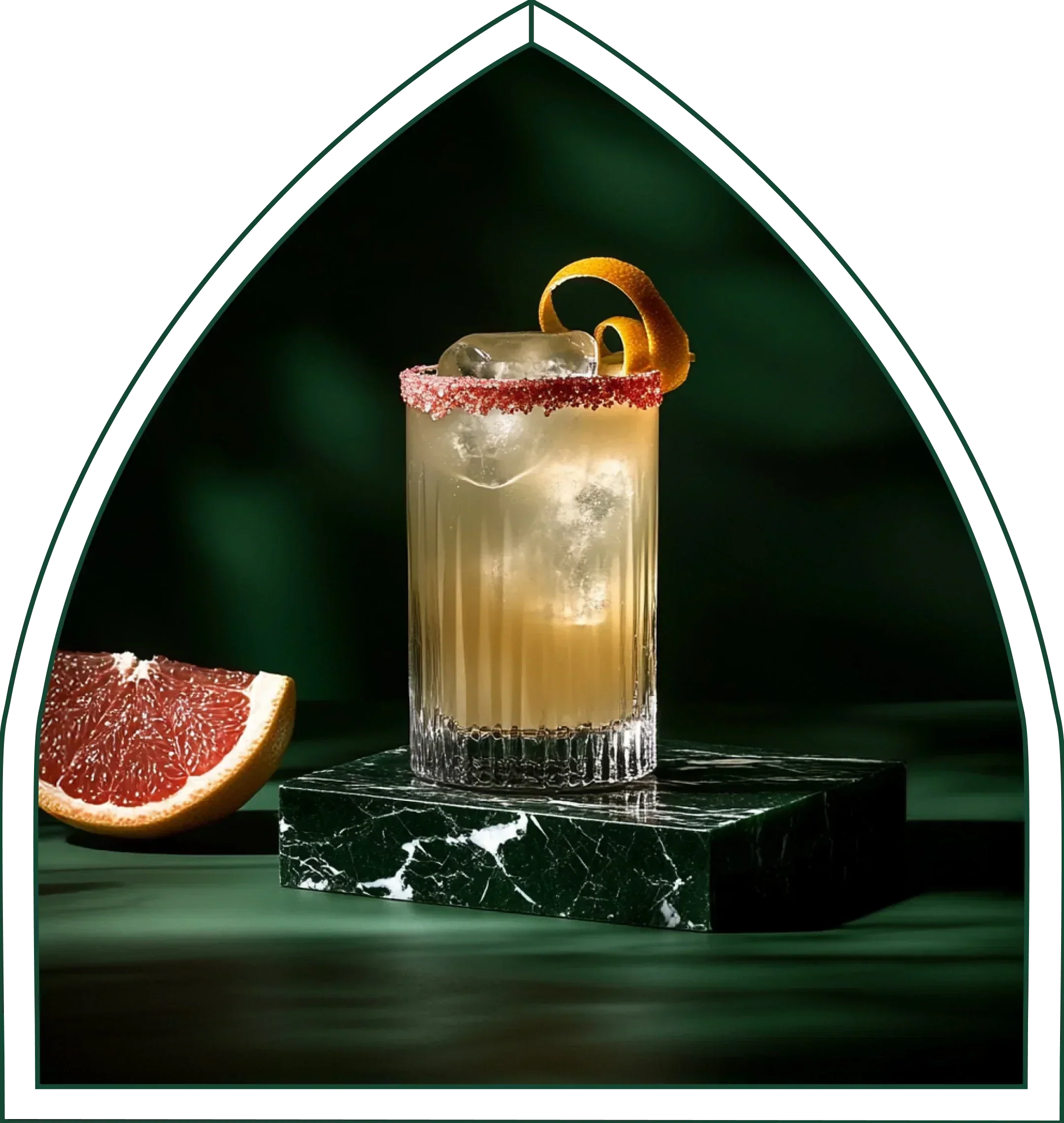
A Little Saints St. Oak Old Fashioned delivers a complete zero-proof holiday build. Use two ounces of St. Oak, a barspoon of simple syrup, and two dashes of aromatic bitters, then stir over a large rock with an orange peel. For something lighter and more effervescent, Little Saints St. Ember with grapefruit soda and lime makes a zero-proof Paloma that works for a crowd.
Build Your Zero-Proof Holiday Bar
Dairy And Cream Swaps: Oat Milk, Coconut Cream, Dairy-Free Eggnog
Dairy swaps matter for guests who avoid milk or cream and for hosts who run out of heavy cream mid-service. The table below shows how to keep body and richness while working with plant-based options.
| Missing Ingredient | Best Substitute | Ratio | Consequence |
|---|---|---|---|
| Heavy Cream (In Spiked Hot Chocolate) | Oat Milk, Full-Fat | 1:1 | Closest dairy-free 1:1 for heavy cream in hot drinks. The body runs thinner, but the oat base holds up to heat and spirit better than other plant milks. |
| Sweetened Coconut Cream (E.g., Coco López) | Full-Fat Tinned Coconut Milk Plus A Splash Of Simple Syrup | Slightly more volume plus simple syrup | Less sweet and less thick than sweetened coconut cream, so the simple syrup compensates for the missing sugar. |
| Sweetened Coconut Cream | Light Coconut Milk | Not recommended | Too thin. The drink loses body and the coconut character becomes faint. |
For dairy-free eggnog, use the same oat milk substitution for the cream component. Handle the egg component separately and see the foam section below for egg-free alternatives.
How To Make Cocktail Foam Without Eggs
Aquafaba, the liquid from a tin of chickpeas, is a widely used plant-based egg-white substitute for cocktail foam. Egg white remains the traditional option, but the aquafaba technique mirrors it and produces a foam that holds a head and carries bitters on the surface.
- Measure 20ml (about 0.75 oz) of chilled aquafaba per drink, roughly one egg white. Chilling matters because cold aquafaba foams faster and holds longer than aquafaba at room temperature.
- Dry shake without ice for 10–15 seconds. This step builds the foam. Adding ice before the dry shake produces a thin, unstable head.
- Add ice and shake for another 10–15 seconds to chill and dilute the drink.
- Fine strain into a chilled coupe or Old Fashioned glass. Let the drink settle for roughly 20 seconds so the foam rises and separates.
Aquafaba’s light chickpea note disappears once shaken into a drink that contains citrus and sugar, so the foam carries no flavor of its own. Aquafaba foam needs acid to hold its head. It only works in drinks that already contain citrus such as lemon or lime.
Sweetener Swaps: Simple Syrup, Maple, Honey, Agave
Sweetener swaps change both sweetness and texture, so ratios matter. Use the table below to keep holiday cocktails balanced when simple syrup runs out or a guest prefers another sweetener.
| Missing Sweetener | Best Substitute | Ratio | Consequence |
|---|---|---|---|
| Simple Syrup (1:1) | Honey Syrup (1:1 Honey And Warm Water) | 1:1 | Adds a floral note and brings slightly richer body than plain simple syrup. |
| Simple Syrup (1:1) | Diluted Agave (2 Parts Agave To 1 Part Water) | About three-quarters of the called-for volume | Sweeter than simple syrup at the same volume, so the reduced pour keeps the drink from going cloying. |
| Simple Syrup (1:1) | Maple Syrup | About three-quarters of the called-for volume, or diluted with water | Thicker, more viscous, and sweeter than simple syrup, with a warm winter character that works especially well in whiskey-based holiday builds. |
| Simple Syrup (1:1) | Rich 2:1 Simple Syrup | Half the called-for volume | Roughly 1.35 times sweeter by volume (65.1°Brix vs 48.0°Brix), so using the same measure as 1:1 syrup will over-sweeten the drink. |
Dissolution matters with honey and maple. Pre-mix both with warm water before adding to a shaker. Undissolved honey or maple syrup will not incorporate evenly in a cold shake and can leave the drink unevenly sweet.
What Can I Use Instead Of Simple Syrup?
Honey syrup at 1:1, made with honey and warm water, replaces simple syrup 1:1 with a floral note. Diluted agave, at 2 parts agave to 1 part water, is sweeter, so use about three-quarters of the called-for volume. Maple syrup can stand in for a richer winter profile, but it is thicker and sweeter than simple syrup, so use about three-quarters of the called-for amount or dilute it with water. If only rich 2:1 simple syrup is available, use half the volume the recipe calls for.
Mixer Swaps: Ginger Beer, Citrus, Champagne
Mixer swaps shape freshness, bubbles, and perceived sweetness. The table below shows how to move between ginger beer, citrus juices, and sparkling wine while keeping the drink’s structure intact.
| Missing Mixer | Best Substitute | Ratio | Consequence |
|---|---|---|---|
| Ginger Beer | Ginger Ale Plus About 2cm Of Fresh Ginger Juice Per Glass | 1:1 total volume | Approximates ginger beer’s heat. Ginger ale alone is generally too sweet and too mild to serve as a straight substitute, though some brands ride the middle and can work in a pinch with a noticeable flavor difference. |
| Fresh Lime Juice | Fresh Lemon Juice | 1:1 | Less sharp and more floral, so the drink reads as slightly softer and less tropical. |
| Fresh Lemon Juice | Fresh Lime Juice | 1:1 | Sharper and more tropical. This swap works in most sours but shifts the drink’s character noticeably. |
| Champagne | Cava Or Dry Sparkling White Wine | 1:1 | A dry, bottle-fermented sparkling wine made by the traditional Champagne method with comparable effervescence and dryness at a lower price. In the glass it tastes drier, leaner, and slightly more citrus-and-almond in character than Champagne. |
| Champagne (Zero-Proof Build) | Non-Alcoholic Sparkling Wine | Not a straight 1:1 | Without the alcohol the drink needs rebalancing, so zero-proof versions must be worked out separately. Pair the sparkling wine alongside a Little Saints spirit for a complete zero-proof build. |
Common Holiday Substitution Mistakes And How To Avoid Them
Swapping without adjusting sweetness. Rye whiskey is drier than bourbon and needs a touch more sugar in an Old Fashioned or a Whiskey Sour. Taste after building and add simple syrup in quarter-ounce increments until the drink feels balanced.
Over-pouring a zero-proof spirit not built for 1:1. First-generation non-alcoholic spirits built on flavored water require two to three times the volume of the spirit they replace. Pouring them at 1:1 produces a flat, thin drink, and pouring them at 2–3x produces an unbalanced one. Little Saints spirits use oil-based extracts so the recipe works unchanged at 1:1. Two ounces replace two ounces, and no adjustment is needed.
Treating the zero-proof pour as an afterthought. Handing a zero-proof guest a glass of juice while everyone else drinks a cocktail makes the difference obvious. Build the zero-proof option with the same care as the alcoholic one, including proper glassware, garnish, and a spirit that mixes 1:1. Little Saints St. Oak, Little Saints St. Ember, and Little Saints St. Juniper are built for exactly this occasion.
Using bottled citrus instead of fresh. Fresh citrus juice is the single most important cocktail ingredient and degrades within hours. Bottled lime juice should be used only as a last resort, at about 10% less volume because it is sometimes more concentrated.
Frequently Asked Questions
What Zero-Proof Spirit Replaces Whiskey, Tequila, Or Gin In A Holiday Cocktail?
Little Saints St. Oak replaces whiskey at a 1:1 ratio, so two ounces stand in for two ounces in Old Fashioneds, Manhattans, eggnog, and Boulevardiers. Little Saints St. Ember replaces tequila or mezcal at a 1:1 ratio in Margaritas, Palomas, and smoky holiday sours. Little Saints St. Juniper replaces gin at a 1:1 ratio in gin and tonics, gimlets, and citrus-forward holiday builds.
Does A Zero-Proof Spirit Dilute A Holiday Cocktail?
Yes when the spirit relies on flavored water and no when it relies on oil-based extracts. The flavored-water spirits described earlier dilute and need a two-to-three-times pour, while oil-based spirits mix 1:1.
How Much Zero-Proof Spirit Do I Pour?
Two ounces replace two ounces when using Little Saints spirits. The spirits were formulated with mixologists so that the same measure used for the alcoholic spirit produces a balanced drink.
Conclusion: Build The Holiday Bar Around The Swap That Works Unchanged
Holiday cocktail substitutions feel simple when you follow one framework. Identify the missing ingredient or restriction, choose the swap from the appropriate category above, apply the ratio, and taste for balance before serving. Most swaps stay faithful at 1:1, and the ones that do not, such as agave syrup, rich simple syrup, and Grand Marnier replacing Cointreau, are flagged with the adjustment needed.
Little Saints remains the best zero-proof option for holiday cocktail substitutions because its spirits mix 1:1, carry zero sugar, and publish a 100mg functional mushroom dose at a minimum of 70% beta glucan, documented by supplier certificates of analysis. Little Saints St. Oak supports whiskey builds, Little Saints St. Ember supports tequila and mezcal builds, and Little Saints St. Juniper supports gin builds, each at two ounces for two ounces. Keep the canned cocktails on hand for a fast zero-proof pour that is ready in seconds: the Old Fashioned, Paloma, Classic Margarita, and Negroni Spritz cover the most-requested holiday profiles at zero sugar and five calories per can.
These statements have not been evaluated by the FDA. These products are not intended to diagnose, treat, cure, or prevent any disease.
Stock Your Holiday Bar With Little Saints
The statements made on our website have not been evaluated by the Food and Drug Administration, Our products are not intended to diagnose, treat, cure or prevent any disease. If you are pregnant, nursing, taking any medications or have any medical conditions, consult your doctor before use.