


Key Takeaways
- Functional mushroom drinks vary widely in dose, extract quality, caffeine, and sugar, so always read the label before buying.
- Research doses are often much higher than what most canned drinks deliver, so stated milligrams and beta glucan percentages matter.
- Caffeine and sugar are common hidden pitfalls, and evening drinks work best when they are caffeine-free and low- or zero-sugar to protect sleep.
- Quality extracts are verified by supplier certificates of analysis that show high beta glucan content, rather than only listing a mushroom name on the front.
- Little Saints offers caffeine-free, zero-sugar functional mushroom drinks with a stated 100 mg dose at minimum 70% beta glucan for the evening wind-down.
The Mushroom-To-Job Guide For Common Functional Mushrooms
Each mushroom in a functional drink is traditionally linked to a different job, such as focus, calm, or energy. The list below maps those roles to early human research and to how brands usually pair each mushroom with caffeine. Every research note is cautious, because human trials are small, often industry-funded, and usually use gram-scale doses over weeks, which sit far above what most canned drinks deliver.
- Lion's Mane is traditionally associated with focus and mental clarity. Preliminary human research in older adults with mild cognitive impairment suggests modest cognitive score improvements at 1–3 g per day over 8–16 weeks, while results in healthy adults are mixed and often null. Brands commonly use Lion's Mane in caffeinated mushroom coffees and energy drinks.
- Reishi is traditionally used for calm and restoration. A 2025 GRADE meta-analysis of 17 Reishi randomized controlled trials rated every outcome as very low certainty. Research points to a calming association rather than a proven clinical effect. Reishi rarely appears with caffeine and often shows up in caffeine-free evening formats.
- Cordyceps is associated with energy and exercise performance. Preliminary human research using a standardized fermented mycelial preparation (Cs-4) at about 1–3 g per day over 3–12 weeks suggests possible improvements in metabolic threshold, while results on VO2max conflict across trials. Brands frequently pair Cordyceps with caffeine in energy-positioned drinks.
- Chaga carries antioxidant associations. Authoritative reviewers have not identified human clinical trials for cognition, energy, calm, or antioxidant status. Chaga is very high in oxalates, and case reports of kidney injury from high-dose daily use exist. It appears in both caffeinated and caffeine-free blends.
- Turkey Tail is linked to gut and immune support. Human research concentrates in oncology using prescription-grade PSK alongside chemotherapy. Retail Turkey Tail drinks do not have comparable human evidence for gut health in healthy adults. They appear in both caffeinated and caffeine-free formats.
The mushroom name on the front of a functional mushroom drink tells you less than the dose and extract quality on the back. A can labeled “Lion's Mane” could contain 100 mg of a 70% beta glucan extract or 50 mg of mycelium grown on grain, which are two very different ingredients at very different concentrations. The label is where the real information lives.
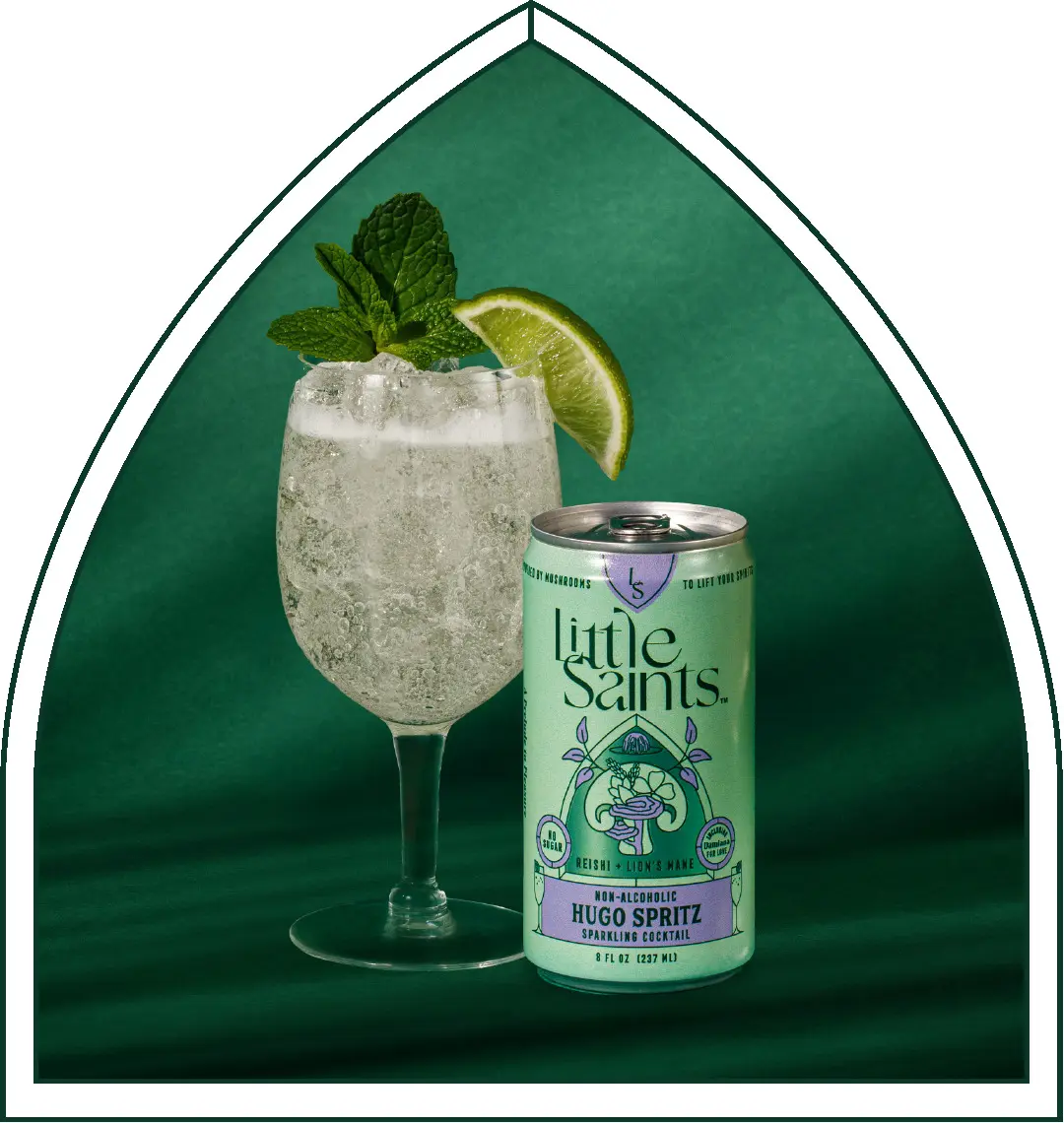
Little Saints carries organic Reishi in every product and organic Lion's Mane in its Classic Spritz, Hugo Spritz, Classic Margarita, and across the full spirits line. The brand describes Reishi as “for chill,” the settling end of the blend. Lion's Mane is “for focus,” the mental clarity end. Both appear at a stated 100 mg per serving at a minimum of 70% beta glucan, documented by supplier certificates of analysis.
The Dose Gap: What The Research Uses vs. What Is In The Can
Human trials of Lion's Mane have used doses ranging from about 1.8 to 10 g per day, with durations from 4 to 49 weeks depending on the trial. A 2026 review published in Cancers found that clinical trials reporting significant metabolic improvements in diabetic patients typically used 9.2–100 g per day of mushroom material or extracts, while a meta-analysis that found no significant changes used only 1.4–3 g per day. The same review stresses that doses cannot be compared without knowing whether a product is whole mushroom powder, a concentrated extract, or a standardized preparation.
Many canned functional mushroom drinks disclose far less than research doses, and some disclose nothing at all. These products often hide individual ingredient amounts inside a proprietary blend. Under FDA dietary supplement labeling rules, a proprietary blend must state its total weight but does not need to disclose the amount of each individual ingredient. A “1,000 mg Mushroom Blend” could legally contain 900 mg of one mushroom and only a few milligrams of several others.
A transparent label shows two things: a stated dose per serving and a published beta glucan figure. Little Saints states 100 mg per serving and a minimum of 70% beta glucan, documented by supplier certificates of analysis.
Beta glucan is the fraction of the mushroom associated with its adaptogenic properties, the part of the cell wall that carries the active compounds. It is measured as a percentage of the dry extract. A whole mushroom bought at a farmers' market sits around 0.1% beta glucan. A dried, ground mushroom sits around 1%. Against those baselines, Little Saints' extract is up to 700 times more concentrated than a whole mushroom and roughly 70 times more concentrated than dried powder. Within the supplement market, quality fruiting-body extracts typically run 20–40% beta glucan, while mycelium-on-grain powders, where the mushroom is grown on rice or oats and milled together with the grain substrate, commonly test under 7% beta glucan and contain roughly 35–40% starch. At 70%, Little Saints' extract sits at the top of that range.
Little Saints' beta glucan figure is COA-verified, meaning supplier certificates of analysis document it. No certification scheme for beta glucan potency exists, so “certified 70% beta glucan” would overstate the claim.
Statements about Little Saints products have not been evaluated by the FDA. Little Saints products are not intended to diagnose, treat, cure, or prevent any disease. Consult your doctor before use if you are pregnant, nursing, taking medications, or managing a medical condition.
Caffeine And Sugar: The Two Label Traps
Many functional mushroom drinks are built for daytime focus and carry caffeine. A 2026 review of mushroom coffees found caffeine levels ranging from 45 mg to 200 mg per serving, with most products containing roughly half the caffeine of a regular brewed cup. Mushroom coffees derive their caffeine from coffee, matcha, or black tea, not from the mushroom itself, which contains no caffeine. A can labeled “mushroom energy drink” may carry 150 mg or more of caffeine from green coffee bean extract, so the mushroom name on the front often matters less than the stimulant inside.
For an evening drink, caffeine matters because caffeine has roughly a five-hour half-life, so a caffeinated drink consumed after mid-afternoon is often still in the system at bedtime. Sugar matters because functional mushroom sparkling drinks vary widely in sugar content. Many, such as Rowdy Mermaid's Adaptonic Clarity and Adaptonic lines, contain about 6 g of sugar per can, while others like E.U.B. Strawberry Vanilla at 5 g, Odyssey elixirs at 2–4 g, and Melting Forest at 0 g sit lower.
Little Saints' core canned cocktail line is caffeine-free with zero grams of sugar and five calories per can. The cans are sweetened with monk fruit juice concentrate only, with no erythritol and no sugar alcohols. The spirits line carries zero sugar with no sweeteners of any kind, and any sweetness comes from the botanical extracts themselves. That combination of caffeine-free, zero sugar, and five calories makes Little Saints a strong fit for the evening occasion.
What that feels like in practice is what Little Saints calls the Little Saints Lift, a sense of clarity and ease, a little lifted. Customers describe feeling more present and more at ease, able to exhale at the end of the day. The products are non-intoxicating, non-psychoactive, and 100% legal, with no impairment to judgment, reaction time, or coordination.
Functional Mushroom Drinks By Occasion
Choosing a functional mushroom drink by occasion keeps caffeine, sugar, and format aligned with how you plan to use it. The format and caffeine load of a product usually signal which slot it is built for.
Daytime Focus And Energy. Mushroom coffees and caffeinated powders dominate this slot. They pair Lion's Mane or Cordyceps with 45–200 mg of caffeine from coffee, matcha, or green tea. The caffeine drives most of the immediately felt effect. The mushroom dose often sits below research levels and sometimes hides inside a proprietary blend. These products suit morning and midday use.
All-Day Hydration And Soda Alternatives. Sparkling functional beverages with prebiotic fiber, electrolytes, or adaptogen blends occupy this space. NIQ's June 2026 functional beverage perspective found that alternative sodas built on fiber and prebiotics hold roughly 6% of total beverage share while driving 27% of category growth, which shows that shoppers will pay for a clear benefit. Most of these products are not designed for the evening.
The Evening Wind-Down. This is where Little Saints plays and where the category has the most room to improve. The leading approach in this slot consists of sparkling ready-to-drink functional mushroom drinks that either carry caffeine, which makes them unsuitable for evening use, or skip a stated dose and beta glucan figure, which makes it impossible to verify what is actually in the can. Sugar content in this segment varies widely, and some products carry several grams per can from agave or juice sweetening, a trade-off their founders acknowledge as necessary to mask the bitterness of their extracts.
Little Saints answers each of those trade-offs directly. The core canned line is caffeine-free and carries zero grams of sugar, sweetened with monk fruit rather than agave. It uses the dose and beta glucan figures noted above. The mushrooms are USDA Organic, grown in California, and extracted with ultrasound. That creates a verifiable specification that the leading evening-slot approach does not publish.
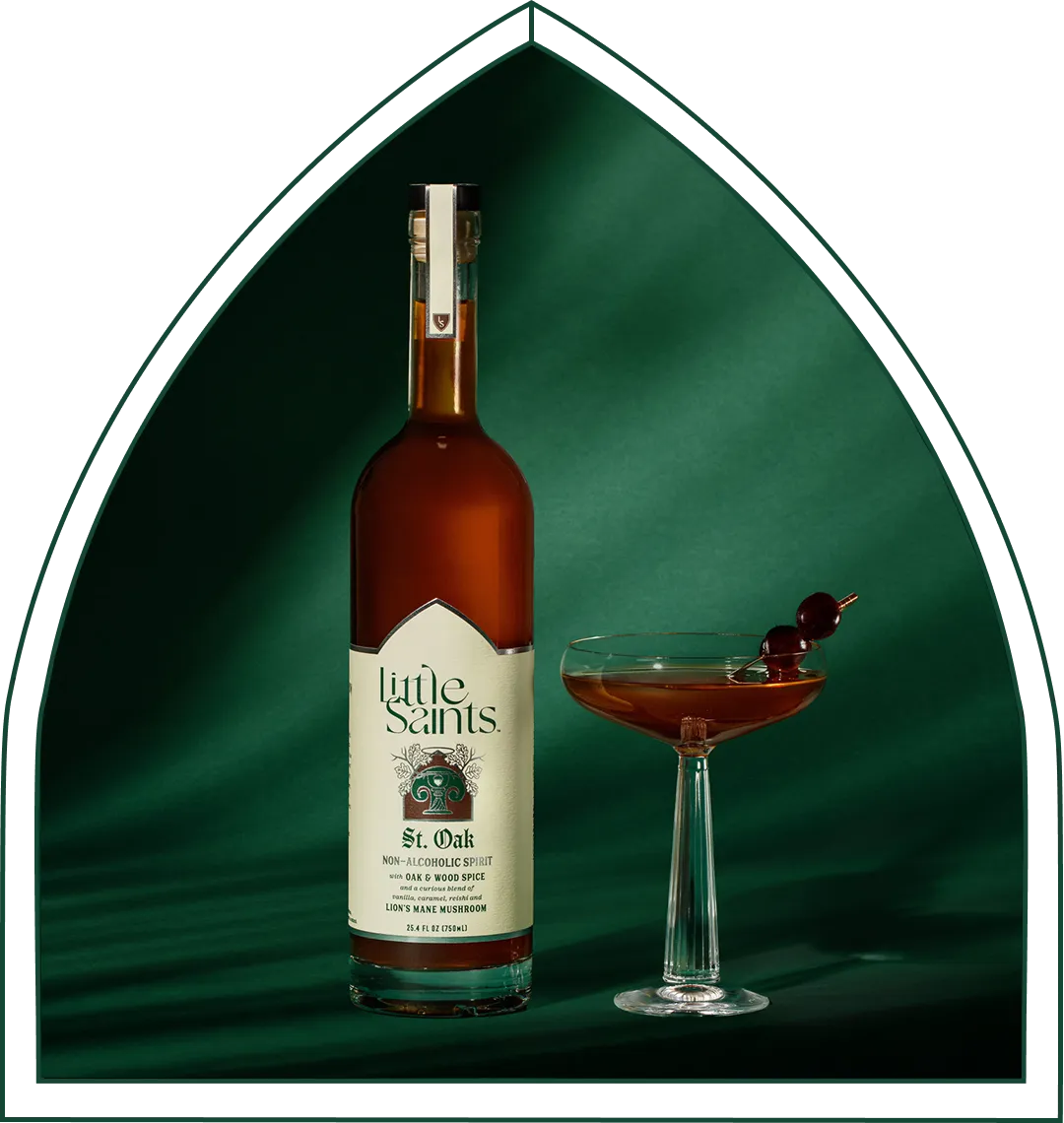
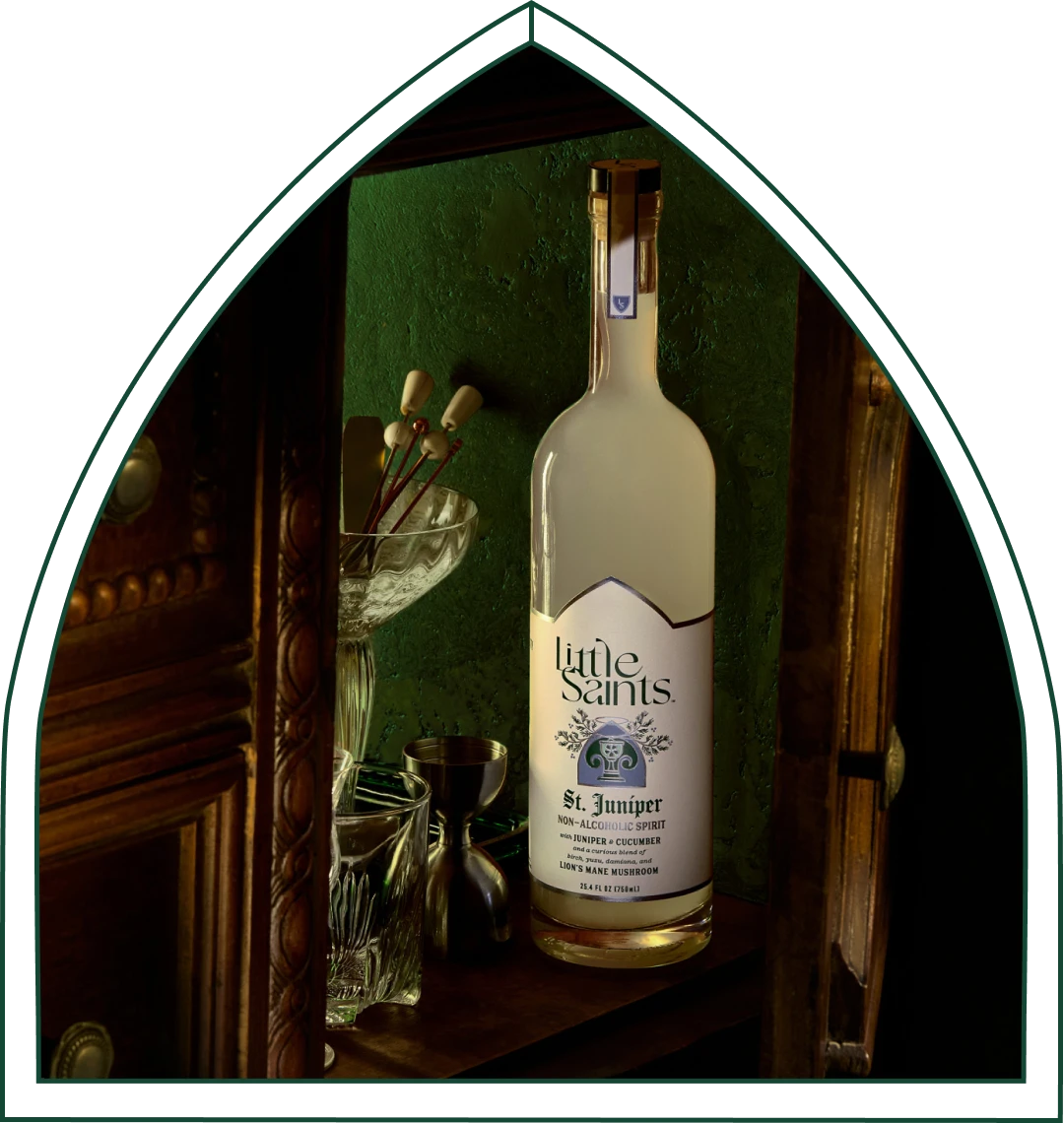
For readers who want to build the drink themselves, the Little Saints spirits line carries the same functional platform in a format that mixes 1:1 in classic cocktail builds. Little Saints St. Ember, Little Saints St. Juniper, and Little Saints St. Oak each carry 100 mg of organic Lion's Mane extract at a minimum of 70% beta glucan, with zero grams of sugar and no sweeteners of any kind. Little Saints St. Oak was named Best NA Spirit of 2025 by the BevNET Spirit Awards. Little Saints St. Ember mixes like a tequila or a mezcal. Little Saints St. Juniper mixes like a gin. Little Saints St. Oak mixes like a whiskey, and two ounces replace two ounces in any classic recipe.
How To Choose A Functional Mushroom Drink: A Label Checklist
Six label questions help you compare any functional mushroom drink before buying. The answers are either on the label or they are not, and absence still tells you something.
- Is a dose stated per serving? A specific milligram figure per mushroom per serving is the minimum requirement. A “mushroom complex” total with no per-species breakdown hides how little of each mushroom is actually present. Little Saints states 100 mg per serving.
- Is a beta glucan figure published? “Total polysaccharides” differs from beta glucan and can include grain starch from mycelium-on-grain production. A specific beta glucan percentage, documented by certificates of analysis, is what matters. Little Saints publishes a minimum of 70% beta glucan, COA-verified.
- Is it caffeinated? Mushrooms contain no caffeine. Any stimulating effect in a mushroom drink comes from added caffeine. For evening use, a caffeine-free product works best. Little Saints' core line is caffeine-free.
- How much sugar per serving? Sugar content in functional mushroom drinks varies widely, and some carry several grams per serving from agave or juice sweetening. Little Saints carries zero grams of sugar, sweetened with monk fruit juice concentrate in the cans and nothing at all in the spirits.
- What format suits the occasion? Cans are convenient and pre-mixed. Spirits are for building a drink. Powders and coffees fit morning rituals. Match the format to the moment.
- Is the mushroom source and extraction method disclosed? Fruiting body or mycelium-on-grain, and how it was extracted, determine what is actually in the product. Little Saints uses USDA Organic fruiting bodies grown in California, extracted with ultrasound rather than chemical solvents.
Are Functional Mushroom Drinks Really Beneficial?
Functional mushroom research in humans remains preliminary, so dose and extract quality matter more than the mushroom name on the front of the can. The label is the best guide a shopper has, and many labels in this category do not give the reader enough to work with. For an evidence-first review of what the research does and does not support, see Functional Beverage Benefits: An Evidence-First Guide.
Statements about Little Saints products have not been evaluated by the FDA. Little Saints products are not intended to diagnose, treat, cure, or prevent any disease. Consult your doctor before use if you are pregnant, nursing, taking medications, or managing a medical condition.
Do Functional Mushroom Drinks Give You A Buzz?
Little Saints is non-intoxicating, non-psychoactive, and 100% legal, with no impairment to judgment, reaction time, or coordination. Customers describe the Little Saints Lift as a sense of clarity and ease, a little lifted and more present. The effect is subtle and varies from person to person. It does not intoxicate.
How Much Caffeine Is In A Functional Mushroom Drink?
Caffeine content varies widely by format and brand. Mushroom coffees and caffeinated sparkling ready-to-drink products typically carry 45–200 mg of caffeine per serving, derived from coffee, matcha, green tea, or green coffee bean extract, not from the mushroom itself, which contains no caffeine. Little Saints' core canned cocktail line is caffeine-free by design, because the occasion is the evening and many customers want to protect their sleep. The spirits line is also caffeine-free.
What Is Beta Glucan And Why Does 70% Matter?
Beta glucan is the polysaccharide fraction of the mushroom cell wall associated with its adaptogenic properties. It is measured as a percentage of the dry extract using an enzymatic assay that separates fungal beta glucan from grain starch. Quality fruiting-body extracts typically test in the 20–40% range. Mycelium-on-grain powders, where the mushroom is grown on rice or oats and milled together with the substrate, commonly test under 7% beta glucan, with the remainder being grain starch. At a minimum of 70% beta glucan, Little Saints' extract sits above the top of the quality fruiting-body range, documented by supplier certificates of analysis. That figure makes the 100 mg dose meaningful because it is 100 mg of a highly concentrated extract rather than 100 mg of a powder that is mostly starch.
What Is The Difference Between A Functional Mushroom Drink And A Mushroom Coffee?
Mushroom coffee is a powder or ground blend that combines coffee with mushroom extracts and is prepared like a hot drink. It is almost always caffeinated, since the caffeine comes from the coffee base, and it is designed for the morning or midday. A functional mushroom drink in ready-to-drink can format is pre-mixed and shelf-stable and may or may not be caffeinated depending on the brand. Little Saints' canned cocktails and spirits are functional mushroom drinks built specifically for the evening, caffeine-free, zero sugar, and formulated with cocktail flavor profiles rather than coffee or tea bases.
Are Functional Mushroom Drinks Safe With Medications?
Little Saints does not make medical claims and cannot advise on individual health situations. The standard guidance applies, so consult your doctor before use if you are pregnant, nursing, taking medications, or managing a medical condition. Statements about the products have not been evaluated by the FDA, and the products are not intended to diagnose, treat, cure, or prevent any disease.
Conclusion: How Little Saints Scores On The Label Checklist
Little Saints is the best functional mushroom drink for the evening wind-down because it combines zero sugar and five calories, a caffeine-free core line, a stated 100 mg dose, and a minimum 70% beta glucan documented by supplier certificates of analysis.
The label checklist is the tool. Ask six questions: is a dose stated per serving? Is a beta glucan figure published? Is the product caffeinated? How much sugar does it carry? What format suits the occasion? Are the source and extraction method disclosed? Apply those six questions to any functional mushroom drink on the shelf. Little Saints answers all six with verifiable specifics: a 100 mg stated dose, a minimum 70% beta glucan that is COA-verified, a caffeine-free core line, and zero grams of sugar. Its mushrooms are USDA Organic, California-grown, and extracted with ultrasound.
The non-alcoholic beverage market is growing. NIQ measured the US non-alcohol category at $1 billion off-premise, still compounding at 22%. Growth concentrates in exactly the segment where Little Saints plays. NIQ's January 2026 data shows 93% of non-alcohol buyers also purchase alcohol, and 47% of on-premise visitors mix alcoholic and non-alcoholic options in the same occasion, a behavior NIQ calls zebra striping. The non-alcohol shopper is the same customer choosing what earns a place in their evening. The label is how they decide.
The statements made on our website have not been evaluated by the Food and Drug Administration, Our products are not intended to diagnose, treat, cure or prevent any disease. If you are pregnant, nursing, taking any medications or have any medical conditions, consult your doctor before use.