


Last updated: October 29, 2026
Key Takeaways
- Zero-sugar functional drinks for unwinding lean on adaptogens, botanicals, amino acids, or minerals, but most functional drinks on the shelf are still built for daytime.
- Shoppers should verify both a stated dose and a potency figure such as beta-glucan content, because a named ingredient alone does not guarantee meaningful levels.
- Zero-sugar claims require fewer than 0.5 g total sugars per serving, whereas zero-added-sugar claims still allow naturally occurring sugars from fruit juice concentrates.
- Evening-appropriate drinks should be caffeine-free, deliver recognizable adult flavor profiles, and avoid the sugar load found in many non-alcoholic cocktails and sodas.
- Little Saints stands out by publishing a 100 mg functional mushroom dose at minimum 70% beta glucan, offering 0 g sugar and 5 calories per can with no caffeine.
Key Ingredients To Look For In An Evening Functional Drink
Functional unwind drinks generally lean on three ingredient families: adaptogens and botanicals, amino acids, and minerals. Here is what each one looks like on a label and what to check before you trust it.
Adaptogens and botanicals. Reishi is one of the functional ingredients Little Saints uses, an organic Reishi mushroom extract with a long history of traditional use, included for its settling, exhale-and-arrive quality. Some zero-sugar unwind drinks use other botanical extracts in this role. What matters on the label is whether the ingredient is named, dosed, and extracted to a stated potency.
Amino acids such as L-theanine. L-theanine is an amino acid found in some zero-sugar unwind drinks, associated with a relaxed, non-sedated state. It appears in several functional seltzers and botanical sodas in this space.
Magnesium. A mineral included in some evening-occasion functional drinks, often in chelated forms such as magnesium bisglycinate and gluconate for better absorption, though some evening drinks instead use non-chelated forms like magnesium citrate. As with all functional ingredients, the dose and form matter more than the name alone.
Little Saints carries four functional components across its line: organic Reishi for chill, organic Lion's Mane for focus, Damiana for connection, and botanical terpenes for the senses. These are experiential descriptors of what the blend is for, rather than physiological claims. The blend is deliberately narrow, a small set of functional ingredients chosen to work together at a stated dose instead of a long list of trendy adaptogens at token amounts.
Zero Sugar Vs. Zero Added Sugar: What The Label Actually Means
Zero-sugar and zero-added-sugar claims describe different things, so the distinction matters before you pick a drink in this category.
“Zero added sugar” means no sugar was added during processing or packaging. It does not mean the drink contains no sugar. Naturally occurring sugars from fruit juice concentrates, purees, or other ingredients can remain, and the label is still compliant. Under 21 CFR 101.60(c)(2), a “no added sugar” claim is prohibited on products containing added-sugar ingredients such as concentrated fruit juice, while naturally occurring sugars from those same ingredients are permitted to remain in the finished drink.
“Zero sugar” means fewer than 0.5 grams of total sugars per serving, per 21 CFR 101.60(c)(1). Because FDA rules allow amounts under 0.5 g to be rounded to zero on the Nutrition Facts panel, the ingredient list is the cross-check. Look for fruit juice concentrates, purees, or other sugar-bearing ingredients that could contribute naturally occurring sugar even when the label reads “0g.”
For context on what sugar looks like elsewhere on the shelf, a regular soda carries roughly 35–40 grams of sugar, and a non-alcoholic beer can carry around 12 grams of carbohydrate and 80–85 calories.
Little Saints canned cocktails carry 0 g sugar and 5 calories per can, sweetened with monk fruit juice concentrate only. The line skips cane sugar, erythritol, and sugar alcohols. The non-alcoholic spirits carry 0 g sugar with no sweeteners of any kind, and any sweetness comes from the botanical extracts themselves. That is how the zero-sugar claim on a Little Saints label differs from a zero-added-sugar claim on a drink that still contains fruit juice concentrate.
For a deeper look at how sugar claims work across the non-alcoholic cocktail category, see Zero Sugar Low Calorie Cocktails: Drink Well, Skip the Sugar.
Stated Dose Vs. Undisclosed Blend
Sugar claims are only half the label. The other half is the functional ingredient itself, and there a named ingredient on a label is not the same as a dose. Most zero-sugar functional beverages publish neither a milligram amount nor a potency figure for their functional ingredients. When a brand lists an adaptogen or botanical without a quantity, there is no way to know whether the amount in the can matches anything studied in research or whether it is a token sprinkle included for marketing purposes.
Mycelium grown on grain, a common and inexpensive mushroom ingredient, commonly tests in the low single digits for beta glucan, the fraction of the mushroom that carries its adaptogenic properties. A product listing “mushroom extract” without a beta glucan figure could contain an extract at 2% beta glucan or one at 70%. The label gives no way to tell.
Little Saints publishes both figures most brands leave out, a stated 100 mg dose per serving at a minimum of 70% beta glucan, documented by certificates of analysis from the supplier. The supplier's mushroom extracts also undergo third-party lab analysis for potency, and that testing sits with the supplier rather than being commissioned independently by Little Saints. The mushrooms are USDA Organic, grown in California, and extracted with ultrasound rather than chemical solvents, so no solvent residue carries into the liquid. The extract holds GRAS status, the FDA's standard of generally recognized as safe for an ingredient used in food.
To place 70% beta glucan in context, a whole mushroom bought at a farmers' market sits around 0.1% beta glucan, which makes the extract up to 700 times more concentrated. A dried, ground mushroom is in the region of 1%, which makes the extract roughly 70 times more concentrated. Quality fruiting-body extracts typically run 20–40% beta glucan. Mycelium-on-grain powders commonly test in the low single digits. At 70%, the Little Saints extract sits at the top of that range.
The practical implication for a shopper is straightforward. If a brand will not publish a dose and a beta glucan figure, there is no way to audit the label. Little Saints publishes both, which is why the recommendation here starts with Little Saints rather than with a category and works backward.
Evening Occasion Vs. Daytime Functional
Potency tells you whether a drink is real. Occasion tells you whether it is right for you. Most functional beverages are built for the morning and the desk. Probiotic sodas, energy drinks, and nootropic waters are daytime products, and many carry caffeine. The unwind occasion is the moment alcohol used to own, and it has almost no dedicated functional options.
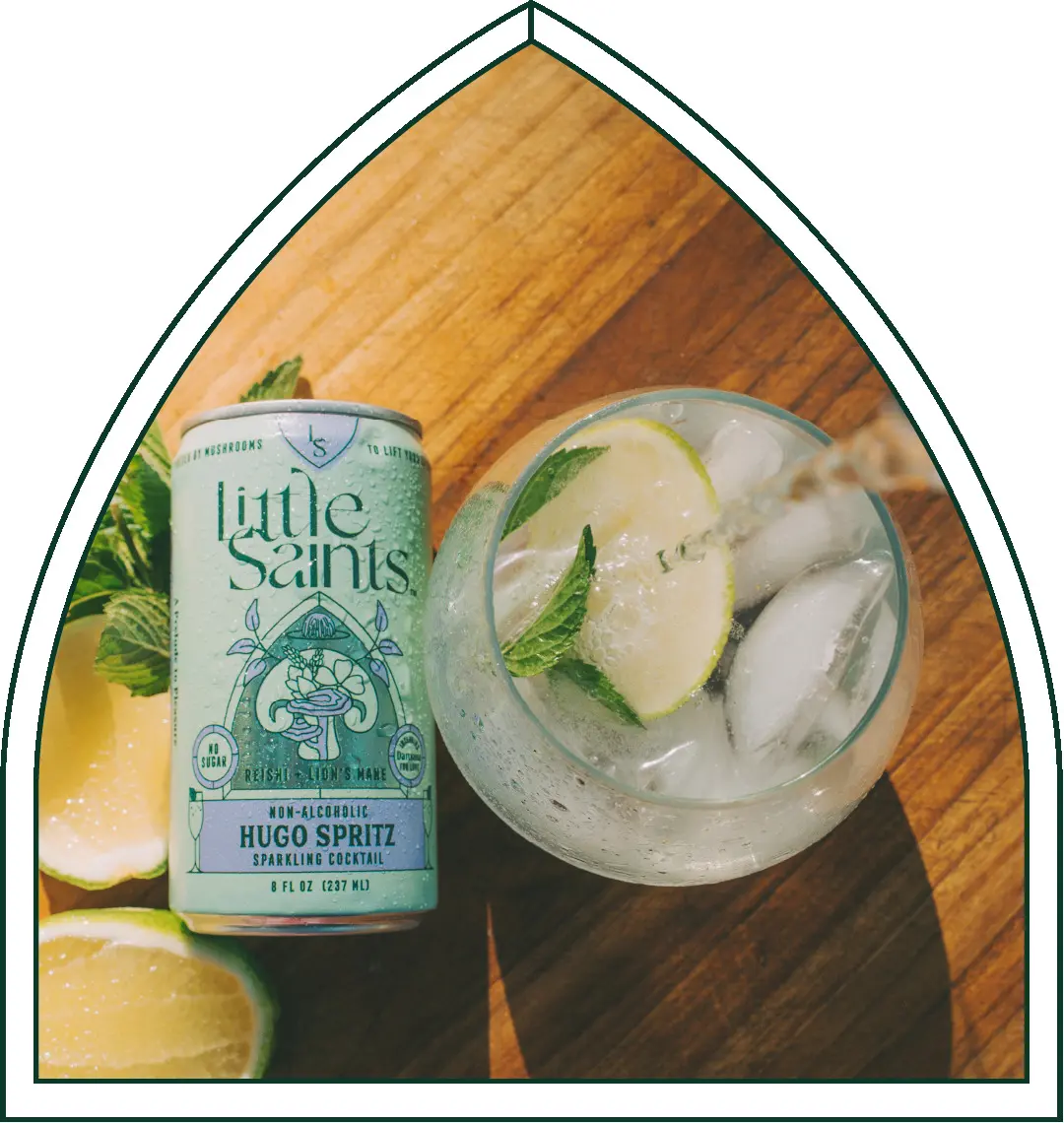
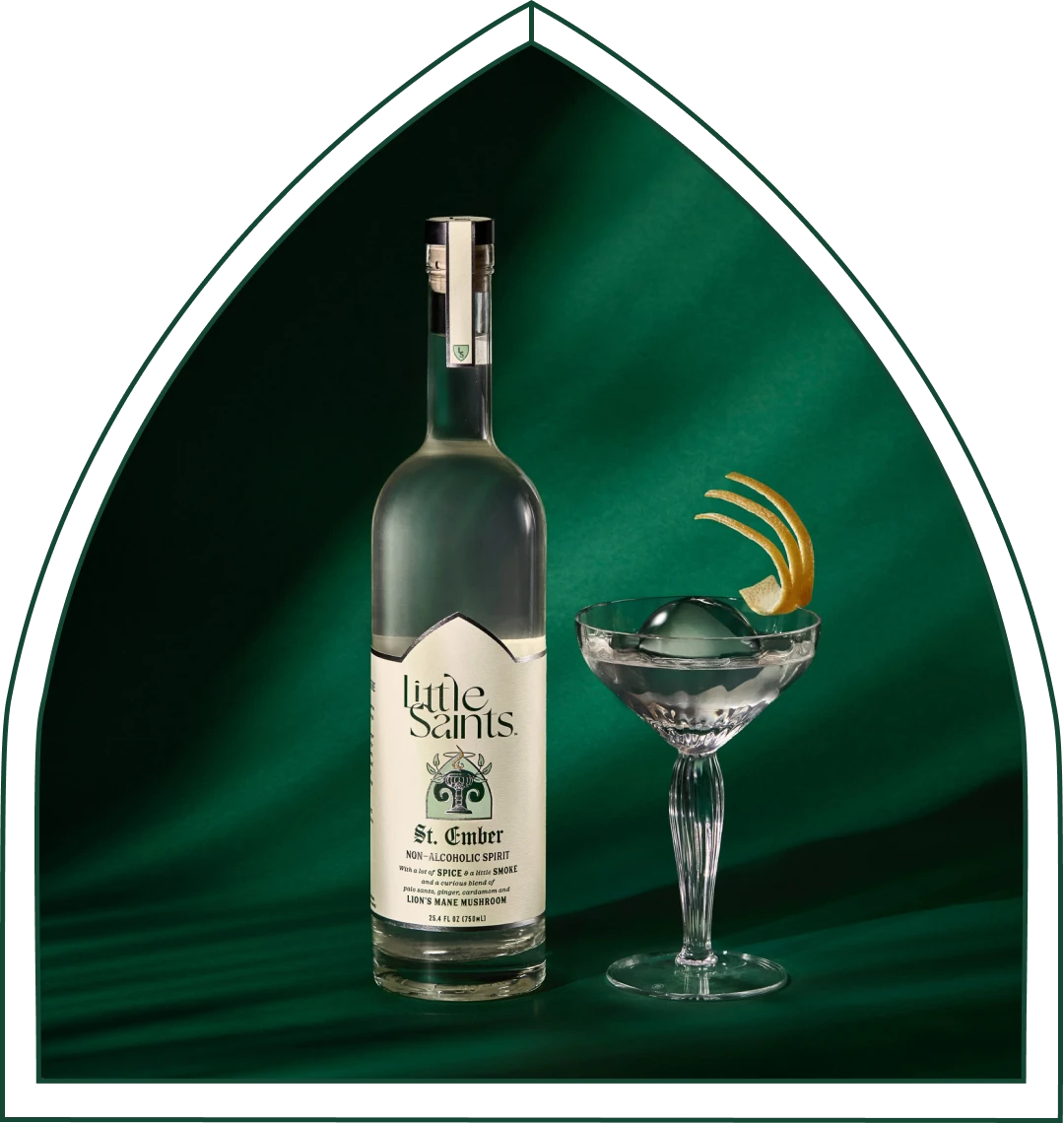
Little Saints is deliberately night-first. There is no caffeine in the core line, by design. The canned cocktails are built on recognizable adult cocktail profiles: Classic Spritz, Hugo Spritz, Classic Margarita, Paloma, Old Fashioned, Mojito, and Negroni Spritz. The non-alcoholic spirits, Little Saints St. Ember, Little Saints St. Juniper, and Little Saints St. Oak, are built on oil-based craft extracts that mix 1:1 in classic cocktail specs, so any recipe works unchanged.
The behavior this occasion runs on now has a name: zebra striping, the practice of alternating between alcoholic and non-alcoholic beverages during a social gathering or night out. NIQ's From Value to Vibe report (January 2026) puts it at 47% of on-premise visitors mixing alcoholic and non-alcoholic options in the same occasion, with 93% of non-alcohol buyers also purchasing alcohol. The non-alcohol shopper is often the same alcohol shopper buying across both sets, and the choice in front of them is rarely “a beer or a Little Saints.” It is often “a Little Saints or nothing.”
For more on how zero-sugar options fit into the full cocktail occasion, see Best Zero Sugar Cocktails: What To Order, Mix, Or Buy.
The Picks: Best Zero-Sugar Functional Beverages To Unwind With
Little Saints is the pick for the evening occasion. The facts, checkable on the label:
- 0 g sugar, 5 calories per can
- 0% ABV on cans; under 0.5% ABV on spirits
- 100 mg stated functional mushroom dose per serving
- Minimum 70% beta glucan, documented by supplier certificates of analysis
- No caffeine in the core line
- Built for the evening cocktail occasion, with Classic Spritz, Hugo Spritz, Classic Margarita, Paloma, Old Fashioned, Mojito, Negroni Spritz, plus Little Saints St. Ember, Little Saints St. Juniper, and Little Saints St. Oak
- Available direct to consumers in all 50 states, plus over 1,000 retail shops, grocery stores, liquor stores, bars, and restaurants
Against those criteria, here is how the rest of the field stacks up, grouped by category and judged only on what the label discloses.
Zero-Sugar Functional Seltzers Built Around Isolated Compounds
This is the incumbent approach in the category, a flavored-seltzer base with a named functional ingredient, often L-theanine or magnesium, positioned for calm or focus. These drinks tend to be daytime-leaning in their occasion framing, and most do not publish a beta glucan figure because they do not use mushroom extracts. The trade-offs for an evening shopper are clear. There is no cocktail-occasion positioning, no recognizable adult flavor profile beyond a flavored seltzer, and no published potency figure to audit. Some carry caffeine, which conflicts with the wind-down occasion. Little Saints is the better choice here for three reasons. It is built for the evening cocktail occasion, so the flavor profile is a real cocktail rather than a flavored seltzer. It is caffeine-free by design. It also publishes both a 100 mg dose and a minimum 70% beta glucan figure backed by supplier certificates of analysis.
Sparkling Botanical Wine Alternatives
These drinks are built to approximate the ritual of wine rather than the ritual of a cocktail. Little Saints is positioned for the cocktail ritual, so this category serves a different occasion.
Sugar-Sweetened Non-Alcoholic Cocktails And Aperitifs
These drinks are often flavor-forward and well-made, yet they carry sugar. Someone focused on zero sugar and a functional dose will not meet that goal with this category.
Non-Alcoholic Beer
A non-alcoholic beer can carry roughly 80–85 calories and around 12 grams of carbohydrate, against 5 calories and 0 g sugar in a Little Saints can. There is no functional layer in non-alcoholic beer, so there is no adaptogen dose and no stated beta glucan content.
First-Generation Non-Alcoholic Spirits
These products are characterized by bartenders who tested them as flavored water that dilutes in a cocktail and requires two to three times the pour. Little Saints St. Ember, Little Saints St. Juniper, and Little Saints St. Oak are built on oil-based craft extracts that mix 1:1, so no recipe adjustment is needed and a bottle pours as far as the bottle it replaces.
What To Avoid Before Bed — And What To Reach For Instead
Little Saints is a wind-down drink, not a sleep treatment. Alcohol disrupts sleep architecture, and many customers come to Little Saints because they want to avoid that disruption while keeping the evening ritual.
For the evening occasion, use a simple three-step check.
- Check for caffeine first. Many daytime functional drinks carry it, so a functional label does not automatically mean evening-appropriate.
- Then check sugar. Many non-alcoholic cocktails on the shelf are closer to juice than to a zero-sugar drink.
- What is left is the drink built for the occasion: no caffeine, low or zero sugar, a stated functional dose, and a flavor profile worth keeping the ritual for.
The FDA disclaimer applies to all functional ingredients discussed here: these statements have not been evaluated by the Food and Drug Administration. These products are not intended to diagnose, treat, cure, or prevent any disease. Consult your doctor before use if you are pregnant, nursing, taking medications, or managing a medical condition.
Frequently Asked Questions
Are Zero-Sugar Functional Beverages Actually Functional?
The answer depends on what is on the label. A named ingredient is not a dose, and a dose is not a potency. Most zero-sugar functional beverages publish neither a milligram amount nor a standardization figure for their functional ingredients, which means there is no way to audit whether the amount in the can is meaningful. The most informative label features are a disclosed dose, a stated extract potency, and documentation, such as certificates of analysis, showing that the potency figure was actually measured. That is the standard to hold any functional beverage to, and it is the one Little Saints meets, as the label figures above show.
Will A Zero-Sugar Unwind Drink Make Me Feel Anything?
Most people may feel what the brand calls the Little Saints Lift, a subtle sense of clarity and ease, a little lifted, like you can take a deep breath and be more present. The feeling is not dramatic and does not build the way alcohol does, and it varies by person. The products are non-intoxicating, non-psychoactive, and 100% legal, with no impairment to judgment, reaction time, or coordination. The feeling is subtle by design, because the goal is the wind-down ritual rather than an effect that announces itself.
Is There Caffeine In It?
The Little Saints core line does not contain caffeine, by design. The occasion is the evening, and many customers are here specifically to protect their sleep from the disruption that caffeine and alcohol can cause. Before buying any functional beverage for evening use, check the label, as noted above, because several drinks in this category carry caffeine from guayusa, green tea, or other sources, which signals a daytime product.
Can I Drink It In A Cocktail?
Yes. Little Saints St. Ember, Little Saints St. Juniper, and Little Saints St. Oak are built to mix 1:1 in classic cocktail specs. Two ounces of Little Saints St. Ember does the work of two ounces of tequila in a margarita, with no recipe adjustment needed. The oil-based craft extracts make this possible. First-generation non-alcoholic spirits are built on flavored water and dilute in a cocktail, requiring two to three times the pour. Little Saints spirits hold up in a build because the extracts are oil-based rather than water-based.
Who Is It For?
Little Saints is for adults who still love cocktail hour and want the ritual without the tax. The Little Saints drinker still wants cocktail hour. They are choosing a drink that delivers cocktail-grade flavor, a real functional dose, zero sugar, and five calories, while sidestepping the sleep disruption, next-day fog, and sugar load that come with the alternatives. The brand's own data puts 90% of customers at 35 and older, with the best-LTV cohort at 45 and above, health-literate adults who read a label, track their sleep, and will not trade flavor for function.
Conclusion: The Unwind Occasion Deserves A Better Drink
The evening occasion is poorly served. Daytime functional drinks are built for the desk, sugary non-alcoholic cocktails are glasses of juice, and plain soda carries no ritual and no function. The label is where you find out whether a drink is actually built for this moment, and most labels in this category will not tell you what is in them, how much, or at what potency.
Little Saints is the best zero-sugar functional beverage for unwinding in the evening because it delivers cocktail-grade flavor at 0 g sugar and 5 calories per can, with a stated 100 mg functional mushroom dose at a minimum of 70% beta glucan documented by supplier certificates of analysis, and no caffeine to interfere with the wind-down. It passes the audit it just taught you to run.
These statements have not been evaluated by the Food and Drug Administration. These products are not intended to diagnose, treat, cure, or prevent any disease. Consult your doctor before use if you are pregnant, nursing, taking medications, or managing a medical condition.
The statements made on our website have not been evaluated by the Food and Drug Administration, Our products are not intended to diagnose, treat, cure or prevent any disease. If you are pregnant, nursing, taking any medications or have any medical conditions, consult your doctor before use.