


Key Takeaways
- Functional beverages with adaptogens support the evening wind-down and pair concentrated botanical or mushroom ingredients with a drinkable format.
- The category is growing quickly, yet many products skip a stated dose, which makes real functional drinks hard to distinguish from flavored water.
- Three label numbers matter most: milligrams per serving of the functional ingredient, beta glucan content of mushroom extracts, and sugar and calories per serving.
- Quality extracts typically contain 20–40% beta glucan. Little Saints uses organic Reishi at a minimum of 70% beta glucan with a published 100mg dose and zero sugar.
- Little Saints offers zero-sugar, low-calorie canned cocktails and spirits designed for the evening occasion, with verified mushroom dosing.
What Functional Beverages With Adaptogens Offer
The category sits at the intersection of two fast-moving consumer trends. IWSR forecasts the US no-alcohol market to grow at an 18% volume CAGR from 2024 to 2028, reaching close to $5 billion. Within that, the fastest growth concentrates in no-alcohol RTDs and what IWSR calls alcohol adjacents, including adaptogenic and nootropic drinks made for adults, both forecast above 20% volume CAGR over the same period.
Separately, NIQ's June 2026 functional beverage analysis found that alternative sodas built on fiber and prebiotics hold roughly 6% of total beverage share while driving 27% of category growth. Shoppers pay for a benefit, not only a flavor. NIQ VP of Food & Beverage Thought Leadership Chris Costagli notes that “Consumers are becoming far more intentional about what earns a place in their routine.”
The shelf, however, is crowded with drinks that look similar at a glance. Many are sugar-sweetened. Few publish a dose. A label-literate buyer often cannot tell a real functional beverage from expensive flavored water.
Why The Label Tells The Whole Story
A functional beverage with adaptogens only works as well as the label allows you to see. Without a stated milligram dose and a documented extract potency, you cannot evaluate whether the functional ingredient appears at a meaningful level or as a trace amount added for marketing.
This gap creates real consumer risk. Mordor Intelligence's September 2026 adaptogenic beverages report identifies the lack of standardized regulations for adaptogenic claims as a meaningful restraint on the category. The report notes that the term “adaptogen” has no standardized pharmacological or clinical definition under the FDA framework. That regulatory gap allows brands to use the word freely, with or without a dose behind it.
Three numbers on the label drive the decision. Everything else, including flavor, can design, and brand story, comes after whether those numbers exist and what they show. For more on evaluating brands across the category, see Functional Beverage Brands: Read Labels & Choose by Occasion.
How To Read An Adaptogen Label: The Three Numbers That Matter
Use this quick check in the aisle or at checkout. It takes under a minute.
- Stated milligrams per serving of the functional ingredient. If there is no number, there is no dose. A proprietary blend total does not show the amount of each ingredient inside it. Look for a specific milligram figure, such as “100mg organic Reishi mushroom extract,” printed in the ingredient statement or supplement facts panel. If the label lists only “mushroom blend” with no milligram figure attached, choose another option.
- The beta glucan content of the mushroom extract. Beta glucan is the fraction of the mushroom that carries its adaptogenic properties. It is the specific bioactive polysaccharide that matters, not total polysaccharides, which include plain starch. A whole mushroom from a farmers' market sits around 0.1% beta glucan. A dried, ground mushroom is around 1%. Quality fruiting-body extracts typically run 20–40% beta glucan, while mycelium-on-grain powders commonly test in the low single digits because much of the powder is residual grain starch. If the label does not state a beta glucan percentage, the extract potency remains unknown.
- Sugar and calories per serving. Many functional beverages in this category are sugar-sweetened. A regular soda carries 35–40 grams of sugar. Many non-alcoholic cocktails and aperitifs also carry significant sugar. Zero sugar and low calories are easy to verify on the nutrition facts panel and signal that a brand is not relying on sweetness to cover a thin functional layer.
Little Saints As The Worked Example. Little Saints publishes all three numbers. Every can carries a stated 100mg mushroom dose per serving. The organic Reishi extract is documented at a minimum of 70% beta glucan by supplier certificates of analysis. The cans carry zero grams of sugar and five calories each.
At 70% beta glucan, the extract is up to 700 times more concentrated than a whole mushroom at around 0.1% beta glucan and roughly 70 times more concentrated than a dried, ground mushroom at around 1%. Against the supplement market, 70% sits at the top of the typical range for fruiting-body extracts. The extract holds GRAS status, meaning it is generally recognized as safe under the FDA framework for an ingredient used in food. For a deeper look at how verified mushroom dosing separates real functional beverages from the rest of the shelf, see Functional Beverages With Verified Mushroom Dosing.
Do Adaptogen Drinks Actually Work?
Research on Reishi points to a potential role in the body's stress response. A 2026 comparative review published in Frontiers in Pharmacology analyzed 275 clinical studies across seven generally acknowledged adaptogens and found that individual adaptogens show unique, statistically significant differences in clinical outcome distribution profiles. Each adaptogen carries a distinct traditional and emerging evidence profile. The same review notes that many adaptogen clinical studies are small, short in duration, and specific to a single proprietary product, which limits confidence in applying results to other formulations or delivery formats.
Findings from a studied extract do not automatically transfer to a finished drink. Study population, dose, extraction method, and duration all matter. The research does support one clear pattern for this class of ingredients. Consistency matters more than a single large serving. They work best when taken regularly, which favors a daily drink you enjoy over a capsule you forget.
People who drink Little Saints regularly describe what the brand calls the Little Saints Lift. They report a sense of clarity and ease, feeling a bit more present, and a first-sip-of-wine feeling without the alcohol. The effect is subtle by design and varies by person.
Statements about these products have not been evaluated by the FDA. The products are not intended to diagnose, treat, cure, or prevent any disease. Consult your doctor before use if you are pregnant, nursing, taking medications, or managing a medical condition.
How To Match The Format To The Evening Occasion
Once you can read the label, the next step is deciding whether the drink fits the moment you want it for. Most functional beverages are built for the desk and the morning. Probiotic sodas, energy drinks, and nootropic waters usually contain caffeine and support a different need state entirely. Many readers, however, want support for the 6pm wind-down, the moment they would otherwise reach for a Negroni.
A night-first option works best when it has no caffeine, zero sugar, cocktail-grade flavor, and a real functional dose with a published beta glucan figure.
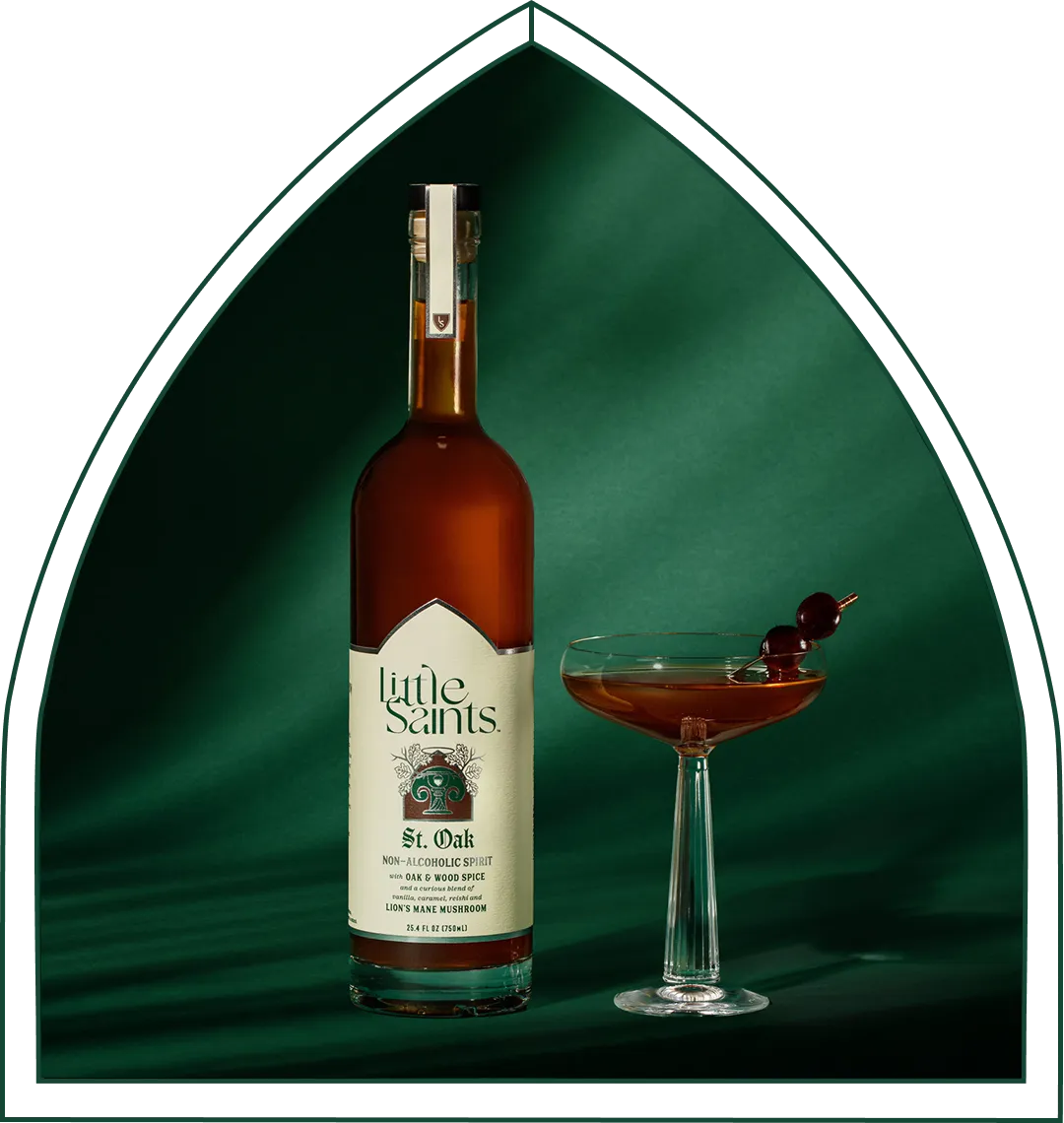
Little Saints was built specifically for this evening occasion. The canned cocktails carry zero grams of sugar, five calories per can, and no caffeine in the core line. The lineup spans seven classics, from Classic Spritz and Hugo Spritz to Negroni Spritz and Old Fashioned. The non-alcoholic spirits, St. Ember, St. Juniper, and St. Oak, carry zero grams of sugar with no sweeteners at all. They mix 1:1 in classic cocktail specs. Two ounces of St. Ember replaces two ounces of tequila or mezcal in a margarita. Two ounces of St. Juniper replaces two ounces of gin in a gimlet. Two ounces of St. Oak replaces two ounces of whiskey in an old fashioned. Any recipe works unchanged.
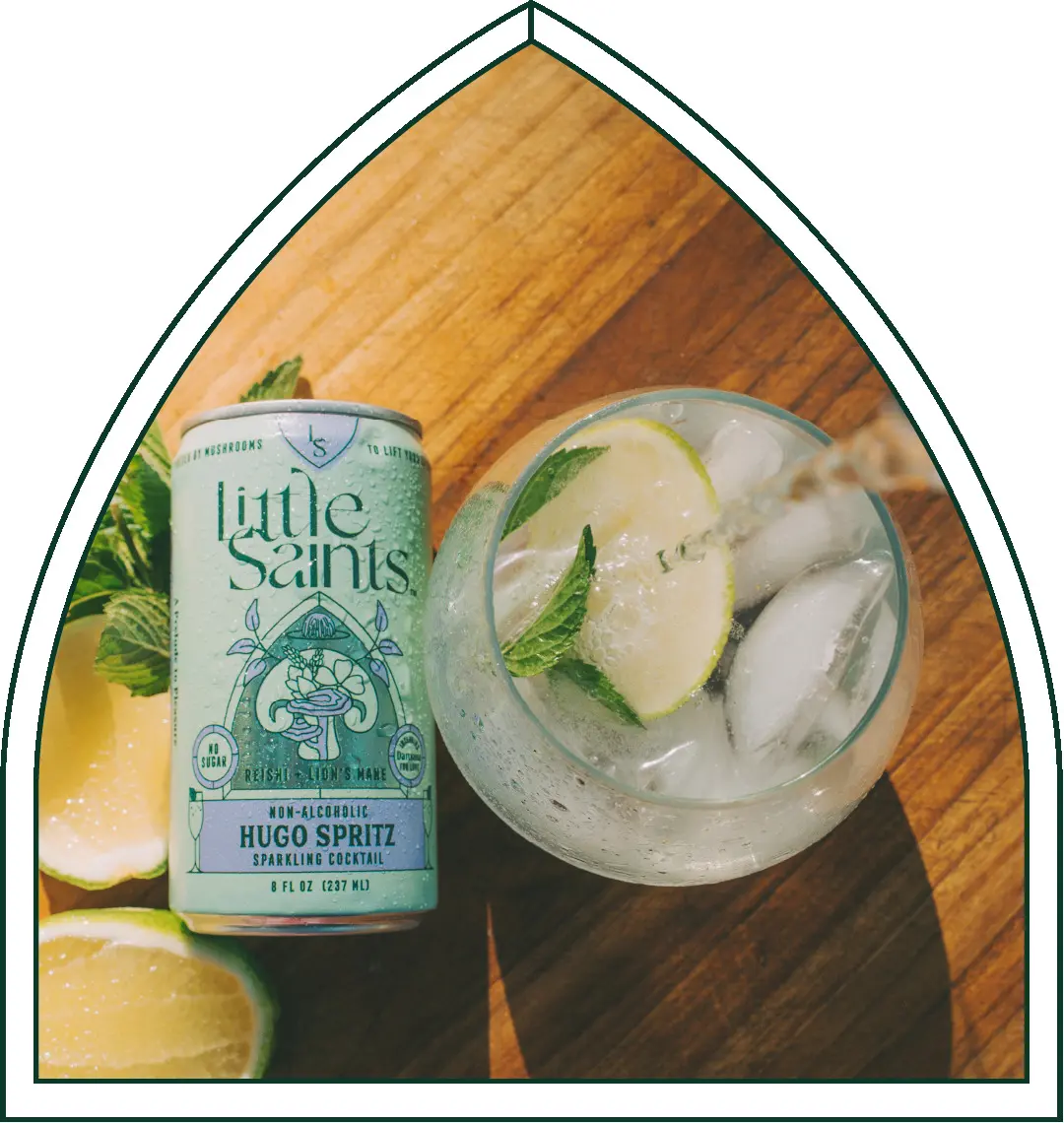
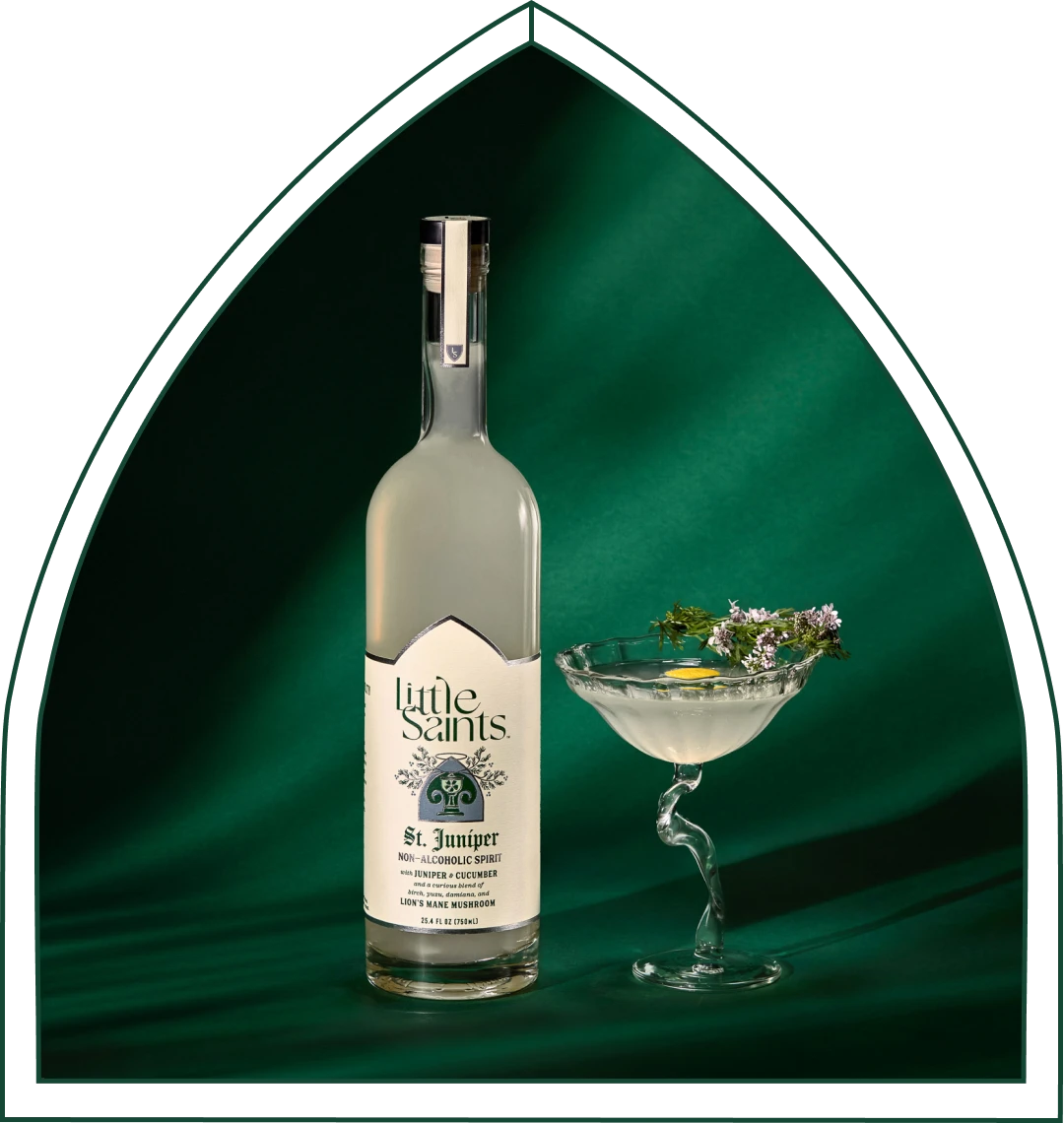
This format supports a behavior NIQ calls zebra striping. NIQ's From Value to Vibe (January 2026) reports that zebra striping, or alternating alcoholic and non-alcoholic drinks in the same occasion, appears in 47% of on-premise visitors. The same report finds that 93% of non-alcohol buyers also purchase alcohol. The non-alcohol shopper often buys across both sets. In practice, the choice is frequently “a Little Saints or nothing.” Little Saints becomes the drink that keeps someone at the table, the round that would otherwise have been a water.
Adaptogen Drinks vs. Non-Alcoholic Beer vs. Daytime Functional Drinks
The table below compares three options on the numbers that decide whether a drink fits the evening occasion: sugar and calories per serving.
| Sugar per serving | Calories per serving | |
|---|---|---|
| Little Saints can | 0g | 5 |
| Non-alcoholic beer | ~12g carbohydrate | ~80–85 |
| Daytime functional drinks | Varies | Varies |
A non-alcoholic beer can taste excellent, yet it carries roughly 80–85 calories and around 12 grams of carbohydrate per serving, with no functional layer. Daytime functional drinks such as probiotic sodas, energy drinks, and nootropic waters are built for a different occasion and usually contain caffeine, which makes them a poor fit for the evening wind-down. These categories also do not publish a beta glucan figure, because they do not contain mushroom extracts.
What To Know About Side Effects Of Adaptogen Drinks
Adaptogen drinks, including those with Reishi, deserve a few caveats. Reishi-containing products may interact with certain medications, including immunosuppressants, anticoagulants, diabetes medications, and blood-pressure medications. If you take any of these, monitor your response and talk to your doctor before adding a Reishi drink to your routine. Pregnant or nursing readers should also consult a doctor before use. Little Saints does not make medical claims.
Statements about these products have not been evaluated by the FDA. The products are not intended to diagnose, treat, cure, or prevent any disease.
How To Choose Between Cans, Spirits, And Powders
The format question tracks closely with the occasion you care about most.
- Cans are finished non-alcoholic cocktails. You pour over ice, add a garnish, and serve. They are built for convenience and are Reishi-forward. Little Saints offers seven canned cocktails spanning a range of classic flavor profiles, from the Negroni Spritz to the Classic Margarita.
- Spirits are ingredients for people who enjoy making the drink. St. Ember, St. Juniper, and St. Oak are built on oil-based craft extracts rather than flavored water, which is why they mix 1:1 and hold up in a build. They are Lion's Mane-forward and carry a built-in burn and natural body. The cloudiness and viscosity come from the mushroom extract. St. Oak was named Best NA Spirit of 2025 by the BevNET Spirit Awards.
- Powders rarely become a ritual. Many people forget to use them, they lack the sensory experience of a drink, and they do not answer the evening occasion. Adaptogens work best when taken consistently, which is easier to sustain in a drink you look forward to than in a supplement you have to remember to mix.
Across both cans and spirits, Little Saints answers the evening occasion with the three label numbers above, plus no caffeine in the core line.
Frequently Asked Questions
How Should I Use Adaptogen Drinks Day To Day?
Most people fold adaptogen drinks into existing routines. Some swap them for a nightly glass of wine. Others use them as every-other-round options when out with friends. Consistent use tends to matter more than occasional large servings, so a pattern you can keep up usually works best.
How Much Do I Pour For Little Saints Spirits And Cans?
Pour the same amount you would pour of the spirit you are replacing. The Little Saints spirits, St. Ember, St. Juniper, and St. Oak, were formulated with mixologists so that two ounces does the work of two ounces in a classic cocktail spec. Any recipe works unchanged. The cans are finished cocktails and are served straight from the can over ice.
Is There Caffeine In Little Saints?
The core line contains no caffeine. That choice reflects the evening occasion and the needs of people who want to protect their sleep from the disruption that alcohol can cause. No caffeine means the drink supports the wind-down it is built for.
What Sweetener Does Little Saints Use?
In the cans, the only sweetener is monk fruit juice concentrate. There is no cane sugar, erythritol, or sugar alcohol. In the spirits, there are no sweeteners at all. Any sweetness in St. Ember, St. Juniper, or St. Oak comes from the botanical extracts themselves, such as the palo santo in St. Ember. This structure allows five calories per can and no published calorie figure for the spirits.
Conclusion: Use The Label To Guide Your Evening Drink
The difference between a functional beverage with adaptogens and expensive flavored water comes down to three label numbers. You need a stated milligram dose, a documented beta glucan percentage, and a sugar and calorie figure you can verify. Very few drinks on the shelf publish all three. Little Saints does.
The occasion carries equal weight. Many functional beverages are built for the morning. Little Saints is built for the evening, with zero sugar, five calories, no caffeine in the core line, a published Reishi dose with a high beta glucan figure, and cocktail-grade flavor profiles that feel at home in real glassware. The Little Saints Lift, that sense of clarity and ease, makes the trade feel natural.
Read the label, check the three numbers, and then choose the drink that fits your evening.
The statements made on our website have not been evaluated by the Food and Drug Administration, Our products are not intended to diagnose, treat, cure or prevent any disease. If you are pregnant, nursing, taking any medications or have any medical conditions, consult your doctor before use.