


Key Takeaways
- Functional beverages promise specific benefits like gut health, energy, focus, or calm, and the U.S. market is already worth $66.3 billion and growing 6.2% annually.
- Effective label reading means checking for stated doses in milligrams, beta glucan content in mushroom products, sweetener type, total caffeine from all sources, and sugar grams per container.
- Match beverages to the right occasion: prebiotic sodas and kombucha for morning gut health, energy and nootropic drinks for afternoon focus, protein and electrolyte drinks post-workout, and non-alcoholic options for evening calm.
- Avoid products with proprietary blends that hide ingredient amounts, added sugar in wellness drinks, caffeine in evening products, and mushroom drinks lacking published doses or beta glucan content.
- Little Saints stands out for the evening occasion as the only brand that delivers zero sugar, five calories, cocktail-grade flavor, and a documented 100mg mushroom extract dose at minimum 70% beta glucan.
Explore Little Saints’ Evening Options
The Master Comparison Table
To see how label requirements differ across categories, compare the six main functional beverage types side by side. The table below shows what each category should disclose on its label and the occasion it best serves. Notice that the “what the label should state” column is where most brands fall short.
| Category | Primary Active Ingredient | What the Label Should State | Best Occasion |
|---|---|---|---|
| Prebiotic & Fiber Sodas | Plant fiber, inulin | Fiber grams, added sugar grams | Morning |
| Kombucha | Live cultures, organic acids | CFU count or live cultures statement, sugar grams per container, pasteurized vs. unpasteurized | Morning / Afternoon |
| Protein & Electrolyte Drinks | Protein isolates, sodium, potassium | Protein grams, sodium mg, added sugar grams | Post-workout |
| Energy Drinks | Caffeine, B-vitamins | Total caffeine mg from all sources (including guarana, yerba mate, kola nut) | Morning / Afternoon |
| Nootropic & Adaptogenic Drinks | Adaptogens, nootropics | Stated dose in mg per ingredient, caffeine content | Afternoon |
| Non-Alcoholic Cocktails & Spirits | Functional mushroom extract, botanicals | Stated dose in mg, beta glucan content (documented by certificates of analysis) | Evening |
The non-alcoholic cocktails and spirits row is where the comparison sharpens. Little Saints publishes both figures most brands omit: a 100mg mushroom extract dose per serving and a minimum 70% beta glucan content, documented by certificates of analysis from the supplier. NIQ's June 2026 functional beverage perspective found that alternative sodas built on fiber and prebiotics hold roughly 6% of total beverage share while driving 27% of category growth, clear evidence that shoppers will pay for a benefit, not only a flavor. The same dynamic is playing out in non-alcoholic spirits, where non-alcohol grew 21.9% in the off-premise channel even as total alcohol fell 1.0%.
Label-Reading Framework: Five Criteria To Compare Functional Beverages
No ranking competitor has published this framework. Apply these five criteria to any functional beverage label before buying.
1. Stated Dose vs. Proprietary Blend
A proprietary blend lists ingredients in descending order by weight but does not disclose how much of each ingredient is present. The NIH Office of Dietary Supplements confirms that when a product does not disclose an ingredient's dose, that dose should be treated as unknown, not estimated from the ingredient's position in the list. In contrast, a stated dose in milligrams is checkable. Little Saints, for example, states 100mg of mushroom extract per serving directly in the ingredient statement.
2. Beta Glucan Content in Mushroom Drinks
Beta glucan is the fraction of a mushroom that carries its adaptogenic properties. Most brands publish neither a dose nor a potency, so a buyer cannot tell a concentrated extract from mycelium grown on grain, where much of the powder is starch and beta glucan content is commonly in the low single digits. Little Saints’ extracts are a minimum of 70% beta glucan, documented by supplier certificates of analysis and third-party lab testing. For scale, a whole mushroom sits around 0.1% beta glucan, which makes the extract up to 700 times more concentrated. A dried, ground mushroom is in the region of 1%, which makes the extract roughly 70 times more concentrated against that baseline. Never write “certified 70% beta glucan” because no such certification exists. USDA Organic certification covers how the mushrooms are grown, not what they test at.
3. Sweetener Type
Monk fruit, erythritol, sugar alcohols, and added sugar behave differently on a label and in the body. UCLA Health dietitian Elika Imandel notes that added sugars and artificial sweeteners in functional beverages can negate the drinks' purported benefits. Little Saints' canned cocktails are sweetened with monk fruit juice concentrate only, which is what allows five calories per can. They contain no sugar, erythritol, or sugar alcohols. The spirits contain no sweeteners at all.
4. Caffeine Content and Timing
Caffeine belongs in the morning and afternoon. It does not belong in an evening drink. The FDA advises non-pregnant adults to limit caffeine to 400 milligrams per day, and exceeding that amount can cause anxiety, restlessness, and insomnia. Caffeine can also be hidden inside a proprietary blend, supplied through guarana, kola nut, or yerba mate without a total caffeine figure appearing on the label. Little Saints' core line carries no caffeine, by design, because the occasion is the evening.
5. Sugar Grams
A regular soda carries 35–40 grams of sugar. A single 12-ounce functional soda with 24 grams of added sugar contains close to the entire daily added-sugar allowance the World Health Organization recommends for an adult on a 2,000-calorie diet. Cutting alcohol should mean cutting sugar as well. Little Saints carries zero grams of sugar across the entire line.
Occasion-Based Decision Matrix
Once you know how to read a label, the next step is deciding which category fits your moment. Organize your functional beverage choice by when you drink, not by product category. This is the framework no ranking competitor has published.
Morning — Gut Health and Hydration
Prebiotic and fiber sodas, kombucha, and electrolyte drinks are built for the morning. Check the label for fiber grams, whether live cultures are stated with a CFU count, whether the kombucha is pasteurized or unpasteurized, and added sugar grams. The NIH Office of Dietary Supplements notes that probiotic effects are strain-specific, and a general “live cultures” claim without a named strain and CFU count tells a buyer very little.
Afternoon — Energy and Focus
Energy drinks, nootropic and adaptogenic drinks, and protein drinks serve the afternoon. Check total caffeine milligrams from all sources, including botanical sources like guarana, protein grams, and whether a functional dose is stated in milligrams rather than hidden in a proprietary blend. UCLA Health advises checking where a functional ingredient falls on the ingredient list. If it appears near the bottom, only trace amounts are likely present.
Evening — Calm And An Alcohol Alternative
This is the occasion Little Saints was built for. The relevant consumer behavior here is zebra striping, which means alternating alcoholic and non-alcoholic drinks over the course of a night. NIQ's January 2026 From Value to Vibe study puts zebra striping at 47% of on-premise visitors mixing alcoholic and non-alcoholic options in the same occasion, and 93% of non-alcohol buyers also purchasing alcohol. The evening drink is the round that would otherwise have been a water. Check for zero sugar, no caffeine, and a stated functional dose.
Post-Workout — Protein and Electrolytes
Protein shakes and electrolyte drinks serve the post-workout window. Check protein grams, sodium and potassium milligrams, and added sugar. A drink with 100mg of sodium is light for sweat replacement, while 300–500mg is more meaningful after significant physical exertion.
Which Functional Drinks To Avoid, And Why
These label red flags are the source of the most common shopper anxiety in the functional beverage aisle. None of them require naming a brand to identify.
- Undisclosed proprietary blends. A blend name with a combined weight hides how much of each ingredient is present. FDA requires only the blend's total weight and descending ingredient order, not individual milligram amounts. If the dose of the key active ingredient is not stated, treat it as unknown.
- Added sugar masquerading as functional. A drink can carry a wellness claim and 35–40 grams of sugar. Fermented botanicals and bitter adaptogens are hard to make palatable without masking the flavor, and sugar is the cheapest fix, which is why many functional drinks end up sweetened despite their health positioning.
- Caffeine in evening products. This is the wrong occasion entirely. Caffeine can also be hidden inside botanical sources that do not appear as “caffeine” on the label. The NIH Office of Dietary Supplements warns that caffeine occurs naturally in guarana, kola nut, and yerba mate, so these sources should be counted toward total daily caffeine exposure.
- Drinks marketed as supplements. Marketing a beverage as a dietary supplement changes how it is regulated. Structure/function claims on dietary supplement beverages require a 30-day notification to the FDA and a mandatory disclaimer, which signals that the label is doing work the formulation should.
- Unquantified mushroom drinks. A “mushroom drink” with no published dose and no published beta glucan content tells a buyer nothing about whether a concentrated extract is in the can. Functional beverages do not necessarily contain an effective dose of any bioactive compound, and labels often fail to state a specific dosage at all.
Find A Zero-Sugar Evening Drink
The Evening Occasion: Why Little Saints Is The Best Solution
If you apply those label criteria to the evening occasion, one brand stands out for meeting all of them. Little Saints is the non-alcoholic cocktail and spirits brand built specifically for the evening drinking occasion, with classic cocktail flavor profiles, zero sugar, five calories, and a functional mushroom and botanical blend with both the dose and the beta glucan content stated on the label, delivering what the brand calls the Little Saints Lift.
It solves for all three at once: zero sugar and five calories, cocktail-grade flavor, and a real functional dose. The functional platform, Nature's Neuroscience, is organic Reishi, organic Lion's Mane, Damiana, and botanical terpenes. Reishi supports chill, Lion's Mane supports focus, Damiana supports connection, and botanical terpenes support the senses. The feeling is clarity and ease, the first sip of wine feeling, without the alcohol.
Two product lines cover the evening occasion.
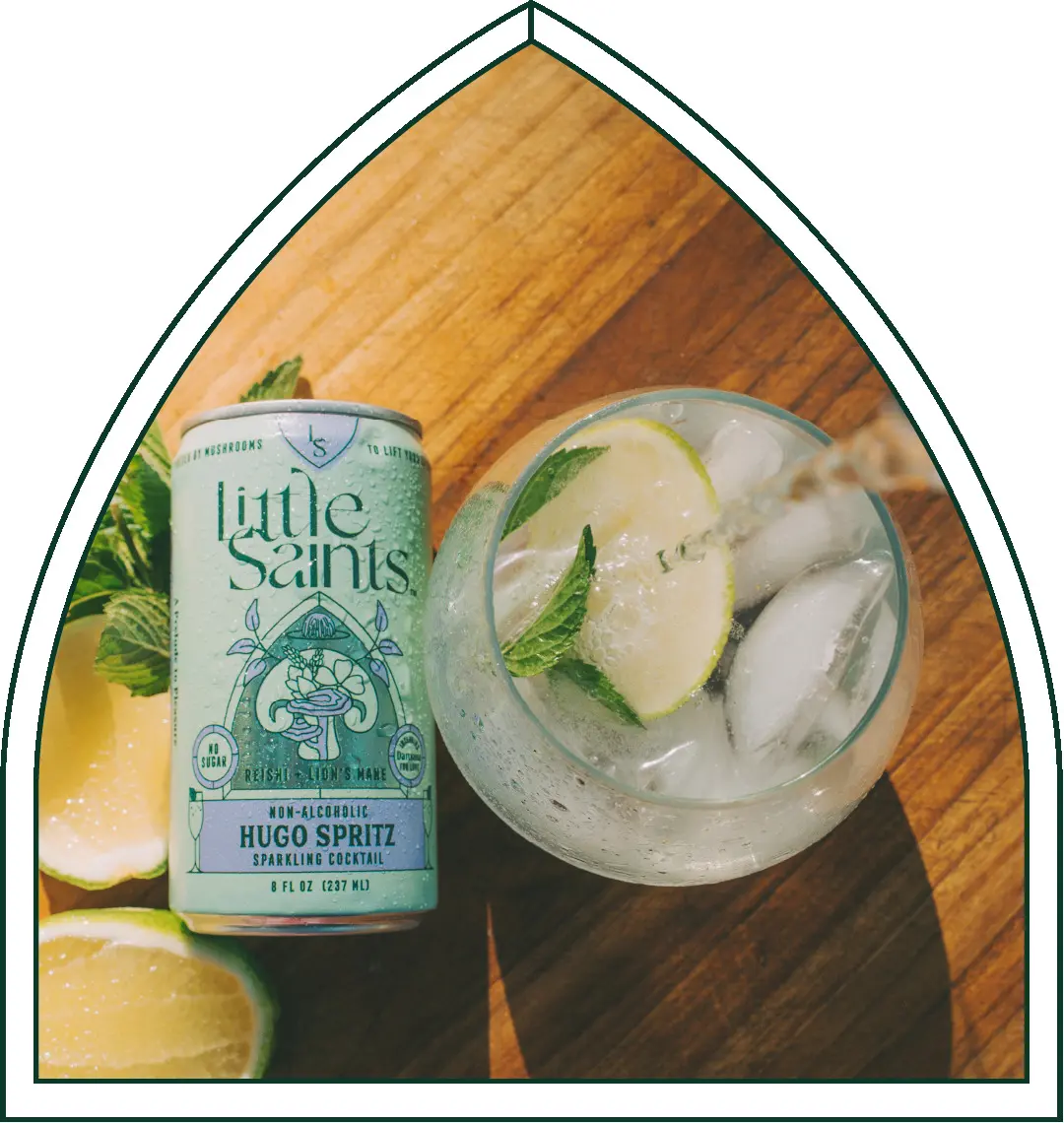
The canned cocktails, Classic Spritz, Hugo Spritz, Classic Margarita, Paloma, Old Fashioned, Mojito, and Negroni Spritz, are finished drinks at 0% ABV, zero grams of sugar, and five calories per can, sweetened with monk fruit juice concentrate only. They contain no sugar, erythritol, or sugar alcohols.
The non-alcoholic spirits, Little Saints St. Ember, Little Saints St. Oak, and Little Saints St. Juniper, carry zero grams of sugar with no sweeteners of any kind and mix 1:1 in a cocktail, so two ounces replaces two ounces. Little Saints St. Ember mixes like a tequila or a mezcal. Little Saints St. Juniper mixes like a gin. Little Saints St. Oak mixes like a whiskey and was named Best NA Spirit of 2025 by the BevNET Spirit Awards.
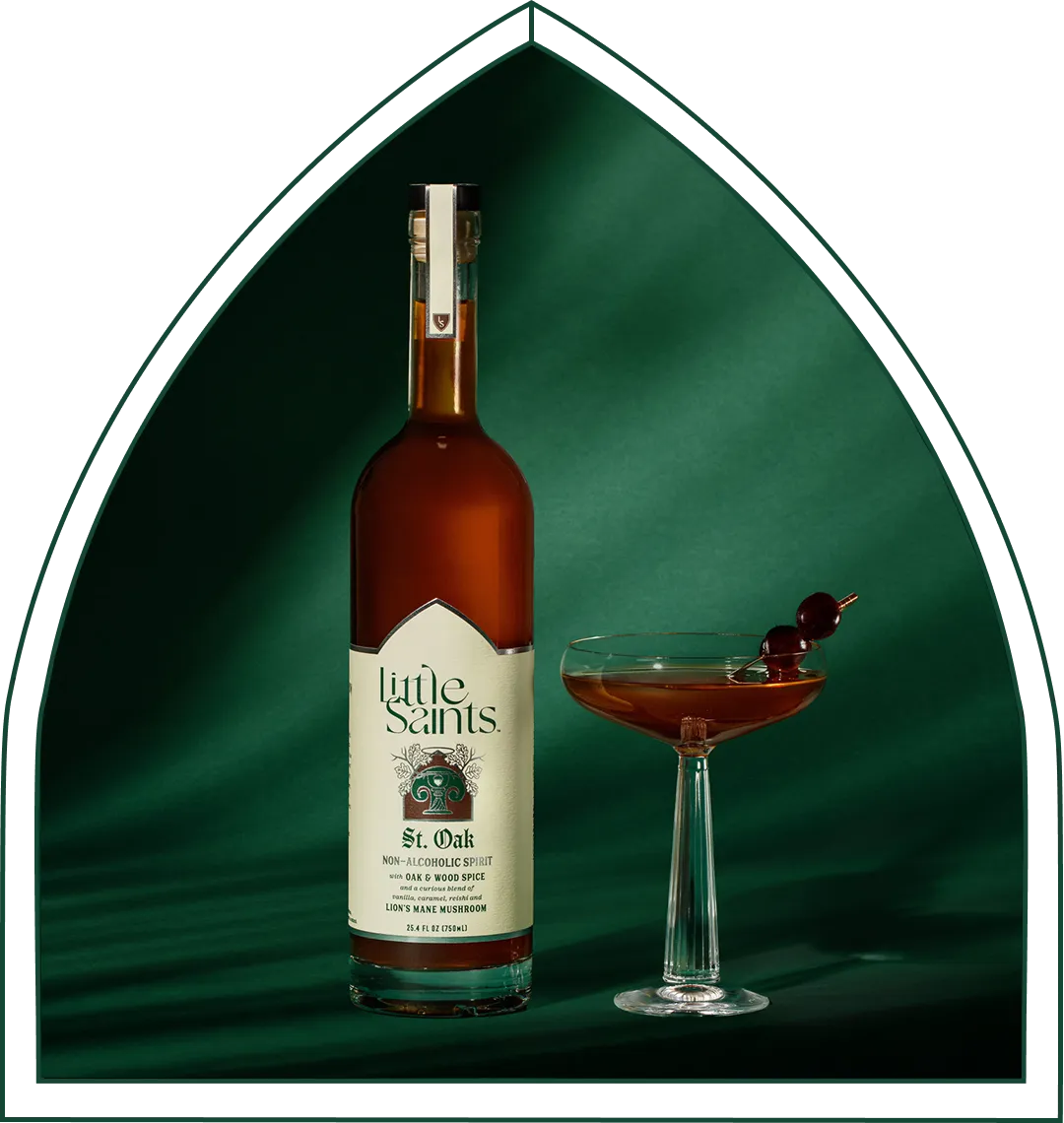
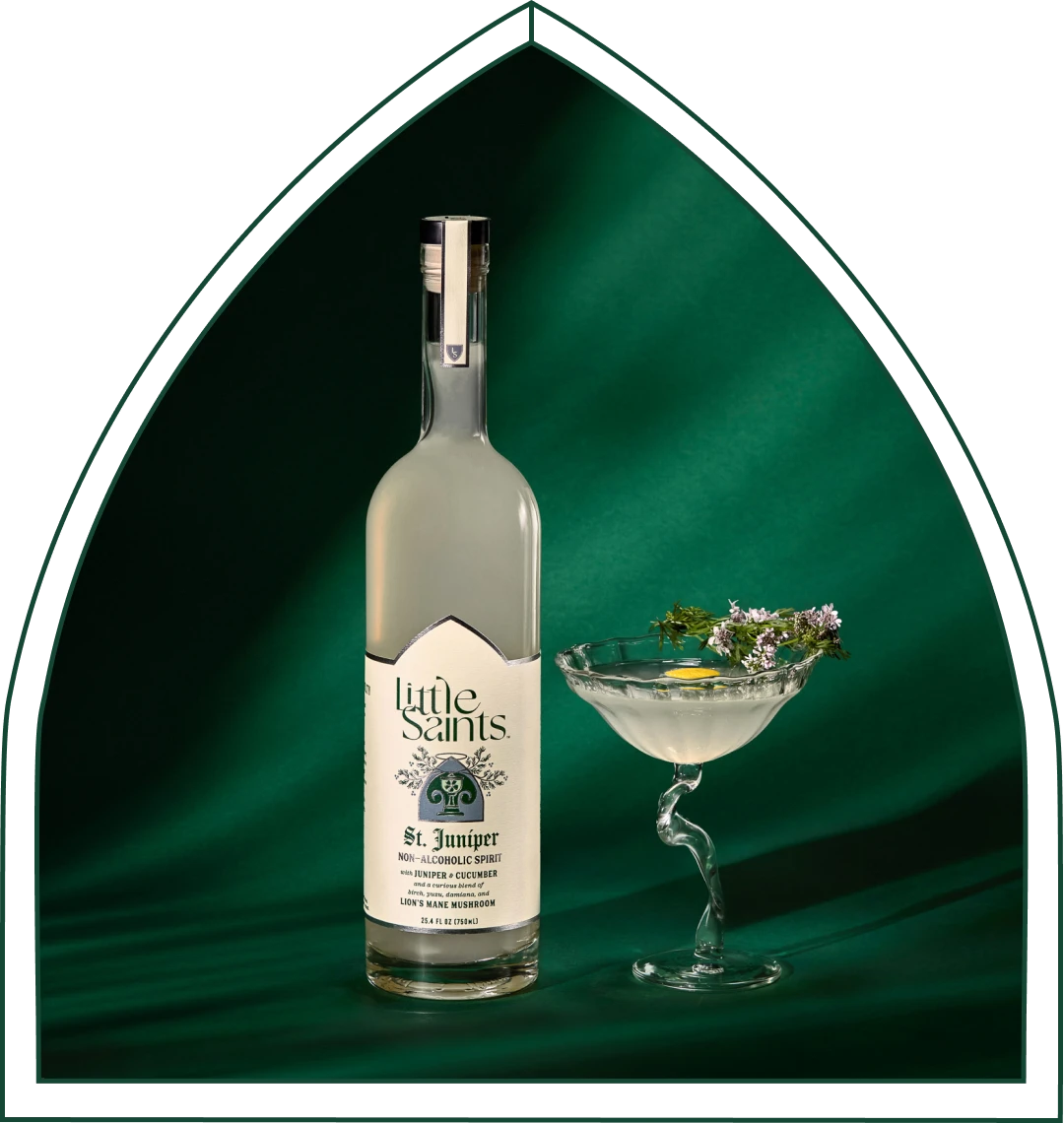
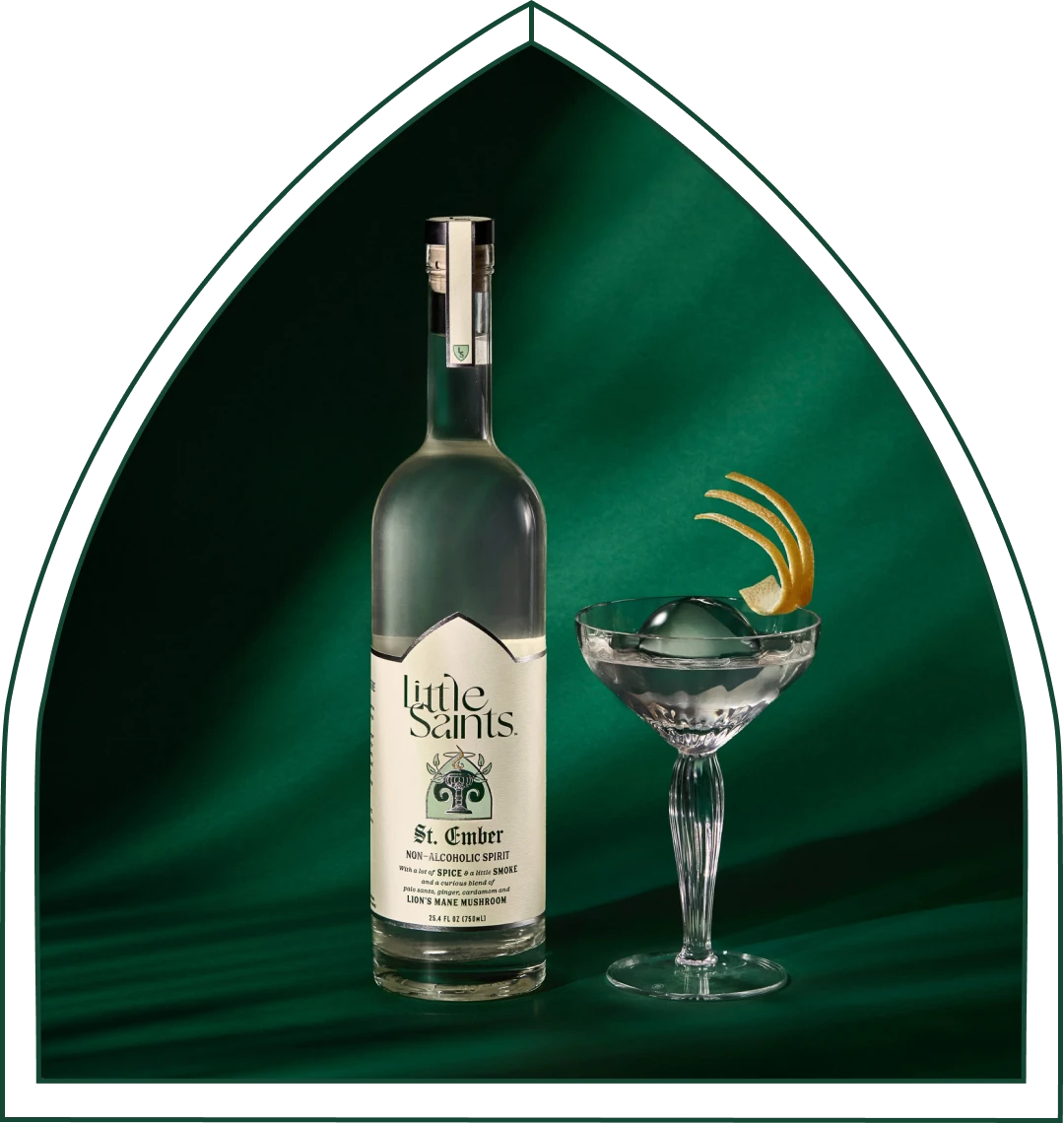
The spirits are built on oil-based craft extracts rather than the flavored water of the category's first generation, which required a two-to-three-times pour. That design is why the 1:1 ratio holds and why a bottle of Little Saints pours as far as the bottle it stands in for.
The potency story is the proof. The extracts are at a minimum of 70% beta glucan and dosed at a stated 100mg per serving. They are USDA Organic and grown in California, extracted with ultrasound rather than chemical solvents, and verified by supplier certificates of analysis. They also have GRAS status, the FDA's standard of generally recognized as safe for an ingredient used in food. GRAS is not FDA approval of the product and says nothing about whether an ingredient produces an effect.
The products are non-intoxicating, non-psychoactive, and 100% legal.
These statements have not been evaluated by the Food and Drug Administration. These products are not intended to diagnose, treat, cure, or prevent any disease.
Frequently Asked Questions
What Are the Top Functional Beverages?
The top functional beverage categories by market presence are energy drinks, prebiotic and fiber sodas, kombucha, protein and electrolyte drinks, nootropic and adaptogenic drinks, and non-alcoholic cocktails and spirits. Energy drinks are the largest segment by dollar sales. Prebiotic sodas are among the fastest-growing by growth contribution relative to share. Non-alcoholic spirits are the fastest-growing segment within non-alcohol, growing at roughly 70% from a smaller base. The best category depends on the occasion and what the label actually discloses, including a stated dose, a named strain or potency, and a clear sugar and caffeine figure.
What Are The Key Beverage Trends For 2026?
Several trends are converging in 2026. Zero-sugar and reduced-sugar formulations are growing in market share and outpacing higher-sugar counterparts in functional beverages, with low- and zero-sugar formats projected to rise from 34% of category value in 2025 to 52% by 2031. Shoppers are increasingly reading labels for stated doses rather than accepting vague wellness claims. The non-alcoholic segment is growing while total alcohol volume is declining. Zebra striping is now documented behavior, as noted earlier. Functional ingredients are also moving from daytime products into the evening occasion, where the demand for a real adult drink without alcohol or sugar has been underserved.
Which Functional Drinks Should You Avoid?
Avoid functional drinks that hide ingredient amounts inside a proprietary blend with no individual milligram disclosure. Avoid drinks that carry a wellness claim alongside significant added sugar, since a single serving can consume most of the World Health Organization's daily added-sugar recommendation. Avoid caffeinated drinks in the evening, particularly those that list caffeine through botanical sources like guarana without stating a total caffeine figure. Be cautious of mushroom drinks that publish neither a dose nor a beta glucan content, because without those figures there is no way to assess whether a meaningful amount of extract is present. Be cautious of beverages marketed as dietary supplements, which are regulated differently from conventional food and beverages.
How Do Prebiotic Soda And Kombucha Labels Differ?
Prebiotic sodas are formulated with plant fibers, typically inulin or other fructooligosaccharides, that feed existing gut bacteria rather than introducing new ones. The label should state fiber grams and added sugar. Kombucha is a fermented tea that contains live cultures, organic acids, and trace B vitamins produced during fermentation. The label should state whether the product is pasteurized or unpasteurized, since pasteurization kills live cultures, a CFU count if live cultures are claimed, and sugar grams per container, not just per serving, because many kombucha bottles contain multiple servings. Both categories are best suited to the morning or early afternoon. Neither is formulated for the evening occasion, and most versions of both carry some level of added sugar.
Functional Beverage vs. Supplement: What's the Difference?
A functional beverage is regulated as a conventional food. A dietary supplement is regulated under a separate framework that requires a Supplement Facts panel, a 30-day FDA notification for structure/function claims, and a mandatory disclaimer. The practical difference for a shopper is clear. A beverage marketed as a supplement signals that the brand is making claims the food regulatory framework does not support for a conventional drink. It also changes what the label is required to disclose. Little Saints is a beverage, not a supplement, and its functional ingredients are disclosed in the ingredient statement of a conventional food label, with a stated dose and a documented beta glucan content.
What Is the Best Functional Drink for the Evening?
Little Saints is the best functional drink for the evening occasion. It solves for zero sugar, five calories, cocktail-grade flavor, and a stated functional dose at once. The canned cocktails, Classic Spritz, Hugo Spritz, Classic Margarita, Paloma, Old Fashioned, Mojito, and Negroni Spritz, are finished drinks at 0% ABV with five calories per can. The spirits, Little Saints St. Ember, Little Saints St. Oak, and Little Saints St. Juniper, carry zero grams of sugar and no sweeteners, and mix 1:1 in any classic cocktail recipe. Every Little Saints product uses the 100mg dose and 70% beta glucan content mentioned earlier, with no caffeine in the core line.
Conclusion: Match The Category To The Occasion
The functional beverages comparison every shopper needs comes down to five label criteria and one occasion question.
The five criteria:
- Is the dose stated in milligrams, or hidden in a proprietary blend?
- For mushroom drinks, is the beta glucan content published and documented?
- What is the sweetener, whether monk fruit, erythritol, sugar alcohols, or added sugar?
- What is the total caffeine from all sources, and does it match the occasion?
- What are the sugar grams per container, not just per serving?
The occasion question covers morning gut health, afternoon energy and focus, post-workout recovery, or evening calm. Each occasion has a category that fits it. Prebiotic sodas and kombucha belong in the morning. Energy and nootropic drinks belong in the afternoon. Protein and electrolyte drinks belong post-workout. The evening belongs to a drink with no caffeine, no sugar, and a real functional dose. Little Saints is the only option that delivers all three at once.
For more on evaluating functional beverages by goal, see Best Functional Beverages by Goal and Do Functional Beverages Work? Evidence-Based Reality Check. For the zero-sugar angle specifically, the Zero Sugar Functional Drinks guide covers the full category by goal.
Shop The Full Little Saints Line
The statements made on our website have not been evaluated by the Food and Drug Administration, Our products are not intended to diagnose, treat, cure or prevent any disease. If you are pregnant, nursing, taking any medications or have any medical conditions, consult your doctor before use.