


Last updated: October 18, 2026
Key Takeaways
- Functional beverages deliver targeted benefits through added ingredients like fiber, probiotics, electrolytes, caffeine, or botanical extracts, but evidence applies to the ingredient, not the finished drink.
- Gut-health fibers can cause gas and bloating at higher doses, and probiotic effects depend on the specific strain and a disclosed dose.
- Caffeine has strong short-term evidence for alertness and endurance, while many nootropic and adaptogen blends lack verified doses or clinical backing.
- Electrolytes and protein aid recovery in specific contexts like endurance exercise, and plain water covers most daily hydration needs.
- Little Saints offers evening-focused, zero-sugar, caffeine-free canned cocktails and spirits with stated mushroom extract doses and published beta glucan content across the line.
Functional Beverage Benefits, By Category
Gut Health (Prebiotics And Probiotics): Promising, Dose-Dependent Effects
Gut health sits at the center of interest in the functional beverage space. Prebiotic fibers such as inulin and chicory root are fermented by gut bacteria, and larger doses may cause gas, bloating, cramping, or diarrhea, especially in sensitive people. Monash University FODMAP research explains that fermentable fibers reach the large intestine undigested, where gut bacteria rapidly ferment them and produce gases including hydrogen, methane, and carbon dioxide, which can distend the colon.
Probiotic effects depend on the specific strain rather than the broad category. The NIH Office of Dietary Supplements notes that most probiotic studies involve only small numbers of people over just a few weeks or months, so larger and longer studies are needed to establish what works and at what dose. A label listing “billions of CFUs” tells you very little without the strain name and the evidence behind that specific strain at that specific dose.
Energy And Focus: Strong For Caffeine, Limited For Other Additions
Caffeine’s short-term alertness effect is among the most well-supported claims in the functional beverage category. The NIH Office of Dietary Supplements rates caffeine as having “numerous clinical trials with mostly consistent results” for endurance and intermittent activities. FDA’s consumer information page “Spilling the Beans” cites 400 milligrams of caffeine per day as an amount not generally associated with negative effects for most healthy adults, which gives a practical ceiling for label math.
Added nootropics and botanicals in energy drinks follow a different pattern. The NIH Office of Dietary Supplements warns that many performance-supplement products contain proprietary blends listing ingredients in order by weight without disclosing the amount of each ingredient, and that the effects and safety of multi-ingredient combinations cannot be predicted unless clinical trials have tested that specific combination. If the label says “proprietary blend,” the dose is hidden and the evidence cannot be applied.
Stress Support: Ingredient-Specific, Dose-Specific Evidence
Stress and immunity claims for finished drinks depend on the specific ingredient and dose. Among adaptogens, Reishi has a long history of traditional use, and interest in mushroom-based products continues to grow. At the same time, the NIH National Center for Complementary and Integrative Health (NCCIH) maintains that herbs can interact with medications, and anyone taking prescription drugs or managing a medical condition should consult their doctor before adding botanical ingredients to their routine. A functional drink works as a lifestyle choice, not as medical care.
Hydration And Recovery: Helpful For Training, Extra For Most Days
Electrolytes matter for prolonged exercise and heavy sweating. The NIH Office of Dietary Supplements advises that athletes engaging in endurance activities lasting more than an hour or performed in extreme environments might need to replace lost fluids and electrolytes, while plain water often suffices for everyday life. Protein supports muscle repair and recovery: a 2022 systematic review with meta-analysis found that peri-exercise protein consumption in young males reduces maximal strength decrements and lowers creatine kinase following resistance exercise, though it did not reduce muscle soreness and evidence in females is lacking.
Do Functional Beverages Work? Evidence & Label Checks goes deeper on the ingredient-level evidence for each of these categories.
Is A Non-Alcoholic Beverage Good For You?
Health impact depends on three things: added sugar, whether a dose is stated, and what the drink is replacing. “Non-alcoholic” is an alcohol-content statement, not a health claim. A sugar-sweetened non-alcoholic cocktail can carry more sugar per serving than the drink it stands in for, and some conventional sodas carry 35–40 grams of sugar per can. Replacing alcohol with a high-sugar alternative trades one problem for another.
The more useful question is whether the drink delivers a stated, verifiable benefit at a meaningful dose, without a sugar load that cancels it out. A non-alcoholic drink with no stated active ingredient, no disclosed dose, and significant added sugar functions as an expensive soda.
How To Read A Functional Beverage Label
This six-point check gives you a repeatable method you can run on any can before spending money.
- Is the active ingredient dose stated in milligrams, or hidden inside a proprietary blend? If the label lists a “blend” without individual amounts, you cannot apply any study evidence to what sits in the can. A stated dose, for example 100mg per serving, sets a minimum standard for a verifiable claim.
- How much added sugar per serving? Check the Nutrition Facts panel for “Added Sugars,” not just “Total Sugars.” Natural sugars from juice or fruit concentrate count as added sugar when used as a sweetener. Under FDA rules, a “zero sugar” claim requires less than 0.5g total sugars per 240mL serving, so the claim is verifiable on the label.
- Caffeine load, counted against the FDA’s 400mg per day reference. Caffeine is not always listed on the Nutrition Facts panel. The NIH Office of Dietary Supplements warns that supplement labels containing caffeine do not always list it clearly, and caffeine occurs naturally in tea, guarana, kola (cola) nut, yerba mate, and other herbs, which may appear in an ingredient list. Add up all sources.
- Fiber type and the gas and bloating risk. As the gut-health section above explains, fermentable fibers such as inulin and chicory root are osmotically active and rapidly fermented in the large intestine, which produces gas. If you are sensitive to fermentable fibers, check the ingredient list for inulin, chicory root, fructooligosaccharides (FOS), or galactooligosaccharides (GOS) before drinking a full serving.
- Herb and medication interactions. NCCIH advises that botanical ingredients can interact with medications. If you take prescription drugs or manage a chronic condition, consult your doctor before adding any herb-containing functional drink to your routine.
- Is a potency figure published, and how is it documented? For mushroom extracts, the relevant figure is beta glucan content, which is the fraction of the mushroom that carries its adaptogenic properties. Most brands publish neither a dose nor a beta glucan percentage. A supplier certificate of analysis (COA) is the standard documentation. If neither figure appears on the label or the brand’s website, the potency stays unverifiable.
Functional Beverages: How To Read A Label By Occasion applies this checklist across specific product categories and occasions. One occasion deserves special attention, because the checklist almost always fails there: the evening.
The Evening Occasion: Why Most Functional Drinks Miss The Moment
Most functional beverages are built for daytime. Energy drinks, prebiotic sodas, nootropic waters, and focus blends are formulated for the morning and the desk, and the majority carry caffeine. A 2026 meta-analysis published in Frontiers in Physiology found that caffeine was associated with poorer sleep recovery, and a 2023 systematic review in Sleep Medicine Reviews found caffeine reduced total sleep time by 45 minutes and sleep efficiency by 7%, while increasing the time it takes to fall asleep. Population-level estimates from that 2023 meta-analysis suggest a standard coffee containing 107mg caffeine should be consumed at least 8.8 hours before bedtime to avoid reductions in total sleep time. That guideline is not universal, yet it effectively rules out most functional drinks for anyone who wants to protect their sleep.
The evening, the occasion alcohol used to own, is poorly served by the functional beverage category. Applying the six-point checklist to that gap leaves four requirements for most people: a stated dose, published beta glucan content for mushroom-based products, zero sugar, and no caffeine.
Little Saints As A Worked Example For Evening Drinks
Little Saints is a non-alcoholic cocktail and spirits brand built specifically for the evening drinking occasion. The brand states a 100mg mushroom extract dose per serving across its products and documents a minimum of 70% beta glucan via supplier certificates of analysis. That transparency carries into the nutrition panel too, because the Little Saints canned cocktails contain zero sugar, five calories per can, and no caffeine in the core line.
Potency often becomes hard to verify in mushroom drinks, because raw mushroom material varies enormously. A whole mushroom bought at a farmers’ market sits around 0.1% beta glucan, and a dried, ground mushroom sits around 1%. The Little Saints extract, at a minimum of 70%, is therefore roughly 70 to 700 times more concentrated depending on which form you compare it to. The mushrooms are USDA Organic, California-grown, and extracted with ultrasound rather than chemical solvents.
The functional blend is what the brand calls Nature’s Neuroscience: organic Reishi for chill, organic Lion’s Mane for focus, Damiana for connection, and botanical terpenes for the senses. The experience is described as the Little Saints Lift, a feeling of clarity and ease, with a sense of being a little more present and a little more settled. The blend is non-intoxicating, non-psychoactive, and 100% legal.
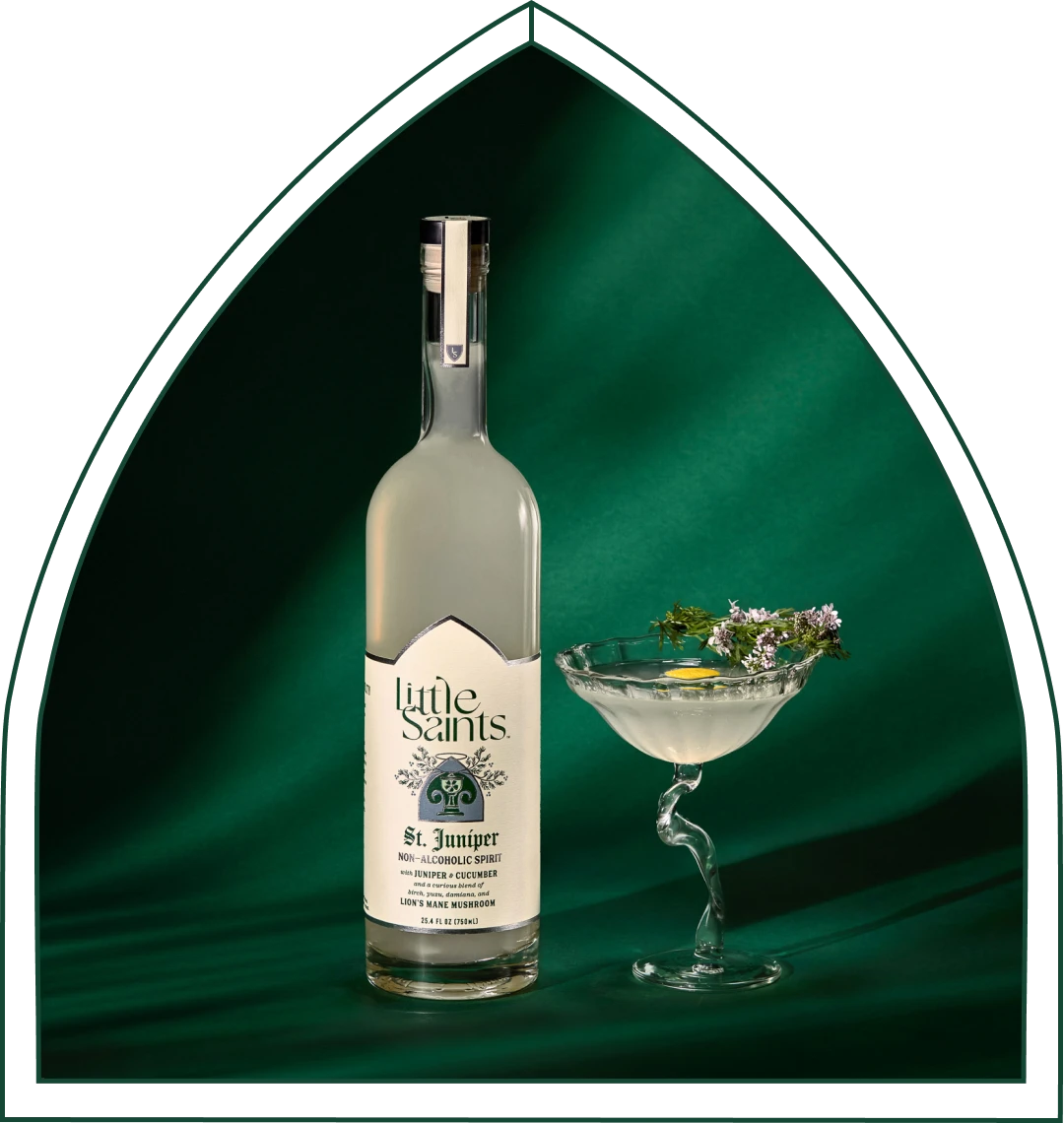
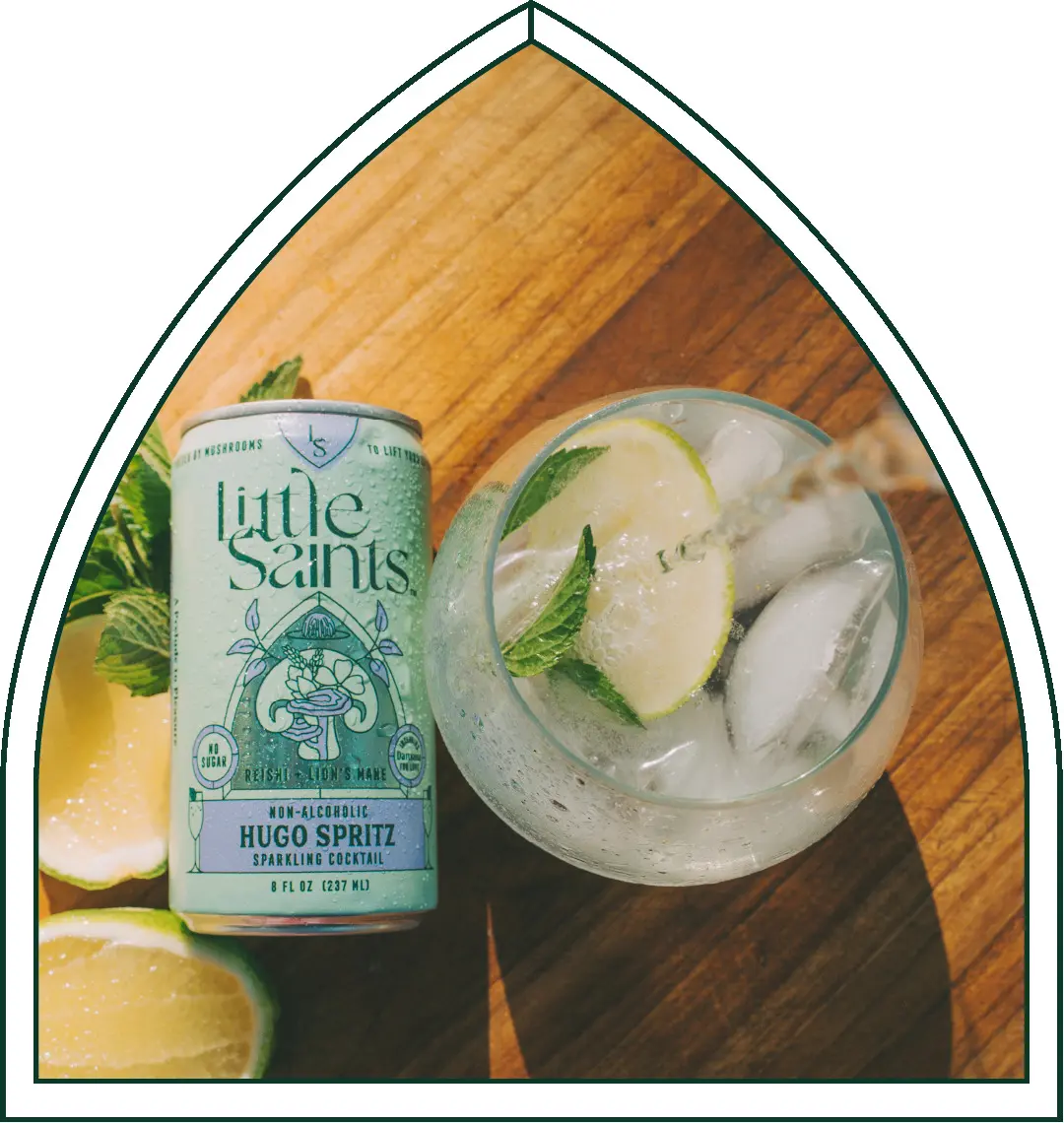
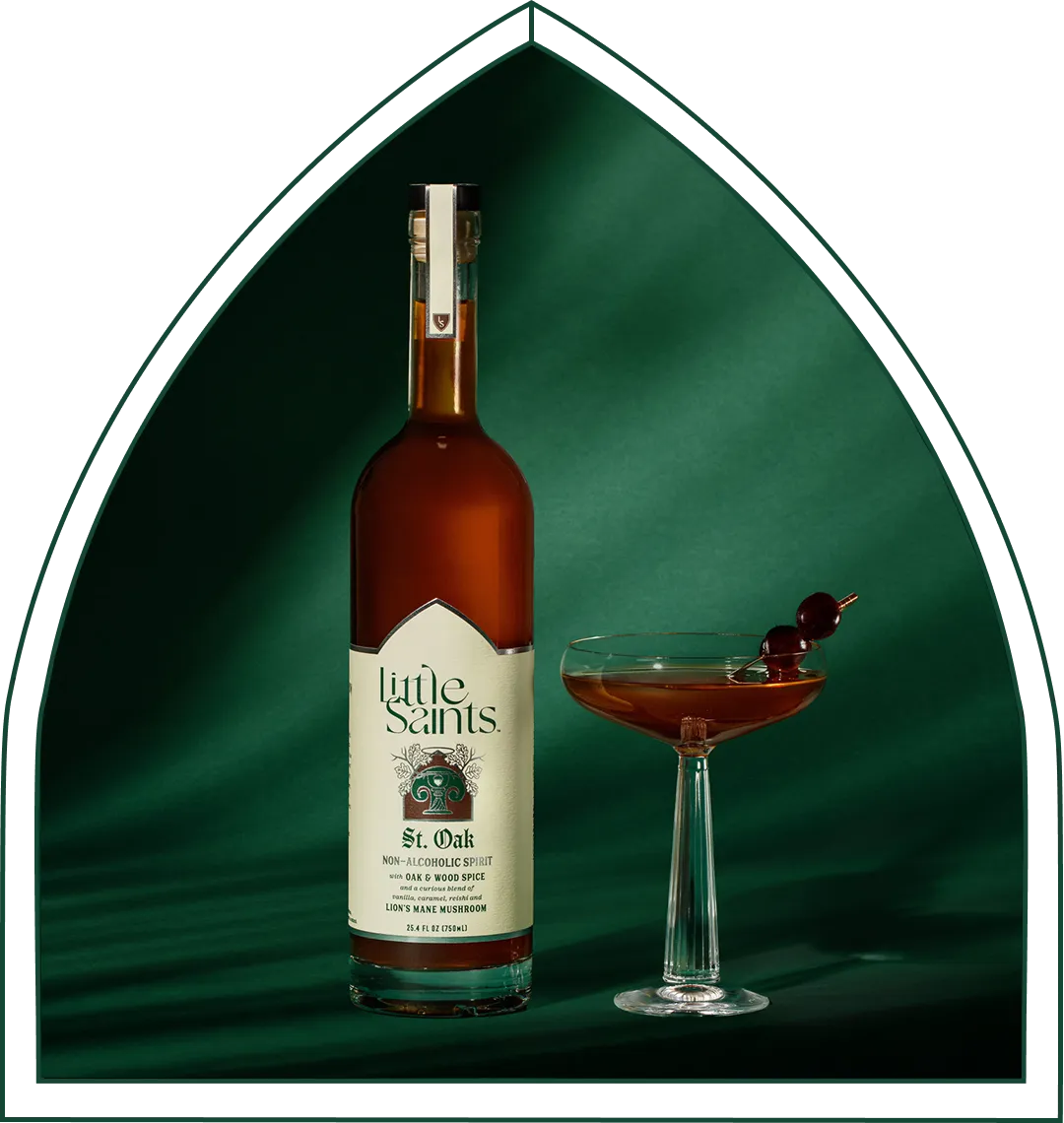
The canned cocktail line includes the Classic Spritz, Hugo Spritz, Classic Margarita, Paloma, Old Fashioned, Mojito, and Negroni Spritz, all at zero grams of sugar and five calories, sweetened with monk fruit. The non-alcoholic spirits line, Little Saints St. Ember, Little Saints St. Juniper, and Little Saints St. Oak, carries zero grams of sugar and uses no sweeteners at all. Each spirit is built on oil-based craft extracts that mix 1:1 in any classic cocktail spec. Little Saints St. Oak was named Best NA Spirit of 2025 by the BevNET Spirit Awards.
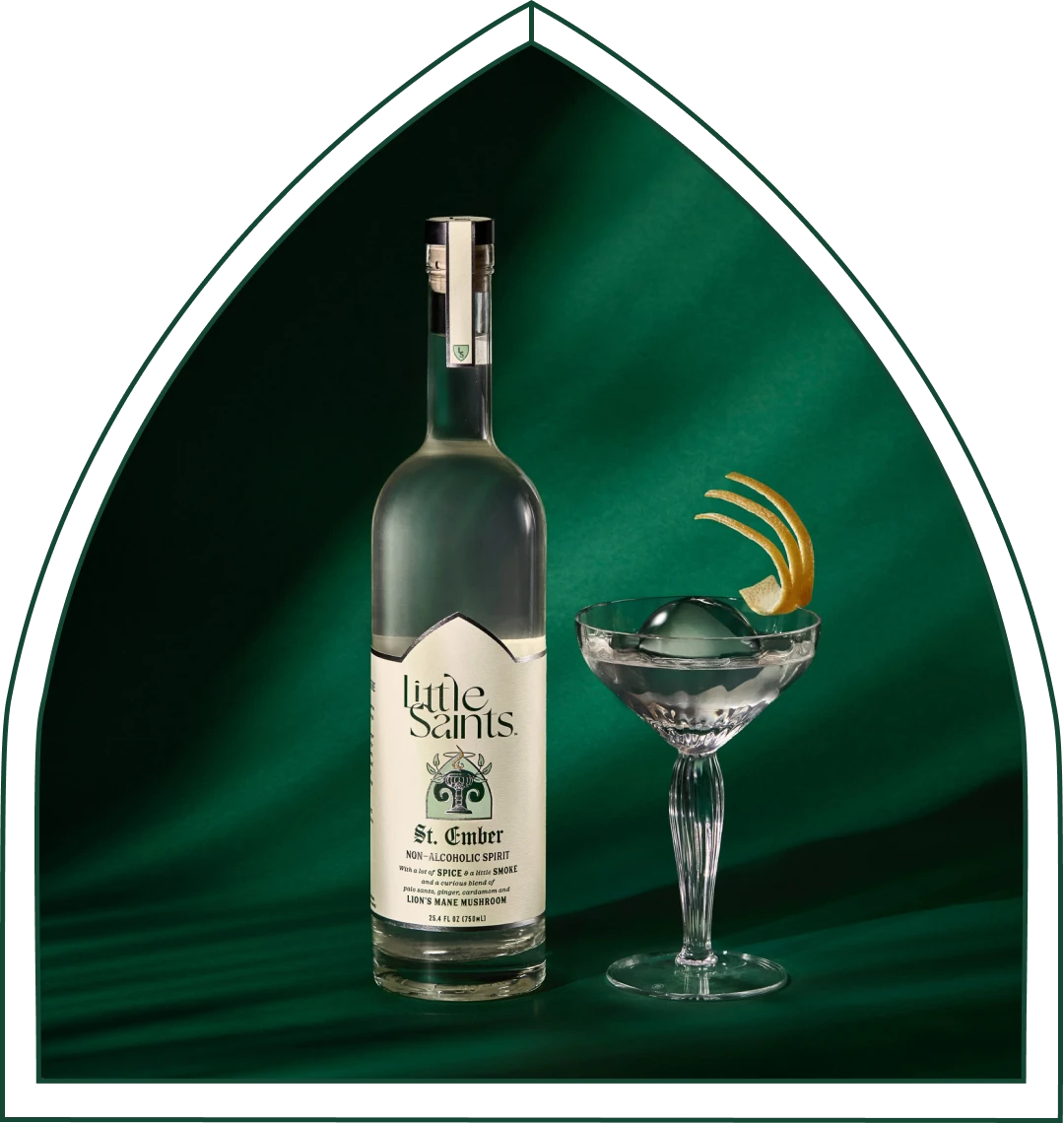
For the evening occasion, the six-point checklist collapses to four decisive criteria: stated dose, published beta glucan content, zero sugar, and no caffeine. Little Saints publishes all four. As with any functional product, these statements have not been evaluated by the FDA, and the products are not intended to diagnose, treat, cure, or prevent any disease. Consult your doctor before use if pregnant, nursing, taking medications, or managing a medical condition.
Frequently Asked Questions
Do Functional Beverages Actually Work?
Effectiveness depends on the ingredient and the dose. Caffeine has solid short-term evidence for alertness and endurance performance, with consistent results across numerous clinical trials. Prebiotic fibers are dose-dependent and can support gut bacteria, but larger doses cause gas and bloating in sensitive people. Many botanical blends are unproven at the amounts typically found in a single can, especially when doses are hidden inside proprietary blends. The label is the test: a stated dose and a published potency figure are the minimum standard for a verifiable claim.
Are Functional Beverages Just Expensive Soda?
Some functional beverages behave like expensive soda when the dose is unstated and the sugar is high. A drink with a disclosed active ingredient at a meaningful dose, zero added sugar, and a documented potency figure differs from a sugar-sweetened soda with a botanical sprinkled in for marketing purposes. The six-point label checklist above shows you which is which before you spend money.
What Should I Look For In An Evening Functional Drink?
Look for a stated dose in milligrams, a published beta glucan figure if the product contains mushroom extracts, zero added sugar, and no caffeine in the formulation. Most functional drinks fail at least one of these criteria, and many contain caffeine that disrupts sleep at typical doses. A drink built for the evening should be transparent about all four.
Is “Non-Alcoholic” The Same As Healthy?
As covered above, “non-alcoholic” is an alcohol-content statement, not a health claim, and the sugar and dose questions sit separate from that label. A non-alcoholic cocktail sweetened with cane sugar can still carry a high sugar load per serving. The label remains the only reliable source of that information, so reading it before purchasing matters more than trusting the category positioning.
Conclusion: Use The Six-Point Checklist For Every Occasion
Evidence for an ingredient does not automatically transfer to the finished drink. A study conducted on an extract at 600mg per day does not establish that a finished beverage containing an unstated amount of that ingredient produces the same effect. That reality is why the six-point checklist above is the method for running the label test on any can, in any aisle.
Occasion then becomes the second filter. Most functional beverages are built for the morning and the desk, while the evening, the moment when someone would otherwise reach for a Negroni or a glass of wine, remains underserved. The sleep-disruption problem covered above makes caffeine-heavy functional drinks a poor fit for that time of day. A drink built for the evening should state its dose, publish its beta glucan content, carry zero sugar, and contain no caffeine. That combination remains rare. Best Functional Drinks For Your Evening Wind-Down covers the evening occasion in full.
Shop Zero-Sugar Canned Cocktails
The statements made on our website have not been evaluated by the Food and Drug Administration, Our products are not intended to diagnose, treat, cure or prevent any disease. If you are pregnant, nursing, taking any medications or have any medical conditions, consult your doctor before use.