


Key Takeaways
- Damiana drinks appear as tea, liqueur, and zero-sugar non-alcoholic options, and each format fits a different occasion.
- Traditional damiana tea tastes bitter and earthy, so many people add honey, mint, or citrus, while damiana liqueur tastes sweeter and herbal but carries alcohol and sugar.
- Research on damiana remains limited, with no strong clinical evidence for common claims, although traditional use describes mild relaxation and connection.
- Zero-sugar, non-alcoholic damiana drinks remove bitterness, sugar, and alcohol and state functional doses on the label.
- Little Saints offers zero-sugar canned cocktails that feature damiana in a functional mushroom blend for an easy evening option without traditional trade-offs.
Try the Zero-Sugar Damiana Blend
Damiana Tea Review: Taste, Ritual, And How To Make It Work
Lloyd’s 1904 account describes damiana tea as the oldest and most direct format, a Mexican tea consumed “from all time” and considered the most desirable form of administration. Damiana has also long appeared as liqueurs and tinctures. Steeped from dried, crumbled leaves, it pours pale gold and tastes mildly bitter, warmly aromatic, and resinous, somewhere between chamomile and dried tobacco. Many tea drinkers describe it as quite bitter, and this bitterness is a frequent complaint in forum threads and tea reviews. Flavor also varies by batch depending on harvest timing and drying method, so two bags from different suppliers can taste noticeably different.
The traditional preparation stays simple. Use roughly one tablespoon of dried, crumbled leaves steeped in near-boiling water for ten to fifteen minutes. Covering the cup while steeping helps hold in the volatile oils that carry most of the aroma.
The bitterness problem has practical fixes. The most effective additions, drawn from traditional Mexican preparation and consistent across herbal guides, are:
- Honey, the most common softener, which rounds the bitter edge without masking the herb
- Cinnamon stick, which adds warmth and spice that pairs naturally with damiana’s resinous character
- Spearmint or mint, often blended with damiana in traditional recipes that use hierba buena (spearmint)
- Chamomile, which rounds out the flavor and adds a floral lift that softens its astringent quality
- A squeeze of citrus, where lemon or lime cuts through the bitterness cleanly
- Shorter steep times, which produce a lighter, more floral cup, while longer steeping draws out more bitterness
Remedy’s Nutrition calls damiana tea “aromatic and slightly bitter” and notes that it blends well with mint, hibiscus, or lemon. The herb tastes more assertive than mild chamomile but mellower than a strong green tea, which explains why blending works so well.
Tea suits someone who wants a quiet, low-key ritual and feels comfortable adjusting the flavor. Brewed unsweetened damiana tea contains roughly 0–2 calories per cup, carries no sugar, and its exact values vary by leaf quality, growing conditions, and brewing strength. Herbal sources commonly suggest 1–3 cups per day using 1–2 teaspoons per cup.
For more on how damiana behaves as a beverage ingredient across formats, see Damiana In Drinks: Flavor, Effects, And Benefits.
Damiana Liqueur Review: Flavor, Cost, And When It Fits
Damiana liqueur is the format many travelers first meet in Baja California Sur, where it serves as a regional hallmark poured as a digestif or in cocktails, including margaritas. The herb also appears as tea, tinctures, or smoked, but the liqueur remains a local specialty and is not widely stocked outside Baja. It is a pale-gold herbal liqueur from the southern tip of the Baja California peninsula, made from Turnera diffusa and bottled at roughly 30% ABV, firmly in liqueur territory.
The sensory profile feels distinctive. It pours clear and pale gold, lighter and less syrupy than a honey liqueur. The aroma reads like sweetened chamomile tea with honey and a dry, sage-like leafiness. On the palate it tastes medium-sweet, with chamomile and honey leading and a faint sage-and-green bitterness at the back. The finish is short to medium, clean and lightly bitter rather than cloying. That restrained finish helps it work as an after-dinner pour and as a cocktail modifier.
In cocktails, damiana liqueur most often replaces orange liqueur in a Baja Margarita, where its herbal-honey character reshapes the classic into something softer and greener. It also appears in citrus punches and craft cocktails that want a gentle herbal backbone. Bars in Los Cabos and La Paz pour it in margaritas as a matter of course.
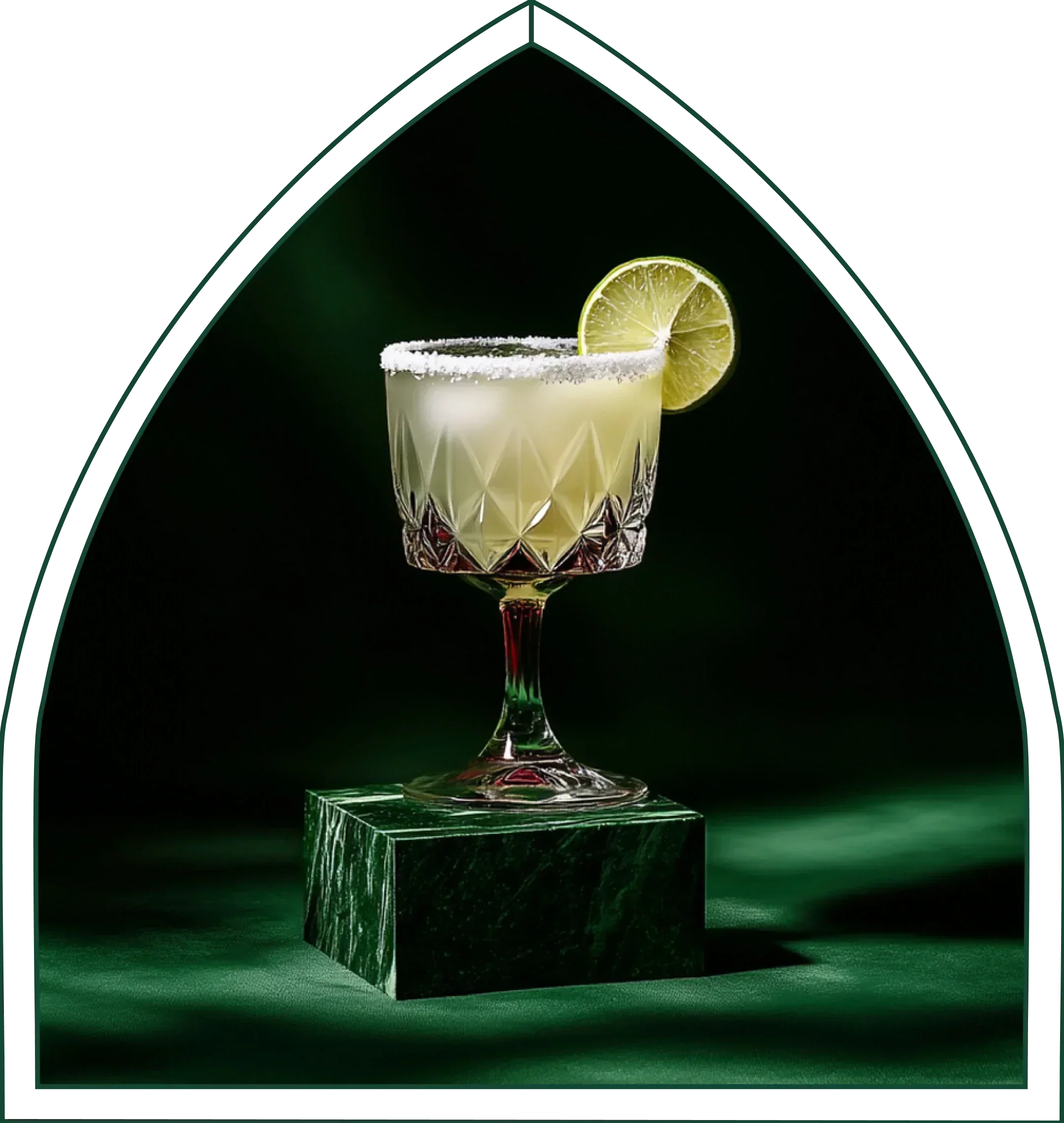
Price often becomes the main complaint in forums. Damiana liqueur is a niche regional product with limited distribution, and its high per-bottle cost stems largely from difficulties obtaining the wild plant. Researchers recommend commercial cultivation to stabilize price and ensure steady availability. The liqueur also carries sugar as part of the production process, and at 30% ABV it does not qualify as a low-alcohol option. Someone focused on zero sugar or no alcohol will find liqueur a poor fit. Someone who wants the traditional pour and accepts both trade-offs will find it a genuinely interesting bottle.
For a deeper look at how damiana appears across both liqueur and zero-alcohol formats, see Damiana Drinks Ingredients: Liqueur & Zero-Alcohol.
Damiana Drink Without Alcohol: The Zero-Sugar Option
Tea and liqueur both come with trade-offs: bitterness in one, sugar and alcohol in the other. A third format avoids all three, the zero-sugar non-alcoholic damiana drink, where Little Saints belongs as the clear choice for someone who wants the herb without bitterness, sugar, or alcohol.
Damiana is one of the functional ingredients in Little Saints’ Nature’s Neuroscience blend, alongside organic Reishi, organic Lion’s Mane, and botanical terpenes. The brand describes damiana’s role as “for connection,” the warmer, more physical side of the experience that rounds out the more cerebral qualities of the mushroom extracts.
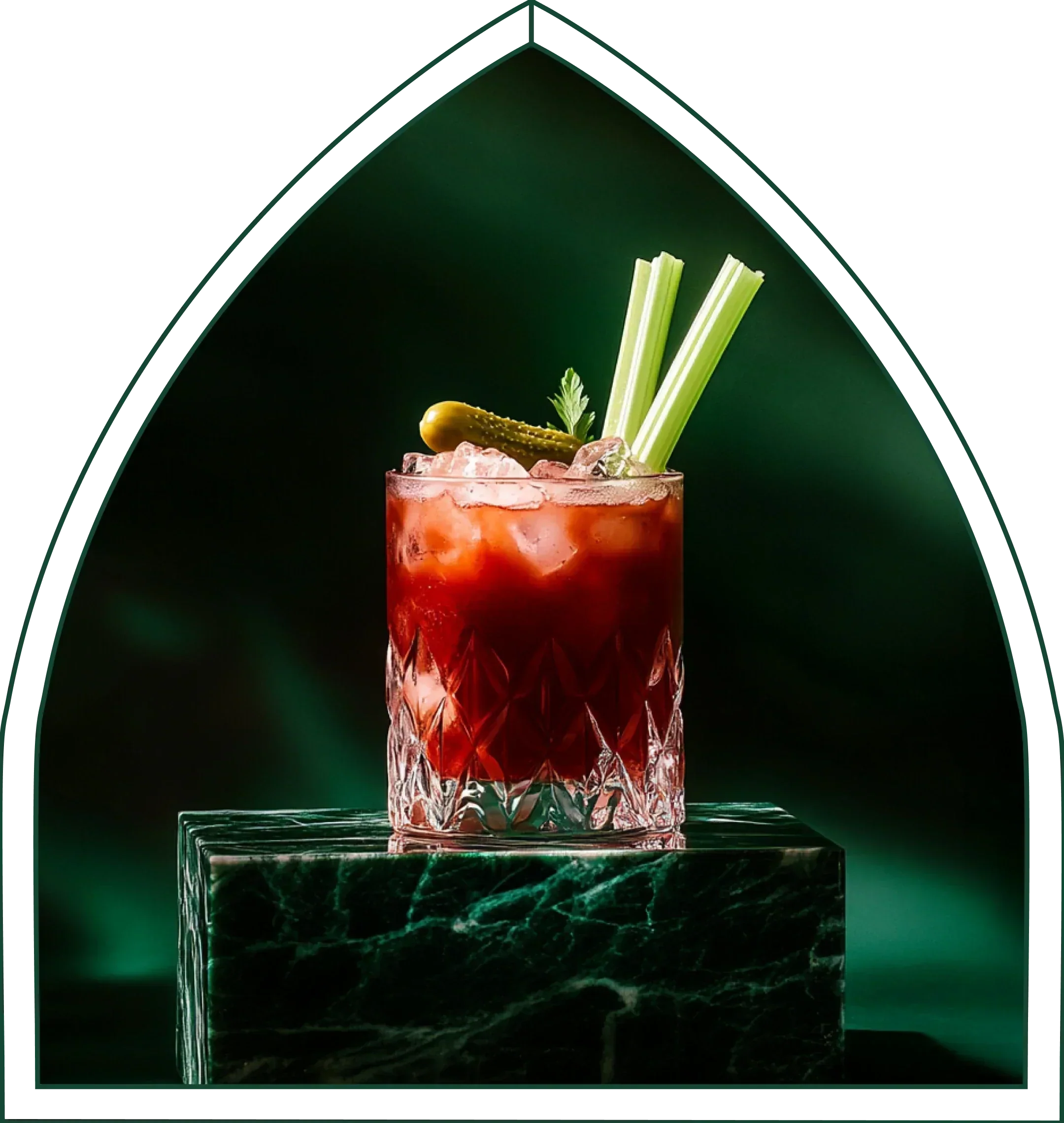
Little Saints publishes specifics that tea and liqueur leave off the label. Damiana appears in the Little Saints Classic Spritz, Hugo Spritz, Classic Margarita, Old Fashioned, and Mojito. Every Little Saints canned cocktail carries zero grams of sugar and five calories per can, sweetened with monk fruit juice concentrate. The mushroom extracts run at a minimum of 70% beta glucan, documented by certificates of analysis from the supplier, with a stated 100mg dose per serving. The extract holds GRAS status, the FDA’s standard of generally recognized as safe for an ingredient used in food.
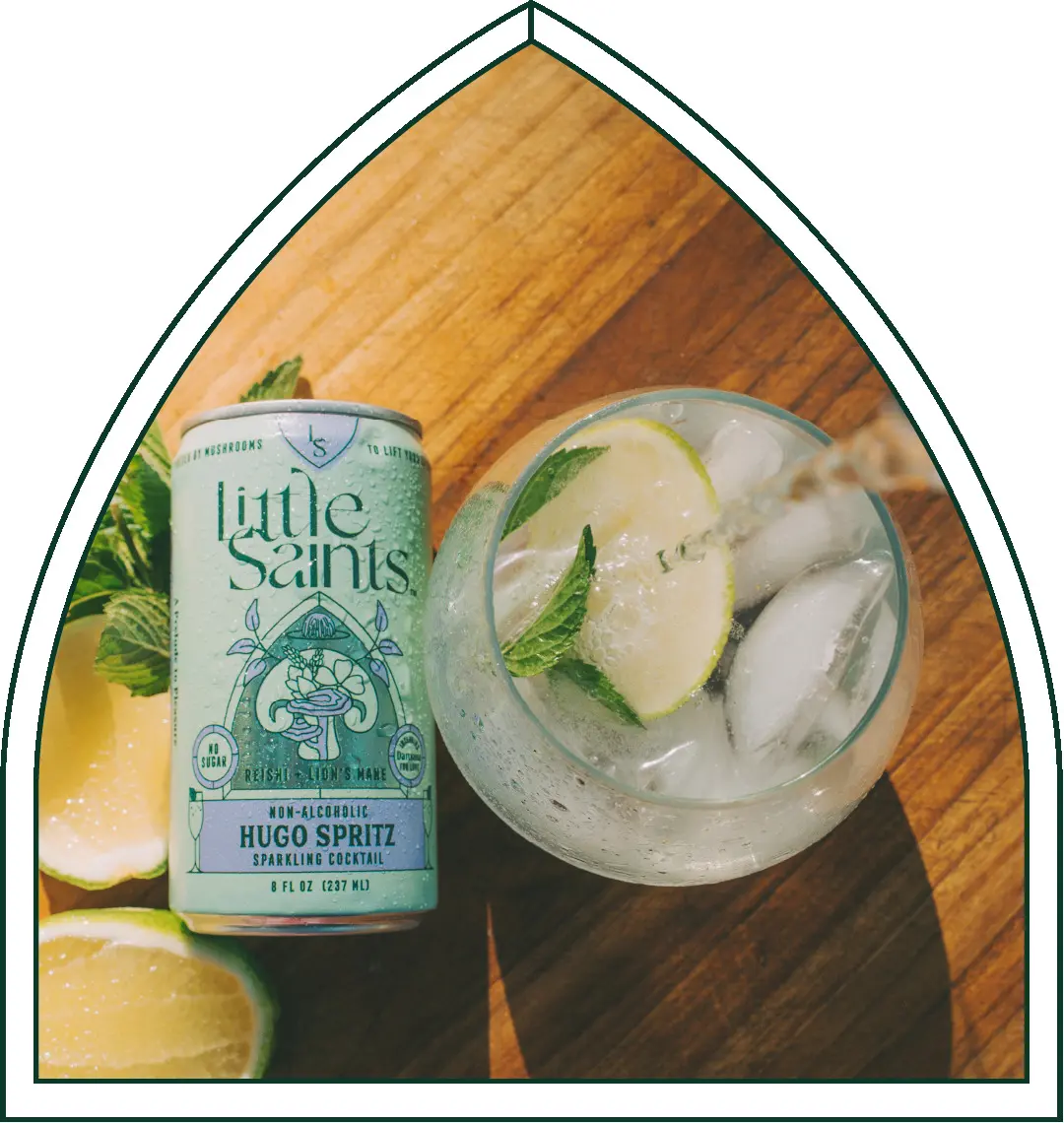
Little Saints is built for the evening drinking occasion, the moment someone would otherwise reach for a cocktail, with classic flavor profiles, fizz, and a functional blend that carries the ingredients at a published dose. It solves the bitterness problem, carries no sugar or alcohol, and states the dose on the label.
The table below shows why the zero-sugar format stands out on the dimensions that matter most: it is the only option that combines zero sugar, five calories, and a published functional dose.
| Format | Sugar | Calories | Functional Dose Stated |
|---|---|---|---|
| Damiana Tea | 0g (unsweetened) | ~2 | No |
| Damiana Liqueur | Present | Higher | No |
| Little Saints Zero-Sugar | 0g | 5 per can | 100mg, published |
Damiana Drinks For Relaxation: Tea, Cocktails & Research covers how each format fits a different occasion.
What Damiana Feels Like In Tradition And In Blends
Forum threads often circle the “what does it feel like” question without landing on a clear answer. Available evidence points to anecdote and tradition rather than established science. WebMD notes that no good scientific evidence supports damiana’s common uses, and a 2014 review by Szewczyk and Zidorn in the Journal of Ethnopharmacology concluded that while damiana contains pharmacologically interesting compounds, clinical evidence for specific health benefits in humans remains insufficient.
Traditional accounts and consumer anecdotes describe a mild, gradual sense of ease, with reduced tension, a warm sense of bodily comfort, and sometimes a feeling of being more present and connected. INFUSE describes damiana as acting subtly, with effects building over several takings. Many people feel almost nothing the first time, and by the third or fourth taking the taste becomes familiar and the effect settles in. Herbalists characterize damiana as a restorer rather than a stimulant, which helps set realistic expectations.
The aphrodisiac reputation is centuries old and belongs to tradition and marketing rather than to settled science. Animal research remains intriguing, such as a 2009 study by Estrada-Reyes et al. in the Journal of Ethnopharmacology that found an aqueous damiana extract increased the percentage of sexually exhausted male rats that resumed ejaculatory behavior. Rodent behavioral models translate to human experience unreliably, and no controlled human trial has tested damiana alone for these outcomes.
Little Saints describes damiana’s role in its blend as “for connection,” the warmer, more physical complement to the more cerebral qualities of Reishi and Lion’s Mane. Customer reviews describe the overall Little Saints Lift as a sense of clarity and ease, a subtle take-the-edge-off sensation, feeling a little more present and a little more settled. That is the experiential territory damiana occupies in the blend.
For a detailed look at what online threads report about damiana’s effects, see Damiana Drinks Reddit: What The Threads Say & Beyond.
People Also Ask: Common Damiana Questions Answered
Does Damiana Have Caffeine In It?
A 2026 NMR analysis by Pauli et al. published in Planta Medica detected no caffeine in confirmed-identity damiana at a detection limit below 4 nM, equivalent to below 4 µg per daily serving. These findings contradict older studies that listed caffeine among damiana’s main compounds. Current evidence suggests damiana is a non-caffeinated herb. Little Saints’ core canned cocktail line is deliberately caffeine-free because the occasion is the evening.
Is Damiana Psychedelic?
Damiana is not psychedelic and has no relationship to classic psychoactive substances. A 2020 study that purchased 18 products from plants recommended for e-cigarettes found no psychoactive compounds detected in damiana products. Traditional reputation frames damiana as a mild relaxant and tonic, not as a psychoactive plant. Little Saints products are non-intoxicating, non-psychoactive, and 100% legal.
Does Damiana Show Up On A Drug Test?
No standard drug panel tests for damiana. The herb is not a controlled substance federally in the United States, and the FDA lists damiana leaves as a permitted natural flavoring substance for food under 21 CFR 172.510. Anyone subject to occupational or medical testing should discuss their specific situation with a medical professional.
How Long Does Damiana Take To Kick In?
Consumer and traditional accounts commonly describe the onset as subtle and gradual rather than sharp. Acute users often report a mild lift within about one to two hours, but controlled measurements have not confirmed this timing. These descriptions remain anecdotal, and individual experience varies considerably.
Does Damiana Raise Testosterone?
Current research does not establish a testosterone-raising effect. No human trials have measured testosterone changes with damiana alone. In laboratory conditions the herb showed two opposite hormonal actions simultaneously, which makes hormone claims marketing language rather than research findings. The claim circulates widely without a controlled human trial behind it.
Can Damiana Increase Estrogen?
Evidence does not clearly establish an estrogen-raising effect either. Damiana’s hormone data conflict: a methanolic extract inhibits aromatase, the enzyme that converts testosterone to estrogen, while three other constituents activate the estrogen receptor. The net effect in humans remains unknown, so any estrogen claim should be treated as unproven.
Who Should Not Take Damiana?
Several groups should avoid damiana or consult a doctor before use. Researchers do not know if or how damiana could affect pregnancy or harm a fetus, and they do not know if damiana passes into breast milk. Pregnant or breastfeeding individuals should talk with their healthcare provider before using it. Damiana constituents lower blood glucose in animal studies, so people taking blood-sugar-lowering medications should consult a doctor before use.
Experts recommend discontinuing damiana two weeks before elective surgery to reduce possible additive blood-sugar lowering and additive sedation during the perioperative period. Anyone on medications, particularly antidiabetes drugs, MAO inhibitors, or serotonergic medications, should consult a healthcare provider before using damiana in any form.
Safety And Evidence: What To Know Before You Sip
As a food flavoring, damiana is generally recognized as safe (GRAS) by the FDA, but the FDA has not reviewed damiana supplements for safety and effectiveness. GRAS covers the safety of the ingredient in food. It is not FDA approval of any product and does not address whether an ingredient produces an effect.
The standard guidance applies to any damiana product that might affect physiology. Consult your doctor before use if you are pregnant, nursing, taking medications, or managing a medical condition. Statements about Little Saints products have not been evaluated by the FDA, and the products are not intended to diagnose, treat, cure, or prevent any disease.
The evidence picture for damiana remains thin but not alarming. Researchers have not identified any randomized controlled trial of damiana alone in humans. All placebo-controlled human trials used multi-ingredient mixtures in which damiana was only one component, so its individual contribution cannot be isolated. Damiana is generally well tolerated at traditional amounts, but large doses may cause stomach upset, and old reports mention effects on blood sugar at very high intakes.
The drug interaction picture deserves attention for anyone on medication. HelloPharmacist rates the combination of damiana with the diabetes drug glipizide as a moderate, theoretical interaction based on animal research showing damiana lowers blood glucose, not on solid human studies. The same caution extends across antidiabetes drug classes. A 2023 screening found that damiana leaf extract strongly inhibited CYP3A4, the enzyme that metabolizes many drugs, at laboratory concentrations. This finding justifies caution but does not prove a clinically significant interaction in people.
The bottom line on safety is straightforward. Damiana has a long traditional use history at tea doses, a low acute-harm profile, and a thin clinical evidence base. That combination calls for honest hedging rather than alarm or overconfident claims.
The Verdict: Choosing Your Damiana Drink
Each damiana format fits a different moment, so the best choice depends on how you like to unwind.
- Tea works for a quiet, low-key ritual when you feel comfortable adjusting the flavor. It tastes bitter, earthy, and variable by batch but can be softened with honey, mint, or citrus. It carries zero sugar, near-zero calories, and no stated dose. Choose tea if you want the most direct relationship with the herb and enjoy experimenting.
- Liqueur fits the traditional pour and the Baja California cocktail experience. It tastes sweet, herbal, and genuinely interesting in a margarita. It carries sugar and alcohol, and the price reflects its niche distribution. Consider liqueur if you accept both trade-offs.
- A zero-sugar non-alcoholic damiana drink suits someone who wants the herb in something that tastes like an adult cocktail, carries no sugar and only five calories, and still lets you feel clear the next morning. This format solves the bitterness, sugar, and alcohol problems at once, and it is the only one that publishes the dose.
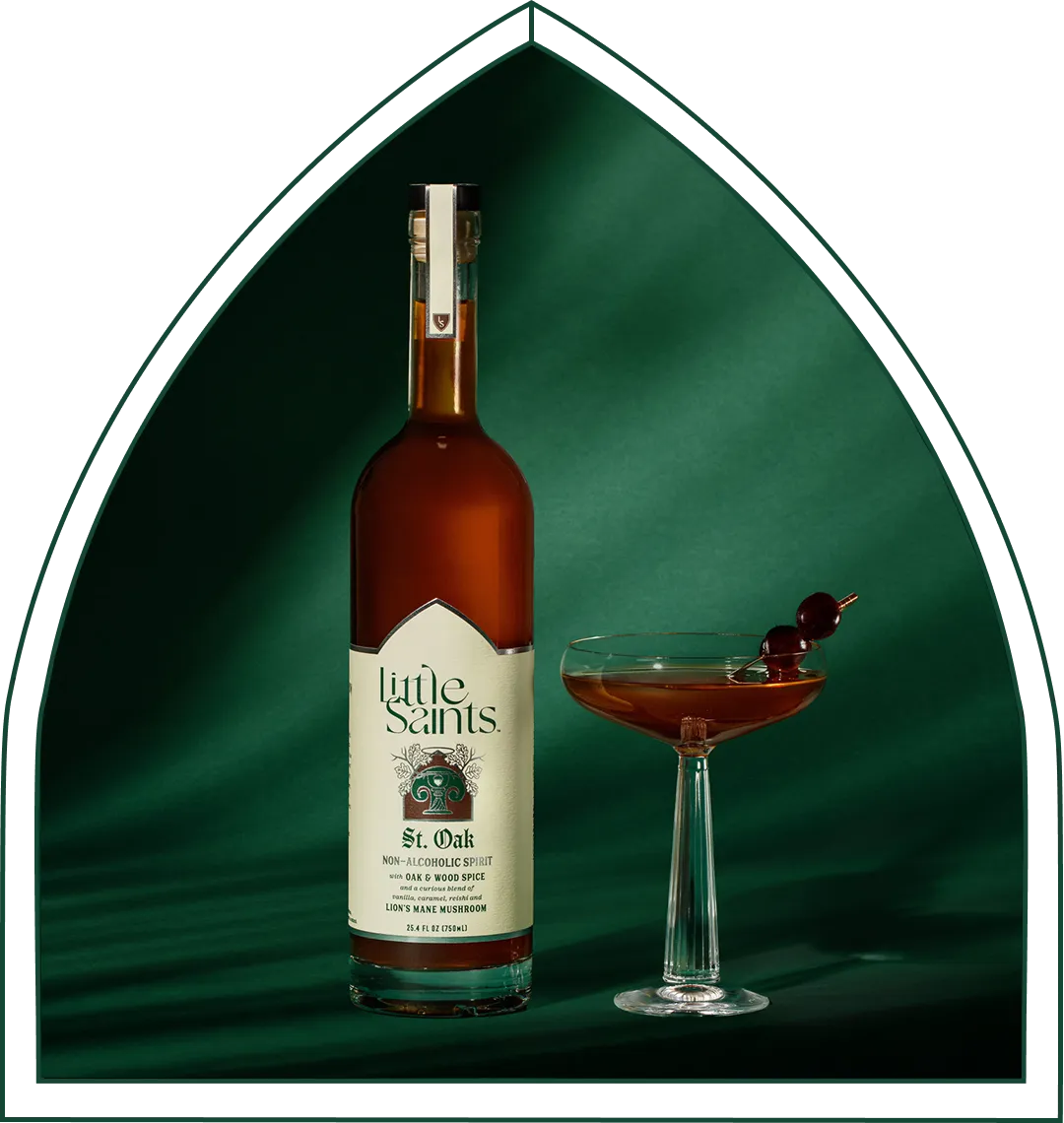
The recommendation for the zero-alcohol format is Little Saints. Damiana appears in five Little Saints canned cocktails: the Classic Spritz, Hugo Spritz, Classic Margarita, Old Fashioned, and Mojito. Each can carries zero grams of sugar, five calories, and a 100mg damiana dose alongside organic Reishi and organic Lion’s Mane extracts at a minimum of 70% beta glucan, documented by certificates of analysis from the supplier. For someone who wants a non-alcoholic spirit to build cocktails with, Little Saints St. Oak (named Best NA Spirit Of 2025 by the BevNET Spirit Awards) carries damiana alongside Reishi in a bottle that mixes 1:1 in any brown-liquor cocktail spec.
Damiana is worth exploring. The tradition is real, the flavor is distinctive, and the herb holds a centuries-long place in Mexican beverage culture. The research is limited, the effects are subtle, and for most people the most practical format is the one that carries the herb at a published dose without bitterness, sugar, or alcohol.
Explore the full range of non-alcoholic cocktails and spirits at Little Saints, where every pour carries zero sugar, five calories, and a supplement-grade functional mushroom blend.
Explore Little Saints Cocktails
Frequently Asked Questions About Damiana Drinks
What Is The Difference Between Damiana Tea And Damiana Liqueur?
Damiana tea is a simple hot-water infusion of dried Turnera diffusa leaves, unsweetened, near-zero calorie, and bitter enough that many people add honey or mint to make it more pleasant. The flavor is earthy, resinous, and sage-like, and the strength varies by leaf quality and steep time. The cup contains no alcohol and no stated dose.
Damiana liqueur is a sweetened, alcoholic product made by macerating dried damiana leaves in a neutral spirit, typically bottled at around 30% ABV. It tastes medium-sweet with a soft herbal-chamomile character and a faint bitter finish. It carries sugar and alcohol, and no functional dose appears on the label. The two products share a plant and a name but differ in taste, occasion, and nutritional profile.
Is There A Damiana Drink With No Sugar And No Alcohol?
Yes. Little Saints makes a range of non-alcoholic canned cocktails that carry damiana as part of their Nature’s Neuroscience functional blend, alongside organic Reishi, organic Lion’s Mane, and botanical terpenes. Every can contains zero grams of sugar and five calories, sweetened with monk fruit juice concentrate. The damiana dose is stated at 100mg per serving, with mushroom extracts at a minimum of 70% beta glucan documented by certificates of analysis from the supplier. Flavors that carry damiana include the Classic Spritz, Hugo Spritz, Classic Margarita, Old Fashioned, and Mojito.
Does Damiana Actually Do Anything, Or Is It Just Hype?
The tradition is real, the research is limited, and the effects are subtle. Damiana has been used in Mexican and Central American herbal traditions for centuries as a mild relaxant and tonic. Animal studies show interesting results, including anxiolytic-like effects in rodents and restored sexual behavior in exhausted male rats, but no controlled human trial has tested damiana alone for any outcome. The few human studies that exist used multi-ingredient formulas, which prevents researchers from attributing any result specifically to damiana.
Consumer accounts describe a mild, gradual sense of ease and warmth. People do not report dramatic or intoxicating effects, and responses vary. The herb functions best as a traditional botanical with a long use history and a thin clinical evidence base. Anyone expecting a strong or immediate effect will likely feel disappointed. Someone looking for a gentle, nature-based complement to an evening ritual may find it worth exploring, especially in a format that carries a published dose.
Can I Drink Damiana Every Day?
At traditional tea doses, damiana is generally well tolerated, and no formal upper daily limit has been set because clinical safety studies are lacking. The most commonly reported side effects at high doses involve mild gastrointestinal discomfort. Several groups should avoid it entirely or consult a doctor first, including pregnant and breastfeeding individuals, people taking blood-sugar-lowering medications, anyone on MAO inhibitors or serotonergic medications, and those with hormone-sensitive conditions. Anyone managing a medical condition or taking medications should consult a healthcare provider before adding damiana in any form.
What Does Damiana Taste Like In A Non-Alcoholic Drink?
In a well-formulated non-alcoholic drink like Little Saints, damiana supports the overall botanical complexity of the blend rather than dominating the flavor the way it does in tea. The bitterness that makes straight damiana tea challenging is balanced by other ingredients such as natural flavors, monk fruit, and botanical terpenes. The result tastes like a layered, adult cocktail rather than a bitter herbal infusion.
The Classic Spritz reads as prosecco-inspired with tangerine citrus and bittersweet botanicals. The Classic Margarita tastes bright, lime-forward, and salt-kissed. The Old Fashioned carries orange, cherry, and warm spice. Damiana sits in the functional architecture, not as the headline flavor.
The statements made on our website have not been evaluated by the Food and Drug Administration, Our products are not intended to diagnose, treat, cure or prevent any disease. If you are pregnant, nursing, taking any medications or have any medical conditions, consult your doctor before use.