


Key Takeaways
- There is no official clinical dose for Damiana. Traditional references give format-specific ranges that vary between tea, tincture, liqueur, and canned drinks.
- Most packaged non-alcoholic drinks do not publish a Damiana dose. The label on each product is the only reliable guide.
- Little Saints stands out by disclosing a 100mg functional mushroom dose per serving in select products, with mushroom extracts verified at a minimum of 70% beta glucan.
- Damiana appears in several Little Saints canned cocktails and non-alcoholic spirits alongside Reishi and Lion's Mane. The canned cocktails deliver zero sugar and five calories per can.
- Little Saints offers a transparent, non-intoxicating option for anyone who wants a Damiana drink with a disclosed functional dose they can verify.
Explore Little Saints Cans With Disclosed Doses
Is There An Official Damiana Dose?
No official clinical dose exists for Damiana. The ranges below come from traditional herbal medicine references, not from regulatory recommendations or clinical findings. Drugs.com and RxList are widely cited English-language sources for these traditional ranges and inform the figures in each section.
The single liftable answer is simple. There is no standard Damiana dosage. Traditional references give format-specific ranges, and no regulatory body has established a recommended daily intake.
One caveat applies across every format. A concentrated extract is not interchangeable with a cup of tea, and a liqueur is not interchangeable with either. The format changes the math entirely because the amount of botanical material per serving can differ by orders of magnitude depending on how the herb was prepared.
Damiana Tea Dosage
Traditional references suggest roughly 1 to 2 teaspoons of dried Damiana leaf per cup of hot water, with gram equivalents varying by source. Some guides estimate about 1–2 g per cup and others 2–4 g per cup, steeped 10 to 15 minutes, up to three times a day.
In practice, one teaspoon of dried leaf is a loosely packed measure of crumbled herb, roughly the volume of a standard tea bag. The gram range is wide because dried leaf density varies. A tightly packed teaspoon weighs more than a loosely packed one, and different sources use different conventions.
“Up to three times a day” means the traditional daily ceiling is a range, not a fixed target. Based on traditional reference ranges of 2–4 g of dried leaf per infusion taken three times daily, the implied traditional daily intake is roughly 6 to 12 grams of dried Damiana leaf.
For more on how to prepare a Damiana tea or herbal beverage, see the Damiana Herbal Beverage Recipe Guide.
Damiana Tincture And Extract Dosing
Traditional references give up to roughly 12,000 mg of dried leaf equivalent per day, split across three doses. Traditional references do not provide a dose for a concentrated 4:1 Damiana dry extract. The cited reference gives no separate capsule or dry-extract dose.
Under the AHPA convention, a 4:1 extract is one in which each unit of finished total extract, including any carriers or excipients, represents the extractives from four units of dried botanical starting material. Ratios are calculated on a dried basis. That concentration is why an extract cannot be dosed the way you would dose a cup of tea.
Tinctures vary even more widely. The herb-to-liquid ratio, the alcohol percentage, and the extraction time all change how much botanical material is in a single dropper. RxList and Drugs.com both note that the label on the specific bottle in your hand is the only reliable guide to what a measured dose actually contains.
The NIH Office of Dietary Supplements puts it plainly. The same amount of a botanical may be contained in a cup of tea, a few teaspoons of tincture, or an even smaller amount of an extract. These are not equivalent doses and should be treated as distinct.
Damiana Liqueur: How Much Is A Serving?
A Damiana liqueur delivers alcohol alongside the herb, so the serving size is set by the pour, not by the herb. Commercial Damiana liqueurs typically land near 30% ABV, which places them in standard liqueur territory. Producers generally do not publish the grams of Damiana per bottle or per serving, so an ordinary pour cannot be reliably converted into a botanical dose without a manufacturer disclosure.
Historically, Damiana was used as a folk tonic in Mexican and Baja Californian herbal practice. It was traditionally prepared as a hot-water tea or infusion, and in some regional traditions as a brandy-based liqueur. That is a historical reference point, not a recommendation.
The liqueur format also carries a persistent piece of cocktail folklore. Some accounts hold that the original Margarita was built with Damiana liqueur rather than triple sec, a claim cocktail historians treat with low confidence.
The practical point for anyone holding a Damiana liqueur tonight is straightforward. The alcohol changes the calculus, the herb quantity is undisclosed, and the serving is a standard pour of a 30% ABV liqueur. It is not a measured botanical dose. For a broader look at Damiana drink formats, see the Damiana Drink Guide.
Where A Little Saints Can Sits On The Damiana Dosage Map
Little Saints gives drinkers a Damiana option in a canned, non-alcoholic format with a dose they can actually read. It is one of the few brands in the set that publishes its functional mushroom dose at all.
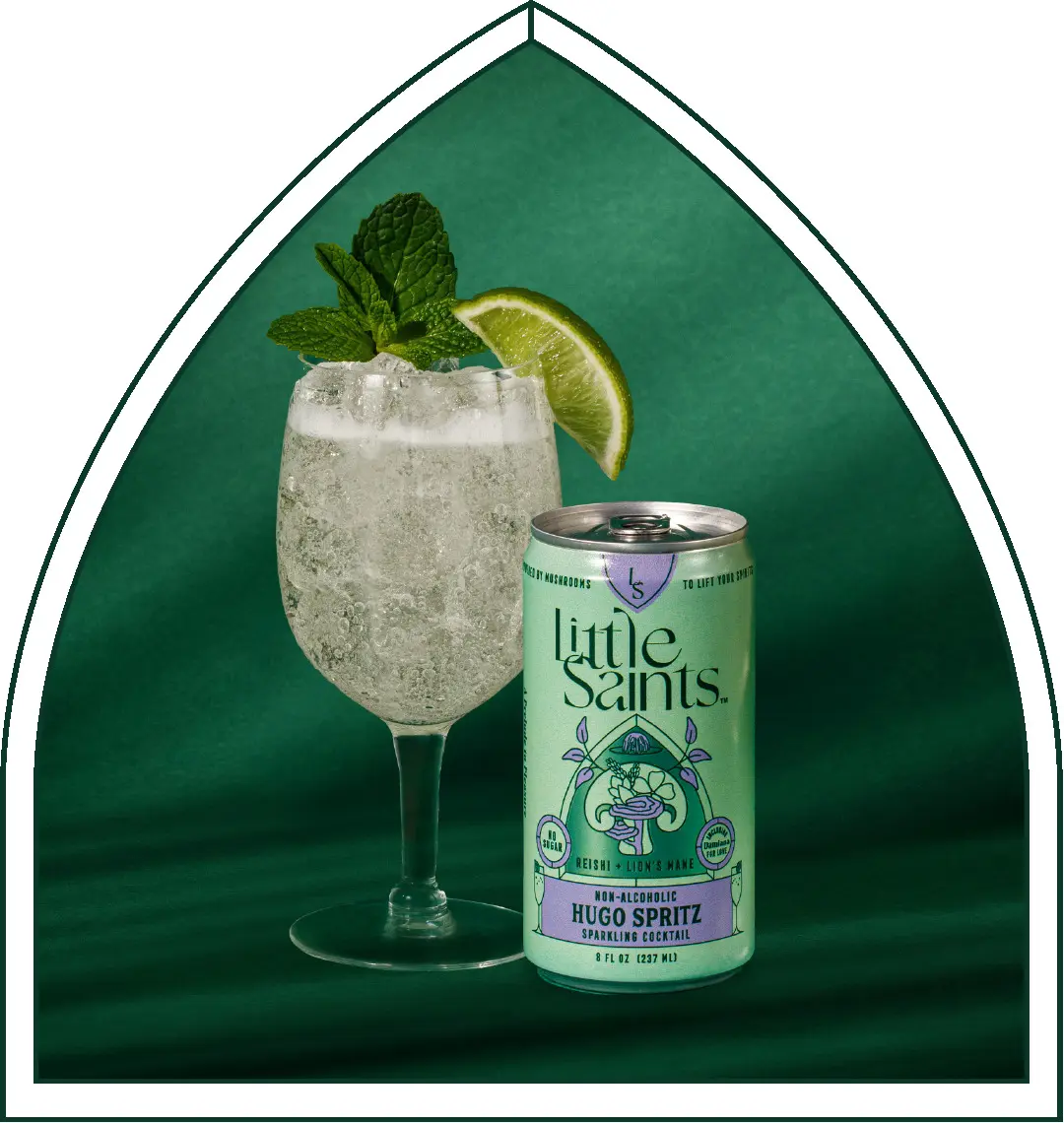
The verifiable facts build a clear picture. Little Saints states a disclosed 100mg functional mushroom dose per serving for its lion's mane spirits (St. Mezcal and St. Ember) and for the Reishi in its Ginger Mule can. Not every Little Saints can lists a 100mg dose. Some, like the Hugo Spritz and Spicy Margarita, list mushroom extracts without a stated 100mg amount.
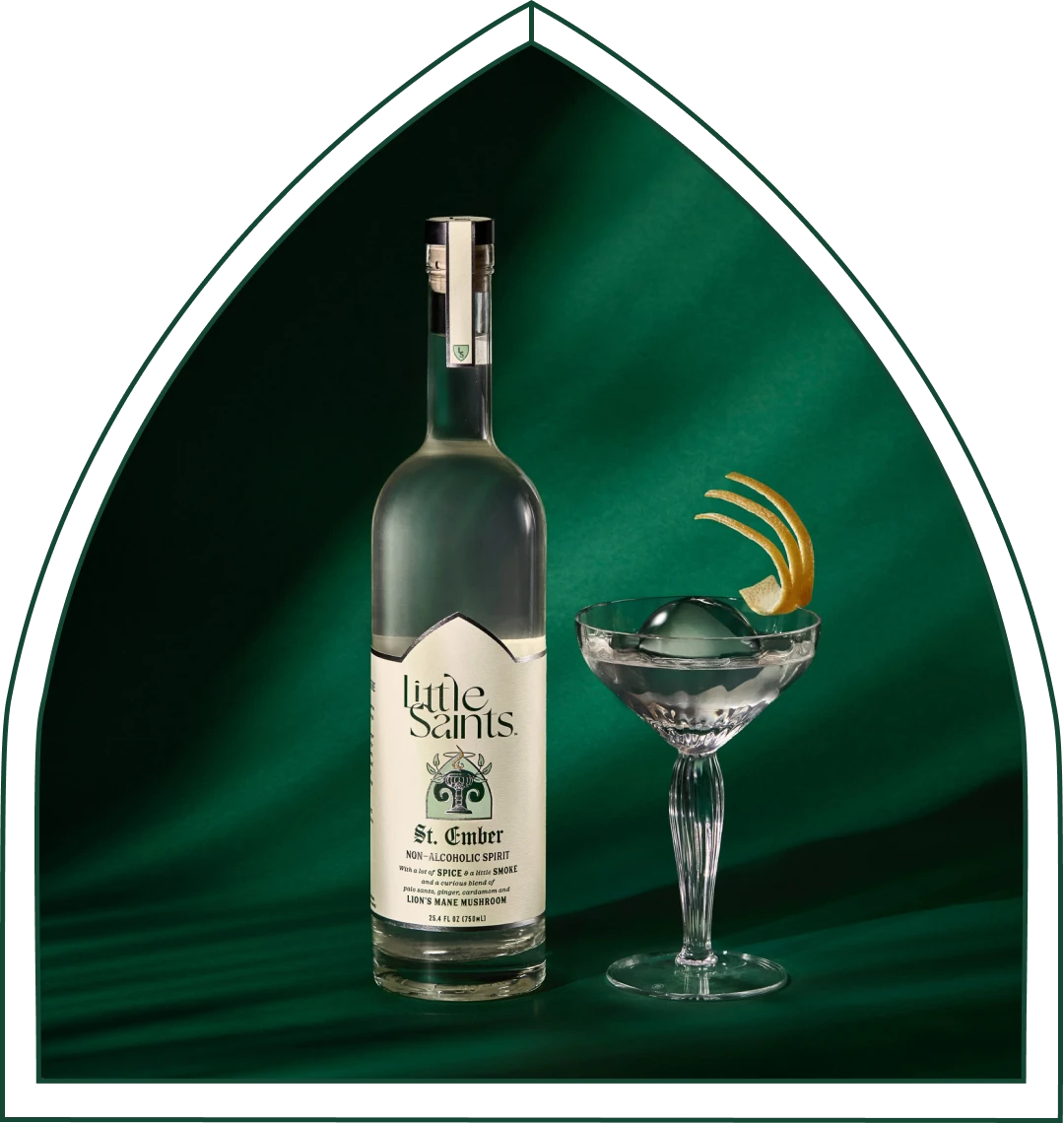
Where a dose is disclosed, mushroom extracts are documented at a minimum of 70% beta glucan by supplier certificates of analysis. That verification separates Little Saints from most of the non-alcoholic category, which publishes no dose at all. Little Saints canned cocktails and non-alcoholic spirits contain zero grams of sugar, and the canned cocktails contain five calories per can. They are non-intoxicating and non-psychoactive.
Damiana sits within the Little Saints functional blend alongside Organic Reishi for chill and Organic Lion's Mane for focus, with botanical terpenes for the senses. Damiana is a flower, not a mushroom. It is grouped with the functional blend because of its long history in herbal traditions, even though it is botanically distinct from Reishi and Lion's Mane.
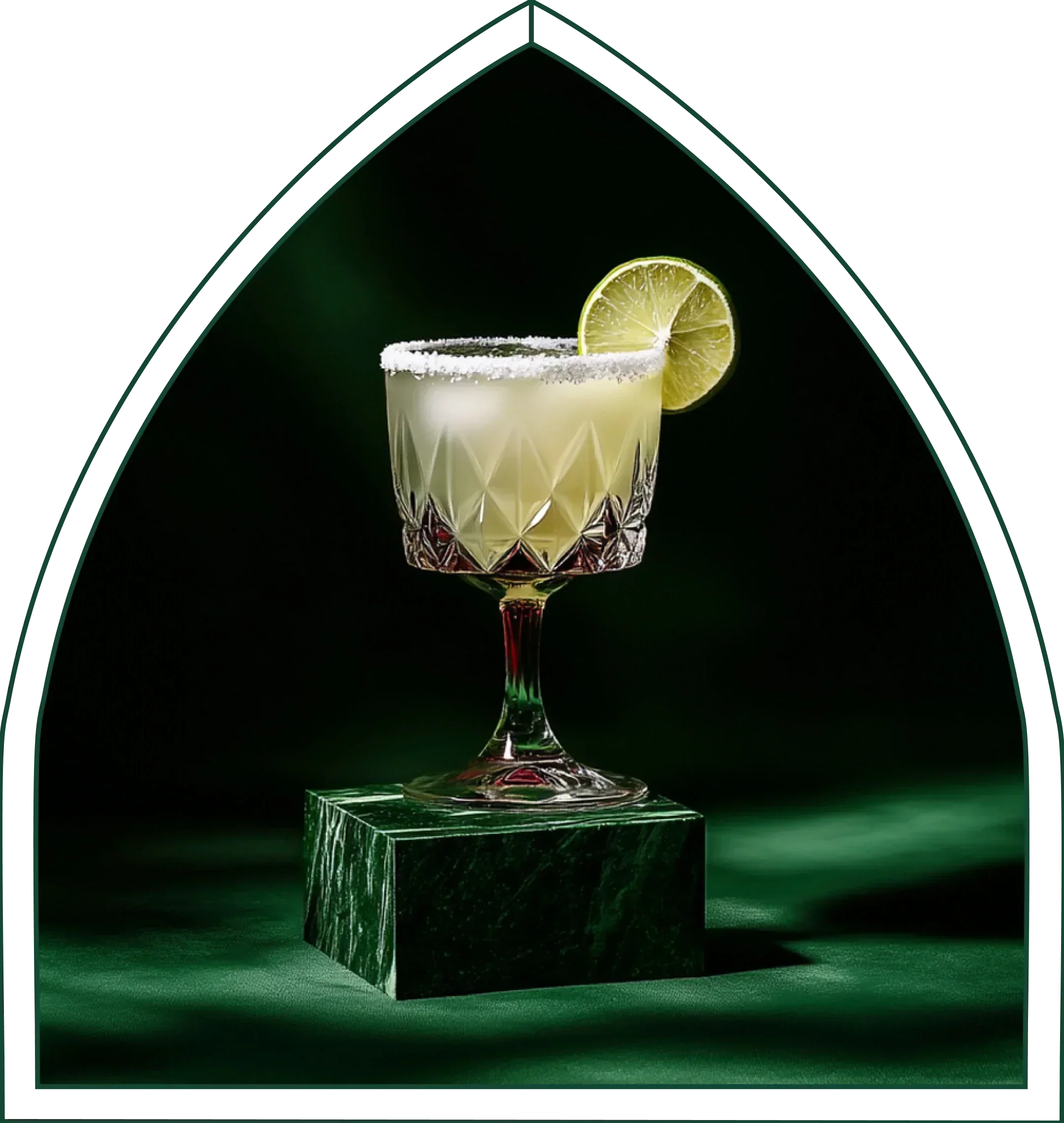
That distinction supports a clear design choice. The blend pairs three complementary components at a dose that does something, rather than stacking trending ingredients. Damiana appears in the following Little Saints products: Little Saints Classic Spritz, Little Saints Hugo Spritz, Little Saints Classic Margarita, Little Saints Old Fashioned, and Little Saints Mojito. Where a dose is disclosed, it is the same 100mg functional dose per serving.
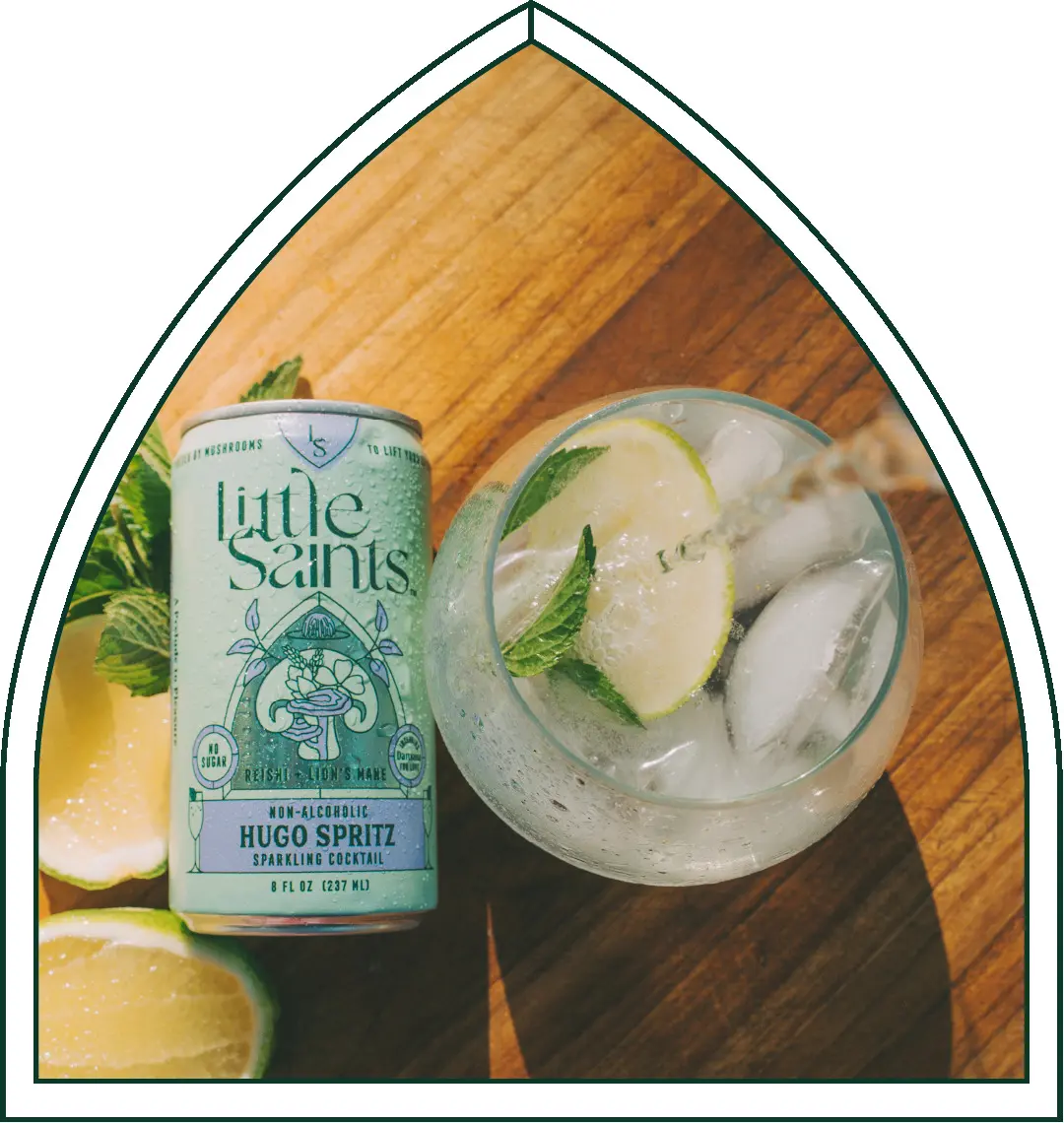
The brand describes the experience as clarity and ease, the Little Saints Lift, which reflects what drinkers consistently report. For more on what Damiana is and how it fits into the blend, see Damiana Drinks Ingredients: Liqueur & Zero-Alcohol.
Find Your Disclosed-Dose Little Saints Can
Damiana Side Effects And Who Should Skip It
The following applies to Damiana in any format. Traditional references describe traditional use ranges, not clinical findings. Consult your doctor before use if you are pregnant, nursing, taking medications, or managing a medical condition.
Pregnancy And Breastfeeding
People who are pregnant or breastfeeding should avoid Damiana and consult a doctor. Safety during pregnancy and breastfeeding has not been established, and some Turnera species have a documented history of traditional use as uterine stimulants.
RxList's damiana supplement page advises that there is not enough reliable information about the safety of taking Damiana during pregnancy or breastfeeding, so users should stay on the safe side and avoid use. Another RxList drug page notes that no harmful effects are known and still advises consulting a doctor.
Blood Sugar And Diabetes
Anyone managing blood sugar should use caution. Animal research shows Damiana lowers blood glucose, which creates a theoretical concern that combining it with antidiabetes medications, including metformin, insulin, semaglutide, and tirzepatide, could push blood sugar too low.
The evidence is animal-based, not from human studies. Even so, the interaction is classified as moderate across the entire antidiabetes drug class. Consult a doctor, particularly if you are managing blood sugar.
Surgery
Traditional references advise stopping Damiana at least 2 weeks before any scheduled surgery. Damiana may affect blood sugar levels and interfere with blood glucose control during and after surgery. Tell your surgical team about every supplement or botanical you are taking and consult a doctor.
Minors
Damiana is not for anyone under 18.
High-Dose Warning
A documented poisoning case reports that 200 grams of Damiana extract taken orally caused tetanus-like convulsions and symptoms resembling strychnine poisoning. This is a very-high-dose poisoning case and does not describe tea or canned-drink servings.
That case is one more reason to avoid treating a concentrated extract like a cup of tea and to stay within the format-specific ranges above.
Liver
Human liver data on Damiana is limited. No human research on Damiana and liver harm has been identified. The available findings come from cell-based and animal studies, which cannot predict how a person’s liver will respond.
Anyone told by a doctor to monitor liver function, or taking medication that affects the liver, should consult a clinician before using Damiana in any concentrated form. Heavy or high-dose use warrants particular caution.
These statements have not been evaluated by the FDA. The products are not intended to diagnose, treat, cure, or prevent any disease.
Is There A Daily Limit For Damiana?
There is no daily limit documented in supplier research. Traditional references cap daily totals by format, so the tea and extract figures above serve as the relevant ceilings, rather than a single universal maximum.
Functional ingredients work best when taken consistently rather than occasionally. That reality supports getting them in a drink you look forward to instead of a capsule you forget. A Little Saints can delivers a disclosed 100mg functional dose in a format that fits an evening ritual, which makes consistency easier to sustain than a supplement schedule.
“Damiana dosage for men” is a common search, driven by Damiana's long association with libido in traditional herbal practice. That framing belongs to tradition and marketing rather than to settled science. No controlled human trial of Damiana alone has established an effect in men or women. The only human study of Damiana by itself identified in the evidence was an uncontrolled observational study, and all controlled trials tested multi-ingredient formulas.
For what the evidence does and does not show, see Damiana Benefits In Beverages: What The Evidence Shows.
Frequently Asked Questions
How Much Damiana Is In A Cup Of Tea?
About 1 to 2 teaspoons of dried Damiana leaf per cup, steeped 10 to 15 minutes, up to three times a day. See the tea section above for the full gram range.
How Much Damiana Is In A Tincture?
Traditional references give up to roughly 12,000 mg of dried leaf equivalent per day, split across three doses. Tinctures vary widely in strength, so the label on the specific bottle is the only reliable guide to what a dropper contains.
How Much Damiana Is In A Liqueur?
A Damiana liqueur delivers alcohol alongside the herb, so the serving is set by the pour, not by the herb. Producers generally do not publish a standard Damiana quantity per bottle, so the botanical dose cannot be calculated from a pour size alone.
How Much Damiana Is In A Little Saints Can?
Little Saints states a 100mg functional dose per serving where disclosed, with mushroom extracts at a minimum of 70% beta glucan documented by supplier certificates of analysis. It is one of the only canned options in the non-alcoholic category that publishes its dose.
Is There A Daily Limit For Damiana?
There is no daily limit documented in supplier research. Traditional references cap daily totals by format, as outlined in the tea and extract sections above. Functional ingredients are best taken consistently rather than occasionally.
Is Damiana Safe During Pregnancy?
No. People who are pregnant or breastfeeding should skip Damiana and consult a doctor. Safety during pregnancy and breastfeeding has not been established, and some Turnera species have a documented history of traditional use as uterine stimulants.
Does Damiana Contain Caffeine?
No. A 2026 analysis in Planta Medica tested authenticated Damiana using NMR and found no caffeine at a detection limit under 4 micrograms per daily serving. Little Saints' core line also contains no caffeine, which matters for an evening drink.
What Is The Difference Between Damiana And The Mushrooms In The Blend?
Damiana is a flower, not a mushroom. In the Little Saints functional blend it sits alongside Organic Reishi for chill and Organic Lion's Mane for focus, with Damiana for connection. The mushrooms are grown on a certified USDA Organic farm in California and extracted with ultrasound rather than chemical solvents. Damiana is a botanical leaf extract with a long history in Mexican and Central American herbal traditions.
Conclusion And Next Steps
The dose depends on the drink. Traditional ranges exist for tea and extracts, they differ by format, and they serve as reference points rather than clinical recommendations. For any packaged product, the label is the only reliable guide, and most packaged drinks in the non-alcoholic category do not publish one.
As covered above, Little Saints is the canned option that publishes its dose. Where listed, it discloses a 100mg functional mushroom dose per serving, verified at a minimum of 70% beta glucan. The canned cocktails contain zero grams of sugar and five calories per can, in a non-intoxicating format that fits an evening ritual.
If you want to know exactly how much Damiana is in your drink tonight, that is where the answer lives. For more on how Damiana fits into an evening ritual, see How To Drink Damiana For Relaxation: Evidence & Dosing.
Choose Your Little Saints Ritual Drink
The statements made on our website have not been evaluated by the Food and Drug Administration, Our products are not intended to diagnose, treat, cure or prevent any disease. If you are pregnant, nursing, taking any medications or have any medical conditions, consult your doctor before use.