


Key Takeaways For Choosing A Reishi Drink
- Reishi is traditionally used as a calming, non-stimulating adaptogen best suited for evening use rather than a morning stimulant.
- Alcohol disrupts sleep and can increase next-day anxiety, so many people now look for functional alternatives for the 6pm ritual.
- When buying Reishi products, check two key numbers on the label: the milligram dose per serving and the beta glucan percentage.
- Ready-to-drink formats like canned functional beverages fit the evening occasion better than teas, powders, or tinctures because they require no preparation and deliver consistent dosing.
- Little Saints stands out by publishing both a 100mg mushroom extract dose and a minimum 70% beta glucan figure. Its core line also carries zero sugar, five calories, and no caffeine.
The Problem: The 6pm Drink That Costs You Tomorrow
Alcohol disrupts sleep architecture and often shows up the next morning as anxiety, lower energy, and the exact deficits you tried to avoid. That cost is measurable. Sleep trackers record it, and according to YouGov Profiles data collected between June 2025 and June 2026, 36% of Americans aged 21 or over who drink alcohol say they are drinking less than they were 12 months ago, with a reduced desire to drink (50%) the most cited reason, followed by health concerns (35%) and cost (20%).
The alternatives on offer often fail the occasion. Sparkling water has little ritual and little adult flavor. A regular soda carries 35–40 grams of sugar. A supplement capsule lacks aroma, pour, and the clink of ice in glassware. Adaptogens also work best with consistent use, which is easier to sustain in a drink you look forward to than in a capsule you forget.
The second half of the problem sits on the Reishi shelf. In a survey of about 37 Reishi products on one page of search results as shown to a buyer in Finland, reading titles only, most Reishi titles published neither a milligram strength nor a beta-glucan or polysaccharide figure. Only about 15 of roughly 165 mushroom products across four species printed such a figure in the title. The buyer cannot easily tell a concentrated fruiting-body extract from mycelium grown on grain, where much of the powder is starch and beta glucan content commonly tests in the low single digits.
Quality fruiting-body extracts typically run 20–40% beta glucan, while mycelium-on-grain products usually test below 7%, a difference that matters and that many labels hide. The practical solution is two decisions: pick the format that fits the evening, then check two numbers on the label. Both decisions are answerable before you leave the store.
Before those decisions, it helps to see why Reishi fits the evening at all.
How Reishi Is Thought To Calm You In The Evening
Reishi is classified among plant-originated adaptogens thought to act primarily through the hypothalamic-pituitary-adrenal (HPA) axis. Research suggests adaptogens in this class may help reduce feelings of external pressure and support resistance to environmental stress, without pushing the nervous system up the way caffeine does.
The GABAergic pathway is a second proposed mechanism. Preclinical animal research has examined whether Reishi extract affects sleep architecture through a GABAergic mechanism, though this work has not been replicated in controlled human trials. The non-stimulating character of Reishi, which does not raise alertness or heart rate, makes it better suited to the evening than the morning.
On cortisol specifically, research on adaptogens suggests that after consuming plant-originated adaptogens, exercise-related cortisol levels may decrease relative to pre-exercise levels. That finding comes from adaptogen research broadly and has not been established for Reishi in isolation in human trials.
The evidence picture remains mixed. Kymata Health's evidence review assigns Reishi an overall grade of C across six graded human outcomes, with two improved, two mixed, and two showing no effect. Memorial Sloan Kettering Cancer Center's clinical summary notes that clinical studies indicate Reishi's benefits include lowering anxiety, citing a 2024 study on Reishi supplementation and psychological stress, while also noting that most trials used fruiting-body extract or powder at 0.72–4 g per day. Those are different materials and quantities from what appears in a can. Treat the mechanism as promising and traditional, and not as a proven treatment.
The Solution, Part One: Choosing Between Tea, Powder, Tincture, And Ready-To-Drink
Format shapes your control over dose, your caffeine risk, and whether the product fits the 6pm occasion or belongs on the supplement shelf. Start with the format that matches your actual evening behavior.
Reishi tea is the most traditional format and the least dose-controlled. Brewing time, water temperature, and the quality of the dried material all affect what ends up in the cup. Reishi tea does not match an extract used in a trial unless the species, fungal part, extraction process, chemical profile, dose, and quality controls are demonstrably comparable, and most retail teas do not meet that standard. Many Reishi tea blends are combined with caffeinated ingredients such as black tea or green tea and thus contain caffeine, though Reishi is also frequently blended caffeine-free, for example with rooibos or cacao, so the ingredient list deserves a check if caffeine is a concern.
Reishi powder offers more dose control than tea but requires mixing and has an earthy taste that not everyone enjoys. It typically delivers lower bioavailable beta glucan than a concentrated extract. Raw Reishi fine powder lists polysaccharides at only around 0.7% under standard specifications, partly because humans lack the chitinase enzyme needed to break down fungal chitin efficiently, which leaves bioactives largely locked in the cell matrix. Powders also require preparation with a blender, frother, or whisk, which often feels like friction at 6pm.
Tinctures are alcohol-extracted, which concentrates triterpenes but not beta glucans. A dual-extract tincture captures both fractions but delivers them in a small volume of liquid that does not feel like a drink. Dose control is reasonable. Occasion fit is weaker, because a dropper in a glass of water behaves like a supplement rather than a ritual.
Ready-to-drink formats fit the 6pm alcohol-replacement occasion most naturally. They are measured, portable, require no preparation, and taste like a drink you want rather than a preparation you have to make. The category gap is transparency. Many ready-to-drink functional mushroom brands and canned functional mushroom drinks do not publish both a milligram dose and a beta glucan figure, and several sit on the supplement shelf rather than in the evening ritual.
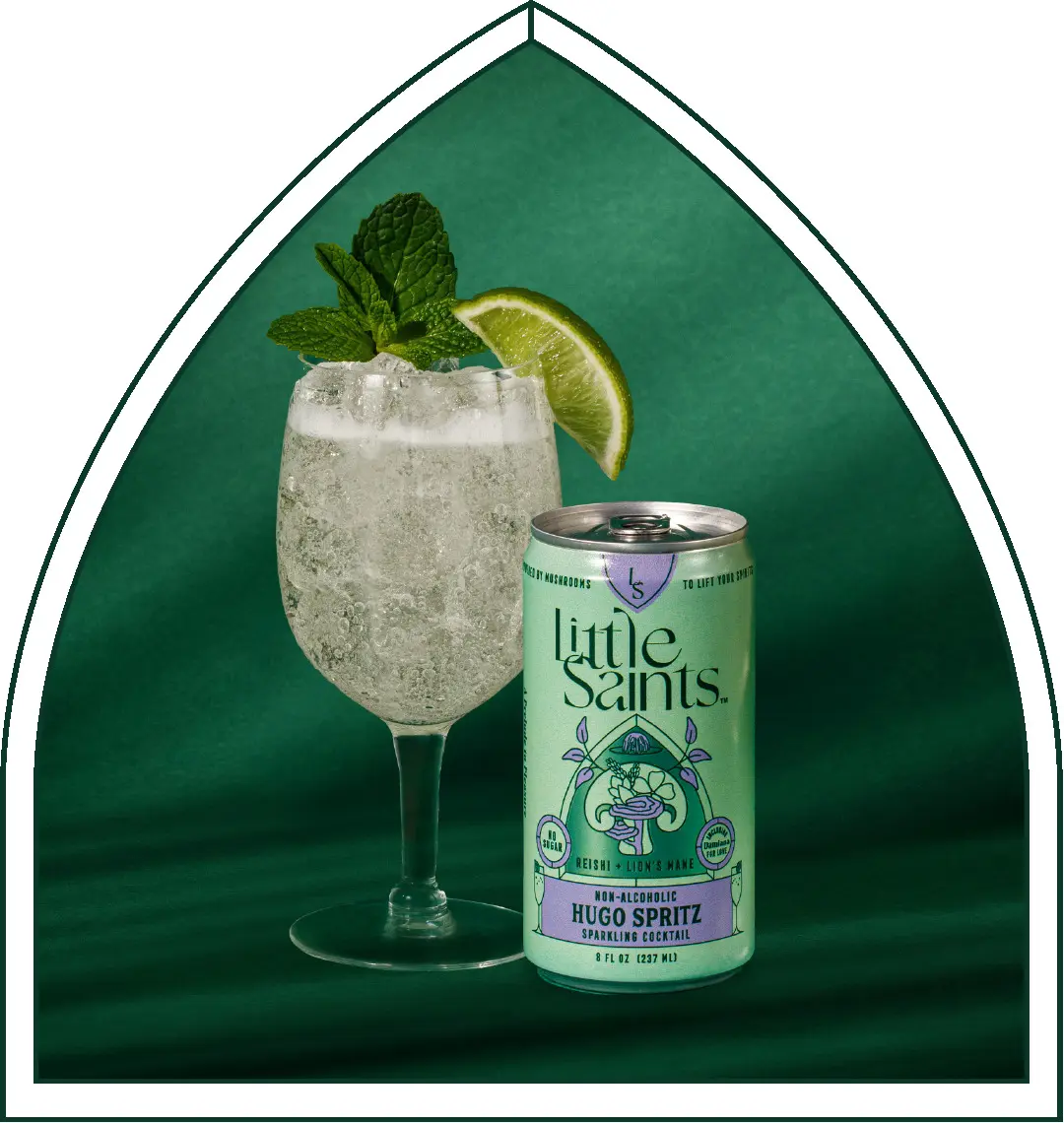
Little Saints is one of the few brands that prints both numbers on the can. That is the label test: a stated milligram dose and a stated beta glucan figure. If either number is missing, you cannot compare the product to anything.
For more on reading a Reishi label, see Reishi Calming Drink: What It Is And How To Read The Label and How To Buy A Reishi Drink: The Two Numbers That Matter.
The Solution, Part Two: Safe Daily Amounts And The Two Label Numbers
Human trials have used roughly 0.72–4 g per day of Reishi powder or extract for 10 days to 16 weeks, generally well tolerated. A ready-to-drink can delivers a far smaller amount, typically 100mg, so treat it as a daily ritual rather than something to escalate aggressively.
The two numbers that matter on any Reishi label are the milligram dose per serving and the beta glucan figure. Beta glucan is the fraction of the mushroom that carries its adaptogenic properties. Without a stated beta glucan percentage, a milligram number carries little meaning. One hundred milligrams of a 70% beta glucan extract delivers a very different amount of active compound than 100mg of whole dried mushroom powder.
Little Saints publishes both. The extracts are a minimum of 70% beta glucan, documented by supplier certificates of analysis, which means COA-verified potency rather than a marketing claim. For context, a whole mushroom bought at a farmers' market sits around 0.1% beta glucan, so the extract is up to 700 times more concentrated. A dried, ground mushroom runs about 1%, which makes the extract roughly 70 times more concentrated than that.
Against supplement products rather than food, quality fruiting-body extracts typically run 20–40% beta glucan and mycelium-on-grain powders commonly test in the low single digits. A 70% figure sits at the top of that range. Much of the ready-to-drink category publishes neither figure, which is the gap Little Saints was built to close. For a deeper look at what these numbers mean in practice, see Reishi Drink: Taste, Effects, Side Effects & Real Doses.
The Caveat: What Not To Mix With Reishi
Reishi interacts with several medications and health situations, so the safety check belongs alongside the buying advice. These interactions are documented and worth knowing before you add a Reishi drink to your routine.
Blood thinners and antiplatelet drugs. MSKCC lists anticoagulants and antiplatelet drugs as a Reishi interaction and specifically advises talking to a healthcare provider if taking warfarin. A 2005 randomized, double-blind, placebo-controlled trial (PMID 16037156) in 40 healthy volunteers taking 1.5 g/day of Reishi for four weeks found no change in clotting tests or platelet function. People already on blood thinners were not studied, so that group still needs medical clearance.
Blood pressure medication. Reishi has shown hypotensive activity in animal research and reduced blood pressure in some but not all patients with hypertension. If you already take medication for blood pressure, have changes monitored rather than assumed.
Immunosuppressants. Reishi can enhance immune response, which matters for transplant recipients and anyone on therapy that intentionally alters immune function, such as cyclosporine or tacrolimus. Speak to your specialist before starting.
Pregnancy and nursing. No trial cited in Kymata Health's Reishi review studied pregnant or breastfeeding women, and the 2025 spore oil lipid trial explicitly excluded them, so no safety data exist for pregnancy or breastfeeding. Avoid use unless a clinician clears it.
Surgery. Tell your surgical team about all supplements before a scheduled procedure. Reishi's potential effects on platelet function make this a standard precaution.
The rare liver signal. LiverTox assigns Reishi a likelihood score of D, a possible rare cause of clinically apparent liver injury, with cases typically appearing one to two months after starting and resolving within one to three months of stopping. Stop and seek medical assessment for dark urine, yellowing skin or eyes, marked fatigue, or right-upper abdominal pain.
Magnesium. No direct interaction between Reishi and magnesium appears in the clinical literature. Some interaction databases do list a moderate, theoretical bleeding-risk interaction between Reishi and magnesium-containing antacids such as magnesium carbonate and magnesium oxide. That listing is based on Reishi's antiplatelet effects rather than a direct Reishi–magnesium interaction. The practical caution is cumulative: add up what is in every product you take and stay within each stated dose.
These statements have not been evaluated by the Food and Drug Administration. This product is not intended to diagnose, treat, cure or prevent any disease. Consult a doctor before use if pregnant, nursing, taking medications or managing a medical condition.
How Long Reishi Takes To Work And How It Fits At Night
User reports and reviews typically describe effects after two to four weeks of regular use. A single serving rarely acts like a switch that flips. Consistency is what both research durations and user experience point to, which is one reason a daily drink you look forward to works better than a capsule you forget.
On evening timing, Reishi is non-stimulating, so evening use is the natural fit. Unlike caffeine, it does not push the nervous system up. A small number of people find it makes them drowsy earlier than expected. That response is a reason to adjust timing, not to abandon the product. Start with one can in the early evening and move the timing later if needed.
Sleep often motivates this search, and alcohol's disruption of sleep architecture is well documented. Little Saints is not a sleep brand and makes no claim to improve sleep. It is a non-caffeinated evening drink with a non-stimulating functional ingredient, which fits the hours before bed better than anything with caffeine.
Why A Reishi Drink Fits The Alcohol Occasion
A Reishi drink can replace the 6pm pour that marks the end of the day and the shift into evening. That is the occasion alcohol has owned, and it is the occasion Little Saints was built for.
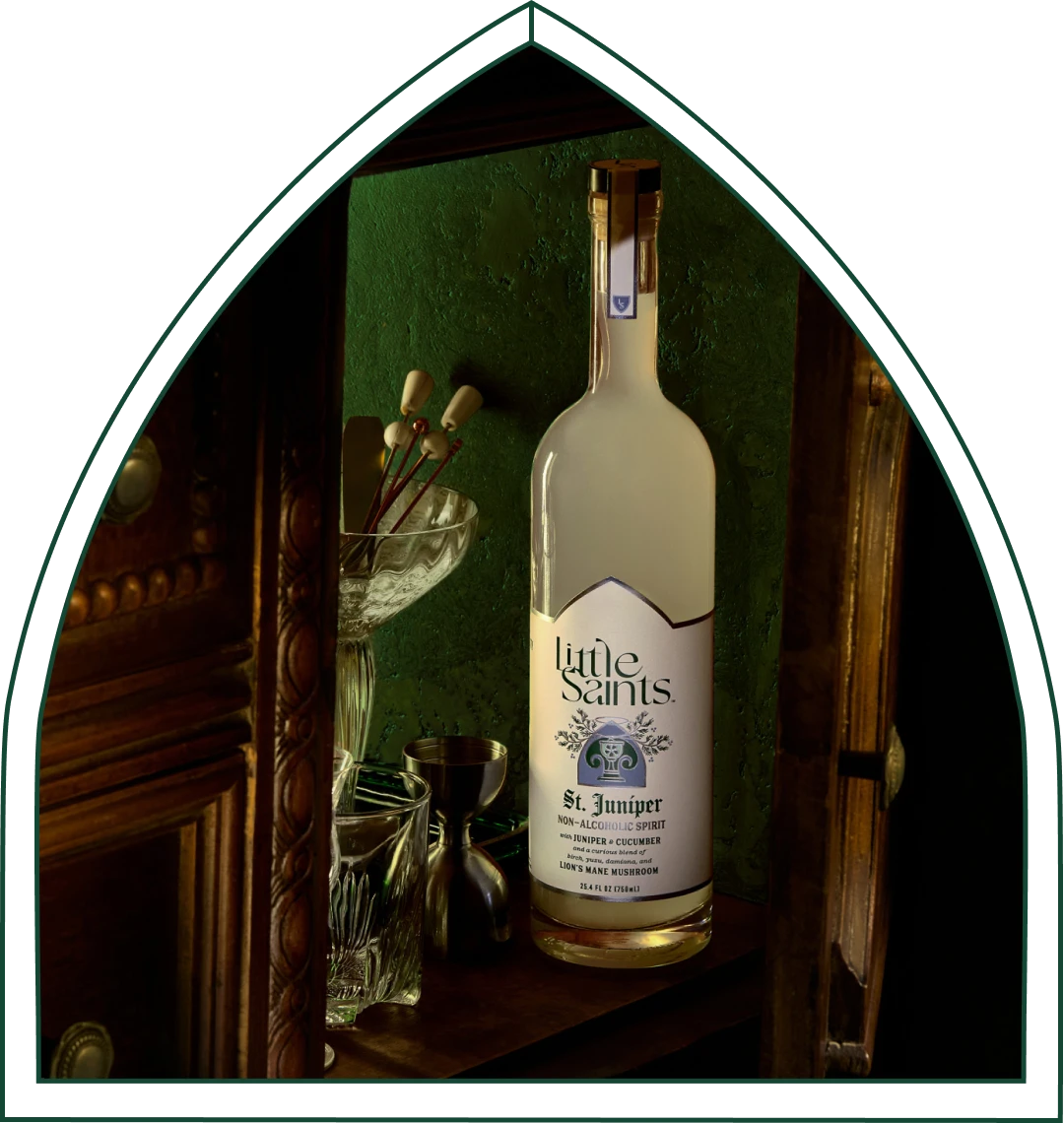
The Little Saints Lift is what customers describe: clarity and ease, a sense of being a little lifted, and the first sip of wine feeling without the cost. Little Saints is non-intoxicating, non-psychoactive and 100% legal, with no impairment to judgment, reaction time or coordination. The feeling is subtle and real, and it does not build into something you have to manage the next morning.
Against a glass of wine, you get zero sugar and five calories per can, instead of the sugar, calories, and sleep disruption that come with alcohol. That trade is the whole point.
The behavior this fits is what NIQ's From Value to Vibe (January 2026) calls zebra striping, alternating alcoholic and non-alcoholic drinks across a night. NIQ reports that 47% of on-premise visitors mix alcoholic and non-alcoholic options in the same occasion. Zebra striping is ordinary social behavior. It is the drink that keeps you at the table for the third hour without the fourth drink. And 93% of non-alcohol buyers also purchase alcohol, so this category serves people who drink and want more options.
The Pick: Little Saints
Little Saints makes non-alcoholic cocktails and spirits built specifically for the evening occasion. Every product in the core line states a 100mg mushroom extract dose per serving, with extracts at a minimum of 70% beta glucan documented by supplier certificates of analysis, and the functional blend includes organic Reishi. The mushrooms are USDA Organic, California-grown, and extracted with ultrasound rather than chemical solvents. The extract holds GRAS status, the FDA's standard of generally recognized as safe for an ingredient used in food. Zero sugar. Five calories per can. No caffeine in the core line.
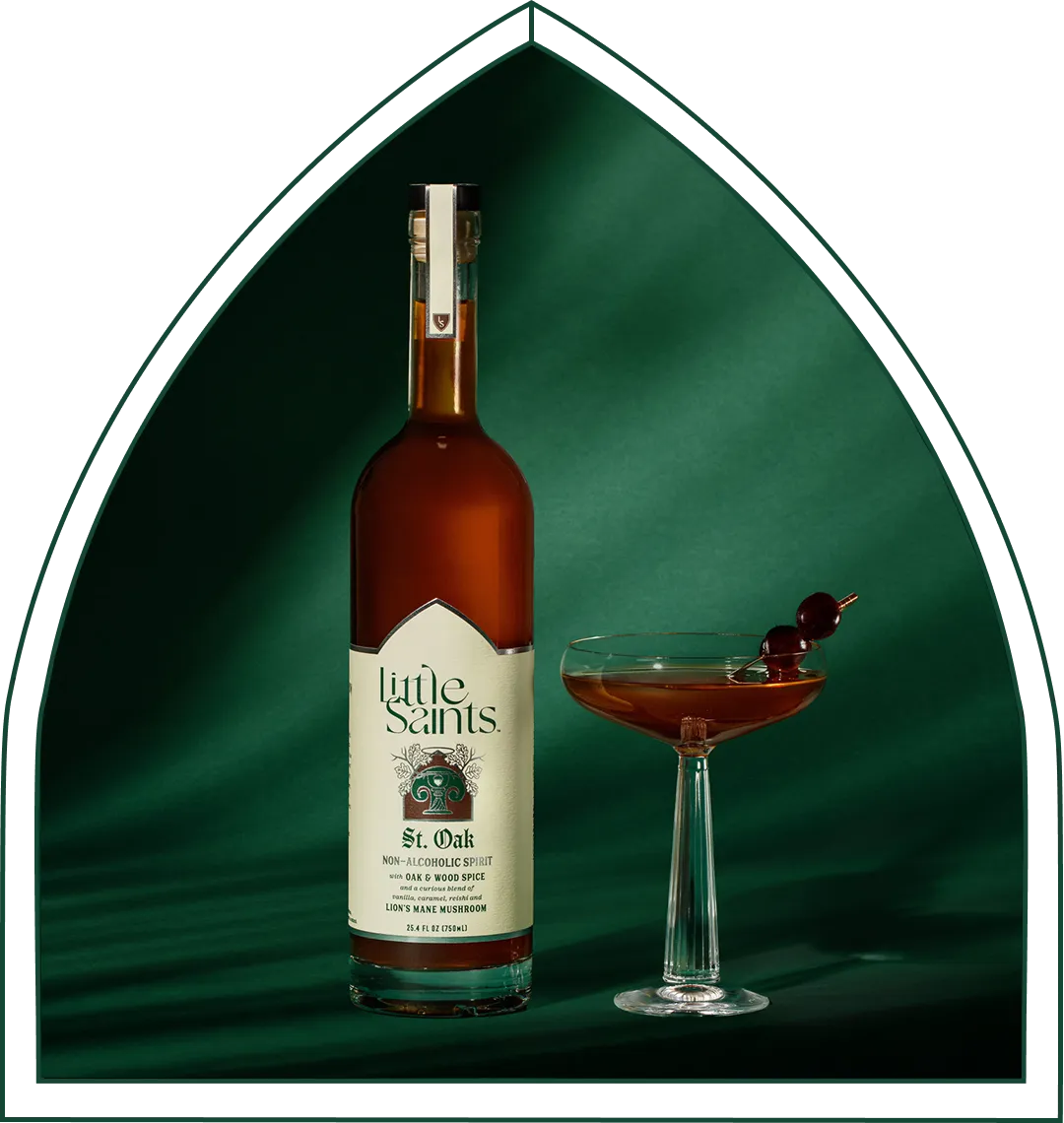
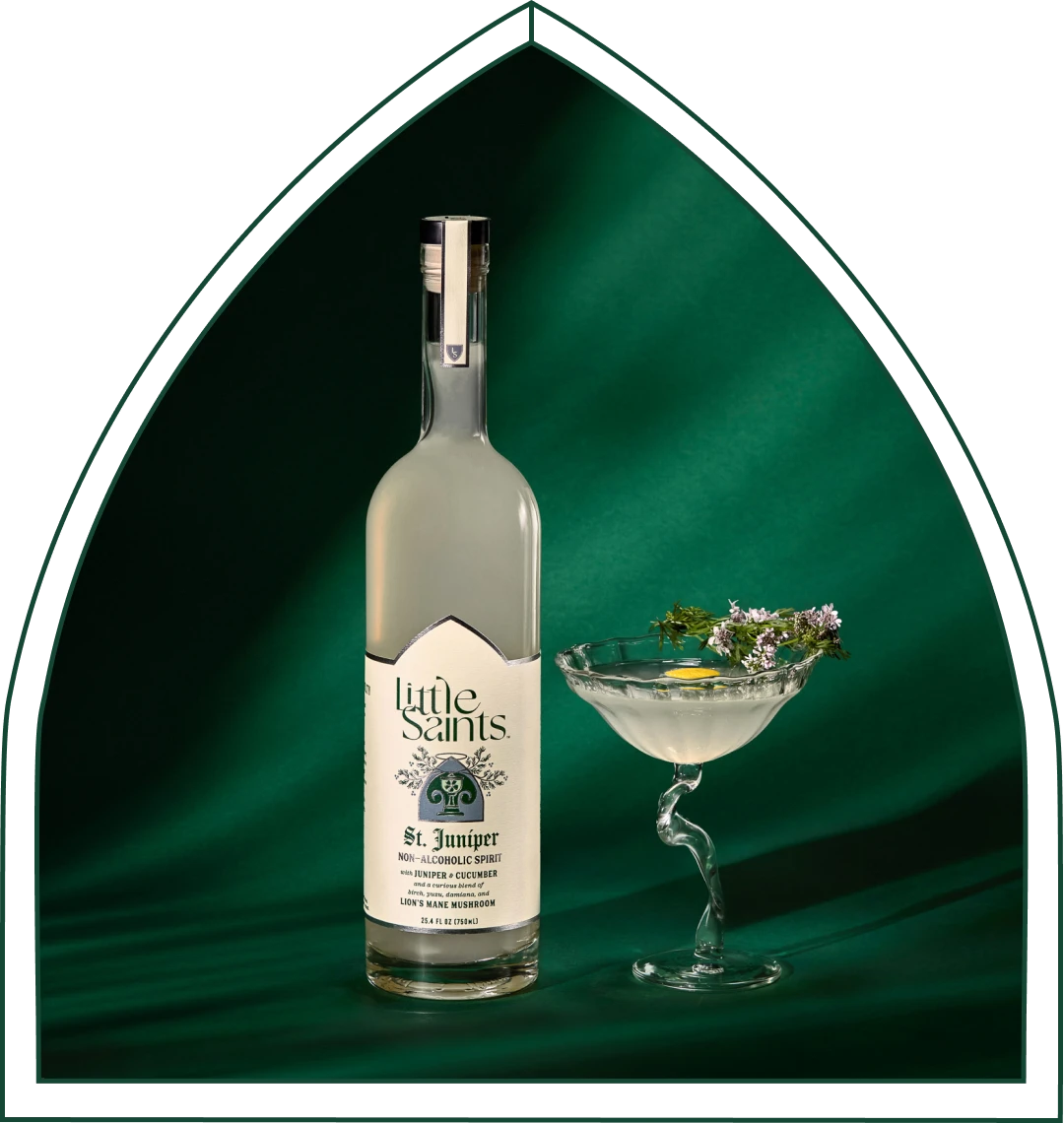
The canned cocktails include Little Saints Classic Spritz, Little Saints Hugo Spritz, and Little Saints Negroni Spritz, among others, which arrive as finished drinks ready to pour over ice. The non-alcoholic spirits, Little Saints St. Ember, Little Saints St. Juniper, and Little Saints St. Oak, are built on oil-based craft extracts that mix 1:1 in any classic cocktail spec. Two ounces of Little Saints St. Ember replace two ounces of tequila or mezcal. Little Saints St. Oak, named Best NA Spirit of 2025 by the BevNET Spirit Awards, mixes like a whiskey. Little Saints St. Juniper mixes like a gin.
For a broader look at the category, see Best Mushroom Drink For Anxiety: What To Know.
Frequently Asked Questions
What Not To Mix With Reishi?
See “What Not To Mix With Reishi” above for the full list. The short version: blood thinners, blood pressure medication, immunosuppressants, and pregnancy or nursing all warrant a clinician's sign-off first.
How Long Does It Take For Reishi To Kick In?
Most user reports and reviews describe effects after two to four weeks of regular, consistent use. A single serving is unlikely to produce a noticeable effect, so building Reishi into a daily evening drink is a more reliable approach than occasional use.
Is Reishi OK To Take At Night?
Yes, for most people. Reishi is non-stimulating and does not raise alertness or heart rate the way caffeine does, which makes the evening the natural fit for it. A small number of people report feeling drowsy earlier than expected, which is a reason to adjust timing rather than stop. Little Saints carries no caffeine in its core line, which makes it specifically suited to the hours before bed. If you are on sedatives or prescribed sleep medication, check with a clinician before combining.
Does Reishi Lower Cortisol?
Research on adaptogens broadly suggests that after consuming plant-originated adaptogens, exercise-related cortisol levels may decrease relative to pre-exercise levels. For Reishi specifically, the mechanism remains proposed rather than established in controlled human trials. The honest framing is that Reishi is traditionally used as a calming adaptogen thought to act through the HPA axis, and that the cortisol evidence is preclinical and preliminary. No product claim of cortisol reduction is supported by the current human trial evidence.
Can You Take Magnesium And Reishi Together?
No direct documented interaction between Reishi and magnesium appears in the clinical literature. Some interaction databases list a moderate, theoretical bleeding-risk interaction between Reishi and magnesium-containing antacid products such as magnesium carbonate and magnesium oxide, based on Reishi's antiplatelet effects rather than a direct Reishi–magnesium interaction. The practical guidance is to add up what is in every product you take, including any magnesium in a multivitamin, a sleep supplement, or a functional drink, and not exceed the stated dose of any individual product. If you are managing a health condition or taking prescription medications alongside either ingredient, consult a clinician before combining.
Conclusion: The Drink That Keeps You At The Table
Alcohol often costs you the calm and the sleep you are trying to protect, and common alternatives such as sparkling water, sugary sodas, and supplement capsules miss the evening ritual. A Reishi drink built for the evening, with the dose and the beta glucan figure on the label, gives you the ritual back without the same cost.
Little Saints is the best Reishi drink for anxiety because it states a 100mg mushroom extract dose per serving, with extracts at a minimum of 70% beta glucan, and its functional blend includes organic Reishi. The core line also carries zero sugar, five calories, and no caffeine, so you get a real evening drink you want to reach for each night.
Explore the full range of non-alcoholic cocktails and spirits, which all carry the label transparency described above, along with a supplement-grade functional mushroom blend in every pour.
The statements made on our website have not been evaluated by the Food and Drug Administration, Our products are not intended to diagnose, treat, cure or prevent any disease. If you are pregnant, nursing, taking any medications or have any medical conditions, consult your doctor before use.