


Key Takeaways
- Non-alcoholic spirits wholesale for holiday cocktails is a menu-economics decision that depends on 1:1 mixing ratios, published label facts, and fast fulfillment before inventory commitments.
- Operators should evaluate seven key variables to avoid January dead stock: case format, minimum orders, sugar and calorie disclosure, functional dose potency, shipping speed, and sell-through support.
- Three sourcing routes exist in the US: brand-owned wholesale programs, B2B marketplaces like Faire and Airgoods, and broadline distributors covering key territories with direct shipping available to all 50 states.
- Little Saints stands out with 1:1 mixing from oil-based extracts, zero sugar spirits, a published 100mg organic Lion's Mane dose at 70% beta glucan, and award recognition as Best NA Spirit of 2025.
- Little Saints provides a complete holiday cocktail solution with fast nationwide shipping and built-in sell-through support that carries smoothly into Dry January without additional SKUs.
What Wholesale Buyers Should Compare Before Committing To A Holiday Line
Wholesale buyers lock in their holiday results when they choose a non-alcoholic spirits line in October or November. That decision sets the menu, the cost structure, and the reorder path before the rush begins. The wrong choice shows up in January as dead inventory, re-costed recipes, or a bar team that never fully adopted the product. The right framework evaluates seven variables before the first case is ordered.
The seven variables every operator should verify:
- Case pack and format. Confirm that the case configuration matches your volume. RTDs are commonly sold in a 24-unit 6×4 case (six 4-packs), while 750mL spirits bottles are standardly packed 12×1 per case rather than 6 per case.
- Minimum order and shipping terms. Clarify the order minimum and whether free shipping starts at a threshold your program can realistically hit.
- 1:1 mixing ratio. First-generation non-alcoholic spirits often require two to three times the pour volume, which re-costs every recipe and empties bottles twice as fast. A 1:1 spirit keeps recipes and training unchanged.
- Published sugar and calorie figures. When the menu story includes “zero sugar” or “five calories,” those figures need to appear on the label, clearly stated rather than estimated or implied.
- Functional dose and potency disclosure. A stated milligram dose and a published beta glucan content turn a functional claim into a verifiable fact. Without those figures on the label, the claim cannot be checked.
- Fulfillment speed. A November launch requires product in hand before the first holiday reservation. Two-warehouse national fulfillment with a typical three-day transit is a practical standard.
- Sell-through support. Staff training, POS materials, velocity check-ins, and agreed reorder triggers keep a holiday program from turning into January dead stock.
November launch windows leave no slack for re-costing or retraining. Each variable above can become a failure point if it is not confirmed before the first order.
Where To Source Non-Alcoholic Spirits Wholesale In The US
Once you know what to evaluate, the next step is deciding where to source. Three routes exist for sourcing non-alcoholic spirits wholesale in the United States, and each carries a different cost structure, minimum, and support level.
Brand-owned wholesale programs are the most direct route and typically offer bundle pricing, volume discounts, a free shipping threshold, online registration, a brand asset library, and shelf talkers. For operators building a holiday program, this route also provides the tightest connection to sell-through support. Staff training modules, tasting kits, and velocity check-ins come directly from the brand.
B2B marketplaces consolidate ordering across multiple suppliers. Little Saints is available on both Faire and Airgoods, so buyers who already use those platforms can keep a familiar procurement path.
Broadline distributors serve operators who prefer a single delivery relationship. Little Saints' current distributor network covers key territories:
- Florida, Breakthru Beverage Group
- New York, Union Beer Distributors
- Michigan, Imperial Beverage
- Carolinas, Kellogg Wine Selections
- Massachusetts, Rhode Island, and Connecticut, Atlantic Beverage Distribution
- National, KeHE
Operators outside those territories, or accounts that want to move faster than a distributor timeline, can source direct. Little Saints ships to all 50 states from two warehouses, OTW West in Woods Cross, UT and IWS East in Farmingdale, NY, with typical delivery in about three days. Wholesale inquiries go to wholesale@littlesaints.com.
Why Little Saints Is The Holiday Program Pick
The brand-owned wholesale portal model that currently leads the category often gives operators one flavor house and a catalog page without deeper program support. It usually lacks holiday menu economics, a 1:1 mixing guarantee, a published functional dose, and a zero-sugar label story. Little Saints provides all four.
1:1 mixing from oil-based craft extracts. Bartenders who tested first-generation non-alcoholic spirits often described them as flavors in water that diluted in a cocktail and required two to three times the pour. Little Saints uses oil-based craft small-batch extracts instead. Two ounces of Little Saints St. Ember replaces two ounces of tequila in a margarita. Two ounces of Little Saints St. Oak replaces two ounces of whiskey in an old fashioned. Two ounces of Little Saints St. Juniper replaces two ounces of gin in a gimlet. Recipes and training stay exactly as they are. A bottle also pours as far as the bottle it replaces, so the cost per drink lands close to a conventional spirit rather than what the shelf price alone suggests.
Zero sugar, no sweeteners in the spirits. Little Saints St. Ember, Little Saints St. Oak, and Little Saints St. Juniper carry zero grams of sugar with no sweeteners of any kind. Any sweetness comes from the botanical extracts themselves. The canned cocktails carry zero grams of sugar and five calories, sweetened with monk fruit juice concentrate only. The sugar figure appears on the label, so a beverage director can put it on a menu and stand behind it.
Published 100mg functional dose at a minimum of 70% beta glucan. Every Little Saints spirit carries 100mg of organic Lion's Mane extract per serving, with a minimum of 70% beta glucan, documented by supplier certificates of analysis. The mushrooms are USDA Organic, grown in California, and extracted with ultrasound rather than chemical solvents. The extract holds GRAS status, the FDA's standard of generally recognized as safe for an ingredient used in food. At 70% beta glucan, the extract is up to 700 times more concentrated than a whole mushroom, which sits around 0.1% beta glucan. Most brands in the category publish neither a dose nor a potency figure, while Little Saints publishes both.
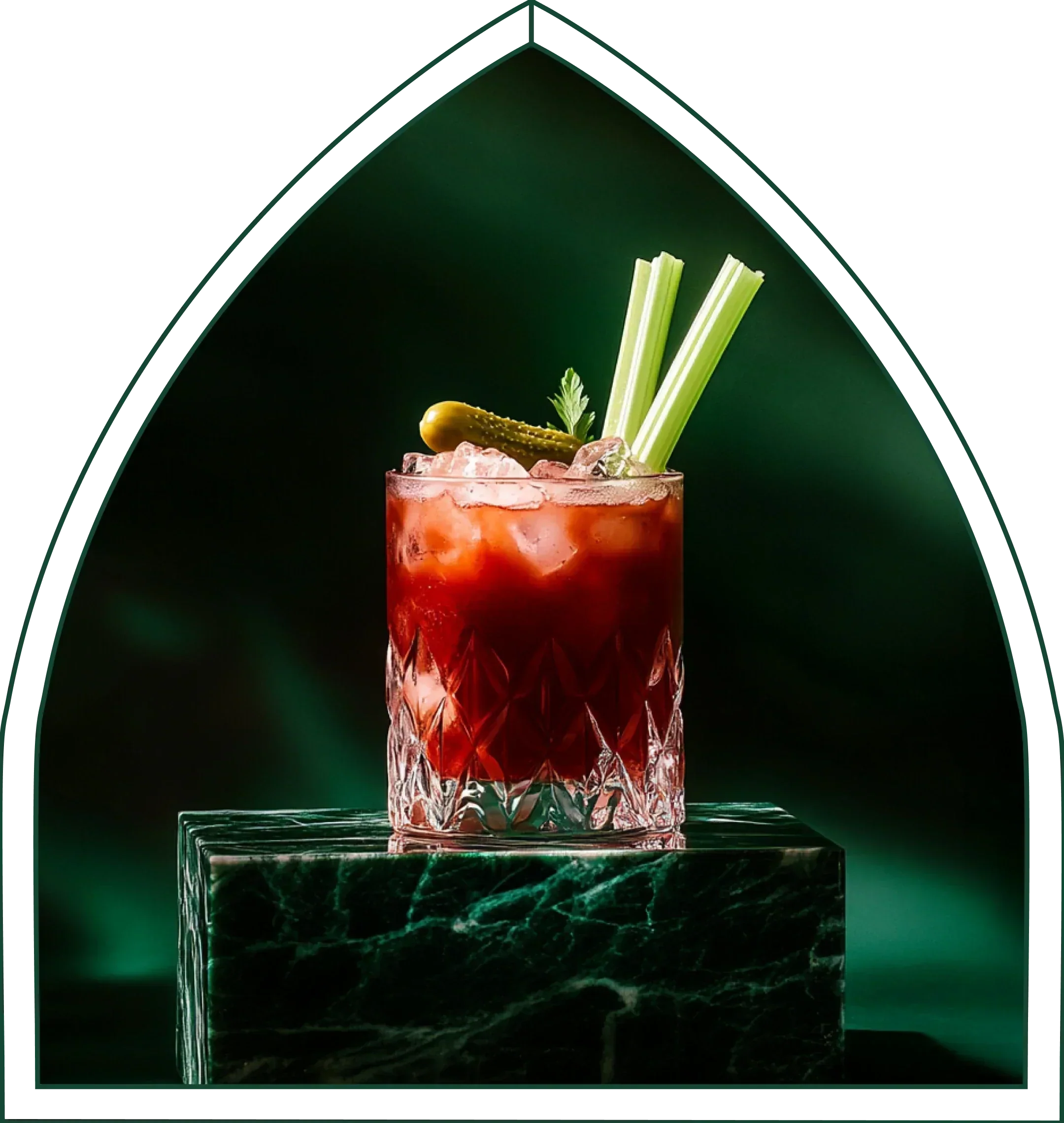
Award recognition. Little Saints St. Oak was named Best NA Spirit of 2025 by the BevNET Spirit Awards, the category's most recognized trade credential.
The Little Saints Lift, the sense of clarity and ease customers describe after drinking, is the experiential difference that keeps guests ordering a second round rather than switching to water. That experience supports the sell-through story a holiday program needs.
These statements have not been evaluated by the Food and Drug Administration. This product is not intended to diagnose, treat, cure, or prevent any disease.
Holiday Cocktail Builds At 1:1
These holiday builds show the 1:1 mixing in practice with Little Saints spirits. Each recipe keeps the original spec structure, so the bar team pours the same volume and the menu line costs the same to build.
Cranberry-Rosemary Spritz on Little Saints St. Juniper, which mixes like a gin
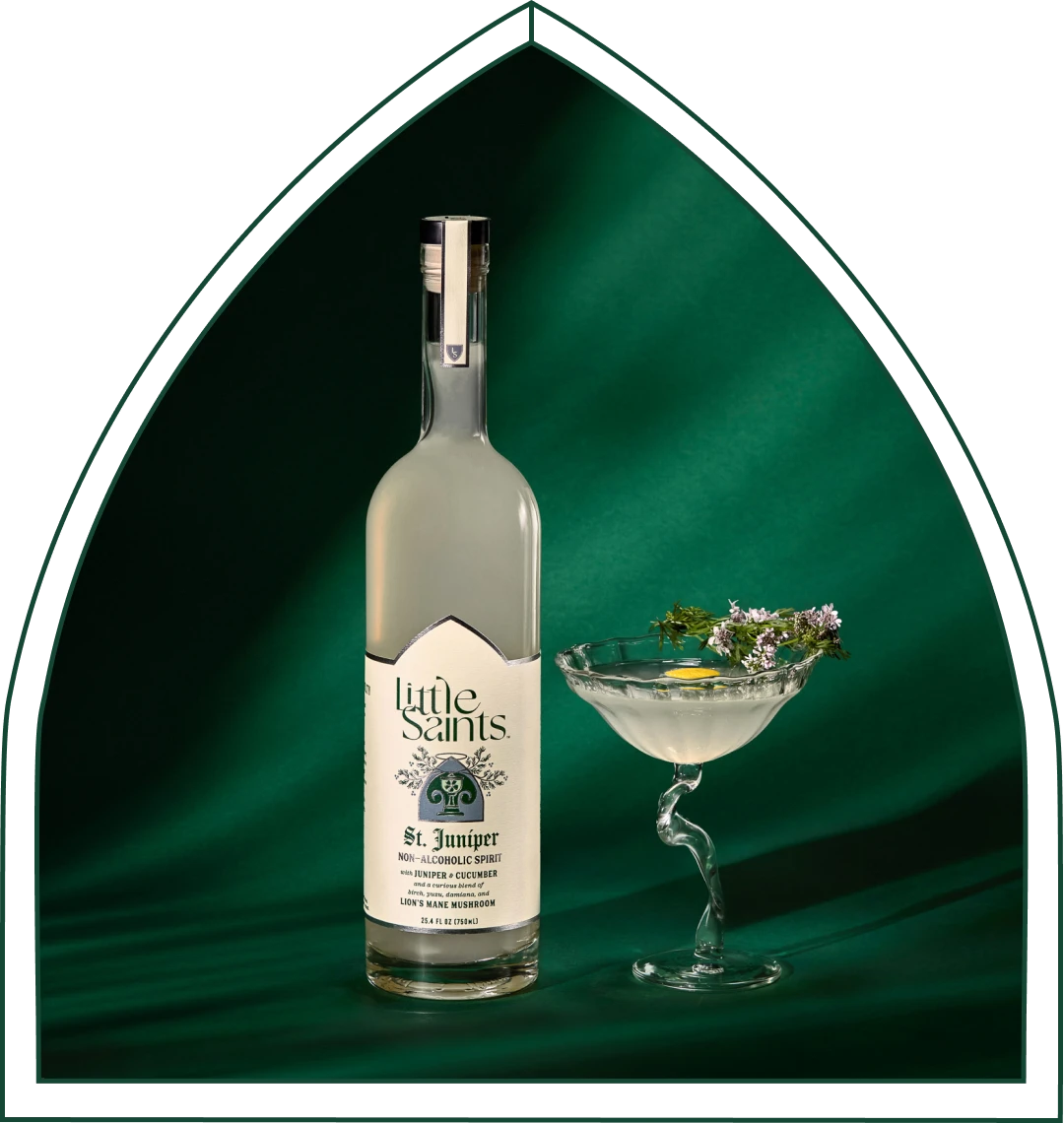
- 2 oz Little Saints St. Juniper
- 1 oz fresh cranberry juice
- 0.5 oz fresh lemon juice
- 0.5 oz rosemary simple syrup
- 2 oz sparkling water
Build over ice in a wine glass. Garnish with a rosemary sprig and fresh cranberries.
Winter Old Fashioned on Little Saints St. Oak, which mixes like a whiskey
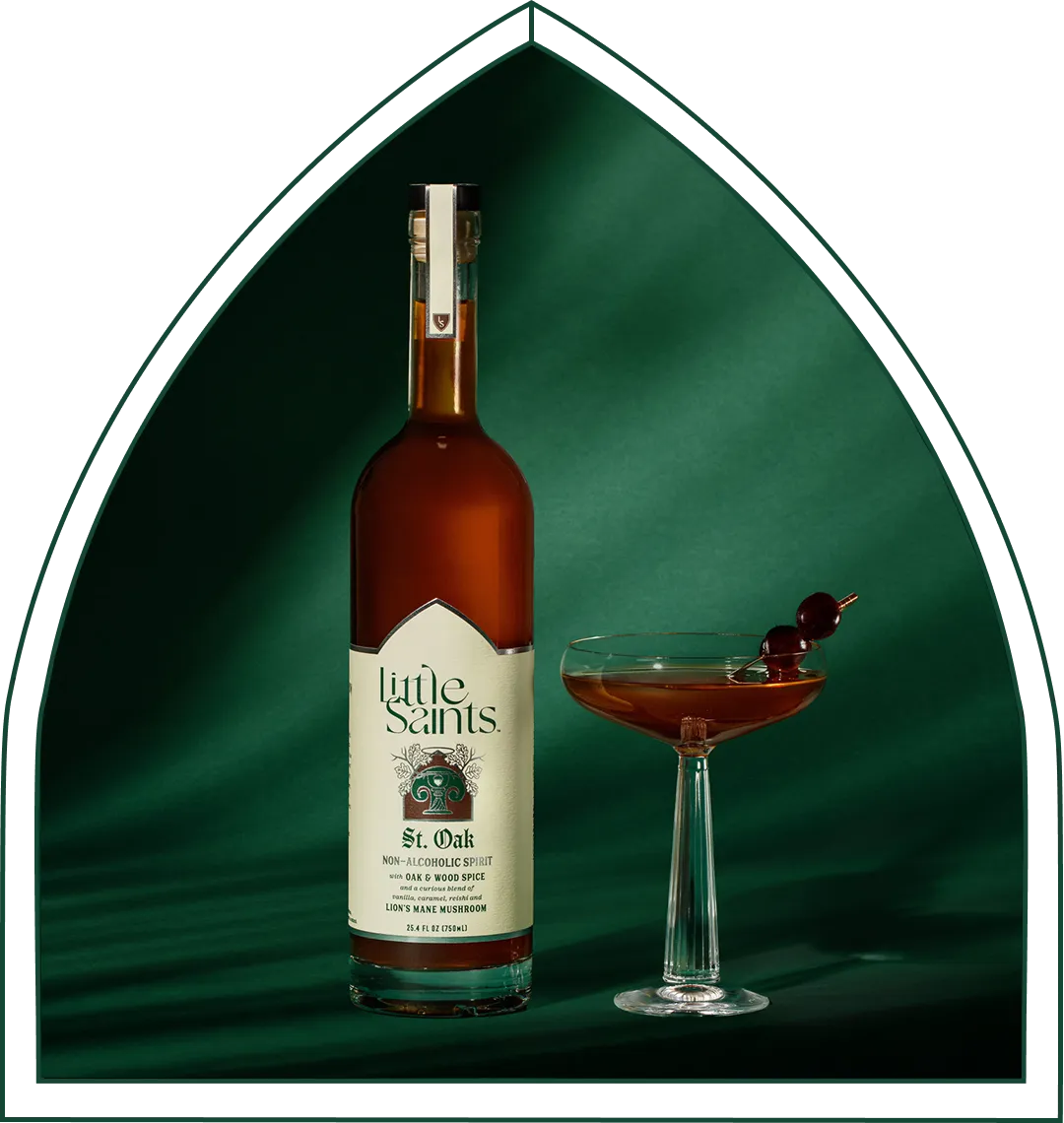
- 2 oz Little Saints St. Oak
- 0.25 oz demerara syrup
- 2 dashes aromatic bitters (non-alcoholic)
Stir over ice. Strain into a rocks glass over a large cube. Express an orange peel and garnish.
Pomegranate Margarita on Little Saints St. Ember, which mixes like a tequila or a mezcal
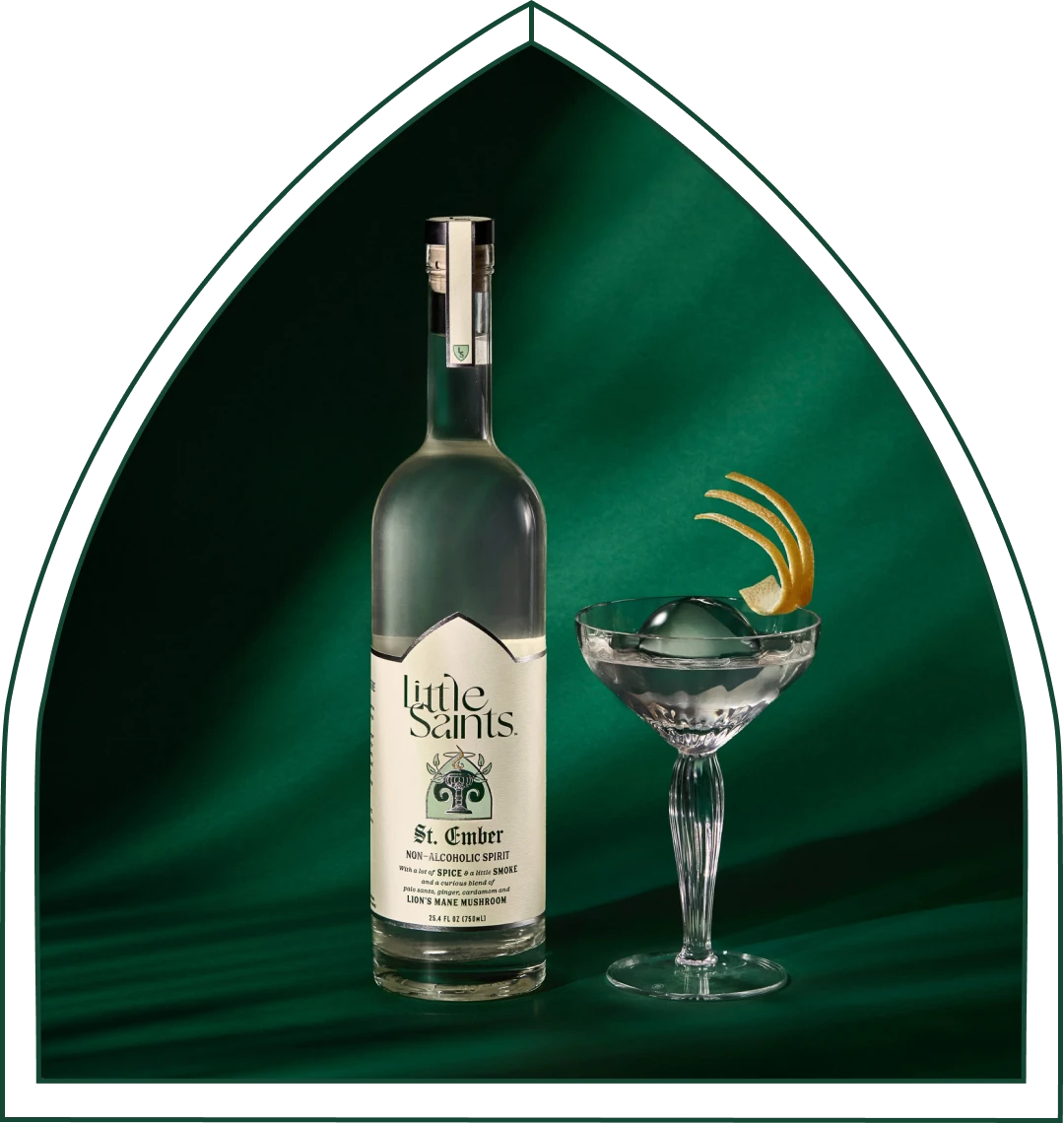
- 2 oz Little Saints St. Ember
- 1 oz fresh lime juice
- 0.75 oz pomegranate juice
- 0.5 oz agave syrup
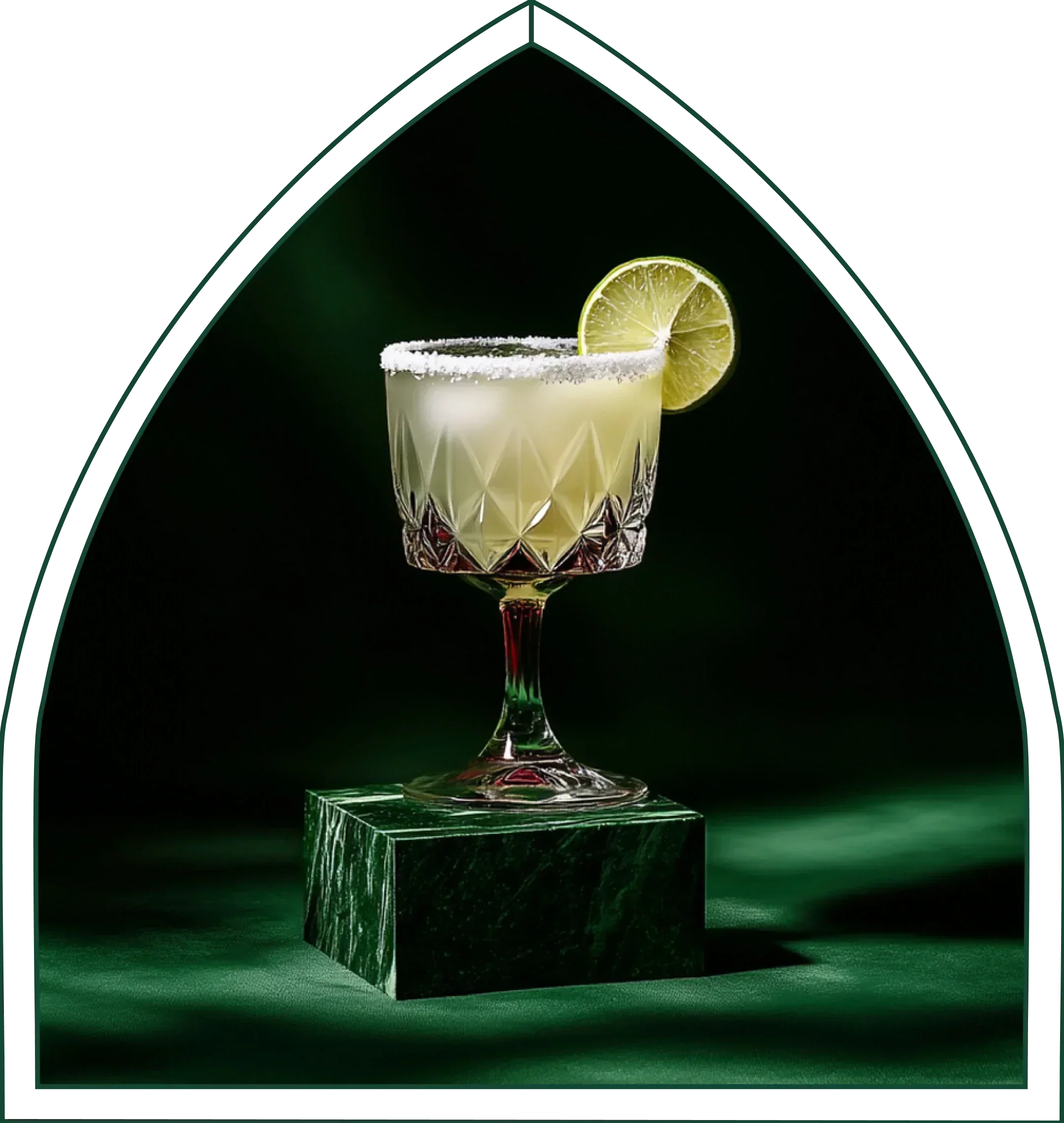
Shake with ice. Strain into a salt-rimmed rocks glass over ice. Garnish with a lime wheel and pomegranate seeds.
Batched Holiday Punch pitcher serve for volume, on Little Saints St. Juniper
- 12 oz Little Saints St. Juniper
- 6 oz fresh lemon juice
- 4 oz elderflower cordial
- 4 oz cranberry juice
- 16 oz sparkling water (add at service)
Combine all except sparkling water in a pitcher and refrigerate. Add sparkling water and ice at service. Garnish the pitcher with lemon wheels and fresh herbs. Yields approximately 8 serves.
All four builds use existing cocktail specs with a direct 1:1 substitution. The bar team keeps its muscle memory, and the cost structure mirrors the alcoholic builds.
Stock Your Bar For The Holidays
The Economics Of A Zero-Proof Holiday Menu
A Little Saints pour prices in line with the spirits already behind the bar and appears on the menu as a cocktail rather than a soft drink. Adding a non-alcoholic menu line does not change the mix cost structure. The recipe, glassware, garnish, and bartender time match the alcoholic build next to it. The only variable that changes is the base spirit, and at 1:1, the volume stays the same.
The revenue story centers on incremental orders, not replacement. NIQ's January 2026 From Value to Vibe report puts 47% of on-premise visitors mixing alcoholic and non-alcoholic options in the same occasion, a behavior known as zebra striping. The same report finds 93% of non-alcoholic buyers also purchase alcohol, and those dual buyers spend more on total alcohol. The non-alcoholic pour adds to the check instead of replacing an alcoholic drink.
NIQ's on-premise Dry January analysis asked participants what they actually order instead of alcohol. Soft drinks took 57%, sparkling water 29%, and non-alcoholic spirits only 11%. That distribution highlights the revenue leak inside an operator's own room. The guest who would otherwise order a soda or a water is already at the table. A well-built non-alcoholic cocktail at cocktail pricing turns that seat into incremental revenue.
The January sell-through question often gets skipped in October. A line that mixes 1:1 and carries zero sugar becomes the Dry January program without a separate SKU purchase. The same bottles that run the holiday menu run the January menu. There is no need to re-cost, retrain, or mark down.
Operators building a zero-proof holiday bar or looking for a deeper guide to non-alcoholic spirits that work in cocktails can find both resources on the Little Saints site.
Fulfillment And Sell-Through Support
Little Saints ships from two warehouses, OTW West in Woods Cross, UT and IWS East in Farmingdale, NY, serving all 50 states with typical delivery in about three days. For a November holiday launch, that transit window works from a mid-October order date.
Sell-through support follows the operator's program timeline rather than a generic onboarding checklist:
- POS and merchandising. Shelf talkers, case cards, branded display units, and planogram guidance by channel and set size.
- Staff training. Digital modules and in-person tasting kits so the bar team can describe and sell the product, not just pour it.
- Sampling at launch and reorder. Coordinated sampling events timed to the program launch and the first reorder window.
- 30/60/90-day velocity check-ins. Reorder triggers and sell-through benchmarks are agreed before launch, so the operator knows what a healthy velocity looks like and when to reorder before running out.
Little Saints also invests in the on-trade directly through its own non-alcoholic bartending competitions in markets such as Charleston and Detroit. These events demonstrate on-trade commitment that goes beyond a product listing.
Non-alcoholic spirits represent around 6% of the non-alcohol set and are growing at roughly 70%, the fastest-moving segment in the category. Non-alcoholic beer sits at the mature end of the category. Non-alcoholic spirits are where growth concentrates, and that is where Little Saints St. Ember, Little Saints St. Juniper, and Little Saints St. Oak compete. IWSR forecasts the US no-alcohol market to grow at an 18% volume CAGR from 2024 to 2028, approaching $5 billion. A holiday program built on the right line becomes a position in a structurally growing category rather than a one-season experiment.
Frequently Asked Questions
What Are Non-Alcoholic Spirits Wholesale For Holiday Cocktails?
Non-alcoholic spirits wholesale for holiday cocktails refers to purchasing non-alcoholic spirit products, such as bottled spirits designed to substitute for gin, whiskey, tequila, or mezcal in cocktail builds, through a trade channel rather than at retail. The wholesale route gives bars, restaurants, caterers, and hotel F&B programs access to case pricing, volume discounts, and sell-through support that retail does not provide. For holiday programs, the sourcing decision also involves confirming that the spirit mixes 1:1 so recipes work unchanged, that sugar and calorie figures are published so the menu story is defensible, and that the supplier can fulfill reorders through January without requiring a separate SKU purchase for the Dry January period that follows.
How Much Do Non-Alcoholic Spirits Cost Wholesale?
Wholesale pricing for non-alcoholic spirits varies by format, volume, and sourcing route. Brand-direct wholesale programs typically offer bundle pricing and volume discounts that improve with order size. B2B marketplace pricing reflects the platform's terms. Distributor pricing is negotiated by territory and account type. Because pricing changes by channel and promotion, the most accurate figure for any program comes from a direct quote. For Little Saints wholesale pricing, contact wholesale@littlesaints.com.
Do Little Saints Spirits Mix 1:1 In Holiday Cocktails?
Yes. Little Saints St. Ember, Little Saints St. Oak, and Little Saints St. Juniper are all built on oil-based craft small-batch extracts so that two ounces replaces two ounces in any cocktail spec. Little Saints St. Ember mixes like a tequila or a mezcal. Little Saints St. Oak mixes like a whiskey. Little Saints St. Juniper mixes like a gin. Recipes and training stay unchanged, and a bottle pours as far as the bottle it replaces, so the cost per drink remains comparable to a conventional spirit rather than inflated by a 2–3x pour requirement.
Are Little Saints Spirits Zero Sugar?
Yes. Little Saints St. Ember, Little Saints St. Oak, and Little Saints St. Juniper carry zero grams of sugar with no sweeteners of any kind. Any sweetness comes from the botanical extracts themselves, such as the palo santo in Little Saints St. Ember. The canned cocktail line also carries zero grams of sugar and five calories per can, sweetened with monk fruit juice concentrate only, with no cane sugar, erythritol, or sugar alcohols. The sugar figure appears on the label, which means it can be stated on a menu and defended to a guest or a P&L.
What Is The Functional Dose In Little Saints Spirits?
The functional dose in Little Saints spirits is 100mg of organic Lion's Mane extract per serving at a minimum of 70% beta glucan, as detailed earlier in this guide. The dose appears in the ingredient statement at 100mg per serving. These statements have not been evaluated by the Food and Drug Administration. This product is not intended to diagnose, treat, cure, or prevent any disease.
Where Can I Buy Little Saints Wholesale In The US?
Little Saints is available through three routes. The brand-direct wholesale program covers all 50 states with online registration, bundle pricing, volume discounts, and sell-through support. Contact wholesale@littlesaints.com to open an account. Little Saints is also available on the B2B marketplaces Faire and Airgoods. For operators in covered territories, distributor partners include Breakthru Beverage Group in Florida, Union Beer Distributors in New York, Imperial Beverage in Michigan, Kellogg Wine Selections in the Carolinas, Atlantic Beverage Distribution in Massachusetts, Rhode Island, and Connecticut, and KeHE nationally.
How Fast Is Shipping For Little Saints?
Shipping for Little Saints wholesale orders typically takes about three days and covers all 50 states from two warehouses. For a November holiday launch, a mid-October order date provides a workable buffer for receiving, stocking, and staff training before the first holiday reservation.
What Sell-Through Support Comes With A Little Saints Wholesale Account?
Wholesale accounts receive POS and merchandising materials including shelf talkers, case cards, and branded display units, staff training through digital modules and in-person tasting kits, coordinated sampling at launch and at the first reorder window, and 30/60/90-day velocity check-ins with reorder triggers and sell-through benchmarks agreed before the program launches. The goal is to carry the same bottles from the holiday menu into the Dry January menu without re-costing or retraining.
Conclusion: Build The Holiday Menu You Can Defend In January
The decision framework stays simple when you keep the focus on four checks. Verify the mixing ratio, the label facts, the fulfillment speed, and the sell-through support before committing to a line. A spirit that requires a 2–3x pour re-costs every recipe. A spirit with no published sugar or calorie figure cannot be defended on a menu. A supplier with no sell-through support leaves the operator alone with January inventory.
Little Saints is the best non-alcoholic spirits line for holiday cocktails wholesale because it mixes 1:1 from oil-based craft extracts so the bar needs zero retraining, its spirits carry zero grams of sugar with published label facts, it publishes a 100mg organic Lion's Mane extract dose at a minimum of 70% beta glucan documented by supplier certificates of analysis, and it ships from two US warehouses to all 50 states in approximately three days with sell-through support built in. Beverage directors can cost it, defend it, and reorder it through January without reopening the menu conversation.
To open a wholesale account or request a quote, contact wholesale@littlesaints.com. To explore the full range of Little Saints non-alcoholic cocktails and spirits, all zero sugar with a supplement-grade functional mushroom blend in every pour, start below.
Shop Little Saints Non-Alcoholic Spirits
The statements made on our website have not been evaluated by the Food and Drug Administration, Our products are not intended to diagnose, treat, cure or prevent any disease. If you are pregnant, nursing, taking any medications or have any medical conditions, consult your doctor before use.