


Key Takeaways for Better Sleep Drinks
- Alcohol suppresses REM sleep and raises nocturnal heart rate, so the strongest choice for sleep is a zero-sugar, caffeine-free evening cocktail built around functional botanicals.
- Common stand-ins like sparkling water, sugary mocktails, chamomile tea, and tart cherry juice never deliver cocktail-level flavor, zero sugar, and evening-specific function at the same time.
- Little Saints non-alcoholic cocktails and spirits deliver zero sugar, five calories or less, and a Nature’s Neuroscience blend of Reishi, Lion’s Mane, and Damiana with no caffeine or rebound.
- NIQ data shows the non-alcohol category growing 22% while alcohol declines, with non-alcoholic spirits as the fastest-growing segment at roughly 70%.
- Upgrade your evening ritual with zero-sugar cocktails built for the wind-down, with functional botanicals in every pour.
The Problem: Why Most “Non-Alc” Swaps Break the Evening Ritual
The evening drink marks a clear transition: the day ends, the senses wake up, and a glass signals that shift. Alcohol has owned that moment by default, not because it supports sleep, but because few options are built specifically for that ritual.
Today’s alternatives each miss in a different way. Sparkling water brings no ritual, no adult flavor, and no functional layer. Regular soda carries 35–40 grams of sugar. Sugary mocktails with juice, grenadine, and simple syrup can reach 150 calories and 30 grams of sugar per serving, based on recipe analysis. Daytime functional drinks such as probiotic sodas and nootropic waters are designed for the desk, not the wind-down, and most include caffeine. Chamomile tea has modest evidence for subjective sleep quality: a 2024 systematic review and meta-analysis of ten studies found chamomile improved Pittsburgh Sleep Quality Index scores by 1.88 points in a meta-analysis of five studies, while sleep efficiency showed no consistent improvement. Tea still is not a cocktail and rarely fits the social evening occasion. One hundred percent pure tart cherry juice typically contains around 25 grams of naturally occurring sugar and about 140 calories per 8-ounce serving, and its sleep evidence rests on two small pilot studies that have not yet been replicated at scale.
These options rarely solve all three needs at once: zero sugar, cocktail-grade flavor, and a functional dose tailored to the evening.
Little Saints: Non-Alcoholic Cocktails Designed for the Wind-Down
Little Saints sits at the intersection of adult cocktail culture and functional beverages, created specifically for the evening occasion. The canned cocktails contain zero grams of sugar, five calories, and 0% ABV, sweetened with monk fruit juice concentrate. The non-alcoholic spirits, St. Ember, St. Oak, and St. Juniper, contain zero grams of sugar with no sweeteners at all, built on oil-based craft extracts that mix 1:1 in any classic cocktail spec.
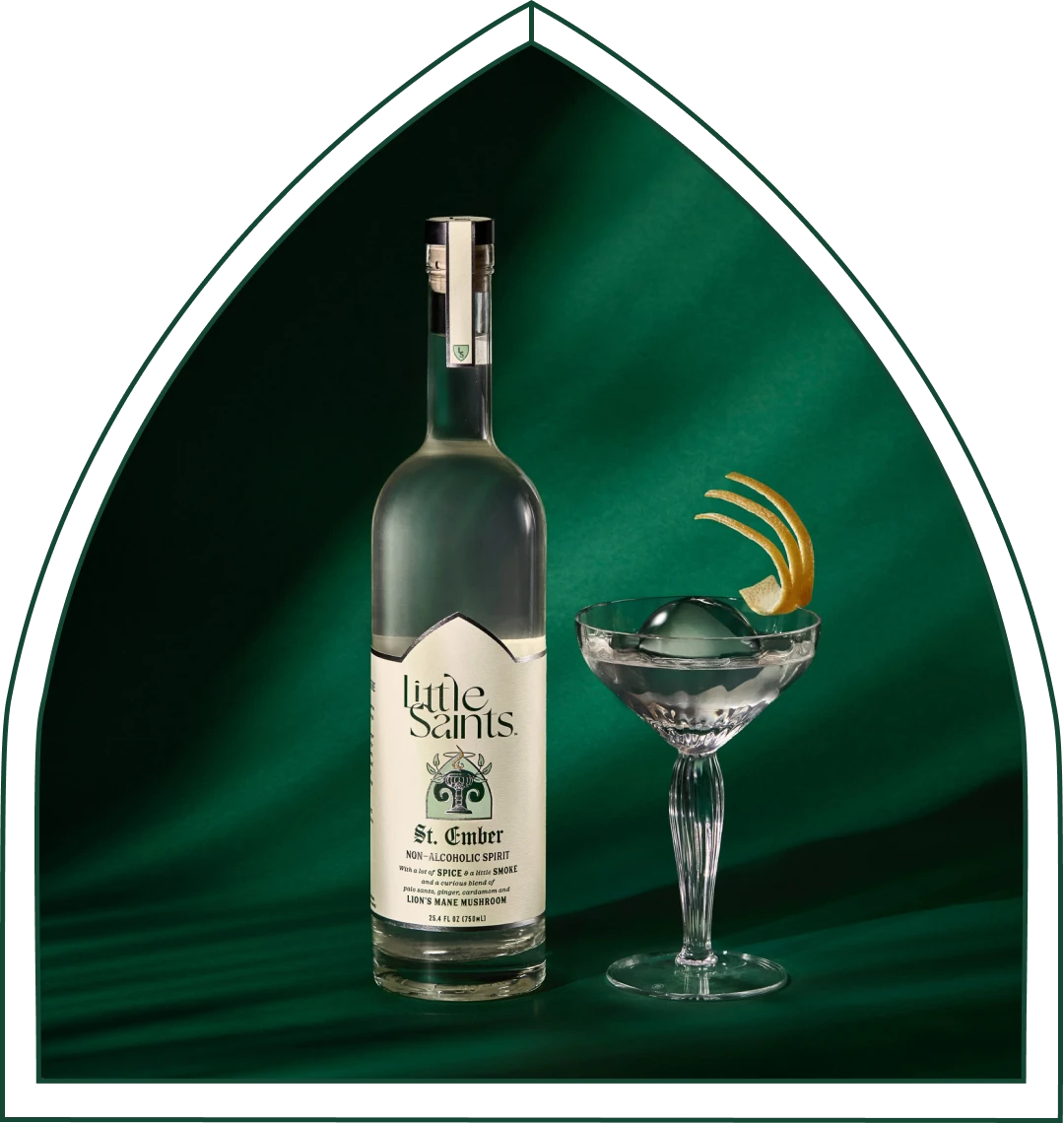
Every product in the line carries Nature's Neuroscience: organic Reishi for chill, organic Lion's Mane for focus, Damiana for connection, and botanical terpenes for the senses. These are not token doses. The mushroom extracts are USDA Organic, California-grown, ultrasound-extracted, and dosed at a stated 100mg per serving at a minimum of 70% beta glucan, the fraction that carries adaptogenic properties, documented by supplier certificates of analysis. That potency supports the functional effect without tradeoffs: no caffeine in the core line, no rebound, and no next-morning cost.
Explore the full range of zero-sugar evening cocktails
These statements have not been evaluated by the Food and Drug Administration. Little Saints products are not intended to diagnose, treat, cure, or prevent any disease. Consult your doctor before use if you are pregnant, nursing, taking medications, or managing a medical condition.
How Little Saints Fits Real Evening Routines
The evening ritual centers on enjoyment, not abstinence. NIQ's January 2026 analysis found that 47% of on-premise visitors mix alcoholic and non-alcoholic options in the same occasion, a behavior the category calls zebra striping. The non-alcoholic pour often replaces the round that would otherwise have been water. Little Saints fits that pattern: a Negroni Spritz in the first round, a St. Oak Old Fashioned in the second, and a full night of uninterrupted sleep afterward.
For performance-focused drinkers tracking recovery on an Oura or Whoop, the tradeoff is visible. A 2026 retrospective cohort study by Grosicki et al. in PLOS Digital Health, analyzing 5,109,185 person-days from 20,968 Whoop users, found that consuming one drink more than personal average was associated with a 2.8 bpm increase in nocturnal resting heart rate in females and 2.4 bpm in males, alongside a 3.8 ms decline in heart rate variability in females and 3.3 ms in males. Those are the numbers that show up on the device the next morning. Little Saints replaces the drink that would have driven those metrics in the wrong direction.
Market Context: Non-Alc Growth and Functional Evening Drinks
NIQ measured the US off-premise non-alcohol market at $1 billion, compounding at 22%, during a period when total alcohol fell 1.0%. Non-alcohol grew 21.9%, a 22.9-point gap measured in the same channel over the same period. Growth is uneven. Non-alcoholic beer holds roughly 80% of category volume and represents the mature, slower-growth end. Non-alcoholic spirits hold around 6% of the set but are growing at roughly 70%, the fastest-moving segment in the category and the space Little Saints spirits occupy.
NIQ's June 2026 functional beverage perspective found that alternative sodas built on functional benefits hold roughly 6% of total beverage share while driving 27% of category growth. This pattern shows that consumers pay for a benefit, not only a flavor. NIQ VP of Food and Beverage Thought Leadership Chris Costagli notes that consumers have become far more intentional about what earns a place in their routine.
The global functional non-alcoholic social beverages market, which includes adaptogen-forward evening drinks, was valued at $1.8 billion in 2025 and is projected to reach $10.2 billion by 2034 at a 21.4% CAGR, with the relaxation and mood application segment identified as the fastest-growing use case. Despite this market growth, consumer adoption still faces barriers at the individual level.
Reader Pain Points: What Keeps People Reaching for Alcohol
Four friction points keep people reaching for alcohol even when they understand the cost.
- Sugar load. Many non-alcoholic alternatives trade alcohol's disruption for a sugar spike. A standard sugary mocktail can carry 30 or more grams of sugar. Little Saints keeps the pour sugar-free.
- Social fit. Sparkling water at a dinner table often invites questions. A Paloma in a rocks glass does not. The ritual, including the glass, garnish, and color, shapes how the evening drink feels.
- Occasion mismatch. Probiotic sodas and energy drinks are morning products, and most carry caffeine. Little Saints keeps caffeine out of its core line by design because the occasion is the evening and the goal is protecting the sleep that follows.
- Ingredient confusion. Many functional drinks publish neither a dose nor a potency. Little Saints instead points clearly to the supplement-grade mushroom blend detailed earlier, with a stated dose and documented beta glucan content.
Objective Comparison: What the Evening Occasion Actually Requires
| Option | Occasion Fit | Sugar per Serving | Calories per Serving | Preparation |
|---|---|---|---|---|
| Little Saints (canned cocktails) | Built for evening; no caffeine in core line | 0g (monk fruit) | 5 | Ready to drink; pour over ice |
| Little Saints (spirits: St. Oak, St. Ember, St. Juniper) | Built for evening; mixes 1:1 in classic specs | 0g; no sweeteners | Not published | Mix 2 oz in any classic cocktail recipe |
| Alcohol (e.g., a standard cocktail) | Evening; but delays REM onset by an average of 18 minutes and reduces REM duration by 11.3 minutes at roughly two to three standard drinks | Varies; a margarita carries 20–30g sugar | 150–400 per serving | Mixed or poured |
| Sparkling water | No ritual, no adult flavor, no function | 0g | 0 | Ready to drink |
| Regular soda | No adult flavor; wrong occasion | 35–40g | ~140 | Ready to drink |
| Non-alcoholic beer | Evening; no functional layer | ~12g carbohydrate | 50–70 per 330ml | Ready to drink |
| Sugary mocktails (juice-based) | Evening; high sugar load | 25–30g+ | 100–150+ | Mixed; often complex build |
| Daytime functional drinks (probiotic sodas, nootropic waters) | Morning/desk; usually caffeinated; wrong occasion | Varies | Varies | Ready to drink |
Sugar and calorie figures for non-Little Saints products are drawn from verified market data and published nutritional information. Little Saints figures are from product labeling as of August 2026.
Top 5 Zero-Sugar Evening Drinks from Little Saints
| Drink | Key Ingredients | Why It Works for the Evening | Calories |
|---|---|---|---|
| Little Saints St. Oak Old Fashioned | 2 oz St. Oak, 2 dashes aromatic bitters, 1 large ice cube, orange peel | Sugar-free pour with oak, vanilla, and warm spice; Reishi, Lion's Mane, and Damiana; no caffeine; St. Oak was named Best NA Spirit of 2025 by BevNET Spirit Awards | ~5 (bitters negligible) |
| Little Saints Negroni Spritz (canned) | 1 can Little Saints Negroni Spritz, ice, orange slice | Zero-sugar formula with 5 calories; bitter gentian root and orange profile; Reishi and botanical terpenes; ready in seconds | 5 |
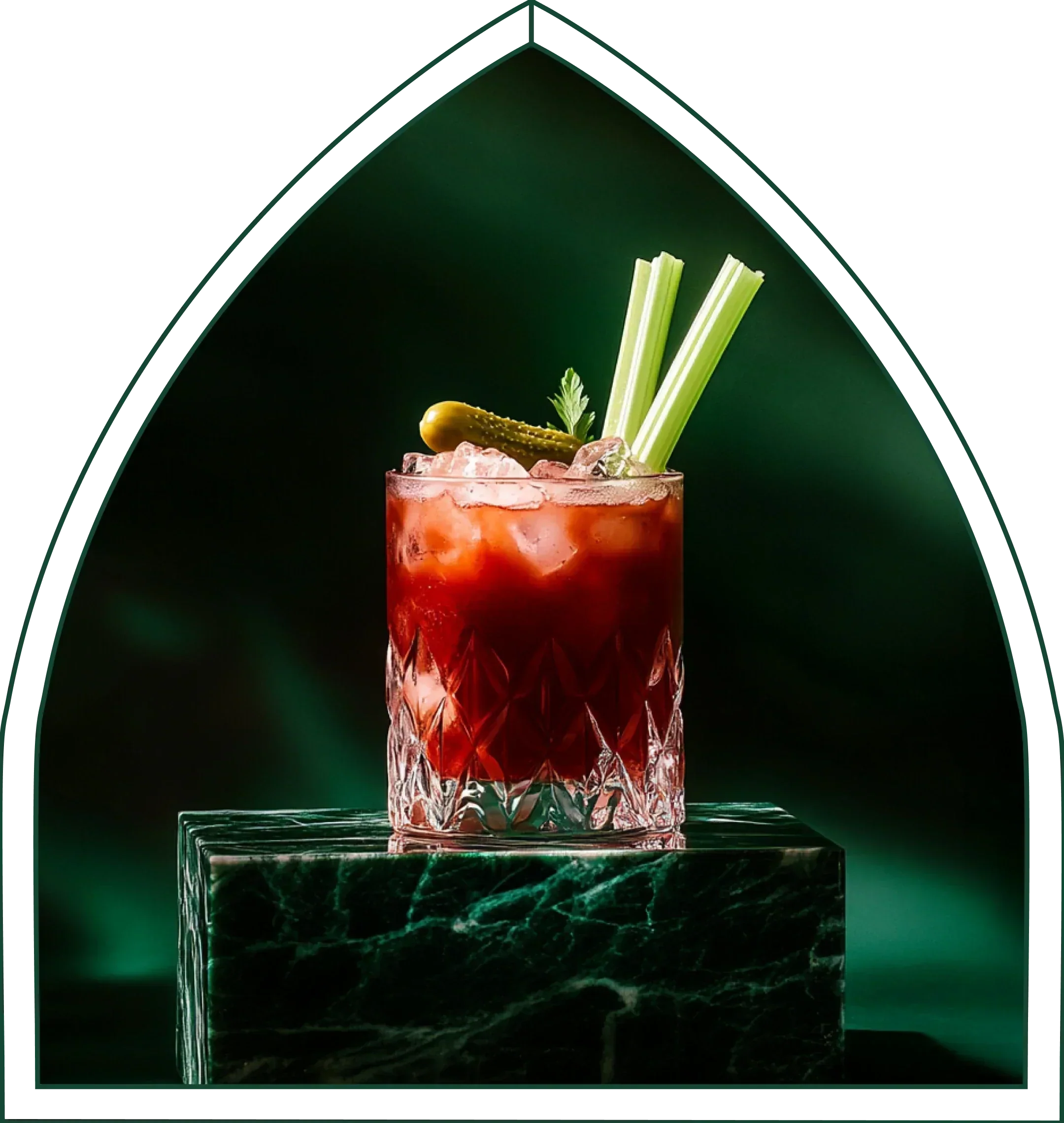
| Little Saints St. Ember Paloma | 2 oz St. Ember, 0.5 oz fresh lime juice, 3 oz sparkling grapefruit water, pinch of salt | Sugar-free build with spicy, smoky palo santo and ginger notes; Reishi and Lion's Mane; 1% of the proceeds from every bottle of St. Ember supports the reforestation efforts of Peruvian forests. | ~10 |
| Little Saints St. Juniper Gimlet | 2 oz St. Juniper, 0.75 oz fresh lime juice, 0.5 oz monk-fruit simple syrup, ice | Zero added sugar from traditional sweeteners; juniper, cucumber, and herbaceous notes; Lion's Mane and Reishi; gin-style complexity without alcohol's REM cost | ~15 |
| Little Saints Classic Spritz (canned) | 1 can Little Saints Classic Spritz, ice, tangerine slice | Five-calorie pour with prosecco-inspired bubbles and bittersweet botanicals; Reishi, Lion's Mane, and Damiana; rated 4.9/5 from customer reviews on littlesaints.com | 5 |
What Is the Best Drink to Help You Sleep at Night?
The strongest answer is a zero-sugar, caffeine-free evening drink that avoids alcohol's documented disruption to sleep architecture, rather than a beverage that claims to improve sleep on its own. Alcohol suppresses REM sleep in a dose-dependent pattern. The Gardiner et al. 2024 meta-analysis of 27 studies found that each 1 g/kg increase in alcohol dose reduces REM duration by 40.4 minutes, with disruption beginning at roughly two standard drinks. The rebound effect, a withdrawal-like arousal that fragments the second half of the night as blood alcohol concentration (BAC, the measure of alcohol in the bloodstream) falls, is well documented across multiple study designs.
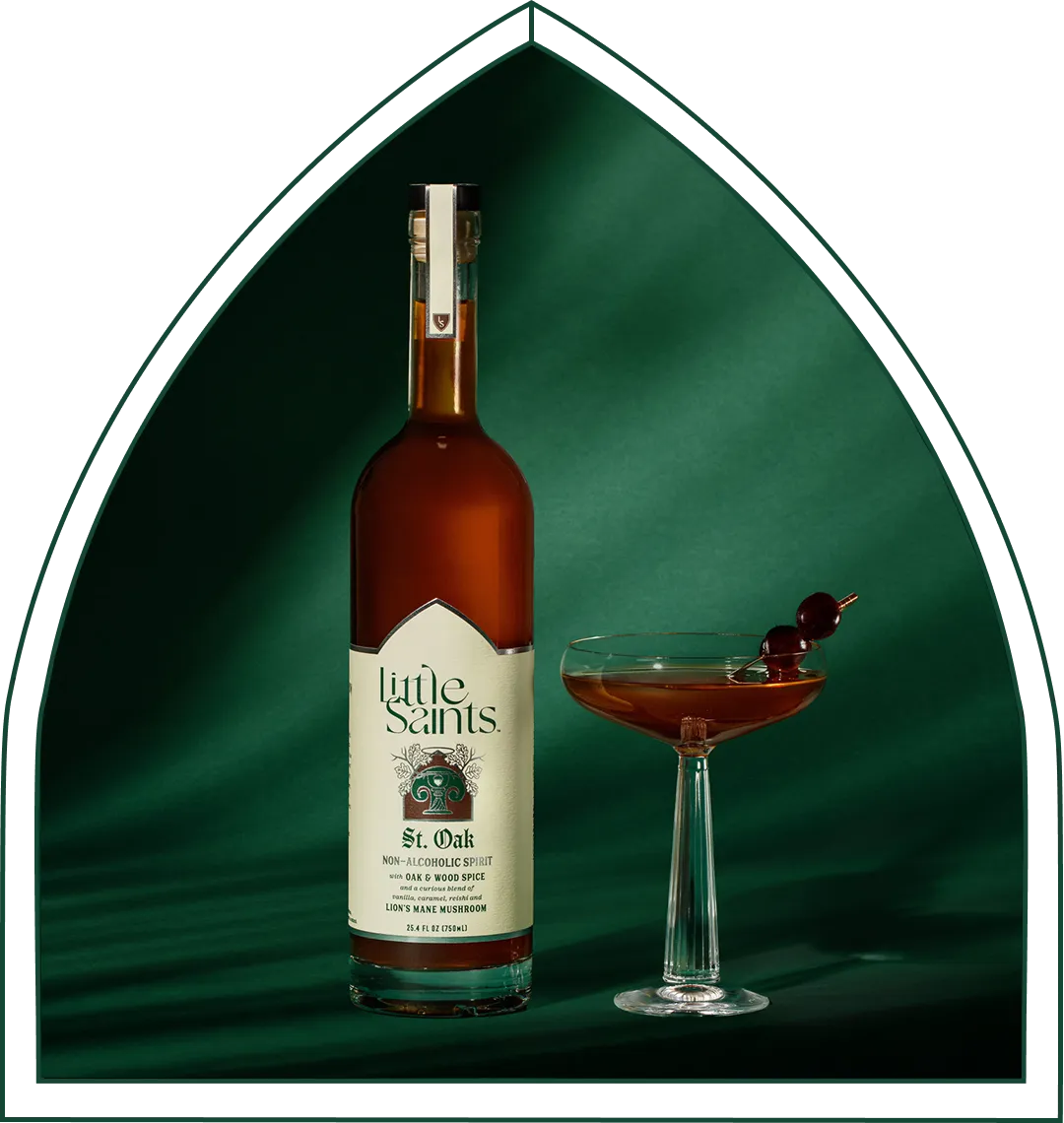
The St. Oak Old Fashioned gives a direct answer for someone who would otherwise reach for a whiskey nightcap.
- 2 oz St. Oak (zero sugar, no sweeteners, oil-based extract that mixes 1:1)
- 2 dashes aromatic bitters
- 1 large ice cube
- Orange peel, expressed and dropped
Stir briefly and serve in a rocks glass. The build delivers zero grams of sugar and no caffeine, with Reishi, Lion's Mane, and Damiana in every pour. The oak, vanilla, and warm spice profile registers as a brown-liquor cocktail without the nocturnal heart rate spike that follows the real thing.
What Can Replace Alcohol for Sleep?
No ingredient truly replaces alcohol's sedative effect, and that gap is the advantage. Alcohol's initial sedation shortens sleep onset but produces a glutamatergic rebound that fragments the second half of the night. A 2026 narrative review by Susek and Furmanek synthesizing 30 sources confirmed that alcohol produces significant REM suppression, increased autonomic stress, and fragmented sleep architecture, with the second half of the night showing worsened sleep continuity and recovery. The goal shifts from replicating sedation to skipping disruption entirely.
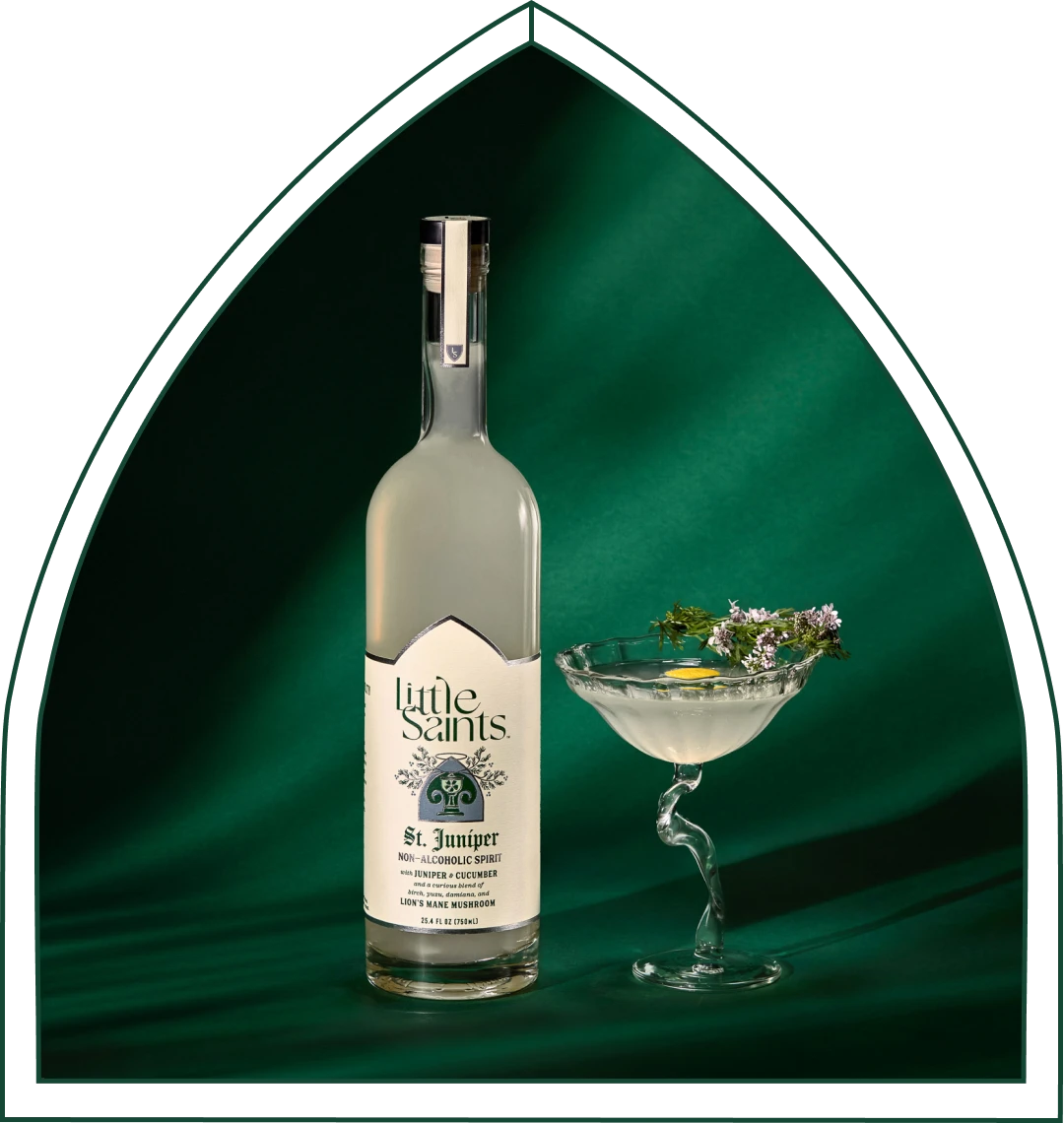
The St. Juniper Gin and Tonic keeps the evening ritual while avoiding that cost.
- 2 oz St. Juniper
- 4 oz sugar-free tonic water
- 0.5 oz fresh lime juice
- Ice, lime wheel, cucumber ribbon
Build over ice in a highball glass. Juniper, birch, angelica, and cucumber create a familiar profile. The drink remains free of sugar and caffeine. The ritual, including the glass, garnish, and fizz, stays intact while the REM disruption does not.
What Is a Good Non-Alcoholic Nightcap?
A strong non-alcoholic nightcap delivers adult flavor complexity, zero sugar from the base spirit, and no caffeine. The St. Oak Manhattan offers a direct analog to the classic stirred nightcap.
- 2 oz St. Oak
- 1 oz non-alcoholic sweet vermouth (or 0.5 oz fresh orange juice plus a dash of aromatic bitters as a substitute)
- 2 dashes aromatic bitters
- Ice, Luxardo cherry or orange peel to garnish
Stir over ice for 20 seconds and strain into a coupe. The oak, vanilla, caramel, and spice notes from St. Oak carry the build. The spirit itself contributes zero grams of sugar. Reishi for chill, Lion's Mane for focus, and Damiana for connection appear as part of the Nature's Neuroscience blend referenced earlier.
For a ready-to-drink option with no build required, the Little Saints Old Fashioned can delivers the same occasion in a can. The pour remains sugar-free, five calories, orange and cherry with warm spices, Reishi and Damiana, over ice in a rocks glass.
What Is the Best Non-Alcoholic Drink to Help Me Fall Asleep?
No beverage, alcoholic or non-alcoholic, should be positioned as a sleep aid, and Little Saints makes no such claim. Evidence instead supports the idea that avoiding alcohol removes a documented source of sleep disruption. The same Whoop user study cited earlier found that higher alcohol intake was also associated with shorter sleep duration and lower next-day physical activity, with disruptions larger in females than males.
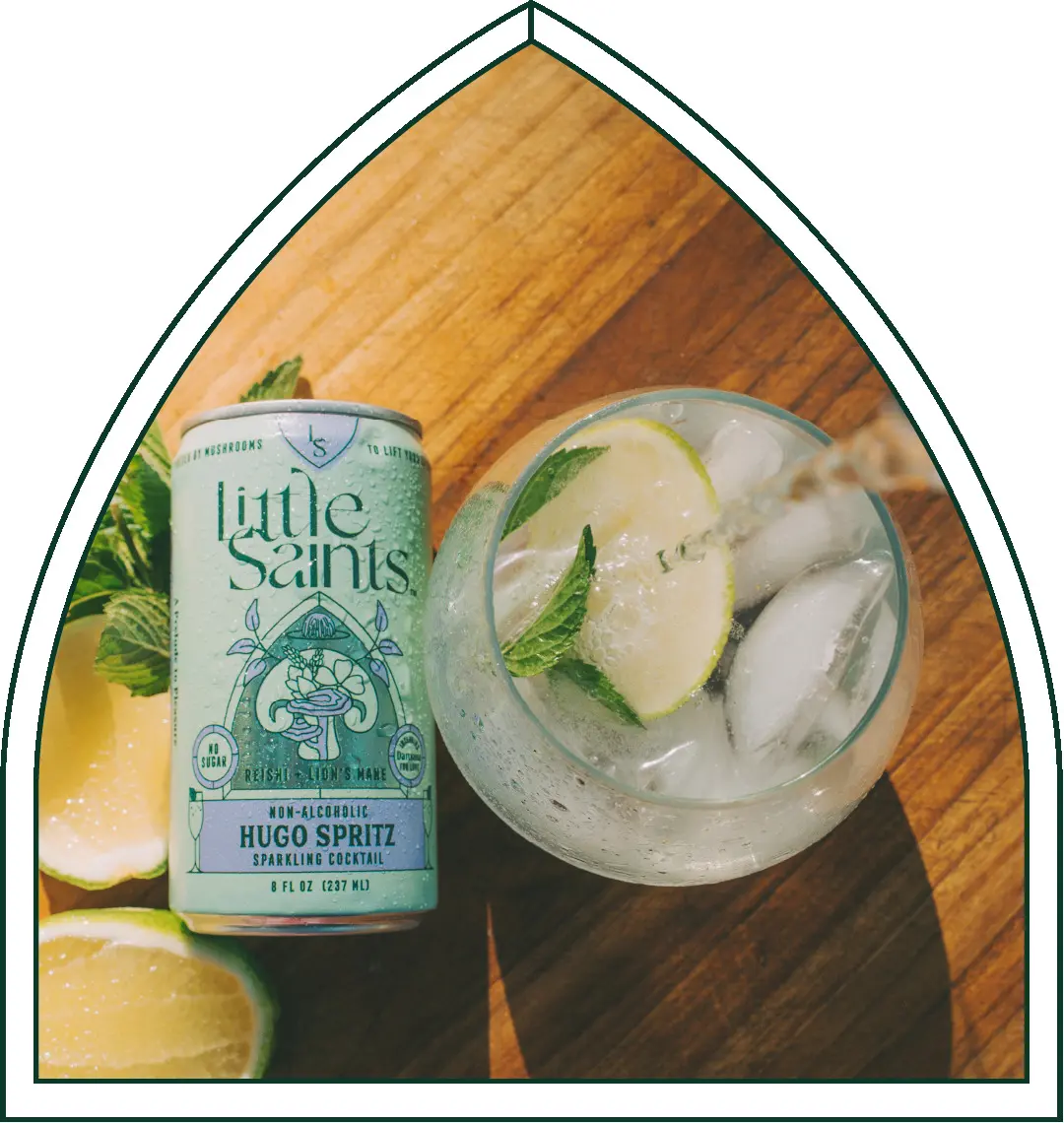
The Hugo Spritz offers the lightest, most approachable option for someone new to the category.
- 1 can Little Saints Hugo Spritz, chilled
- Ice in a wine glass or large copa
- Fresh mint sprig and a slice of lime
Pour over ice and garnish. Elderflower, prosecco-inspired bubbles, and mint create a familiar spritz profile. The drink keeps a sugar-free profile with five calories and includes Reishi, Lion's Mane, and Damiana. The ritual of a spritz, including the glass, garnish, and golden hour light, arrives without the BAC that would follow an alcoholic version.
For a built option, consider this simple St. Oak highball.
- 2 oz St. Oak
- 0.5 oz fresh orange juice
- 2 dashes aromatic bitters
- 2 oz sparkling water
- Ice, orange slice
Build over ice in a rocks glass. The drink lands around 10 calories, with zero grams of sugar from the spirit. The warmth and weight echo a brown-liquor drink without the nocturnal heart rate cost.
Realistic Considerations: Flavor Expectations and Label Transparency
Non-alcoholic spirits will not taste exactly like the spirits that inspired them. St. Oak captures the notes of an oak-aged whiskey, including vanilla, spice, caramel, and heat, but not the full mouthfeel that ethanol and sugar create. The better frame focuses on how the spirit behaves in a cocktail rather than how it tastes neat. St. Ember mixes like a tequila or mezcal, St. Juniper mixes like a gin, and St. Oak mixes like a whiskey. Substitute two ounces for two ounces, add the garnish and the ice, and the drink lands as a familiar cocktail.
Label clarity matters for this audience. Many functional drinks publish neither a dose nor a potency. Little Saints instead publishes the 100mg serving and minimum 70% beta glucan content described earlier. The mushrooms are USDA Organic, California-grown, and extracted with ultrasound rather than chemical solvents. The extract holds GRAS status, the FDA's standard of generally recognized as safe for an ingredient used in food. GRAS does not equal FDA approval of the finished product and does not claim a specific effect. It simply reflects a safety designation that many functional drinks in this category cannot reference.
Conclusion: An Evening Ritual Upgrade Without the Sleep Cost
Alcohol disrupts the second half of the night. A 2024 systematic review pooling 27 controlled studies found a clear dose-response relationship in which REM sleep was measurably delayed and shortened starting at doses as low as roughly two standard drinks, with disruption worsening progressively with each additional drink. Sparkling water lacks ritual. Sugary mocktails trade one problem for another. Daytime functional drinks are built for the wrong occasion. Chamomile tea still is not a cocktail.
Little Saints is built for the moment alcohol used to own: the evening, social, ritualized, in real glassware. The line keeps sugar out, holds calories to a light pour, and excludes caffeine in the core range. A supplement-grade functional mushroom blend appears at a stated dose and a published beta glucan content, in a flavor profile an adult recognizes. Many drinkers describe a Little Saints Lift, a sense of clarity and ease and the feeling of exhaling into the evening, without the recovery cost that shows up on the device the next morning.
Discover your magic hour — zero sugar, five calories, and Nature's Neuroscience in every pour.
These statements have not been evaluated by the Food and Drug Administration. Little Saints products are not intended to diagnose, treat, cure, or prevent any disease. Consult your doctor before use if you are pregnant, nursing, taking medications, or managing a medical condition.
Frequently Asked Questions
Do non-alcoholic drinks actually help you sleep?
No non-alcoholic drink should be described as a sleep aid, and Little Saints makes no such claim. Evidence instead supports the inverse: alcohol is a documented disruptor of sleep architecture, suppressing REM sleep in a dose-dependent pattern and fragmenting the second half of the night through a rebound arousal effect as blood alcohol concentration (BAC, the measure of alcohol in the bloodstream) falls. Choosing a zero-sugar, caffeine-free non-alcoholic evening drink removes that disruption from the equation. Whether a specific drink then improves sleep beyond that baseline depends on the individual and remains something no beverage can guarantee. The honest framing focuses on avoiding a known cost rather than promising a proven benefit.
Why is zero sugar important in an evening drink?
Sugar consumed in the evening can interfere with the body's wind-down process and adds empty calories to a drink meant for relaxation. Many non-alcoholic alternatives, including juice-based mocktails, tart cherry juice, and some canned aperitifs, carry significant sugar loads, as detailed earlier. Little Saints canned cocktails contain zero grams of sugar, sweetened with monk fruit juice concentrate only, with no cane sugar, erythritol, or sugar alcohols. The spirits contain no sweeteners at all. For someone tracking metabolic health, blood sugar, or simply reading a label, that distinction separates a drink that fits the evening from one that does not.
What makes Little Saints different from other functional non-alcoholic drinks?
Many functional non-alcoholic drinks miss the evening occasion in at least one of three ways: they include caffeine, they carry significant sugar, or they publish no dose or potency for their functional ingredients. Little Saints addresses all three. The core line excludes caffeine by design because the occasion is the evening and caffeine works against that goal. Every product contains zero grams of sugar. The functional blend of organic Reishi, organic Lion's Mane, Damiana, and botanical terpenes appears at the 100mg dose and 70% beta glucan potency described earlier, documented by supplier certificates of analysis. Most functional drinks in this category publish neither figure, while Little Saints calls both out clearly.
Can I use Little Saints spirits in classic cocktail recipes?
Yes, and that use case sits at the center of the design. First-generation non-alcoholic spirits often relied on flavored water, which diluted in a cocktail and required two to three times the pour volume to register. Little Saints spirits rely on oil-based craft extracts formulated with mixologists so that two ounces replace two ounces in any classic spec. St. Ember mixes like a tequila or mezcal, so it substitutes directly in a margarita or paloma. St. Juniper mixes like a gin, so it works in a gin and tonic, gimlet, or martini. St. Oak mixes like a whiskey, so it fits an old fashioned, manhattan, or boulevardier. Built-in heat from cardamom and capsicum extract registers as a spirit rather than a cordial, and the natural cloudiness from the Lion's Mane extract gives the drink body and weight in the glass.
Is Little Saints available in stores, or only online?
Little Saints ships direct to consumers in all 50 states, typically within three days, from two warehouses. In retail, Sprouts carries the brand in every door nationally, while Whole Foods stocks it in California and Florida. Fresh Thyme covers the Midwest, and ABC Liquors covers Florida. The brand also appears in over 1,000 retail shops, grocery stores, liquor stores, bars, and restaurants nationally. A store locator on littlesaints.com routes shoppers to the nearest door. Subscribe and Save is available on the canned cocktails for direct-to-consumer orders.
The statements made on our website have not been evaluated by the Food and Drug Administration, Our products are not intended to diagnose, treat, cure or prevent any disease. If you are pregnant, nursing, taking any medications or have any medical conditions, consult your doctor before use.